Boating Safety Equipment: A Guide for Safer Australian Adventures
Heading out on the water is a classic Australian pastime, but real enjoyment begins with having the right boating safety equipment . This gear is more than just a list of items to tick off; it's your primary defence agai…
At a glance
Heading out on the water is a classic Australian pastime, but real enjoyment begins with having the right boating safety equipment . This gear is more than just a list of items to tick off; it's your primary defence agai…
- Why Your Boating Safety Equipment Matters
- The Real-World Impact of Preparedness
- Required vs. Recommended Gear: A Quick Look
- Navigating Australian Boating Safety Regulations
What we'd put you in
Aerowave Viper 400 Sovereign
Our best-selling boat: 4.0 m, 1.2 mm VALMEX hull, 7-year hull warranty.
US$3,167 USD
Delivered to your door, today's rate
- Free freight to United States · local taxes payable on arrival
- 7-year hull warranty
🇺🇸 Shipping to United States · landed price quoted in writing
Yes — we ship the Aerowave Viper 400 Sovereign to United States. Here's the landed price.
Our best-selling boat: 4.0 m, 1.2 mm VALMEX hull, 7-year hull warranty.
Written for Australian readers — but the boat ships to you. We are an Australian builder and this article is written from Australian waters. That changes nothing about what you can order: the same hull, the same 7-year warranty and the same certification go out to United States every week.
Aerowave Viper 400 Sovereign
- Boat package (export price)
- US$3,726
- 15% tariff relief credit
- − US$559
- Express air freight to United States
- Included
- Import duty, taxes & customs clearance
- Payable on arrival
- Estimated landed, USD
- US$3,167
Indicative, converted at today's rate, before local duty and tax on arrival. Ask below and we'll put a fixed figure in writing, valid 30 days.
- 7-year hull warranty
- 1500 GSM / 1.2 mm VALMEX® Heavy Plus hull
- CE certified to ISO 6185-3 and EU Directive 2013/53/EU
- Door-to-door, tracked the whole way
Your price, delivered to your door — freight included.
We email the full PDF quote (spec, freight, finance, WavePay) to your inbox in under 60 seconds. No spam — one quote, one follow-up.
See it for yourself
Real boats. Real owners. Real people behind them.
Plenty of what you read online these days is generated. Check us out properly — the factory, the reviews and the owners are all one click away. Why we use AI, and how to check we’re real
How our boats are built
Walk the production line: thermo-welded seams, 1.2 mm VALMEX Heavy Plus hulls, over-pressure relief valves on every chamber.
See the buildGoogle Maps reviews
Real Australian owners, five stars, published on our Google Business Profile with the map — read them there, not just on our own site.
Open Google Maps reviewsOwner stories
Boats in use — offshore, on rivers, on rescue duty. Photos and words from the people who actually own them.
Read owner storiesHeading out on the water is a classic Australian pastime, but real enjoyment begins with having the right boating safety equipment. This gear is more than just a list of items to tick off; it's your primary defence against the unexpected, ensuring every trip on your inflatable boat ends as well as it began. Whether you're comparing prices and features of inflatable boats in your area or looking to hire one for a family outing, understanding safety requirements is the first step.
Why Your Boating Safety Equipment Matters
Think of your safety gear as the essential toolkit for your vessel. Just as you wouldn't take a screwdriver to fix a plumbing leak, the equipment you carry must be fit for the job. This concept of ‘fit-for-purpose’ is crucial; a coastal trip in an inflatable catamaran demands a different level of preparation than a calm river paddle in a small tender. Safety isn't just about avoiding fines. It’s about building the confidence and readiness to handle anything the water throws at you. It’s the solid foundation upon which every stress-free day on the water is built.
The Real-World Impact of Preparedness
Failing to carry the correct or up-to-date gear has tangible consequences. According to the Australian Maritime Safety Authority's 2023 Marine Incident Annual Report, nearly 600 expiation notices and cautions were issued in the 2023 boating season for expired flares, insufficient safety gear, or inappropriate equipment. This shows that authorities are actively checking that boaters are compliant. You can dive deeper into the stats in the full marine incident report from AMSA.
Equipping your boat properly isn't just about following rules. It's about taking personal responsibility for yourself, your passengers, and other boaters who share the water with you. A well-prepared skipper is a safe skipper.
Required vs. Recommended Gear: A Quick Look
Figuring out the difference between legally required and highly recommended items can be confusing, especially since the rules change based on your location and vessel type. Let's break it down simply. To make things clearer, here’s a quick summary table that cuts through the noise.
Required vs Recommended Safety Equipment at a Glance
| Equipment Category | Legally Required (Varies by State/Vessel) | Highly Recommended for All Boaters |
|---|---|---|
| Personal Flotation Devices (PFDs) | At least one properly fitting PFD for every person on board. | Self-inflating PFDs for comfort and mobility. |
| Distress Signals | Flares, V-sheet, horn, or sound signal (depending on distance from shore). | Emergency Position Indicating Radio Beacon (EPIRB) for offshore trips. |
| Fire Safety | At least one approved fire extinguisher (especially for vessels with engines). | A fire blanket in addition to an extinguisher. |
| Navigation & Communication | Navigation lights for night operation. | A VHF radio for reliable communication and a waterproof torch. |
| Anchoring | An anchor with appropriate rope/chain for your vessel size and location. | A secondary anchor (kedge anchor) for extra security. |
| First Aid | Not always legally required on smaller recreational boats. | A comprehensive, waterproof first-aid kit. |
This table is a starting point, but remember to always check your local state maritime authority for the specific rules that apply to you. Now, let's explore those categories in more detail:
- Legally Required: These are the non-negotiable items mandated by state maritime law. They typically include essentials like personal flotation devices (PFDs) for everyone on board, signalling devices such as flares or a horn, and a fire extinguisher. Think of these as your ticket to getting on the water.
- Highly Recommended: This category includes gear that elevates your safety from basic compliance to genuine preparedness. Items like a first-aid kit, a reliable anchor, a VHF radio, and an Emergency Position Indicating Radio Beacon (EPIRB) fall into this group. These are the items that can turn a bad day into a manageable one.
This guide will cut through the confusion, helping you choose the right setup for your specific needs, whether you're trying to find the best inflatable boats for recreational use available near you or looking for a place in Australia to hire inflatable boats for a family outing. To further understand the broader concepts of preparedness and what constitutes essential equipment for demanding situations, you might find this article insightful.
Navigating Australian Boating Safety Regulations
Trying to get your head around Australian maritime law can feel a bit like reading a map in choppy seas. The rules for essential boating safety equipment aren't a simple one-size-fits-all deal. They change depending on your state, the type of boat you're in—from a lightweight inflatable to a big cruiser—and exactly where you plan to go, whether that's a calm river or out on the open ocean. This section is your plain-English guide. We'll cut through the jargon and explain the mandatory gear you need on board, like life jackets (Personal Flotation Devices or PFDs), flares, fire extinguishers, and various signalling devices. Instead of just listing dense regulations, we’ll get into the ‘why’ behind each piece of equipment. Knowing this helps you make smarter choices, ensuring your inflatable catamaran or tender isn't just legally compliant, but genuinely safe for everyone on board.
Understanding State-Specific Rules
In Australia, boating safety is handled at the state and territory level. This means the gear you need for a family day out on Sydney Harbour might be different from what an angler needs off the coast of Perth. These regulations are the absolute minimum legal standard. A few key things determine what equipment you're required to carry:
- Vessel Length: Smaller boats, like most recreational inflatables, often have slightly different rules compared to larger vessels.
- Operating Area: The regulations make a clear distinction between 'enclosed waters' (think protected bays, rivers, and lakes) and 'open waters' (coastal or offshore areas).
- Time of Day: Hitting the water after dark means you'll need specific gear, like proper navigation lights, that aren't required during the day.
Your best bet is to always check in with your local maritime authority—like NSW Maritime or Maritime Safety Queensland—for the most up-to-date rules for your area. Think of it as checking the local road rules before you head out for a drive.
Demystifying Core Safety Equipment
Let's break down the most common bits of legally required gear. These items are the foundation of your onboard safety kit, and understanding what they do is crucial for using them effectively when it really counts. A Personal Flotation Device (PFD) is arguably the single most important piece of safety equipment you can have. The law is simple: you must carry at least one Australian Standard-approved PFD for every single person on your boat. They have to be the right size, in good nick, and easy to grab in a hurry—not buried under a pile of fishing gear.
A common mistake is thinking all life jackets do the same job. The rules specify different types (like Level 50 vs. Level 100) based on your activity and how far you are from shore. The rules are even stricter for kids, who often must wear one at all times on smaller boats.
This decision tree gives you a great visual on how your trip plans directly shape the equipment you'll need to pack.
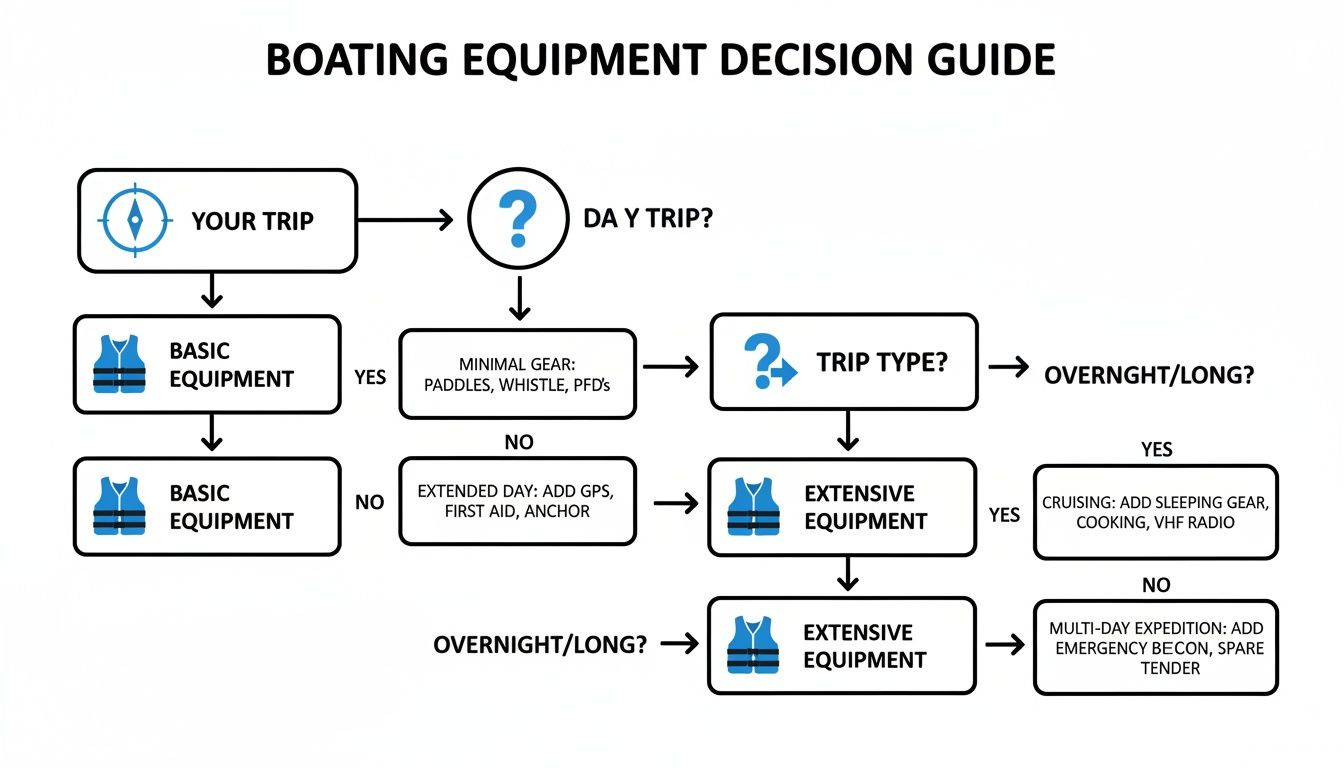 As you can see, the moment you move from enclosed waters to the open sea, the list of mandatory safety items gets a lot longer.
Signalling for Help When It Matters Most
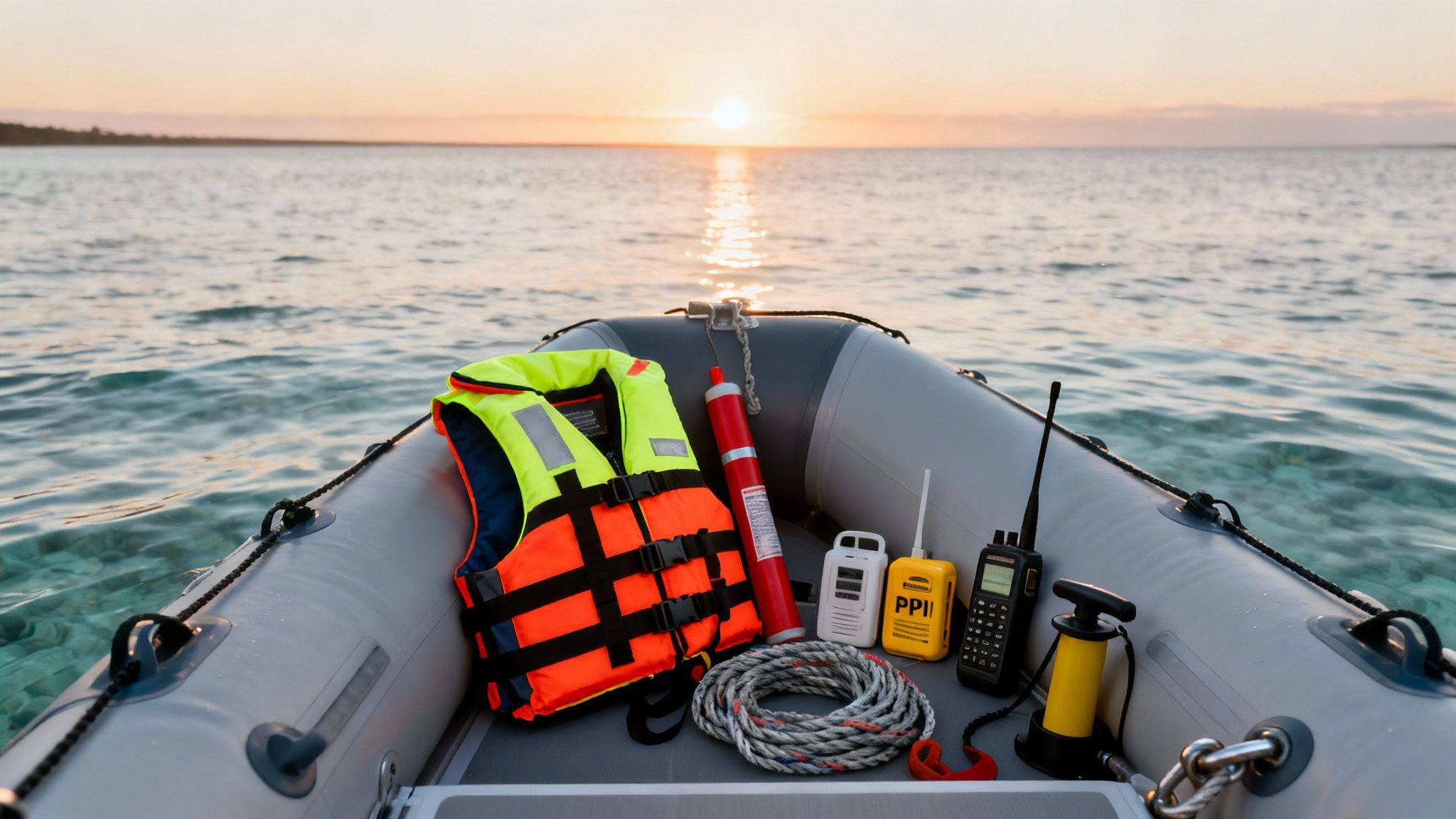
If you ever find yourself in a tight spot, your ability to signal for help is your lifeline. The devices you’re required to carry depend entirely on how far from the coast you plan to venture. For any trip in open waters, carrying distress flares is mandatory. These come with strict expiry dates, and having out-of-date flares on board can land you a fine. For enclosed waters, you might only need a simple sound signal like a horn or whistle, plus a V-sheet (a big orange sheet with a black 'V'). For the ultimate peace of mind on any coastal or offshore adventure, an Emergency Position Indicating Radio Beacon (EPIRB) or a Personal Locator Beacon (PLB) is a non-negotiable. While not always legally required for recreational boats staying close to shore, these devices are lifesavers, transmitting a distress signal via satellite directly to search and rescue services. You can explore the benefits and learn more about how a modern ACR rescue beacon works in our detailed guide.
Equipping Your Inflatable Boat for Peak Safety
Inflatable boats, including popular Inflatable Catamarans, give you incredible portability and stability on the water. But those unique strengths also demand a smarter approach to your boating safety equipment. Kitting out your vessel isn't about cramming a standard safety kit into a smaller space; it's about choosing gear that fits your boat’s design and plays to its strengths.
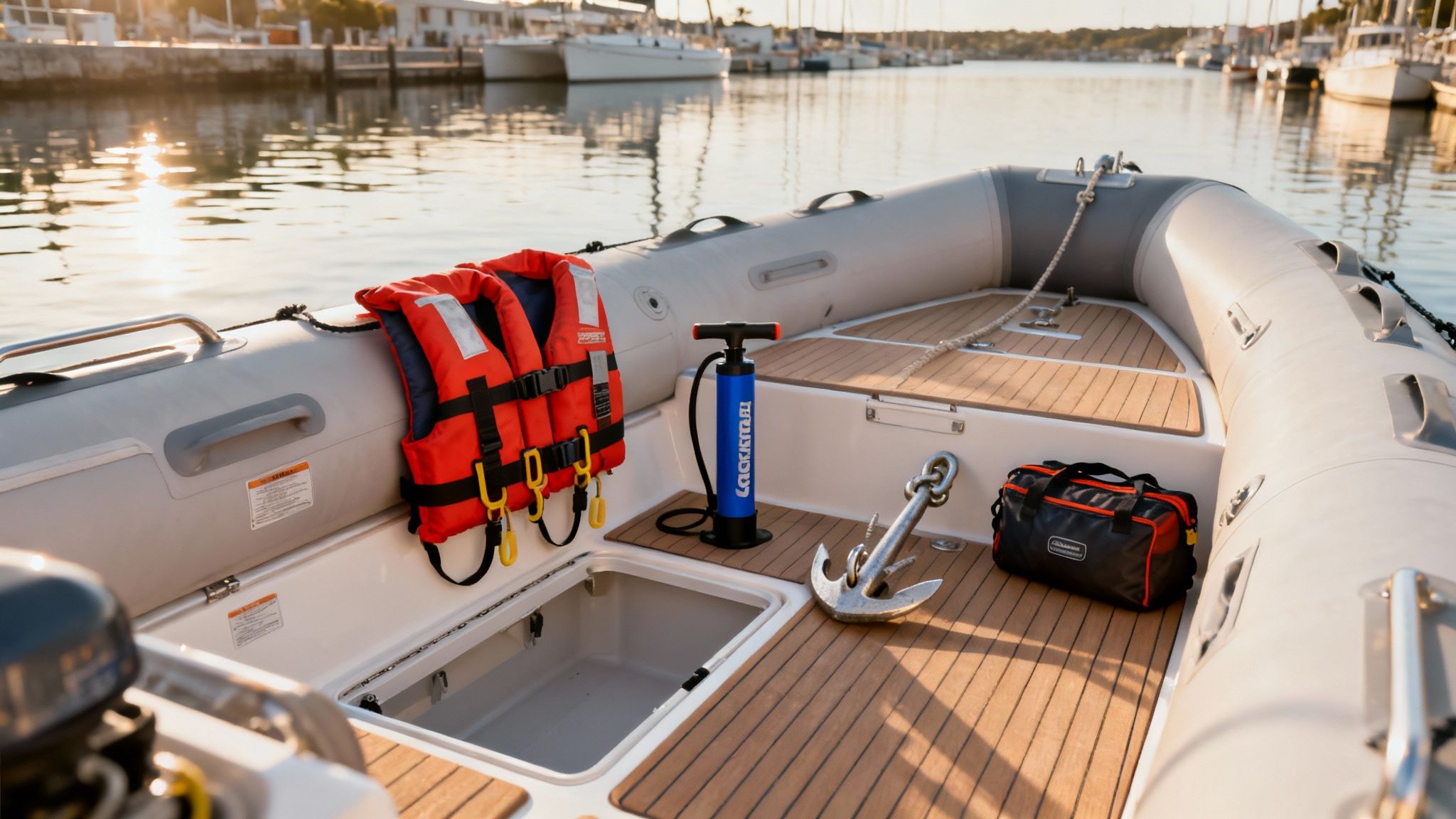 The trick is to think light and compact without ever compromising on performance. Your goal is a safety kit that works with your boat, not against it, making sure every item is there for a reason on your inflatable tender or catamaran.
Maximising Space with Smart Gear Choices
Limited deck space is a fact of life on most inflatables, making every square centimetre count. This is where modern, space-saving safety equipment really proves its worth.
- Inflatable PFDs: Let's face it, traditional foam life jackets are bulky. Self-inflating PFDs are a total game-changer, packing down into a small, wearable size while still offering fantastic buoyancy when you need it. They're all about maximum safety with a minimal storage footprint.
- Compact Signalling Devices: Instead of a clunky horn, think about a waterproof whistle and a compact mirror. If you’re heading offshore, a Personal Locator Beacon (PLB) is much smaller than a full-sized EPIRB but still gives you that vital satellite link to rescue services.
- Telescopic Paddles and Boat Hooks: These essential tools collapse down to a fraction of their length, making them a breeze to stow along the inside of a tube or under a seat.
By choosing gear designed for portability, you can tick all the safety boxes without sacrificing precious room for passengers or gear—a huge win for those looking for the best inflatable boats for recreational use available near me.
Enhancing Stability and Performance Under Pressure
Some safety gear does more than just sit there waiting for an emergency—it actually makes your inflatable boat more stable and perform better. A properly chosen anchor and a reliable pump are two of the most critical pieces you can have on board. An anchor might seem like extra weight, but it’s absolutely essential for holding your position while you're fishing or having a swim. For an inflatable, a lightweight but effective anchor like a fluke or grapnel-style is perfect. It gives you great holding power without adding unnecessary bulk.
The most overlooked piece of safety equipment for an inflatable is a high-capacity air pump. Keeping the right tube pressure is a core safety rule—under-inflated tubes flex way too much, killing performance and stability, while over-inflation risks blowing a seam.
The heartbreaking reality is that proper equipment can prevent tragedies. Of the 281 people who drowned in Australian waterways during 2023, about 17% of these deaths were linked to boating and watercraft incidents. This just hammers home how critical it is to be prepared.
The Inflatable-Specific Safety Kit
When you put it all together, a solid safety kit for an inflatable boat should be all about efficiency and function. Beyond what the law requires, your kit should be tailored to the unique needs of your vessel. A great starting point includes:
- High-Volume Manual or Electric Pump: Perfect for topping up tube pressure while you're out on the water.
- Puncture Repair Kit: This is completely non-negotiable for any inflatable owner.
- Lightweight Anchor with Ample Rope: Stops you from drifting in the wind or current.
- Compact Bailer or Sponge: To quickly get rid of any water that sloshes aboard.
A well-organised boat is a safer boat. To learn more about setting up your vessel for a secure day on the water, check out our guide on inflatable boat setup tips for safety. This thoughtful approach ensures you have the right tools ready to go without cluttering up your valuable space.
Going Beyond the Basics for Total Peace of Mind
Meeting the bare minimum legal requirements for boating safety equipment is your starting line, not the finish line. True confidence on the water comes from being ready for the unexpected ‘what ifs’—those moments that can turn a perfect day sour in a heartbeat. This is where you build a kit that offers total peace of mind.
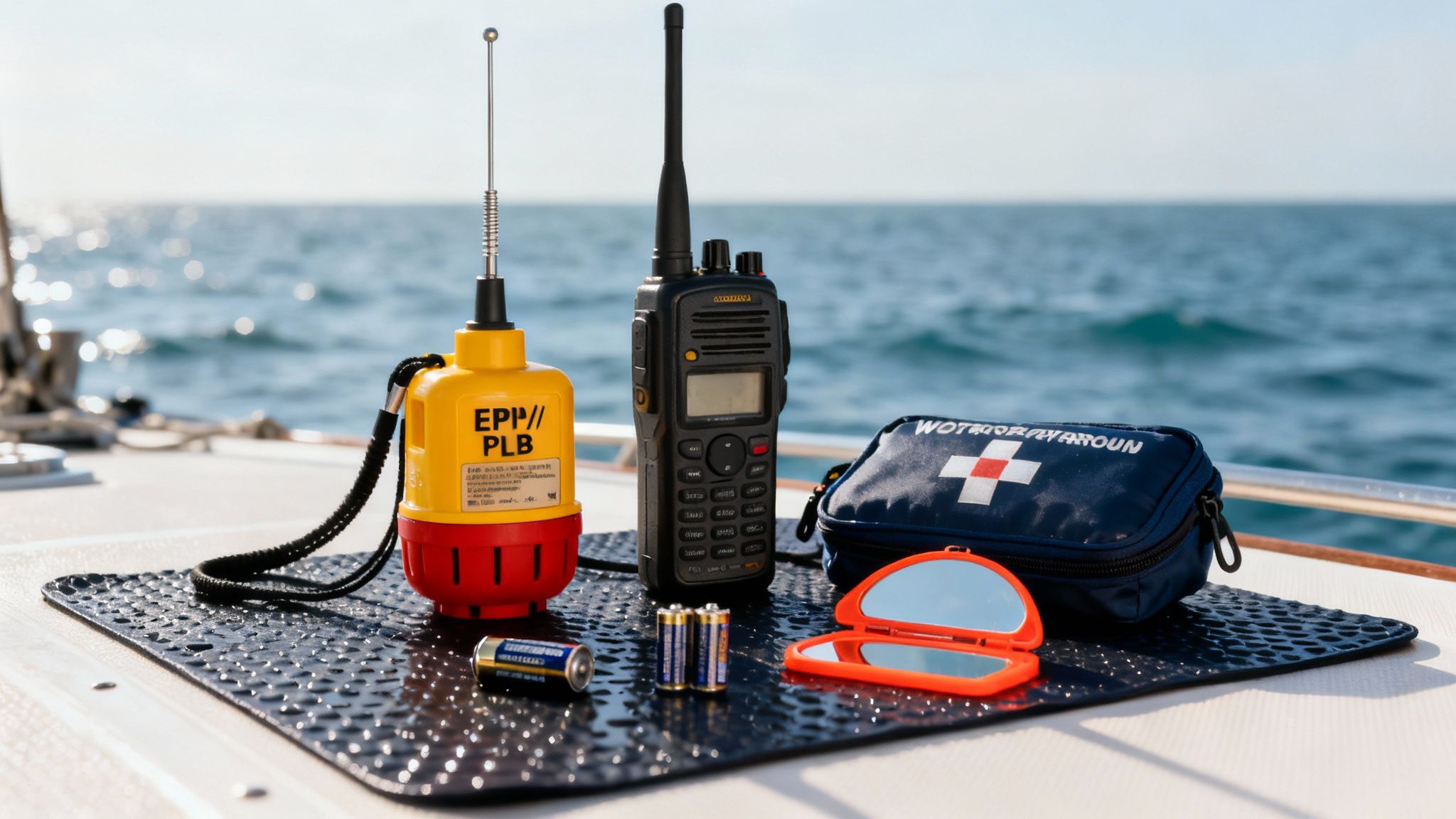 This advanced gear isn’t about being paranoid; it’s about being self-reliant. It’s the stuff that empowers you to handle almost any situation the water throws your way, turning potential disasters into manageable problems. This is especially critical when you’re exploring coastal areas in your Inflatable Catamaran.
Your Personal Lifeline When It Matters Most
Picture this: your engine cuts out, miles from shore. Your phone, predictably, has no signal. This is where the difference between an EPIRB and a PLB becomes crystal clear. Both are absolute lifesavers, but they play slightly different roles.
- An EPIRB (Emergency Position Indicating Radio Beacon) is registered to your vessel. When you set it off, it blasts a powerful distress signal to rescue authorities via satellite, pinpointing your boat’s location. It’s the ultimate safety net for any offshore or remote trip.
- A PLB (Personal Locator Beacon) is smaller and registered to you personally. It does the same job as an EPIRB but can be carried on your person—perfect if you fall overboard or have to abandon your boat.
For anyone serious about boating, factoring one of these beacons into your budget is a non-negotiable. It’s a direct investment in your safety.
Comparing Critical Safety Devices
Choosing between these devices can feel tricky, but it really comes down to where and how you boat. This table breaks down the essentials to help you decide which lifeline is right for your adventures.
| Safety Device | Primary Use | Ideal Operating Area | Key Consideration |
|---|---|---|---|
| EPIRB | Vessel in distress | Offshore, remote coastal waters | Registered to the boat; best for group safety. |
| PLB | Individual in distress | Anywhere, including on-person | Registered to an individual; essential for man-overboard scenarios. |
| VHF Radio | Vessel-to-vessel & rescue comms | Within radio range (coastal) | Real-time communication, not just a distress signal. |
Ultimately, having a combination—like a vessel-mounted EPIRB and a PLB on your life jacket—offers the most comprehensive coverage for you and your crew.
The Unsung Heroes of Your Safety Kit
Beyond the high-tech beacons, a few other items are the unsung heroes of any good safety kit. They’re the practical tools that solve common problems before they escalate into something serious. A waterproof handheld VHF radio is one of the best tools you can own. Unlike a mobile, it doesn't rely on patchy reception from cell towers, giving you a direct line to marine rescue services and other boats nearby. There's a reason it’s the standard for marine communication.
A reliable power source is just as critical as the electronics themselves. There’s no point having the gear if the batteries are dead. For a deep dive on keeping your essential kit powered up, our guide to choosing the right marine battery and charger is a great place to start.
A comprehensive, waterproof first-aid kit is another non-negotiable. Minor cuts, sunburn, or seasickness can quickly ruin a day out, and a well-stocked kit lets you sort these issues out on the spot. Finally, never underestimate simple, low-tech tools. A sturdy bailing bucket or even a large sponge can make a massive difference if you start taking on water. And believe me, carrying a small, separate container of spare fuel has saved countless boaters from a long, embarrassing paddle back to the ramp. Equipping your boat with this next level of safety gear builds a genuine sense of confidence, letting you and your family truly relax and enjoy your time on the water.
How to Maintain and Store Your Safety Equipment
Owning the best boating safety equipment is only half the battle. Let's be honest, it’s completely useless if it fails you in an emergency. Proper maintenance and storage aren't just chores you put on the to-do list—they're critical routines that could save your life. Think of it as a regular health check for your most important gear, making sure everything is in perfect working order before you even dream of hitting the water. This is especially true here in Australia, where the harsh sun and corrosive saltwater can chew through even the toughest materials. A simple, consistent maintenance routine is your best defence against wear and tear, guaranteeing every piece of equipment is ready to perform when you need it most.
Creating a Simple Maintenance Routine
The key here is building a habit. You don’t need a workshop full of complex tools or hours of your weekend—just a systematic way of checking your gear, ideally at the start and end of each boating season. A great place to begin is with your Personal Flotation Devices (PFDs).
- Visual Inspection: Give every PFD a good look-over. Check for rips, tears, or that chalky, faded look from sun damage, which is a sure sign the fabric is getting weak. Squeeze any foam-filled jackets to make sure they're still pliable and not going brittle.
- Buckles and Straps: Click all the buckles and run the zips up and down to make sure they fasten securely. Give the straps a solid tug to check that the stitching is still strong and not starting to fray.
- Inflatable PFDs: For the self-inflating life jackets, have a look at the CO2 cylinder. Make sure it hasn't been accidentally discharged and that the service date is still valid. Most manufacturers recommend getting them professionally serviced every 1-2 years.
This same simple logic of checking for wear, tear, and expiry dates applies to all your gear. It's a quick process that can make all the difference out on the water.
Checking Expiry Dates and Electronics
Some of the most critical items in your safety kit have a limited shelf life. Getting complacent here isn't just dangerous; it could also land you a hefty fine from the maritime authorities.
- Flares and V-Sheets: Flares typically have a three-year lifespan from their manufacture date. Once they're expired, they're unreliable and need to be disposed of correctly—never, ever just toss them in the bin.
- Fire Extinguishers: Check the pressure gauge to ensure the needle is sitting comfortably in the green zone and look for the expiry date printed right on the cylinder. It’s also a good idea to give it a gentle shake every now and then to stop the powder inside from compacting.
- EPIRBs and PLBs: These beacons run on batteries with a fixed replacement date, usually every 5-10 years. Just as important, make sure your registration details are up-to-date with the Australian Maritime Safety Authority (AMSA).
Testing your electronics should also be part of this routine. Switch on your VHF radio for a quick radio check and flick on your navigation lights and waterproof torch to confirm the batteries are still good to go. For a deeper dive into looking after your vessel, our guide on inflatable boat maintenance made simple has some great practical tips that go beyond just safety gear.
Smart Storage for Longevity
How you store your equipment is just as important as how you maintain it. The goal is simple: protect it from moisture, sunlight, and extreme temperatures.
Store your safety gear in a cool, dry, and easily accessible place. A dedicated waterproof bag or container on your boat keeps everything organised and protected from the elements, ensuring you can grab it in a hurry.
After a day on the water, always make a habit of rinsing your gear—especially electronics and PFDs—with fresh water to get the salt residue off. Let everything dry completely in the shade before you pack it away to prevent mould and mildew from setting in. Proper storage ensures your safety gear stays in top condition, and for bigger items or off-season needs, you might even look into specialized equipment storage solutions. By making this small effort, you'll significantly extend the life and reliability of your entire safety kit.
The Ultimate Pre-Departure Safety Checklist
The last few moments before you launch are easily the most important. Turning your pre-departure check into a consistent ritual is the single best habit you can build to ensure a safe, fun day on the water. It’s about building muscle memory for safety—moving beyond just knowing your gear is on board to confirming it’s ready to go and easy to reach. Think of this routine as your final line of defence against the usual suspects of boating problems. When it becomes second nature, you slash your risks and kick off every trip knowing you’re fully prepared for a great, stress-free adventure.
Weather and Trip Planning
Before your inflatable even sniffs the water, your first checks should happen on solid ground. Aussie weather can turn on a dime, so checking the forecast isn't just a suggestion—it’s a non-negotiable safety step.
- Review the Latest Marine Forecast: Don't just glance at yesterday's report. Jump onto a trusted source like the Bureau of Meteorology for the latest wind, swell, and tide info specific to your spot.
- File a Float Plan: This one is crucial. Tell a responsible mate or family member where you're heading, who's with you, and what time you plan to be back. Make sure they know who to call if you don't check in as planned.
Onboard Equipment and Vessel Checks
With your trip plan sorted, it's time to get hands-on with the boat itself. This is all about making sure your inflatable and its essential boating safety equipment are in top shape for the day ahead. First up, give your inflatable's tubes a once-over. Proper inflation is everything for stability and performance. You want them at the manufacturer's recommended pressure—but remember that the air inside will expand in the sun, so don't overdo it. Next, a quick run-through of your safety gear.
- Accessibility Check: Confirm that life jackets, your fire extinguisher, and flares aren't just on board, but are somewhere you can grab them in a split second. They should never be buried under tackle boxes or beach bags.
- Communications Check: If you're running a VHF radio, switch it on and do a quick radio check to make sure it’s transmitting and receiving clearly. And it goes without saying—make sure your phone is fully charged.
- Fuel and Engine: Have a visual look at your fuel level and inspect the engine for any obvious leaks or problems. A quick start on the trailer is a great way to confirm it’s running smoothly before you launch.
A simple, repeatable checklist removes guesswork and stops complacency from creeping in. It ensures that even on the most exciting days, you never overlook the small details that make the biggest difference in an emergency.
To help you lock this habit in, we've put together a comprehensive resource you can use every single time you head out. Download and print our detailed boat safety equipment checklist to keep on your vessel as a constant reminder. Making this process a non-negotiable part of every trip is the mark of a truly safe and responsible skipper.
Got Questions About Boating Safety?
Heading out on the water is one of the best ways to spend a day, but it’s natural to have questions, especially when you’re just starting out or taking the family on an inflatable. If you're looking to compare prices and features of inflatable boats in your area or find a place in Australia to hire inflatable boats for a family outing, getting the right answers first builds confidence and keeps everyone safe. Here are a few of the most common questions we get about boating safety equipment here in Australia. We’ll break down the essentials so you can make smart, safe decisions before you even leave the shore.
What Are the Rules for Kids and Life Jackets in Australia?
This is one of the most important things to get right. In almost all Australian states, there are strict laws requiring children—usually anyone under 12 years old—to wear a life jacket at all times when on a boat under a certain size (like 4.8m) while it’s underway. This isn’t just a friendly suggestion; it’s the law. The exact rules on age and boat size can differ slightly from state to state, so it’s always a good idea to double-check with your local maritime authority before you head out. Just as important, the life jacket has to fit the child properly based on their weight and be in good condition. A PFD that’s too big or damaged is a serious safety risk.
Do I Really Need to Carry Flares on My Inflatable?
Whether you need flares comes down to one simple thing: where you’re planning to go. Here in Australia, flares are generally mandatory if you’re boating in open or coastal waters, which is usually defined as being more than two nautical miles from the coast. This rule applies to all boats, including our Inflatable Catamarans. If you’re sticking to enclosed waters like rivers, sheltered bays, or lakes, you usually aren’t legally required to carry them. That said, having an in-date flare kit on board is always a smart move, even when it’s not required. Authorities are known to check expiry dates, and out-of-date flares are a common reason for fines, so make a habit of checking yours.
How often Should I Replace My Safety Gear?
The lifespan of your safety equipment really varies, which is why regular checks are so crucial.
- Gear with Expiry Dates: Some items make it easy. Flares and fire extinguishers have mandatory replacement dates printed right on them. Flares typically last for three years and must be replaced after they expire.
- PFDs and Life Jackets: For inflatable life jackets, you'll need to follow the manufacturer's guidelines for periodic professional servicing. For all PFDs, foam or inflatable, you should replace them immediately if you spot any damage like torn fabric, sun damage, or busted buckles.
A good rule of thumb is to give all your boating safety equipment a thorough once-over at the start of every season. It's a simple habit that makes sure everything is ready to go when you need it most.
Ready to gear up for your next adventure with confidence? At Easy Inflatables, we offer a wide range of Aerowave inflatable boats and essential accessories designed for Australian conditions. Explore our collection and find the perfect setup for your family fun or fishing trips. Find your perfect inflatable boat at Easy Inflatables.
Explore the Aerowave range
Weekend-Proof Score 17 questions · about 2 minutes
Will the boat you're about to buy survive an Australian summer?
Seventeen straight questions about where you'll use it, what you'll ask of it and the boat you're weighing up. You get a score out of 100, the exact weak points in your plan, and the one boat that genuinely fits.
Free · your result shows on screen · no email required
So which one is yours?
Pick how you'll actually use it and we'll take you straight to the right hull.
I want to fish it
Open bow, rod holders, deck space you can stand and cast from.
Viper Sport 400Family, diving and the beach
3.8 m Series 3 catamaran — low bow to climb back in wearing fins or a tank.
WaveRunner 380Tender / one-person launch
3.3 m hard-floor boat that packs into a bag and still takes a beach landing.
Viper 330Shop gear featured in this guide
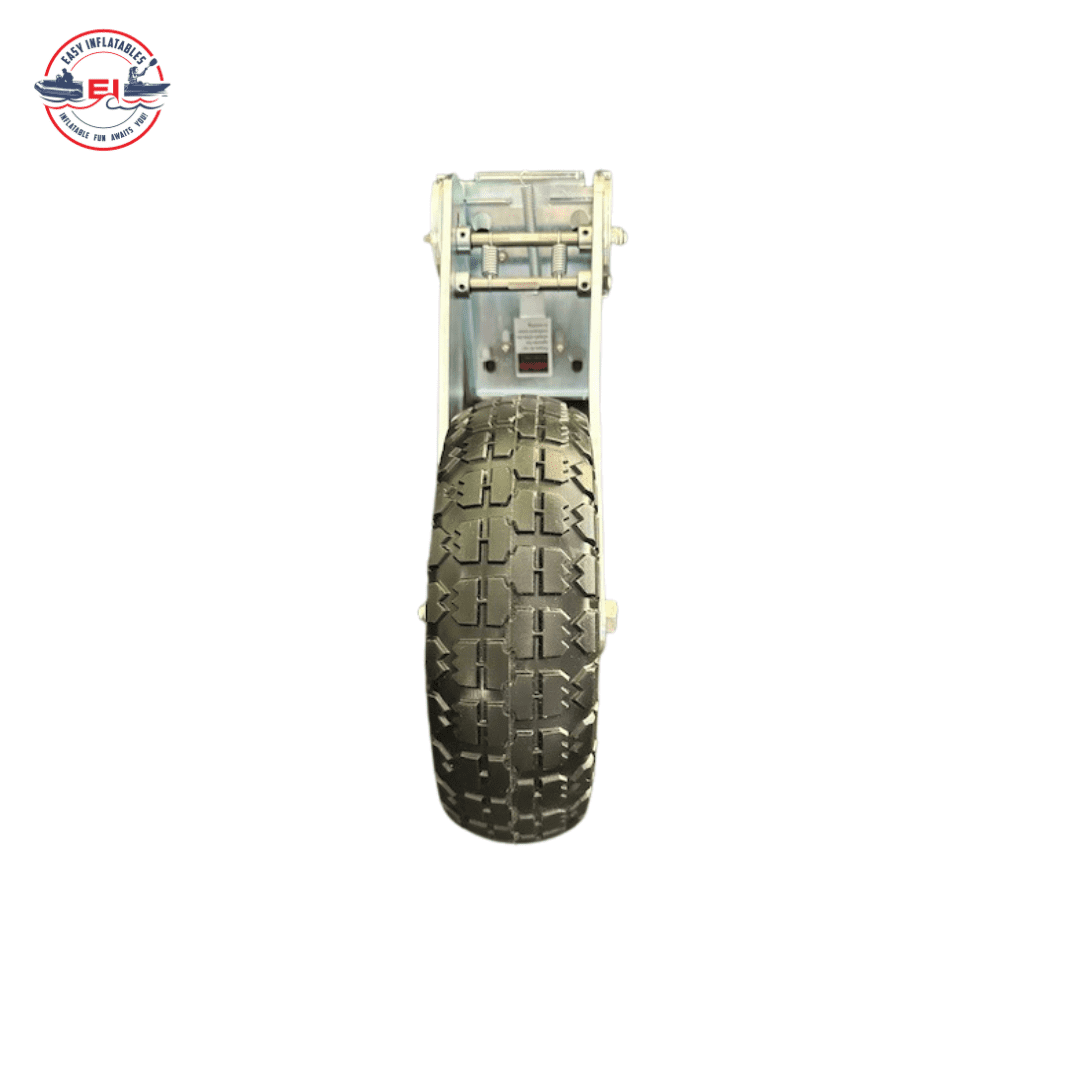
LockPro Plus Inflatable Boat Wheel Set
The LockPro Plus Inflatable Boat Wheel Set offers a premium solution for easy and safe loading of inflatable boats, featuring an Italian stainless steel quick-lock system.
Free freight to United States · local taxes payable on arrival
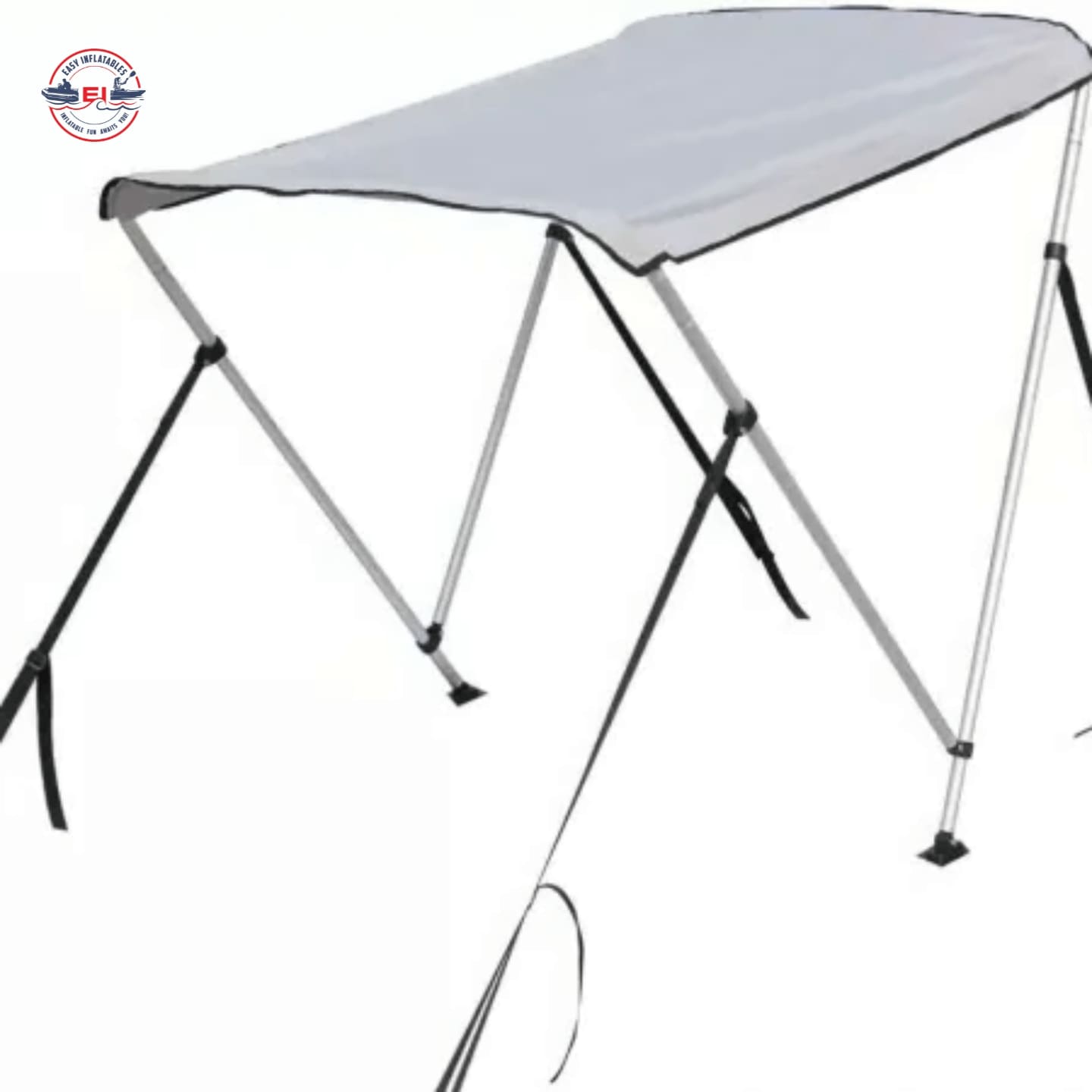
Aerowave Inflatable Boat Bimini
Lightweight inflatable UV sun-shade canopy for inflatable boats, SIBs and catamarans. Now available in two colours — Light Grey and Black. Fast setup, compact storage and premium UV protection for Australian boating.
Free freight to United States · local taxes payable on arrival
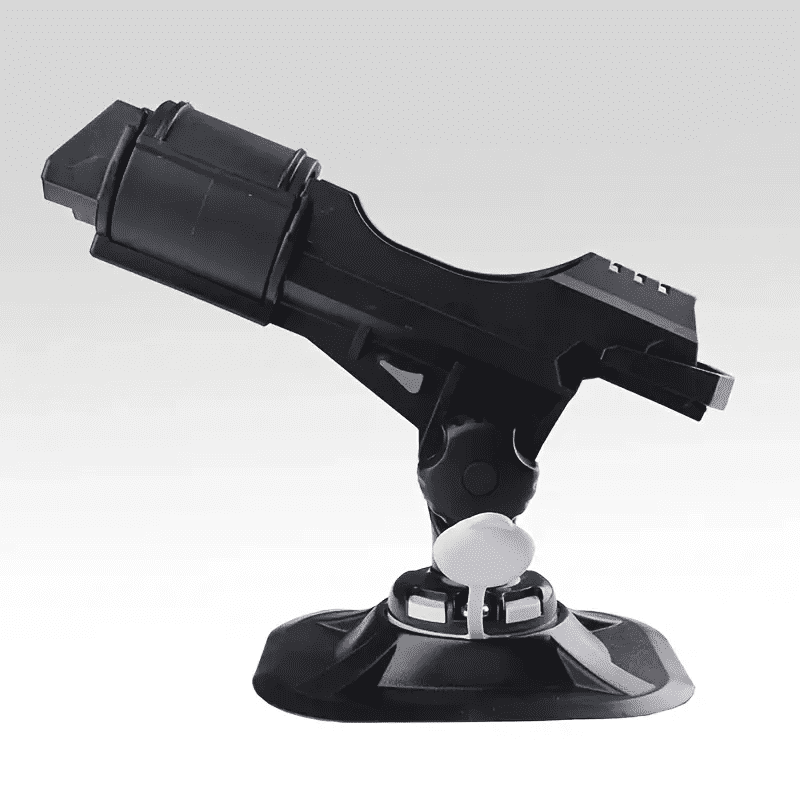
Inflatable Boat Rod Holder Mount
Factory-installed fishing mount designed for Easy Inflatables boats, providing a clean and secure installation for serious anglers.
Free freight to United States · local taxes payable on arrival
Not sure which suits you? Talk to a real boat owner.
Before you spend a cent
Buying from Australia, delivered to United States
You have never heard of us, we are on the other side of the world, and the internet is full of fakes. Fair enough. Here is everything you would need to check us out, in one place — no forms, no chat bot.
Australian designed business
Easy Inflatables, Avoca Beach NSW 2251. ABN 96 856 548 613. International orders ship from our Hong Kong hub.
222 owner reviews, 4.8 average
Read them in full, good and bad, on our reviews page.
CE certified, 7-year hull warranty
ISO 6185-3 and EU Directive 2013/53/EU. Warranty honoured worldwide.
Tracked, insured, door to door
FREE freight to United States · local tax/duty on arrival.
- Who am I actually buying from?
- Easy Inflatables, Avoca Beach NSW 2251, Australia. ABN 96 856 548 613. Sean is the owner and skipper, Gary Stewart handles sales on +61 2 4335 1603, Karen Matthews handles email. The boats are Australian designed; international orders ship from our Hong Kong dispatch hub so your landed price stays competitive. Phone us before you pay a cent — a real person answers.
- Is this really an Australian product?
- Yes — Australian designed and engineered on the NSW Central Coast. Manufacturing is done offshore to our spec, and international orders ship direct from our Hong Kong dispatch hub. If we routed every boat through Australia first, the freight alone would roughly double or triple your cost for the same hull.
- What do I pay, and what is not included?
- The delivery and import terms depend on your country. EU, UK, New Zealand and named Asia/Pacific lanes include duty and tax; US freight is free but US buyers pay import charges on arrival. Other destinations show their terms before payment.
- How do I pay safely?
- Card through Stripe (Visa, Mastercard, Amex, Apple Pay, Google Pay) or bank transfer. Card payments carry your bank's own dispute protection. We never ask for crypto, gift cards or payment to a personal account.
- What if it arrives damaged?
- Every boat ships fully tracked and insured door to door. Photograph the carton and the boat on arrival and email us — transit damage is claimed and replaced through us, not left with you and the courier.
- Is the warranty real outside Australia?
- Yes. The 7-year hull warranty on 1.2 mm VALMEX Heavy Plus and Orca Hypalon hulls applies wherever you are. Replacement parts are held in Australia and at our overseas hub and go out by express courier to your door.
- Is the boat actually certified?
- All Aerowave catamarans are CE certified to ISO 6185-3 and EU Directive 2013/53/EU. Certification paperwork is supplied with the boat — ask and we will send it before you order.
Ready to set sail?
Premium German-fabric inflatable catamarans, built to order and delivered to your door. Talk to our team or browse the fleet.
Like this guide? Get the next one in your inbox.
Owner-tested tips, gear deep-dives and Aussie boating know-how — no spam.