
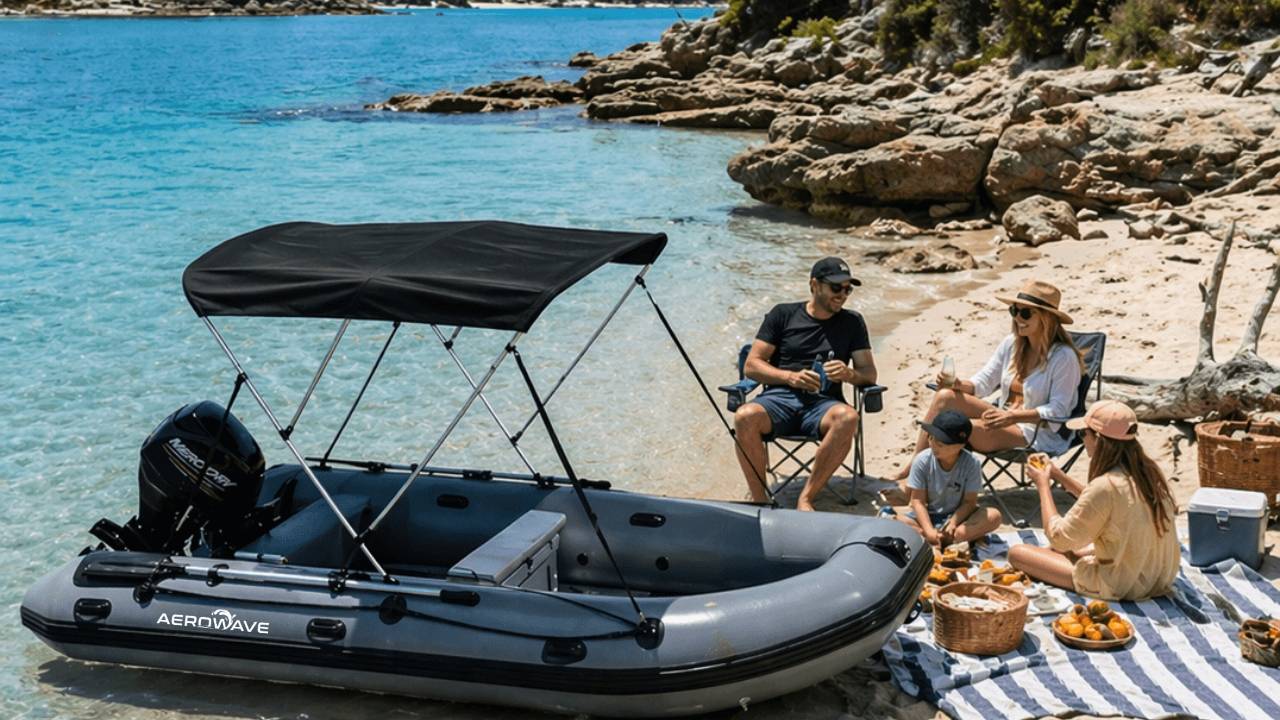
Buying an Inflatable Boat in Australia: The 10 Critical Questions to Ask Before You Pay
Our definitive guide to buying an inflatable boat in Australia. Learn the crucial differences in fabric, hull design, warranty, and support to ensure you invest in a vessel that lasts.
Our recommendation
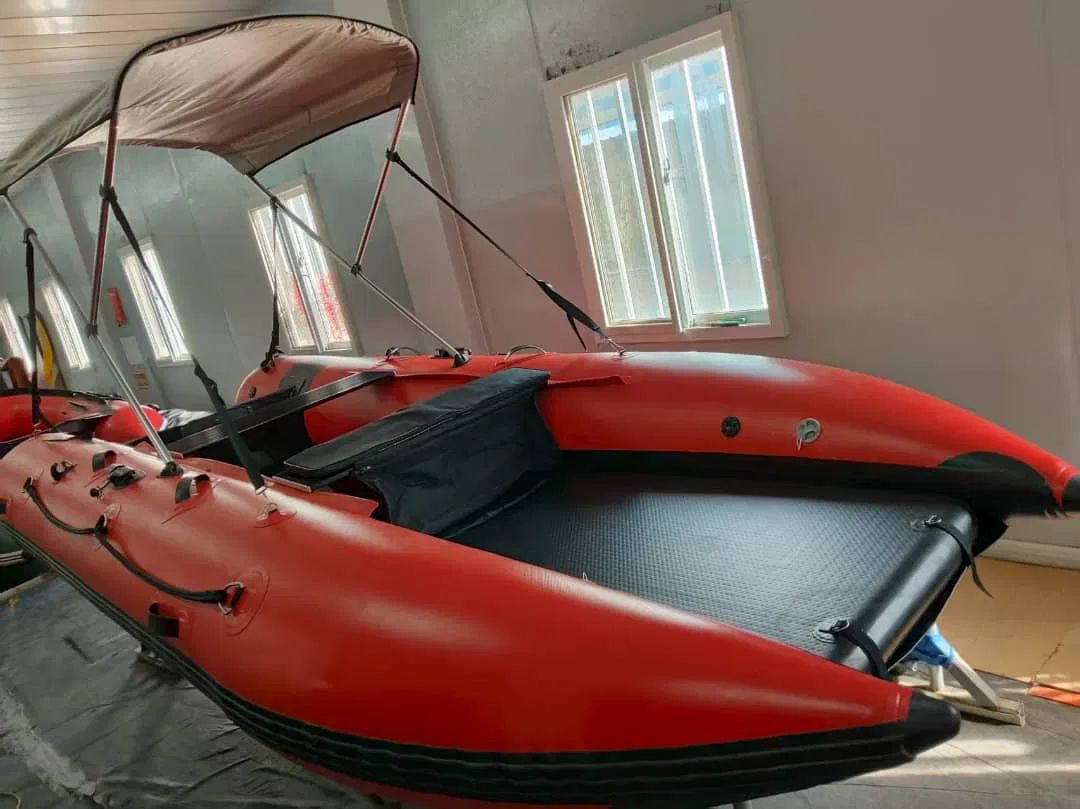
Aerowave Viper 400 Sovereign
1.2 mm fabric is about 33% thicker than common 0.9 mm fabric: more material between your boat and the water for everyday rubbing and knocks during beach launches. Careful handling still matters.
Length
4.0m / 13'1"
Beam
1.80m / 71"
Tube Diameter
51cm
Bare Boat Weight (without Bimini & wheel kit)
66kg / 145lbs
The single biggest mistake first-time boat buyers make is focusing on the price tag instead of the price of ownership.
Venturing into the world of inflatable boats is an exciting prospect. The promise of freedom—exploring secluded coves, fishing in quiet estuaries, or simply having a reliable ship-to-shore tender—is a powerful lure. But the Australian market is flooded with options, from suspiciously cheap online deals to premium, locally-supported vessels. For a first-time buyer, telling them apart can feel impossible.
This isn't a sales pitch. This is the guide we wish we had when we first started. It's a deep dive into the ten most critical questions you need to ask before you hand over your credit card. Answering them honestly will be the difference between buying a boat that provides a decade of memories and one that becomes a garage burden in a single season. Let's get you prepared for buying an inflatable boat in Australia, the right way.
1. What Fabric is the Boat Made From (And Why Does GSM Matter)?
This is, without question, the most important factor determining your boat's lifespan, durability, and performance. If you get this wrong, nothing else matters. The vast majority of inflatable boats are made from either PVC (Polyvinyl Chloride) or Hypalon (a brand name for a type of synthetic rubber).
PVC vs. Hypalon: The Real-World Difference
-
Hypalon: Traditionally considered the 'gold standard', it's extremely UV resistant and durable. However, it's very expensive, heavy, and its seams must be glued by hand. This manual process can introduce inconsistencies, and the glue itself can degrade over time, especially in Australia's harsh climate. It's often overkill for recreational users.
-
High-Quality PVC: Modern, premium PVC is a different beast entirely from the stuff used in pool toys. Top-tier German-made fabric like VALMEX®, used in our Aerowave range, offers UV resistance and durability that rivals Hypalon for a fraction of the cost. Critically, its seams can be thermo-welded. This process molecularly fuses the panels together, creating a seam that is stronger than the material itself and won't degrade over time. The lifespan for premium VALMEX® fabric is typically 10–12 years with basic care.
The GSM Secret: Not All PVC is Created Equal
'GSM' stands for 'Grams per Square Metre'. It’s a measure of fabric density and thickness. A higher GSM means a tougher, more puncture-resistant boat. This is where many budget imports cut corners.
- Below 900 GSM (0.7 mm): Often found in the cheapest boats. This thin material is highly susceptible to scrapes, punctures, and UV damage. It feels flimsy and offers a poor, flexible ride.
- 1100 decitex (0.9 mm): A respectable industry standard for quality recreational boats. It provides a good balance of durability and manageable weight. The Easy Inflatables AeroCat series uses 1100 decitex / 0.9 mm VALMEX® fabric.
- 1500 GSM (1.2 mm): This is heavy-duty, commercial-grade territory. It offers exceptional toughness and rigidity, ideal for rugged use, sharp oyster beds, and a firm, responsive feel on the water. Our flagship Aerowave Viper range is built with 1500 GSM / 1.2 mm VALMEX® Heavy Plus fabric for precisely this reason.
Ask the seller: "What is the exact GSM and thickness of the fabric, and is it thermo-welded or glued?" If they can't answer immediately, that's a major red flag.
2. What is the Hull Design? (Catamaran vs. Monohull)
After fabric, the hull shape is the next biggest influence on your boating experience. It dictates stability, efficiency, speed, and how the boat handles chop. Most people picture a standard 'dinghy' or V-shaped monohull, but inflatable catamarans are rapidly gaining popularity for very good reasons.
| Feature | Inflatable Catamaran (e.g., AeroCat, Viper) | Traditional Inflatable Monohull (V-Hull) |
|---|---|---|
| Stability at Rest | Exceptional. The two widely spaced hulls create a super-stable platform. Ideal for fishing, diving, or loading kids and gear. | Good, but more prone to tipping or rolling side-to-side when weight shifts. |
| Performance | More efficient. The hulls slice through water with less drag, requiring a smaller, more fuel-efficient outboard to get on the plane. | Less efficient. Pushes more water, requiring more power to achieve similar speeds. |
| Handling in Chop | Excellent. The tunnel between the hulls traps a cushion of air, softening the ride and reducing slamming. | Can be jarring. The single V-hull can 'slam' into oncoming waves, creating a harsher ride. |
| Internal Space | More usable deck space. The rectangular shape provides more room corner-to-corner compared to a V-hull of the same length. | Less usable space. The tapering V-shape at the bow reduces functional deck area. |
| Use Case | Versatile: Fishing, tenders, day trips, exploring. A true all-rounder for anyone buying an inflatable boat in Australia for coastal use. | Primarily tenders and short ship-to-shore trips. Can be less comfortable on longer journeys. |
For many Australian boaters, the stability and efficiency of an inflatable catamaran make it a far more practical and enjoyable choice.
3. What Kind of Floor Does it Have?
The floor, or 'deck', provides the rigidity you stand on. This is another area where a small detail makes a huge difference to portability and performance.
-
Aluminium / Plywood Floor: These are heavy, cumbersome to install, and have multiple parts to lose. They add significant weight and complexity to your setup and pack-down routine. While they feel solid, they are rapidly being superseded by modern air deck technology.
-
High-Pressure Air Deck: Don't confuse this with the squishy floor of a pool toy. A quality high-pressure air deck, like those in the Aerowave range, inflates to a rock-solid 8–10 PSI. It's constructed with thousands of 'drop-stitch' fibres connecting the top and bottom surfaces, creating a structure as rigid as a wooden plank but a fraction of the weight. The benefits are immense: it's faster to set up, lighter to carry, more comfortable underfoot, and packs down into the same bag as the boat. For a portable boat, an integrated high-pressure air deck is the superior choice.
4. What Does the Warranty Really Cover?
A '5-Year Warranty' banner can hide a multitude of sins. You must read the fine print. A reputable supplier will be transparent about what's covered, for how long, and what the process is.
Key Warranty Questions to Ask:
- Is it for the fabric, the seams, or both? The most critical warranty is on the seams, as this is where thermo-welded construction proves its worth. Glued seams are a common failure point.
- What is the warranty period for different components? Don't assume everything is covered for the same duration. For example, Easy Inflatables offers a 5-year warranty on the VALMEX® fabric and seams for the AeroCat, WaveRunner, and Sport Series, and a premium 5+2 year warranty on the heavy-duty Viper range. However, accessories like oars, pumps, and bags carry a standard 1-year warranty. This is a normal and honest structure.
- Is the warranty 'pro-rata'? Some suppliers reduce the warranty value over time. A 5-year pro-rata warranty might only give you a 20% credit towards a new boat in year four. Look for a straightforward repair or replacement warranty.
- Who handles the claim? Are you dealing with a local Australian team who can assess the boat and manage the repair, or are you expected to ship it back to an overseas factory at your own expense?
Our warranty is simple: if you have an issue, you call us in Australia on +61 2 4335 1603. We stand behind our products, and our support is based right here.
5. Where Do I Get Spare Parts and Support?
This is the ghost in the machine for many online boat retailers. You've saved a few hundred dollars on a budget import, but a year later an oarlock breaks or you lose a valve cap. The website you bought it from has vanished, or they simply don't carry spares. Your boat is now useless.
A long-term investment requires long-term support. Before buying, check if the seller offers a full range of spare parts:
- Valves and valve spanners
- Repair patches and glue
- Oarlocks and oars
- Replacement seat attachments
- Drain plugs (bung)
Having a local phone number and a physical presence means you have a lifeline if something goes wrong. At Easy Inflatables, we stock a comprehensive inventory of parts for the boats we sell, ensuring your vessel stays on the water for its entire 10–12 year lifespan.
6. Is the Boat Correctly Rated for My Motor?
Every inflatable boat has a compliance plate specifying its maximum horsepower (HP) rating, maximum engine weight, and recommended transom shaft length (usually 'Short Shaft' for SIBs).
Exceeding these limits is not only illegal and voids your warranty and insurance, but it's also incredibly dangerous. An overpowered transom can cause the boat to flip or even tear the transom off the tubes.
Conversely, underpowering is deeply frustrating. A boat that can't get 'on the plane' will use more fuel and push through the water like a barge. We recommend aiming for an outboard that is around 70-100% of the maximum HP rating for the best performance.
This is why package deals can be a smart move. For example, our Aerowave WaveRunner 380 + Hidea 15HP 4-Stroke Package ($8,189) is perfectly matched. The 15HP Hidea outboard is well within the WaveRunner's rating, providing excellent performance and efficiency without overwhelming the hull. All Hidea outboards are reliable 4-stroke engines, offering quiet, clean power.
7. Is the Boat CE Certified to ISO 6185-3 Standards?
This sounds technical, but it’s a simple and non-negotiable check for safety. CE Certification to ISO standard 6185-3 means the boat has been independently tested and verified to meet essential safety requirements for design, construction, and performance.
It also assigns the boat a Design Category:
- Category D (Sheltered Waters): For use in calm, sheltered waters like small lakes, rivers, and canals.
- Category C (Inshore): For use in coastal waters, large bays, estuaries, and lakes with moderate wind and waves.
All Easy Inflatables boats, from the Swift Tender 230 SI to the Viper 450, are CE Certified to at least Category C, making them suitable and safe for the wide range of conditions you'll encounter when boating in Australia.
If a seller cannot show you proof of CE Certification, walk away. It's a sign that the boat has not been through any recognised safety validation process.
8. What's Included in the Box?
The advertised price can be misleading if you have to spend another $500 on essential accessories. A quality package should get you on the water with minimal extra fuss.
Here’s a checklist of what should come as standard with any good inflatable boat package:
- The boat hull itself
- High-pressure air deck (if applicable)
- One or more lightweight seats
- A set of collapsible aluminium oars
- A high-volume hand or foot pump
- A basic repair kit (patches and glue)
- A carry bag for the deflated boat
At Easy Inflatables, all our boats come with these items as standard. We also offer a range of premium, Australian-made accessories to enhance your experience, like the Aerowave Heavy-Duty Boat Bag ($299) or the Aerowave Viper Sovereign Bow Bag ($250), which are designed for a perfect fit and long life.
9. What is the Real Delivery Time and Process?
In an age of next-day delivery, it's important to understand the logistics of buying a specialised item like an inflatable boat. Many online retailers are simply 'drop-shippers'; they take your money and have a generic boat sent from an overseas warehouse, with little oversight or quality control.
A premium boat is often built to order. This is a sign of quality, not a flaw. At Easy Inflatables, our process is transparent:
- Order & Payment: Pay in full, or by WavePay over four fortnightly payments, to secure your build slot. This confirms you are getting a brand-new boat, not one that's been sitting in a box for two years.
- Build Phase: The boat is custom-built, which typically takes about three weeks (up to four for Hypalon models).
- Quality Control: Your boat is inflated, inspected, and passes a rigorous QC check before the final balance is due.
- Dispatch & Delivery: Once QC is passed and the balance is settled, the boat is dispatched. Delivery within Australia is included in the price and can take up to two weeks, depending on your location.
This process ensures you receive a perfect product, built just for you. Be wary of any company promising immediate dispatch on a wide range of models; they are likely selling old stock or generic, mass-produced products.
10. What Will the Resale Value Be?
While you're buying a boat to use it, it's wise to consider its value down the track. A cheap, no-name PVC boat with a questionable history has virtually zero resale value. After a few years of sun and use, it’s often destined for the tip.
A boat from a reputable brand, made with premium materials like German VALMEX® fabric and backed by local Australian support, holds its value remarkably well. When you decide to upgrade, a well-cared-for Aerowave or AeroCat will have a strong second-hand market. Potential buyers will recognise the brand, trust the build quality, and know they can still get parts and support.
Your initial investment in quality pays dividends in performance, safety, and eventual resale. It’s the smartest financial decision you can make when buying an inflatable boat in Australia.
The Bottom Line
Choosing your first inflatable boat is a significant decision. By arming yourself with these ten questions, you move from being a 'buyer' to being an 'informed investor'. You'll be able to cut through the marketing hype, identify genuine quality, and select a vessel that will be a trusted companion on your water adventures for years to come.
Take your time, do your research, and don't be afraid to pick up the phone and speak to a real person. A supplier who is happy to answer these questions in detail is one you can trust. If you'd like to discuss your specific needs, feel free to call our team on +61 2 4335 1603 or email us at sales@easyinflatables.com.au.
Frequently asked questions
- How much does a decent inflatable boat cost in Australia?
- A quality inflatable boat from a reputable brand starts around $3,000 for a small tender and goes up to $6,000+ for larger, heavy-duty catamaran models. For example, our AeroWave Swift Tender 270 SI is $2,899, while the flagship Aerowave Viper 450 is $6,745. Prices below this range often indicate lower-grade materials and lack of local support.
- Are inflatable boats worth it in Australia?
- Absolutely. Their portability, stability, and fuel efficiency make them perfect for Australia's diverse waterways. They don't require a large vehicle or boat ramp, opening up countless hidden gems. A high-quality inflatable catamaran offers a safe, spacious, and surprisingly capable platform for fishing, diving, and family fun.
- What size inflatable boat do I need?
- For 1-2 people on a tender, 2.3m–2.9m is ideal. For a versatile family boat for 2-4 adults, look at the 3.3m–4.0m range. The AeroWave AeroCat 380 ($4,895), for example, offers ample space for a small family and gear. Always check the boat's rated passenger capacity.
- How long do inflatable boats last?
- The lifespan depends entirely on the fabric quality and care. A cheap, low-GSM PVC boat might only last 2-3 seasons in the Australian sun. A premium German VALMEX® PVC boat, like those in the Aerowave range, has a typical lifespan of 10–12 years with basic maintenance like rinsing after use and storing it covered.
- Is PVC or Hypalon better for an inflatable boat?
- For most recreational users in Australia, modern high-quality PVC is the better choice. Premium thermo-welded PVC like VALMEX® offers durability and UV resistance that rivals Hypalon but at a much lower cost and with stronger seams. Hypalon's main advantage is extreme UV resistance for commercial vessels left in the sun 24/7, but it's expensive and its glued seams can be a weak point over time.
- Can you leave an inflatable boat in the water?
- While you can for short periods, it's not recommended for long-term storage. Constant water and sun exposure will accelerate wear and encourage marine growth. For the best longevity, you should rinse your boat with fresh water and store it out of direct sunlight, either inflated on a trailer or deflated in its bag.
- Do I need to register an inflatable boat in Australia?
- Yes, in most states, any boat powered by an outboard motor must be registered, regardless of its size. You will also need a boat licence to operate it. Check with your state's maritime authority (e.g., Transport for NSW, Maritime Safety Queensland) for the specific requirements in your area.
Finance this boat from $27/week
Estimate only — powered by Australian Motorcycle & Marine Finance (AMMF).
Paid upfront (AUD)
$617
10% of price
Term
5 years
60 monthly repayments
Comparison rate
9.95% p.a.
Subject to AMMF approval
Weekly
$27
Monthly
$118
Amount financed
$5,552
Indicative only. Actual repayments depend on your AMMF credit assessment, term, fees and the balloon you select. Talk to AMMF for a personalised quote on Aerowave Viper 400 Sovereign.
Like this guide? Get the next one in your inbox.
Owner-tested tips and Aussie boating know-how — no spam.
Ready when you are
Build your Viper 400 Sovereign in under 3 minutes.
1500 GSM / 1.2 mm VALMEX® hull. Five-year limited hull warranty plus two years of extended limited structural hull cover, subject to conditions. Free freight to United States · taxes included, nothing to pay on arrival.
delivered to your door
See it for yourself
Real boats. Real owners. Real people behind them.
Plenty of what you read online these days is generated. Check us out properly — the factory, the reviews and the owners are all one click away. Why we use AI, and how to check we’re real
How our boats are built
Walk the production line: thermo-welded seams, 1.2 mm VALMEX Heavy Plus hulls, over-pressure relief valves on every chamber.
See the buildGoogle Maps reviews
Real Australian owners, five stars, published on our Google Business Profile with the map — read them there, not just on our own site.
Open Google Maps reviewsOwner stories
Boats in use — offshore, on rivers, on rescue duty. Photos and words from the people who actually own them.
Read owner stories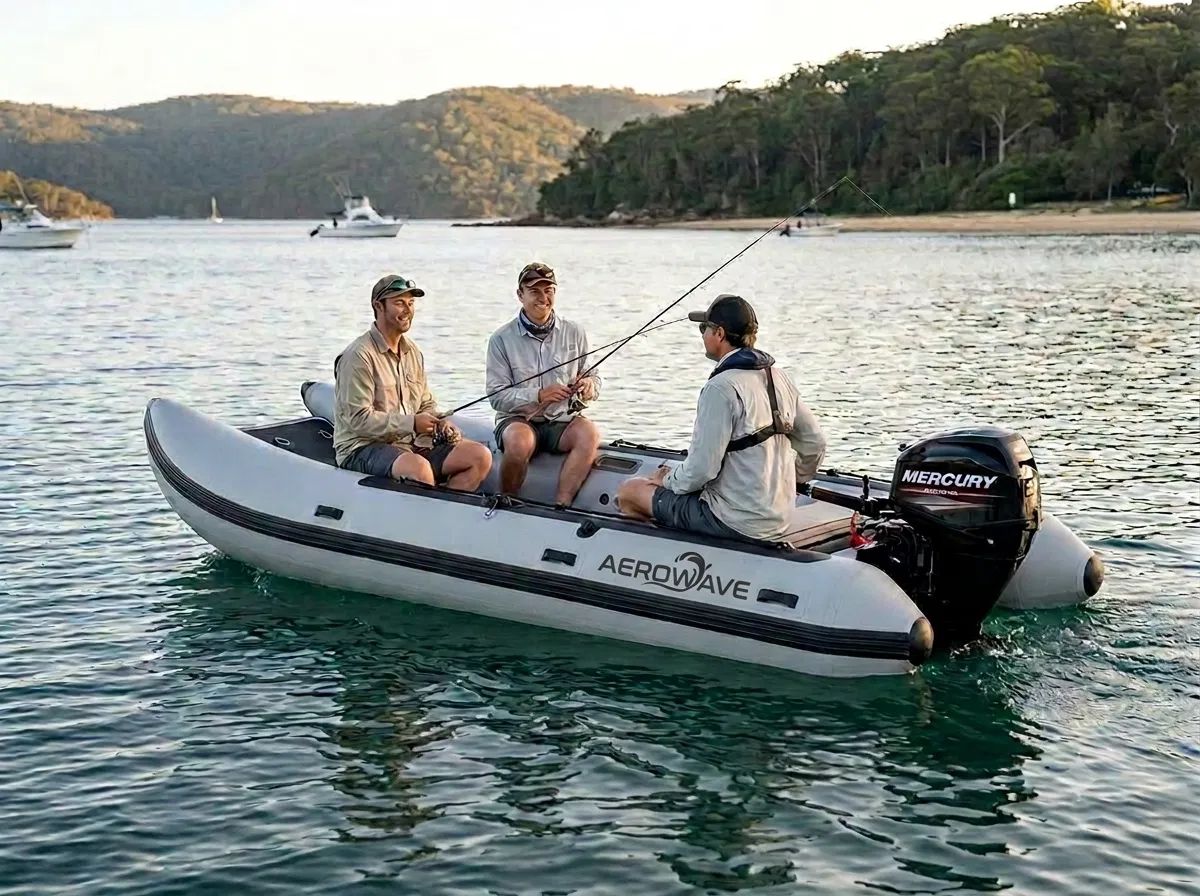
Aerowave Viper 400 Sovereign
US$4,701 USD · delivered to your door