Catamaran vs Monohull Inflatable: The Definitive Guide for Australian Estuaries
Which is best for Aussie estuaries: a stable twin-hull catamaran or a classic V-hull monohull? Discover the definitive pros and cons before you buy.
At a glance
Which is best for Aussie estuaries: a stable twin-hull catamaran or a classic V-hull monohull? Discover the definitive pros and cons before you buy.
- What Defines a Catamaran vs Monohull Inflatable?
- The Inflatable Catamaran: A Tunnel of Air
- The Classic Inflatable Monohull: The Deep-V Design
- Stability at Rest: The Unbeatable Edge of the Twin-Hull Design
What we'd put you in

Aerowave Viper 400 Sovereign
If you're reading about catamarans, this is the one we build most of.
US$3,167 USD
Delivered to your door, today's rate
- Free freight to United States · local taxes payable on arrival
- 7-year hull warranty
🇺🇸 Shipping to United States · landed price quoted in writing
Yes — we ship the Aerowave Viper 400 Sovereign to United States. Here's the landed price.
If you're reading about catamarans, this is the one we build most of.
Written for Australian readers — but the boat ships to you. We are an Australian builder and this article is written from Australian waters. That changes nothing about what you can order: the same hull, the same 7-year warranty and the same certification go out to United States every week.
Aerowave Viper 400 Sovereign
- Boat package (export price)
- US$3,726
- 15% tariff relief credit
- − US$559
- Express air freight to United States
- Included
- Import duty, taxes & customs clearance
- Payable on arrival
- Estimated landed, USD
- US$3,167
Indicative, converted at today's rate, before local duty and tax on arrival. Ask below and we'll put a fixed figure in writing, valid 30 days.
- 7-year hull warranty
- 1500 GSM / 1.2 mm VALMEX® Heavy Plus hull
- CE certified to ISO 6185-3 and EU Directive 2013/53/EU
- Door-to-door, tracked the whole way
Your price, delivered to your door — freight included.
We email the full PDF quote (spec, freight, finance, WavePay) to your inbox in under 60 seconds. No spam — one quote, one follow-up.
See it for yourself
Real boats. Real owners. Real people behind them.
Plenty of what you read online these days is generated. Check us out properly — the factory, the reviews and the owners are all one click away. Why we use AI, and how to check we’re real
How our boats are built
Walk the production line: thermo-welded seams, 1.2 mm VALMEX Heavy Plus hulls, over-pressure relief valves on every chamber.
See the buildGoogle Maps reviews
Real Australian owners, five stars, published on our Google Business Profile with the map — read them there, not just on our own site.
Open Google Maps reviewsOwner stories
Boats in use — offshore, on rivers, on rescue duty. Photos and words from the people who actually own them.
Read owner stories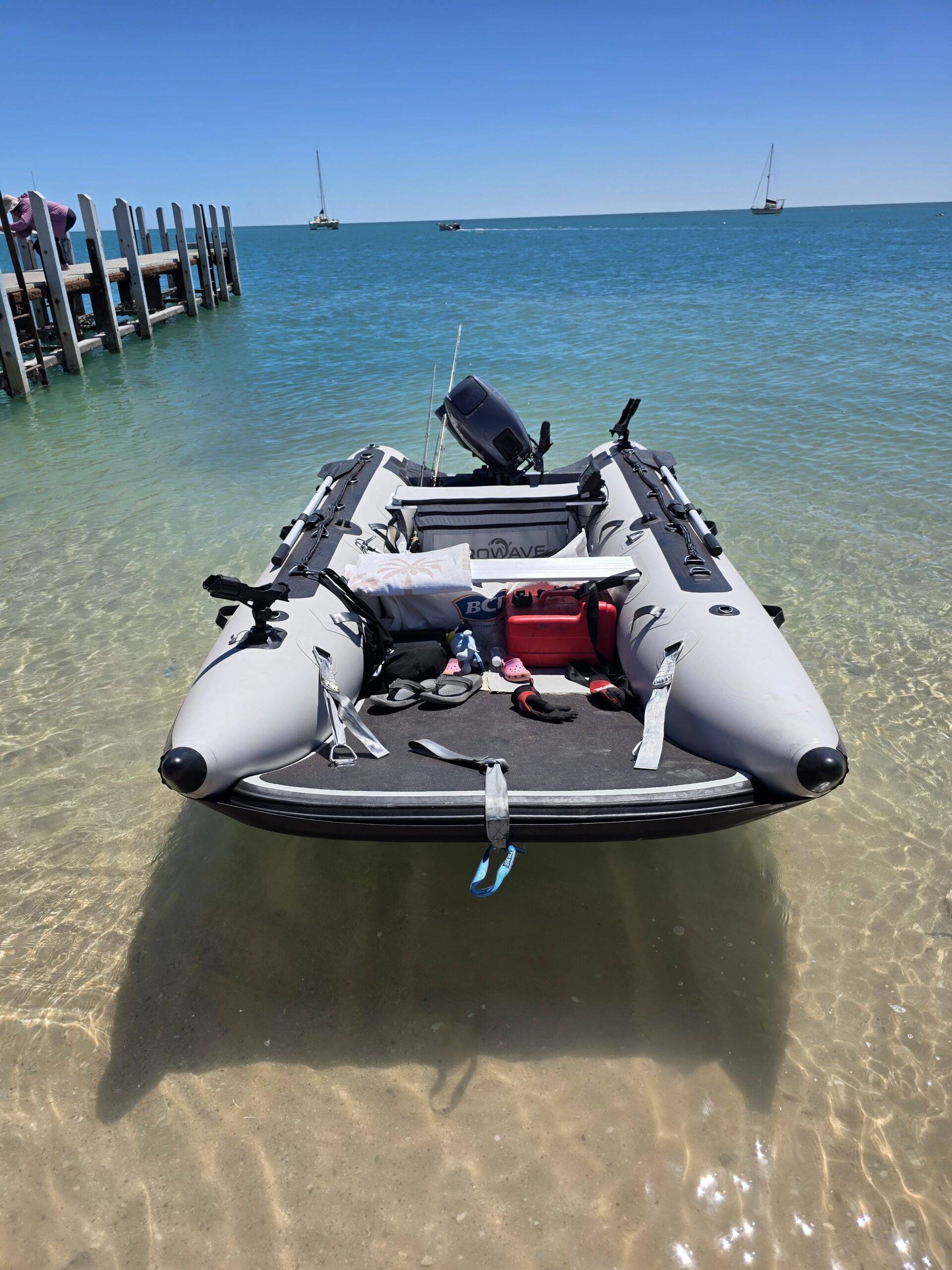
For estuary boating, the choice between a catamaran and a monohull isn't just preference—it's a fundamental decision about stability, efficiency, and the very nature of your day on the water.
Choosing the right inflatable boat for exploring Australia’s stunning network of estuaries, harbours, and inland waterways is a more nuanced decision than many first-time buyers realise. It’s not simply about length or payload. The core of the debate often boils down to one crucial question: catamaran vs monohull inflatable? This isn't just marine jargon; it's a fundamental difference in hydrodynamics that dictates how a boat behaves at rest, on the plane, and in varied conditions. Your answer will shape everything from the size of the outboard you need to how comfortable your family feels when you're casting a line for flathead.
On one side, you have the inflatable catamaran, a design that leverages two separate hulls (or sponsons) to create a remarkably stable and efficient platform. Think of our Aerowave Viper or AeroCat series. On the other, the traditional deep-V monohull, like our WaveRunner 380, offers a classic, wave-cutting ride and nimble handling. Both are superb options when constructed from high-quality materials, but they excel in different areas. For the unique demands of estuary boating—characterised by calm stretches, tidal currents, shallow sandbars, and the occasional bit of wind chop—understanding this distinction is paramount. This guide will unpack the physics, performance, and practicalities of both designs to help you make an informed choice for your Aussie adventures.
What Defines a Catamaran vs Monohull Inflatable?
At a glance, both are inflatable boats. They are portable, lightweight, and perfect for getting on the water without the hassle of a trailer or boat ramp. But beneath the surface, their design philosophies are worlds apart. Understanding this is the first step in the catamaran vs monohull inflatable decision-making process.
The Inflatable Catamaran: A Tunnel of Air
An inflatable catamaran’s defining feature is its twin-hull design. Two large, parallel inflatable tubes act as the boat's foundation, connected by a deck and a transom. The crucial element is the space between these hulls: the tunnel.
As the boat moves forward, this tunnel traps a cushion of air. This trapped air generates aerodynamic lift, which helps to raise the hull higher out of the water. This dramatically reduces the wetted surface area—the part of the boat in contact with the water—and, therefore, minimises hydrodynamic drag. The result? A boat that is incredibly efficient, requires less outboard power to get on the plane, and achieves higher speeds with less fuel.
This design also provides a wide, stable base. With its buoyancy distributed out to the far edges of the craft, an inflatable catamaran resists rolling and pitching to an extraordinary degree, making it a dream platform for activities that demand stability.
The Classic Inflatable Monohull: The Deep-V Design
A monohull inflatable boat, as the name suggests, has a single hull. In quality sport models like the WaveRunner 380, this takes the form of a 'deep-V'. The inflatable keel, when pressurised, forces the fabric floor into a V-shape that is deepest at the bow and flattens out towards the stern. This shape is a time-tested design for a reason.
The sharp entry of the V-bow is designed to slice through waves and chop rather than ride over them. This provides a softer ride in bumpy conditions and contributes to the boat's agile, responsive handling. When you turn a V-hull boat, it 'banks' or leans into the turn, much like a motorbike. It's a feeling many experienced boaters find intuitive and enjoyable.
While effective, this design inherently has more wetted surface area than a catamaran at planing speeds. It requires a bit more power to overcome the water's resistance, but in return, it offers a distinct handling character that many boaters love.
Stability at Rest: The Unbeatable Edge of the Twin-Hull Design
For anyone looking to fish, load gear, or have kids and pets aboard in the sheltered waters of an estuary, this is arguably the most critical point of comparison. Stability at rest (or primary stability) is where the inflatable catamaran truly distances itself from its monohull cousin.
A catamaran's stability comes from its wide footprint. Imagine standing with your feet wide apart – you are incredibly stable. Now imagine standing with your feet together – you can be tipped over far more easily. A V-hull monohull, by its very nature, has its centre of buoyancy closer to the centerline. While stable, a significant weight shift—like a person moving to one side to land a fish—will cause it to rock or list more noticeably.
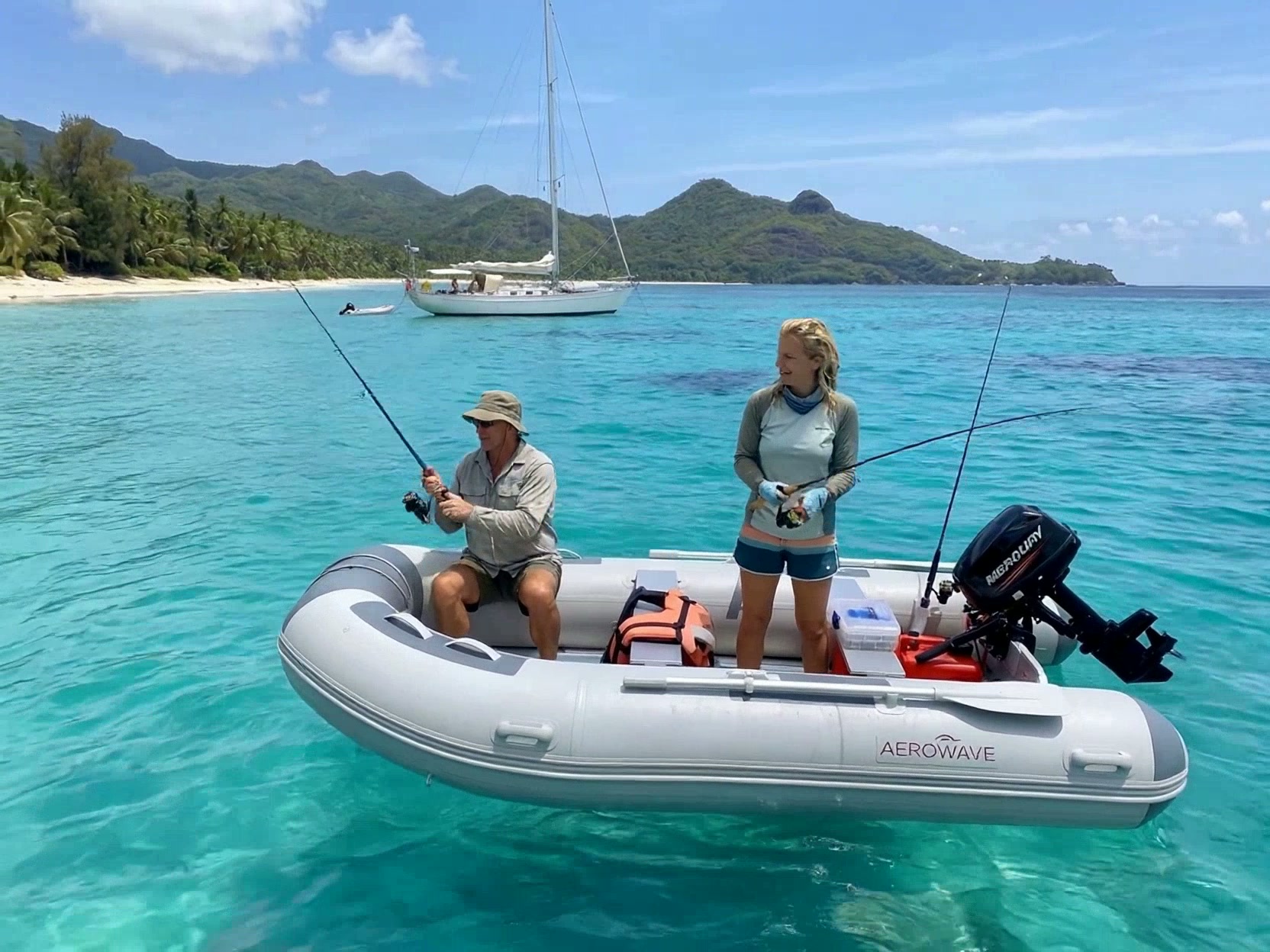
An inflatable catamaran, with its two hulls positioned at the outer edges of the boat, is like a raft. You can stand on the absolute edge of a tube on our Aerowave Viper, and the boat will barely react. This makes it an incredibly safe and comfortable platform. For anglers, it means you can stand and cast without constantly correcting your balance. For families, it means kids can move about without giving you a heart attack. For divers, it provides a solid platform for gearing up and re-entering the boat from the water. In the context of the catamaran vs monohull inflatable debate for estuary use, this single factor often makes the catamaran the clear winner for fishers and families.
Performance and Efficiency: How Hull Shape Affects Your Day
Once you’re moving, the differences between the two hull types become even more apparent. This isn't just about top speed; it's about how the boat gets on the plane, how it handles, and how much fuel you'll burn exploring that distant sandbank.
The Catamaran's Efficiency Secret
The air-cushion lift generated by a catamaran’s tunnel hull is the key to its remarkable efficiency. By reducing drag, the boat can achieve planing speed faster and with less throttle. This 'lower planing speed' is a massive advantage in estuaries where you might want to cruise comfortably without creating excessive wake or burning through fuel.
This efficiency has a direct impact on your outboard choice. An inflatable catamaran like the AeroCat 380 will perform brilliantly with a 9.9hp or 15hp Hidea 4-stroke outboard, where a comparable-sized monohull might feel sluggish without a 20hp. This means a lighter, more portable, and more fuel-efficient engine package. Over the life of the boat, the fuel savings are significant, and the ease of handling a smaller motor off the water is a daily convenience.
The Monohull's Nimble Ride
The deep-V monohull offers a different kind of performance. Its ability to 'bank' into turns creates a fun, sporty feel. It's incredibly responsive to steering inputs, making it feel agile and direct. That deep V at the bow is also excellent at cleaving through short, sharp chop that you might find in an exposed harbour or when a southerly blows up.
While a catamaran glides over the water, a monohull cuts through it. Neither is definitively 'better'—it's a different sensation. If you prioritise that classic, intuitive, corner-on-rails feeling above all else, the WaveRunner 380's monohull design delivers it in spades.
The Truth About the "Cat Sneeze"
Critics of catamarans sometimes mention the 'cat sneeze' – a phenomenon where water and air can be forced out of the front of the tunnel, creating a fine spray. It’s important to address this with honesty. Yes, it can happen, but almost exclusively when heading directly into short, steep wind chop at a specific speed—a condition not commonly found for prolonged periods in most estuary systems.
Modern inflatable catamaran designs, like those on our AeroCat and Viper models, incorporate features to minimise this. The height and shape of the tunnel are optimised to channel air and water cleanly aft. In the vast majority of boating conditions you'll encounter in Australia's beautiful estuaries and bays, it's a complete non-issue.
Head-to-Head Comparison: Catamaran vs Monohull Inflatable
Let's break down the key attributes in a simple table, comparing premium examples of each type, such as our AeroCat 380 catamaran and WaveRunner 380 monohull.
| Feature | Inflatable Catamaran (e.g., AeroCat 380) | Inflatable Monohull (e.g., WaveRunner 380) |
|---|---|---|
| Stability at Rest | Exceptional. A wide, ultra-stable platform perfect for fishing/family. | Good. Stable for an inflatable, but will rock more with weight shifts. |
| Efficiency | Very high. Lower drag means less HP needed and better fuel economy. | Standard. Requires more power to overcome wetted surface resistance. |
| Planing Speed | Achieves plane at lower speeds and with less throttle input. | Requires more speed and power to get onto the plane. |
| Handling | Flat turning, 'go-kart' like. Precise and stable through corners. | Banks into turns for a sporty, intuitive feel. Agile and responsive. |
| Ride in Chop | Smoothly glides over most chop. Can 'sneeze' in specific conditions. | Cuts through chop effectively thanks to the deep-V bow design. |
| Usable Deck Space | Massive. The floor extends to the full width between the tubes. | Good, but the V-shape of the hull can reduce flat, usable floor area. |
| Self-Draining | Excellent. Most have an open transom for instant, fail-safe draining. | Relies on a one-way bung or bailer, which can be slower or clog. |
| Best Use Case | Catamaran vs Monohull Inflatable: The clear winner for stable estuary fishing, family boating, and efficient cruising. | A superb all-rounder, especially for those who prioritise a sporty ride and classic handling in potentially choppy water. |
Practicalities for the Australian Boater
Beyond performance, the day-to-day use of your boat is what truly matters. How easy is it to use, how much gear can you fit, and how long will it last in the harsh Aussie sun?
Deck Space & Layout
Don't just look at the overall length and beam. Look at the usable internal space. Because a catamaran's floor is a flat rectangle stretched between two parallel tubes, it offers significantly more flat, unobstructed deck area than a monohull of the same length, where the internal space tapers towards the bow. This means more room for eskies, tackle boxes, and people.
Furthermore, the open transom design common on inflatable catamarans is a game-changer. Take a wave over the bow? The water flows straight out the back in seconds. There's no bailing required and no reliance on a small bung that can get clogged with sand or fishing line. It's the ultimate self-draining system.
Build Quality: The VALMEX® Imperative
This is the most important consideration of all, regardless of hull type. The Australian sun is brutal, and it will destroy a cheap inflatable boat in short order. Many budget imports are made from low-grade PVC with glued seams, which can have a realistic lifespan of just 3-5 years before the fabric becomes brittle and the seams fail.
This is why we exclusively use premium, German-made VALMEX® fabric. Our AeroCat series features a tough 0.9mm (1100 GSM) VALMEX®, while our flagship Aerowave Viper 400 Sovereign uses an incredibly robust 1.2mm (1500 GSM) VALMEX® Heavy Plus. This material is thermo-welded, not glued, creating seams that are stronger than the fabric itself. A boat built with this material has a realistic lifespan of 10-12 years, even with regular use in Australia. It's the difference between a long-term investment and a disposable toy. It's also why we can confidently offer a 7-year warranty on the Viper Sovereign Full Package and a 5-year warranty on the WaveRunner 380.
Portability & The High-Pressure Air Deck
Both our catamaran and monohull models are designed for portability. They can be deflated, rolled up, and transported in the back of a wagon or ute. Critically, they both feature a high-pressure drop-stitch air deck that inflates to a rock-solid 8-10 PSI. This technology creates a floor with the rigidity of timber floorboards but at a fraction of the weight and assembly time. It’s a standard feature you should insist on from any premium inflatable boat supplier.
Use Case Showdown: Which Hull is for You?
Let’s distil this down to a simple checklist. Be honest about your primary use case.
An Inflatable Catamaran (Viper/AeroCat) is likely your best choice if:
- Stability is your absolute #1 priority (for stand-up fishing, diving, or boating with children).
- You want maximum fuel efficiency and the ability to use a smaller, lighter outboard motor.
- The majority of your boating will be in estuaries, bays, lakes, and harbours.
- You value a huge, flat, completely self-draining deck space for gear and activities.
- You want the ultimate platform that represents the peak of modern inflatable boat design.
- Your research into the catamaran vs monohull inflatable question keeps leading you back to stability and space.
A Premium Monohull (WaveRunner 380) might be a better fit if:
- You love the thrilling, sporty feeling of a boat that banks into turns.
- You anticipate frequently encountering short, steep chop and prioritise a wave-slicing ride over platform stability.
- You prefer the security and familiarity of a more traditional, enclosed cockpit feeling.
- You need a high-performance tender for a larger yacht or cruiser.
Our Catamaran & Monohull Lineup
At Easy Inflatables, we offer premium options for both philosophies, all built to the highest standards with German VALMEX® fabric and welded seams.
- The AeroCat Series (3.3m, 3.6m, 3.8m): Starting from A$2,910 for the AeroCat 330, this range is the workhorse of Australian estuaries. It balances incredible stability, smart design, and fantastic value, all built from tough 0.9mm VALMEX®.
- The Aerowave Viper 400 Sovereign: At A$5,995 for the Full Package, this is our flagship. It's the most stable, robust, and feature-packed inflatable catamaran on the market, constructed from commercial-grade 1.2mm VALMEX® and backed by a 7-year warranty.
- The WaveRunner 380: For A$4,000, this is our answer for the monohull purist. It offers the classic deep-V ride and handling, but executed with premium materials and our exceptional 5-year warranty.
All our boats can be delivered to your door. We offer FREE Economy Sea Freight (30-40 days) or an express air option (7–14 days) for a A$600 customer contribution. If you're ready to discuss which model is perfect for you, give our expert team a call on +61 2 4335 1603 or send an email to sales@easyinflatables.com.au.
The Bottom Line
For the vast majority of boaters looking to explore Australia's rich and diverse estuary systems, the modern inflatable catamaran presents a compelling, and often superior, set of advantages. Its unparalleled stability, impressive efficiency, and vast, practical deck space make it an ideal platform for fishing, family fun, and exploration. The twin-hull design is no longer a niche concept; it is the logical evolution of the portable boat.
The premium deep-V monohull remains an excellent choice for those who specifically seek its dynamic, sporty handling characteristics. The most important takeaway, however, is to look past the hull shape and focus on the quality of construction. No matter which design you choose, insisting on thermo-welded German VALMEX® fabric is the only way to ensure your investment lasts for a decade of memories, not just a couple of seasons.
Related
Weekend-Proof Score 17 questions · about 2 minutes
Will the boat you're about to buy survive an Australian summer?
Seventeen straight questions about where you'll use it, what you'll ask of it and the boat you're weighing up. You get a score out of 100, the exact weak points in your plan, and the one boat that genuinely fits.
Free · your result shows on screen · no email required
So which one is yours?
Pick how you'll actually use it and we'll take you straight to the right hull.
I want to fish it
Open bow, rod holders, deck space you can stand and cast from.
Viper Sport 400Family, diving and the beach
3.8 m Series 3 catamaran — low bow to climb back in wearing fins or a tank.
WaveRunner 380Tender / one-person launch
3.3 m hard-floor boat that packs into a bag and still takes a beach landing.
Viper 330Shop gear featured in this guide
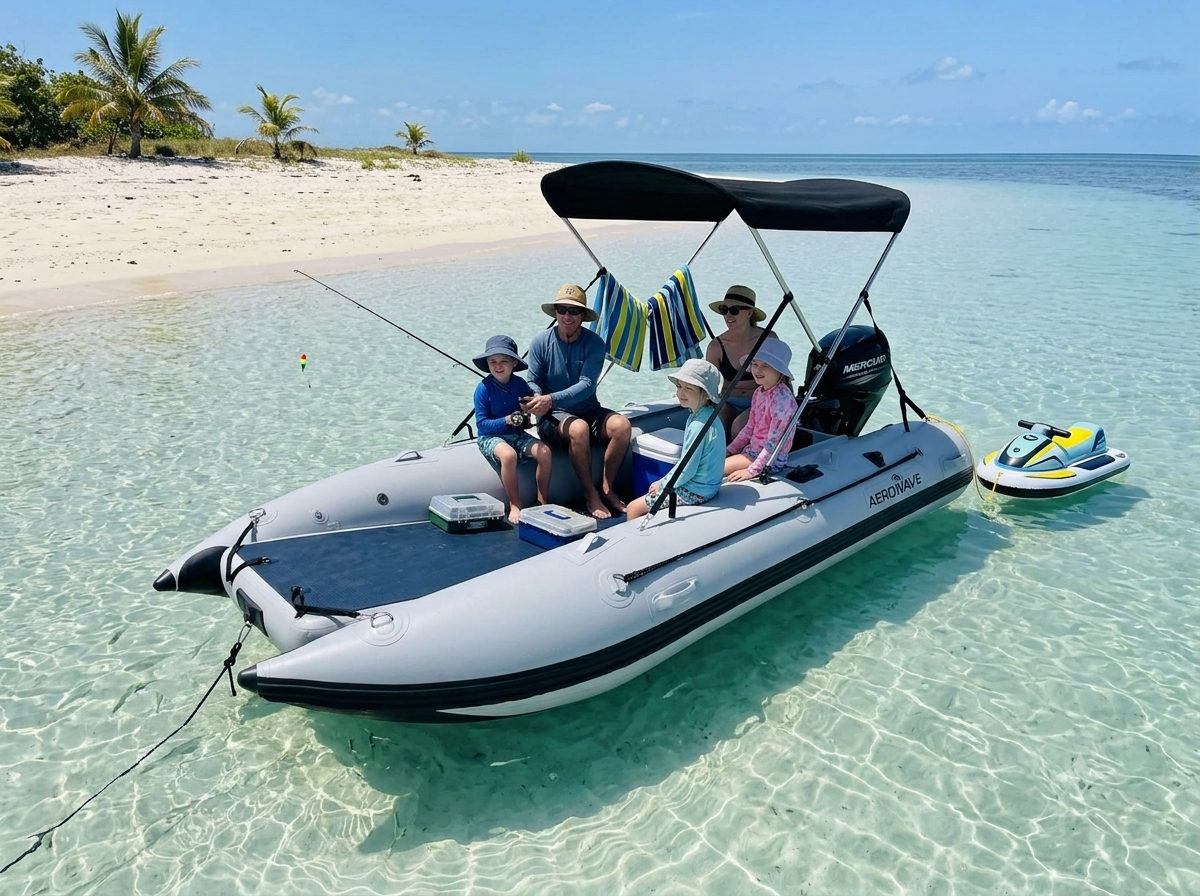
Aerowave WaveRunner 380 Series 3 Catamaran Package
The WaveRunner 380 Series 3 is a premium 3.8m inflatable catamaran package built for Australian and worldwide families, fishing, and coastal day boating — ideal for snorkeling and spearfishing — offering serious stability and premium German Valmex® construction.
Free freight to United States · local taxes payable on arrival
Aerowave Viper 400 Sovereign
Flagship 4m enclosed-bow inflatable catamaran. German VALMEX® 7321 Heavy Plus 1.2mm commercial-grade fabric, 10 PSI high-pressure drop-stitch air deck floor with VALMEX non-slip surface, LockPro wheels, full Bimini and FREE express delivery Australia-wide included. Winter special — save $1,000 until 31 August 2026.
Free freight to United States · local taxes payable on arrival
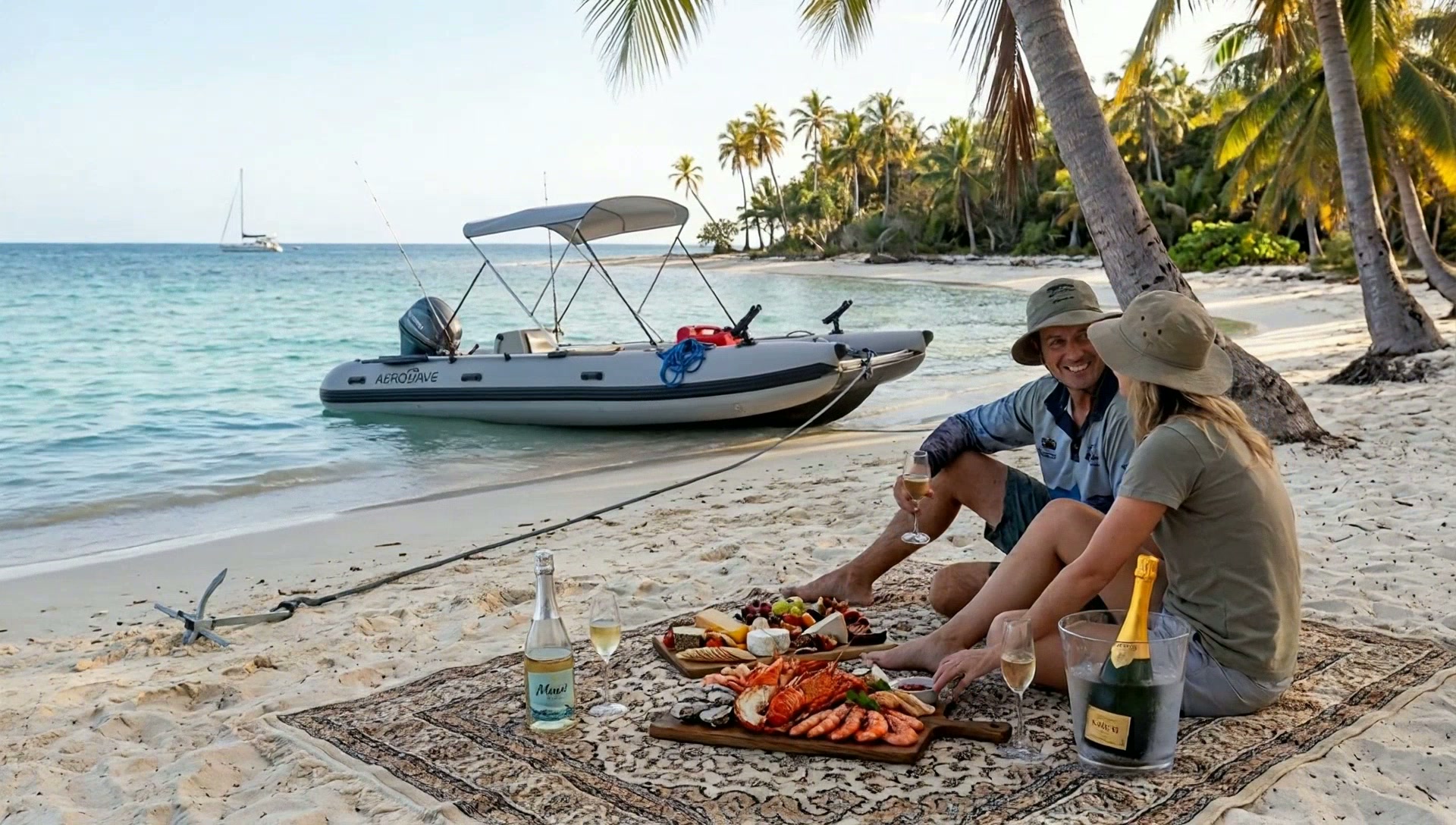
Aerowave Viper 365 Open Bow
Premium 3.65m Inflatable catamaran — built the same way as our flagship Viper 400 sports boat, just 35cm shorter. German VALMEX® 7321 Heavy Plus 1.2mm commercial-grade fabric, 10 PSI high-pressure drop-stitch air deck floor with VALMEX non-slip surface, LockPro wheels, full Bimini and FREE express delivery Australia-wide included.
Free freight to United States · local taxes payable on arrival
Not sure which suits you? Talk to a real boat owner.
Before you spend a cent
Buying from Australia, delivered to United States
You have never heard of us, we are on the other side of the world, and the internet is full of fakes. Fair enough. Here is everything you would need to check us out, in one place — no forms, no chat bot.
Australian designed business
Easy Inflatables, Avoca Beach NSW 2251. ABN 96 856 548 613. International orders ship from our Hong Kong hub.
222 owner reviews, 4.8 average
Read them in full, good and bad, on our reviews page.
CE certified, 7-year hull warranty
ISO 6185-3 and EU Directive 2013/53/EU. Warranty honoured worldwide.
Tracked, insured, door to door
FREE freight to United States · local tax/duty on arrival.
- Who am I actually buying from?
- Easy Inflatables, Avoca Beach NSW 2251, Australia. ABN 96 856 548 613. Sean is the owner and skipper, Gary Stewart handles sales on +61 2 4335 1603, Karen Matthews handles email. The boats are Australian designed; international orders ship from our Hong Kong dispatch hub so your landed price stays competitive. Phone us before you pay a cent — a real person answers.
- Is this really an Australian product?
- Yes — Australian designed and engineered on the NSW Central Coast. Manufacturing is done offshore to our spec, and international orders ship direct from our Hong Kong dispatch hub. If we routed every boat through Australia first, the freight alone would roughly double or triple your cost for the same hull.
- What do I pay, and what is not included?
- The delivery and import terms depend on your country. EU, UK, New Zealand and named Asia/Pacific lanes include duty and tax; US freight is free but US buyers pay import charges on arrival. Other destinations show their terms before payment.
- How do I pay safely?
- Card through Stripe (Visa, Mastercard, Amex, Apple Pay, Google Pay) or bank transfer. Card payments carry your bank's own dispute protection. We never ask for crypto, gift cards or payment to a personal account.
- What if it arrives damaged?
- Every boat ships fully tracked and insured door to door. Photograph the carton and the boat on arrival and email us — transit damage is claimed and replaced through us, not left with you and the courier.
- Is the warranty real outside Australia?
- Yes. The 7-year hull warranty on 1.2 mm VALMEX Heavy Plus and Orca Hypalon hulls applies wherever you are. Replacement parts are held in Australia and at our overseas hub and go out by express courier to your door.
- Is the boat actually certified?
- All Aerowave catamarans are CE certified to ISO 6185-3 and EU Directive 2013/53/EU. Certification paperwork is supplied with the boat — ask and we will send it before you order.
Frequently asked questions
- Is an inflatable catamaran less portable than a monohull?
- No, not at all. Both types are designed to be deflated, rolled up, and transported in a vehicle. The weight and packed dimensions for a catamaran and a monohull of similar length are comparable, especially with modern high-pressure air floors.
- Do inflatable catamarans need a special or bigger engine?
- Quite the opposite. Due to their hydrodynamic efficiency, inflatable catamarans typically require a smaller, lighter outboard to achieve the same performance as a monohull. This saves you money on the engine, on fuel, and makes handling the motor easier.
- What is the 'cat sneeze' and should I be worried about it?
- The 'cat sneeze' is spray that can come up through the hull tunnel in specific choppy conditions. While it can happen, it's often exaggerated and modern designs like our AeroCat and Viper minimise it. In typical estuary conditions, it's rarely an issue.
- Which is safer for a family with small children?
- For family use, the superior stability of an inflatable catamaran is a significant safety advantage. The platform is far more resistant to rocking when people move around, creating a more secure and predictable environment for children on board.
- Is the open transom on a catamaran a disadvantage?
- No, it's a major advantage. An open transom provides instant and complete self-draining, meaning any water from a wave or spray immediately flows out the back. This is faster and more reliable than a traditional bung system.
- How does the ride compare in choppy water?
- A catamaran tends to glide over chop, offering a smooth ride. A deep-V monohull will cut through the chop, which can also be comfortable. The 'better' ride is subjective, but the catamaran's stability is constant regardless of conditions.
- Why is VALMEX® fabric so important?
- German-made VALMEX® is a premium PVC material that is highly resistant to UV damage, abrasion, and chemicals. Unlike cheaper PVC used on budget imports, it has a lifespan of 10-12 years in Australian conditions, ensuring your boat is a long-term investment.
- Can I put a boat tent on both types?
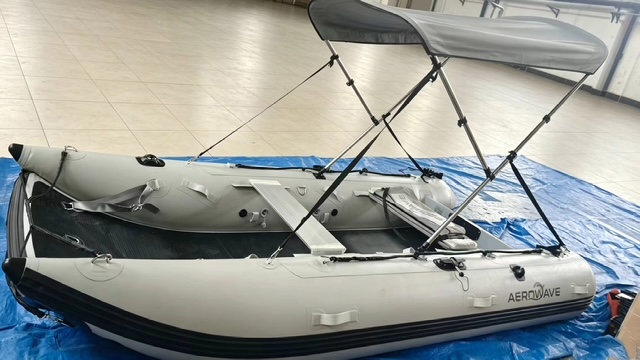
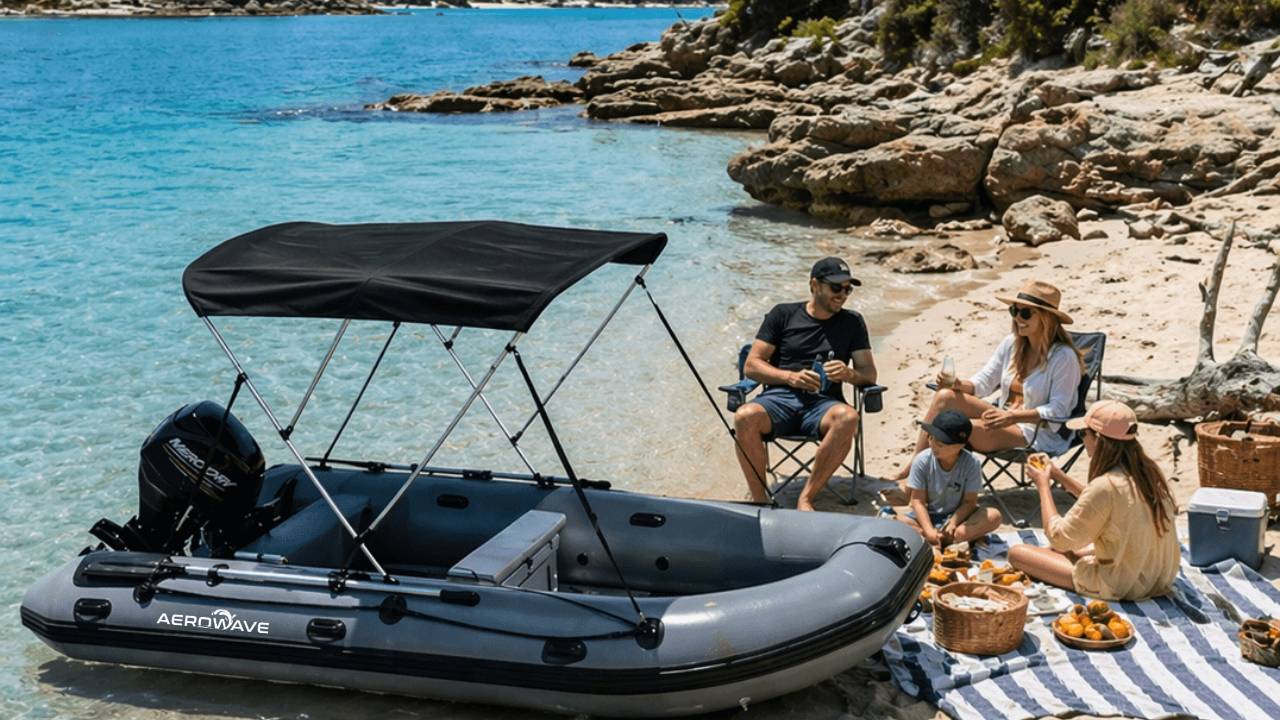
- Yes! The wide, stable platform of an inflatable catamaran is actually an ideal base for an accessory like our Air Tent (A$890). This creates a brilliant on-water shelter for overnight trips or protection from the sun.
Ready to set sail?
Premium German-fabric inflatable catamarans, built to order and delivered to your door. Talk to our team or browse the fleet.
Like this guide? Get the next one in your inbox.
Owner-tested tips, gear deep-dives and Aussie boating know-how — no spam.