How Fast Does an Inflatable Catamaran Go? Real Speeds by Motor
Wondering how fast an inflatable catamaran can go? We break down real-world speeds by motor size, load, and conditions. Discover the science of planing and find the perfect power for your boat.
At a glance
Wondering how fast an inflatable catamaran can go? We break down real-world speeds by motor size, load, and conditions. Discover the science of planing and find the perfect power for your boat.
- What Makes an Inflatable Catamaran So Efficient? The Science of Early Planing
- How Fast Does an Inflatable Catamaran Go? Real-World Speeds by Motor Size
- The Real-World Variables: What Slows an Inflatable Boat Down?
- 1. Weight and its Distribution
What we'd put you in
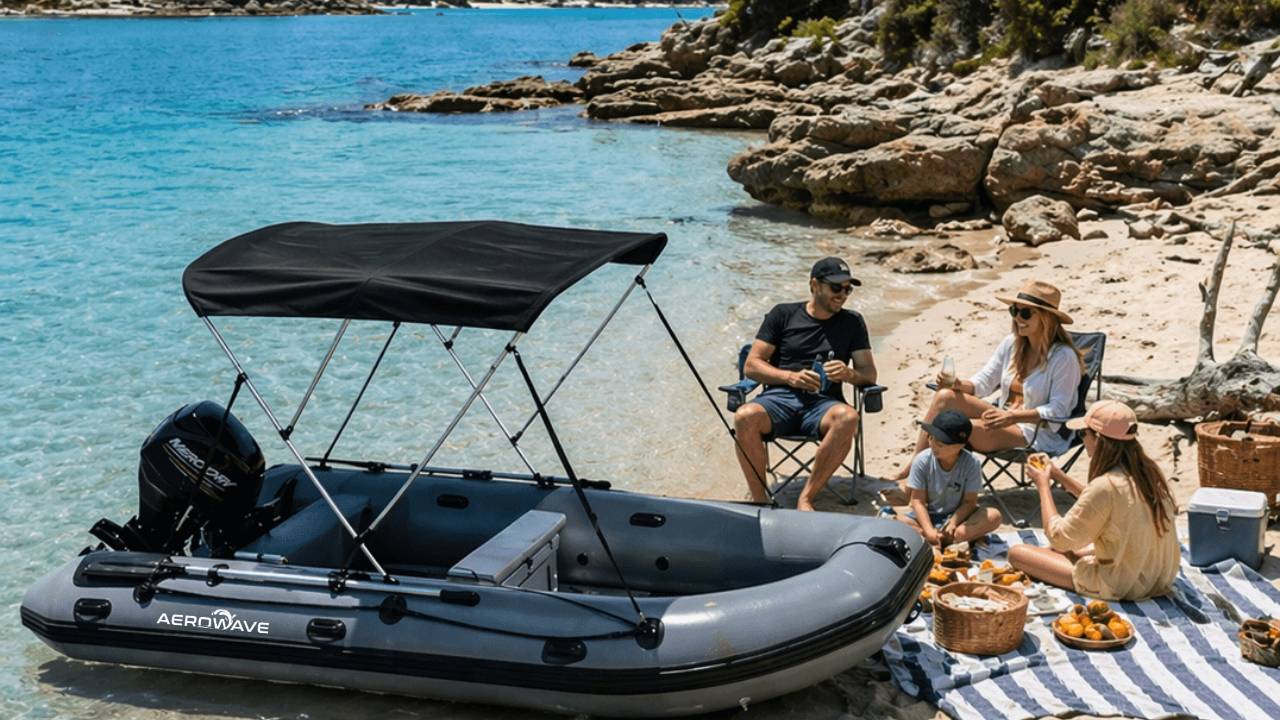
Aerowave Viper 400 Sovereign
If you're reading about catamarans, this is the one we build most of.
US$3,279 USD
Delivered to your door, today's rate
- Free freight to United States · local taxes payable on arrival
- 7-year hull warranty
🇺🇸 Shipping to United States · landed price quoted in writing
Yes — we ship the Aerowave Viper 400 Sovereign to United States. Here's the landed price.
If you're reading about catamarans, this is the one we build most of.
Aerowave Viper 400 Sovereign
- Boat package (export price)
- US$3,858
- 15% tariff relief credit
- − US$579
- Express air freight to United States
- Included
- Import duty, taxes & customs clearance
- Payable on arrival
- Estimated landed, USD
- US$3,279
Indicative, converted at today's rate, before local duty and tax on arrival. Ask below and we'll put a fixed figure in writing, valid 30 days.
- 7-year hull warranty
- 1500 GSM / 1.2 mm VALMEX® Heavy Plus hull
- CE certified to ISO 6185-3 and EU Directive 2013/53/EU
- Door-to-door, tracked the whole way
Your price, delivered to your door — freight included.
We email the full PDF quote (spec, freight, finance, WavePay) to your inbox in under 60 seconds. No spam — one quote, one follow-up.
See it for yourself
Real boats. Real owners. Real people behind them.
Plenty of what you read online these days is generated. Check us out properly — the factory, the reviews and the owners are all one click away. Why we use AI, and how to check we’re real
How our boats are built
Walk the production line: thermo-welded seams, 1.2 mm VALMEX Heavy Plus hulls, over-pressure relief valves on every chamber.
See the buildGoogle Maps reviews
Real Australian owners, five stars, published on our Google Business Profile with the map — read them there, not just on our own site.
Open Google Maps reviewsOwner stories
Boats in use — offshore, on rivers, on rescue duty. Photos and words from the people who actually own them.
Read owner stories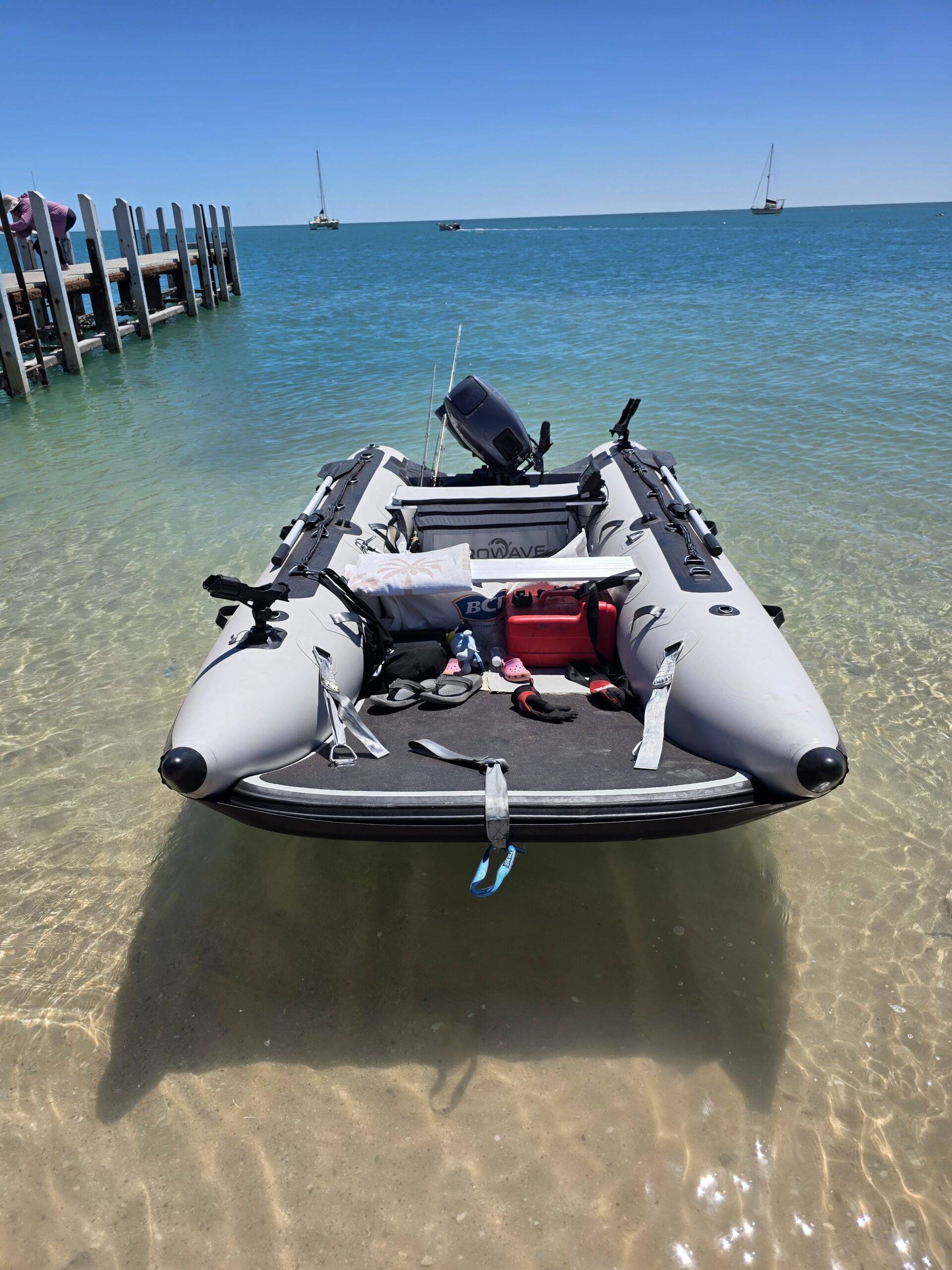
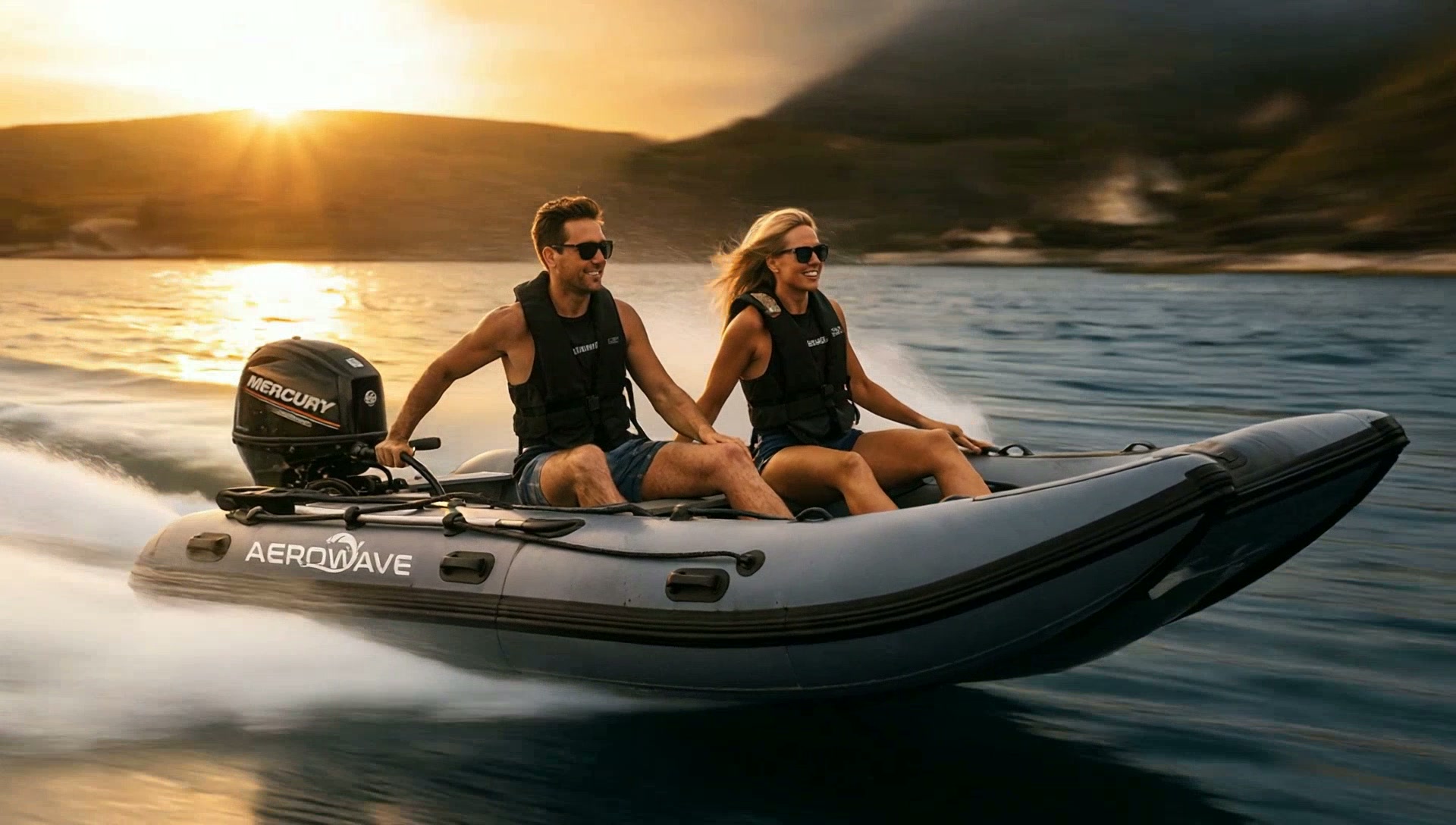
Speed on the water isn't just a number on a dial; it's about efficiency, safety, and the thrill of getting on plane with less effort.
It's the first question on every prospective boat owner's lips: "How fast does it go?" Whether you're planning to cross a choppy bay to a secret fishing spot or just want to feel the wind in your hair, speed matters. But for an inflatable catamaran, the answer is far more interesting than a single number. It's a story of advanced hydrodynamics, clever design, and finding the perfect balance between power, weight, and purpose.
Unlike traditional monohulls that have to brute-force their way onto the plane, inflatable catamarans are designed for effortless efficiency. They represent a smarter way of moving across the water. This article is your definitive guide to understanding inflatable catamaran speeds. We'll ditch the marketing hype and give you honest, real-world speed ranges based on motor size, load, and the crucial factors that can either unleash your boat's full potential or hold it back.
At Easy Inflatables, we live and breathe this stuff. We specialise in premium German-made VALMEX® inflatable catamarans like our AeroCat and Viper series, pairing them with reliable Hidea 4-stroke outboards. We've seen firsthand how these remarkable boats perform, and we want to share that knowledge so you can make a truly informed decision.
What Makes an Inflatable Catamaran So Efficient? The Science of Early Planing
To understand how fast an inflatable catamaran can go, you first need to appreciate why it goes fast. The secret lies in its twin-hull design and the way it interacts with the water. It’s a fundamentally different, and frankly superior, approach compared to most other inflatable boats on the market.
Traditional inflatable monohulls, whether they have a V-shaped keel or a flat bottom, have a large wetted surface area. When stationary, this provides stability. But as you apply power, the boat has to push a huge amount of water out of the way to lift itself up and onto the plane. This process, often called 'climbing out of the hole' or getting 'over the hump', requires a significant amount of power and fuel.
An inflatable catamaran cheats this system. Here’s how:
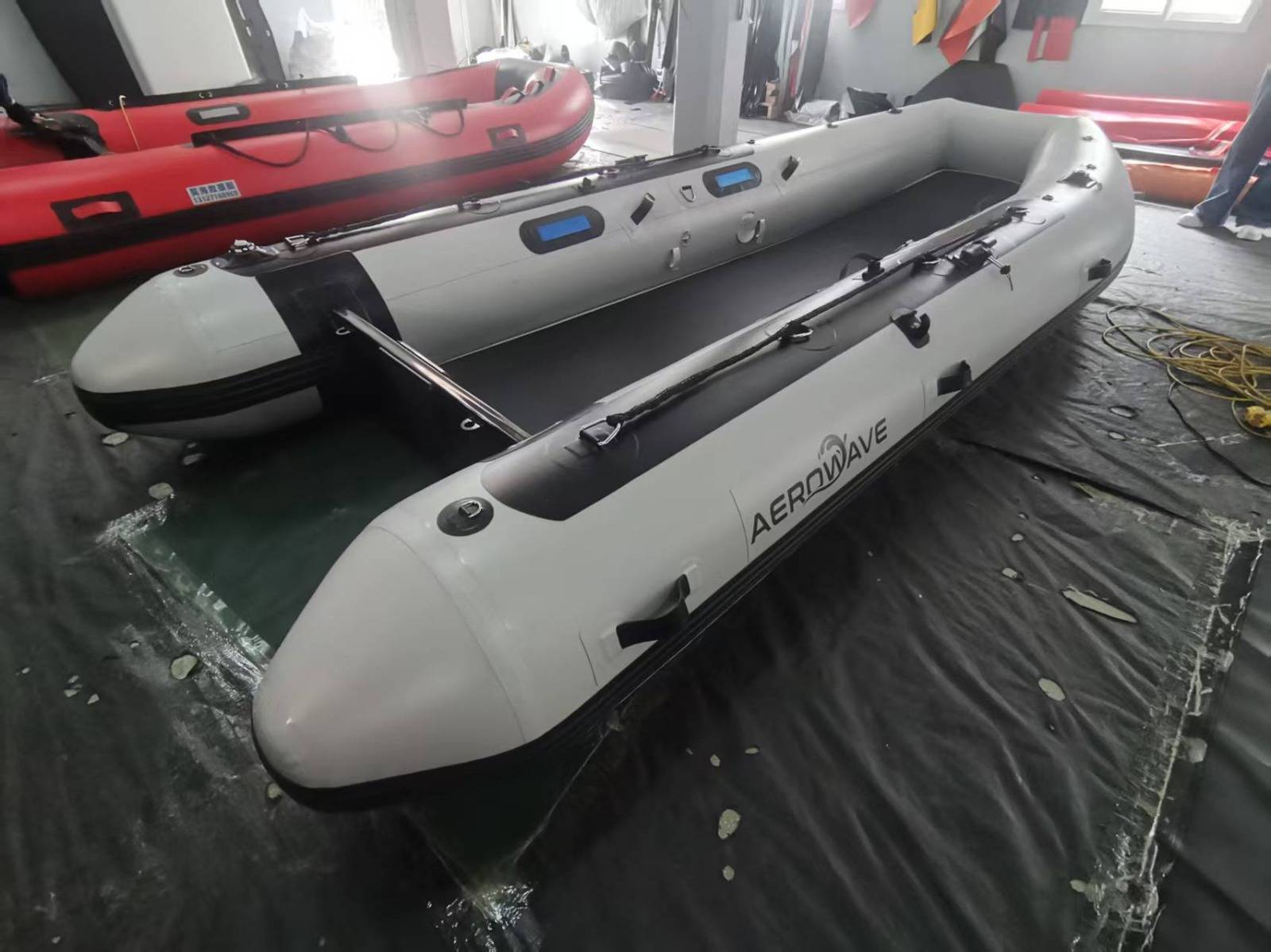
- Twin Hulls: Instead of one wide hull, a catamaran has two long, narrow hulls (sponsons). These slice through the water like knives, creating far less drag and water resistance.
- Reduced Wetted Surface: As the boat gains a little speed, it rises up to run on these two narrow points of contact. The wetted surface area—the part of the boat physically touching the water—is dramatically reduced compared to a monohull of the same size. Less contact means less friction, which means more speed from less power.
- The Air Tunnel: The space between the two hulls creates a tunnel. As the boat moves forward, air is forced into this tunnel, creating a high-pressure cushion. This cushion provides additional lift, helping to raise the central part of the boat clear of the water. In essence, the boat is partially riding on a bubble of air, further reducing drag and softening the ride in chop.
The result is a boat that gets on plane earlier, with a smaller motor, and with less bow rise than a conventional inflatable. You use less fuel to achieve planing speed, and you can maintain it at lower RPMs. This efficiency is the core of the inflatable catamaran's performance advantage.
How Fast Does an Inflatable Catamaran Go? Real-World Speeds by Motor Size
This is the heart of the matter. While the exact top speed will always depend on the specific boat model, load, and conditions, we can provide reliable ranges based on thousands of hours of on-water experience. The following table breaks down typical performance for a quality inflatable catamaran (from 3.3 to 4.5 metres) built from high-tensile fabric like our VALMEX® models.
| Motor HP | Typical Load (1 Person, Light Gear) | Heavy Load (3 People, Esky, Gear) | Notes & Suitable Boats |
|---|---|---|---|
| 5 - 8 HP | 15 - 20 km/h | 8 - 12 km/h (Displacement Speed) | Excellent for tenders, solo fishing in calm water. Will plane with one person but struggles with a heavy load. A great choice for the Aerowave Swift Tender 290. |
| 9.9 - 15 HP | 25 - 35 km/h | 20 - 28 km/h (Planing) | The all-round sweet spot. Easily planes with two adults and gear. A 15HP on a 3.8m cat is a classic, versatile combination. Perfect for our AeroCat 380 or the Aerowave WaveRunner 380 + Hidea 15HP Package (A$8,189). |
| 20 - 25 HP | 38 - 45 km/h+ | 30 - 38 km/h (Strong Planing) | Serious performance for speed lovers and those carrying family-sized loads. Delivers thrilling acceleration and high top speeds. The ideal power for our Viper 400 or 430 models. Consider the Aerowave Viper 400 Open Bow + Hidea 20HP Package (A$9,385). |
| 30 HP | 45 - 55 km/h+ | 35 - 45 km/h (Effortless Planing) | Maximum rated power for larger models (4.3m+). Unnecessary for smaller boats but provides exhilarating performance and the ability to handle heavy loads without breaking a sweat. Suited to the Aerowave Viper 450. Knowing how fast an inflatable catamaran can be is just one part of the equation. |
Disclaimer: These speeds are estimates for guidance only. Your results will vary based on the factors discussed below.
The Real-World Variables: What Slows an Inflatable Boat Down?
Achieving the speeds listed above requires an optimised setup. Many new boat owners are disappointed with their initial performance, not realising that several small factors can combine to rob their boat of significant speed. Here’s what to look out for.
1. Weight and its Distribution
Weight is the arch-nemesis of speed. Every extra kilogram—be it passengers, a heavy esky, fishing tackle, or a full fuel tank—requires more power to push. But it's not just the amount of weight, it's where you put it.
- Too much weight aft (in the stern): This is the most common mistake. With the skipper, fuel tank, and a heavy esky all at the back, the boat will squat. The bow points to the sky, and the engine has to work incredibly hard to try and lift the hull onto the plane. The boat will feel sluggish and burn excessive fuel.
- Too much weight forward (in the bow): This causes the bow to 'plough' through the water, pushing it rather than lifting over it. The boat will feel unresponsive and 'wet', with spray coming over the front.
The Solution: Aim for balanced weight distribution. On a solo trip, place your fuel tank and gear forward of the boat's centreline to counteract your own weight at the transom. With passengers, have them sit forward to help the bow come down and get on plane quickly. Once planing, they can move back for a more comfortable ride.
2. Hull Pressure and Condition
An inflatable boat is only as good as its structure. A premium inflatable catamaran made from German VALMEX® fabric is designed to be incredibly rigid when inflated correctly.
- Under-inflation: This is the silent killer of performance. If your main tubes are soft (rated for 3.6 PSI) or your high-pressure air deck is spongy (rated for 8-10 PSI), the boat will flex. As it moves through the water, it will 'caterpillar' or ripple, creating immense drag. A soft floor feels like running on sand—all your power gets absorbed by the flexing surface. Always use a pressure gauge to inflate to the manufacturer's recommended PSI.
- Hull Fouling: A smooth, clean hull is a fast hull. Over time, a boat left in the water will accumulate marine growth—algae, slime, and eventually barnacles. This growth creates friction, acting like sandpaper on your hull and can easily strip 5-10 km/h or more from your top speed.
3. Engine Trim and Propeller
Your outboard's setup is critical. Most small-to-mid-size outboards have a manual trim setting, usually a pin with 4-5 different holes on the mounting bracket.
- Trimmed too far in (Negative Trim): The propeller is angled towards the boat. This forces the stern up and the bow down. It's useful for getting out of the hole quickly with a heavy load, but once at speed, it will cause the boat to plough, reducing speed.
- Trimmed too far out (Positive Trim): The propeller is angled away from the boat. This lifts the bow. A little positive trim is needed for optimal top speed, allowing the hull to run freely. However, too much will cause the bow to bounce uncontrollably (known as 'porpoising') or the propeller to lose its grip on the water and over-rev ('ventilating').
Finding the right trim angle is a process of trial and error for your specific load, but it usually lies in the second or third hole from the transom.
4. Water and Weather Conditions
This one is obvious but often underestimated. A boat's speed on a glassy calm river at slack tide will be vastly different from its speed heading into a 15-knot wind and a 1-metre chop in open water. Headwinds, tailwinds, currents, and tides can add or subtract several kilometres per hour from your speed over ground.
How Much Horsepower Do I Really Need?
Chasing the highest possible top speed isn't always the smartest goal. A bigger engine costs more, weighs more, and uses more fuel. The right question is, "What's the right amount of power for my boating?" Let's break it down by use case.
-
You are a solo angler exploring calm estuaries and rivers. A 6-9.9HP outboard is your best friend. It's lightweight, incredibly fuel-efficient, and quiet. It will pop a 3.3m-3.8m catamaran onto the plane with just you and your fishing gear, providing more than enough speed to move between spots. Our AeroCat 335 paired with a small Hidea 4-stroke is a stealthy fishing weapon.
-
You are a couple wanting to explore coastlines and visit secluded beaches. A 15HP outboard is the undisputed champion of versatility. It provides the power to comfortably plane with two adults, a full esky, and beach gear. It's the perfect balance of performance, weight, and fuel economy. It's why our Aerowave WaveRunner 380 + Hidea 15HP Package is one of our most popular combinations.
-
You are a family of 3 or 4 needing to carry people and gear for a full day out. A 20HP or 25HP motor is the ideal choice. This gives you the grunt to get on plane reliably even when fully loaded. You won't have to ask people to shift their weight around; you'll just have the power on tap. This is the perfect range for our larger Viper models, like the Aerowave Viper 400 Open Bow, ensuring safe and exhilarating family fun.
Does Boat Material Affect Speed? VALMEX® vs. Budget PVC
Absolutely. The quality and type of fabric your inflatable boat is made from has a direct impact on its performance. It's not just about how long the boat will last; it's about how it behaves on the water.
Our Aerowave boats are constructed from premium, high-tensile VALMEX® fabric, made in Germany. The AeroCat and WaveRunner series use a robust 1100 GSM / 0.9 mm material, while our flagship Viper series uses an incredibly tough 1500 GSM / 1.2 mm VALMEX Heavy Plus. This material is dimensionally stable, meaning it doesn't stretch or warp under pressure and load.
When you inflate an Aerowave boat to the correct pressure, the hulls become drum-tight and extremely rigid. This rigidity is what allows the boat to slice cleanly through the water and transfer the engine's power into forward motion efficiently.
In contrast, many budget imports use a lower-grade, generic PVC. This fabric can stretch and flex, even when fully inflated. When you apply power, the hull can deform and 'caterpillar' through the water. This constant flexing creates drag and turbulence, sapping the engine's power and robbing you of speed and fuel efficiency. You can have the best outboard in the world, but if it's attached to a spongy, flexible hull, you'll never achieve the boat's true performance potential. Investing in a quality build with premium fabric isn't just for the 10-12 year lifespan; it's for better performance every single time you go out.
The Bottom Line
An inflatable catamaran's speed is a function of its brilliant design, the power you choose, and the care you take in setting it up. They are inherently faster and more efficient than their monohull counterparts, allowing you to get on plane with less power and use less fuel. For most users of 3.8m-4.0m boats, a 15-20HP motor offers the ultimate blend of performance, economy, and practicality.
Remember that chasing a single top speed number is less important than having a boat that performs well for your specific needs—whether that's carrying a family, fishing solo, or exploring distant shores. By understanding the factors of weight, pressure, and trim, you can unlock the full, thrilling potential of your inflatable catamaran.
Our boats are custom-built to order, a process that takes about three weeks, with delivery in Australia included. If you're ready to experience the incredible performance of a premium inflatable catamaran, or just want to chat about the perfect boat and motor combination for you, give us a call. We're here to help.
Contact us at sales@easyinflatables.com.au or phone +61 2 4335 1603.
Related
Weekend-Proof Score 17 questions · about 2 minutes
Will the boat you're about to buy survive an Australian summer?
Seventeen straight questions about where you'll use it, what you'll ask of it and the boat you're weighing up. You get a score out of 100, the exact weak points in your plan, and the one boat that genuinely fits.
Free · your result shows on screen · no email required
So which one is yours?
Pick how you'll actually use it and we'll take you straight to the right hull.
I want to fish it
Open bow, rod holders, deck space you can stand and cast from.
Viper Sport 400Family, diving and the beach
3.8 m Series 3 catamaran — low bow to climb back in wearing fins or a tank.
WaveRunner 380Tender / one-person launch
3.3 m hard-floor boat that packs into a bag and still takes a beach landing.
Viper 330Shop gear featured in this guide
Aerowave WaveRunner 380 Series 3 Catamaran Package
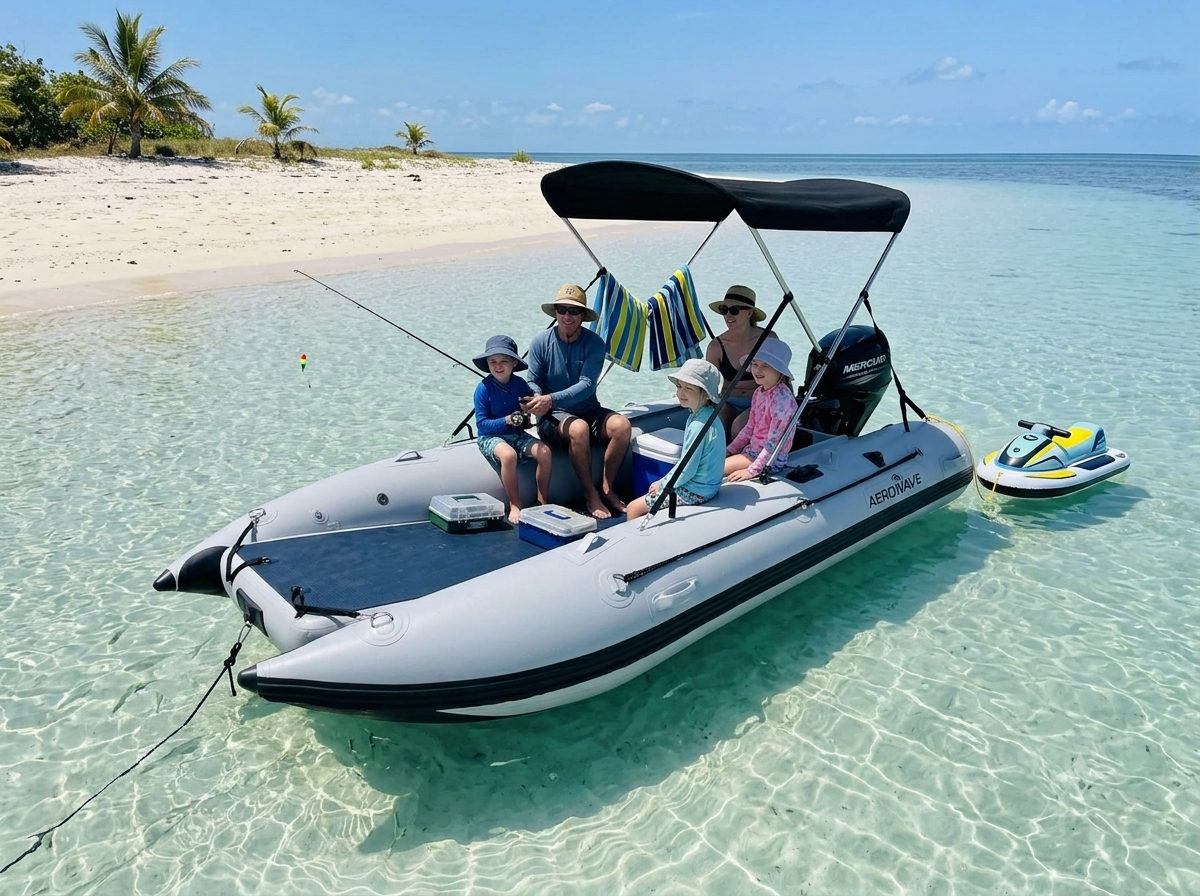
The WaveRunner 380 Series 3 is a premium 3.8m inflatable catamaran package built for Australian and worldwide families, fishing, and coastal day boating — ideal for snorkeling and spearfishing — offering serious stability and premium German Valmex® construction.
Free freight to United States · local taxes payable on arrival
Aerowave Viper 400 Sovereign
Flagship 4m enclosed-bow inflatable catamaran. German VALMEX® 7321 Heavy Plus 1.2mm commercial-grade fabric, 10 PSI high-pressure drop-stitch air deck floor with VALMEX non-slip surface, LockPro wheels, full Bimini and FREE express delivery Australia-wide included. Winter special — save $1,000 until 31 August 2026.
Free freight to United States · local taxes payable on arrival
Aerowave Viper 365 Open Bow
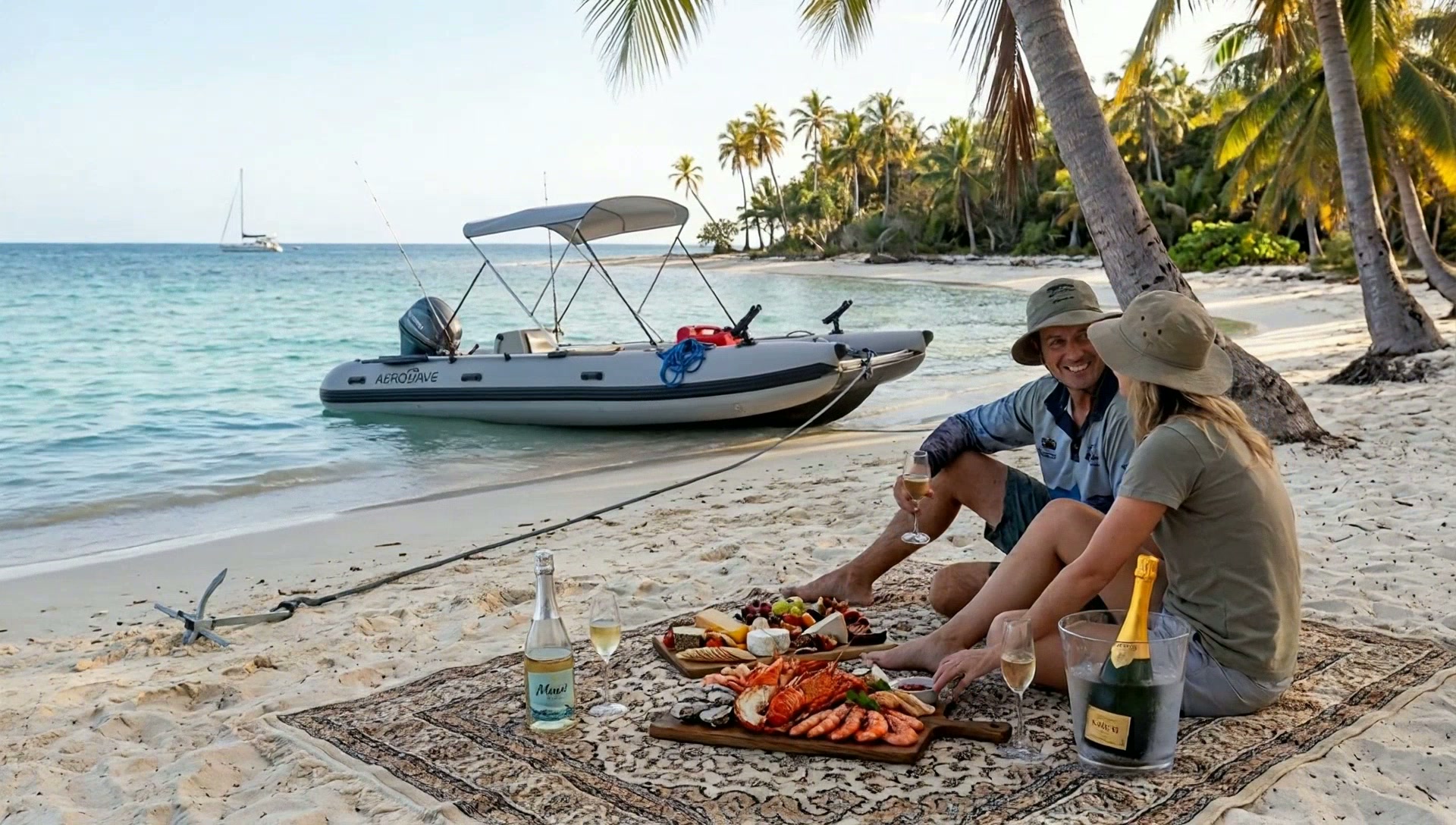
Premium 3.65m Inflatable catamaran — built the same way as our flagship Viper 400 sports boat, just 35cm shorter. German VALMEX® 7321 Heavy Plus 1.2mm commercial-grade fabric, 10 PSI high-pressure drop-stitch air deck floor with VALMEX non-slip surface, LockPro wheels, full Bimini and FREE express delivery Australia-wide included.
Free freight to United States · local taxes payable on arrival
Not sure which suits you? Talk to a real boat owner.
Before you spend a cent
Buying from Australia, delivered to United States
You have never heard of us, we are on the other side of the world, and the internet is full of fakes. Fair enough. Here is everything you would need to check us out, in one place — no forms, no chat bot.
Australian designed business
Easy Inflatables, Avoca Beach NSW 2251. ABN 96 856 548 613. International orders ship from our Hong Kong hub.
222 owner reviews, 4.8 average
Read them in full, good and bad, on our reviews page.
CE certified, 7-year hull warranty
ISO 6185-3 and EU Directive 2013/53/EU. Warranty honoured worldwide.
Tracked, insured, door to door
FREE freight to United States · local tax/duty on arrival.
- Who am I actually buying from?
- Easy Inflatables, Avoca Beach NSW 2251, Australia. ABN 96 856 548 613. Sean is the owner and skipper, Gary Stewart handles sales on +61 2 4335 1603, Karen Matthews handles email. The boats are Australian designed; international orders ship from our Hong Kong dispatch hub so your landed price stays competitive. Phone us before you pay a cent — a real person answers.
- Is this really an Australian product?
- Yes — Australian designed and engineered on the NSW Central Coast. Manufacturing is done offshore to our spec, and international orders ship direct from our Hong Kong dispatch hub. If we routed every boat through Australia first, the freight alone would roughly double or triple your cost for the same hull.
- What do I pay, and what is not included?
- The delivery and import terms depend on your country. EU, UK, New Zealand and named Asia/Pacific lanes include duty and tax; US freight is free but US buyers pay import charges on arrival. Other destinations show their terms before payment.
- How do I pay safely?
- Card through Stripe (Visa, Mastercard, Amex, Apple Pay, Google Pay) or bank transfer. Card payments carry your bank's own dispute protection. We never ask for crypto, gift cards or payment to a personal account.
- What if it arrives damaged?
- Every boat ships fully tracked and insured door to door. Photograph the carton and the boat on arrival and email us — transit damage is claimed and replaced through us, not left with you and the courier.
- Is the warranty real outside Australia?
- Yes. The 7-year hull warranty on 1.2 mm VALMEX Heavy Plus and Orca Hypalon hulls applies wherever you are. Replacement parts are held in Australia and at our overseas hub and go out by express courier to your door.
- Is the boat actually certified?
- All Aerowave catamarans are CE certified to ISO 6185-3 and EU Directive 2013/53/EU. Certification paperwork is supplied with the boat — ask and we will send it before you order.
Frequently asked questions
- How fast will a 3.8m inflatable catamaran go?
- A 3.8m inflatable cat like our WaveRunner 380 or AeroCat 380 performs brilliantly with a 15-20HP outboard. With two people and light gear, you can expect speeds of 25-35 km/h in good conditions. A solo skipper with a 20HP might even touch 40 km/h.
- Can you put a 40hp motor on an inflatable catamaran?
- Only if the boat's compliance plate specifically states it is rated for that power. Most inflatable catamarans under 4.5 metres are rated for a maximum of 30HP. Exceeding the max HP rating is dangerous, can void your warranty and insurance, and may cause catastrophic failure of the transom.
- What is the most fuel-efficient speed for an inflatable boat?
- The most fuel-efficient speed, or 'cruise speed', is typically just after the boat is comfortably on plane. At this point, the engine isn't labouring to push the hull through the water, and you aren't at wide-open throttle burning maximum fuel. For most setups, this is around 60-75% of your maximum throttle.
- Do inflatable catamarans handle rough water well?
- Yes, they handle rough water exceptionally well for their size. The twin hulls slice through chop rather than slapping against it, while the air tunnel between the hulls cushions the ride. This results in a surprisingly soft, stable, and dry experience compared to a similar-sized monohull.
- Why is my inflatable boat so slow?
- The most common reasons are under-inflated tubes or air deck, incorrect weight distribution (too much weight at the stern), or a dirty hull. First, check your boat is inflated to the recommended PSI using a gauge. Then, try moving weight forward. Finally, ensure the underside of the hulls is clean from any marine growth.
- Is a 15HP outboard enough for an inflatable catamaran?
- For many models and users, a 15HP outboard is the perfect all-rounder. It has enough power to get a 3.8m boat on plane with 2-3 people, offers great fuel economy, and is a manageable weight to handle. Our Aerowave WaveRunner 380 + Hidea 15HP package is a very popular choice for this reason.
- Does an open bow vs closed bow affect speed?
- The difference in top speed is negligible and not a factor you would notice. The choice is about usability, not performance. A closed bow, like on our Viper Sovereign, offers a drier ride in head seas and secure storage, while an open bow provides more deck space and easier boarding.
- Do bigger tubes make an inflatable boat faster?
- Not directly. Larger diameter tubes increase buoyancy, payload capacity, and stability, which contributes to safety and comfort at speed. However, they also create more wind resistance. The key to speed is the boat's hydrodynamic hull design, its rigidity, and low wetted surface area, not just the size of the tubes.
Ready to set sail?
Premium German-fabric inflatable catamarans, built to order and delivered to your door. Talk to our team or browse the fleet.
Like this guide? Get the next one in your inbox.
Owner-tested tips, gear deep-dives and Aussie boating know-how — no spam.