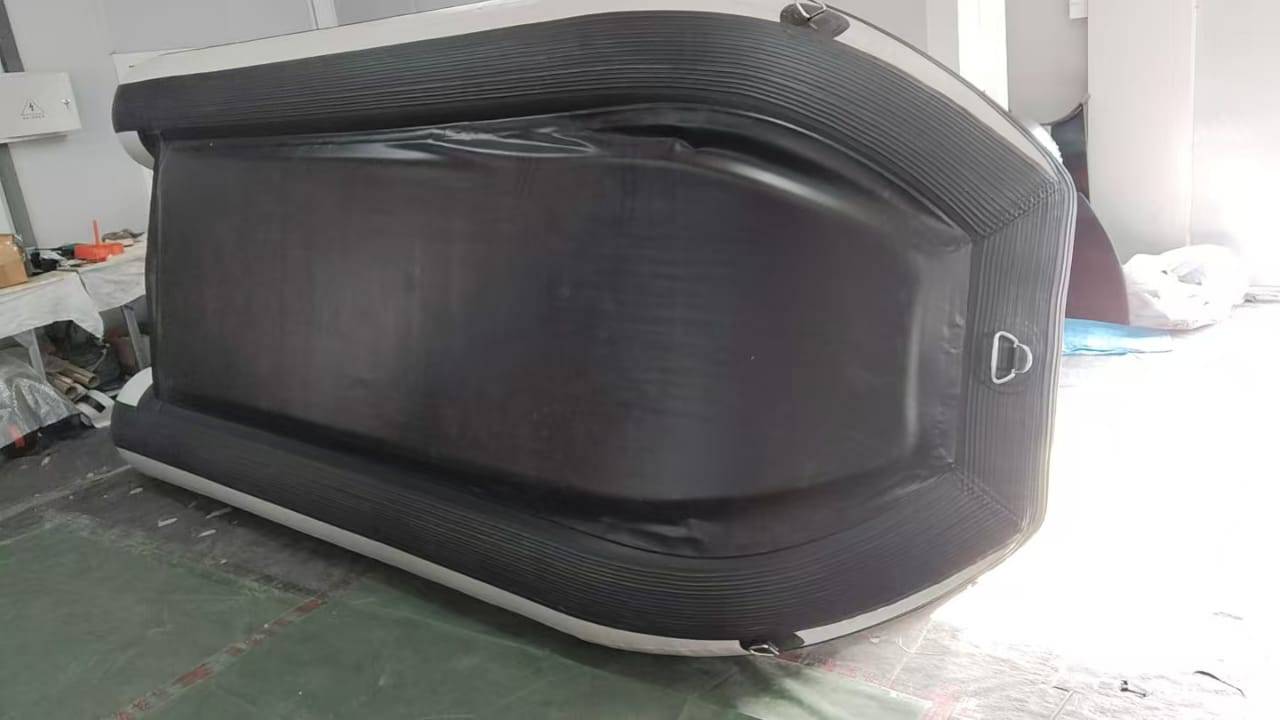
Why Inflatable Boat Air Floors Blister — And How to Stop It
Air floors blister and delaminate where the drop-stitch tape is glued, usually in year two or three. Here is why it happens in Australian heat, how to spot it early, and what a repairable floor looks like.
At a glance
Air floors blister and delaminate where the drop-stitch tape is glued, usually in year two or three. Here is why it happens in Australian heat, how to spot it early, and what a repairable floor looks like.
- What an air floor actually is
- Why Australian conditions accelerate it
- How to catch it early
- What "not repairable" really means
What we'd put you in
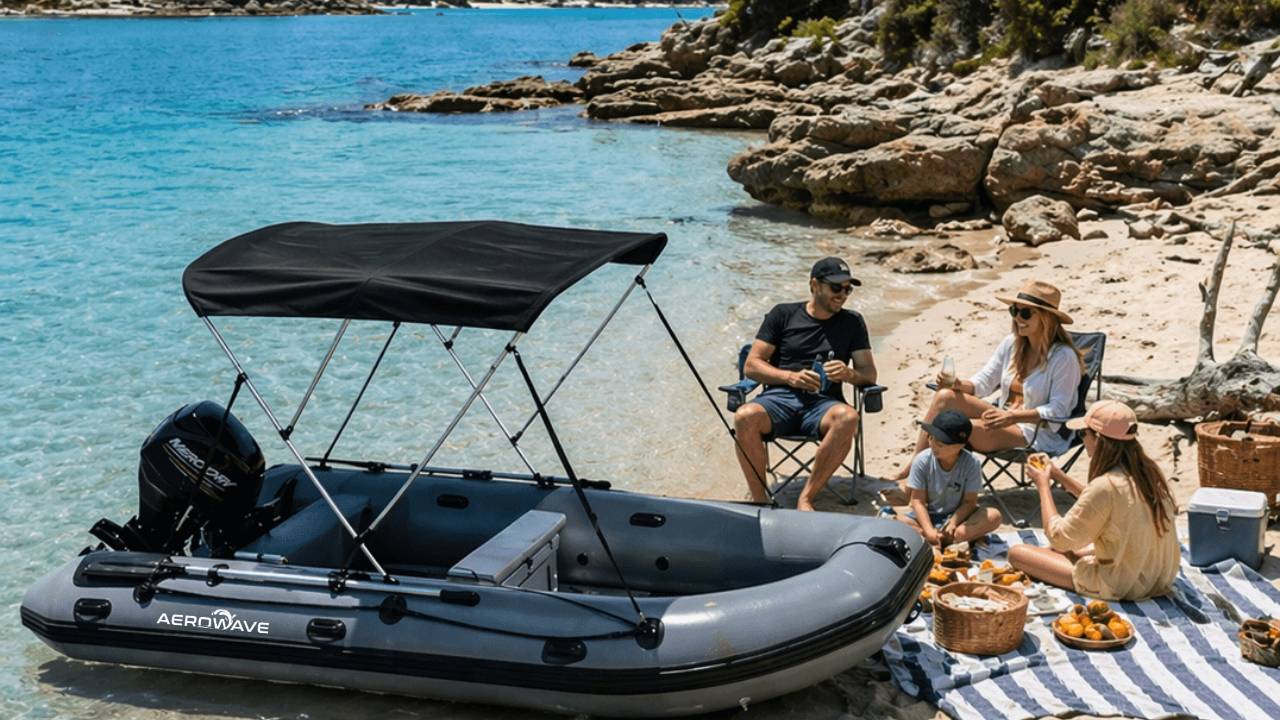
Aerowave Viper 400 Sovereign
Our best-selling boat: 4.0 m, 1.2 mm VALMEX hull, 7-year hull warranty.
US$3,167 USD
Delivered to your door, today's rate
- Free freight to United States · local taxes payable on arrival
- 7-year hull warranty
🇺🇸 Shipping to United States · landed price quoted in writing
Yes — we ship the Aerowave Viper 400 Sovereign to United States. Here's the landed price.
Our best-selling boat: 4.0 m, 1.2 mm VALMEX hull, 7-year hull warranty.
Aerowave Viper 400 Sovereign
- Boat package (export price)
- US$3,726
- 15% tariff relief credit
- − US$559
- Express air freight to United States
- Included
- Import duty, taxes & customs clearance
- Payable on arrival
- Estimated landed, USD
- US$3,167
Indicative, converted at today's rate, before local duty and tax on arrival. Ask below and we'll put a fixed figure in writing, valid 30 days.
- 7-year hull warranty
- 1500 GSM / 1.2 mm VALMEX® Heavy Plus hull
- CE certified to ISO 6185-3 and EU Directive 2013/53/EU
- Door-to-door, tracked the whole way
Your price, delivered to your door — freight included.
We email the full PDF quote (spec, freight, finance, WavePay) to your inbox in under 60 seconds. No spam — one quote, one follow-up.
See it for yourself
Real boats. Real owners. Real people behind them.
Plenty of what you read online these days is generated. Check us out properly — the factory, the reviews and the owners are all one click away. Why we use AI, and how to check we’re real
How our boats are built
Walk the production line: thermo-welded seams, 1.2 mm VALMEX Heavy Plus hulls, over-pressure relief valves on every chamber.
See the buildGoogle Maps reviews
Real Australian owners, five stars, published on our Google Business Profile with the map — read them there, not just on our own site.
Open Google Maps reviewsOwner stories
Boats in use — offshore, on rivers, on rescue duty. Photos and words from the people who actually own them.
Read owner storiesA blistered air floor is not wear and tear. It is an adhesive failure with a date stamp on it.
Ask around any Australian boat ramp and you will hear the same story from inflatable owners in year two or three: a soft lump appears in the air deck, it grows across a summer, and the boat gets pumped harder to hide it. By the following season the floor will not hold shape at all.
The lump is not the drop-stitch thread letting go. It is the tape bonded over the drop-stitch panel edge lifting away from the fabric — and once air migrates under that tape, pressure does the rest.
What an air floor actually is
A drop-stitch air deck is two fabric sheets joined by thousands of vertical threads. Inflate it to 8–12 PSI and it goes rigid enough to stand on. Around the perimeter, a tape strip seals the edge and holds the panel together under load.
That perimeter tape is the whole ball game. On cheaper decks it is glued. Glue is an adhesive holding two pieces of PVC against each other, and adhesive is a consumable — heat, UV and flex age it.
Why Australian conditions accelerate it
- Deck temperature. A dark air floor sitting rigged on a trailer in Queensland or WA summer sun runs far hotter than air temperature. Adhesive softens long before the fabric cares.
- Pressure swings. Air expands as the boat heats. A deck pumped to spec at 7am on the ramp can be well over spec by 2pm, loading the perimeter tape exactly where it is weakest.
- Salt and grit. Sand worked into the edge under foot traffic abrades the tape line.
- Rolled storage. Folding the deck along the same crease every trip fatigues the same few centimetres of bond, season after season.
None of those are abuse. That is normal Australian boating, which is why the failure is so predictable.
How to catch it early
Do this once a month during the season:
- Inflate to spec cold and mark the time. Check pressure again after two hours in the sun. If it climbs a long way past spec, you need a relief valve or you need to bleed it.
- Run a flat hand over the whole deck. Any soft rise, ripple or spongy patch is air where it should not be.
- Kneel and sight along the surface. Blisters show as a shadow line before you can feel them.
- Check the perimeter tape. A hairline lift at the edge is the earliest visible symptom.
- Listen at pressure. Soap-and-water on the tape line finds a slow migration leak that a gauge will not.
Catch it as a hairline lift and it is a repair. Catch it as a football-sized bubble and the panel is usually finished.
What "not repairable" really means
Owners are often told a blistered deck cannot be fixed. Frequently that is true — but only because of how the deck was built. Once air has tracked between the layers of a glued perimeter, there is no way to get adhesive back into the void, clamp it and cure it evenly. Patching over the top traps the void.
The honest answer at that point is a new floor panel. The question that matters is whether the maker will sell you one, and how long you wait.
What a repairable floor looks like
- Thermo-welded, not glued perimeters. Welding fuses the fabric into a single piece; there is no adhesive layer left to age.
- Over-pressure relief valves on the chambers, so a hot afternoon vents instead of loading the seam.
- Fabric with a stated thickness. Ours is 1.2 mm / 1500 GSM VALMEX® Heavy Plus on the Viper hulls — thickness in millimetres, published, not implied.
- A floor you can actually buy as a part. We hold valves, D-rings, floors, handles and fabric patches in stock in Australia and at our overseas hub, dispatched by express courier.
- A repair-first policy. We fix it if a fix will hold, and only replace when it will not.
That last pair is the Aerowave Owner Promise, and it exists precisely because this failure mode is the one the category ignores. Read the full version on the seam and floor failure page.
Care that genuinely extends floor life
- Inflate the floor after the tubes, to the pressure on the panel — not "as hard as it goes".
- Bleed a few PSI before you leave the boat rigged in full sun.
- Rinse the deck and edge tape with fresh water; sand at the perimeter is an abrasive.
- Dry it before rolling, and vary the fold line between trips.
- Store it loosely rolled in the carry bag, not folded flat under weight.
The buying decision this should change
If you are choosing between boats, the two questions to ask are simple:
- Is the floor perimeter welded or glued?
- Can I buy a replacement floor panel in twelve months, and how fast does it arrive?
If a seller cannot answer both plainly, you are buying the cheaper answer either way.
Have a look at the Viper 365 Open Bow or the AeroCat 380 for how we spec floors, or talk it through with the crew on +61 2 4335 1603 before you commit to anything.
Weekend-Proof Score 17 questions · about 2 minutes
Will the boat you're about to buy survive an Australian summer?
Seventeen straight questions about where you'll use it, what you'll ask of it and the boat you're weighing up. You get a score out of 100, the exact weak points in your plan, and the one boat that genuinely fits.
Free · your result shows on screen · no email required
So which one is yours?
Pick how you'll actually use it and we'll take you straight to the right hull.
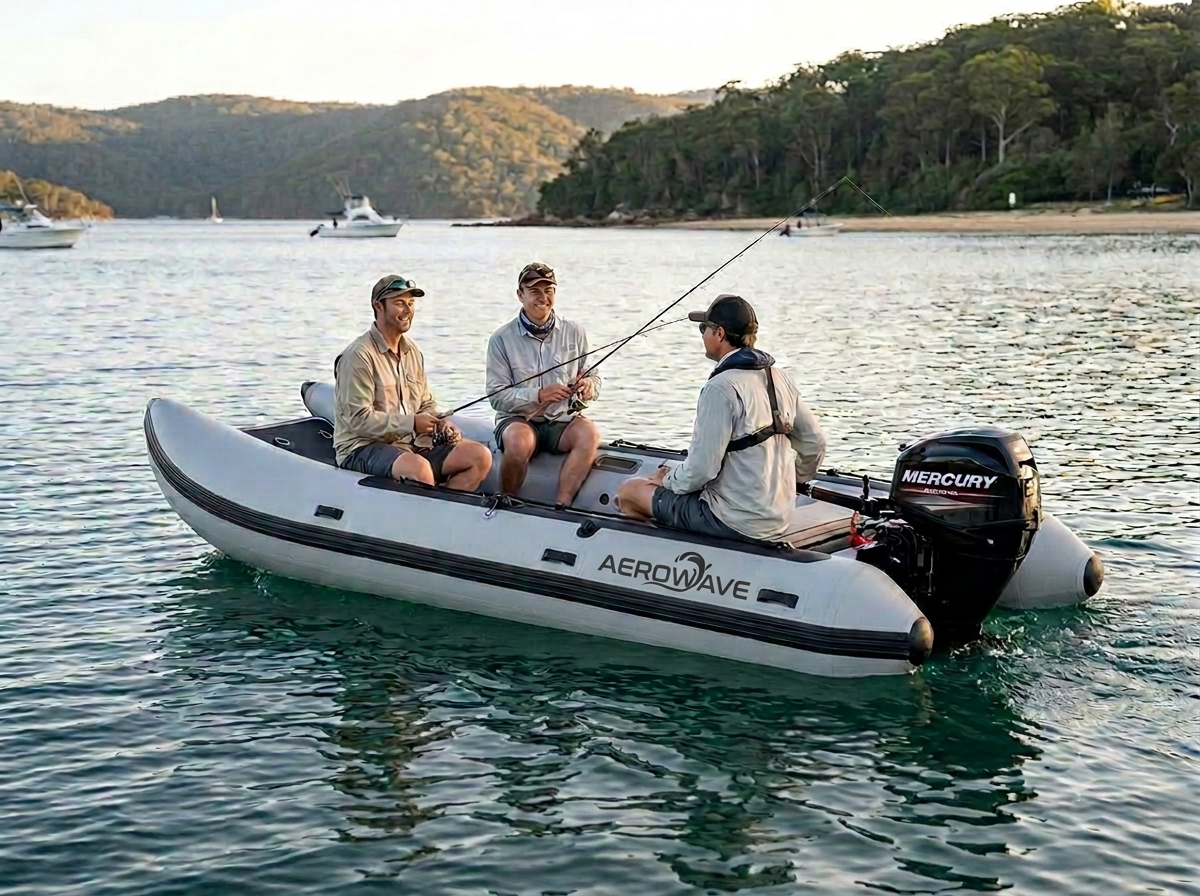
I want to fish it
Open bow, rod holders, deck space you can stand and cast from.
Viper Sport 400Family, diving and the beach
3.8 m Series 3 catamaran — low bow to climb back in wearing fins or a tank.
WaveRunner 380Tender / one-person launch
3.3 m hard-floor boat that packs into a bag and still takes a beach landing.
Viper 330Shop gear featured in this guide
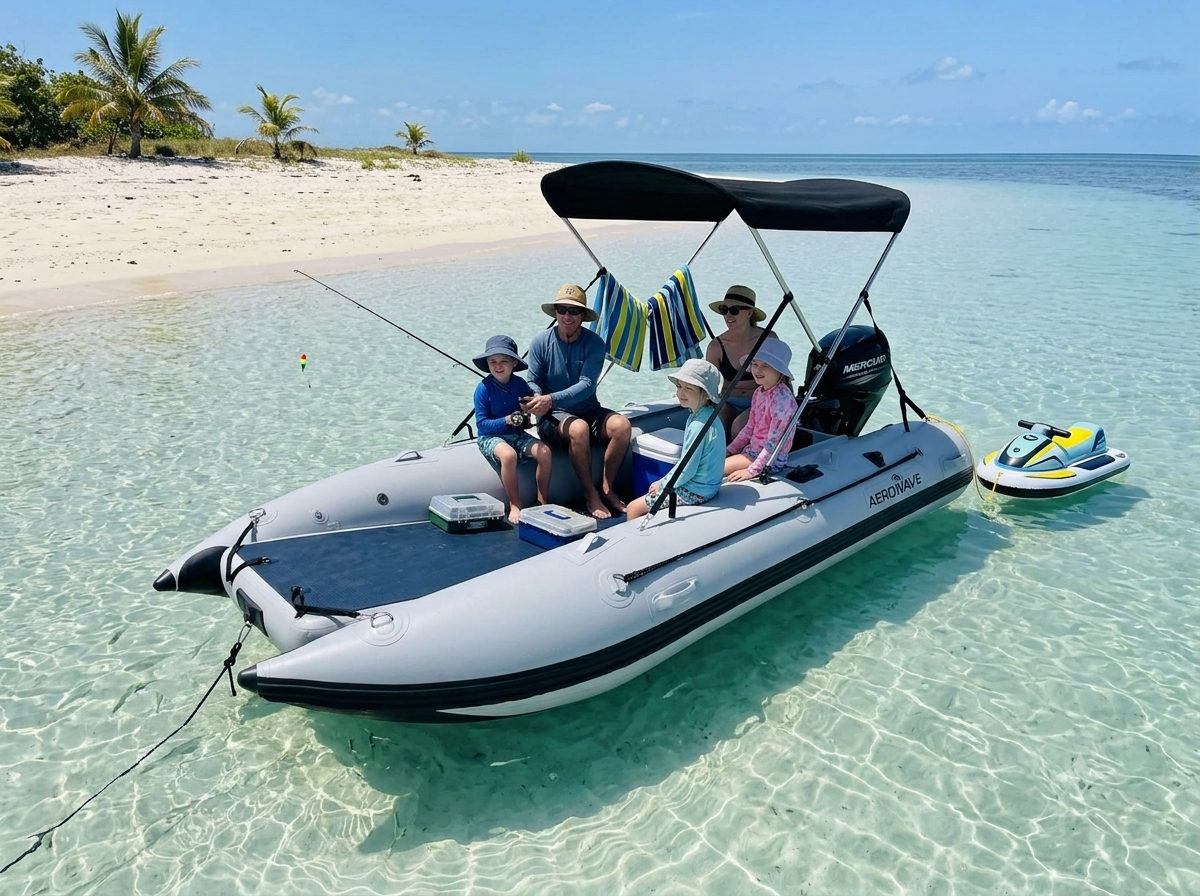
Aerowave WaveRunner 380 Series 3 Catamaran Package
The WaveRunner 380 Series 3 is a premium 3.8m inflatable catamaran package built for Australian and worldwide families, fishing, and coastal day boating — ideal for snorkeling and spearfishing — offering serious stability and premium German Valmex® construction.
Free freight to United States · local taxes payable on arrival
Aerowave Viper 400 Sovereign
Flagship 4m enclosed-bow inflatable catamaran. German VALMEX® 7321 Heavy Plus 1.2mm commercial-grade fabric, 10 PSI high-pressure drop-stitch air deck floor with VALMEX non-slip surface, LockPro wheels, full Bimini and FREE express delivery Australia-wide included. Winter special — save $1,000 until 31 August 2026.
Free freight to United States · local taxes payable on arrival
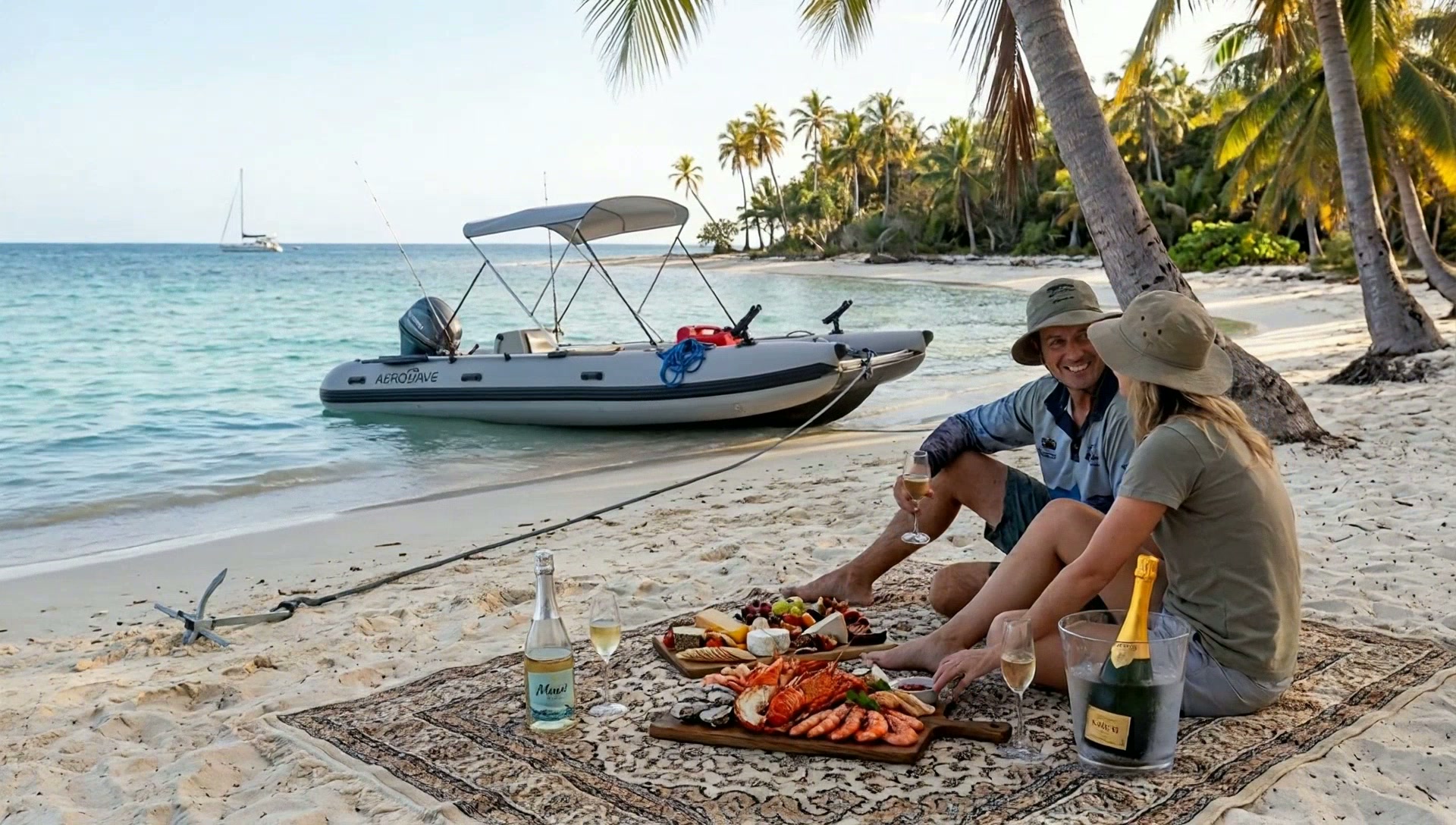
Aerowave Viper 365 Open Bow
Premium 3.65m Inflatable catamaran — built the same way as our flagship Viper 400 sports boat, just 35cm shorter. German VALMEX® 7321 Heavy Plus 1.2mm commercial-grade fabric, 10 PSI high-pressure drop-stitch air deck floor with VALMEX non-slip surface, LockPro wheels, full Bimini and FREE express delivery Australia-wide included.
Free freight to United States · local taxes payable on arrival
Not sure which suits you? Talk to a real boat owner.
Before you spend a cent
Buying from Australia, delivered to United States
You have never heard of us, we are on the other side of the world, and the internet is full of fakes. Fair enough. Here is everything you would need to check us out, in one place — no forms, no chat bot.
Australian designed business
Easy Inflatables, Avoca Beach NSW 2251. ABN 96 856 548 613. International orders ship from our Hong Kong hub.
222 owner reviews, 4.8 average
Read them in full, good and bad, on our reviews page.
CE certified, 7-year hull warranty
ISO 6185-3 and EU Directive 2013/53/EU. Warranty honoured worldwide.
Tracked, insured, door to door
FREE freight to United States · local tax/duty on arrival.
- Who am I actually buying from?
- Easy Inflatables, Avoca Beach NSW 2251, Australia. ABN 96 856 548 613. Sean is the owner and skipper, Gary Stewart handles sales on +61 2 4335 1603, Karen Matthews handles email. The boats are Australian designed; international orders ship from our Hong Kong dispatch hub so your landed price stays competitive. Phone us before you pay a cent — a real person answers.
- Is this really an Australian product?
- Yes — Australian designed and engineered on the NSW Central Coast. Manufacturing is done offshore to our spec, and international orders ship direct from our Hong Kong dispatch hub. If we routed every boat through Australia first, the freight alone would roughly double or triple your cost for the same hull.
- What do I pay, and what is not included?
- The delivery and import terms depend on your country. EU, UK, New Zealand and named Asia/Pacific lanes include duty and tax; US freight is free but US buyers pay import charges on arrival. Other destinations show their terms before payment.
- How do I pay safely?
- Card through Stripe (Visa, Mastercard, Amex, Apple Pay, Google Pay) or bank transfer. Card payments carry your bank's own dispute protection. We never ask for crypto, gift cards or payment to a personal account.
- What if it arrives damaged?
- Every boat ships fully tracked and insured door to door. Photograph the carton and the boat on arrival and email us — transit damage is claimed and replaced through us, not left with you and the courier.
- Is the warranty real outside Australia?
- Yes. The 7-year hull warranty on 1.2 mm VALMEX Heavy Plus and Orca Hypalon hulls applies wherever you are. Replacement parts are held in Australia and at our overseas hub and go out by express courier to your door.
- Is the boat actually certified?
- All Aerowave catamarans are CE certified to ISO 6185-3 and EU Directive 2013/53/EU. Certification paperwork is supplied with the boat — ask and we will send it before you order.
Frequently asked questions
- Why is my inflatable boat floor bubbling?
- Air has migrated under the tape bonded to the drop-stitch panel edge. Heat, over-pressure and flex age the adhesive, then internal pressure lifts it into a blister. It is an adhesive failure, not thread failure.
- Can a blistered air deck be repaired?
- A hairline lift at the perimeter can often be re-sealed. Once air has tracked between the layers into a large blister, there is no way to re-bond the void evenly and the panel usually needs replacing. That is why parts availability matters more than the repair kit.
- What pressure should an air floor run at?
- Follow the figure printed on the panel — typically 8–12 PSI on a drop-stitch deck. Inflate the tubes first, then the floor, and inflate cold. A deck pumped to the maximum at dawn can be well over spec by mid-afternoon.
- Does leaving the boat in the sun damage the air floor?
- Yes. Deck surface temperature runs far above air temperature and softens any adhesive at the perimeter, while heated air pushes pressure above spec at the same time. Bleed a few PSI or fit relief valves if you leave the boat rigged.
- Are welded air floors better than glued ones?
- Thermo-welding fuses the fabric into one piece so there is no adhesive layer left to age with heat and UV. Glue is an adhesive holding two pieces together, and adhesive is the part that lets go.
- Can I buy a replacement air floor in Australia?
- From us, yes — floors, valves, D-rings, handles and fabric patches are held in stock in Australia and at our overseas hub and dispatched by express courier. Call +61 2 4335 1603 with your model and we will confirm the part.
Ready to set sail?
Premium German-fabric inflatable catamarans, built to order and delivered to your door. Talk to our team or browse the fleet.
Like this guide? Get the next one in your inbox.
Owner-tested tips, gear deep-dives and Aussie boating know-how — no spam.