
0.9 mm vs 1.2 mm: What Hull Fabric Really Buys You
GSM and millimetres, quoted together, tell you how long a hull stays airtight. Here is what actually ages inflatable fabric in Australian conditions and what to expect from each spec.
Our recommendation
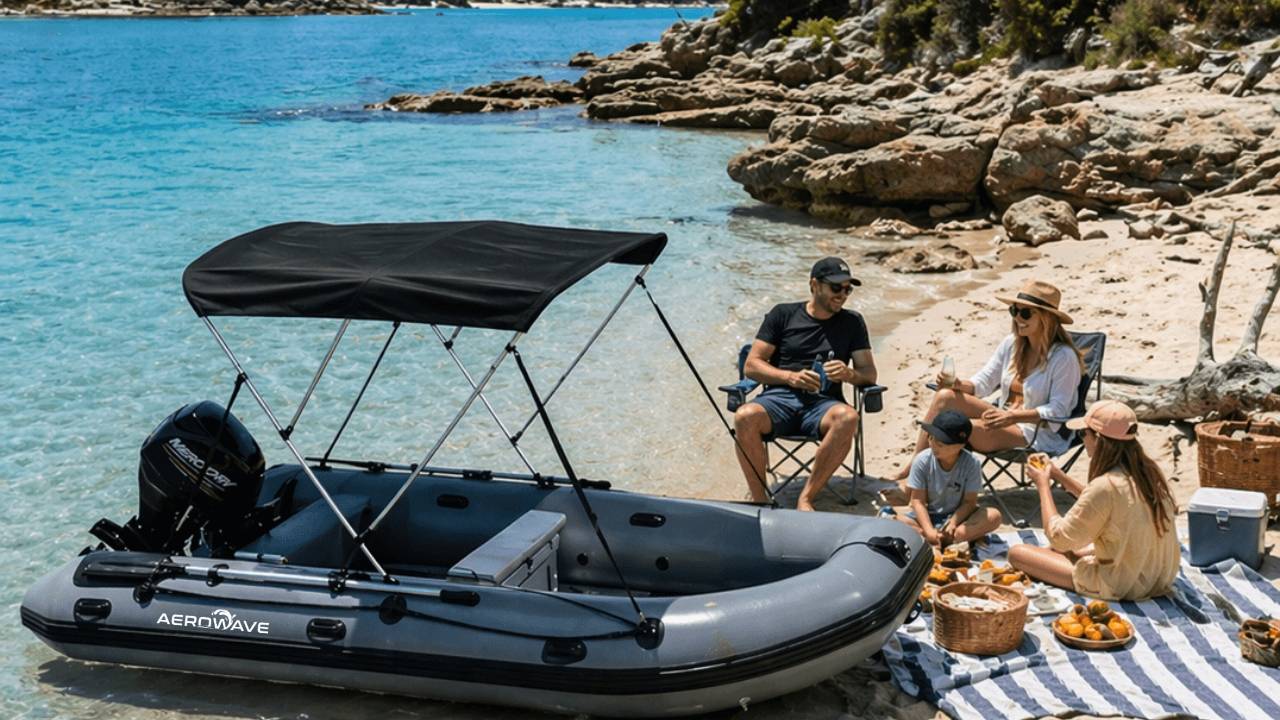
Aerowave Viper 400 Sovereign
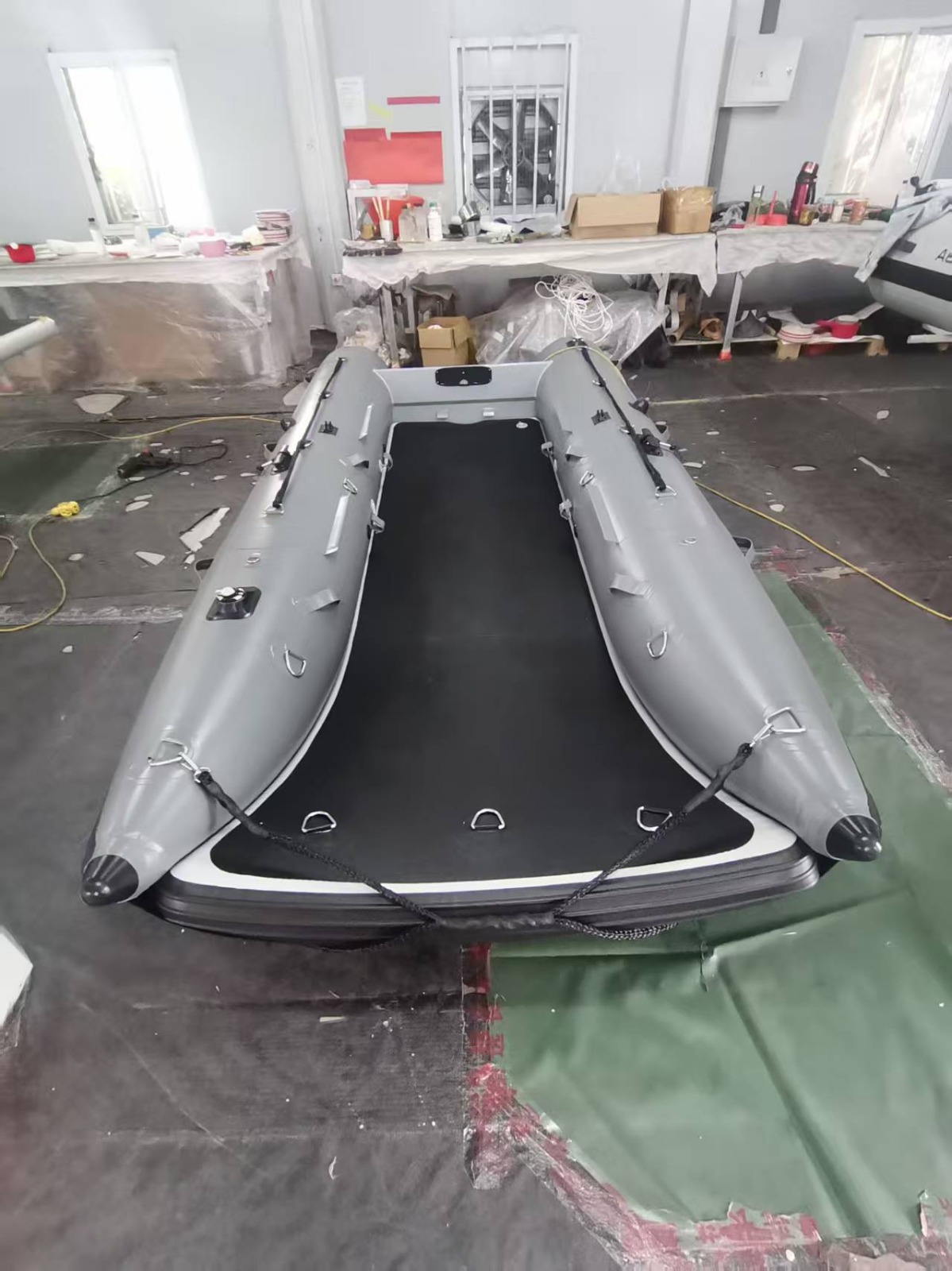
1.2 mm fabric is about 33% thicker than common 0.9 mm fabric: more material between your boat and the water for everyday rubbing and knocks during beach launches. Careful handling still matters.
Length
4.0m / 13'1"
Beam
1.80m / 71"
Tube Diameter
51cm
Bare Boat Weight (without Bimini & wheel kit)
66kg / 145lbs
0.9 mm is not a bad fabric. It is a fabric with a shorter clock — and most boats make that clock run faster than it needs to.
Almost every inflatable boat sold in Australia under about five thousand dollars is built on 0.9 mm PVC fabric, usually quoted as 1100 decitex. Some of it is excellent German-made material. Some of it is not. Either way, the number that matters to you is not the brand on the roll — it is how long the hull stays airtight in real Australian conditions.
Here is the plain version, without the marketing.
What GSM and mm actually mean
Two numbers, always quoted together, or the spec is meaningless:
- GSM — grams per square metre. Total mass of the coated fabric. More mass generally means more coating over the base cloth.
- mm — total thickness, coating plus base cloth plus coating.
A fabric can be heavy but thin, or thick and under-coated. This is why "0.9 mm PVC" on its own tells you nothing, and why we always publish both figures:
| Base cloth spec | Where we use it | |
|---|---|---|
| 1500 GSM / 1.2 mm VALMEX® Heavy Plus | Premium hull fabric | Viper, Sport Series, WaveRunner |
| 1100 decitex / 0.9 mm VALMEX® | Lighter hull fabric | AeroCat range |
| Typical market benchmark | 1100 decitex / 0.9 mm | Most boats in this price bracket |
Note that we use 0.9 mm ourselves on the AeroCat. It is a legitimate fabric for a lighter boat. What it is not is a ten-year offshore hull.
What actually ages a hull
Fabric does not wear out from being used. It ages from three things, in this order:
1. UV. Australian UV is brutal on the surface coating. The coating is what holds air; the base cloth is what holds shape. Once UV chalks the coating, the fabric starts losing its ability to seal, and the seam edges are the first place it shows.
2. Heat cycling. A tube that goes from 3.5 PSI cold to well over 5 PSI in the sun and back down every day is being flexed at the seams thousands of times a season. Thinner fabric has less coating mass to absorb that cycling.
3. Abrasion. Ramps, oyster-crusted pylons, sand under the hull, gear dragged across the tube. Coating thickness is exactly what abrasion eats.
Every one of those three punishes a 0.9 mm hull faster than a 1.2 mm hull — because there is simply less coating between the weather and the base cloth.
The seam is where the clock is read
You will almost never see a hull fail in the middle of a panel. You will see it at the join, because that is where two thicknesses meet and where stress concentrates.
Which is why the three questions to ask about any hull are always the same:
- How thick is the coating? (GSM + mm, together)
- How are the seams made? Thermo-welded fuses the fabric into one piece. Glued relies on adhesive, and adhesive is a consumable that heat and UV age.
- Is the tube ever allowed to exceed its rated pressure? If there are no over-pressure relief valves on every chamber, the answer is yes, most hot afternoons.
Get those three right and you have a decade boat. Get any one of them wrong and you have a three-to-five year boat with a nice invoice.
Honest expectations by spec
Reasonable care assumed — rinsed after salt, stored out of permanent direct sun, inflated cold to spec:
- 0.9 mm, glued seams, no relief valves — three to five years before seams and fittings start needing attention.
- 0.9 mm, welded seams, relief valves fitted — meaningfully longer, because the pressure spikes that fatigue the seams have been removed. This is our AeroCat construction.
- 1.2 mm / 1500 GSM, welded seams, relief valves fitted — ten to twelve years. This is our premium hull construction, and it is why we can back it with a 5 + 2 year warranty rather than twelve months.
We are not going to tell you a heavier fabric is indestructible. It is not. It is simply thicker, better protected, and never asked to hold pressure it was not built for.
What to do with a 0.9 mm boat you already own
You can add years to it without spending much:
- Inflate cold, to the printed figure, and check with a gauge — not by thumb
- Bleed a few PSI before you walk away from a rigged boat in the sun
- Rinse with fresh water, dry before folding, never fold a wet boat
- Store out of direct sun; a cover or tube chaps is cheap insurance
- Fix a lifting seam edge or fitting the week you notice it, not the season after
None of that changes the fabric. All of it slows the clock.
The point
Thickness buys you time. Welding buys you a seam that does not rely on adhesive. Relief valves stop the boat from destroying itself on hot days. You need all three, and the cheapest of the three is the one most builders leave out.
See the fabric, the welding and the valves for yourself on our manufacturing page, or read what owners say years in on our owner stories page.
Want the spec sheet for a specific model? Call the crew on +61 2 4335 1603, Mon–Fri 9am–5pm and Sat 9am–1:30pm Sydney time.
Frequently asked questions
- What does GSM mean on inflatable boat fabric?
- Grams per square metre — the total mass of the coated fabric. It should always be quoted alongside thickness in millimetres, because a fabric can be heavy but thin, or thick and under-coated.
- Is 0.9 mm PVC good enough for an inflatable boat?
- It is a legitimate fabric for a lighter boat — we use 1100 decitex / 0.9 mm VALMEX on our AeroCat range. It simply has less coating between the weather and the base cloth than 1.2 mm, so UV, heat and abrasion age it faster.
- What fabric do Aerowave premium hulls use?
- 1500 GSM / 1.2 mm VALMEX Heavy Plus, with thermo-welded seams and over-pressure relief valves on every chamber.
- What actually wears out inflatable boat fabric?
- UV chalking the surface coating, daily heat cycling flexing the seams, and abrasion grinding coating off the hull. Fabric almost never fails in the middle of a panel — it fails at the join.
- How long does 1.2 mm inflatable fabric last?
- Ten to twelve years with reasonable care when combined with welded seams and relief valves: rinsed after salt, stored out of permanent direct sun, inflated cold to spec.
- How can I make a 0.9 mm boat last longer?
- Inflate cold to the printed figure with a gauge, bleed a few PSI before leaving it rigged in the sun, rinse and dry fully before folding, store out of direct sun, and repair lifting seams or fittings the week you notice them.
Finance this boat from $27/week
Estimate only — powered by Australian Motorcycle & Marine Finance (AMMF).
Paid upfront (AUD)
$617
10% of price
Term
5 years
60 monthly repayments
Comparison rate
9.95% p.a.
Subject to AMMF approval
Weekly
$27
Monthly
$118
Amount financed
$5,552
Indicative only. Actual repayments depend on your AMMF credit assessment, term, fees and the balloon you select. Talk to AMMF for a personalised quote on Aerowave Viper 400 Sovereign.
Like this guide? Get the next one in your inbox.
Owner-tested tips and Aussie boating know-how — no spam.
Ready when you are
Build your Viper 400 Sovereign in under 3 minutes.
1500 GSM / 1.2 mm VALMEX® hull. Five-year limited hull warranty plus two years of extended limited structural hull cover, subject to conditions. Free freight to United States · taxes included, nothing to pay on arrival.
delivered to your door
See it for yourself
Real boats. Real owners. Real people behind them.
Plenty of what you read online these days is generated. Check us out properly — the factory, the reviews and the owners are all one click away. Why we use AI, and how to check we’re real
How our boats are built
Walk the production line: thermo-welded seams, 1.2 mm VALMEX Heavy Plus hulls, over-pressure relief valves on every chamber.
See the buildGoogle Maps reviews
Real Australian owners, five stars, published on our Google Business Profile with the map — read them there, not just on our own site.
Open Google Maps reviewsOwner stories
Boats in use — offshore, on rivers, on rescue duty. Photos and words from the people who actually own them.
Read owner stories
Aerowave Viper 400 Sovereign
US$4,701 USD · delivered to your door