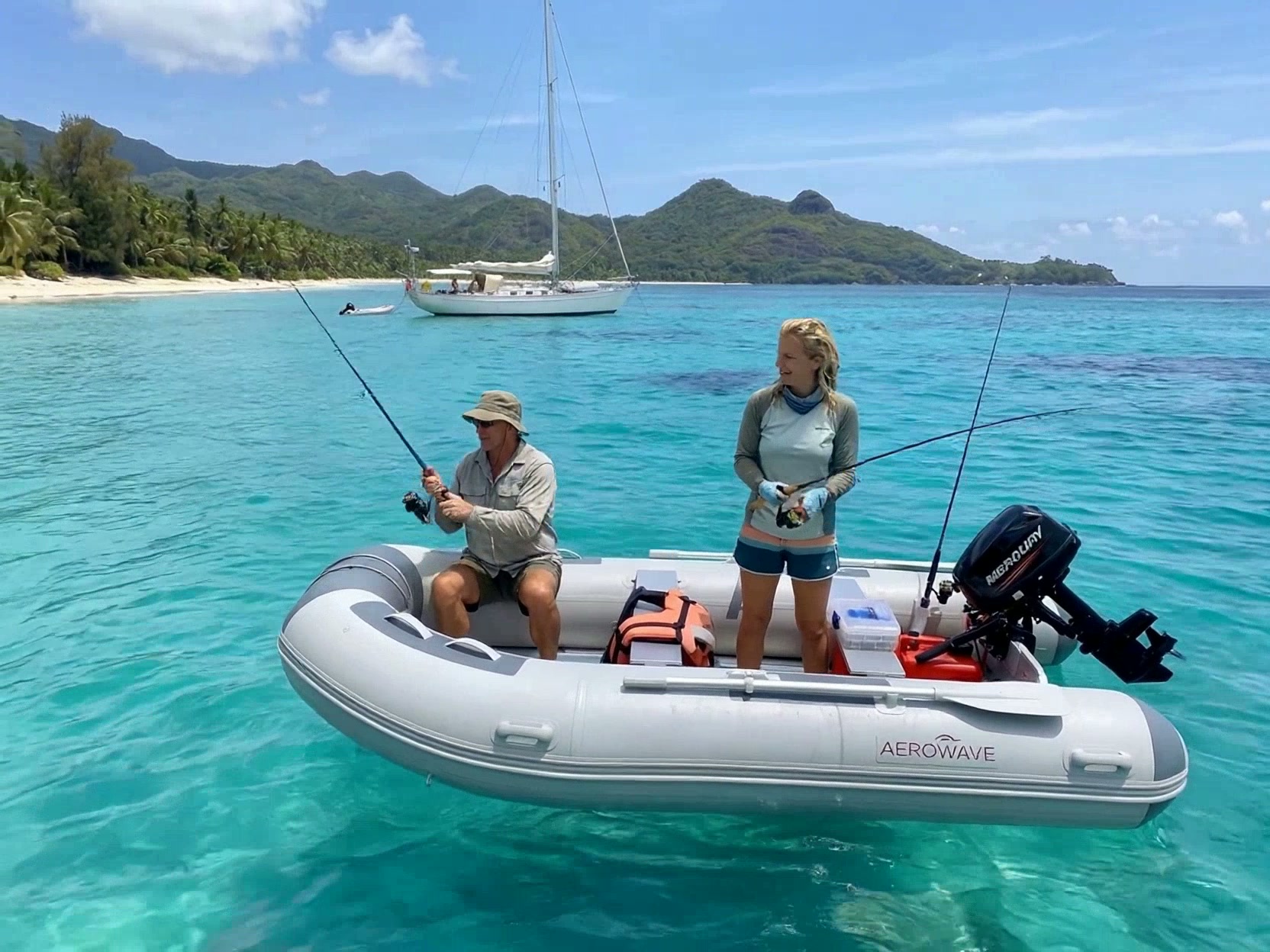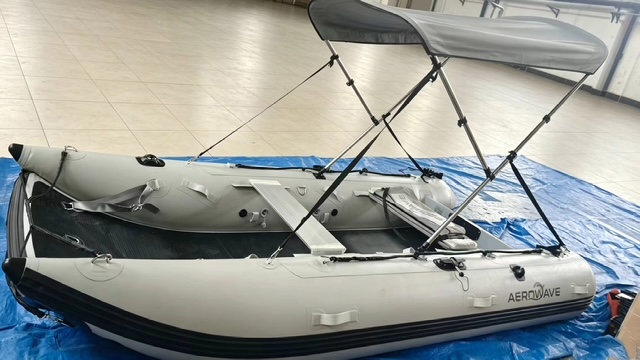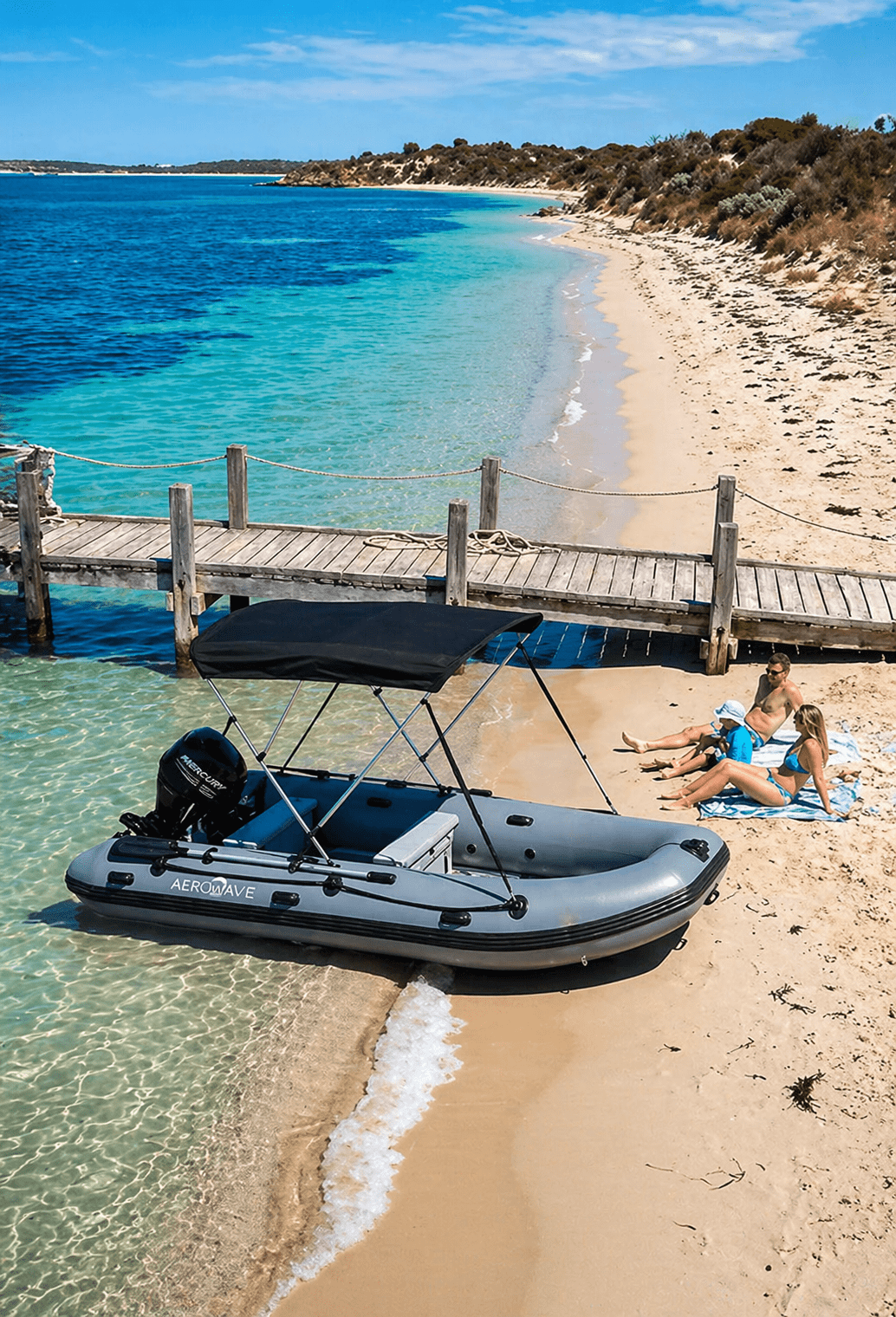
Inflatable Boat Fabric Australia: PVC vs. Hypalon vs. VALMEX®
Discover the truth about inflatable boat fabrics in Australia. We dive deep into PVC, Hypalon, and German VALMEX® to find the best material for our harsh sun.
At a glance
Discover the truth about inflatable boat fabrics in Australia. We dive deep into PVC, Hypalon, and German VALMEX® to find the best material for our harsh sun.
- What is Inflatable Boat Fabric and Why Does It Matter So Much in Australia?
- The Truth About PVC (Polyvinyl Chloride) Inflatable Boats
- Why do most cheap inflatable boats use PVC?
- What are the biggest problems with PVC boats in Australia?
What we'd put you in
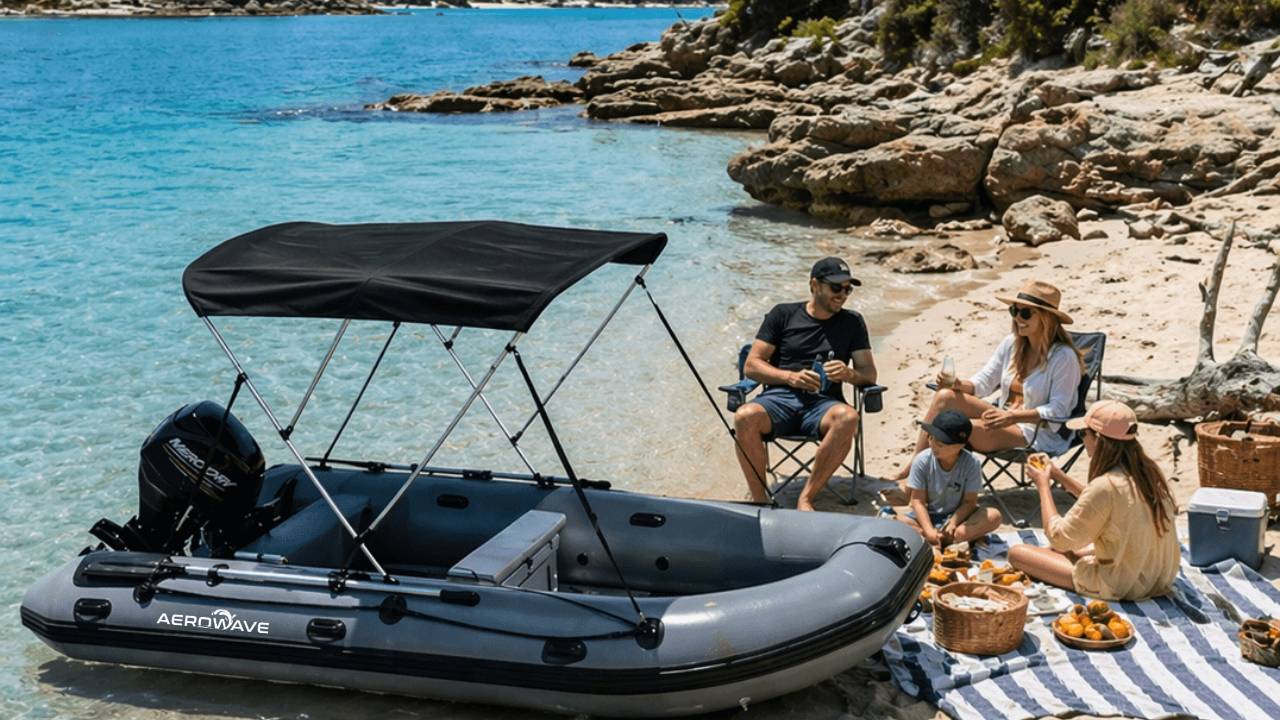
Aerowave Viper 400 Sovereign
1500 GSM / 1.2 mm VALMEX Heavy Plus — the fabric this article is really about.
US$3,167 USD
Delivered to your door, today's rate
- Free freight to United States · local taxes payable on arrival
- 7-year hull warranty
🇺🇸 Shipping to United States · landed price quoted in writing
Yes — we ship the Aerowave Viper 400 Sovereign to United States. Here's the landed price.
1500 GSM / 1.2 mm VALMEX Heavy Plus — the fabric this article is really about.
Written for Australian readers — but the boat ships to you. We are an Australian builder and this article is written from Australian waters. That changes nothing about what you can order: the same hull, the same 7-year warranty and the same certification go out to United States every week.
Aerowave Viper 400 Sovereign
- Boat package (export price)
- US$3,726
- 15% tariff relief credit
- − US$559
- Express air freight to United States
- Included
- Import duty, taxes & customs clearance
- Payable on arrival
- Estimated landed, USD
- US$3,167
Indicative, converted at today's rate, before local duty and tax on arrival. Ask below and we'll put a fixed figure in writing, valid 30 days.
- 7-year hull warranty
- 1500 GSM / 1.2 mm VALMEX® Heavy Plus hull
- CE certified to ISO 6185-3 and EU Directive 2013/53/EU
- Door-to-door, tracked the whole way
Your price, delivered to your door — freight included.
We email the full PDF quote (spec, freight, finance, WavePay) to your inbox in under 60 seconds. No spam — one quote, one follow-up.
See it for yourself
Real boats. Real owners. Real people behind them.
Plenty of what you read online these days is generated. Check us out properly — the factory, the reviews and the owners are all one click away. Why we use AI, and how to check we’re real
How our boats are built
Walk the production line: thermo-welded seams, 1.2 mm VALMEX Heavy Plus hulls, over-pressure relief valves on every chamber.
See the buildGoogle Maps reviews
Real Australian owners, five stars, published on our Google Business Profile with the map — read them there, not just on our own site.
Open Google Maps reviewsOwner stories
Boats in use — offshore, on rivers, on rescue duty. Photos and words from the people who actually own them.
Read owner storiesThe single most important factor determining your inflatable boat's lifespan in Australia isn't the motor, the hull shape, or even how you use it—it's the fabric.
Choosing an inflatable boat is one of the great Aussie freedoms. It’s the key to unlocking hidden beaches, remote fishing spots, and lazy days exploring our stunning coastline. But in our sunburnt country, not all inflatables are created equal. The relentless Australian sun, saltwater, and humidity are a brutal testing ground for marine materials, and a cheap boat made from the wrong fabric can quickly turn from a dream purchase into a cracked, sticky, and useless liability.
The heart and soul of any inflatable boat is its fabric. This isn't just the 'skin'; it's the entire structure, the skeleton and muscle working in unison, holding pressurised air to create a rigid, seaworthy vessel. Get this choice wrong, and you'll be patching leaks and watching your investment degrade before your eyes. Get it right, and you'll have a reliable partner for a decade or more of adventures.
This guide cuts through the marketing jargon to give you the honest truth about the three main players in the inflatable boat fabric world: generic PVC, Hypalon (CSM), and the high-tech German material we trust for our own boats, VALMEX®. We'll explain what they are, how they're made, and most importantly, how they stand up to the unique challenges of boating in Australia.
What is Inflatable Boat Fabric and Why Does It Matter So Much in Australia?
An inflatable boat's tubes, or sponsons, are made from a composite textile. This typically consists of a strong inner woven cloth (usually polyester) that provides tear resistance and structural integrity, which is then coated on both sides with an air-holding, waterproof, and UV-resistant layer. It's the quality, thickness, and chemical makeup of this outer coating that dictates the boat's durability, lifespan, and performance.
In Australia, a boat fabric has to fight a multi-front war:
- UV Radiation: Australia has some of the highest levels of UV radiation in the world. This radiation breaks down the chemical bonds in polymers, causing them to become brittle, fade, and lose strength. This is the number one killer of inflatable boats.
- Heat: A dark-coloured boat sitting on a trailer can reach scorching surface temperatures, accelerating chemical degradation and placing immense stress on seams.
- Saltwater & Humidity: Salt crystals can be abrasive, and the constant humidity can attack the adhesives used in poorly constructed boats.
- Abrasion: Scraping against oyster-encrusted pylons, being dragged up a sandy beach, or having a stray fishing hook catch the tube—your boat needs to be tough enough to handle real-world use.
Choosing a fabric not engineered for these specific conditions is a recipe for disaster. This is why a deep understanding of the materials is non-negotiable for any serious Aussie boater.
The Truth About PVC (Polyvinyl Chloride) Inflatable Boats
Polyvinyl Chloride, or PVC, is the most common material used for budget-friendly inflatable boats. It's a type of thermoplastic that can be easily mass-produced, making it a favourite for manufacturers looking to hit a low price point.
Why do most cheap inflatable boats use PVC?
The simple answer is cost and ease of manufacturing. PVC fabric is relatively inexpensive to produce. More importantly, its seams can be thermo-welded. This process uses heat to melt the material together, creating a seam quickly and cheaply on a production line. This is much faster and requires less skilled labour than the hand-gluing process required for other fabrics like Hypalon.
This low barrier to entry means the market is flooded with generic PVC boats, often with impressive-looking specs on paper but a hidden weakness in their material DNA.
What are the biggest problems with PVC boats in Australia?
While modern PVC is better than it was 20 years ago, most standard PVC fabrics share a fatal flaw: a reliance on 'plasticisers'. These chemicals are added to the PVC formula to make it soft and flexible. Under the assault of Australian UV radiation, these plasticisers migrate out of the material and evaporate.
This process leads to a cascade of failures:
- Brittleness: As the plasticisers leave, the fabric becomes hard, stiff, and eventually brittle. A boat that once folded easily becomes a struggle, and the material is far more susceptible to cracking and puncture.
- Sticky Surface: In the intermediate stage of degradation, the surface of the PVC can become unpleasantly sticky to the touch as the plasticisers leach out.
- Seam Failure: While a welded seam is strong initially, if the fabric around the seam becomes brittle, the area under stress is prone to catastrophic failure.
- Poor Abrasion Resistance: Standard PVC is relatively soft and doesn't stand up well to being dragged over rocks, sand, or barnacles compared to premium materials.
For a boat used sparingly and stored meticulously in a garage, a cheap PVC boat might last a few seasons. But for anyone who plans to actually use and keep their boat under the Australian sun, the typical lifespan is a disappointing 5-7 years, and often less.
Is Hypalon the “Gold Standard” for Inflatable Boat Fabric?
Hypalon has long held a reputation as the premium, 'go-to' material for serious inflatables, particularly for commercial and military applications. The name itself is actually a DuPont brand name for a synthetic rubber called chlorosulfonated polyethylene (CSM). While DuPont ceased production in 2010, other manufacturers produce high-quality CSM fabrics that are colloquially still referred to as Hypalon.
What are the pros of Hypalon?
Hypalon's reputation is built on its incredible resilience. It is a thermoset material, meaning its chemical structure is set once cured and it doesn't melt. Its key advantages include:
- Exceptional UV Resistance: Hypalon is inherently stable under UV light and does not require the plasticisers that are the weak link in PVC.
- Chemical Resistance: It holds up extremely well against fuel, oil, and other chemicals.
- Durability: It's tough, flexible over a wide temperature range, and maintains its properties for a very long time.
These qualities have made it the choice for life rafts and SOLAS rescue boats for decades.
What are the cons of Hypalon?
Despite its strengths, Hypalon is not a perfect material, and its dominance is increasingly being challenged.
- Extreme Cost: Hypalon fabric is significantly more expensive to produce than even the most premium PVC materials.
- Labour-Intensive Construction: Because it's a thermoset rubber, Hypalon cannot be welded. It must be painstakingly hand-glued. This process is time-consuming, requires highly skilled labour, and introduces the potential for human error. A bad glue job will fail, regardless of how good the fabric is.
- Porosity & Maintenance: The material itself can be porous. Over time, it can absorb water and stains, leading to a grimy appearance if not meticulously cleaned. It's also harder to patch than modern welded fabrics.
- Weight: It's generally heavier than equivalent PVC-based fabrics.
While undeniably a brilliant material, the question for the modern boater is whether its high cost and manufacturing quirks still justify its 'gold standard' title, especially when new technologies have emerged.
Enter VALMEX®: The German-Engineered Fabric Changing the Game
This brings us to the third, and in our opinion, most advanced option for recreational boaters in Australia: premium coated PVC, specifically VALMEX® from Mehler Texnologies in Germany. It’s critical to understand that lumping VALMEX® in with the cheap, generic PVC discussed earlier is like comparing a high-performance European car to a basic go-kart. They may share a core principle, but the engineering, materials, and final performance are worlds apart.
What is VALMEX® and why is it different?
VALMEX® is a multi-layered, highly-engineered material designed for extreme durability. It starts with a high-tenacity polyester base fabric, which provides immense tear strength and controls stretch. This is then sandwiched between multiple layers, including adhesion promoters and the specialised VALMEX® PVC coatings. The entire structure is then finished with a protective acrylic lacquer.
This multi-layer construction and proprietary chemical formulation are what set it apart. Unlike cheap PVC, it’s engineered from the ground up for colour stability, UV resistance, and air retention. It allows for the use of modern welding technology, creating seams that are not glued, but fused into a single, continuous piece of material.
How VALMEX® beats generic PVC and even Hypalon
The superiority of VALMEX® comes down to advanced chemistry and manufacturing precision:
-
Unmatched UV Resistance: The top lacquer coating on VALMEX® is specifically designed to block and reflect harsh UV rays, protecting the layers beneath. This formula has been refined over decades to perform in the world's most demanding environments, including Australia. It doesn't rely on volatile plasticisers, so it doesn't suffer the same brittleness and degradation as cheap PVC.
-
Welded Seam Integrity: VALMEX® is designed to be welded using high-frequency or hot air techniques. This process creates a molecular bond—the two pieces of fabric are fused into one. A properly welded seam is stronger than the fabric around it and is completely impervious to the glue degradation that can plague hand-made boats in hot, humid climates.
-
Abrasion & Puncture Resistance: The density and quality of the material offer superb protection against everyday scrapes and knocks. At Easy Inflatables, we use two different grades to perfectly match the boat's purpose:
- Aerowave Viper Series: Uses an incredibly robust 1500 GSM / 1.2 mm VALMEX® Heavy Plus. This is an exceptionally thick and heavy-duty fabric for maximum durability and longevity.
- Aerowave AeroCat & WaveRunner Series: Use a premium 1100 GSM / 0.9 mm VALMEX®. This is still far heavier and tougher than what you'll find on budget boats, offering a fantastic balance of toughness, performance, and manageable weight for our catamaran designs.
-
Cleanliness & Maintenance: The acrylic lacquer finish makes the surface smooth and non-porous. It resists dirt, scuffs, and staining, making it incredibly easy to clean and maintain its colour and finish for years.
This combination of German engineering provides the UV and chemical resistance approaching Hypalon, but with the superior seam technology of welding and at a more accessible value proposition. It delivers an expected lifespan of 10-12 years in Australian conditions, double that of a standard PVC boat.
Inflatable Boat Fabric Comparison: PVC vs. Hypalon vs. VALMEX®
Here’s how the three main options stack up head-to-head for the Australian boater:
| Feature | Generic PVC | Hypalon (CSM) | VALMEX® (Premium Coated PVC) |
|---|---|---|---|
| Construction | Thermo-welded | Hand-glued | Thermo-welded (Molecular Fusion) |
| UV Resistance (AU) | Poor to Fair | Excellent | Excellent |
| Abrasion Resistance | Fair | Excellent | Very Good to Excellent |
| Air Retention | Good (when new) | Very Good | Excellent (especially at seams) |
| Expected Lifespan (AU) | 3–7 years | 15–20+ years | 10–12+ years |
| Weight | Lightest | Heaviest | Medium |
| Cost | Low | Very High | High / Medium (Best Value) |
| Maintenance | Can become sticky | Prone to staining/water spotting | Easy to clean, non-porous |
| Best For | Infrequent use, budget-buyers | Commercial use, high-end RIBs | Discerning recreational boaters in Australia |
How to Identify Your Inflatable Boat's Fabric
Not sure what your current or prospective boat is made from? Here’s a quick checklist:
- Check the Seams: This is the most reliable indicator. Look closely at where two pieces of fabric join.
- Welded (PVC/VALMEX): The seam will be very neat, clean, and narrow. It looks like the two pieces have been melted together seamlessly. You may see a slight 'overspill' of melted material.
- Glued (Hypalon): The seam will be wider and less perfect. You are looking at two overlapping pieces of fabric joined by an adhesive. You can often see a distinct glue line at the edge of the overlap, which may be slightly darker or messier.
- Look Inside the Valve: Unscrew a valve and look at the edge of the fabric cutout on the inside of the tube. Hypalon has a fabric backing (neoprene) that is usually a different colour (often black or dark grey) and will look more like cloth. PVC is the same material and colour all the way through.
- Find the Manufacturer's Plate: All CE-certified boats have a plate that lists the hull number and specs. Sometimes the material type is listed here.
The Bottom Line
For Australian boaters, the choice of inflatable boat fabric is a critical investment decision. Buying a cheap, generic PVC boat is a false economy. You might save a thousand dollars upfront, but you'll be replacing the entire vessel in just a few short years when it inevitably succumbs to our harsh sun.
For decades, Hypalon was the only answer for serious durability, but it comes with a punishing price tag and the potential inconsistencies of hand-glued construction.
Today, advanced materials science has provided a smarter solution. Premium, German-engineered fabric like VALMEX® offers the UV resistance and longevity needed for Australian conditions, combined with the absolute strength and reliability of welded seams. It provides the durability that rivals Hypalon but at a value that makes sense for the dedicated recreational boater. It's not the cheapest option, but it is, without question, the best long-term value and the right choice for a decade or more of worry-free boating on Australian waters.
Related
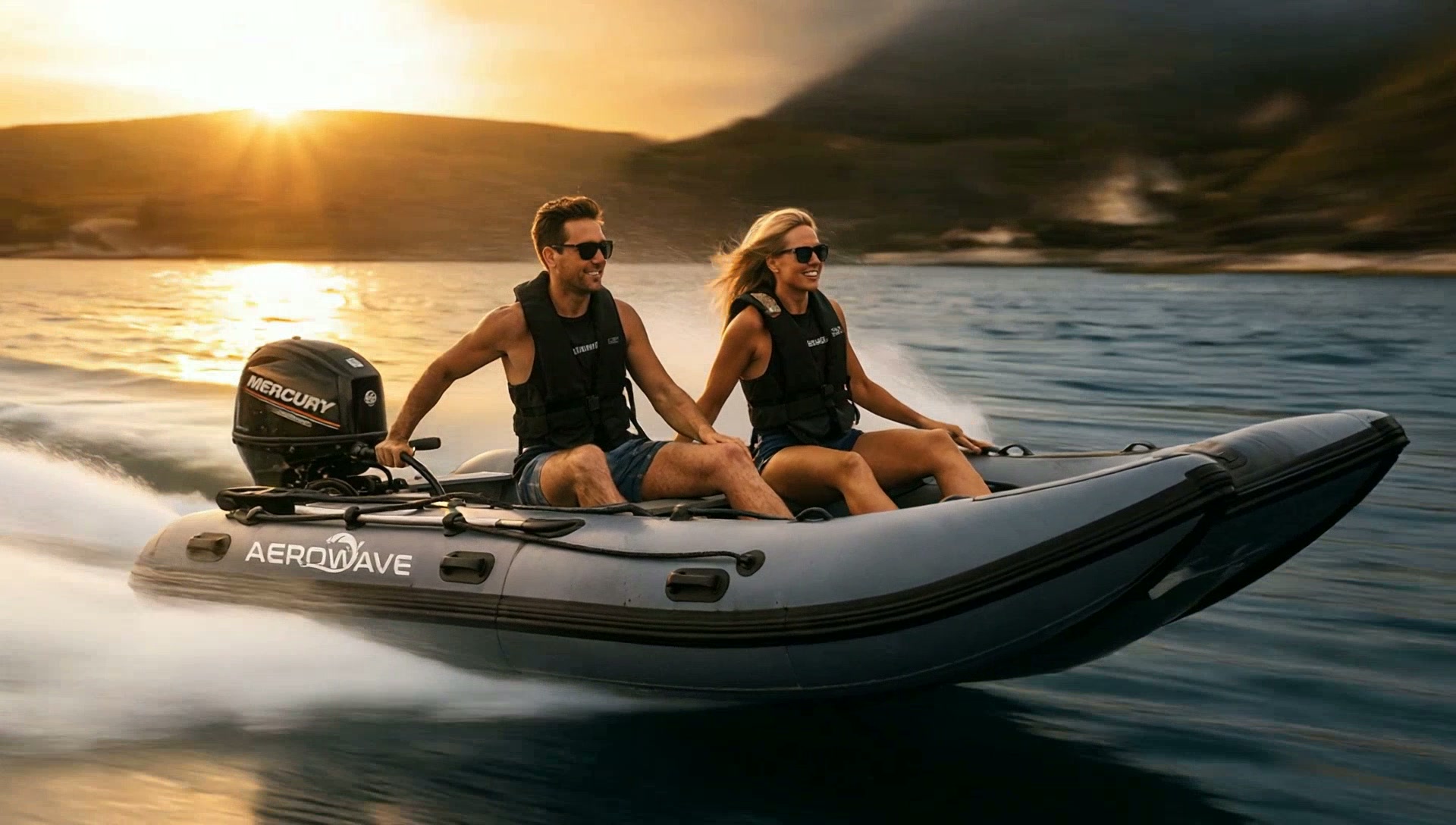
Weekend-Proof Score 17 questions · about 2 minutes
Will the boat you're about to buy survive an Australian summer?
Seventeen straight questions about where you'll use it, what you'll ask of it and the boat you're weighing up. You get a score out of 100, the exact weak points in your plan, and the one boat that genuinely fits.
Free · your result shows on screen · no email required
So which one is yours?
Pick how you'll actually use it and we'll take you straight to the right hull.
I want to fish it
Open bow, rod holders, deck space you can stand and cast from.
Viper Sport 400Family, diving and the beach
3.8 m Series 3 catamaran — low bow to climb back in wearing fins or a tank.
WaveRunner 380Tender / one-person launch
3.3 m hard-floor boat that packs into a bag and still takes a beach landing.
Viper 330Shop gear featured in this guide
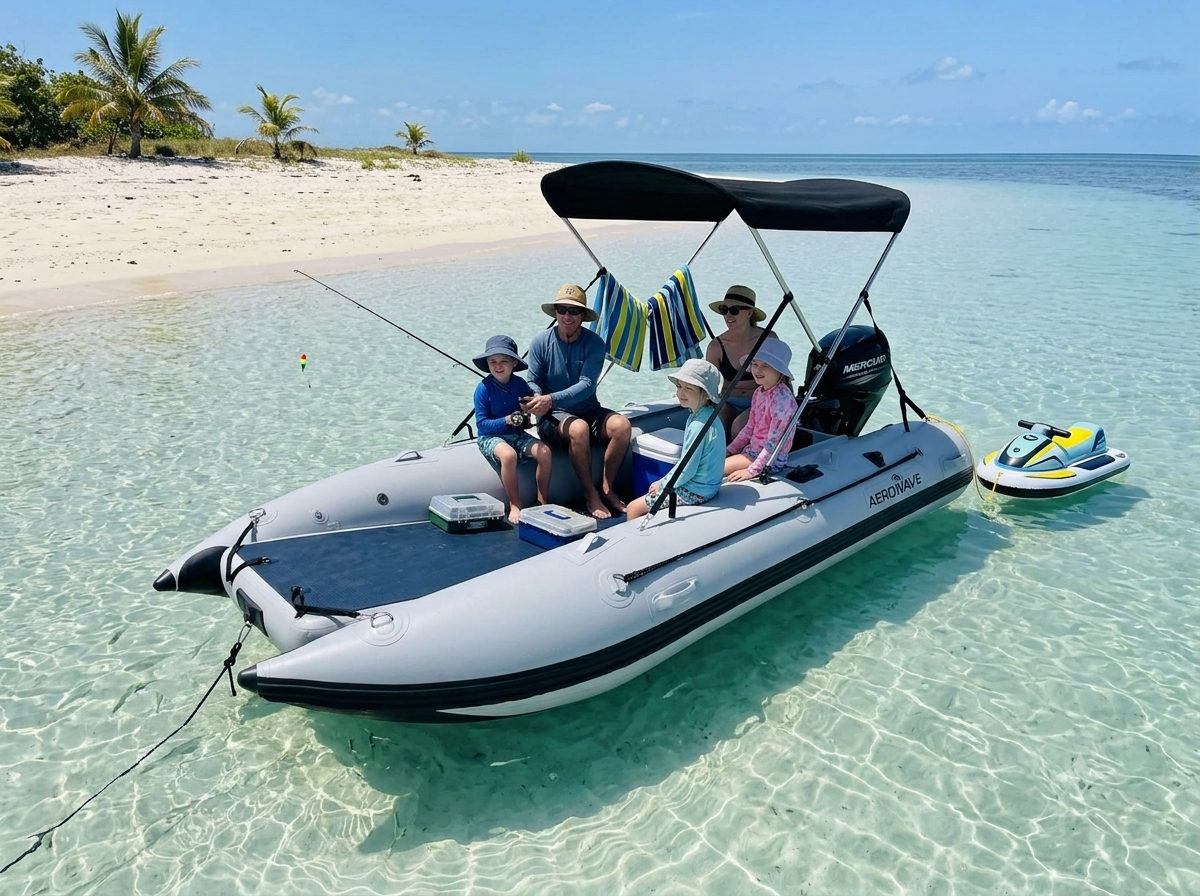
Aerowave WaveRunner 380 Series 3 Catamaran Package
The WaveRunner 380 Series 3 is a premium 3.8m inflatable catamaran package built for Australian and worldwide families, fishing, and coastal day boating — ideal for snorkeling and spearfishing — offering serious stability and premium German Valmex® construction.
Free freight to United States · local taxes payable on arrival
Aerowave Viper 400 Sovereign
Flagship 4m enclosed-bow inflatable catamaran. German VALMEX® 7321 Heavy Plus 1.2mm commercial-grade fabric, 10 PSI high-pressure drop-stitch air deck floor with VALMEX non-slip surface, LockPro wheels, full Bimini and FREE express delivery Australia-wide included. Winter special — save $1,000 until 31 August 2026.
Free freight to United States · local taxes payable on arrival
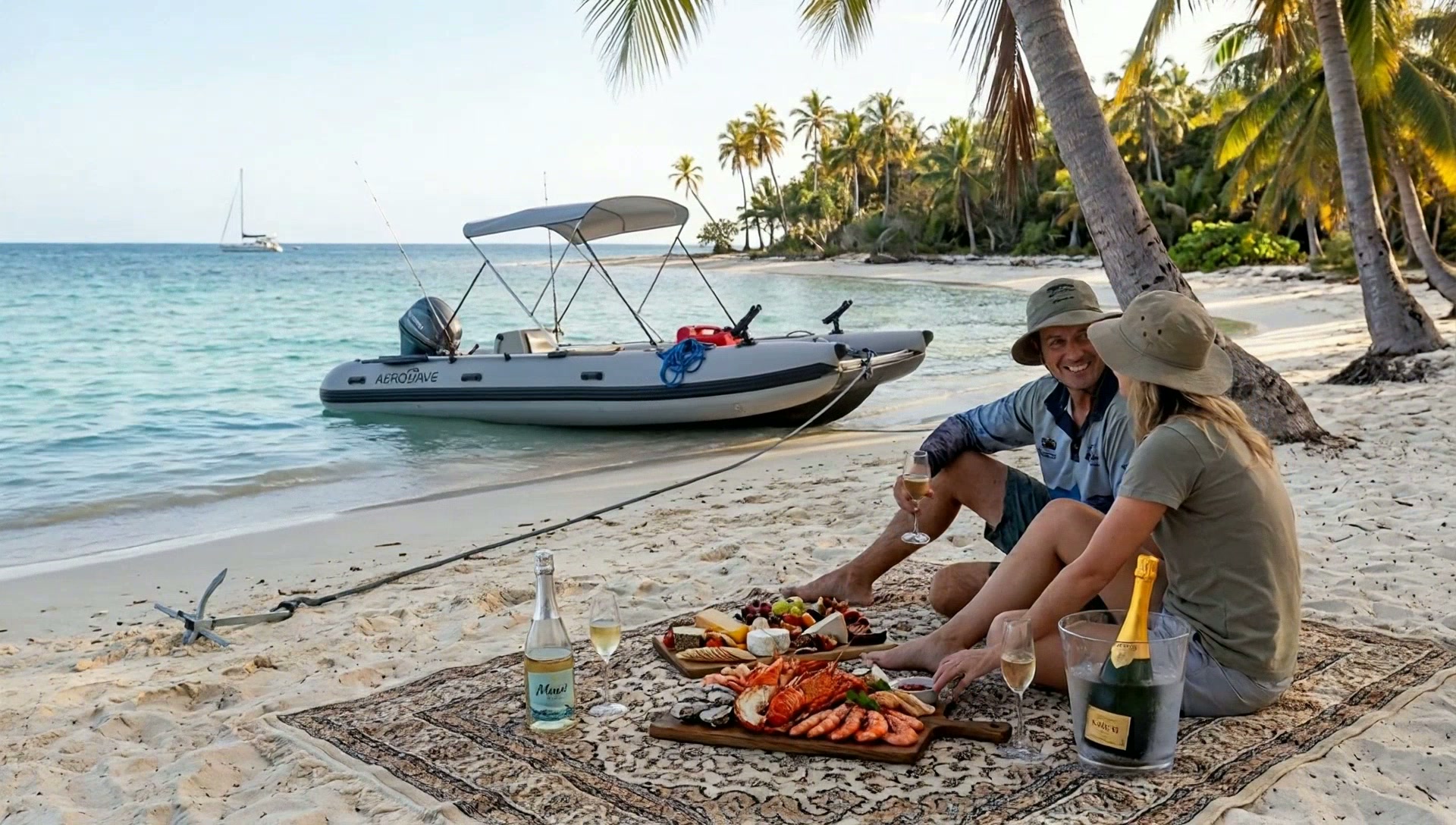
Aerowave Viper 365 Open Bow
Premium 3.65m Inflatable catamaran — built the same way as our flagship Viper 400 sports boat, just 35cm shorter. German VALMEX® 7321 Heavy Plus 1.2mm commercial-grade fabric, 10 PSI high-pressure drop-stitch air deck floor with VALMEX non-slip surface, LockPro wheels, full Bimini and FREE express delivery Australia-wide included.
Free freight to United States · local taxes payable on arrival
Not sure which suits you? Talk to a real boat owner.
Before you spend a cent
Buying from Australia, delivered to United States
You have never heard of us, we are on the other side of the world, and the internet is full of fakes. Fair enough. Here is everything you would need to check us out, in one place — no forms, no chat bot.
Australian designed business
Easy Inflatables, Avoca Beach NSW 2251. ABN 96 856 548 613. International orders ship from our Hong Kong hub.
222 owner reviews, 4.8 average
Read them in full, good and bad, on our reviews page.
CE certified, 7-year hull warranty
ISO 6185-3 and EU Directive 2013/53/EU. Warranty honoured worldwide.
Tracked, insured, door to door
FREE freight to United States · local tax/duty on arrival.
- Who am I actually buying from?
- Easy Inflatables, Avoca Beach NSW 2251, Australia. ABN 96 856 548 613. Sean is the owner and skipper, Gary Stewart handles sales on +61 2 4335 1603, Karen Matthews handles email. The boats are Australian designed; international orders ship from our Hong Kong dispatch hub so your landed price stays competitive. Phone us before you pay a cent — a real person answers.
- Is this really an Australian product?
- Yes — Australian designed and engineered on the NSW Central Coast. Manufacturing is done offshore to our spec, and international orders ship direct from our Hong Kong dispatch hub. If we routed every boat through Australia first, the freight alone would roughly double or triple your cost for the same hull.
- What do I pay, and what is not included?
- The delivery and import terms depend on your country. EU, UK, New Zealand and named Asia/Pacific lanes include duty and tax; US freight is free but US buyers pay import charges on arrival. Other destinations show their terms before payment.
- How do I pay safely?
- Card through Stripe (Visa, Mastercard, Amex, Apple Pay, Google Pay) or bank transfer. Card payments carry your bank's own dispute protection. We never ask for crypto, gift cards or payment to a personal account.
- What if it arrives damaged?
- Every boat ships fully tracked and insured door to door. Photograph the carton and the boat on arrival and email us — transit damage is claimed and replaced through us, not left with you and the courier.
- Is the warranty real outside Australia?
- Yes. The 7-year hull warranty on 1.2 mm VALMEX Heavy Plus and Orca Hypalon hulls applies wherever you are. Replacement parts are held in Australia and at our overseas hub and go out by express courier to your door.
- Is the boat actually certified?
- All Aerowave catamarans are CE certified to ISO 6185-3 and EU Directive 2013/53/EU. Certification paperwork is supplied with the boat — ask and we will send it before you order.
Frequently asked questions
- How long should an inflatable boat last in Australia?
- An inflatable boat's lifespan in Australia depends almost entirely on its fabric. A cheap PVC boat might only last 3-7 years, while a premium VALMEX® or Hypalon boat, when properly cared for, can last 10-15 years or more.
- What is the difference between GSM and mm in fabric specs?
- GSM stands for 'Grams per Square Metre' and measures the fabric's density or weight. The 'mm' measurement refers to the overall thickness of the fabric. Higher numbers in both generally indicate a more robust, heavy-duty material, like the 1500 GSM / 1.2mm VALMEX® on our Viper series.
- Why are VALMEX boats welded instead of glued?
- VALMEX® is engineered for thermal welding, which uses heat to fuse two pieces of fabric into one. This creates a molecular bond that is as strong or stronger than the material itself and won't degrade over time like adhesives can in heat and humidity.
- Is a heavier GSM fabric always better for an inflatable boat?
- Generally, a heavier GSM indicates greater durability and puncture resistance. However, it also adds weight to the boat. The key is balance; our AeroCat series uses a 1100 GSM VALMEX® for an optimal blend of toughness and performance suitable for a lightweight catamaran.
- How can I protect my inflatable boat from the sun?
- The best protection is to use a full boat cover when not in use. Regularly cleaning the tubes and applying a quality UV protectant like 303 Aerospace Protectant will also significantly extend the life of the fabric. Storing it clean, dry, and out of direct sun is ideal.
- Can you repair PVC and Hypalon boats yourself?
- Yes, both can be repaired, but they require different procedures and materials. PVC requires a specific PVC adhesive, while Hypalon needs a two-part glue and a more involved surface preparation. Using the wrong kit will result in a failed patch.
- Is VALMEX® fabric environmentally friendly?
- Mehler Texnologies, the German manufacturer of VALMEX®, adheres to strict European REACH regulations, which control the use of chemicals. They are also certified under ISO 14001 for environmental management, reflecting a commitment to sustainable production processes.
Ready to set sail?
Premium German-fabric inflatable catamarans, built to order and delivered to your door. Talk to our team or browse the fleet.
Like this guide? Get the next one in your inbox.
Owner-tested tips, gear deep-dives and Aussie boating know-how — no spam.