Best Inflatable Boat Sales Australia 2026
A lot of Australians start in the same place. They want a boat for fishing, family beach days, creek exploring, or as a tender, but they don't want the full size boat headache that comes with trailers, storage, ramp dela…
At a glance
A lot of Australians start in the same place. They want a boat for fishing, family beach days, creek exploring, or as a tender, but they don't want the full size boat headache that comes with trailers, storage, ramp dela…
- Your Ultimate Guide to Inflatable Boat Sales in Australia
- Why buyers are paying closer attention to inflatables
- What matters before you buy
- Why an Inflatable is Your Ticket to Australian Waterways
What we'd put you in
Aerowave Viper 400 Sovereign
Our best-selling boat: 4.0 m, 1.2 mm VALMEX hull, 7-year hull warranty.
US$3,167 USD
Delivered to your door, today's rate
- Free freight to United States · local taxes payable on arrival
- 7-year hull warranty
🇺🇸 Shipping to United States · landed price quoted in writing
Yes — we ship the Aerowave Viper 400 Sovereign to United States. Here's the landed price.
Our best-selling boat: 4.0 m, 1.2 mm VALMEX hull, 7-year hull warranty.
Written for Australian readers — but the boat ships to you. We are an Australian builder and this article is written from Australian waters. That changes nothing about what you can order: the same hull, the same 7-year warranty and the same certification go out to United States every week.
Aerowave Viper 400 Sovereign
- Boat package (export price)
- US$3,726
- 15% tariff relief credit
- − US$559
- Express air freight to United States
- Included
- Import duty, taxes & customs clearance
- Payable on arrival
- Estimated landed, USD
- US$3,167
Indicative, converted at today's rate, before local duty and tax on arrival. Ask below and we'll put a fixed figure in writing, valid 30 days.
- 7-year hull warranty
- 1500 GSM / 1.2 mm VALMEX® Heavy Plus hull
- CE certified to ISO 6185-3 and EU Directive 2013/53/EU
- Door-to-door, tracked the whole way
Your price, delivered to your door — freight included.
We email the full PDF quote (spec, freight, finance, WavePay) to your inbox in under 60 seconds. No spam — one quote, one follow-up.
See it for yourself
Real boats. Real owners. Real people behind them.
Plenty of what you read online these days is generated. Check us out properly — the factory, the reviews and the owners are all one click away. Why we use AI, and how to check we’re real
How our boats are built
Walk the production line: thermo-welded seams, 1.2 mm VALMEX Heavy Plus hulls, over-pressure relief valves on every chamber.
See the buildGoogle Maps reviews
Real Australian owners, five stars, published on our Google Business Profile with the map — read them there, not just on our own site.
Open Google Maps reviewsOwner stories
Boats in use — offshore, on rivers, on rescue duty. Photos and words from the people who actually own them.
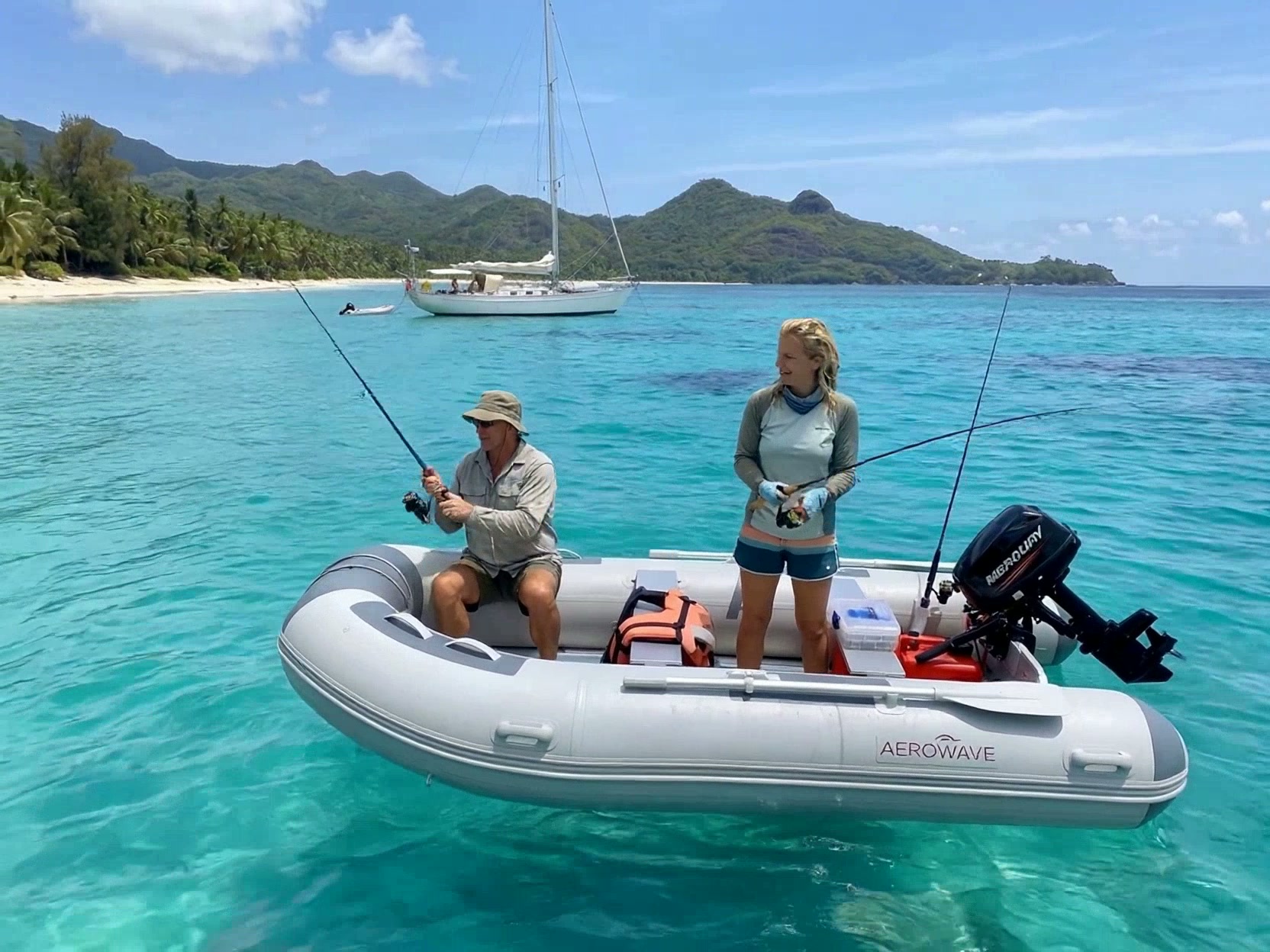
Read owner storiesA lot of Australians start in the same place. They want a boat for fishing, family beach days, creek exploring, or as a tender, but they don't want the full-size boat headache that comes with trailers, storage, ramp delays, and constant setup. They want something they can pack, carry, inflate, launch, and enjoy without turning every outing into a project.
That’s exactly why inflatable boat sales australia keeps getting stronger. Buyers are moving toward practical boats that suit the way people travel and boat here. The Australian boating sector reached $10.2 billion in 2024-25, and inflatable boat licence registrations surged 29% from 2019 to 2024, according to the Boating Industry Association report card. That shift makes sense. If your weekends include caravanning, beach camping, apartment living, or quick after-work sessions on the water, portability stops being a bonus and becomes the deciding factor.
Your Ultimate Guide to Inflatable Boat Sales in Australia
You feel the difference before you buy. One boat fits the way you spend time on the water in Australia. The other becomes another piece of gear that needs more storage, more planning, and more patience than most owners expect.
That is why buyers looking at inflatable boat sales australia are asking better questions now. They are not only comparing price tags. They want to know how a boat will handle a beach launch at Jervis Bay, a tender run from a mooring, a quick fish in an estuary, or a family day during a caravan trip up the coast.
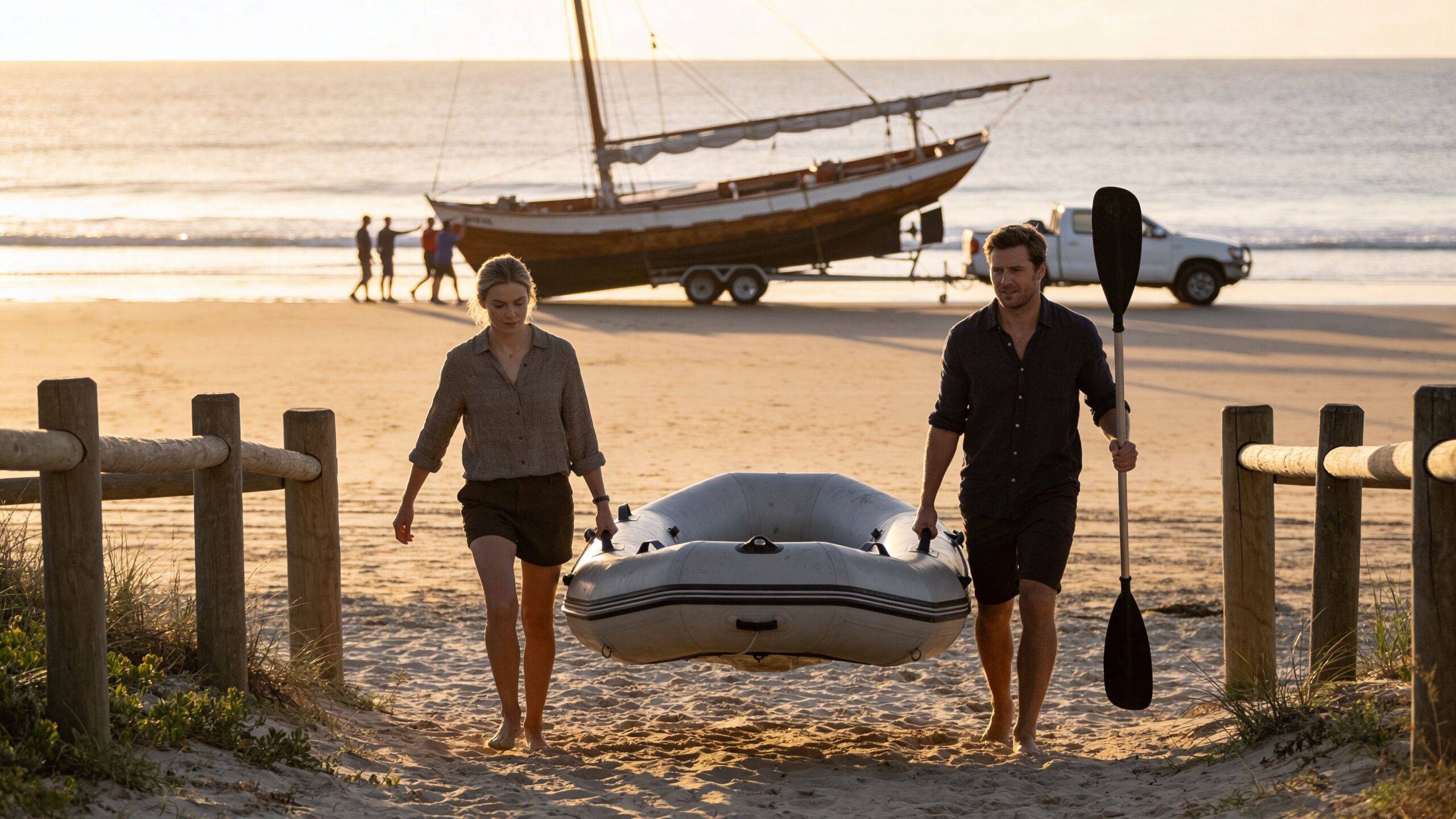
Why buyers are paying closer attention to inflatables
Portable boats have moved well beyond the old idea of a basic tender that only gets occasional use. In practice, a well-built SIB can cover a lot of ground. It can fish, carry the family, serve as a serious tender, and pack away without taking over the garage or driveway.
At Easy Inflatables, we see the same pattern every week. Buyers usually arrive thinking about convenience first, then realise the bigger win is frequency of use. A boat that is easy to pack, launch, clean, and store gets used more often. That changes the value equation quickly.
If you want a closer look at why portability matters so much in real ownership, our guide to the benefits of buying an inflatable boat breaks that down in practical terms.
Practical rule: Buy the boat you will launch often, not the one that only looks good on paper.
What matters before you buy
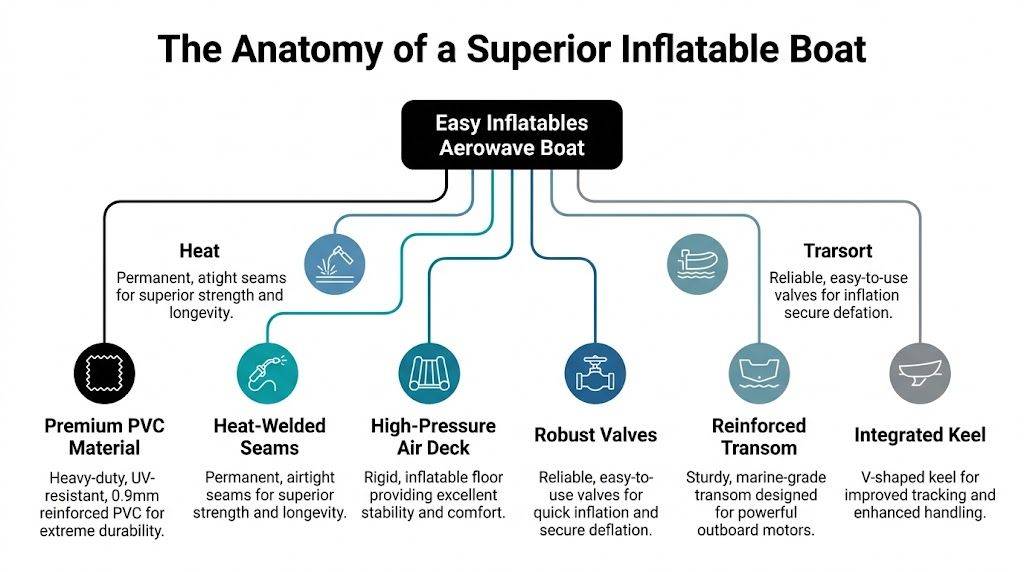
A quality inflatable is built around the details buyers often miss at first glance. Fabric grade matters. Floor design matters. So do seam construction, transom strength, tube diameter, weight capacity, and how the hull shape matches the motor you plan to run.
That is the trade-off many first-time buyers get wrong. A cheaper boat can look similar in photos, yet feel very different once it is loaded with fuel, safety gear, a second passenger, or fishing kit. Under Australian sun, sand, and salt, small differences in build quality stop being small.
Aerowave boats stand out here because they are designed for practical use in Australian conditions, not for showroom appeal alone. The right model should feel stable at rest, predictable underway, easy to set up, and durable enough to keep performing after repeat beach launches and regular transport in the car.
Before you commit, get clear on a few points:
- The size that suits your real crew and gear load
- The material and construction quality needed for UV, abrasion, and salt exposure
- Whether the boat is compliant and straightforward to register in your state
- The outboard range that gives proper performance without overloading the transom
- How delivery, after-sales support, spare parts, and warranty are handled
Get those decisions right and buying becomes much simpler. You end up with a boat that fits your weekends, your vehicle, and your local waterways, with far less guesswork once it is time to order.
Why an Inflatable is Your Ticket to Australian Waterways
The strongest argument for an inflatable boat is simple. It lets you go boating more often.
A traditional boat can still be the right tool in some situations, especially if you always launch from the same ramp and have permanent storage sorted. But for a huge number of Australians, the barrier isn’t desire. It’s hassle. If the boat is awkward to store, expensive to transport, and slow to launch, people use it less.
Portability changes everything
A soft inflatable boat works because it matches how people move around Australia. It suits SUVs, utes, caravans, apartments, garages, and holiday travel in a way a hard boat usually doesn’t.
One of the biggest practical wins is the “boat-in-a-bag” concept. Instead of needing trailer space and a dedicated parking plan, you can carry the boat as packed gear. That matters to travellers who stop at estuaries, inland lakes, calm bays, and river systems as part of a broader trip rather than a dedicated boating day.
For buyers weighing the lifestyle upside, this guide on the benefits of buying an inflatable boat lays out why portability changes the ownership experience so much.
They’re more capable than many buyers expect
A lot of first-time shoppers still carry an outdated mental image of an inflatable. They picture something flimsy, slow, or only suitable for still water. That’s usually based on cheap inflatables, not proper SIBs built with a rigid transom, quality floor, and marine-grade materials.
Used correctly, a good SIB handles fishing sessions, beach landings, tender duties, and recreational exploring extremely well. The key is matching expectations to the boat’s real purpose. If you want a portable craft that’s easy to launch and simple to own, an inflatable does that brilliantly. If you want a heavy offshore platform with all-day hard-hull behaviour, then you need to be honest about those trade-offs.
A well-chosen inflatable gets used because it removes excuses. That’s why owners often spend more time on the water than buyers of larger boats.
Where inflatables work especially well
The practical sweet spots are easy to recognise:
- Family beach days: You can launch from sand, bring the kids, and avoid ramp drama.
- Creek and estuary fishing: A compact SIB reaches spots that are annoying to access with a trailer boat.
- Caravan travel: It packs away and doesn’t dominate the whole trip.
- Yacht tender use: It stores more neatly and is easier to deploy than a rigid alternative.
- Short coastal exploring: For the right conditions and setup, it gives plenty of freedom without full boat ownership complexity.
Cost is only part of the story
People often focus on purchase price first. Fair enough. But what usually wins them over is ownership simplicity.
You’re not just buying a hull. You’re buying easier storage, simpler transport, less setup friction, and lower barriers to quick trips. Those advantages are what make inflatables so well suited to Australian boating habits.
The Anatomy of a Superior Inflatable Boat
You see the difference fast on an Australian summer launch. One boat is still firm, tracks cleanly, and shrugs off a sandy beach landing. Another already feels soft underfoot, twists under power, and starts showing wear around the seams and transom. From a distance they both looked fine online. On the water, build quality is obvious.
That is the part many first-time buyers miss. A serious SIB has to handle UV, salt, folding, beach abrasion, and the load of a real outboard, not just look tidy in a product photo. At Easy Inflatables, that is the filter we use when assessing whether a boat will stay enjoyable to own after the first few trips.
Fabric quality decides how the boat ages
Material choice has a direct effect on lifespan, rigidity, and how the boat copes with Australian conditions. Cheap PVC can look acceptable in a showroom, then harden, fade, or wear prematurely once it sees sun, heat, and repeated pack-down.
Aerowave boats use 1.2mm 2000D German Valmex PVC. That matters because better fabric holds pressure well, resists abrasion better, and keeps the boat feeling more solid under load. Buyers weighing up PVC against Hypalon should focus on actual use, not marketing labels. A boat used for occasional estuary runs has different demands from one stored in harsh sun and launched regularly on the coast.
This breakdown of Hypalon vs German Mehler 1.2mm PVC material is useful if you want a clearer material-by-material comparison.
The wider market points to the same benchmark. The Swift Marine Deluxe 2.9m specifications highlight premium materials such as ORCA Hypalon and German Valmex PVC because higher-grade fabric is built for harder service and longer life.
Seam construction matters more than most buyers realise
Good fabric still needs good seam work. This is one of the first areas where cheaper boats show their real standard after a season of use.
Thermo-welded seams are a better choice for buyers who want long-term durability. They hold up well through heat cycles, folding, and regular inflation. Poorly executed glued seams can be serviceable on a very low-use tender, but they are rarely the right answer for an owner planning frequent trips, beach launches, or heavier loading.
The transom and floor tell you whether it is built for real use
The transom carries more than the motor. It transfers thrust into the whole structure of the boat, and if it is underbuilt, you feel it in flex, handling, and long-term reliability. Aluminium transoms make sense for SIBs that will run outboards regularly because they cope well with repeated engine load and remain practical to maintain.
The floor matters just as much. A quality high-pressure air-deck gives the boat proper rigidity, improves footing, and makes movement onboard feel more predictable. You notice it when standing to cast, helping kids aboard, or shifting weight at anchor.
Here is what I tell buyers to inspect before they get distracted by accessories or package pricing:
- Fabric spec: Confirm exactly what material and thickness the tubes use.
- Seam type: Thermo-welded seams are the standard worth looking for.
- Transom construction: Check what it is made from and how it is reinforced.
- Floor design: A proper air-deck changes the feel of the boat underway and at rest.
- Valve quality: Reliable valves make inflation, pressure retention, and pack-down far less frustrating.
Compliance belongs on the checklist
A polished listing does not guarantee the boat is properly documented or built to a recognised standard. CE compliance gives buyers a useful baseline for design and safety classification, and it can make the registration process much more straightforward when you are working through paperwork in Australia.
It still sits alongside common sense, local requirements, and the right operating limits. But if compliance details are vague, that is a warning sign worth taking seriously before purchase.
Hull design still shapes the ride
An inflatable’s behaviour on the water comes down to more than length and tube size. Hull shape affects tracking, stability, and how the boat handles chop. Deadrise, keel shape, and overall geometry all influence whether a boat feels dry and predictable or flat and harsh.
That is why I tell buyers to look under the boat, not just at the spec sheet. A well-designed hull helps the boat lift cleanly, hold a line better, and soften the ride in the short, messy conditions that are common around Australian bays, estuaries, and coastal inlets.
Choosing Your Perfect Aerowave Size and Type
Boat size is where most buying decisions become clearer. Once people stop browsing by photo and start browsing by use, the shortlist gets much better.
Australian sales data already points to the sweet spot. Market data from Easy Inflatables shows that boats in the 3.3m to 4.0m range dominate sales in Australia, and those sizes typically suit 9.9 to 20HP outboards while carrying 4 to 5 adults plus gear. That’s why this size band works for so many family, fishing, and recreational setups.
Match the boat to the trip
If you mostly fish with one mate, your needs are different from a family loading towels, lunch, and beach gear. If you’re buying for a yacht tender, packed size can matter more than outright deck space.
The easiest way to choose is to start with the trip that will happen most often.
For anglers
Stability and usable interior space matter more than flashy extras. A longer SIB gives you a more forgiving platform when shifting weight, reaching for tackle, or working around an esky.
For many buyers, the core question isn’t “what’s the biggest boat I can afford?” It’s “what’s the largest boat I’ll still carry, inflate, launch, and use regularly?” That’s why mid-size models often win.
For families
Families usually benefit from going one size up if storage and transport allow it. The extra room reduces clutter, makes boarding easier, and gives everyone more confidence on the water.
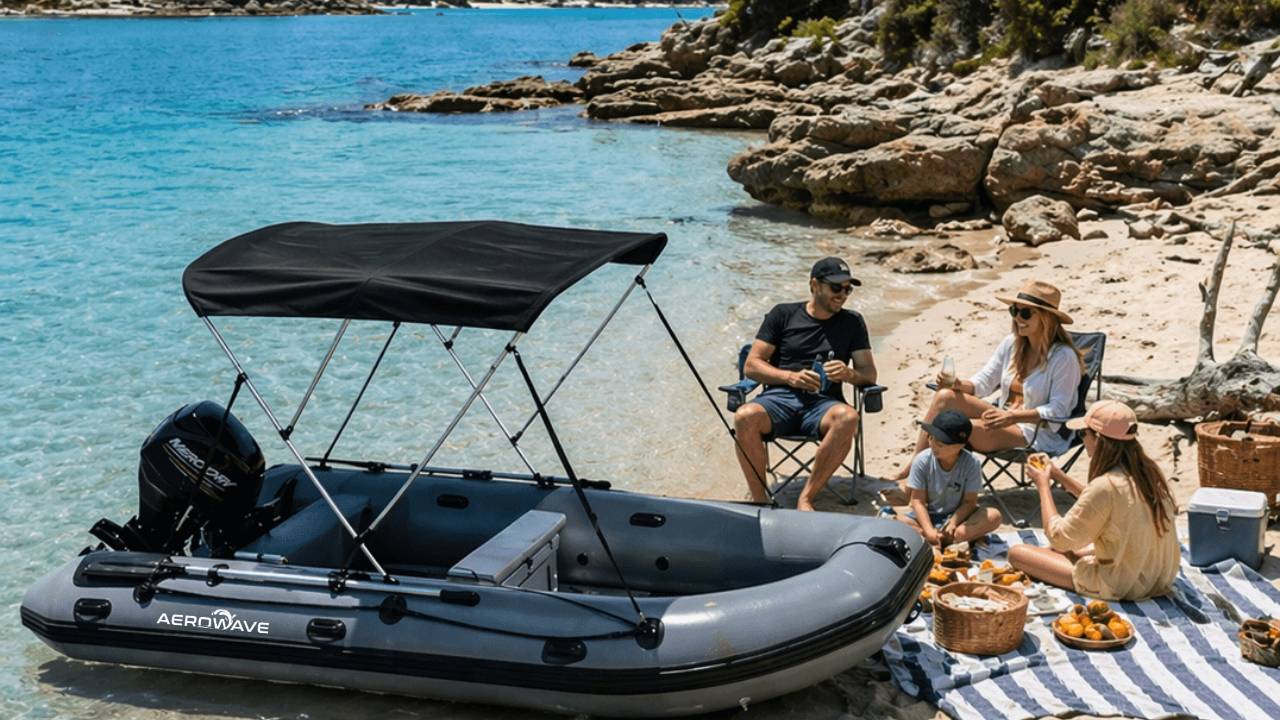
A family setup also benefits from smart accessories rather than raw size alone. Shade, bags, seating arrangement, and simple boarding all matter.
For yachties and travellers
This is where compact SIBs and inflatable tenders shine. If the boat’s main job is getting from mooring to shore, or fitting into a caravan trip without dominating packing space, smaller and lighter often beats larger and faster.
Aerowave model comparison guide
| Model | Length | Max Persons | Max HP | Best For |
|---|---|---|---|---|
| Aerowave compact tender | Smaller format | Small crew | Lower HP setup | Yacht tender, traveller, short shore runs |
| Aerowave mid-size SIB | 3.3m to 4.0m range | 4 to 5 adults plus gear | 9.9 to 20HP | Fishing, family use, general recreation |
| Aerowave larger recreational model | Larger format | More internal room | Higher-rated setup | Family days, heavier gear loads, broader use cases |
| Aerowave inflatable catamaran | Varies by build | Depends on model | Depends on rating | Stability-focused fishing and tender duties |
For readers comparing layouts and configurations, the Aerowave inflatable boats range is a useful starting point.
Where inflatable catamarans fit
Inflatable catamarans deserve separate attention because they solve a different problem from a standard SIB. They’re especially appealing to buyers who value stability, efficient movement, and a very planted feel on the water.
That makes them attractive for fishing, tender work, and buyers who want confidence at rest. They won’t be the perfect answer for everyone, but they’re worth serious consideration if side-to-side stability sits high on your list.
If your shortlist includes both a standard SIB and an inflatable catamaran, focus on launch style, storage shape, and how much you value steadiness at rest.
Powering Your Adventure Outboards and Turnkey Packages
A lot of disappointing first runs start the same way. The hull is fine, but the motor is too heavy, underpowered, the wrong shaft length, or a poor match for how the boat will be used in Australia.
Transom ratings set the limit. Real-world performance comes from pairing the hull with an outboard that suits your usual crew, gear load, launch style, and distance on the water.
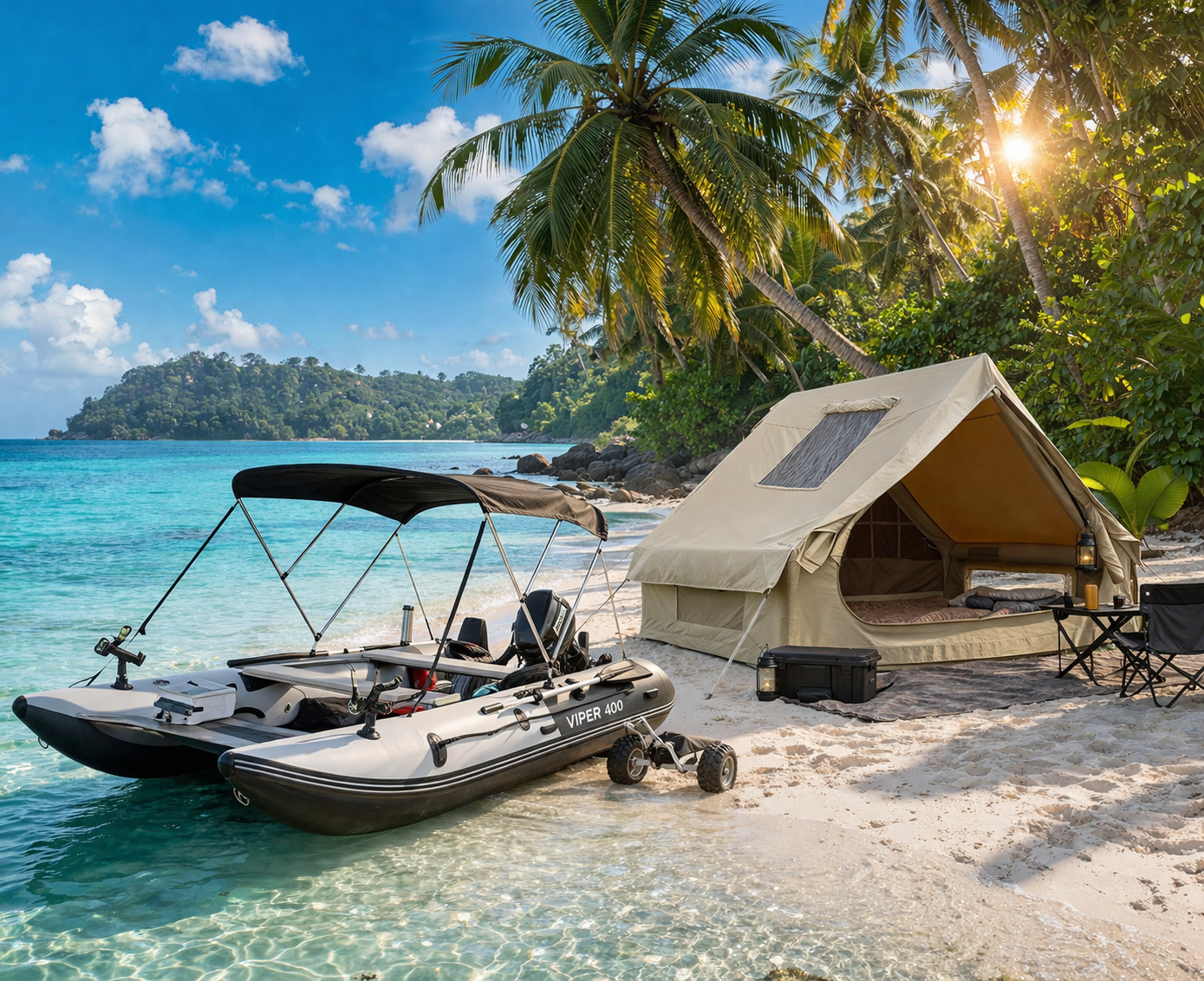
Standalone boat versus turnkey package
Buying the hull on its own still makes sense for some owners. If you already have a suitable outboard, know your shaft length, and understand the boat’s rating, a boat-only purchase can be the cleanest option.
For many buyers, though, separate sourcing creates work that usually gets underestimated. Motor weight affects trim. Shaft length affects how the boat lifts and planes. Fuel setup, battery placement, launch wheels, and accessory fitment all affect how the package behaves at the ramp and on the water.
That is why packaged setups are popular with families, fishers, and first-time SIB owners. The decisions are coordinated up front.
- Boat-only purchase: Suits owners who already have compatible gear and are confident checking fitment.
- Mixed sourcing from different sellers: Can work, but it often leads to delays, compatibility checks, and finger-pointing if something feels off.
- Turnkey rig: Best for buyers who want one setup selected to work together from day one.
Why outboard pairing matters
Hidea outboards cover a wide spread of use cases, from compact tenders to larger recreational inflatables. The right choice depends less on maximum horsepower and more on how the boat will spend most of its time.
A tender doing short shore runs has one job. A mid-size Aerowave carrying two adults, fishing gear, and a full esky has another. I usually tell buyers to size for their normal load, not the lightest possible test run. That gives a package that planes more cleanly, trims better, and feels less fussy at low speed.
The engine guide for inflatable boats helps narrow that choice around weight, use case, and compatibility.
More horsepower is not automatically better. Extra motor weight on the transom can make a portable inflatable harder to handle off the water, slower to pack down, and less balanced when lightly loaded.
What a complete setup should include
A worthwhile package covers the gear owners reach for straight away, not just the headline items.
- Matched outboard: Correct shaft length, sensible power, and a weight the hull can carry properly
- Inflation gear: A 22 PSI lithium pump makes setup faster and more consistent
- Storage and transport basics: Bags, tie-down considerations, and pack-down gear suited for portable use
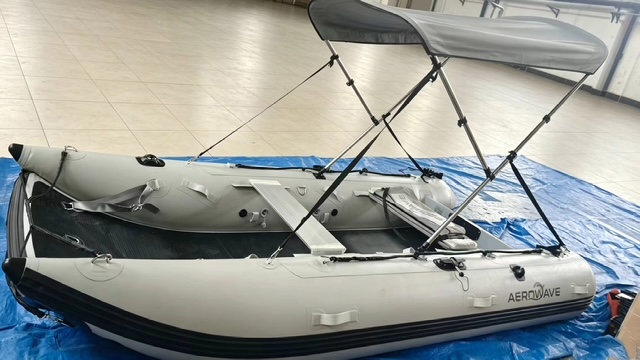
- Useful add-ons: Bimini tops, launch wheels, and rod holders that match how the boat will be used
- Ready-to-use fitout: Fewer compatibility surprises after delivery
Easy Inflatables supplies Aerowave boats, Hidea outboards, and package options built around that matched-setup approach. That matters in Australian conditions, where beach launches, chop, and longer drives to the ramp quickly expose poor rigging decisions.
For owners building out a broader camp or support setup around the boat, A Practical Guide to Your 12V Water Pump is also a useful reference for portable washdown and water handling.
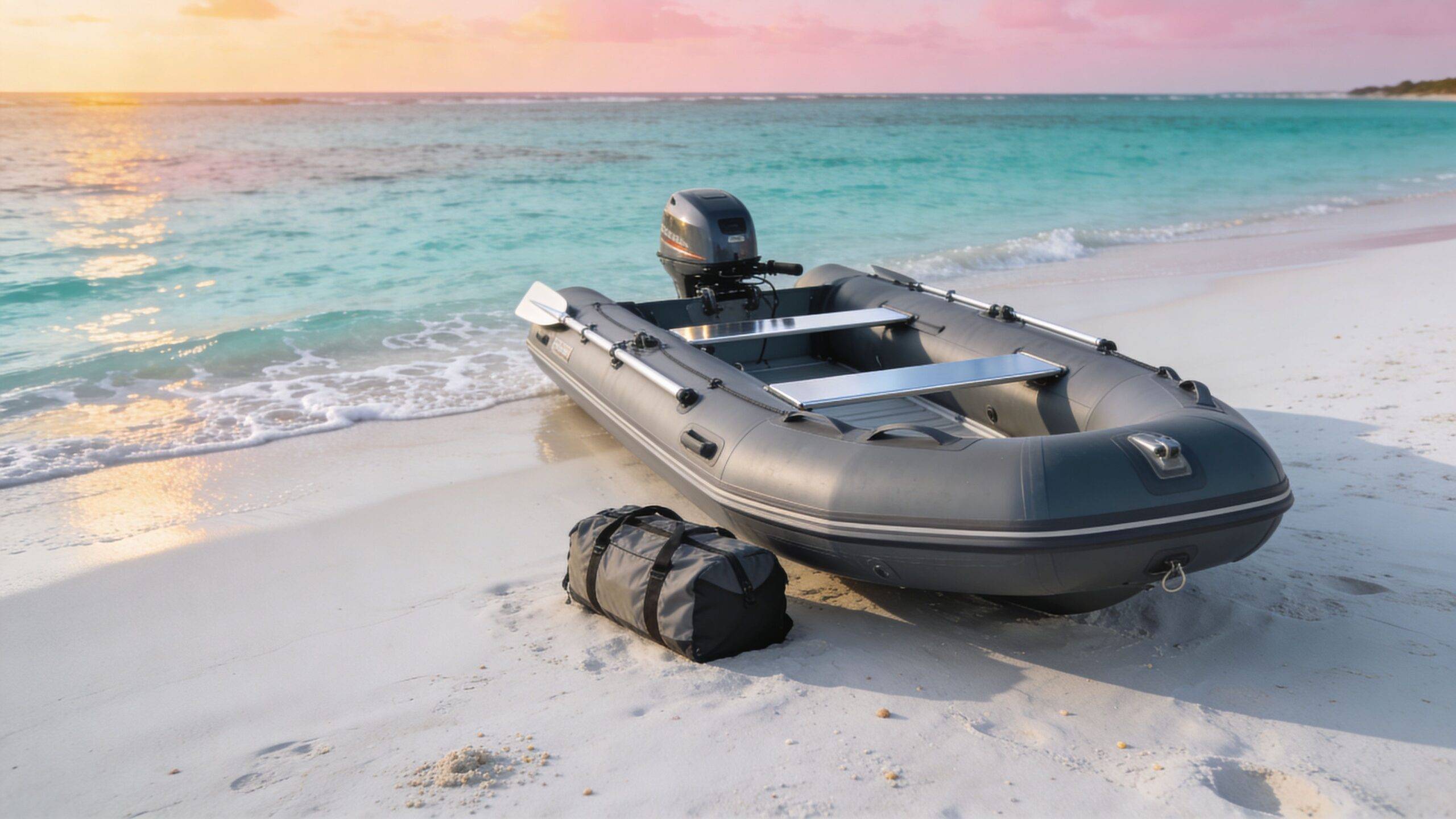
Here’s a look at what powered inflatable setups look like in practice:
What works and what doesn’t
Balanced packages get used more often. That is the ultimate test.
What works is enough power for the load you carry, a motor weight the hull handles well, and accessories that remove setup friction at the ramp. What usually disappoints is buying off brochure specs alone, then discovering the boat squats at the stern, feels awkward to trim, or becomes a chore to launch and retrieve.
A good inflatable setup should feel easy to own, not just impressive on paper.
The Easy Inflatables Buying Experience Click to Coastline
Buying a boat online worries some people for a fair reason. They don’t want hidden costs, vague delivery timing, or confusion about what’s included. A smooth buying experience fixes that by making each step obvious before payment, not after.
The process should feel less like a gamble and more like ordering a well-specified piece of boating gear. You choose the hull style, size, material, and package level that matches your use, then confirm the inclusions before it ships.
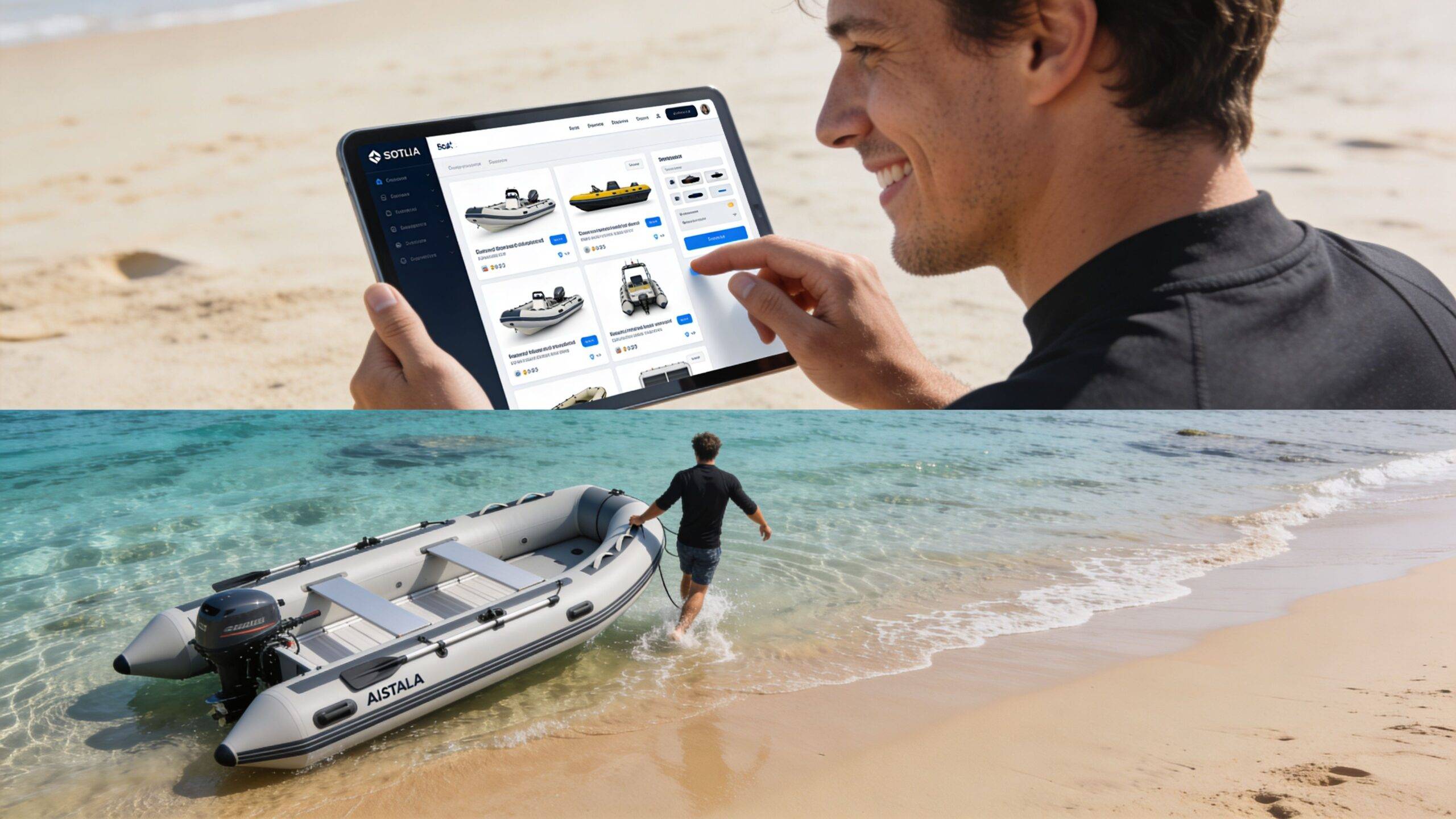
What removes stress from the purchase
The biggest confidence builders are usually practical, not flashy:
- Australia-wide shipping included: You know the boat can get to you without arranging freight separately.
- Duties and GST included for residents: That removes the nasty surprise factor.
- Warranty cover: A 3 to 5 year warranty gives buyers a clear support window.
- Local after-sales support: Questions after delivery are handled in Australia, not bounced offshore.
Those details matter because they remove the usual online-purchase anxiety. You’re not just buying a carton and hoping for the best. You’re buying with a clear support path.
Delivery timing matters
Straight answers about timing build trust. In-stock production-line boats are typically available in 7 to 10 days, while custom orders usually land in 30 to 35 days.
That split is useful because buyers are different. Some want a boat quickly for an upcoming trip. Others are happy to wait a bit longer for a custom layout, colour, material choice, or package combination that better suits their use.
A buying process feels easy when the seller is clear about inclusions, timeline, support, and warranty before you commit.
From order to first launch
The best customer journey is the one that keeps momentum after the sale. Once the boat arrives, buyers should be able to unpack it, confirm the included accessories, inflate it properly, and prepare for registration and first launch without chasing missing pieces.
That’s especially important for new owners. First-time inflatable buyers don’t want mystery. They want a clear path from checkout to water.
Australian Registration and On-Water Essentials
Registration worries a lot of first-time buyers more than it should. The process is usually straightforward when the boat has clear compliance details and the owner approaches it methodically.
Rules vary by state and territory, so the exact steps, labels, and thresholds will depend on where you live. But the general process is consistent. You confirm the boat’s specifications, gather proof of purchase and compliance information, check the motor details, then lodge the application with your local maritime authority.
What usually helps registration go smoothly
The most useful habit is preparation. Don’t wait until launch day to discover you’re missing a document or need extra details about the hull or engine.
This guide on inflatable boat compliance in Australia is a helpful starting point because it frames the compliance side in plain language.
A practical checklist usually includes:
- Proof of purchase: Keep your invoice and any package details together.
- Boat identification details: Model information and compliance documents matter.
- Engine information: Record your outboard details clearly.
- Owner identification: State authorities generally need standard personal identification.
- Safety gear plan: Know what equipment your local rules expect you to carry.
Don’t overcomplicate the process
Many SIB buyers assume registration will be painful because boating paperwork sounds intimidating. In practice, the process is often much easier when the boat comes from a seller that provides proper documentation and clear specifications.
If you’re new to boating, call your state authority early and ask exactly what they want. That short conversation often saves time.
Get your paperwork sorted before accessories and upgrades. A registered, compliant boat is useful. An accessorised boat stuck on land isn’t.
Simple habits that protect the boat
Maintenance is where inflatables can be pleasantly low-fuss, provided you stay consistent.
After saltwater use, rinse the boat thoroughly. Let it dry properly before folding and storing it. Check valves and seams periodically. Avoid dragging the boat unnecessarily across rough ground. Store it clean, dry, and out of harsh exposure when not in use.
A few habits matter more than everything else:
- Rinse after use: Salt left sitting on the boat shortens the life of fittings and surfaces.
- Dry before storage: Folding a damp boat invites mould and stale smells.
- Check pressure sensibly: Underinflation hurts performance and feel.
- Inspect high-wear zones: Look over seams, transom area, and contact points.
- Fold with care: Repeated rough folding creates avoidable stress.
Good maintenance isn’t complicated. It’s just regular. That’s one reason inflatable ownership works well for people who want boating without turning every month into a maintenance weekend.
Inflatable Boat FAQs and Your Next Adventure
Shoppers close to buying usually ask sharper questions than first-time browsers. They’re no longer asking whether inflatables are real boats. They’re asking whether buying makes more sense than hiring, how to compare options near them, and whether they can get a build that fits their exact use.
Is it better to hire or buy an inflatable boat
Hiring makes sense if you only need a boat once in a while and don’t care what setup you get. It’s a short-term solution.
Buying makes more sense when you want reliability, familiarity, and the freedom to use the boat whenever conditions line up. You also avoid repeating the same compromises every time you hire. Wrong size, tired equipment, awkward pickup timing, and unfamiliar handling all get old quickly.
If you fish regularly, travel with family, or want a dependable tender, ownership is usually the more practical path.
Can you get a custom-built inflatable boat in Australia
Yes, and for many buyers that’s the smart move. A custom build lets you choose the format that suits your actual boating life rather than settling for whatever is already on a warehouse shelf.
That can include material choice, layout preferences, and accessory setup. This matters most for yacht owners, anglers with specific rigging needs, and families who want a more purposeful package from the start.
How should you compare prices and features near you
Start with build quality, not the headline sale price. Two inflatables can look similar online and be very different in long-term value.
Use a simple filter:
- Material quality: Ask exactly what fabric is used.
- Seam construction: Check whether the seams are thermo-welded.
- Transom strength: Confirm the motor mounting is built properly.
- Compliance details: Make sure the paperwork side is clear.
- Package inclusions: Compare what’s included, not just the base hull.
- After-sales support: A cheap boat is less cheap when support disappears.
Buyers searching “inflatable boats for sale Sydney” or comparing local dealers often find that the most useful comparison isn’t suburb versus suburb. It’s quality versus compromise.
The right comparison question isn’t “Which boat is cheapest near me?” It’s “Which boat will still feel like a good decision after a full season of use?”
What should you do next
If your goal is easy boating, portable storage, and real capability for Australian conditions, a well-built SIB is hard to beat. The key is choosing the right material, the right size, and the right engine package from the start.
That approach gives you a boat you’ll use. And that’s the point.
If you’re ready to compare sizes, materials, inflatable catamarans, tenders, or outboard packages, browse the current range at Easy Inflatables and match a setup to the way you boat in Australia.
Explore the Aerowave range
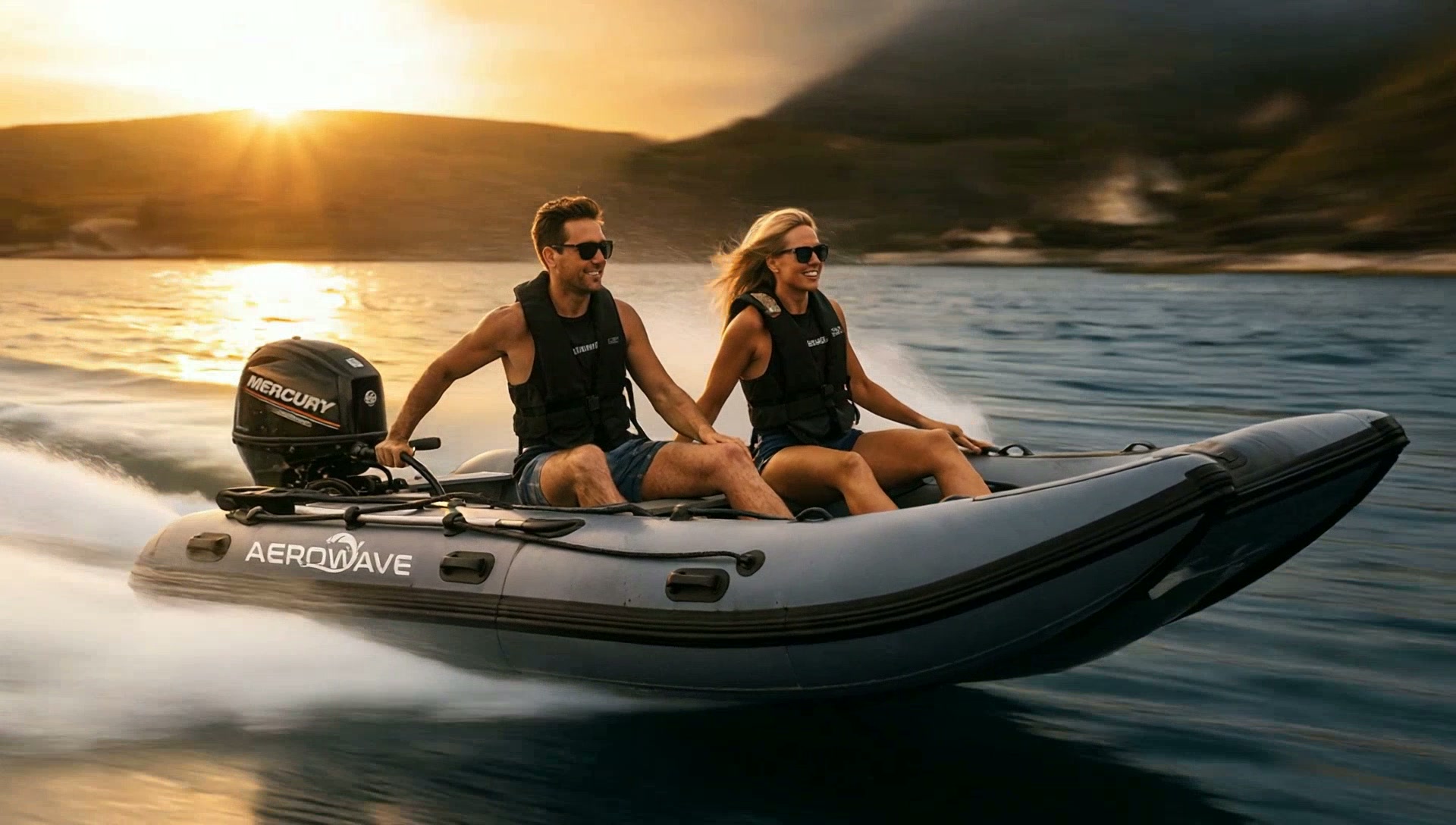
Weekend-Proof Score 17 questions · about 2 minutes
Will the boat you're about to buy survive an Australian summer?
Seventeen straight questions about where you'll use it, what you'll ask of it and the boat you're weighing up. You get a score out of 100, the exact weak points in your plan, and the one boat that genuinely fits.
Free · your result shows on screen · no email required
So which one is yours?
Pick how you'll actually use it and we'll take you straight to the right hull.
I want to fish it
Open bow, rod holders, deck space you can stand and cast from.
Viper Sport 400Family, diving and the beach
3.8 m Series 3 catamaran — low bow to climb back in wearing fins or a tank.
WaveRunner 380Tender / one-person launch
3.3 m hard-floor boat that packs into a bag and still takes a beach landing.
Viper 330Shop gear featured in this guide
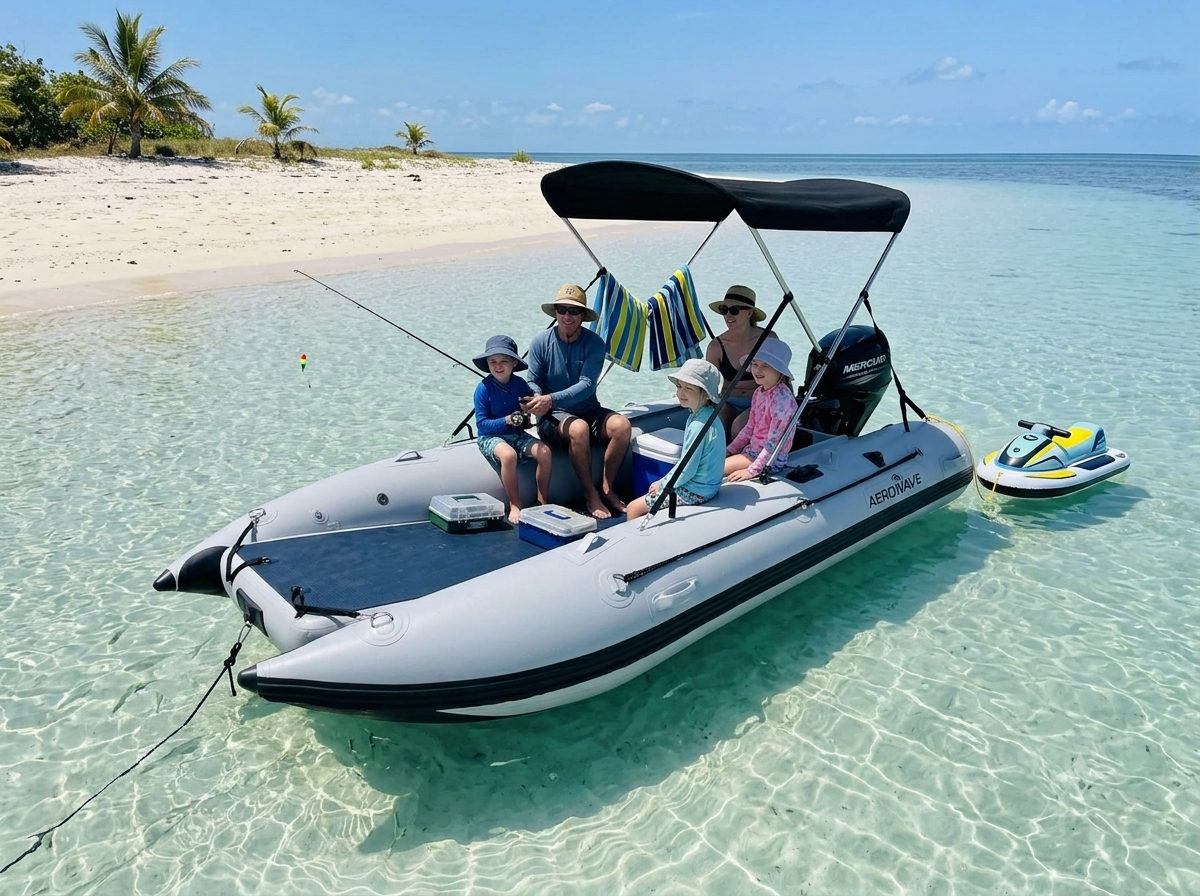
Aerowave WaveRunner 380 Series 3 Catamaran Package
The WaveRunner 380 Series 3 is a premium 3.8m inflatable catamaran package built for Australian and worldwide families, fishing, and coastal day boating — ideal for snorkeling and spearfishing — offering serious stability and premium German Valmex® construction.
Free freight to United States · local taxes payable on arrival
Aerowave Viper 400 Sovereign
Flagship 4m enclosed-bow inflatable catamaran. German VALMEX® 7321 Heavy Plus 1.2mm commercial-grade fabric, 10 PSI high-pressure drop-stitch air deck floor with VALMEX non-slip surface, LockPro wheels, full Bimini and FREE express delivery Australia-wide included. Winter special — save $1,000 until 31 August 2026.
Free freight to United States · local taxes payable on arrival
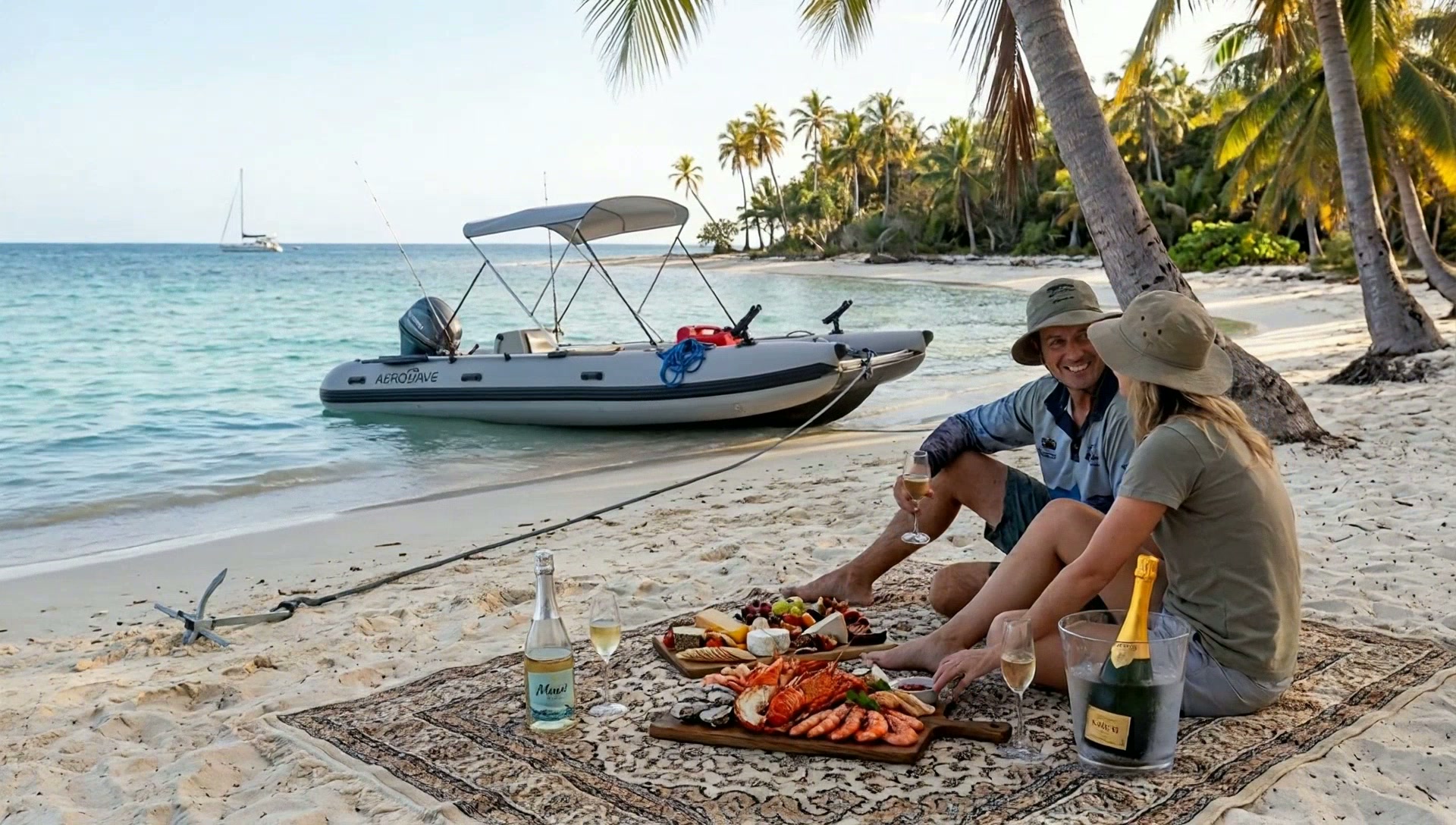
Aerowave Viper 365 Open Bow
Premium 3.65m Inflatable catamaran — built the same way as our flagship Viper 400 sports boat, just 35cm shorter. German VALMEX® 7321 Heavy Plus 1.2mm commercial-grade fabric, 10 PSI high-pressure drop-stitch air deck floor with VALMEX non-slip surface, LockPro wheels, full Bimini and FREE express delivery Australia-wide included.
Free freight to United States · local taxes payable on arrival
Not sure which suits you? Talk to a real boat owner.
Before you spend a cent
Buying from Australia, delivered to United States
You have never heard of us, we are on the other side of the world, and the internet is full of fakes. Fair enough. Here is everything you would need to check us out, in one place — no forms, no chat bot.
Australian designed business
Easy Inflatables, Avoca Beach NSW 2251. ABN 96 856 548 613. International orders ship from our Hong Kong hub.
222 owner reviews, 4.8 average
Read them in full, good and bad, on our reviews page.
CE certified, 7-year hull warranty
ISO 6185-3 and EU Directive 2013/53/EU. Warranty honoured worldwide.
Tracked, insured, door to door
FREE freight to United States · local tax/duty on arrival.
- Who am I actually buying from?
- Easy Inflatables, Avoca Beach NSW 2251, Australia. ABN 96 856 548 613. Sean is the owner and skipper, Gary Stewart handles sales on +61 2 4335 1603, Karen Matthews handles email. The boats are Australian designed; international orders ship from our Hong Kong dispatch hub so your landed price stays competitive. Phone us before you pay a cent — a real person answers.
- Is this really an Australian product?
- Yes — Australian designed and engineered on the NSW Central Coast. Manufacturing is done offshore to our spec, and international orders ship direct from our Hong Kong dispatch hub. If we routed every boat through Australia first, the freight alone would roughly double or triple your cost for the same hull.
- What do I pay, and what is not included?
- The delivery and import terms depend on your country. EU, UK, New Zealand and named Asia/Pacific lanes include duty and tax; US freight is free but US buyers pay import charges on arrival. Other destinations show their terms before payment.
- How do I pay safely?
- Card through Stripe (Visa, Mastercard, Amex, Apple Pay, Google Pay) or bank transfer. Card payments carry your bank's own dispute protection. We never ask for crypto, gift cards or payment to a personal account.
- What if it arrives damaged?
- Every boat ships fully tracked and insured door to door. Photograph the carton and the boat on arrival and email us — transit damage is claimed and replaced through us, not left with you and the courier.
- Is the warranty real outside Australia?
- Yes. The 7-year hull warranty on 1.2 mm VALMEX Heavy Plus and Orca Hypalon hulls applies wherever you are. Replacement parts are held in Australia and at our overseas hub and go out by express courier to your door.
- Is the boat actually certified?
- All Aerowave catamarans are CE certified to ISO 6185-3 and EU Directive 2013/53/EU. Certification paperwork is supplied with the boat — ask and we will send it before you order.
Ready to set sail?
Premium German-fabric inflatable catamarans, built to order and delivered to your door. Talk to our team or browse the fleet.
Like this guide? Get the next one in your inbox.
Owner-tested tips, gear deep-dives and Aussie boating know-how — no spam.