The Abrasion Nobody Counts: Preventing Inflatable Boat Storage Damage
Discover the hidden cause of wear on your inflatable boat. Most damage happens not on the water, but from transport and storage abrasion. Learn how to prevent it.
At a glance
Discover the hidden cause of wear on your inflatable boat. Most damage happens not on the water, but from transport and storage abrasion. Learn how to prevent it.
- What is Inflatable Boat Storage Damage?
- The Folding Fallacy: How Packing Your Boat Can Ruin It
- The Grit Grinder: Sand and Debris in the Fold
- The Crease Catastrophe: Permanent Folds and Fabric Fatigue
What we'd put you in
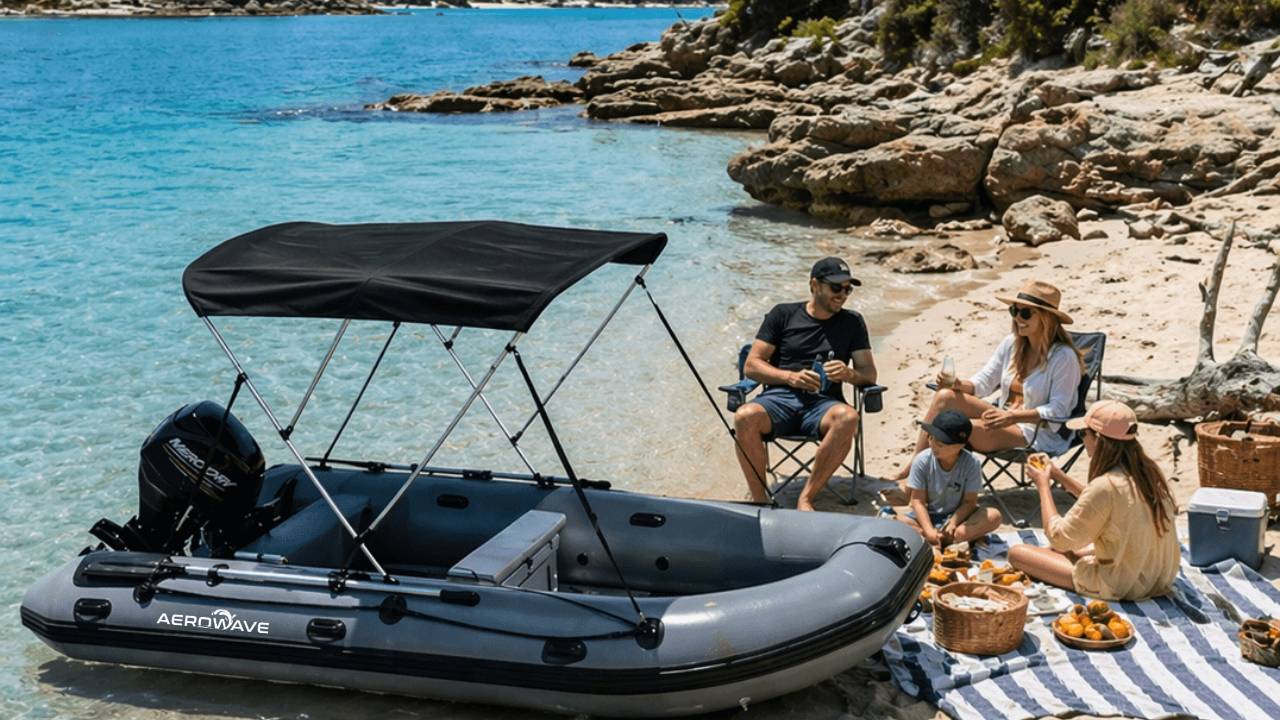
Aerowave Viper 400 Sovereign
Our best-selling boat: 4.0 m, 1.2 mm VALMEX hull, 7-year hull warranty.
US$3,167 USD
Delivered to your door, today's rate
- Free freight to United States · local taxes payable on arrival
- 7-year hull warranty
🇺🇸 Shipping to United States · landed price quoted in writing
Yes — we ship the Aerowave Viper 400 Sovereign to United States. Here's the landed price.
Our best-selling boat: 4.0 m, 1.2 mm VALMEX hull, 7-year hull warranty.
Aerowave Viper 400 Sovereign
- Boat package (export price)
- US$3,726
- 15% tariff relief credit
- − US$559
- Express air freight to United States
- Included
- Import duty, taxes & customs clearance
- Payable on arrival
- Estimated landed, USD
- US$3,167
Indicative, converted at today's rate, before local duty and tax on arrival. Ask below and we'll put a fixed figure in writing, valid 30 days.
- 7-year hull warranty
- 1500 GSM / 1.2 mm VALMEX® Heavy Plus hull
- CE certified to ISO 6185-3 and EU Directive 2013/53/EU
- Door-to-door, tracked the whole way
Your price, delivered to your door — freight included.
We email the full PDF quote (spec, freight, finance, WavePay) to your inbox in under 60 seconds. No spam — one quote, one follow-up.
See it for yourself
Real boats. Real owners. Real people behind them.
Plenty of what you read online these days is generated. Check us out properly — the factory, the reviews and the owners are all one click away. Why we use AI, and how to check we’re real
How our boats are built
Walk the production line: thermo-welded seams, 1.2 mm VALMEX Heavy Plus hulls, over-pressure relief valves on every chamber.
See the buildGoogle Maps reviews
Real Australian owners, five stars, published on our Google Business Profile with the map — read them there, not just on our own site.
Open Google Maps reviewsOwner stories
Boats in use — offshore, on rivers, on rescue duty. Photos and words from the people who actually own them.
Read owner storiesThe single biggest threat to your inflatable boat's lifespan isn't a reef, a rogue wave, or a dropped fishing knife—it's the gravel on your driveway.
When you invest in a quality portable boat, you imagine years of adventure on the water. You think about exploring hidden coves, fishing in quiet estuaries, and making memories with family and friends. You probably worry about obvious hazards: sharp oysters, submerged logs, or a clumsy moment with a filleting knife. But what if the most persistent and damaging threat to your boat happens when it’s high and dry? For most owners, the slow, grinding wear of improper storage and transport is what truly shortens a boat's life.
This is the abrasion nobody counts. It’s the damage that happens in a thousand tiny increments: folding your boat over a few grains of sand, dragging the bag across a concrete boat ramp, the subtle chafe of a tie-down strap on a long drive, or the constant rub against a ute tray. Each event on its own seems trivial, but compounded over years, they systematically destroy a boat’s fabric. This guide exposes these hidden dangers and provides a definitive framework for preventing them, ensuring your inflatable boat serves you faithfully for a decade or more, not just a few seasons.
What is Inflatable Boat Storage Damage?
Inflatable boat storage damage is the cumulative physical wear—abrasions, scuffs, punctures, and fabric stress—that occurs when a boat is not in the water. Unlike a dramatic on-water puncture, this type of damage is slow and insidious, caused by seemingly harmless actions during packing, storing, and transporting your vessel.
At its core, it’s a battle against friction. The very portability that makes an inflatable boat so appealing is also its greatest vulnerability. Every time you deflate, fold, and pack your boat, you are introducing opportunities for abrasion. The main culprits are surprisingly mundane:
- Grit Contamination: Folding sand, dirt, or fine gravel into the boat's fabric. These particles act like sandpaper under the pressure of the fold, grinding away at the PVC or Hypalon coating.
- Surface Drag: Dragging the boat or its storage bag across abrasive surfaces like asphalt, concrete, or pavers. This is the fastest way to wear holes in a bag and subsequently damage the boat inside.
- Transport Rub: The constant, high-frequency vibration of a vehicle causes the boat to rub against roof racks, ute trays, or other gear. Over a long journey, this focused friction can wear through even tough fabrics.
- Strap Chafe: Tie-down straps, especially overtightened ratchet straps, create immense pressure on small areas, leading to concentrated wear and potential seam stress.
- Internal Pressure Points: Storing hard items like pumps, oars, or seat planks inside the folded boat. These create hard edges that press against the fabric from within, causing abrasion from the inside out.
Understanding these mechanisms is the first step. Preventing them requires a combination of disciplined habits and choosing a boat built with a sufficient 'wear margin' to withstand the rigours of real-world use.
The Folding Fallacy: How Packing Your Boat Can Ruin It
We're taught to fold our boats neatly to fit them in their bag. It seems like the correct and responsible thing to do. However, the act of folding is where much of the long-term, invisible damage begins. Without the right preparation, each fold can be a step toward premature fabric failure.
The Grit Grinder: Sand and Debris in the Fold
This is the number one cause of avoidable inflatable boat damage. You’ve had a fantastic day on the water and pull your boat up onto the sand or a grassy bank. You let the air out, and in your haste to get home, you fold it up. What you’ve also done is fold in countless tiny, sharp particles of sand, shell, and dirt.
When the boat is folded and compressed in its bag, these particles are trapped between layers of fabric. Every movement—lifting the bag into your car, the vibrations of the drive home, shifting it in the garage—causes these abrasive grains to grind away at the boat's outer coating. It's like folding a sheet of sandpaper into the boat itself. Initially, the damage is microscopic, a dulling of the finish. But over dozens of trips, these micro-abrasions strip away the protective outer layer of the fabric, exposing the underlying scrim (the polyester base fabric) to UV rays and further physical damage. This is why a five-year-old boat that's always packed away gritty can look twenty years old, with faded, weak-looking patches along the fold lines.
The Crease Catastrophe: Permanent Folds and Fabric Fatigue
Modern boat fabrics like the German-made VALMEX® used in our Aerowave range are incredibly resilient. However, all fabrics have a memory. If you repeatedly fold your boat along the exact same lines every single time, you are creating lines of concentrated stress.
Think of bending a credit card back and forth. Eventually, it weakens and snaps along the crease. While boat fabric is far more durable, the principle is similar. Over many years, permanent creasing can lead to plasticiser migration in PVC fabrics, making the fold lines more brittle and susceptible to cracking, especially in cold weather. It also puts continuous strain on the seams that fall along these fold lines. While a well-made boat with high-quality welded or glued seams can handle this for a long time, it’s an unnecessary stressor that can be easily avoided by simply varying your folding pattern slightly each time.
Internal Sabotage: Storing Gear Inside the Fold
It’s tempting. The boat is a big, empty wrapper, and you have oars, a pump, maybe a bench seat or a bait board. Why not just roll them up inside the boat to save space? This is a critical error.
Any hard or sharp-edged object packed inside the folded boat creates a significant pressure point. The corner of a transom wheel bracket, the edge of an aluminium oar blade, or the valve on the foot pump will press relentlessly into the fabric. During transport, this pressure point becomes a point of intense friction. It’s a guaranteed way to create a wear patch that will eventually become a hole. Always pack your boat's hull separately from its hard accessories. Your boat bag is for the boat; use a separate wheel bag or storage box for everything else.
Your Step-by-Step Guide to Preventing Folding Damage
Preventing inflatable boat storage damage from folding isn't complicated, but it requires discipline. By turning these steps into a non-negotiable post-boating ritual, you will dramatically extend the life of your vessel.
Here is your checklist for the perfect pre-fold routine:
- 1. Rinse Thoroughly, Every Time: Before you even think about deflating, give the boat a complete rinse with fresh water. Don't just splash it; get into all the nooks and crannies. Pay special attention to the area between the tubes and the floor, under rubbing strakes, and around seam edges where sand loves to hide. This single step removes the 'sandpaper' that causes the most damage.
- 2. Dry Completely: Folding a boat while damp is a recipe for mould and mildew, which can stain the fabric and, in severe cases, attack the adhesives in glued seams. Ideally, let the boat air dry in the shade. If you're short on time, use a microfibre towel or a shammy to wipe it down. Ensure it is bone dry before it goes into the bag, especially for long-term storage.
- 3. Choose Your Folding Surface Wisely: Never, ever fold your boat on a coarse surface like a gravel car park, asphalt road, or concrete boat ramp. The slightest drag will cause immediate and severe abrasion. Always fold it on a clean patch of grass, a smooth deck, or carry a cheap, large tarp in your car to use as a dedicated folding mat. A clean surface is non-negotiable.
- 4. Deflate Evenly and Without Force: Open all the air valves to let the boat deflate naturally. Pushing and squeezing the air out aggressively puts unnecessary stress on the internal baffles and seams. Once most of the air is out, you can begin to roll or fold the boat, which will push the remaining air out as you go.
Transport Trauma: How Roof Racks and Ute Trays Cause Damage
The journey to and from the water is another major source of hidden inflatable boat damage. While the boat is securely strapped down, it's subjected to a relentless combination of pressure, vibration, and friction that can cause significant wear over time.
The Rub of the Road: Vibration and Abrasion
When your boat is strapped to a roof rack or sitting in the bed of a ute, it might look perfectly still. But at a microscopic level, the vibrations from the road surface are causing it to constantly shift and rub against any point of contact. Over a two-hour drive to your favourite spot, that’s thousands upon thousands of tiny movements.
Where the boat’s tube rests on the hard metal or plastic of a roof rack bar, this constant vibration acts like a power sander in slow motion. It slowly erodes the fabric's outer layer. You may not notice it for years, but one day you’ll see a perfectly straight, dull, and weakened line across the tubes that matches your roof rack spacing exactly. This is especially true for heavier boats, where the pressure at these contact points is greater.
Strap Chafe: The Silent Killer
Tie-down straps are essential for safety, but they are also a primary cause of chafe. A cam-buckle or ratchet strap concentrates all its holding force along a narrow one- or two-inch strip of webbing. When this is cinched down tight over a tube, it creates a point of high pressure.
Add in the road vibrations, and the strap begins to chafe against the fabric, the grab ropes, and any D-rings it touches. Overtightening with a ratchet strap is a common mistake; you should aim for 'firm', not 'crushing'. The tension itself can deform the tubes and stress the seams underneath, while the friction can wear through the fabric surprisingly quickly. We have seen boats with deep grooves worn into their tubes from just a few long trips with overtightened, unpadded straps.
The solution is simple: padding. Never let a strap have direct contact with the boat's main tubes. Use sections of pool noodle, high-density foam blocks, or even just thick, folded old towels at all contact points. This spreads the load and provides a sacrificial layer that absorbs the friction, protecting your boat's fabric.
The Fabric Factor: Why Material Thickness is Your Best Defence
While careful handling is crucial, the physical properties of your boat's fabric provide the ultimate defence against the inevitable bumps and scrapes of real-world use. The thickness and quality of the material create a 'wear margin'—a buffer that can absorb years of abrasion before the structural integrity of the fabric is compromised. This is where premium boats stand apart from budget imports.
Understanding Fabric Metrics: GSM, Decitex, and Millimetres
When comparing boats, you'll see specs like '0.9mm', '1100 Decitex', or '1500 GSM'. Here’s a quick breakdown:
- Millimetres (mm): The overall thickness of the composite material (PVC/Hypalon layers + internal fabric scrim). A larger number means a thicker, more robust sheet.
- Decitex (dtex) or Denier: A measure of the weight and thickness of the fibre used in the internal base fabric (usually polyester). A higher number indicates a stronger, more tear-resistant internal weave.
- Grams per Square Metre (GSM): The total weight of one square metre of the finished fabric. This is a great overall indicator of density and durability. A higher GSM means more material, more strength, and more abrasion resistance.
The Wear Margin: A Material Comparison
Most standard-duty inflatable boats on the market use a PVC fabric that is approximately 0.9mm thick, with a density of around 1100 GSM. This is perfectly adequate for light, occasional use. However, it offers a minimal buffer against the type of transport and storage abrasion we've been discussing.
This is why we build our flagship Aerowave Viper series with a significantly heavier material: 1.2mm, 1500 GSM VALMEX® Heavy Plus. That extra 0.3mm of thickness and 400 GSM of density isn't for deflecting sharks; it’s for absorbing the grind of the driveway, the rub of the roof rack, and the chafe of a tie-down strap, year after year.
| Feature / Scenario | Standard 0.9mm / 1100gsm PVC | AeroCat 0.9mm / 1100gsm VALMEX® | Viper 1.2mm / 1500gsm VALMEX® Heavy Plus |
|---|---|---|---|
| Material Thickness | 0.9 mm | 0.9 mm (higher quality polymer) | 1.2 mm (+33%) |
| Fabric Density (Weight) | ~1100 g/m² | 1100 g/m² | 1500 g/m² (+36%) |
| Abrasion Resistance | Standard | High (due to premium VALMEX® coating) | Exceptional |
| Puncture Resistance | Good | Very Good | Excellent |
| Resilience to inflatable boat storage damage | Vulnerable over time | Good resistance | Superior buffer for long-term wear |
| Expected Lifespan | 5–8 years | 10–12 years | 10–12+ years |
As the table shows, the Viper's fabric provides a 33% increase in thickness and a 36% increase in density. This is the physical margin that allows it to endure the small, cumulative abuses of transport and storage and still have plenty of life left for on-water performance. Even our AeroCat and WaveRunner series, which use a 0.9mm fabric for lighter weight and portability, utilise premium German VALMEX® material, which offers vastly superior abrasion and UV resistance compared to the generic PVC found on budget boats of the same thickness.
Smart Storage Solutions: Beyond Just the Bag
How you store your boat during the off-season or between trips can also have a major impact on its longevity.
To Inflate or Deflate for Long-Term Storage?
This is a question we get all the time. If you have the space in a garage, carport, or shed, the absolute best way to store your inflatable boat long-term is partially inflated. Inflate it to just 2-3 PSI, enough for it to hold its shape but not be hard to the touch. Then, store it on a rack or blocks to keep it off the concrete floor, and cover it with a breathable tarp or boat cover.
This method is superior for two key reasons:
- It eliminates fabric creasing: The boat is not folded, so there are no stress points on the fabric or seams.
- It deters pests: A firm, inflated boat is much less inviting for rodents looking for nesting material compared to a soft, folded boat in a bag.
If you lack the space and must store it in its bag, the rules from the folding section are paramount: it must be perfectly clean and bone dry. Store the bag in a cool, dry place off the ground, and do not stack heavy items on top of it, which can create permanent compression marks.
The Role of a Quality Boat Bag
The bag your boat comes in shouldn't be an afterthought. It's the first line of defence. The thin nylon sacks supplied with many budget boats are often not durable enough to withstand being dragged even a few metres on concrete. They tear easily, exposing the boat itself to damage.
Investing in a proper, heavy-duty boat bag is a wise move. Our Australian-made Aerowave Heavy-Duty Boat Bag ($299) is constructed from rugged, reinforced fabric with strong webbing and multiple grab handles. It’s designed to be carried, not dragged, but has the toughness to withstand accidental scrapes. Pairing it with the Aerowave Australian-Made Heavy-Duty Wheel Bag ($109) for your accessories makes moving your whole kit from the car to the water's edge a much safer, drag-free process.
The Bottom Line
The health and lifespan of your inflatable boat are determined as much by your habits on land as your adventures at sea. The persistent, low-level threat of abrasion from grit, transport, and improper storage is what separates a boat that lasts five years from one that's still going strong after twelve.
By adopting a disciplined routine—rinse, dry, fold on a clean surface, and pad during transport—you eliminate 90% of potential off-water damage. When this careful ownership is paired with a boat built from superior, heavy-duty materials like the 1.2mm, 1500 GSM VALMEX® fabric on our Aerowave Viper series, you create an unbeatable combination for longevity. This philosophy of built-in durability is at the heart of every boat we make. If you have questions about protecting your investment, call our team on +61 2 4335 1603 or email us at sales@easyinflatables.com.au.
Related
Weekend-Proof Score 17 questions · about 2 minutes
Will the boat you're about to buy survive an Australian summer?
Seventeen straight questions about where you'll use it, what you'll ask of it and the boat you're weighing up. You get a score out of 100, the exact weak points in your plan, and the one boat that genuinely fits.
Free · your result shows on screen · no email required
So which one is yours?
Pick how you'll actually use it and we'll take you straight to the right hull.
I want to fish it
Open bow, rod holders, deck space you can stand and cast from.
Viper Sport 400Family, diving and the beach
3.8 m Series 3 catamaran — low bow to climb back in wearing fins or a tank.
WaveRunner 380Tender / one-person launch
3.3 m hard-floor boat that packs into a bag and still takes a beach landing.
Viper 330Shop gear featured in this guide
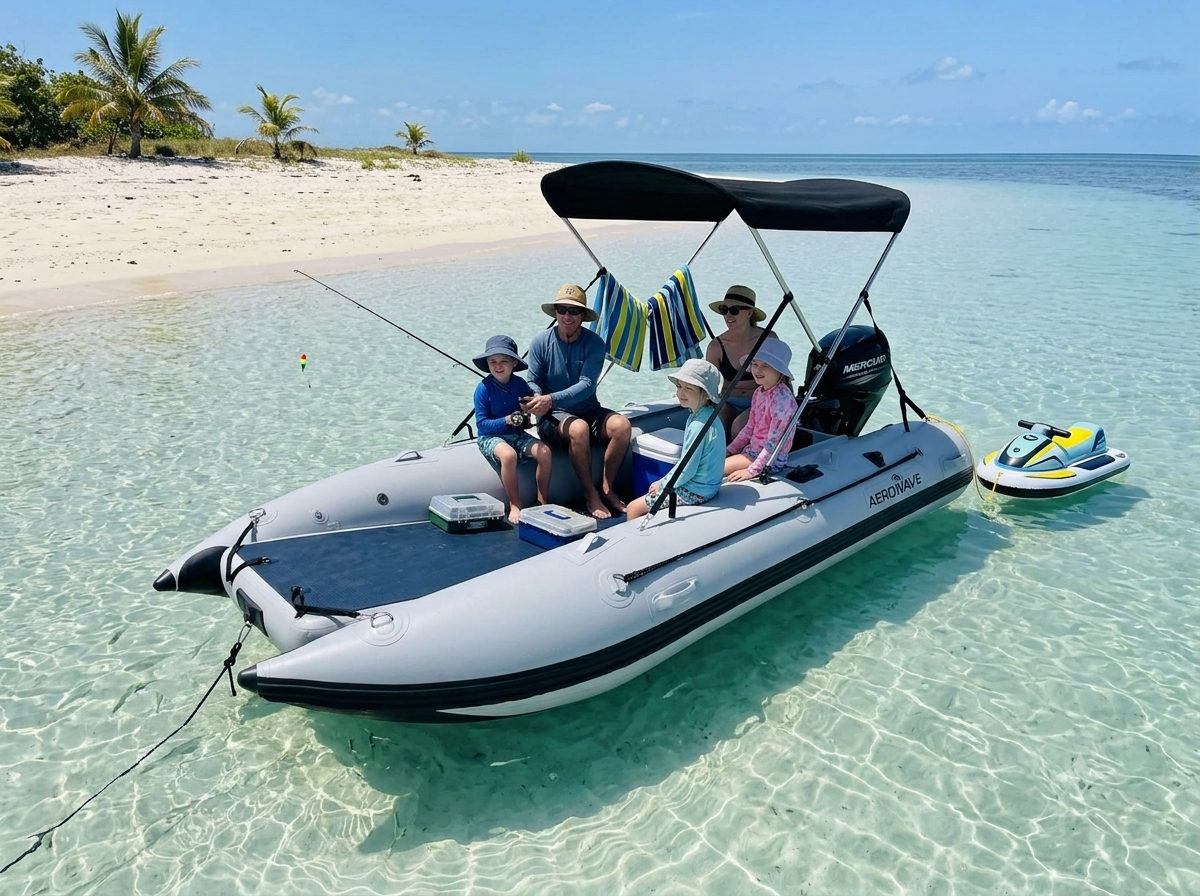
Aerowave WaveRunner 380 Series 3 Catamaran Package
The WaveRunner 380 Series 3 is a premium 3.8m inflatable catamaran package built for Australian and worldwide families, fishing, and coastal day boating — ideal for snorkeling and spearfishing — offering serious stability and premium German Valmex® construction.
Free freight to United States · local taxes payable on arrival
Aerowave Viper 400 Sovereign
Flagship 4m enclosed-bow inflatable catamaran. German VALMEX® 7321 Heavy Plus 1.2mm commercial-grade fabric, 10 PSI high-pressure drop-stitch air deck floor with VALMEX non-slip surface, LockPro wheels, full Bimini and FREE express delivery Australia-wide included. Winter special — save $1,000 until 31 August 2026.
Free freight to United States · local taxes payable on arrival
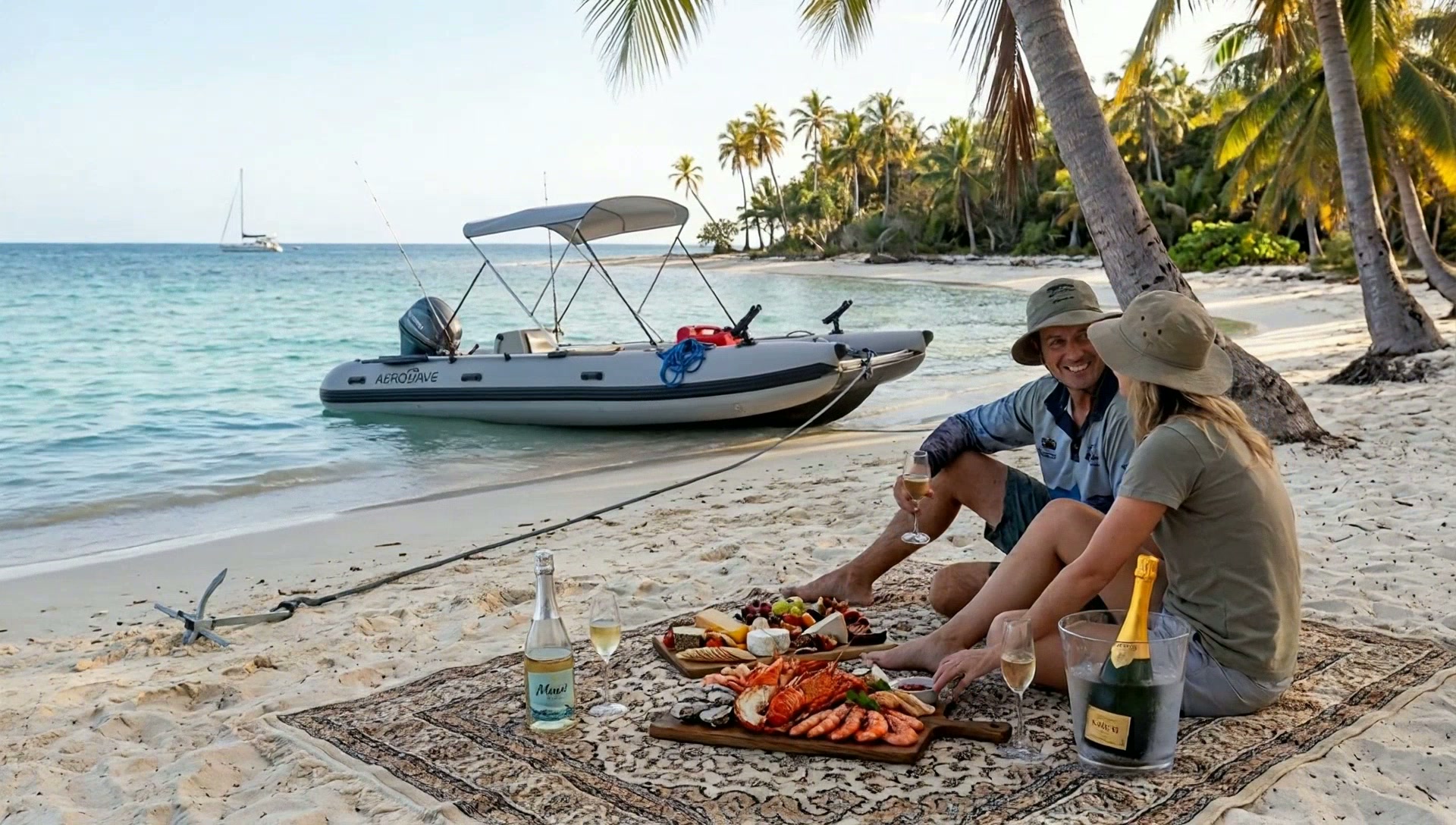
Aerowave Viper 365 Open Bow
Premium 3.65m Inflatable catamaran — built the same way as our flagship Viper 400 sports boat, just 35cm shorter. German VALMEX® 7321 Heavy Plus 1.2mm commercial-grade fabric, 10 PSI high-pressure drop-stitch air deck floor with VALMEX non-slip surface, LockPro wheels, full Bimini and FREE express delivery Australia-wide included.
Free freight to United States · local taxes payable on arrival
Not sure which suits you? Talk to a real boat owner.
Before you spend a cent
Buying from Australia, delivered to United States
You have never heard of us, we are on the other side of the world, and the internet is full of fakes. Fair enough. Here is everything you would need to check us out, in one place — no forms, no chat bot.
Australian designed business
Easy Inflatables, Avoca Beach NSW 2251. ABN 96 856 548 613. International orders ship from our Hong Kong hub.
222 owner reviews, 4.8 average
Read them in full, good and bad, on our reviews page.
CE certified, 7-year hull warranty
ISO 6185-3 and EU Directive 2013/53/EU. Warranty honoured worldwide.
Tracked, insured, door to door
FREE freight to United States · local tax/duty on arrival.
- Who am I actually buying from?
- Easy Inflatables, Avoca Beach NSW 2251, Australia. ABN 96 856 548 613. Sean is the owner and skipper, Gary Stewart handles sales on +61 2 4335 1603, Karen Matthews handles email. The boats are Australian designed; international orders ship from our Hong Kong dispatch hub so your landed price stays competitive. Phone us before you pay a cent — a real person answers.
- Is this really an Australian product?
- Yes — Australian designed and engineered on the NSW Central Coast. Manufacturing is done offshore to our spec, and international orders ship direct from our Hong Kong dispatch hub. If we routed every boat through Australia first, the freight alone would roughly double or triple your cost for the same hull.
- What do I pay, and what is not included?
- The delivery and import terms depend on your country. EU, UK, New Zealand and named Asia/Pacific lanes include duty and tax; US freight is free but US buyers pay import charges on arrival. Other destinations show their terms before payment.
- How do I pay safely?
- Card through Stripe (Visa, Mastercard, Amex, Apple Pay, Google Pay) or bank transfer. Card payments carry your bank's own dispute protection. We never ask for crypto, gift cards or payment to a personal account.
- What if it arrives damaged?
- Every boat ships fully tracked and insured door to door. Photograph the carton and the boat on arrival and email us — transit damage is claimed and replaced through us, not left with you and the courier.
- Is the warranty real outside Australia?
- Yes. The 7-year hull warranty on 1.2 mm VALMEX Heavy Plus and Orca Hypalon hulls applies wherever you are. Replacement parts are held in Australia and at our overseas hub and go out by express courier to your door.
- Is the boat actually certified?
- All Aerowave catamarans are CE certified to ISO 6185-3 and EU Directive 2013/53/EU. Certification paperwork is supplied with the boat — ask and we will send it before you order.
Frequently asked questions
- How do I protect my inflatable boat from UV damage?
- Store it under cover or use a boat cover when not in use. Regular application of a marine-grade UV protectant for PVC or Hypalon is essential for maximising lifespan. All Aerowave boats use premium German VALMEX® fabric with excellent inherent UV resistance, but good habits can extend its 10-12 year life even further.
- Can I leave my inflatable boat inflated all year?
- Yes, and if you have the space, it's the ideal way to store it. Keeping the boat partially inflated to 2-3 PSI reduces stress on the seams from repeated folding and discourages pests. Just be sure to keep it clean, covered, and out of direct sunlight.
- What's the best way to clean an inflatable boat before storage?
- Rinse the boat thoroughly with fresh water immediately after use to remove all salt, sand, and grit. For stubborn grime, use a specialised inflatable boat cleaner and a soft-bristle brush. Avoid harsh household chemicals like bleach or ammonia, as they can degrade the fabric and adhesives over time.
- How tight should tie-down straps be on an inflatable boat?
- Straps should be firm enough to prevent any movement, but not so tight that they crush the tubes. Overtightening, especially with ratchet straps, can damage the fabric and stress the seams. Always use padding like foam blocks or old towels at contact points to spread the load and prevent abrasion.
- Does fabric thickness really matter for an inflatable boat?
- Absolutely. A thicker, denser fabric like the 1.2mm / 1500 GSM VALMEX® used on our Aerowave Viper series provides a crucial 'wear margin'. It is significantly more resistant to the everyday abrasions from transport and storage, which directly translates to a longer, more durable service life compared to standard 0.9mm fabrics.
- Is it worth buying a heavy-duty boat bag?
- A quality boat bag is one of the best investments you can make to protect your boat. It acts as the primary shield against transport scuffs, garage scrapes, and handling damage. Our Australian-made Aerowave Heavy-Duty Boat Bag ($299) uses reinforced materials specifically to protect your main asset for years to come.
- How do I fix a small scuff or abrasion on my inflatable boat?
- For light scuffs that haven't compromised the fabric, cleaning the area is often enough. If the abrasion is deeper and has worn the outer PVC layer, you can apply a thin layer of repair glue to the area to reseal it. For any damage that appears to go through to the inner scrim, a proper patch is required.
Ready to set sail?
Premium German-fabric inflatable catamarans, built to order and delivered to your door. Talk to our team or browse the fleet.
Like this guide? Get the next one in your inbox.
Owner-tested tips, gear deep-dives and Aussie boating know-how — no spam.