Inflatable Rescue Boat Buyer's Guide 2026
Inflatable boats are fantastic things. They can be a serious rescue craft, a super stable fishing platform, or a simple, portable boat for family fun. The best one for you all comes down to what you plan to do on the wat…
At a glance
Inflatable boats are fantastic things. They can be a serious rescue craft, a super stable fishing platform, or a simple, portable boat for family fun. The best one for you all comes down to what you plan to do on the wat…
- Choosing Your First Inflatable Boat
- Matching A Boat To Your Adventure
- Quick Comparison Of Inflatable Boat Types
- Understanding Inflatable Boat Materials And Construction
What we'd put you in
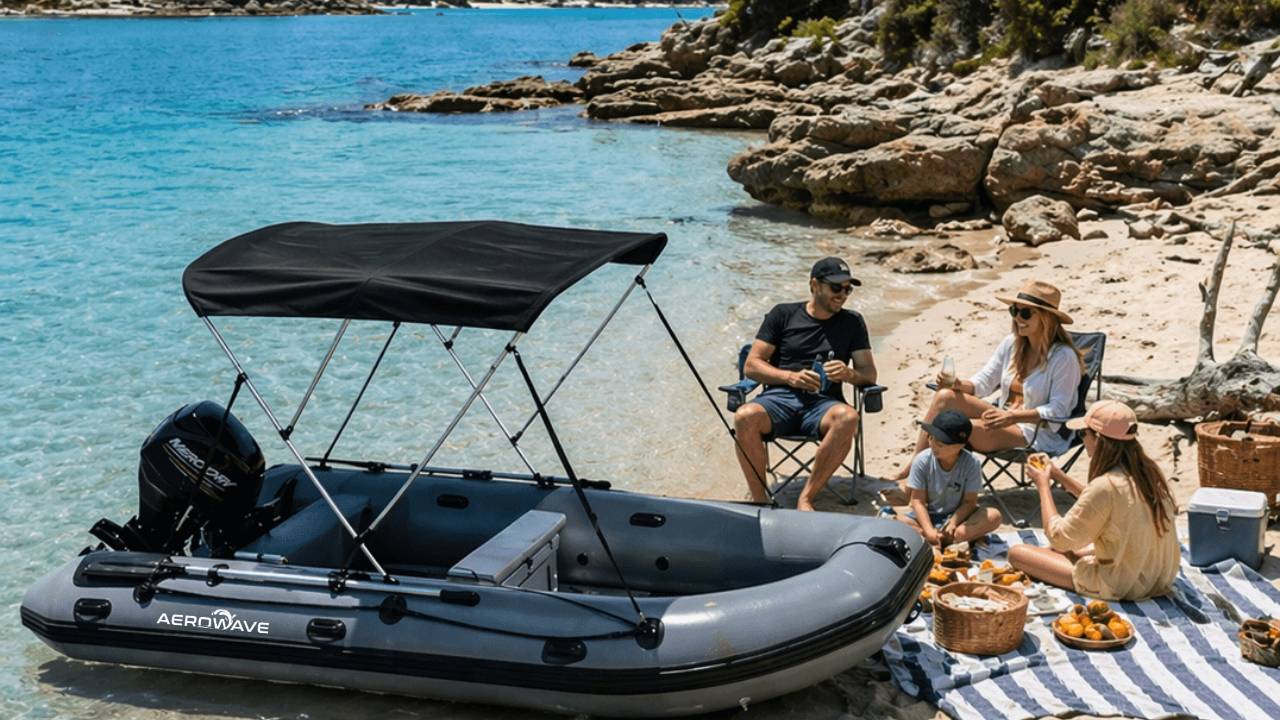
Aerowave Viper 400 Sovereign
Our best-selling boat: 4.0 m, 1.2 mm VALMEX hull, 7-year hull warranty.
US$3,167 USD
Delivered to your door, today's rate
- Free freight to United States · local taxes payable on arrival
- 7-year hull warranty
🇺🇸 Shipping to United States · landed price quoted in writing
Yes — we ship the Aerowave Viper 400 Sovereign to United States. Here's the landed price.
Our best-selling boat: 4.0 m, 1.2 mm VALMEX hull, 7-year hull warranty.
Aerowave Viper 400 Sovereign
- Boat package (export price)
- US$3,726
- 15% tariff relief credit
- − US$559
- Express air freight to United States
- Included
- Import duty, taxes & customs clearance
- Payable on arrival
- Estimated landed, USD
- US$3,167
Indicative, converted at today's rate, before local duty and tax on arrival. Ask below and we'll put a fixed figure in writing, valid 30 days.
- 7-year hull warranty
- 1500 GSM / 1.2 mm VALMEX® Heavy Plus hull
- CE certified to ISO 6185-3 and EU Directive 2013/53/EU
- Door-to-door, tracked the whole way
Your price, delivered to your door — freight included.
We email the full PDF quote (spec, freight, finance, WavePay) to your inbox in under 60 seconds. No spam — one quote, one follow-up.
See it for yourself
Real boats. Real owners. Real people behind them.
Plenty of what you read online these days is generated. Check us out properly — the factory, the reviews and the owners are all one click away. Why we use AI, and how to check we’re real
How our boats are built
Walk the production line: thermo-welded seams, 1.2 mm VALMEX Heavy Plus hulls, over-pressure relief valves on every chamber.
See the buildGoogle Maps reviews
Real Australian owners, five stars, published on our Google Business Profile with the map — read them there, not just on our own site.
Open Google Maps reviewsOwner stories
Boats in use — offshore, on rivers, on rescue duty. Photos and words from the people who actually own them.
Read owner storiesInflatable boats are fantastic things. They can be a serious rescue craft, a super-stable fishing platform, or a simple, portable boat for family fun. The best one for you all comes down to what you plan to do on the water. Rigid Inflatable Boats (RIBs) are brilliant all-rounders for choppy conditions, inflatable catamarans offer incredible stability for fishing, and Soft Inflatable Boats (SIBs) are the kings of portability.
Choosing Your First Inflatable Boat
Trying to pick the right inflatable boat can feel a bit overwhelming at first, but it really boils down to one simple question: what’s your number one priority out on the water? The very same technology that’s been perfected for tough inflatable rescue boat work has made its way into modern recreational boats, making them safer and tougher than ever. This means you get professional-grade quality whether you're after the best inflatable boats for recreational use available near you or just a reliable craft for weekend adventures in Australia.
The trick is to match the boat's design to your main activity. It’s just like picking a car—you wouldn’t take a sports car on a rugged 4WD track. In the same way, the perfect boat for calm river fishing is a world away from one built to handle open ocean swell.
Matching A Boat To Your Adventure
To make the choice easier, let's break down the main boat types and what they do best.
- Rigid Inflatable Boats (RIBs): Think of these as the versatile workhorses of the inflatable world. Their solid, V-shaped hull cuts cleanly through waves, giving you a smooth and stable ride even when it gets a bit choppy. This makes them the perfect all-rounder for families who want a boat that can do a bit of everything, from exploring coastal bays to having some fun with light-duty watersports.
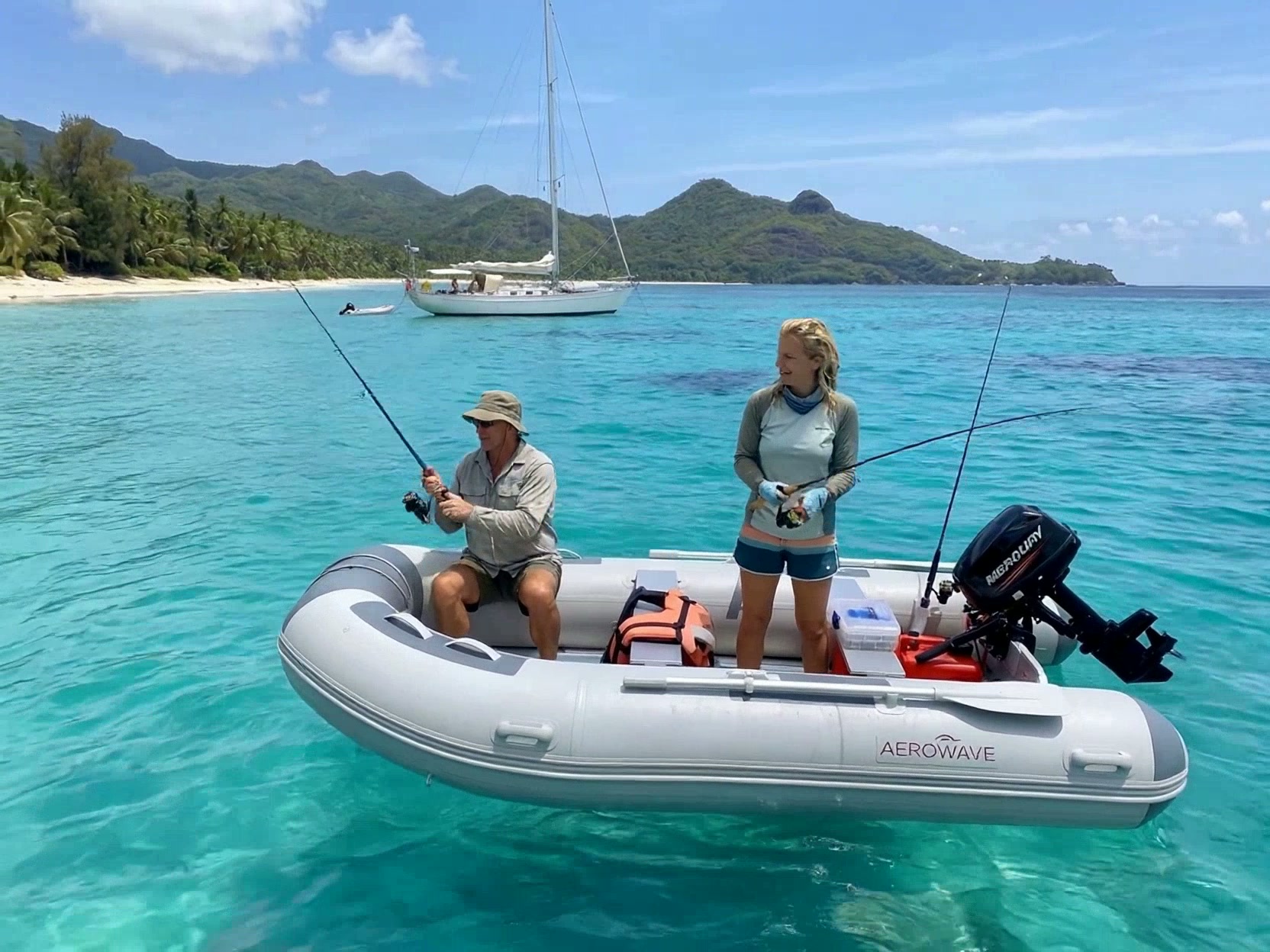
- Inflatable Catamarans: If stability is what you're after, nothing beats an inflatable catamaran. The twin-hull design creates an incredibly wide and steady platform on the water. This is a game-changer for anglers who need a solid base for casting or for anyone who just wants maximum stability when moving around or getting in and out of the boat.
- Soft Inflatable Boats (SIBs): For anyone who puts portability and convenience first, the SIB is the clear winner. These boats can be deflated, rolled up, and popped in a storage bag, fitting easily into the boot of a car or a caravan. They’re absolutely perfect for spontaneous trips, getting to out-of-the-way fishing spots, or for use as a simple, lightweight tender for a bigger boat.
To help you decide, here's a quick comparison of the main inflatable boat categories.
Quick Comparison Of Inflatable Boat Types
This table gives you a simple summary of each boat type to help you find the best fit for your adventures. When you compare prices and features of inflatable boats in your area, this chart will help you understand the core differences in design.
| Boat Type | Best For | Key Characteristic | Example Use Case |
|---|---|---|---|
| Rigid Inflatable (RIB) | All-round performance & choppy water | Solid V-hull for cutting through waves | A family day trip exploring coastal islands. |
| Inflatable Catamaran | Maximum stability | Twin-hull design creates a wide, steady platform | Fishing or diving where a stable base is essential. |
| Soft Inflatable (SIB) | Portability & convenience | Rolls up into a bag for easy transport and storage | Taking on a camping trip or as a tender for a yacht. |
By thinking about what's most important to you—performance, stability, or portability—you can quickly see which boat style will be your perfect match.
This decision tree gives you a great visual guide for matching a boat type to your main priority.
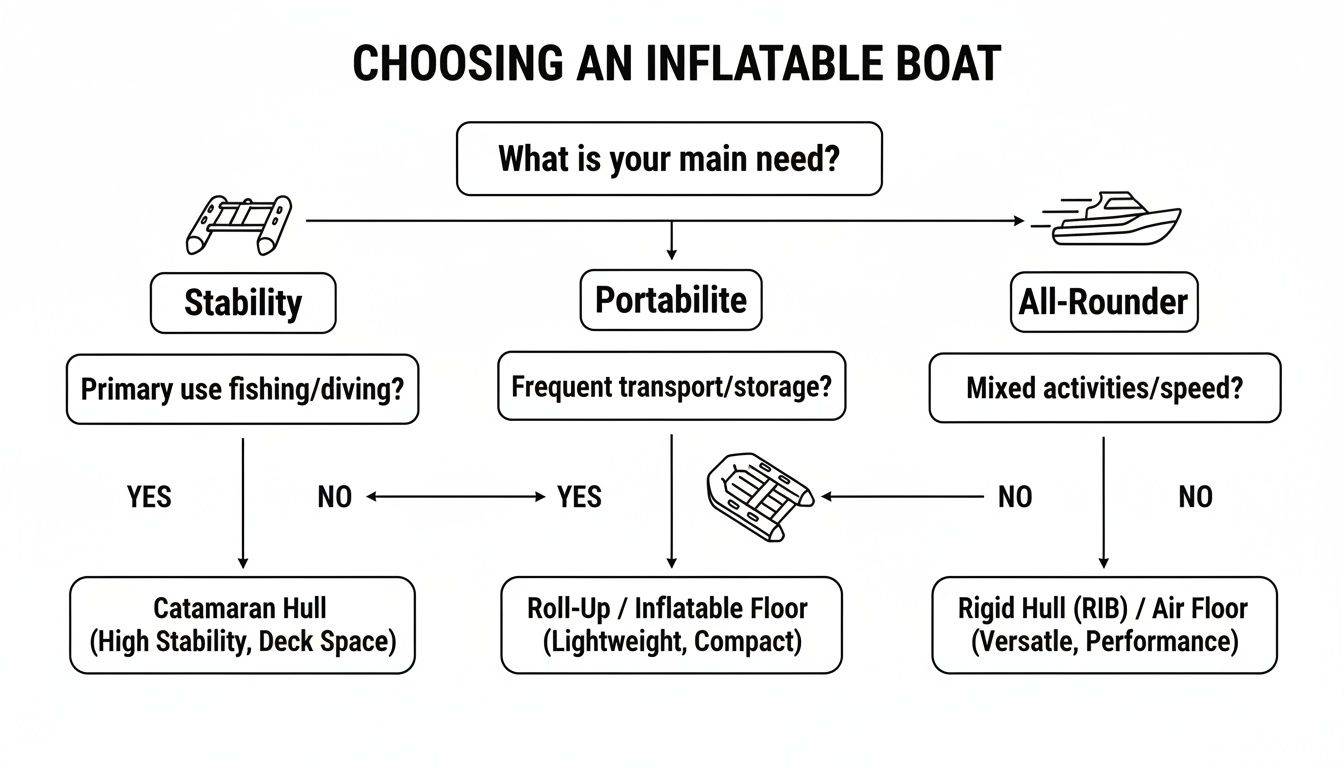
As you can see, your primary need—whether it’s all-around capability, rock-solid stability, or easy transport—points you directly to a specific kind of inflatable. Once you figure out your main goal, it’s much easier to narrow down the options and find the perfect boat for your kind of adventure.
Understanding Inflatable Boat Materials And Construction
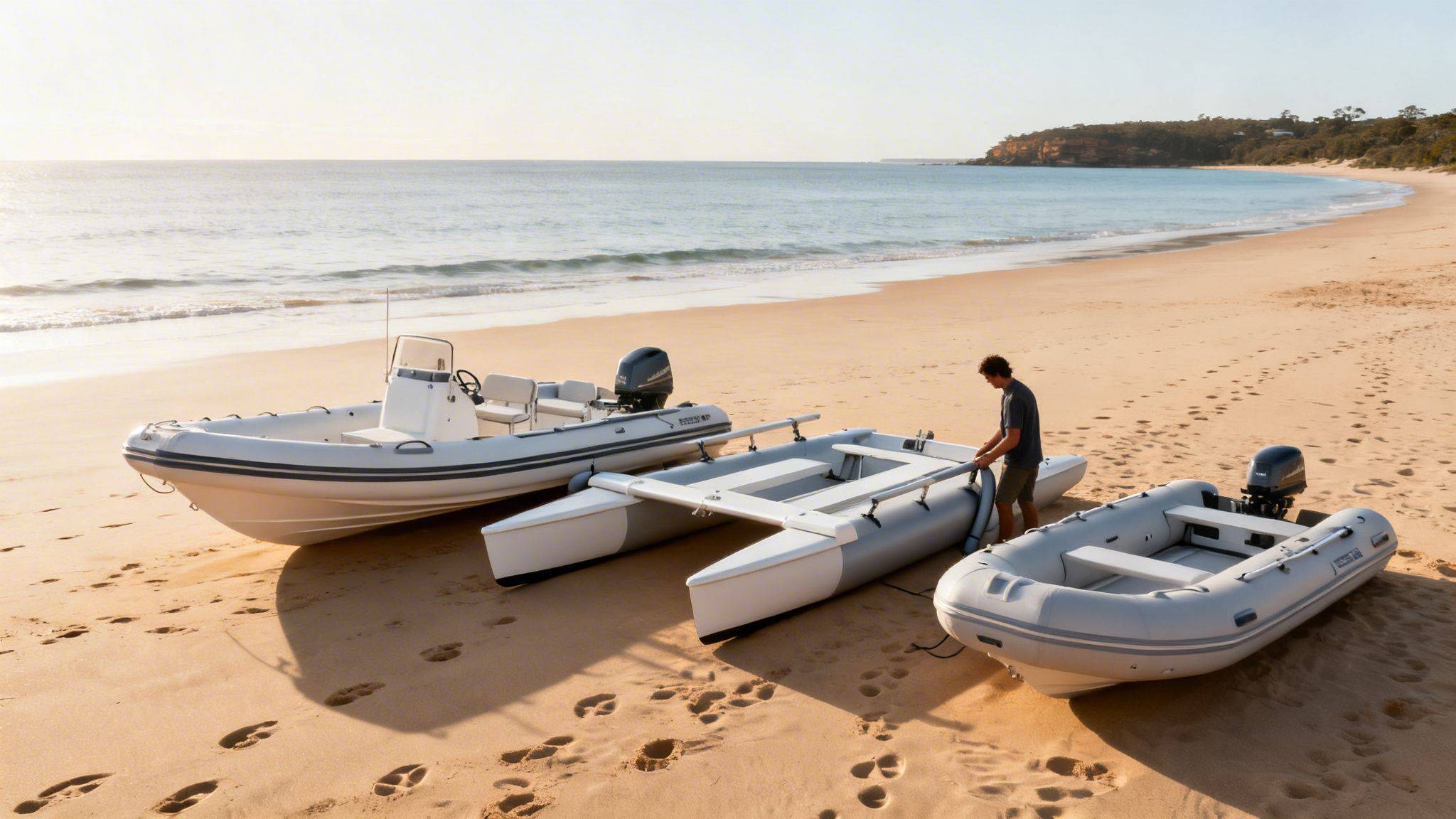
The strength and lifespan of an inflatable boat come down to more than just its size or shape. It’s all in the materials it's made from and how well it’s put together. Getting your head around these core elements is the key to seeing past the price tag and understanding a boat's true value, ensuring you pick one that's engineered to handle tough Australian conditions.
The fabric used for the boat's main tubes is its first line of defence against punctures, sun damage, and general wear and tear. In the world of inflatables, two materials dominate: PVC (Polyvinyl Chloride) and Hypalon.
PVC: The Modern High-Performer
When we talk about PVC, don't think of flimsy pool toys. Modern, high-grade PVC is more like a technical, armoured raincoat for your boat. Materials like the German Valmex 1.2mm 2000D PVC we use are advanced, multi-layered fabrics that are incredibly tough, flexible, and offer brilliant resistance to tears and UV damage—a must-have under the harsh Aussie sun.
But its real advantage lies in how it’s put together. High-end PVC is perfect for a construction method called thermo-welding, which uses heat to fuse the fabric panels together, creating a permanent molecular bond.
Thermo-welded seams are fundamentally stronger than the material itself. This means the seams are no longer the weakest point, virtually eliminating the slow leaks and failures that plague older, glued boats.
This modern construction makes a high-quality PVC boat an exceptional choice for anyone looking for a durable, reliable craft without the premium price tag. It gives families peace of mind and delivers the tough performance keen anglers demand.
Hypalon: The Expedition-Grade Standard
Hypalon is the gold standard for heavy-duty commercial and military applications, and it’s what you’ll find on many professional inflatable rescue boat fleets. It offers unmatched resistance to chemicals, extreme temperatures, and UV exposure.
Of course, that top-tier performance comes with a significantly higher price. For most recreational boaters in Australia, a quality German-made PVC offers more than enough durability for weekend adventures, fishing trips, and family fun, striking a fantastic balance of performance and price. You can dive deeper into this in our article on the benefits of Hypalon vs German Mehler PVC material.
Seams and Transoms: The Unseen Heroes
While the fabric gets all the attention, the way a boat is held together is just as critical. As we mentioned, thermo-welded seams are a game-changer for PVC boats. They offer far superior strength and longevity compared to glued seams, which can break down over time, especially with exposure to heat and humidity.
The transom is another part of the boat that does a lot of the heavy lifting. This is the rigid, flat section at the back where you mount the outboard motor. A flimsy transom can lead to flexing, poor handling, and in the worst case, catastrophic failure.
You want to look for boats with solid transoms made from robust materials:
- Aluminium Transoms: These are standard on our Aerowave models for a good reason. They are incredibly strong, lightweight, and completely resistant to the rot and water damage that can destroy marine plywood transoms over time.
- Reinforced Mounting Points: A solid transom will also have sturdy mounting plates to handle the thrust and weight of an engine, ensuring all that power gets transferred straight to the water efficiently.
When you're shopping around, don't just look at a boat's length or colour. Ask about where the fabric comes from, whether the seams are welded or glued, and what the transom is made of. These are the details that define a boat's resilience and are the true signs of a quality investment that will give you years of safe, reliable service.
Matching Hull Design to Your Adventure
The hull is the heart and soul of an inflatable boat. It’s what dictates how it cuts through the water, how stable it feels under your feet, and ultimately, what kind of adventures it’s truly built for. Think of it as the chassis of a 4WD—it’s the foundation everything else relies on. Getting your head around the main hull designs is the key to finding the perfect match for your needs.
We'll walk through the three main types you'll come across: Rigid Inflatable Boats (RIBs), inflatable catamarans, and Soft Inflatable Boats (SIBs). Each has its own distinct personality on the water, engineered for different Aussie conditions. By the end, you’ll know exactly which one is right for your family weekends, fishing trips, or coastal explorations.
Rigid Inflatable Boats (RIBs): The All-Rounder
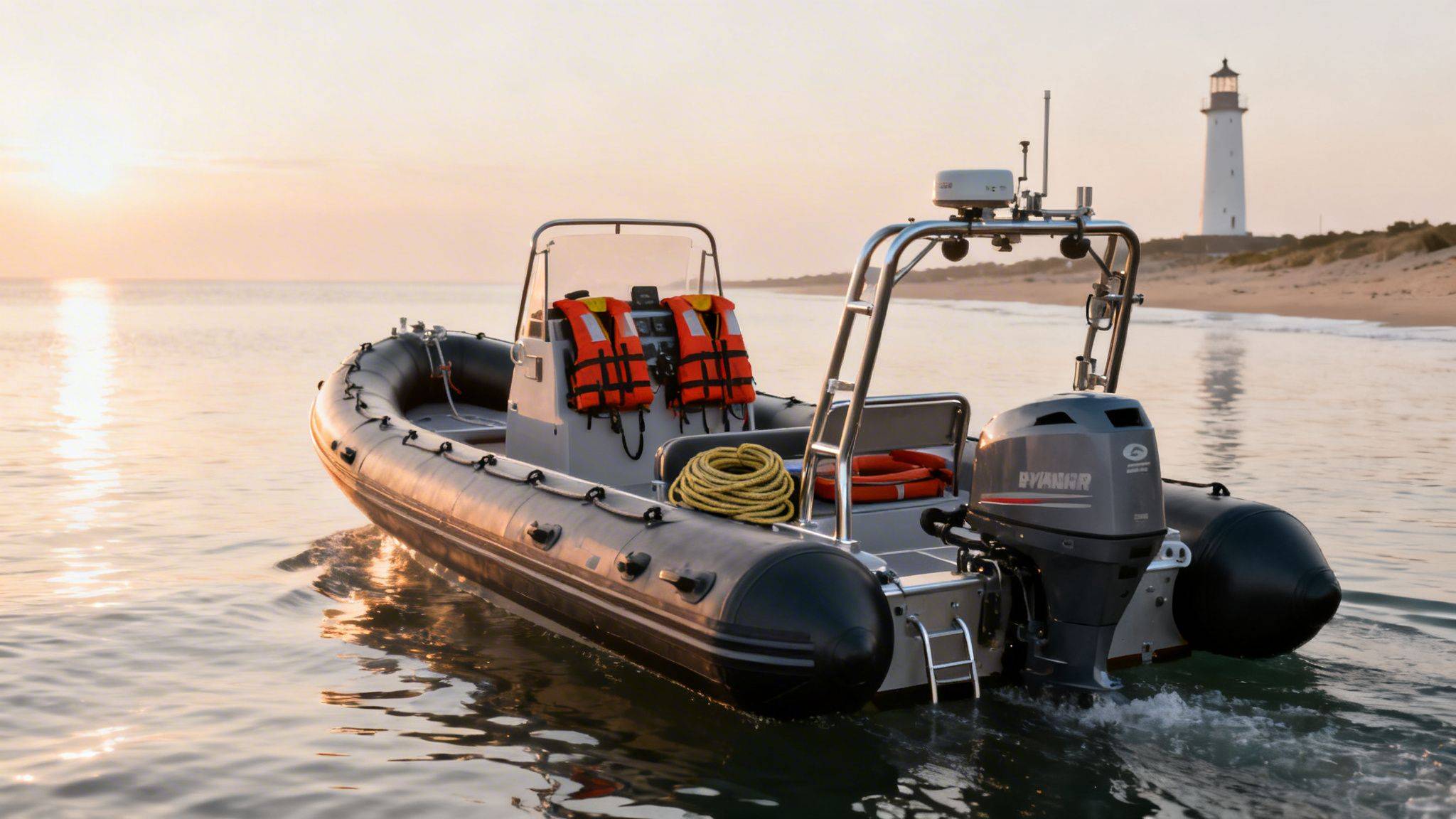
A Rigid Inflatable Boat, or RIB, is exactly what it sounds like: a hybrid featuring a solid, V-shaped hull—usually fibreglass or aluminium—paired with inflatable tubes. Imagine that deep-V hull as a sharp knife. It’s designed to slice cleanly through choppy water, not bounce over the top. The result is a much smoother, drier ride, especially when the afternoon sea breeze kicks in.
The inflatable tubes on the sides give it incredible buoyancy and stability, making the boat feel exceptionally safe and forgiving. This blend of a high-performance hull and secure inflatable tubes makes the RIB a superb all-rounder. It’s the perfect choice for families wanting a boat that's just as happy handling a choppy day on Sydney Harbour as it is cruising quietly up a coastal river.
There’s a reason you see these boats everywhere in professional fleets. They dominate Australia's emergency services, and recreational sales saw a 42% surge in 2023 as more people discovered their capabilities. The Royal Australian Navy has used over 150 of these for border patrol since 2000, and during the 2022 Eastern floods, the Victoria SES saved 2,500 people with 320 inflatable rescues. That’s a serious testament to how well these deep-V designs handle tough conditions. You can learn more about how this professional-grade tech translates to recreational fun in our guide to Rigid Hull Inflatables.
Inflatable Catamarans: The Stable Platform
An inflatable catamaran is a different beast altogether, with a unique twin-hull design. Instead of a single central hull, it features two parallel tubes that create an incredibly wide and stable footprint on the water. This design also creates a tunnel of air between the hulls, helping the boat get up on the plane faster and run more efficiently with a smaller engine.
The real magic of an inflatable catamaran is its extraordinary stability. It feels incredibly solid underfoot, almost like you’re standing on a floating pontoon, which makes it perfect for any activity where a steady platform is a must.
This stability makes it one of the best choices out there if your passion is fishing. The wide, flat deck gives you plenty of room to move around and cast without rocking the boat. Its shallow draft also means you can sneak into skinny water estuaries and creeks where other boats simply can’t go.
- Fishing: Loads of space for gear and a rock-solid platform for casting.
- Family Outings: Provides a secure, stable feel for families with young kids.
- Diving: A stable base makes getting in and out of the water a breeze.
For anyone looking to take the family out on a calm day or needing a dedicated fishing vessel, the stability of a catamaran is a massive advantage.
Soft Inflatable Boats (SIBs): The Portable Adventurer
Soft Inflatable Boats, or SIBs, are the undisputed champions of portability. Unlike a RIB, a SIB has no solid hull. Instead, the whole boat, including the floor, is inflatable. They use a high-pressure air-deck floor that becomes surprisingly rigid when inflated to the correct PSI, giving you a firm platform to stand on.
This design means the entire boat can be deflated, rolled up, and packed away into a bag. It’s the ultimate "boat-in-a-bag"—small enough to fit in the boot of your car, a caravan locker, or on the deck of a yacht. This unmatched convenience makes SIBs the go-to for adventurers who value easy transport and quick setup, perfect for spontaneous day trips, reaching remote beaches, or as a lightweight tender.
How To Outfit Your Inflatable Boat
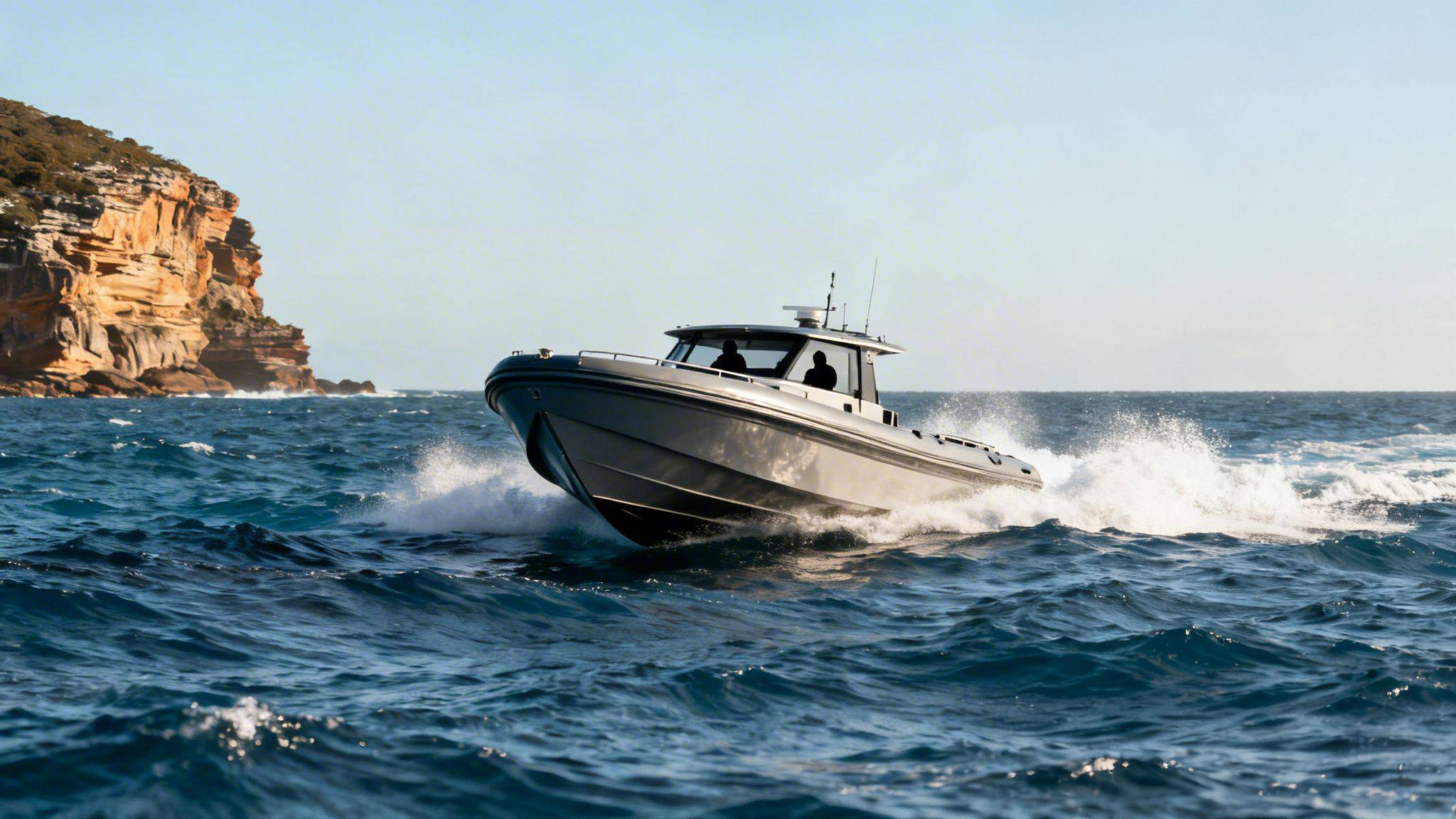
The right gear can transform your inflatable boat from a bare hull into a purpose-built craft ready for any Aussie waterway. Outfitting your boat isn’t about just adding clutter; it’s about strategically matching your equipment to your goals, whether that’s a quiet day of fishing, family fun on the lake, or serving as a reliable tender for your yacht.
This whole process kicks off with the single most important decision you’ll make: the engine. The motor is the heart of your boat’s performance, and getting this pairing right is absolutely crucial for both safety and your enjoyment on the water.
Matching The Right Engine To Your Boat
Picking an outboard motor isn’t a game of "bigger is better." It’s a careful balancing act between power, weight, and your boat's specific design limitations. Bolting on an oversized engine can make a boat dangerously unstable, while an underpowered one will leave you struggling against wind and tide, burning fuel without getting you anywhere fast.
For a small tender or for just pottering around a calm estuary, a lightweight 2.5HP outboard is often the perfect fit. It’s a breeze to handle, sips fuel, and gives you all the push you need for simple transport.
But if you're looking at a larger inflatable catamaran or a RIB for family days out or serious fishing trips, you’re going to need more grunt. An engine in the 20HP to 40HP range provides the power to get on the plane quickly, even with a few people and all their gear on board. For those wanting to pull a water skier or tackle more demanding open-water conditions, motors between 50HP and 60HP are where you want to be.
Key Takeaway: Always check the boat's maximum horsepower (HP) rating on the transom plate and stick to it. This number isn't a suggestion—it's a critical safety limit set by the manufacturer to guarantee stability and proper handling.
To get this choice spot on, you need to understand how engine size really affects performance. For a deep dive into this, check out our complete guide on how to choose the right engine for an inflatable boat.
Essential Gear For Comfort And Functionality
Once your engine is sorted, it’s time for the fun part: adding the accessories that make your time on the water better. These items aren’t just nice-to-haves; they are practical additions that seriously boost your comfort, safety, and the boat's overall function.
Comfort and Convenience Upgrades:
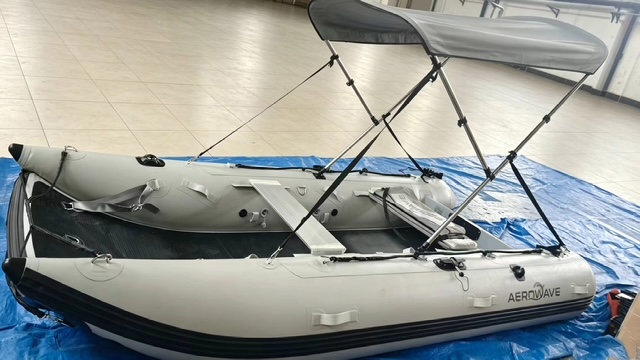
- Fitted Bimini Tops: A bimini is non-negotiable under the harsh Australian sun. A quality, fitted top provides vital shade, cutting down fatigue and protecting you and your family from harsh UV rays.
- High-Pressure Lithium Pumps: Forget pumping by hand. A 22 PSI lithium pump will have your boat inflated in minutes, getting you on the water faster and with zero effort.
- Boat Storage Bags: These protect your pride and joy from scrapes, dirt, and sun damage during transport and storage, extending its life for years to come.
Outfitting For Specific Adventures
Different adventures call for different gear. For example, an inflatable catamaran, with its incredible stability, becomes a dream fishing platform once you add a few dedicated accessories.
Fishing-Specific Gear:
- Specialised Rod Holders: Keep your rods securely out of the way while travelling or trolling.
- Bait Boards: A clean, dedicated spot for preparing bait and lures makes all the difference.
- Sounder/GPS Mounts: Easily attach your fish-finder so you can locate the best spots without any fuss.
For yacht owners using their inflatable as a tender, a different set of gear takes priority. Davit systems make launching and retrieving from the mother ship effortless, while heavy-duty painter lines and bow bags are essential for secure towing and stashing your gear. By thoughtfully selecting your accessories, you can equip your inflatable rescue boat-grade vessel for any mission you have in mind.
Safety Features Inspired By Real-World Rescues
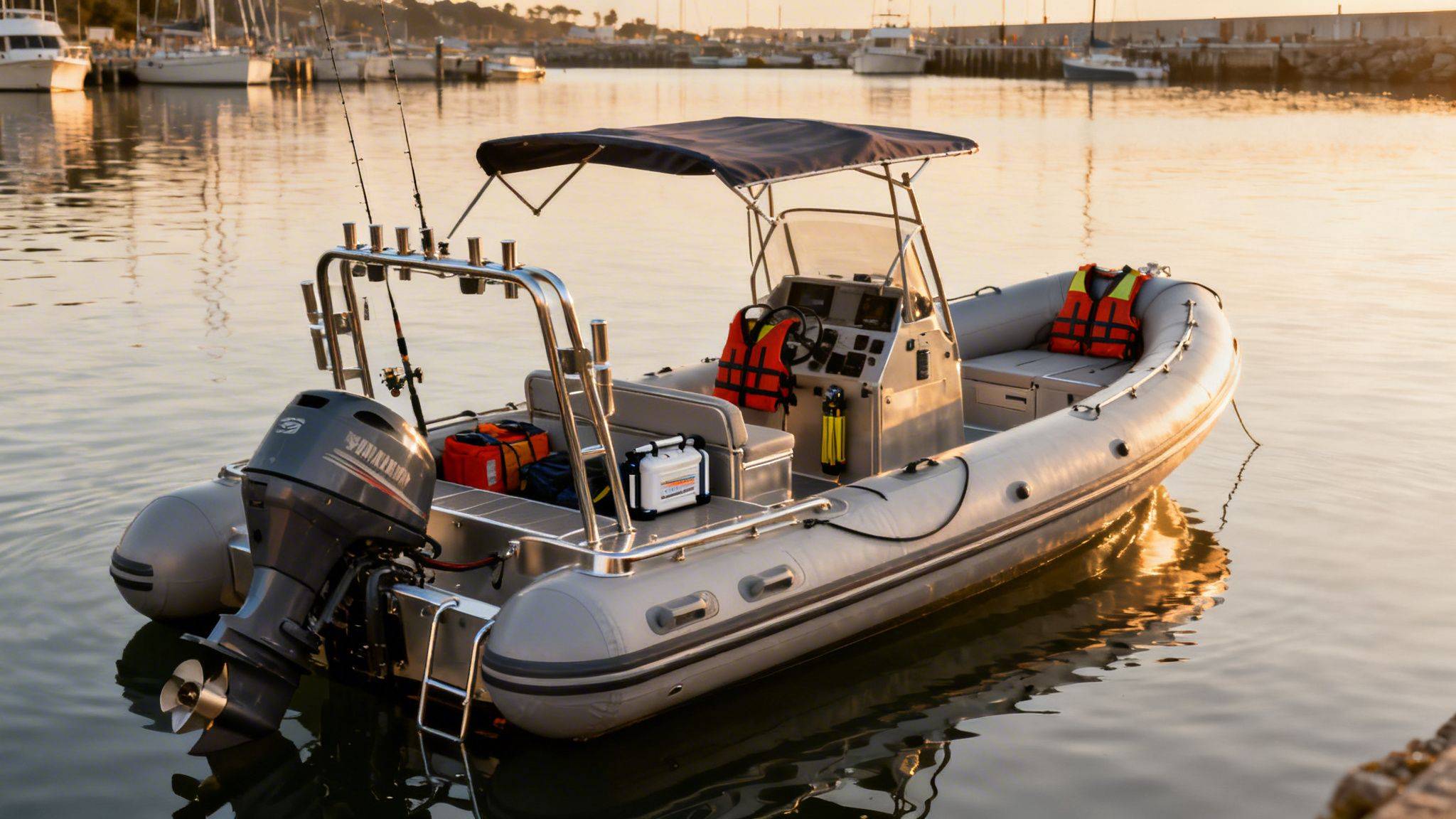
When you invest in a modern inflatable boat, you’re not just buying a recreational vessel. You're getting the benefit of decades of design evolution, honed in the toughest conditions imaginable by professional rescue teams. The safety features that are now standard on high-quality inflatables aren’t just marketing spin—they’re direct descendants of technology proven to save lives.
Think about organisations like Surf Life Saving Australia. They operate in some of the most treacherous surf on the planet, where their inflatable rescue boat (IRB) fleets must be fast, incredibly tough, and absolutely reliable. The very design principles that allow them to perform daring rescues are now built into the boats you can use for your family adventures, giving you a level of security once reserved for the pros.
It’s not just a concept; it’s a feeling of on-water confidence. Once you understand how these rescue-grade features work, you'll see why a well-built inflatable is one of the safest platforms you can have on the water.
Built-In Redundancy: Multiple Air Chambers
One of the most fundamental safety features of any quality inflatable is its multi-chamber construction. Instead of being one giant balloon, the main tubes are divided into several independent, airtight compartments.
Imagine getting a puncture in a single-chamber boat—it would be a total loss of buoyancy. With multiple chambers, if one section is compromised, the others stay fully inflated, keeping the boat afloat and stable. It’s the exact same design principle used in professional life rafts, providing critical redundancy when you need it most. That peace of mind is priceless, especially when you’re far from shore.
An inflatable boat with multiple air chambers is designed to stay afloat and get you home safely, even if one tube is damaged. This built-in backup system is a core element of inflatable rescue boat design that directly enhances safety for recreational users.
The work of these rescue organisations is immense. Along Australia's vast 25,760 km coastline, IRBs have been crucial to maritime safety. In the 2023-2024 financial year alone, Surf Life Saving Australia performed over 1.2 million preventive actions and 13,500 first aid treatments. IRBs were central to responding to more than 2,500 major incidents, proving their worth time and again. These nimble craft, often powered by outboards just like those we offer, are the backbone of beach safety from Bondi to the Great Barrier Reef. The growth of the inflatable boats market is directly tied to these advancements in safety.
Stability That Inspires Confidence
A boat’s stability is non-negotiable for safety, especially with family and friends on board. Inflatable boats, by their very design, are exceptionally stable thanks to their wide footprint and the massive buoyancy of their outer tubes.
This is taken to the next level with an inflatable catamaran. Its twin-hull design creates an incredibly wide and steady platform, drastically reducing the "tippy" feeling that can make some boaters nervous. This stability isn't just for comfort; it's a critical safety feature.
Consider these real-world scenarios where stability makes all the difference:
- The Angler: A fisherman in a windy bay can confidently stand and cast from an inflatable catamaran, focusing on the catch without worrying about the boat rocking.
- The Family: A family can easily beach their portable soft-inflatable boat in a remote cove, letting kids climb in and out without unsettling the vessel.
- The Yacht Owner: A tender pilot can confidently navigate a busy harbour, knowing their rugged RIB will remain stable when crossing wakes from larger vessels.
Preparing For The Unexpected
Even with the best boat, you need to be ready for emergencies. Your boat’s built-in safety features should always be backed up by essential safety gear. This includes life jackets for everyone on board, flares, and a reliable communication device. When packing for your trip, keeping essentials protected from water is a must; consider investing in a high-quality dry bag to keep electronics and emergency supplies safe and functional.
If you’re venturing further offshore, a personal locator beacon is a vital piece of equipment. You can discover more about these life-saving devices by reading our guide on the ACR Rescue Beacon and how it can be your lifeline in an emergency. The combination of a well-designed boat and smart safety planning creates a secure environment for everyone on the water.
Maintaining Your Boat For Long-Term Value
Your inflatable boat is your ticket to adventure, and looking after it properly means it’ll be ready to go whenever you are. A few simple habits are all it takes to protect your investment, ensuring your boat stays safe, reliable, and looking great for years to come. Think of it as a small effort that pays off with countless seasons of hassle-free fun on the water.
The most important habit is the easiest one. You must thoroughly rinse your boat with fresh water after every use, especially after a day in saltwater. Salt is incredibly corrosive and, left unchecked, will eat away at fabrics and fittings. A quick hose-down stops that corrosive build-up in its tracks and is the single best thing you can do for your boat’s longevity.
After Use Care And Storage
Once your boat is clean and dry, how you store it is just as crucial. Proper storage protects it from the elements, especially the harsh Australian sun, which is the biggest threat to any inflatable.
- UV Protection: If you’re storing your boat inflated, a quality boat cover is non-negotiable. Direct, prolonged UV exposure is the number one enemy of inflatable boat fabrics, causing them to become brittle and faded over time.
- Proper Folding: When it’s time to pack it away, open all the valves and let the air escape naturally before gently pushing the rest out. Avoid creasing the fabric with sharp, aggressive folds. Instead, roll it smoothly from the transom towards the bow to prevent stress points from forming.
- Cool, Dry Storage: Keep the rolled-up boat in its carry bag and store it somewhere cool and dry, out of direct sunlight. A garage or shed is ideal. Leaving it on hot asphalt or concrete can cause damage, so always get it under cover.
Regular Inspection Checklist
Before you head out, a quick 5-minute once-over can be the difference between a great day and a major headache. This simple pre-launch check helps you spot any small issues before they can escalate on the water.
A proactive maintenance check is the best way to ensure your inflatable rescue boat-grade vessel is always ready for action. By catching wear and tear early, you guarantee safety and maximise your time on the water.
Focus on these key areas:
- Valves: Make sure every valve cap is on tight. Listen for any faint hissing that might signal a slow leak—a bit of soapy water applied around the valve will reveal any escaping air with tiny bubbles.
- Seams: Run your hands along the main tube seams. You’re feeling for any signs of lifting or peeling. While our thermo-welded seams are built for extreme durability, it’s always a good habit to check them.
- Transom: Give the transom a firm wiggle. Check that it’s securely bonded to the tubes and that the engine mount is solid, with no cracks or signs of stress.
- Hull and Tubes: Scan the tubes and hull for any noticeable scuffs, deep scratches, or potential puncture spots. Minor marks are part of normal use, but deeper gouges might need a patch. For anything that looks serious, our guide on handling inflatable boat repairs has you covered.
Don’t forget your safety gear, either. A well-maintained boat is only half the equation. Vital equipment, like specialized rescue knives, should be checked to ensure it’s accessible and in perfect working order. Keeping all your gear in top condition is just as important as the boat itself.
Frequently Asked Questions About Inflatable Boats
To help you get out on the water with confidence, we’ve put together answers to some of the most common questions we hear from buyers across Australia. This should clear things up and help you compare different models like a pro.
What are the best inflatable boats for recreational use available near me?
When looking for the best inflatable boats for recreational use available near you, the ideal choice depends on your plans. For family fun with kids, an inflatable catamaran or a RIB are top contenders. The catamaran offers superior stability and deck space, creating a secure platform. RIBs provide a smoother ride in choppy water, keeping everyone comfortable. You can start by searching online for "inflatable boat dealers near me" to explore local options and compare prices and features of inflatable boats in your area.
The demand for recreational boats in Australia is booming for a reason. In 2023 alone, over 120,000 soft hull boats were sold for leisure and water sports, and the total number of registered vessels is set to top 950,000 in 2024. This massive growth is fuelling a thriving small boats market perfect for lightweight tenders and RIBs.
Can you recommend a place in Australia to hire inflatable boats for a family outing?
Yes, absolutely. Most coastal towns and holiday spots have businesses that hire out inflatable boats. It’s a brilliant way to try before you buy, letting you get a feel for different models like a stable inflatable catamaran or a zippy RIB. A quick search for "inflatable boat hire Australia" or "hire inflatable boats for a family outing" will point you to operators in popular locations like the Gold Coast, Sydney Harbour, or the Whitsundays.
When you're looking at hire options, check what’s included in the price. Many packages come with life jackets and a full tank of fuel, so all you have to do is show up and start your adventure. It makes for a truly hassle-free day on the water.
Are inflatable catamarans good for fishing?
They’re not just good—they’re fantastic for fishing. An inflatable catamaran’s twin-hull design creates an incredibly stable platform, so you can stand, cast, and reel in a big one without the boat rocking all over the place.
They also give you heaps of deck space for all your tackle and an esky, and you can easily fit them out with rod holders to create the ultimate fishing machine.
Ready to start your adventure on the water? Easy Inflatables offers a wide range of premium inflatable boats, catamarans, and RIBs designed for Australian conditions. Explore our collection and find the perfect boat for you at .
Explore the Aerowave range
Weekend-Proof Score 17 questions · about 2 minutes
Will the boat you're about to buy survive an Australian summer?
Seventeen straight questions about where you'll use it, what you'll ask of it and the boat you're weighing up. You get a score out of 100, the exact weak points in your plan, and the one boat that genuinely fits.
Free · your result shows on screen · no email required
So which one is yours?
Pick how you'll actually use it and we'll take you straight to the right hull.
I want to fish it
Open bow, rod holders, deck space you can stand and cast from.
Viper Sport 400Family, diving and the beach
3.8 m Series 3 catamaran — low bow to climb back in wearing fins or a tank.
WaveRunner 380Tender / one-person launch
3.3 m hard-floor boat that packs into a bag and still takes a beach landing.
Viper 330Shop gear featured in this guide
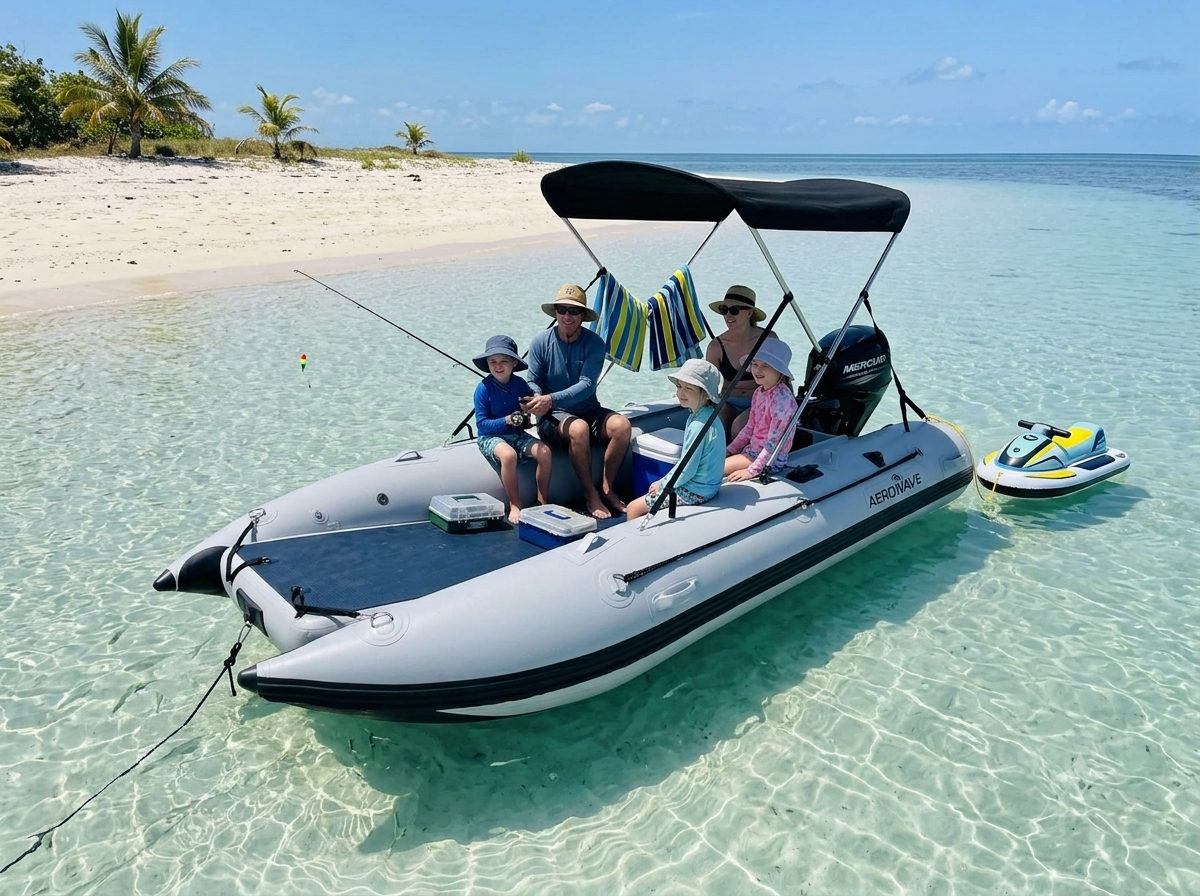
Aerowave WaveRunner 380 Series 3 Catamaran Package
The WaveRunner 380 Series 3 is a premium 3.8m inflatable catamaran package built for Australian and worldwide families, fishing, and coastal day boating — ideal for snorkeling and spearfishing — offering serious stability and premium German Valmex® construction.
Free freight to United States · local taxes payable on arrival
Aerowave Viper 400 Sovereign
Flagship 4m enclosed-bow inflatable catamaran. German VALMEX® 7321 Heavy Plus 1.2mm commercial-grade fabric, 10 PSI high-pressure drop-stitch air deck floor with VALMEX non-slip surface, LockPro wheels, full Bimini and FREE express delivery Australia-wide included. Winter special — save $1,000 until 31 August 2026.
Free freight to United States · local taxes payable on arrival
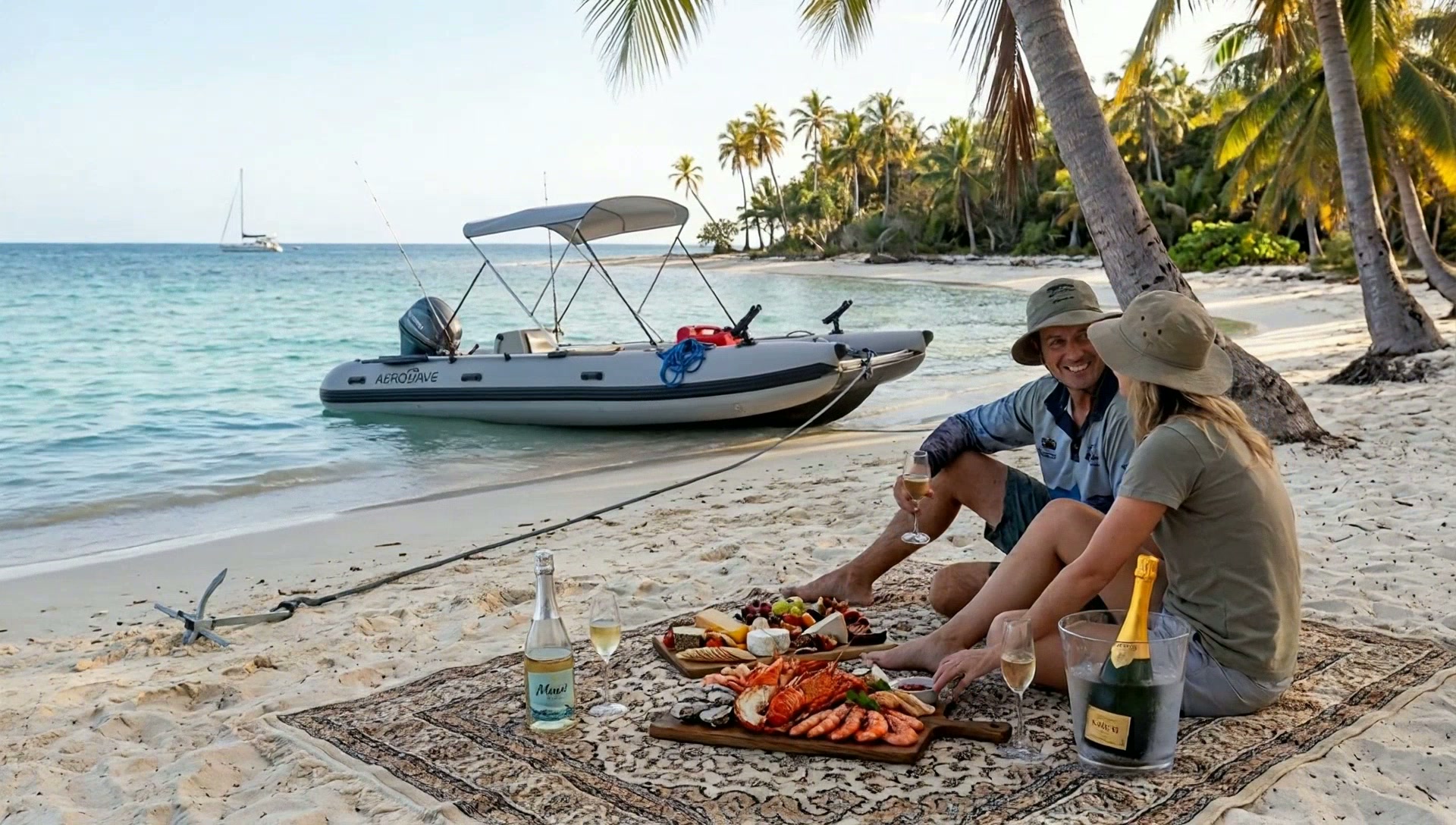
Aerowave Viper 365 Open Bow
Premium 3.65m Inflatable catamaran — built the same way as our flagship Viper 400 sports boat, just 35cm shorter. German VALMEX® 7321 Heavy Plus 1.2mm commercial-grade fabric, 10 PSI high-pressure drop-stitch air deck floor with VALMEX non-slip surface, LockPro wheels, full Bimini and FREE express delivery Australia-wide included.
Free freight to United States · local taxes payable on arrival
Not sure which suits you? Talk to a real boat owner.
Before you spend a cent
Buying from Australia, delivered to United States
You have never heard of us, we are on the other side of the world, and the internet is full of fakes. Fair enough. Here is everything you would need to check us out, in one place — no forms, no chat bot.
Australian designed business
Easy Inflatables, Avoca Beach NSW 2251. ABN 96 856 548 613. International orders ship from our Hong Kong hub.
222 owner reviews, 4.8 average
Read them in full, good and bad, on our reviews page.
CE certified, 7-year hull warranty
ISO 6185-3 and EU Directive 2013/53/EU. Warranty honoured worldwide.
Tracked, insured, door to door
FREE freight to United States · local tax/duty on arrival.
- Who am I actually buying from?
- Easy Inflatables, Avoca Beach NSW 2251, Australia. ABN 96 856 548 613. Sean is the owner and skipper, Gary Stewart handles sales on +61 2 4335 1603, Karen Matthews handles email. The boats are Australian designed; international orders ship from our Hong Kong dispatch hub so your landed price stays competitive. Phone us before you pay a cent — a real person answers.
- Is this really an Australian product?
- Yes — Australian designed and engineered on the NSW Central Coast. Manufacturing is done offshore to our spec, and international orders ship direct from our Hong Kong dispatch hub. If we routed every boat through Australia first, the freight alone would roughly double or triple your cost for the same hull.
- What do I pay, and what is not included?
- The delivery and import terms depend on your country. EU, UK, New Zealand and named Asia/Pacific lanes include duty and tax; US freight is free but US buyers pay import charges on arrival. Other destinations show their terms before payment.
- How do I pay safely?
- Card through Stripe (Visa, Mastercard, Amex, Apple Pay, Google Pay) or bank transfer. Card payments carry your bank's own dispute protection. We never ask for crypto, gift cards or payment to a personal account.
- What if it arrives damaged?
- Every boat ships fully tracked and insured door to door. Photograph the carton and the boat on arrival and email us — transit damage is claimed and replaced through us, not left with you and the courier.
- Is the warranty real outside Australia?
- Yes. The 7-year hull warranty on 1.2 mm VALMEX Heavy Plus and Orca Hypalon hulls applies wherever you are. Replacement parts are held in Australia and at our overseas hub and go out by express courier to your door.
- Is the boat actually certified?
- All Aerowave catamarans are CE certified to ISO 6185-3 and EU Directive 2013/53/EU. Certification paperwork is supplied with the boat — ask and we will send it before you order.
Ready to set sail?
Premium German-fabric inflatable catamarans, built to order and delivered to your door. Talk to our team or browse the fleet.
Like this guide? Get the next one in your inbox.
Owner-tested tips, gear deep-dives and Aussie boating know-how — no spam.