Tender vs RIB vs Inflatable Catamaran: The Ultimate Buyer's Guide
A definitive guide comparing traditional tenders, rigid inflatable boats (RIBs), and modern inflatable catamarans on performance, price, storage, and real-world use cases.
At a glance
A definitive guide comparing traditional tenders, rigid inflatable boats (RIBs), and modern inflatable catamarans on performance, price, storage, and real-world use cases.
- The Traditional Inflatable Tender: A Familiar Friend
- Design and Construction
- Use Cases and Strengths
- The Downsides
What we'd put you in
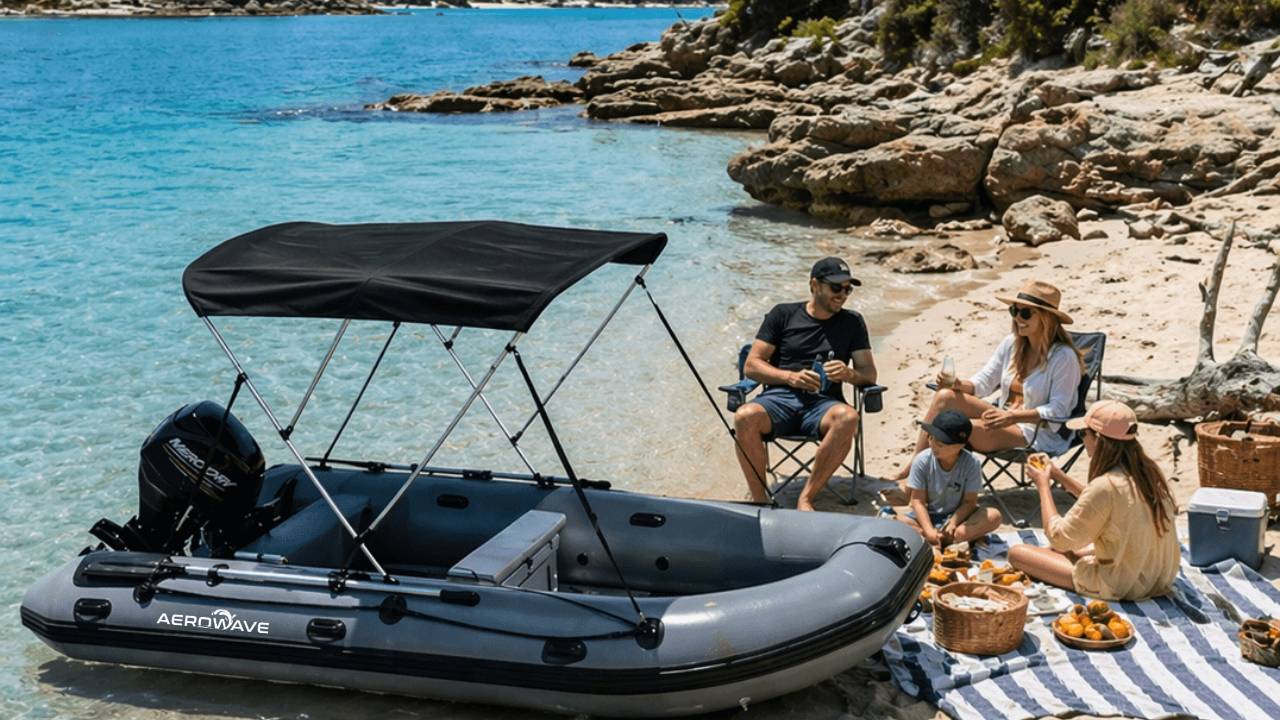
Aerowave Viper 400 Sovereign
If you're reading about catamarans, this is the one we build most of.
US$3,167 USD
Delivered to your door, today's rate
- Free freight to United States · local taxes payable on arrival
- 7-year hull warranty
🇺🇸 Shipping to United States · landed price quoted in writing
Yes — we ship the Aerowave Viper 400 Sovereign to United States. Here's the landed price.
If you're reading about catamarans, this is the one we build most of.
Aerowave Viper 400 Sovereign
- Boat package (export price)
- US$3,726
- 15% tariff relief credit
- − US$559
- Express air freight to United States
- Included
- Import duty, taxes & customs clearance
- Payable on arrival
- Estimated landed, USD
- US$3,167
Indicative, converted at today's rate, before local duty and tax on arrival. Ask below and we'll put a fixed figure in writing, valid 30 days.
- 7-year hull warranty
- 1500 GSM / 1.2 mm VALMEX® Heavy Plus hull
- CE certified to ISO 6185-3 and EU Directive 2013/53/EU
- Door-to-door, tracked the whole way
Your price, delivered to your door — freight included.
We email the full PDF quote (spec, freight, finance, WavePay) to your inbox in under 60 seconds. No spam — one quote, one follow-up.
See it for yourself
Real boats. Real owners. Real people behind them.
Plenty of what you read online these days is generated. Check us out properly — the factory, the reviews and the owners are all one click away. Why we use AI, and how to check we’re real
How our boats are built
Walk the production line: thermo-welded seams, 1.2 mm VALMEX Heavy Plus hulls, over-pressure relief valves on every chamber.
See the buildGoogle Maps reviews
Real Australian owners, five stars, published on our Google Business Profile with the map — read them there, not just on our own site.
Open Google Maps reviewsOwner stories
Boats in use — offshore, on rivers, on rescue duty. Photos and words from the people who actually own them.
Read owner stories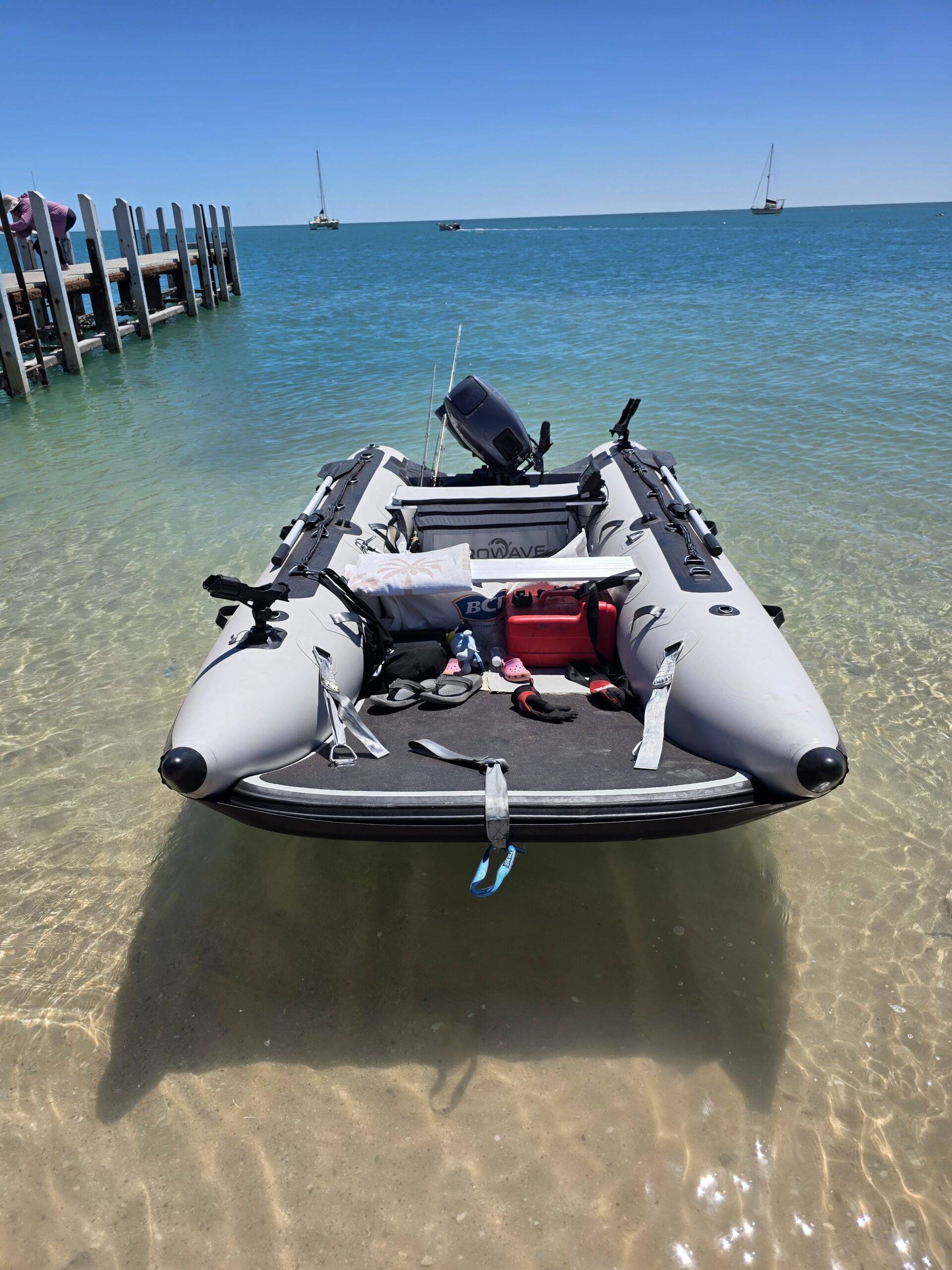
Choosing your next boat isn't just a purchase; it's a decision about the kind of adventurer you want to be.
Navigating the world of portable watercraft can feel like charting unknown waters. You see them everywhere: the classic inflatable dinghies ferrying families to a moored yacht, the sleek, powerful Rigid Inflatable Boats (RIBs) blasting across a harbour, and a growing number of strikingly stable, high-performance inflatable catamarans zipping through estuaries. Each has its tribe, and each promises a gateway to the water. But the crucial question is, which one is the right gateway for you?
The choice between a traditional tender, a RIB, and an inflatable catamaran is far more than a matter of aesthetics. It’s a fundamental decision that impacts performance, practicality, storage, running costs, and ultimately, how much and where you'll use your boat. This guide is designed to cut through the marketing noise and provide a clear, honest, and comprehensive framework for making that decision. We'll dive deep into the real-world pros and cons of each design, so you can invest not just in a boat, but in years of hassle-free enjoyment on Australia’s incredible waterways.
The Traditional Inflatable Tender: A Familiar Friend
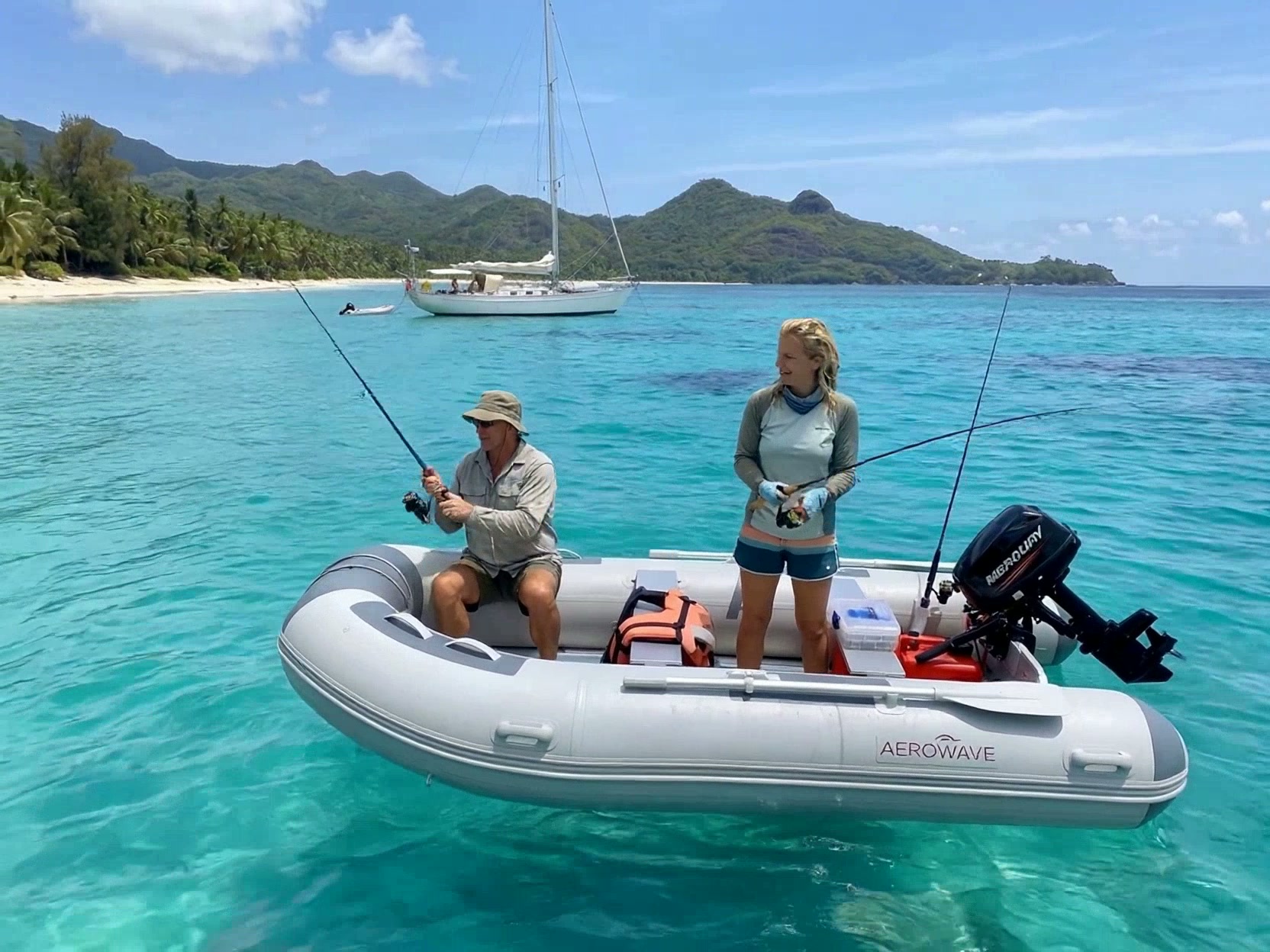
The quintessential 'soft inflatable boat' or SIB, the traditional V-hull tender is what most people picture when they hear 'inflatable boat'. It consists of two main air tubes (sponsons) and a transom, with either a simple roll-up slatted floor, a sectional hard floor, or a high-pressure inflatable floor. For decades, they've been the workhorse of harbours everywhere, serving as yacht tenders, fishing platforms, and family runabouts.
Design and Construction
Most tenders feature a monohull design, meaning a single V-shaped hull. This shape is designed to cut through water, providing a reasonably comfortable ride in calm conditions. The quality of these boats varies enormously, from budget PVC imports with questionable seams to premium German VALMEX® fabric models designed to last. A quality air-deck floor, like those inflated to a rigid 8–10 PSI, can create a surprisingly firm and stable platform, rivalling the feel of a solid floor but with a fraction of the weight and setup time.
Use Cases and Strengths
- Yacht Tendering: This is their home turf. Their light weight, collapsibility, and soft sides make them perfect for stowing on a yacht's deck or davits and for nudging up against an expensive hull without fear of scratching.
- Portability: A smaller tender can be deflated, rolled up, and thrown in the back of a station wagon or ute. Even a larger model like our WaveRunner 380, while substantial, is fundamentally a portable craft.
- Simplicity: There are no complex structures. Inflate, attach the outboard, and you're away. For casual boaters who just want to get on the water with minimal fuss, this is a huge plus.
The Downsides
Despite their versatility, traditional tenders have inherent limitations. The single V-hull, while effective, can be prone to 'chine walking' (rocking from side to side) at speed, especially with only one person aboard. They can also feel 'wet' in even moderate chop, as the bow has a tendency to push water out and up, often right back into the boat. The biggest drawback, however, is efficiency. It takes a significant amount of power—and therefore fuel—to push the wetted surface area of a monohull up onto the plane.
The Rigid Inflatable Boat (RIB): The Hybrid Powerhouse
RIBs represent a significant step up in performance and structural integrity. By combining a rigid fibreglass or aluminium hull with inflatable tubes for stability and buoyancy, they offer a 'best of both worlds' solution that has made them favourites for rescue services, serious offshore fishers, and performance enthusiasts.
Design and Construction
At the heart of a RIB is its solid hull. This deep-V or modified-V hull is designed for serious performance, allowing the boat to slice through chop and handle rough conditions with a confidence that a SIB simply cannot match. The inflatable tubes, or sponsons, provide immense stability at rest and act as giant fenders, making docking easier and adding a huge safety margin of buoyancy. The helm is typically a console with a steering wheel, seats are often moulded into the deck, and they are designed for larger, more powerful outboards.
Use Cases and Strengths
- Offshore Performance: This is where RIBs shine. Their rigid hulls can handle conditions that would have a SIB owner heading for home. They are faster, drier, and more capable in open water.
- Capacity and Power: RIBs are designed to carry more weight and handle much larger engines, often well over 100 horsepower. This makes them suitable for serious fishing, diving, or watersports like skiing.
- A 'Proper Boat' Feel: With a fixed helm, built-in seating, and solid underfoot feel, a RIB drives and feels much more like a conventional fibreglass boat.
The Downsides
The strengths of a RIB are directly linked to its weaknesses. That solid hull makes it heavy. A RIB is not a portable boat; it lives on a trailer. This means you need space to store it, a vehicle capable of towing it, and access to a boat ramp for every launch and retrieval. The fibreglass or aluminium hull can be damaged on rocks and requires more care than an inflatable underbelly. Critically, the cost is in another league. A comparable-sized RIB is often two to three times the price of a premium SIB, not to mention the added costs of a trailer, registration, and a much larger, thirstier outboard.
The Inflatable Catamaran: The Modern Challenger
The newest and, in many ways, most innovative design in this tender vs RIB vs inflatable catamaran debate is the inflatable catamaran. By replacing the single V-hull with two separate, widely spaced inflatable hulls (or 'tubes'), this design dramatically changes the performance and stability equation.
Design and Construction
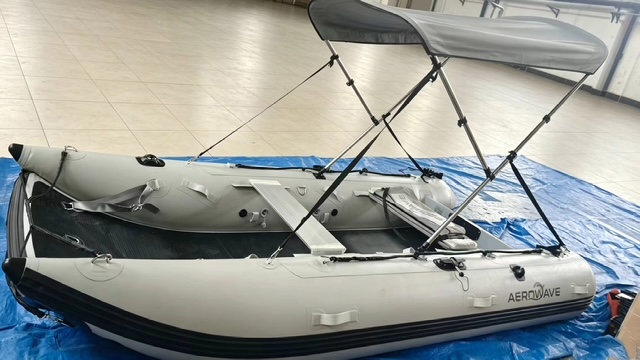
An inflatable catamaran, like our Aerowave Viper or AeroCat series, uses two slim, hydrodynamic tubes to slice through the water. Between these tubes, a high-pressure air-deck floor is suspended, creating a tunnel. As the boat moves forward, air is packed into this tunnel, creating a cushion that lifts the majority of the hull out of the water. This vastly reduces drag and wetted surface area.
Construction is key. Premium models use high-end German VALMEX® fabric; for instance, the Aerowave Viper Sovereign uses an incredibly tough 1.2mm, 1500 GSM VALMEX Heavy Plus, the same material trusted in heavy-duty commercial applications. This ensures an airframe that is not only light but also exceptionally rigid and durable, with a potential lifespan of 10-12 years. The transom is fixed high and well back, keeping the engine clear of the water and reducing spray.
Use Cases and Strengths
- Unmatched Stability: With its wide stance, a catamaran is exceptionally stable, both at rest and at speed. You can have multiple adults standing on one side without the unnerving tipping sensation common in monohulls.
- Efficiency and Performance: The air-cushion effect means the boat planes earlier and with less power. A 10hp outboard on a 3.8m catamaran can often outperform a 15-20hp on a traditional 3.8m tender, saving significantly on fuel and initial engine cost.
- A Dry, Smooth Ride: The tunnel hull traps spray and the twin pontoon design cuts through chop rather than bouncing over it. This results in a much smoother and drier ride, more akin to a RIB than a traditional tender.
- True Portability: Despite its superior performance, a high-quality inflatable catamaran remains fully portable. Models like the AeroCat 380 can be packed down into bags and transported in a car, offering RIB-like performance without the need for a trailer.
The Downsides
While they excel in many areas, there are considerations. The wide beam that provides such excellent stability means they take up a bit more space on a yacht's foredeck. Their turning circle can be wider than a V-hull's, requiring a different handling technique, more of a carved turn than a pivot. And while they outperform tenders, they won't match the top-end speed of a high-powered RIB in heavy offshore conditions, which is a trade-off for their incredible portability.
Head-to-Head Comparison: Tender vs RIB vs Inflatable Catamaran
To make the decision clearer, let's break down the key attributes of each boat type in a direct comparison table.
| Feature | Traditional Tender (SIB) | Rigid Inflatable Boat (RIB) | Inflatable Catamaran (SIB) |
|---|---|---|---|
| Performance | Moderate. Planes with enough power but can be wet and inefficient. | Excellent. Fast, dry, handles chop very well. | Very Good. Planes easily, very efficient, smooth and dry ride. |
| Stability at Rest | Fair to Good. Can feel 'tippy' with uneven loads. | Excellent. The hard hull and wide tubes provide a solid platform. | Exceptional. The wide twin-hull stance offers incredible stability. |
| Portability | Excellent. Can be deflated and carried in a bag. | Poor. Requires a trailer for transport and storage. | Excellent. Fully foldable, can be transported in a car. |
| Storage | Minimal. Can be stored in a cupboard or garage corner. | Significant. Requires a driveway, garage space, or yard for the trailer. | Minimal. Can be stored in a cupboard or on a shelf. |
| Launch Method | Can be launched from anywhere (beach, rocks, ramp). | Boat ramp only. | Can be launched from anywhere, just like a tender. |
| Initial Cost | Low to Medium. ($1,500 - $4,500 for a quality model) | High to Very High. ($15,000 - $50,000+) | Medium. ($2,900 - $6,000 for a premium model) |
| Running Cost (Fuel) | Moderate. A V-hull creates significant drag. | High. Requires a large, powerful, and thirsty outboard. | Low. Highly efficient hull requires less power and burns less fuel. |
| Verdict Summary | The ultra-portable, simple choice for calm water use. | The high-performance, non-portable choice for offshore adventuring. | The a tender vs RIB vs inflatable catamaran winner for portable high-performance. |
Performance & Handling: How They Really Behave on the Water
Let's get past the spec sheets and talk about the on-water experience. This is where the differences between the three designs become vividly clear.
Getting on the Plane
A traditional V-hull tender experiences a distinct 'hump' as it transitions to planing speed. The bow rises high, obscuring the view, before it finally levels out. This requires a good burst of power. A RIB, with its powerful engine and solid hull, powers through this phase almost instantly. An inflatable catamaran, however, simply accelerates and rises horizontally onto the surface. The lift from the air tunnel means it planes at a lower speed and with less power, often feeling like it's skimming effortlessly.
Handling in Chop
This is a major differentiator. In a 30cm harbour chop:
- The Tender will start to bounce and slam, with the flat sections of the hull smacking the water. Spray is easily thrown up and over the bow and sides, leading to a wet ride.
- The RIB will slice through the chop cleanly. Its weight and deep-V hull provide momentum and cut through the waves with authority. The ride is dry and secure.
- The Inflatable Catamaran offers a unique ride. The slim twin hulls knife through the waves rather than bouncing over them, while the tunnel between them absorbs the shock. The ride is remarkably soft and, because the hull is high off the water and well back, exceptionally dry.
Stability for Activities
Imagine you're fishing or have the kids on board. Stability at rest is paramount.
- On a Tender, if two people move to one side, the boat will list noticeably. Casting, pulling in a pot, or helping someone back into the boat requires awareness of balance.
- A RIB is a solid platform. You can walk around with confidence; its stability is one of its core strengths.
- An Inflatable Catamaran is arguably the most stable of all. You can have two or three adults standing on one pontoon with minimal list. This makes it an outstandingly safe and comfortable platform for fishing, diving, or family outings where people are constantly moving about.
Portability, Storage & Launching: The Practical Realities
Your boating life doesn't just happen on the water. It involves packing, transporting, storing, and launching your vessel. This is where the tender vs RIB vs inflatable catamaran choice has the biggest impact on your lifestyle.
A RIB is a commitment. It's a trailer boat. This means:
- You need a towbar-equipped vehicle.
- You need the space to store a boat and trailer (often 5-6 metres long).
- You are restricted to launching at a formal boat ramp, which can be crowded on a perfect summer's day.
- Annual costs include trailer registration and maintenance (wheel bearings, tyres, lights).
In stark contrast, a fully inflatable boat—be it a traditional tender or a catamaran—offers true freedom. Our Aerowave and AeroCat models, for example, pack down into two carry bags. This unlocks a different kind of boating:
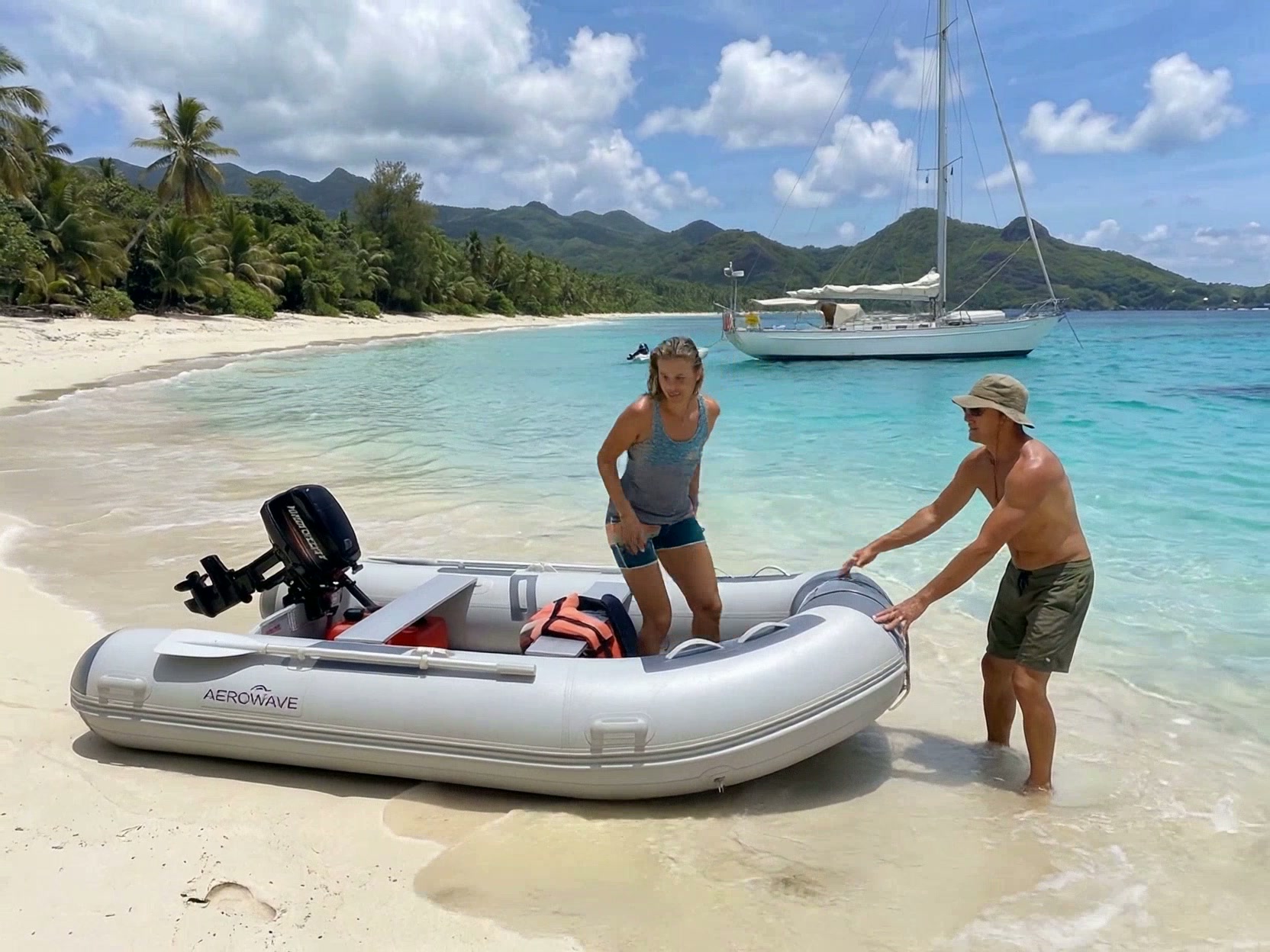
- Launch Anywhere: Launch from a deserted beach, a rocky shoreline, or a secluded riverbank miles from the nearest ramp.
- Travel Friendly: Put it in the back of the car for a weekend away or even check it in as luggage on a flight to explore a remote coastline.
- Simple Storage: Store it in a garage, a spare room, or an apartment balcony. No yard required.
A premium inflatable catamaran like the Aerowave Viper 400 Sovereign Full Package ($5,995) offers the performance that might tempt you towards a RIB, but with the sublime portability of a classic tender. It bridges the gap. You're not compromising performance for portability anymore.
Cost of Ownership: The Full Financial Picture
When buying a boat, the sticker price is just the beginning. A true cost assessment looks at the entire lifecycle.
-
Initial Purchase: As the table shows, RIBs are in a different financial league. A premium inflatable catamaran sits in a sweet spot, offering advanced performance for not much more than a premium traditional tender. For example, the AeroCat series starts from just $2,910, offering catamaran stability and efficiency at an incredible price point.
-
Engine Cost: Because an inflatable catamaran is so efficient, it requires a smaller, lighter, and less expensive outboard to achieve the same performance as a tender. A Hidea 9.9hp 4-stroke on a cat can feel like a 15hp on a monohull, saving you money upfront and at the pump.
-
Fuel Costs: Over a boat's lifetime, this is a huge factor. Less drag means less fuel. An inflatable catamaran's efficient design can translate into fuel savings of up to 30-40% compared to a similarly sized tender with the same engine.
-
Storage & Maintenance: Here's the killer checklist for RIB hidden costs:
- Trailer registration (annual)
- Trailer maintenance (tyres, bearings, rust-proofing)
- Potential storage fees if you don't have space
- Fibreglass/aluminium hull repairs (can be costly)
A portable inflatable avoids all of these. Maintenance is simple: a freshwater rinse and proper storage. The high-end VALMEX fabric used in our boats has a proven lifespan of 10-12 years, making it a long-term investment. Easy Inflatables also offers warranties of up to 7 years on select models like the Viper Sovereign, giving you peace of mind.
-
Delivery: Don't forget the cost of getting the boat to you. Many suppliers only offer expensive freight. At Easy Inflatables, we provide options: FREE Economy Sea Freight (30–40 days) for those who can wait, or Express Air Delivery (7–14 days) with a customer contribution (around A$600) for those who need it fast.
The Bottom Line: Which Boat is Right for Your Life?
There is no single 'best' boat; there is only the best boat for you. The decision hinges on an honest assessment of your needs, your budget, and how you truly want to spend your time on the water.
-
Choose a Traditional Tender if your primary need is maximum portability for short, calm-water trips, like ferrying to a moored yacht, and your budget is tight.
-
Choose a RIB if you have a large budget, ample storage space for a trailer, demand high-speed offshore performance, and don't mind being restricted to boat ramps.
-
Choose an Inflatable Catamaran if you want the 'best of both worlds': performance, stability, and a dry ride that rivals a RIB, combined with the complete portability and freedom of a traditional tender. It's the intelligent choice for the modern boater who values efficiency, versatility, and practicality.
If the idea of launching anywhere, enjoying a stable and efficient ride, and packing your high-performance boat into the car at the end of the day sounds like your kind of freedom, then an inflatable catamaran is very likely the boat for you. To discuss your specific needs, feel free to call our expert team on +61 2 4335 1603 or email us at sales@easyinflatables.com.au. We're boaters, and we're here to help.
Related
Weekend-Proof Score 17 questions · about 2 minutes
Will the boat you're about to buy survive an Australian summer?
Seventeen straight questions about where you'll use it, what you'll ask of it and the boat you're weighing up. You get a score out of 100, the exact weak points in your plan, and the one boat that genuinely fits.
Free · your result shows on screen · no email required
So which one is yours?
Pick how you'll actually use it and we'll take you straight to the right hull.
I want to fish it
Open bow, rod holders, deck space you can stand and cast from.
Viper Sport 400Family, diving and the beach
3.8 m Series 3 catamaran — low bow to climb back in wearing fins or a tank.
WaveRunner 380Tender / one-person launch
3.3 m hard-floor boat that packs into a bag and still takes a beach landing.
Viper 330Shop gear featured in this guide
Aerowave WaveRunner 380 Series 3 Catamaran Package
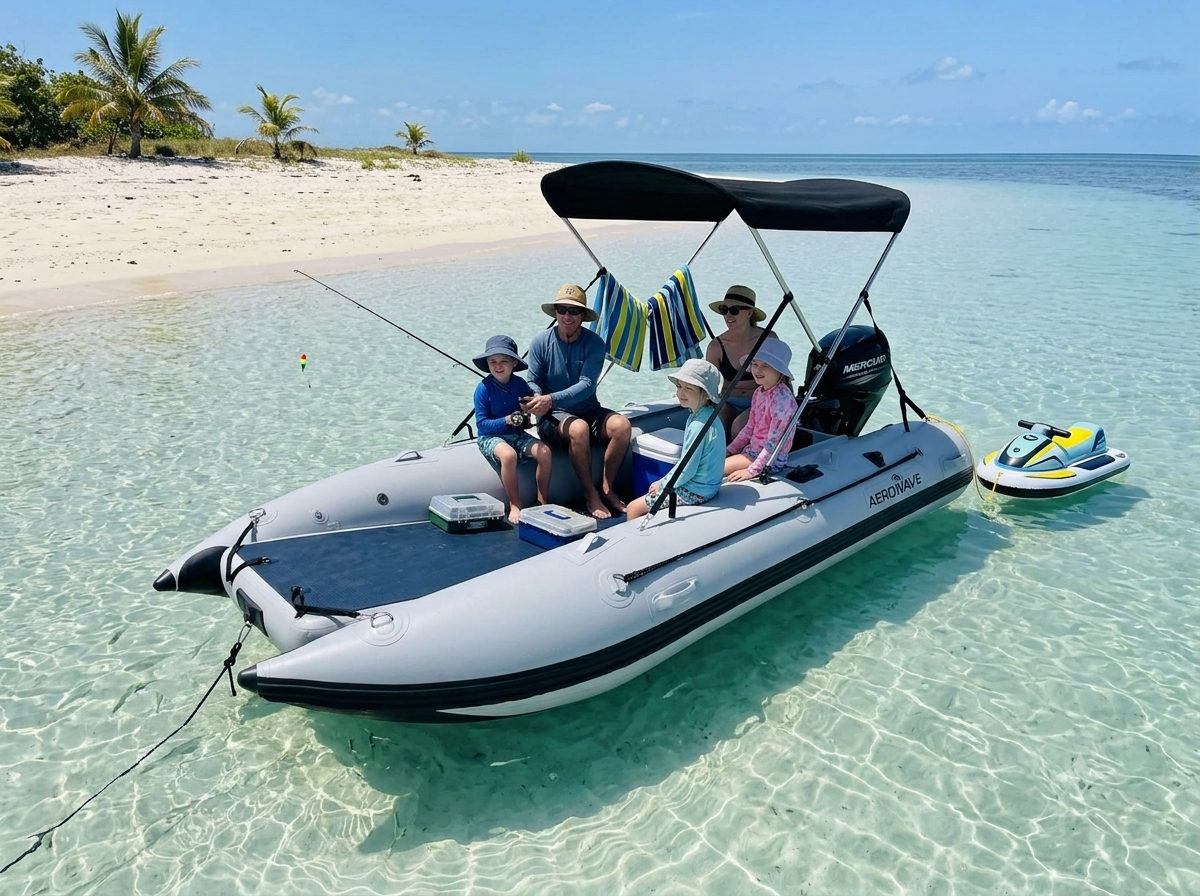
The WaveRunner 380 Series 3 is a premium 3.8m inflatable catamaran package built for Australian and worldwide families, fishing, and coastal day boating — ideal for snorkeling and spearfishing — offering serious stability and premium German Valmex® construction.
Free freight to United States · local taxes payable on arrival
Aerowave Viper 400 Sovereign
Flagship 4m enclosed-bow inflatable catamaran. German VALMEX® 7321 Heavy Plus 1.2mm commercial-grade fabric, 10 PSI high-pressure drop-stitch air deck floor with VALMEX non-slip surface, LockPro wheels, full Bimini and FREE express delivery Australia-wide included. Winter special — save $1,000 until 31 August 2026.
Free freight to United States · local taxes payable on arrival
Aerowave Viper 365 Open Bow
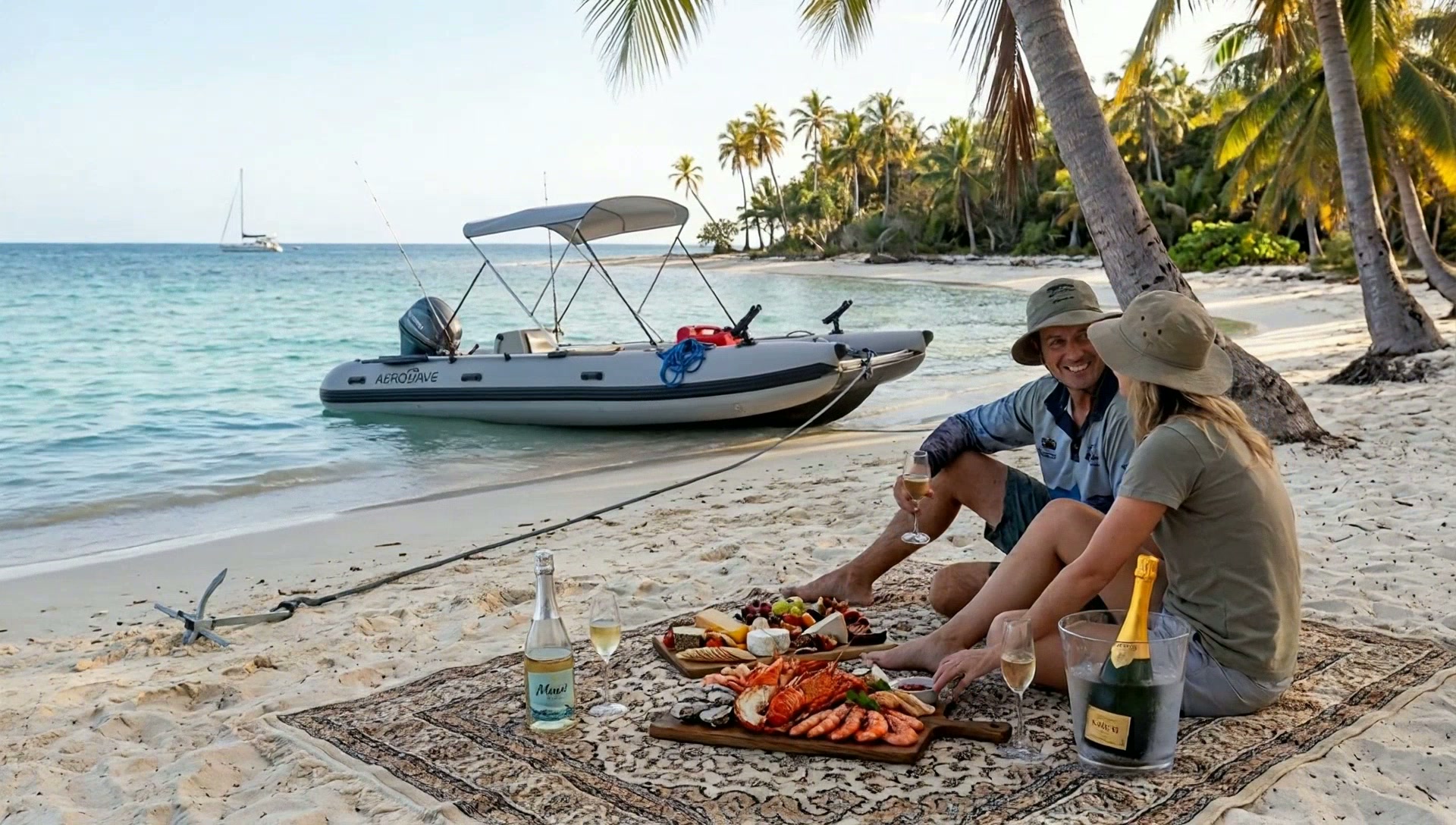
Premium 3.65m Inflatable catamaran — built the same way as our flagship Viper 400 sports boat, just 35cm shorter. German VALMEX® 7321 Heavy Plus 1.2mm commercial-grade fabric, 10 PSI high-pressure drop-stitch air deck floor with VALMEX non-slip surface, LockPro wheels, full Bimini and FREE express delivery Australia-wide included.
Free freight to United States · local taxes payable on arrival
Not sure which suits you? Talk to a real boat owner.
Before you spend a cent
Buying from Australia, delivered to United States
You have never heard of us, we are on the other side of the world, and the internet is full of fakes. Fair enough. Here is everything you would need to check us out, in one place — no forms, no chat bot.
Australian designed business
Easy Inflatables, Avoca Beach NSW 2251. ABN 96 856 548 613. International orders ship from our Hong Kong hub.
222 owner reviews, 4.8 average
Read them in full, good and bad, on our reviews page.
CE certified, 7-year hull warranty
ISO 6185-3 and EU Directive 2013/53/EU. Warranty honoured worldwide.
Tracked, insured, door to door
FREE freight to United States · local tax/duty on arrival.
- Who am I actually buying from?
- Easy Inflatables, Avoca Beach NSW 2251, Australia. ABN 96 856 548 613. Sean is the owner and skipper, Gary Stewart handles sales on +61 2 4335 1603, Karen Matthews handles email. The boats are Australian designed; international orders ship from our Hong Kong dispatch hub so your landed price stays competitive. Phone us before you pay a cent — a real person answers.
- Is this really an Australian product?
- Yes — Australian designed and engineered on the NSW Central Coast. Manufacturing is done offshore to our spec, and international orders ship direct from our Hong Kong dispatch hub. If we routed every boat through Australia first, the freight alone would roughly double or triple your cost for the same hull.
- What do I pay, and what is not included?
- The delivery and import terms depend on your country. EU, UK, New Zealand and named Asia/Pacific lanes include duty and tax; US freight is free but US buyers pay import charges on arrival. Other destinations show their terms before payment.
- How do I pay safely?
- Card through Stripe (Visa, Mastercard, Amex, Apple Pay, Google Pay) or bank transfer. Card payments carry your bank's own dispute protection. We never ask for crypto, gift cards or payment to a personal account.
- What if it arrives damaged?
- Every boat ships fully tracked and insured door to door. Photograph the carton and the boat on arrival and email us — transit damage is claimed and replaced through us, not left with you and the courier.
- Is the warranty real outside Australia?
- Yes. The 7-year hull warranty on 1.2 mm VALMEX Heavy Plus and Orca Hypalon hulls applies wherever you are. Replacement parts are held in Australia and at our overseas hub and go out by express courier to your door.
- Is the boat actually certified?
- All Aerowave catamarans are CE certified to ISO 6185-3 and EU Directive 2013/53/EU. Certification paperwork is supplied with the boat — ask and we will send it before you order.
Frequently asked questions
- What is the main advantage of an inflatable catamaran over a traditional inflatable tender?
- The primary advantages are stability and efficiency. The twin-hull design provides a remarkably stable platform that doesn't tip like a V-hull, and it creates an air cushion that helps the boat plane with less power, saving fuel and providing a smoother, drier ride.
- Is a RIB always better in rough water?
- In serious offshore conditions, a heavy RIB with a deep-V fibreglass hull will have an advantage. However, in typical coastal chop (up to 0.5 metres), a quality inflatable catamaran often provides a more comfortable and drier ride than a small RIB, as its tunnel hull absorbs impact instead of slamming.
- How portable is an inflatable catamaran really?
- They are genuinely portable. A model like the AeroCat 380 packs down into two bags that can fit in the boot of a medium-sized car. They are designed for one or two people to assemble in about 20-25 minutes without tools, offering ultimate freedom from trailers and boat ramps.
- Why is VALMEX fabric important for an inflatable boat?
- German-made VALMEX® is a premium, multi-layer composite material known for its exceptional strength, UV resistance, and air-holding properties. A boat made from quality VALMEX, like our Aerowave Viper (1.2mm) or AeroCat (0.9mm), has a proven lifespan of 10-12 years, unlike budget PVC boats that can degrade in just a few seasons.
- How much horsepower do I need for an inflatable catamaran?
- Because of their efficiency, inflatable catamarans require less power. A 3.8-metre model performs brilliantly with just a 9.9hp outboard, while a 4.0-metre model is perfectly matched with a 15-20hp. This saves money on the engine purchase, reduces the boat's overall weight, and lowers your fuel consumption.
- Can I store my inflatable boat inflated?
- Yes, you can. If you have the space, you can store your inflatable tender or catamaran lightly inflated on a trailer or rack. Just ensure it's covered from direct, prolonged sunlight to maximise the lifespan of the VALMEX fabric. For long-term winter storage, it is best to clean, dry, and pack it away in its bags.
- What's the difference between the AeroCat and Aerowave Viper models?
- Both are premium inflatable catamarans. The AeroCat series uses high-quality 0.9mm VALMEX and is designed as the ultimate high-performance, super-portable boat. The Aerowave Viper is our flagship Sovereign model, built with even heavier-duty 1.2mm VALMEX and additional features for those demanding the absolute best in durability and capability.
Ready to set sail?
Premium German-fabric inflatable catamarans, built to order and delivered to your door. Talk to our team or browse the fleet.
Like this guide? Get the next one in your inbox.
Owner-tested tips, gear deep-dives and Aussie boating know-how — no spam.