The Ultimate Australian Inflatable Catamaran Size Guide (2024)
Confused by boat sizes? Our definitive inflatable catamaran size guide breaks down the choice between 3.3m, 3.6m, 3.8m, and 4.0m models for every Aussie use case.
At a glance
Confused by boat sizes? Our definitive inflatable catamaran size guide breaks down the choice between 3.3m, 3.6m, 3.8m, and 4.0m models for every Aussie use case.
- Beyond Length: The Three Dimensions of Boat Size
- Overall Length (LOA): More Than Just a Number
- Beam Width & Tube Diameter: The Stability Equation
- Payload Capacity: The Real-World Litmus Test
What we'd put you in
Aerowave Viper 400 Sovereign
If you're reading about catamarans, this is the one we build most of.
US$3,167 USD
Delivered to your door, today's rate
- Free freight to United States · local taxes payable on arrival
- 7-year hull warranty
🇺🇸 Shipping to United States · landed price quoted in writing
Yes — we ship the Aerowave Viper 400 Sovereign to United States. Here's the landed price.
If you're reading about catamarans, this is the one we build most of.
Written for Australian readers — but the boat ships to you. We are an Australian builder and this article is written from Australian waters. That changes nothing about what you can order: the same hull, the same 7-year warranty and the same certification go out to United States every week.
Aerowave Viper 400 Sovereign
- Boat package (export price)
- US$3,726
- 15% tariff relief credit
- − US$559
- Express air freight to United States
- Included
- Import duty, taxes & customs clearance
- Payable on arrival
- Estimated landed, USD
- US$3,167
Indicative, converted at today's rate, before local duty and tax on arrival. Ask below and we'll put a fixed figure in writing, valid 30 days.
- 7-year hull warranty
- 1500 GSM / 1.2 mm VALMEX® Heavy Plus hull
- CE certified to ISO 6185-3 and EU Directive 2013/53/EU
- Door-to-door, tracked the whole way
Your price, delivered to your door — freight included.
We email the full PDF quote (spec, freight, finance, WavePay) to your inbox in under 60 seconds. No spam — one quote, one follow-up.
See it for yourself
Real boats. Real owners. Real people behind them.
Plenty of what you read online these days is generated. Check us out properly — the factory, the reviews and the owners are all one click away. Why we use AI, and how to check we’re real
How our boats are built
Walk the production line: thermo-welded seams, 1.2 mm VALMEX Heavy Plus hulls, over-pressure relief valves on every chamber.
See the buildGoogle Maps reviews
Real Australian owners, five stars, published on our Google Business Profile with the map — read them there, not just on our own site.
Open Google Maps reviewsOwner stories
Boats in use — offshore, on rivers, on rescue duty. Photos and words from the people who actually own them.
Read owner stories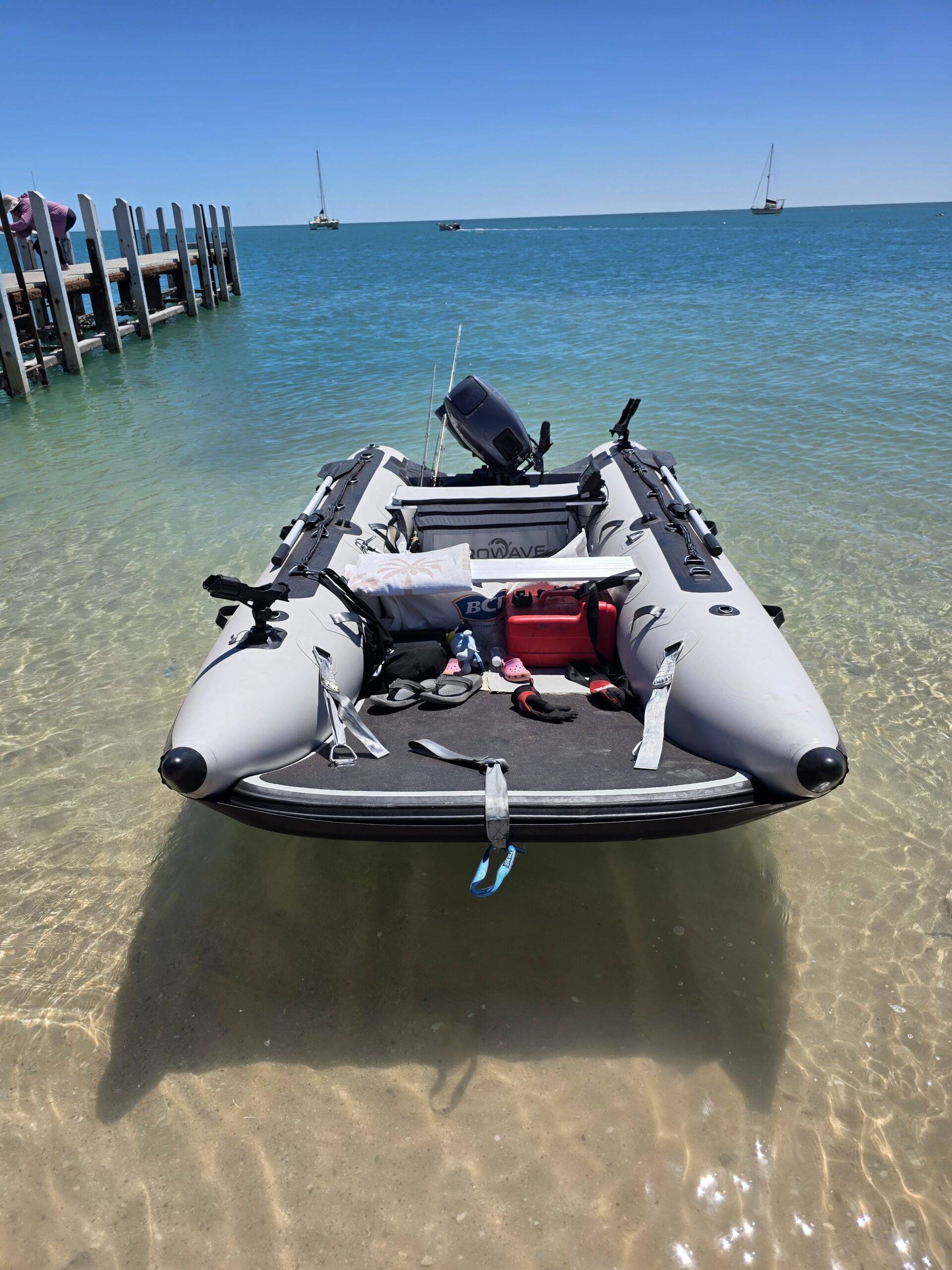
The single biggest mistake in buying an inflatable boat isn't choosing the wrong brand; it's choosing the wrong size.
Choosing your first, or next, inflatable catamaran is an exhilarating moment. You can already picture it: sliding silently into a secret fishing spot, exploring a secluded cove with the family, or simply enjoying the unparalleled freedom of being on the water. But between that vision and reality lies a crucial decision that dictates everything about your boating experience: size. It's a choice that seems simple—3.3 metres, 3.6, 3.8, 4.0—but the real-world difference between these numbers is immense. Getting it right means years of effortless enjoyment; getting it wrong leads to frustration, regret, and a boat that spends more time in the garage than the harbour.
This is more than just a list of specifications. This is the definitive Australian inflatable catamaran size guide, designed to cut through the marketing noise and give you an honest, expert framework for making the right choice. We'll move beyond simple length measurements and dive into the critical, often-overlooked factors like payload, stability, transportability, and intended use. Whether you're a solo angler, a family adventurer, or an expedition leader, this guide will map your specific needs to the perfect vessel, using our own Aerowave and AeroCat models as real-world examples of what to look for.
Beyond Length: The Three Dimensions of Boat Size
Most boat buyers, especially first-timers, fixate on one number: the Length Overall (LOA). While important, it's only one-third of the story. A boat's true character and capability are defined by a trio of interconnected dimensions. Understanding this interplay is the first step towards becoming an expert buyer.
Overall Length (LOA): More Than Just a Number
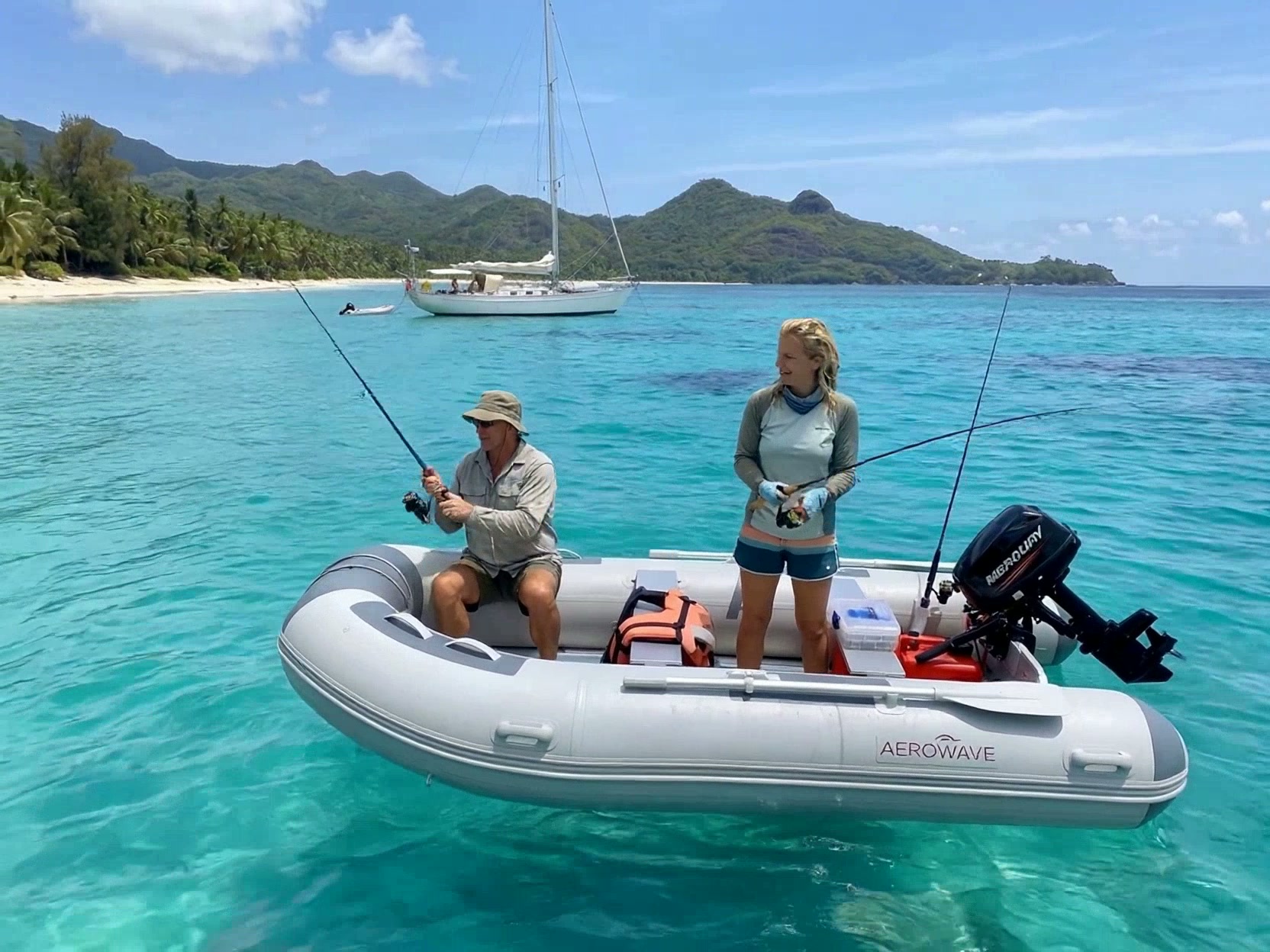
The advertised length of a boat (e.g., 4.0 metres) is a powerful indicator of its potential performance, especially in choppy water. A longer waterline length—the length of the hull in contact with the water—allows the boat to 'bridge' waves more effectively. Instead of pitching up and down over every small wave, a longer boat spans the crests, resulting in a significantly smoother, drier, and more comfortable ride. This is particularly noticeable when travelling at speed. A 4.0m Aerowave Viper will handle a 15-knot sea breeze chop far more gracefully than a 3.3m boat, which might feel more skittish and wet.
Length also directly translates to internal cockpit space. That extra 20-30cm between a 3.6m and 3.8m model might not sound like much, but it can be the difference between comfortably fitting an extra esky and having to leave it on the jetty.
Beam Width & Tube Diameter: The Stability Equation
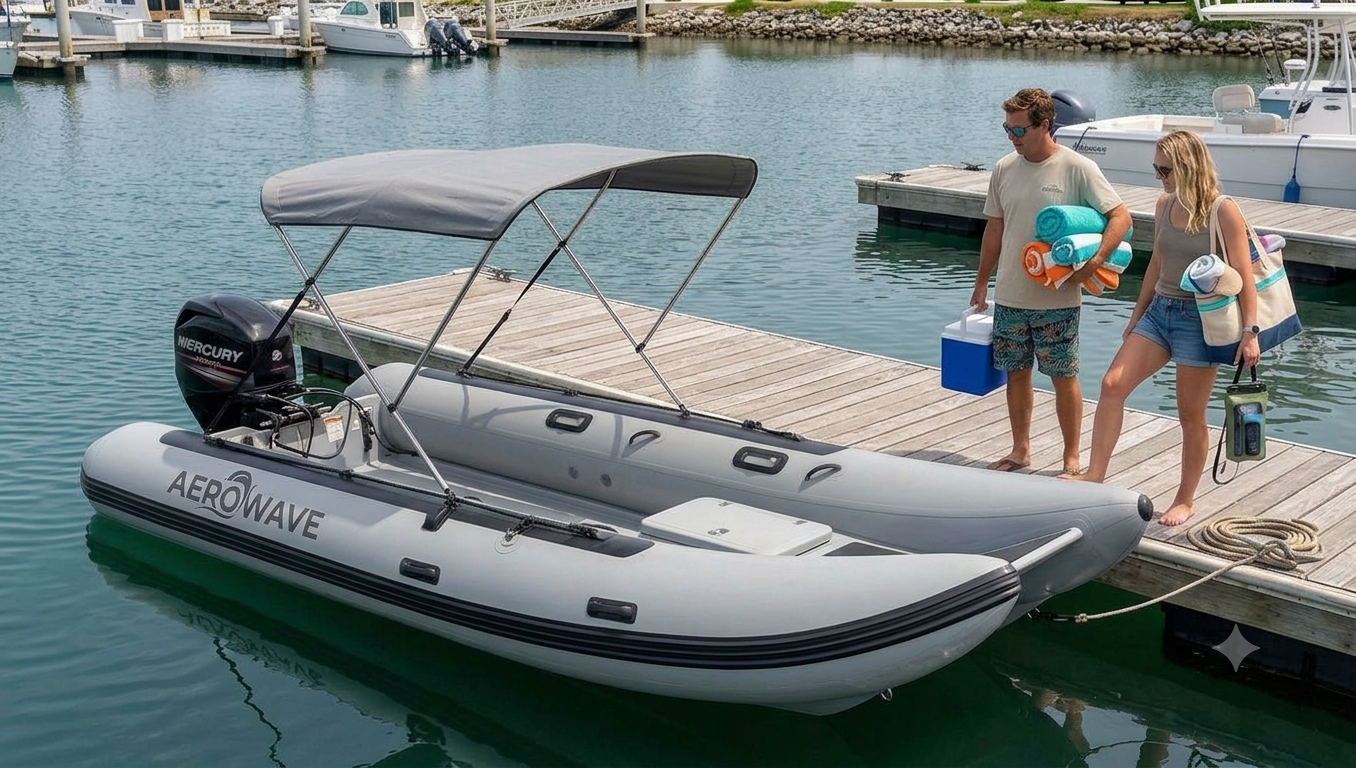
If length dictates the ride, width dictates the stability. The 'beam' of a boat is its widest point. For an inflatable catamaran, this is a huge advantage over traditional monohulls. The wide stance of the twin hulls, combined with large-diameter tubes, creates a platform of incredible lateral stability. This is the quality you feel when you step aboard, or when two people move to one side to land a fish. The boat doesn't lurch; it remains steady and predictable.
Pay attention to both the overall beam and the internal beam (the usable space between the tubes). A wider internal beam means more floor space for gear, tackle boxes, and feet. Larger diameter tubes not only increase stability and buoyancy but also lift you higher out of the water, contributing to a drier ride and providing a more comfortable, secure seating position.
Payload Capacity: The Real-World Litmus Test
This is perhaps the most misunderstood and crucial specification of all. Payload capacity (measured in kilograms) is the total weight a boat can safely carry. Crucially, this is not just the weight of your passengers. It's the combined weight of:
- Passengers
- The outboard motor
- Fuel tank (a full 20L tank is about 20kg)
- Safety gear (anchor, chain, flares, life jackets)
- Fishing or diving equipment
- Eskies with ice, food, and drinks
- Any accessories like bait boards or rod holders
A common mistake is to buy a boat rated for "4 persons" and assume you and three mates can load up with a day's worth of fishing gear. In reality, four large adults could easily exceed the usable payload once the engine and gear are accounted for, even if they don't exceed the boat's maximum capacity. Always choose a boat with a payload capacity that comfortably exceeds your typical needs. Never push this limit. It's the single biggest factor in on-water safety.
Use-Case Matrix: Finding Your Perfect Inflatable Catamaran
Now, let's apply these principles to real-world scenarios. The best way to choose a size is to honestly assess your most common use case—not the one-off dream trip, but the 80% of boating you'll actually be doing.
The Solo Angler & Tender Operator (AeroCat 330)
The Profile: You predominantly head out alone or with one other person. You value speed and ease of setup above all else. You want to be on the water in minutes, exploring tight creeks, calm estuaries, and sheltered bays. You might also need a light, easily-stowed tender for a larger keelboat or launch.
The Perfect Match: AeroCat 330 At 3.3 metres, the AeroCat 330 is the epitome of portability and convenience. It's light enough for one reasonably fit person to manage, transport, and launch. The setup is quick, and its smaller footprint means it can be stored in a garage corner or apartment balcony with ease. For the solo angler, it offers a stable casting platform with ample space for a tackle bag, a small esky, and a handful of rods.
When used as a tender, its light weight makes it easy to hoist onto davits or stow on the foredeck. Paired with a small, lightweight 4-stroke outboard like a 5-6hp Hidea, it's efficient, quiet, and has enough poke to get on the plane with one person and light gear. While it can handle a bit of light chop, its primary domain is protected and inshore waters. The high-quality 0.9mm VALMEX fabric ($2,910) offers excellent durability for this class, far surpassing typical budget PVC imports that degrade quickly under the Australian sun.
The Adventurous Couple or Young Family (AeroCat 360 & 380)
The Profile: Your typical crew is two adults, perhaps with one or two small children. Your adventures involve beach-hopping, exploring local waterways, and casual fishing or snorkelling. You need more space than a solo boat but still want something that's manageable to transport and launch without a dedicated trailer.
The Sweet Spot: AeroCat 360 / AeroCat 380 This is the heartland of inflatable catamaran boating, and where the choice becomes more nuanced. Both the 3.6m and 3.8m models represent a significant jump in internal volume and capability over the 3.3m.
-
The AeroCat 360 ($3,195) is the classic all-rounder. It has the space for two adults to sit comfortably at the front while underway, with plenty of floor space between them for bags and an esky. It feels substantially more stable and spacious than the 330 and is a great platform for teaching kids to fish.
-
The AeroCat 380 ($3,480) offers that little bit extra of everything. That 20cm of additional length and slightly more volume translates into a noticeably drier ride in chop and a more generous payload. It's the ideal choice if your 'young family' includes rapidly growing teenagers, or if you regularly carry gear for multiple activities (e.g., fishing gear and beach gear). It's also the better platform if you plan on fitting an 15hp outboard and want to cover more distance, more quickly.
Both models are true 'car-toppers', packing down into bags that fit in the back of a wagon or ute. They strike a brilliant balance between capacity and convenience.
The Serious Fishing Crew & Dive Buddy Boat (WaveRunner 380 & Viper 400)
The Profile: Your boating is mission-focused. You head out with two or three mates for serious fishing or diving. You carry lots of specialised, heavy gear: multiple large tackle boxes, dive tanks, weight belts, and a big esky for the day's catch. Stability at rest is non-negotiable, and durability is paramount.
The Workhorses: WaveRunner 380 / Aerowave Viper 400 Here, the priorities shift to maximum deck space, payload, and ruggedness.
The WaveRunner 380 ($4,000) is a fantastic, heavy-duty monohull option for this role, offering a huge internal beam and a 5-year warranty. However, for those who demand the unique stability of a catamaran, the Viper is the pinnacle.
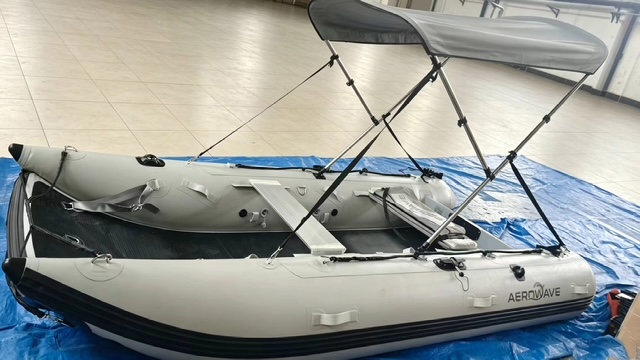
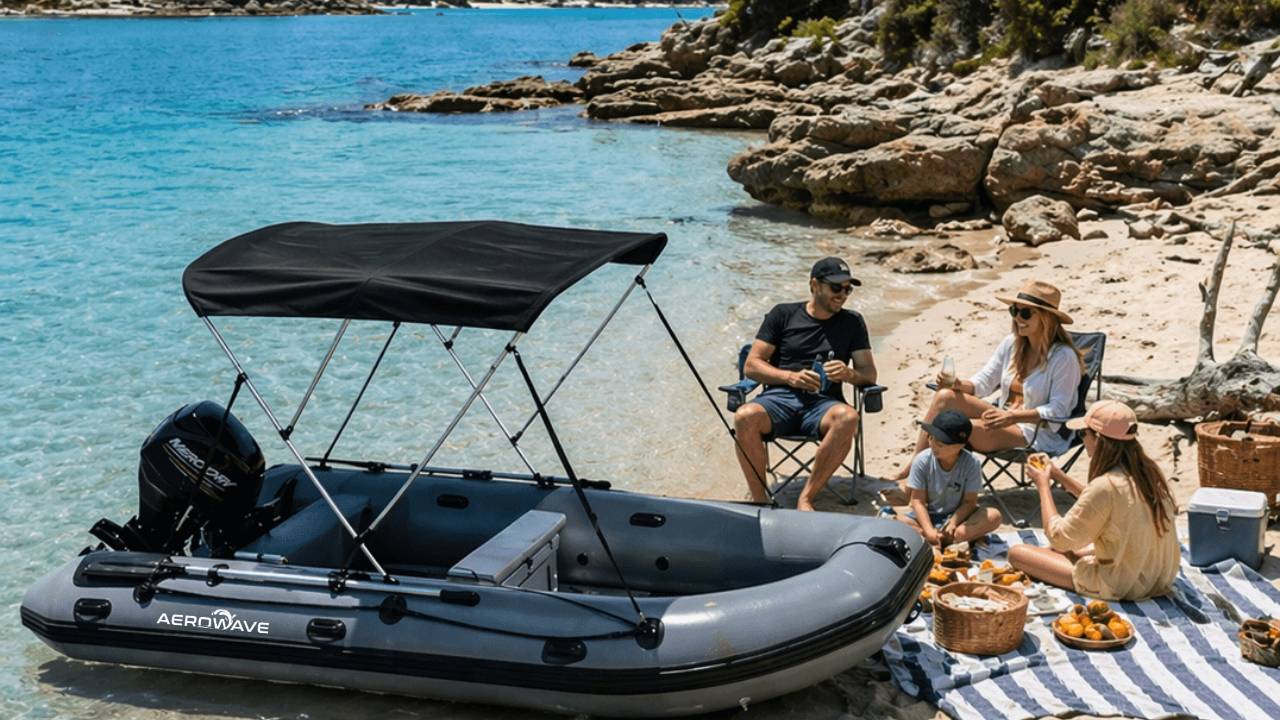
The Aerowave Viper 400 is built for this purpose. At 4.0 metres long with a wide beam, it provides an exceptionally large and stable working platform. Three anglers can cast without constantly getting in each other's way. The key differentiator is the fabric: the Viper uses an ultra-heavy-duty 1.2mm, 1500 GSM VALMEX Heavy Plus German fabric. This material is substantially more resistant to punctures and abrasions from fishing hooks, gaffs, dive fins, and being dragged up a gritty boat ramp. This is the boat you buy when your gear is sharp and heavy, and your adventures are demanding.
The higher payload of the Viper 400 is critical here, easily accommodating three or four adults plus the immense weight of dive or fishing equipment. When matched with a 20-25hp outboard, it can plane efficiently with a heavy load, getting you to your offshore spot quickly and safely. The Viper 400 Sovereign Full Package at $5,995, backed by a 7-year warranty, represents a long-term investment in serious capability.
The Expedition & Long-Range Cruiser (Aerowave Viper 400)
The Profile: You dream bigger. You're planning multi-day trips, camping on remote beaches, or exploring vast, open waterways like the Whitsundays or the Gippsland Lakes. You need to carry not just day gear, but overnight equipment: tents, sleeping bags, cooking supplies, and extra fuel and water.
The Flagship: Aerowave Viper 400 For expedition use, there is no substitute for size and durability. The Aerowave Viper 400 is the clear choice. Its 4.0m length provides the smoothest, safest ride in the variable conditions encountered on long-range trips. Its massive payload means you can carry days' worth of supplies without compromising performance or safety.
The superior 1.2mm VALMEX fabric is essential peace of mind when you're miles from the nearest ramp. It's built to withstand the rigours of being loaded and unloaded on unknown, potentially rough shorelines. This is the model where accessories like our custom-fit Air Tent ($890) come into their own, transforming the boat's deck into a comfortable, waterproof shelter for two, turning your day boat into a pocket cruiser.
An expedition boat needs range. The Viper 400, paired with an efficient Hidea 4-stroke outboard and carrying secondary fuel tanks, can achieve impressive range, opening up a world of destinations that are simply out of reach for smaller vessels.
Inflatable Catamaran Size Guide Comparison Table
To see the specifications side-by-side, this table provides a clear overview. Note how payload and recommended power increase significantly with each step up in size.
| Model | Length (m) | Beam (m) | Payload (kg) | Max Persons | Recommended HP | Primary Use Case | Fabric | Price (Boat Only) |
|---|---|---|---|---|---|---|---|---|
| AeroCat 330 | 3.3 | 1.65 | 510 | 4 | 5-10 hp | Solo Angler / Tender | 0.9mm VALMEX | A$2,910 |
| AeroCat 360 | 3.6 | 1.65 | 650 | 5 | 8-15 hp | Couple / Small Family | 0.9mm VALMEX | A$3,195 |
| AeroCat 380 | 3.8 | 1.7 | 780 | 6 | 10-20 hp | Family / All-Rounder | 0.9mm VALMEX | A$3,480 |
| Viper 400 | 4.0 | 1.9 | 850 | 7 | 15-25 hp | Fishing / Diving / Expedition | 1.2mm VALMEX | A$5,995 (Package) |
Note: The Viper 400 price shown is for the Sovereign Full Package.
Motor Matchmaking: Sizing Your Outboard
Your boat and motor are a team; one can't perform without the other. Sizing your outboard correctly is just as important as choosing the hull size. All our catamarans are designed for a standard 380mm short-shaft transom.
Under-powering: This is a common mistake made to save cost. An under-powered boat will struggle to get on the plane, especially with any sort of load. It will use more fuel as the engine labours constantly at high revs. Most importantly, it can be dangerous. Lacking the power to motor against a strong tide or wind can put you in a precarious situation.
Over-powering: This is illegal, voids your warranty, and is extremely dangerous. Never exceed the maximum horsepower rating stamped on the boat's transom plate. An oversized engine puts immense stress on the transom structure, makes the boat dangerously unstable (too much weight on the stern), and can cause unpredictable handling at speed.
The Sweet Spot: The ideal engine is typically around 75-80% of the boat's maximum HP rating. This provides a great blend of performance, efficiency, and responsiveness without straining the engine or the hull. A reliable Hidea 4-stroke outboard is the perfect partner. For an AeroCat 380 rated to 20hp, a 15hp engine is the perfect match—powerful enough to get a family and their gear on the plane, but light and efficient for all-day running.
The Unseen Factors: Storage, Transport, and Assembly
Your boating experience doesn't start at the ramp; it starts in your garage. The practicalities of storing and moving your boat are a huge part of ownership.
Storage: While all inflatable catamarans are fantastically compact compared to a rigid boat, size still matters. The packed bags of a 4.0m Viper are noticeably larger and heavier than those of a 3.3m AeroCat. Before buying, measure the space in your garage, shed, or apartment where the boat will live. Remember you also need space for the motor, fuel tank, and safety gear.
Transport: The key question is: can you move it by yourself? An AeroCat 330's main hull bag might weigh around 35-40kg, which is manageable for one person to lift into a car. The hull bag for a 4.0m Viper could be over 60kg, making it a definite two-person lift. Consider how you'll get the boat from your home to the water. Will it be in a ute tray, a van, or on roof racks? Plan accordingly.
Assembly: A larger boat has larger, heavier components. The high-pressure air deck for a 4.0m boat is substantially bigger and heavier than for a 3.3m model. It also takes longer to inflate. While the assembly process is the same across the range, expect to spend an extra 5-10 minutes setting up a larger boat compared to a smaller one. This might be insignificant to some, but critical for those who value maximum speed from car park to water.
Pre-Purchase Practicality Checklist
- Where, specifically, will I store the boat's packed bags at home? Do I have the floor/shelf space?
- How will I transport the boat? Does its packed weight and size fit my vehicle and my physical ability?
- Who is in my typical launch crew? Am I usually alone, or do I have a helper?
- Do I have a suitable space (lawn, driveway) to unroll, wash, and dry the boat after use?
- Does my most frequent destination have a good ramp, or am I launching off beaches where a lighter boat is better?
The Bottom Line
Choosing the right size inflatable catamaran is a balancing act between ambition and reality. While the 4.0 metre expedition boat is an alluring prospect, it may be overkill and cumbersome for your weekly solo fishing trip in the local creek. Conversely, pinching pennies on a boat that's too small for your family will lead to cramped, uncomfortable, and potentially unsafe outings.
The golden rule is to choose the boat that best fits 80% of your planned usage. It's almost always better to have slightly too much boat than not quite enough. A little extra space and payload capacity is a safety and comfort buffer you will never regret. If you're torn between two sizes, our decades of experience suggest that stepping up is the wiser long-term choice. Our team lives and breathes these boats, and we're here to help you make the perfect decision. Contact us at sales@easyinflatables.com.au or give us a call on +61 2 4335 1603 for personalised advice.
Related
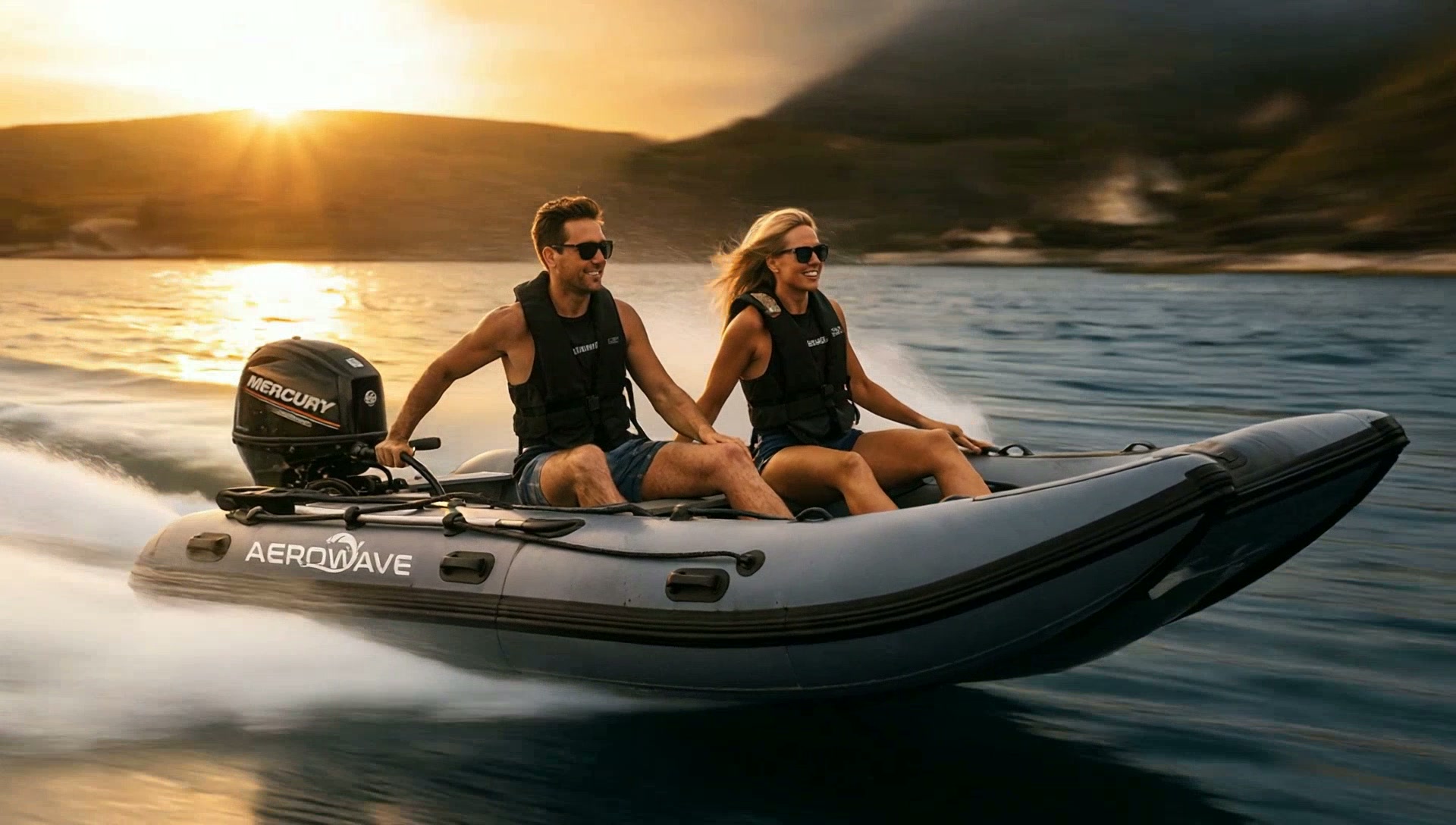
Weekend-Proof Score 17 questions · about 2 minutes
Will the boat you're about to buy survive an Australian summer?
Seventeen straight questions about where you'll use it, what you'll ask of it and the boat you're weighing up. You get a score out of 100, the exact weak points in your plan, and the one boat that genuinely fits.
Free · your result shows on screen · no email required
So which one is yours?
Pick how you'll actually use it and we'll take you straight to the right hull.
I want to fish it
Open bow, rod holders, deck space you can stand and cast from.
Viper Sport 400Family, diving and the beach
3.8 m Series 3 catamaran — low bow to climb back in wearing fins or a tank.
WaveRunner 380Tender / one-person launch
3.3 m hard-floor boat that packs into a bag and still takes a beach landing.
Viper 330Shop gear featured in this guide
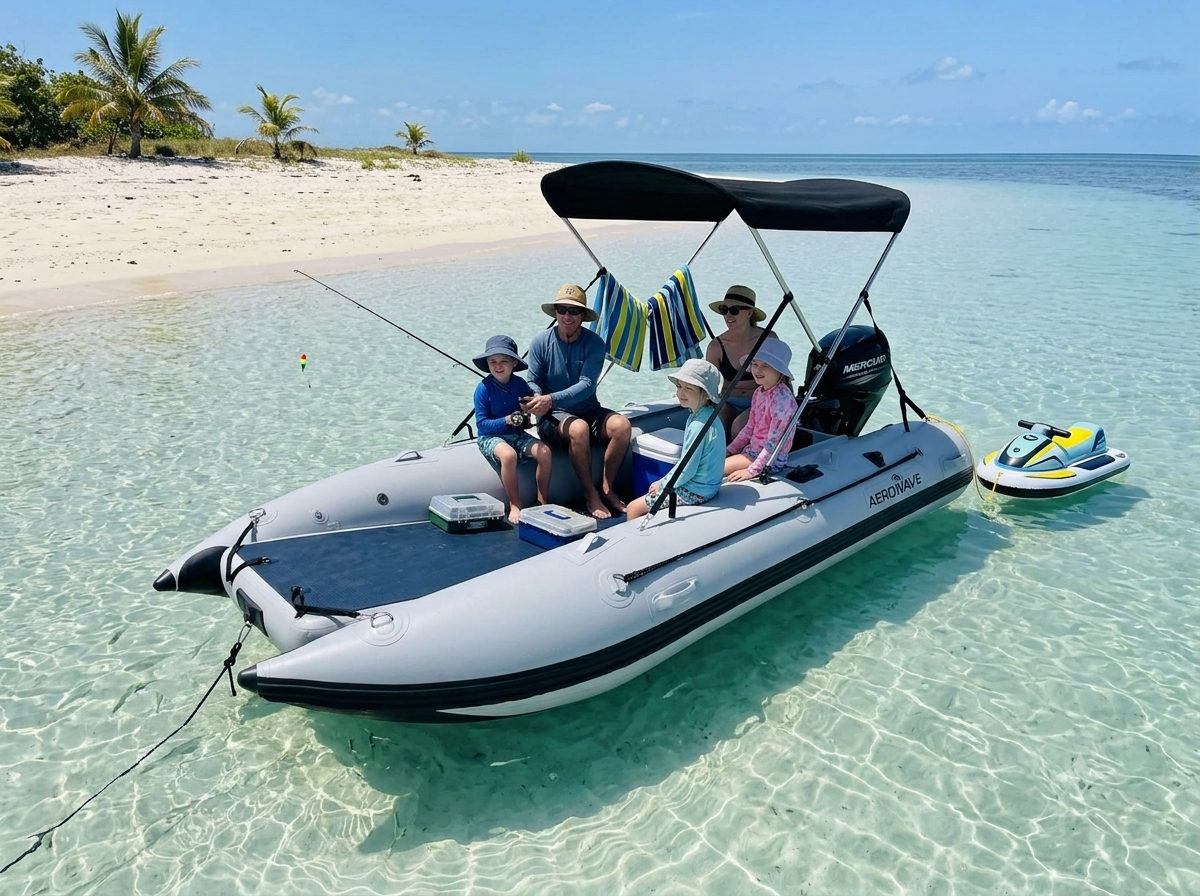
Aerowave WaveRunner 380 Series 3 Catamaran Package
The WaveRunner 380 Series 3 is a premium 3.8m inflatable catamaran package built for Australian and worldwide families, fishing, and coastal day boating — ideal for snorkeling and spearfishing — offering serious stability and premium German Valmex® construction.
Free freight to United States · local taxes payable on arrival
Aerowave Viper 400 Sovereign
Flagship 4m enclosed-bow inflatable catamaran. German VALMEX® 7321 Heavy Plus 1.2mm commercial-grade fabric, 10 PSI high-pressure drop-stitch air deck floor with VALMEX non-slip surface, LockPro wheels, full Bimini and FREE express delivery Australia-wide included. Winter special — save $1,000 until 31 August 2026.
Free freight to United States · local taxes payable on arrival
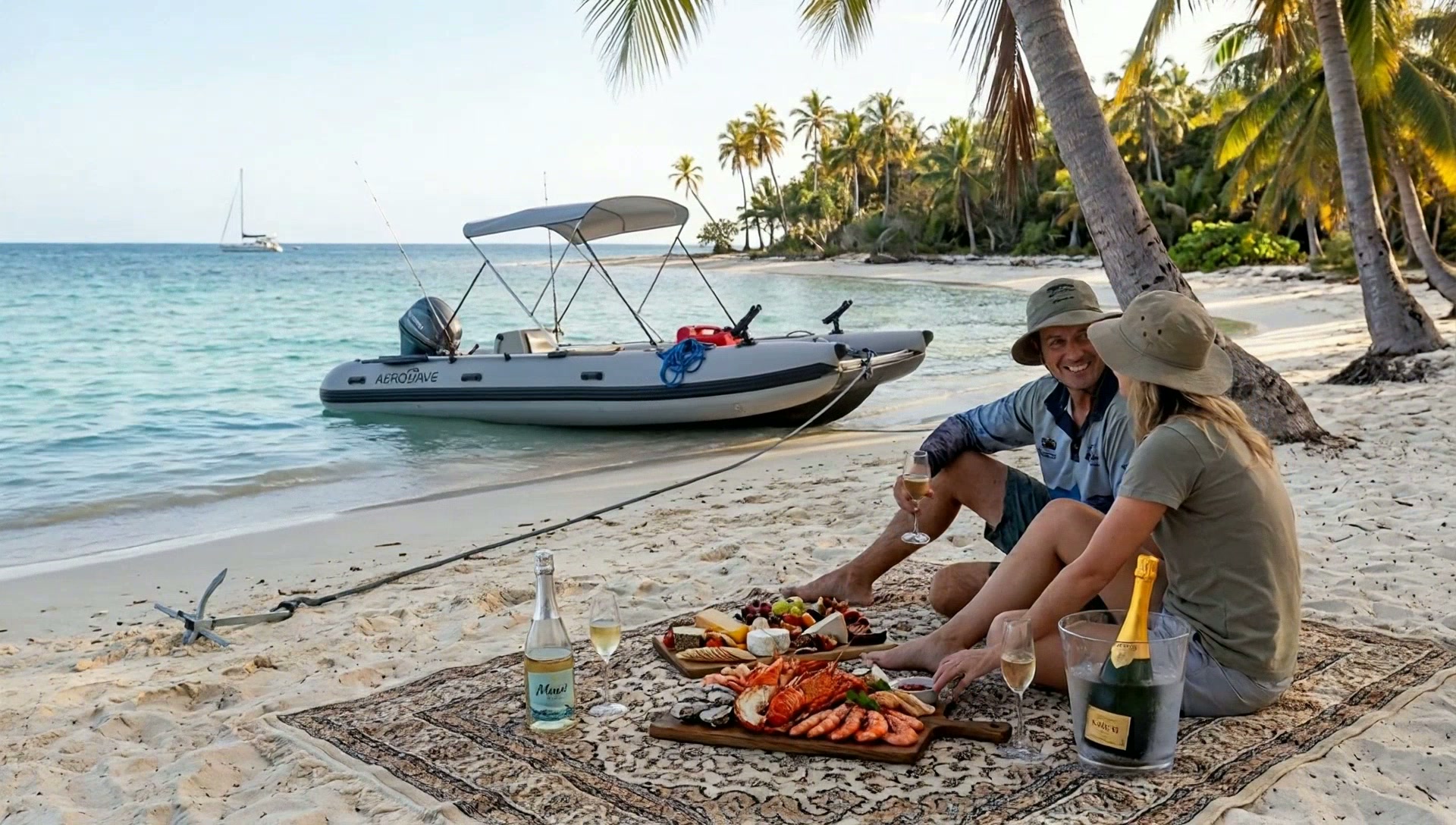
Aerowave Viper 365 Open Bow
Premium 3.65m Inflatable catamaran — built the same way as our flagship Viper 400 sports boat, just 35cm shorter. German VALMEX® 7321 Heavy Plus 1.2mm commercial-grade fabric, 10 PSI high-pressure drop-stitch air deck floor with VALMEX non-slip surface, LockPro wheels, full Bimini and FREE express delivery Australia-wide included.
Free freight to United States · local taxes payable on arrival
Not sure which suits you? Talk to a real boat owner.
Before you spend a cent
Buying from Australia, delivered to United States
You have never heard of us, we are on the other side of the world, and the internet is full of fakes. Fair enough. Here is everything you would need to check us out, in one place — no forms, no chat bot.
Australian designed business
Easy Inflatables, Avoca Beach NSW 2251. ABN 96 856 548 613. International orders ship from our Hong Kong hub.
222 owner reviews, 4.8 average
Read them in full, good and bad, on our reviews page.
CE certified, 7-year hull warranty
ISO 6185-3 and EU Directive 2013/53/EU. Warranty honoured worldwide.
Tracked, insured, door to door
FREE freight to United States · local tax/duty on arrival.
- Who am I actually buying from?
- Easy Inflatables, Avoca Beach NSW 2251, Australia. ABN 96 856 548 613. Sean is the owner and skipper, Gary Stewart handles sales on +61 2 4335 1603, Karen Matthews handles email. The boats are Australian designed; international orders ship from our Hong Kong dispatch hub so your landed price stays competitive. Phone us before you pay a cent — a real person answers.
- Is this really an Australian product?
- Yes — Australian designed and engineered on the NSW Central Coast. Manufacturing is done offshore to our spec, and international orders ship direct from our Hong Kong dispatch hub. If we routed every boat through Australia first, the freight alone would roughly double or triple your cost for the same hull.
- What do I pay, and what is not included?
- The delivery and import terms depend on your country. EU, UK, New Zealand and named Asia/Pacific lanes include duty and tax; US freight is free but US buyers pay import charges on arrival. Other destinations show their terms before payment.
- How do I pay safely?
- Card through Stripe (Visa, Mastercard, Amex, Apple Pay, Google Pay) or bank transfer. Card payments carry your bank's own dispute protection. We never ask for crypto, gift cards or payment to a personal account.
- What if it arrives damaged?
- Every boat ships fully tracked and insured door to door. Photograph the carton and the boat on arrival and email us — transit damage is claimed and replaced through us, not left with you and the courier.
- Is the warranty real outside Australia?
- Yes. The 7-year hull warranty on 1.2 mm VALMEX Heavy Plus and Orca Hypalon hulls applies wherever you are. Replacement parts are held in Australia and at our overseas hub and go out by express courier to your door.
- Is the boat actually certified?
- All Aerowave catamarans are CE certified to ISO 6185-3 and EU Directive 2013/53/EU. Certification paperwork is supplied with the boat — ask and we will send it before you order.
Frequently asked questions
- What's the real-world difference between a 3.8m and a 4.0m inflatable catamaran?
- While only 20cm, the difference is significant. A 4.0m boat like the Viper 400 has a longer waterline length for a smoother ride in chop, a wider beam for more stability and internal space, and is built from heavier-duty 1.2mm fabric for more demanding use. The 3.8m is a superb all-rounder, while the 4.0m is a step up into a more serious, expedition-capable class.
- Can I put a 25hp motor on my AeroCat 380 that's rated for 20hp?
- Absolutely not. Overpowering a boat is illegal, extremely dangerous, and will void your warranty. It puts unsafe stress on the transom and can cause the boat to handle unpredictably. Always adhere to the maximum horsepower rating on the manufacturer's plate.
- Do I need to register an inflatable catamaran in Australia?
- Registration rules vary by state. Generally, any vessel powered by an engine of 4.0kw (approx. 5hp) or more must be registered. We always recommend checking with your local state maritime authority for the specific requirements in your area before hitting the water.
- The boat is rated for 6 people, can we really fit that many?
- The 'persons' rating is a calculation based on stability and buoyancy, not comfort. While an AeroCat 380 can safely carry 6 people in calm conditions (for a short ferry trip, for example), it would be very cramped. For comfortable all-day use, we recommend using about 60-70% of the maximum person rating.
- What's the best size inflatable catamaran to use as a tender for my yacht?
- The AeroCat 330 is our most popular choice for a tender. Its light weight and compact packed dimensions make it easy to store on a foredeck or lift onto davits. It's quick to inflate and provides a stable, dry ride for ferrying crew and supplies from ship to shore.
- Why is premium VALMEX fabric important, and how long does it last?
- German-made VALMEX is a premium, multi-layer composite material, not simple PVC. It offers vastly superior UV resistance, abrasion resistance, and air retention compared to cheaper materials. With proper care, a VALMEX boat like an AeroCat or Viper has a lifespan of 10-12 years in Australian conditions, whereas budget imports may only last 2-3 seasons.
- How long does it take to receive my boat after ordering?
- We offer two options. Our FREE Economy Sea Freight typically takes 30-40 days. If you need your boat sooner, you can opt for Express Air Delivery for a contribution of A$600, which will have your boat to you in just 7-14 days.
Ready to set sail?
Premium German-fabric inflatable catamarans, built to order and delivered to your door. Talk to our team or browse the fleet.
Like this guide? Get the next one in your inbox.
Owner-tested tips, gear deep-dives and Aussie boating know-how — no spam.