
US Import Duty on Inflatable Boats: What You Actually Pay in 2026
The charges that land on an imported inflatable boat in the United States, why the total surprises people, and how a prepaid-duty quote removes the risk.
Our recommendation
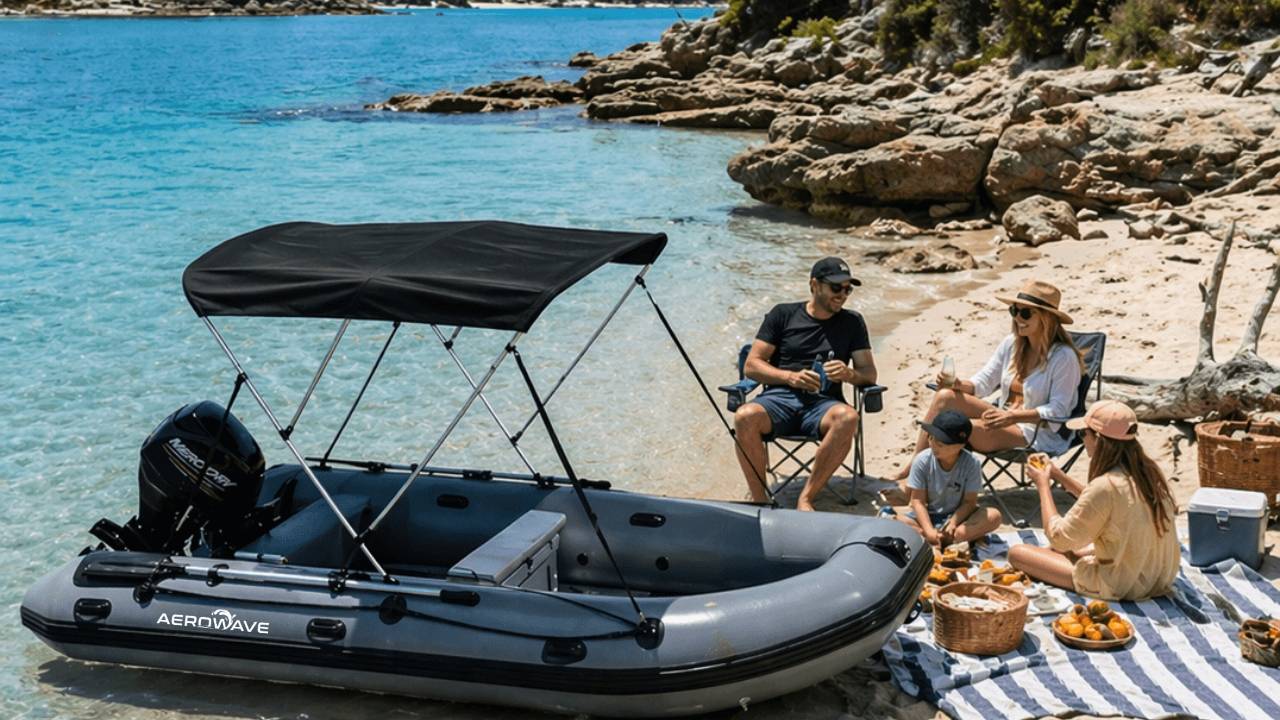
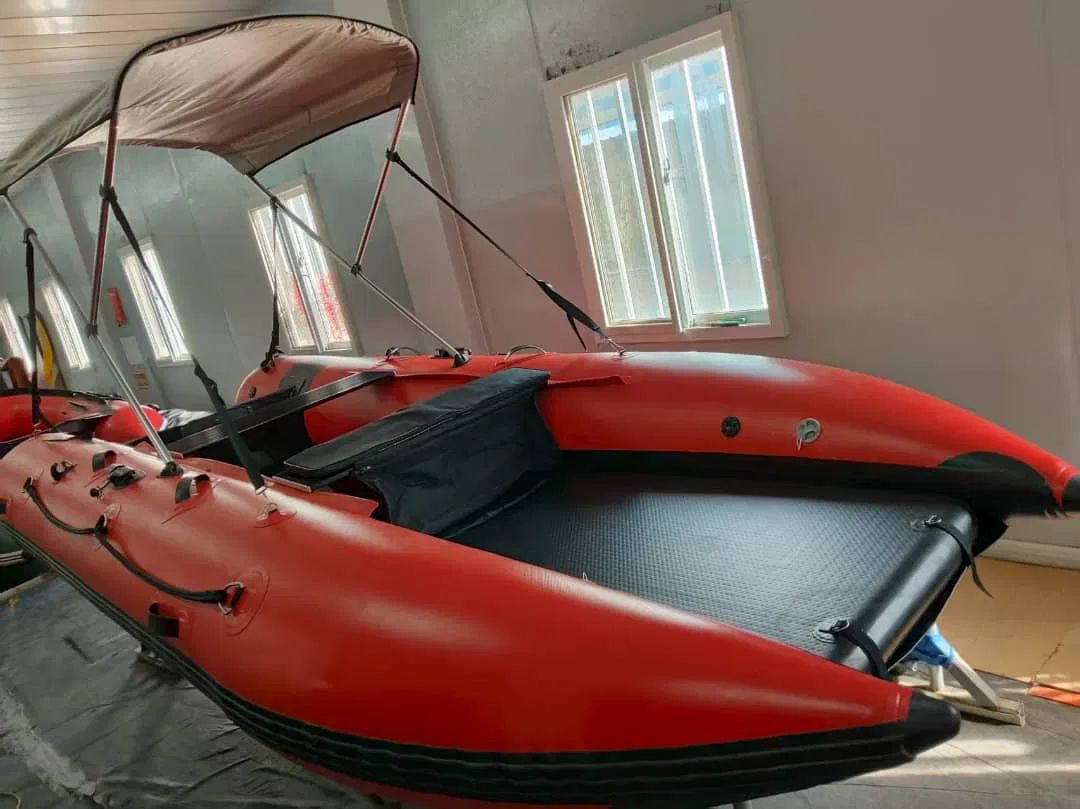
Aerowave Viper 400 Sovereign
1.2 mm fabric is about 33% thicker than common 0.9 mm fabric: more material between your boat and the water for everyday rubbing and knocks during beach launches. Careful handling still matters.
Length
4.0m / 13'1"
Beam
1.80m / 71"
Tube Diameter
51cm
Bare Boat Weight (without Bimini & wheel kit)
66kg / 145lbs
Almost every American who asks us about importing a boat asks the same thing in the same order: what is the duty, who collects it, and can it change after I have paid?
Fair questions. Import charges are where an overseas purchase either stays honest or turns into a bad afternoon.
The charges that apply
Inflatable boats enter the United States under heading 8903 of the Harmonized Tariff Schedule (HTS) — pleasure and sports vessels. Three things typically stack on a boat of Chinese or Hong Kong origin:
| Charge | What it is |
|---|---|
| MFN duty | The standard tariff rate for the classification |
| Section 301 | An additional trade measure applied to goods of Chinese origin |
| MPF | The Merchandise Processing Fee, charged as a percentage of value |
| Brokerage | Your customs broker's fee for clearing the shipment |
Rates are set by the US government, not by us, and they move. The authoritative sources are the USITC Harmonized Tariff Schedule and US Customs and Border Protection. If you are importing anything of value from anywhere, those two links are worth a bookmark.
The number that matters is the combined effect. Once the standard rate, the trade measure, the processing fee and brokerage are added, the total sitting on top of an imported inflatable boat is substantial — enough that a buyer who budgeted only for the sticker price will feel it.
Why buyers get caught
Duty is not charged at the point you pay the seller. It is assessed when the goods arrive, and it is billed to the importer of record. On a standard overseas purchase, that is you.
So the sequence goes: you pay for a boat, you wait, and then a customs broker you have never dealt with contacts you for several hundred to a few thousand dollars before the shipment is released. The boat is in the country and you cannot have it. That is the experience people mean when they say importing is a hassle — not the shipping, the surprise.
How a prepaid quote removes it
There are two shipping terms worth knowing:
- DDU / DAP — Delivered Duty Unpaid. The seller gets the goods to your country; duty and taxes are yours to settle on arrival.
- DDP — Delivered Duty Paid. The seller is the importer of record and prepays duty, fees and clearance. Nothing is collected from you.
We ship to the United States on DDP terms. The landed price on a US quote already contains the duty, the processing fee and the brokerage. There is no second invoice, and the price does not move after you have accepted the quote — it is fixed in writing for 30 days.
Two things a landed price should always show you
If you are comparing quotes from any overseas seller, insist on seeing:
- The export price with local sales tax removed. Australian GST should not appear on an export order. If a seller quotes you their domestic retail price unchanged, you are paying someone else's tax.
- Freight and duty as separate lines. A single blended number is impossible to check. Separate lines can be verified against the published tariff schedule.
If a seller will not itemise, that tells you something before you have spent a dollar.
What we do not do
We do not undervalue shipments on customs paperwork. It is asked for more often than you would think, and the answer is always no — it is fraud, the exposure lands on the buyer as much as the seller, and a boat seized at the border is a far worse outcome than a duty bill.
Working out your number
Duty is calculated on the value of the goods, so it varies with the boat and package you choose. The fastest way to see your figure is a written quote: it comes back itemised — boat ex-GST, freight, prepaid duty, regional credit — and holds for 30 days.
Explore the Aerowave range
Frequently asked questions
- What is the import duty on an inflatable boat into the USA?
- Inflatable boats classify under HTS heading 8903. The total is a combination of the standard MFN rate, any Section 301 measure applying to the country of origin, the Merchandise Processing Fee and customs brokerage. Rates are set by the US government and change — the USITC tariff schedule and US Customs and Border Protection are the authoritative sources.
- Who pays the duty, me or the seller?
- It depends on the shipping terms. On DDU or DAP terms the duty is billed to you as importer of record when the goods arrive. On DDP terms the seller prepays everything. We ship to the United States on DDP terms, so nothing is collected from you on arrival.
- Can the price change after I accept a quote?
- Not on a DDP quote from us. The landed figure includes duty, fees and clearance, and it is fixed in writing for 30 days.
- Do I pay Australian GST on an export order?
- No. Australian GST is removed on export. If any overseas seller quotes you their domestic retail price unchanged, ask them to itemise it — you should not be paying another country's sales tax.
- Will you declare a lower value to reduce my duty?
- No. Undervaluing a customs declaration is fraud and the exposure falls on the buyer as importer as well as on us. We declare shipments accurately, every time.
Finance this boat from $27/week
Estimate only — powered by Australian Motorcycle & Marine Finance (AMMF).
Paid upfront (AUD)
$617
10% of price
Term
5 years
60 monthly repayments
Comparison rate
9.95% p.a.
Subject to AMMF approval
Weekly
$27
Monthly
$118
Amount financed
$5,552
Indicative only. Actual repayments depend on your AMMF credit assessment, term, fees and the balloon you select. Talk to AMMF for a personalised quote on Aerowave Viper 400 Sovereign.
Like this guide? Get the next one in your inbox.
Owner-tested tips and Aussie boating know-how — no spam.
Ready when you are
Build your Viper 400 Sovereign in under 3 minutes.
1500 GSM / 1.2 mm VALMEX® hull. Five-year limited hull warranty plus two years of extended limited structural hull cover, subject to conditions. Free freight to United States · taxes included, nothing to pay on arrival.
delivered to your door
See it for yourself
Real boats. Real owners. Real people behind them.
Plenty of what you read online these days is generated. Check us out properly — the factory, the reviews and the owners are all one click away. Why we use AI, and how to check we’re real
How our boats are built
Walk the production line: thermo-welded seams, 1.2 mm VALMEX Heavy Plus hulls, over-pressure relief valves on every chamber.
See the buildGoogle Maps reviews
Real Australian owners, five stars, published on our Google Business Profile with the map — read them there, not just on our own site.
Open Google Maps reviewsOwner stories
Boats in use — offshore, on rivers, on rescue duty. Photos and words from the people who actually own them.
Read owner stories
Aerowave Viper 400 Sovereign
US$4,701 USD · delivered to your door