
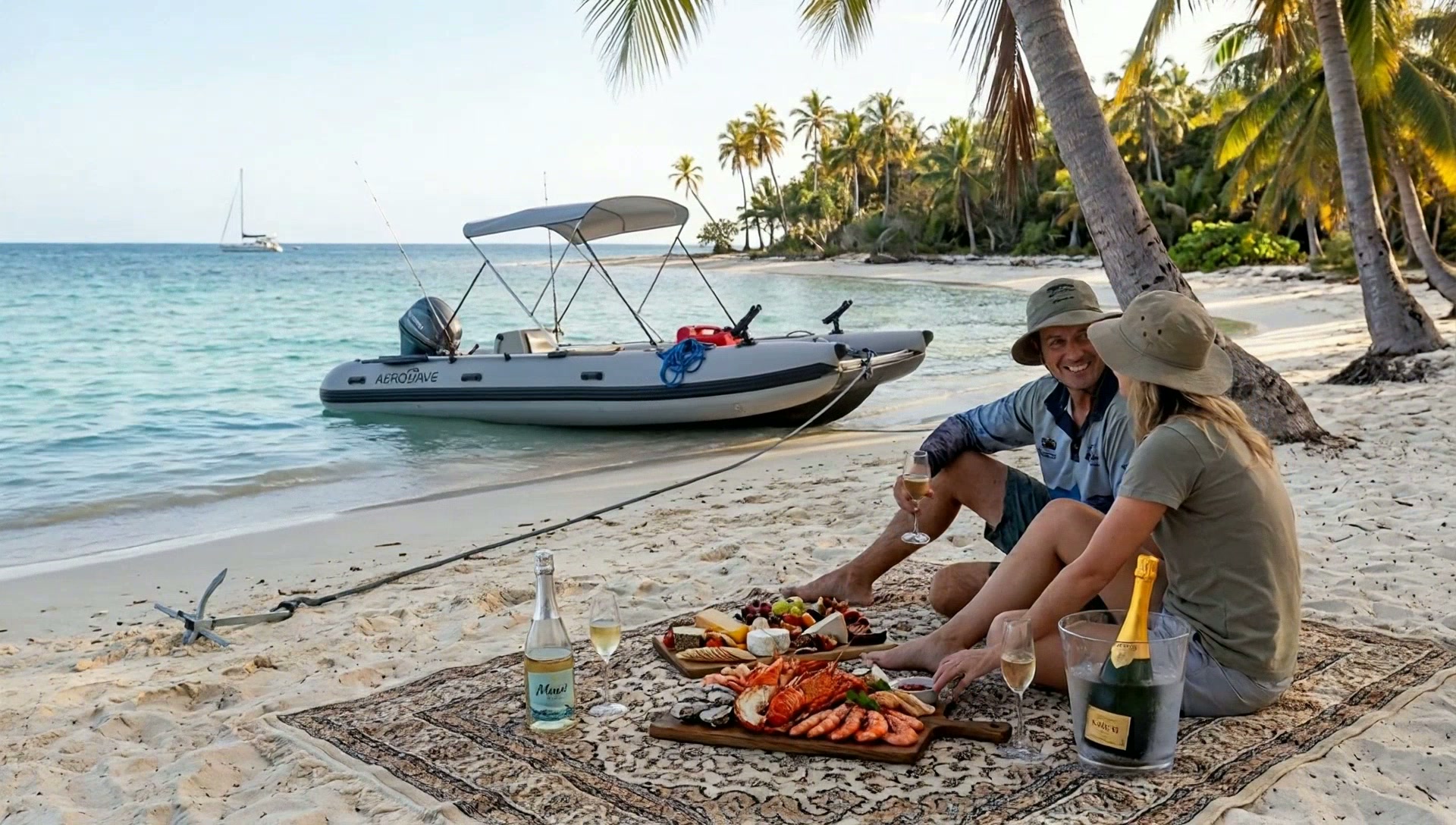
What size inflatable boat do I need for fishing?
A no-fluff Aussie sizing guide: how many anglers, what water, what horsepower — and the exact hull length that matches your fishing.
Our recommendation
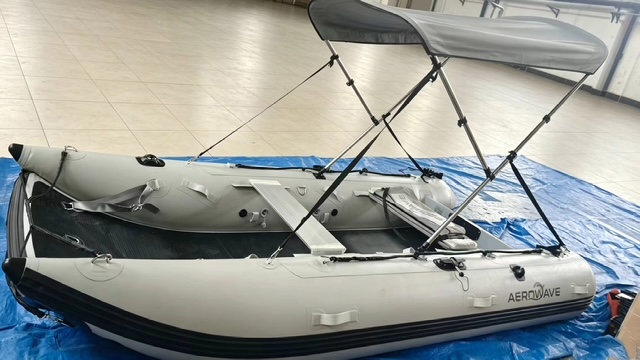
Aerowave Viper 365 Open Bow
Length
3.65m / 12'0"
Beam
1.80m / 71"
Tube Diameter
51cm
Bare Boat Weight (without Bimini & wheel kit)
~52kg / 115lbs
The single biggest reason people end up unhappy with their first inflatable boat isn't the brand, the colour or even the price. It's the size. Buy too small and you're constantly bumping rods, standing on tackle boxes and wishing you had another 40 cm of deck. Buy too large and you're paying for hull you never use, towing more than you need to and burning fuel to move air.
After fifteen years of putting Aussie families and serious anglers into inflatable boats — from Sydney Harbour tinnie replacements to Top End barra rigs — we've seen the same pattern over and over. Fishing size isn't about how big the fish are. It's about how many people are on board, what water you fish, and how much gear rides with you. Get those three right and the length picks itself.
This guide walks you through it the way we'd walk you through it on the phone.
The three numbers that decide your fishing size
Before you look at a single boat, write down three numbers on your phone. These are the only numbers that matter for sizing:
- How many adults will realistically be on board at once? Not "capacity" — realistic. Two mates plus your teenager is three adults for sizing purposes.
- What's the biggest water you'll fish? Sheltered estuary, open harbour, offshore inside 5 nautical miles, or genuine offshore?
- How much gear rides permanently? A fuel tank, a battery, an esky, four rods, tackle bags, a live-bait tank, a small anchor and chain — it adds up faster than people think.
Almost every fishing complaint we hear traces back to a mismatch between these three numbers and the hull that was bought. So let's match them properly.
By angler count: the honest sizing rule
Here's the sizing rule we give friends and family, not the marketing one:
| Anglers on board | Minimum sensible length | Sweet spot | Comfortable ceiling |
|---|---|---|---|
| 1 solo | 3.0 m | 3.3 m | 3.6 m |
| 2 adults | 3.3 m | 3.6 m | 4.0 m |
| 3 adults | 3.6 m | 3.8–4.0 m | 4.3 m |
| 4 adults | 3.8 m | 4.0 m | 4.5 m |
| Family of 4 (2 adults, 2 kids, gear) | 3.6 m | 4.0 m | 4.5 m |
Notice the sweet spot column. That's where the boat still feels roomy on a full day out but doesn't become a chore to launch or tow. For most Australian fishing scenarios, 3.6–4.0 m is the answer. Below 3.3 m you're in tender territory. Above 4.5 m you're in serious bluewater rig territory with the towing bill to match.
By water type: what you'll actually fish
Size isn't just about people. It's about how the hull handles the chop you meet. This is where a lot of buyers get it wrong.
Sheltered estuaries, lakes, protected bays — think Pittwater, Port Stephens inside, Gippsland Lakes, a farm dam, a river system. Anything from 3.0 m upwards will do. You're not fighting chop, you're fighting patience. Prioritise casting room and a dry deck over hull length.
Open harbour and near-shore coastal — think Sydney Harbour proper, Moreton Bay, Port Phillip. You want at least 3.6 m and a catamaran hull. The twin-hull cat design carves through wind chop instead of slapping over it, and the wider beam gives you a stable casting platform when the ferry wash rolls through.
Offshore inside 5 nautical miles — think out through the heads to a close reef, chasing snapper, kingfish, mackerel. You want 4.0 m minimum, ideally 4.0–4.5 m, in a catamaran layout with a 1.2 mm fabric hull. Anything thinner and anything shorter is asking to be uncomfortable on a lumpy afternoon run home.
Genuine offshore or northern remote — a 4.5 m rigid inflatable with 40 hp is the entry point. If you're asking whether an inflatable is enough for genuine bluewater work, the honest answer is: our 4.0–4.5 m boats do it every week in the right hands and the right forecast, but you plan around the weather, not against it.
By gear load: what actually fits
Gear is the silent boat killer. People remember to count anglers but forget to count what those anglers bring.
On a proper day's fishing, a two-angler load looks like this: 25 L fuel tank, cranking battery, 60 L esky with ice and catch, four rods rigged, one tackle bag, one soft cooler with lunch, a landing net, a small anchor with 30 m of rope and 5 m of chain, two life jackets, a small first aid kit, and whatever the day's bait station demands. That's roughly 90–110 kg of gear before you've caught anything.
A 3.3 m boat carries this. It carries it tightly. A 3.6 m boat carries it comfortably. A 4.0 m boat carries it and leaves you room to move around your gear instead of over it. Whenever you're on the fence between two sizes, the extra 30–40 cm almost always pays for itself in day-of-fishing comfort.
Horsepower: the size decision inside the size decision
Size picks the hull. Horsepower picks how the hull actually behaves. For fishing use, our recommended matches are:
- 3.0–3.3 m: 6–9.9 hp (electric or petrol)
- 3.3–3.6 m: 9.9–15 hp
- 3.6–3.8 m: 15–20 hp (this range planes beautifully with 20 hp)
- 3.8–4.0 m: 20–30 hp
- 4.0–4.5 m: 30–40 hp maximum
We rate our Viper series to a 40 hp maximum for good reason: the transom is engineered for it, but more horsepower doesn't always mean more capable. A well-matched 20 hp on a 3.8 m hull will out-fish an under-matched 30 hp on a badly balanced boat all day long.
The mistake almost everyone makes
If we could stop one thing across every phone call and email we take, it would be this: people buy their fishing boat based on the biggest day they'll ever do, not the ninety percent of days they'll actually do.
You'll take the family out once, you'll take four mates out twice, and you'll fish solo or with one mate the rest of the year. Buy for that ninety percent. When the big day comes, you've still got room. When the small day comes, you're not launching a barge by yourself.
Our honest fishing size recommendations
Here's how our current range maps to fishing scenarios:
- Solo tinnie replacement, estuary and lakes: Viper 330 (3.3 m). Enough deck to stand and fish, light enough to launch alone, 15 hp is plenty.
- Two mates, harbour and near-shore: Viper 365 Open Bow (3.65 m). This is our all-round sweet spot and the boat we recommend most often. Catamaran hull, open bow for anchoring bow-first, room for four but perfect for two.
- Family of four, everything from lakes to near-shore: Viper 400 Open Bow or AeroCat 380. The extra 30–40 cm turns "cosy" into "comfortable" the moment kids and gear are involved.
- Serious fishing platform, offshore-capable: Viper 400 Sovereign. Aluminium floorboards, deep-vee catamaran hull, 40 hp — this is the one for chasing pelagics.
What we build them out of, and why it matters for fishing
One last thing that isn't about size but is about the boat lasting long enough for size to matter. Every fishing boat we build uses 1.2 mm German VALMEX® Heavy Plus fabric. That's a 10–12 year service life in Aussie sun and salt. The thin 0.9 mm PVC fabric you'll see on cheaper imports has a 3–7 year service life in the same conditions.
Fishing is hard on boats. Sinkers get dropped. Hook points get dragged. Fillet knives get set down where they shouldn't be. A thicker fabric absorbs all that without complaining. That's why we build to 1.2 mm and not to a price point.
Ready to pick your size?
If you got this far and you're still on the fence, here's the shortcut: call us, tell us your three numbers, and we'll tell you which of our boats fits. No upsell — we'd rather sell you the right 3.6 m boat than the wrong 4.0 m one. That's how you get a customer who buys their second boat from you too.
Explore the Aerowave range
Frequently asked questions
- Is a 3.3 m inflatable big enough for two people fishing?
- Yes, comfortably for sheltered water and short trips. For full-day fishing in open water with two adults and a full gear load, step up to 3.6 m for the extra deck space and stability.
- What's the minimum size for offshore fishing in an inflatable?
- 4.0 m in a catamaran configuration with 1.2 mm hull fabric, run within 5 nautical miles in appropriate weather. For genuine offshore work, 4.5 m is our recommended entry point.
- How much horsepower do I need for fishing?
- For most fishing use, 15–20 hp on a 3.6–3.8 m hull is the sweet spot for economy and performance. Boats 4.0 m and up run best with 20–30 hp; our 40 hp maximum rating gives headroom without being mandatory.
- Can one person launch and retrieve a 3.6 m inflatable?
- Yes. With our LockPro Plus wheel kit fitted, one adult can walk a 3.6 m Viper down a ramp or beach solo. Above 4.0 m, a second pair of hands makes the day easier.
- Why not just buy a cheaper 0.9 mm PVC boat for fishing?
- You can. It'll last 3–7 years in Aussie sun before the fabric fatigues, seams weep or the transom lets go. Our 1.2 mm VALMEX® hulls are rated 10–12 years for the same conditions. Fishing wear accelerates cheap fabric fast.
Finance this boat from $23/week
Estimate only — powered by Australian Motorcycle & Marine Finance (AMMF).
Deposit (AUD)
$530
10% of price
Term
5 years
60 monthly repayments
Comparison rate
9.95% p.a.
Subject to AMMF approval
Weekly
$23
Monthly
$101
Amount financed
$4,765
Indicative only. Actual repayments depend on your AMMF credit assessment, term, fees and the balloon you select. Talk to AMMF for a personalised quote on Aerowave Viper 365 Open Bow.
Like this guide? Get the next one in your inbox.
Owner-tested tips and Aussie boating know-how — no spam.
Ready when you are
Build your Viper 365 Open Bow in under 3 minutes.
1500 GSM / 1.2 mm VALMEX® hull. Five-year limited hull warranty plus two years of extended limited structural hull cover, subject to conditions. Free freight to United States · local taxes payable on arrival.
delivered to your door
See it for yourself
Real boats. Real owners. Real people behind them.
Plenty of what you read online these days is generated. Check us out properly — the factory, the reviews and the owners are all one click away. Why we use AI, and how to check we’re real
How our boats are built
Walk the production line: thermo-welded seams, 1.2 mm VALMEX Heavy Plus hulls, over-pressure relief valves on every chamber.
See the buildGoogle Maps reviews
Real Australian owners, five stars, published on our Google Business Profile with the map — read them there, not just on our own site.
Open Google Maps reviewsOwner stories
Boats in use — offshore, on rivers, on rescue duty. Photos and words from the people who actually own them.
Read owner stories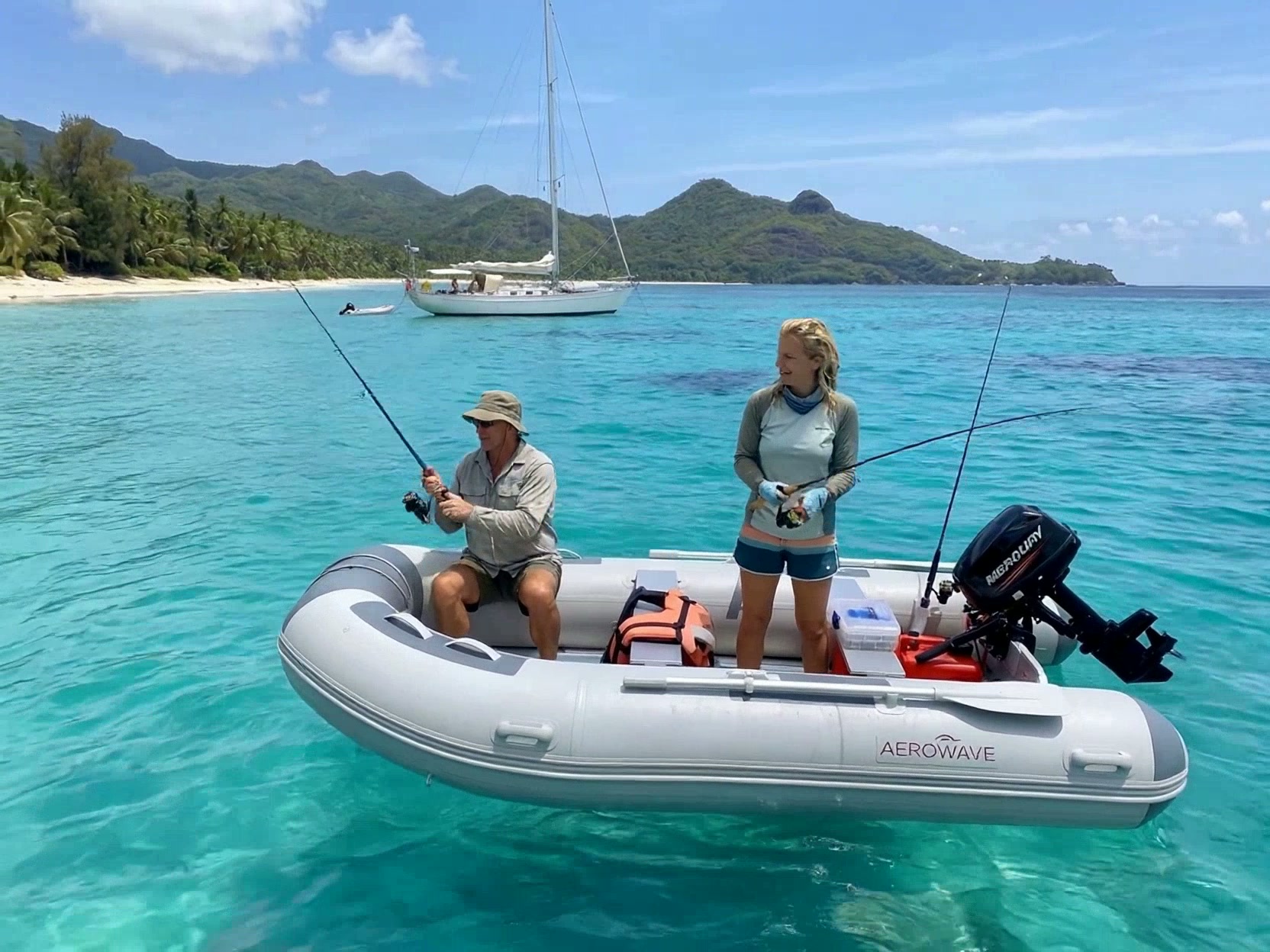
Aerowave Viper 365 Open Bow
US$2,971 USD · delivered to your door