
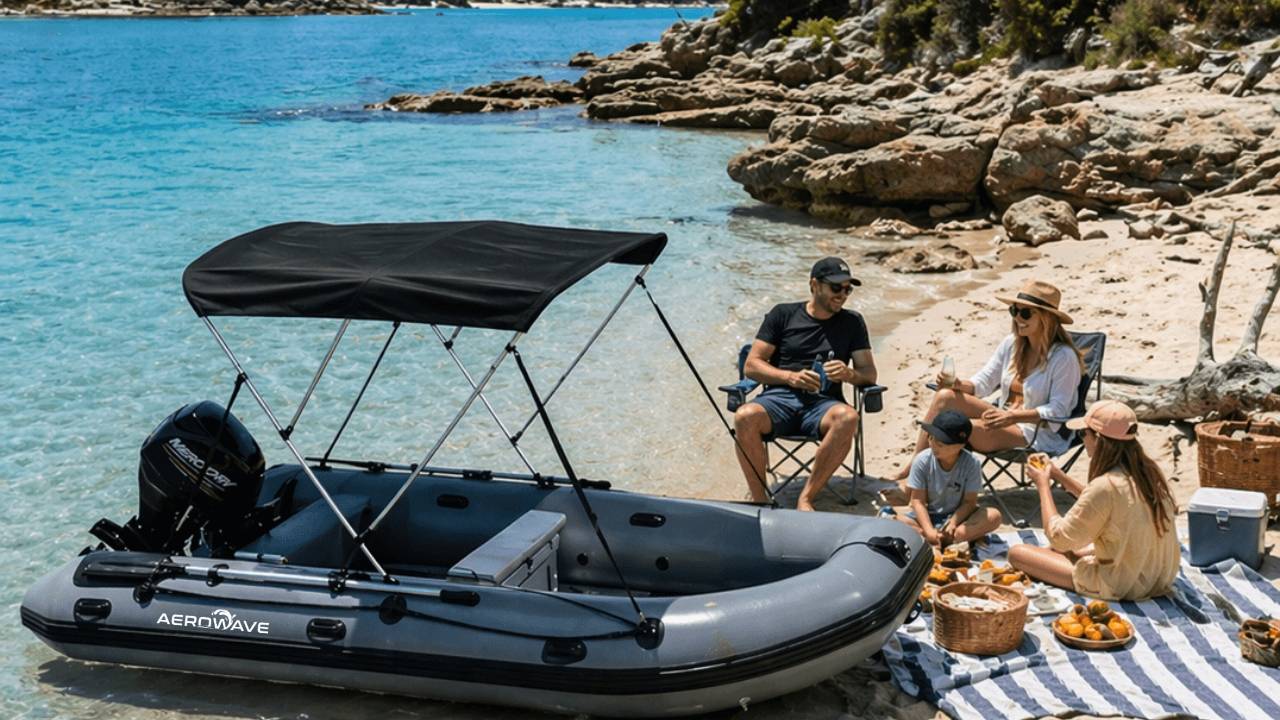
Boating With Dogs: Setting Up Your Inflatable Catamaran for a Day on the Water
Plan a calmer day afloat with your dog: choose a comfortable deck layout, practise boarding, fit a life jacket and keep shade, fresh water and propeller safety part of every trip.
Our recommendation
Aerowave Viper 400 Sovereign
1.2 mm fabric is about 33% thicker than common 0.9 mm fabric: more material between your boat and the water for everyday rubbing and knocks during beach launches. Careful handling still matters.
Length
4.0m / 13'1"
Beam
1.80m / 71"
Tube Diameter
51cm
Bare Boat Weight (without Bimini & wheel kit)
66kg / 145lbs
Taking your dog boating can turn a regular day out into a proper family adventure. The secret is making the boat feel like a safe, familiar place for your dog, rather than expecting them to work it all out once you are underway.
A soft-hull inflatable catamaran packs away without a trailer and gives you a deck where you can set up a comfortable spot for your four-legged crew member. Choose suitable sheltered conditions, check dog-access rules and make the first outing short.
Choose a boat and layout with room for your dog
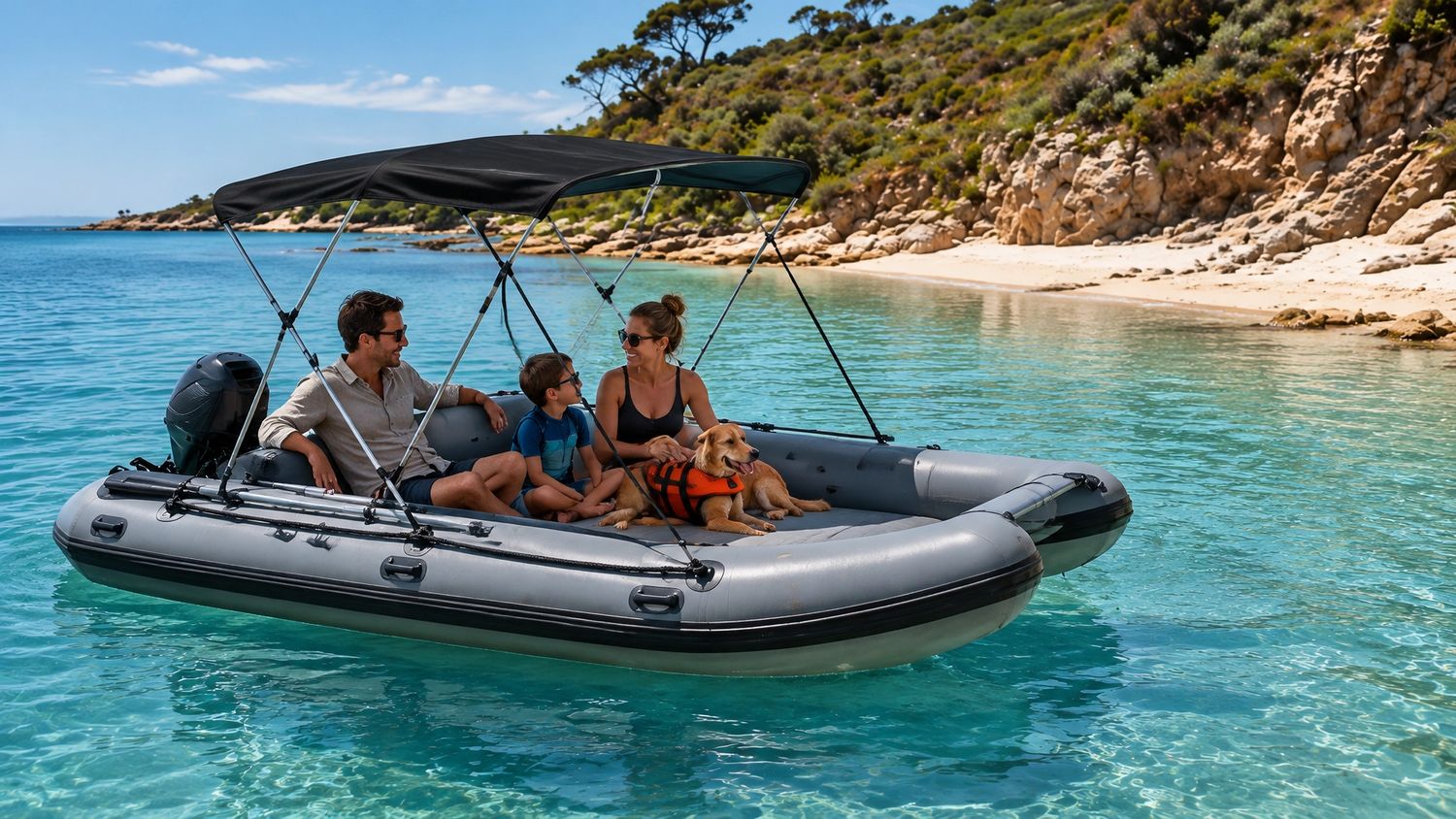
Think about your dog as part of the load. Allow space to lie down without blocking the skipper, passengers, gear or safety equipment. Account for people, your dog, motor, fuel and supplies within the boat's stated capacity; maximum capacity is not a target for every outing.
Set up a clear resting place away from the outboard and moving feet. A familiar non-slip mat or bed can help your dog settle. Keep claws trimmed and check for sand, shell fragments or sharp objects before boarding.
The Viper 330 and AeroCat 335 have an 8–10 PSI hard AirDeck in their current specifications. Inflate to your particular model's instructions, not a universal pressure. A firm floor helps support paws, but a suitable mat can add comfort and grip.
Explore the Viper range and AeroCat range. Compare usable space after seating, people and gear are aboard, rather than overall length alone.
Fit a dog life jacket and practise first
A dog life jacket is sensible equipment even for a confident swimmer. Current and cold water can tire a dog, and recovering a wet animal can be difficult. Look for buoyancy suited to your dog's size, a bright colour for visibility and a sturdy grab handle.
Follow the maker's weight and chest-measurement guidance. The jacket should stay in place without restricting breathing or movement. Ask your vet or a reputable pet-safety supplier if you are unsure.
Practise wearing it at home in short, positive sessions with treats and praise. Use a harness rather than relying on a collar for lead control. Supervise your dog aboard: a life jacket does not replace watching them.
Plan boarding before you launch
A confident adult may be able to lift a small or medium dog aboard while supporting its body. Do not attempt a heavy or wriggling lift you cannot manage safely. Only lift using the jacket handle if its maker specifically rates it for that use.
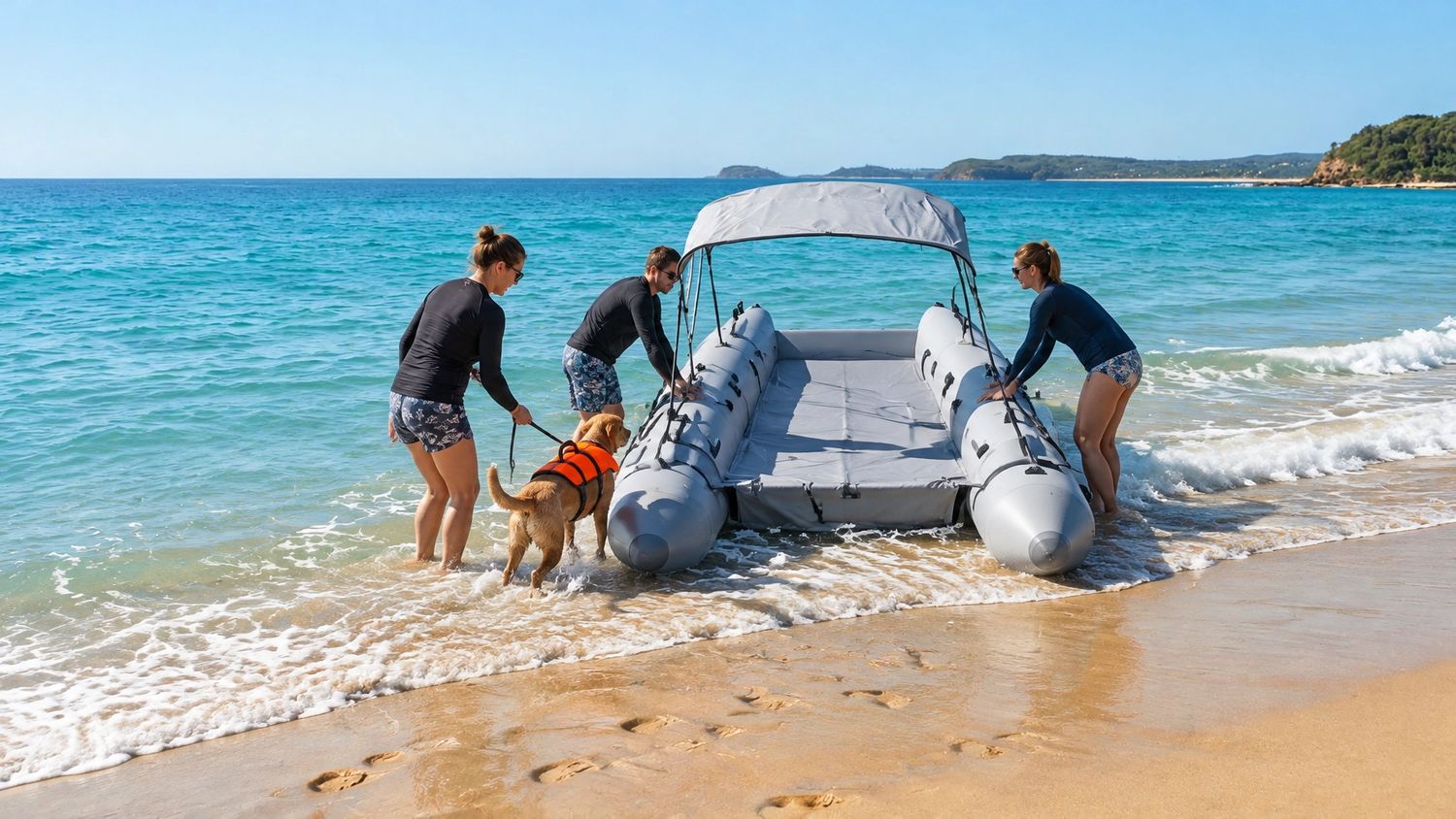
In calm, shallow water at a suitable beach, a dog may step aboard while one person steadies the boat and another manages the lead. Check footing, tide, wash and shells first. Do not let the dog jump between a moving boat and shore.
A boat dog ramp is another option. Use a stable non-slip ramp designed for water use, secure it as instructed and practise on land first. It is not suitable for every boat, dog or shoreline.
Allow approximately 15 minutes for boat setup once familiar, then extra time to arrange the dog's space, check conditions and complete safety checks. Your first setup may take longer.
Keep the outboard and swimming separate
Make the rule simple: engine off before anyone, human or dog, is in the water nearby. Keep controls with the skipper and only restart when everyone is aboard and clear of the motor. A transom or hull design never makes swimming beside a propeller safe.
Choose a suitable swimming spot and nominate a supervisor. Watch current, temperature, passing boats and local wildlife hazards. Do not tether a swimming dog to the boat: a lead can snag or restrict movement. Have a practised, safe way to help your dog back aboard.
Make shade, fresh water and paw checks non-negotiable
Where your boat has a compatible bimini, arrange the resting place underneath it. Bring plenty of fresh drinking water and a stable bowl; do not rely on seawater or unfamiliar waterways.
Check the floor and other surfaces with your hand. Dark or sun-heated surfaces, hot sand and rocks can hurt paws. Choose cooler parts of the day and check for cuts or shell fragments after beach walks.
If you cannot provide a genuinely cool, shaded space on a hot day, postpone the outing. Never leave your dog unattended aboard while the rest of the crew goes ashore or swims.
Plan anchoring, fishing and toilet breaks
Keep your dog away from anchor lines, hooks, bait and loose fishing line. Pay attention to passing wash and changes in drift as well as the fishing. Arrange toilet breaks around permitted, suitable shore access; carry waste bags and dispose of them responsibly.
Watch for drooling, panting, distress or vomiting. Start with a short sheltered trip, and talk to your vet beforehand if you are concerned about seasickness. Do not give human medication without veterinary advice.
Check local dog-access and boating rules
Beaches, reserves, waterways and national parks can have different dog restrictions. Check the destination's rules before leaving and choose another location if dogs are not permitted. Keep your dog controlled near wildlife, other boats and people.
Carry the required equipment for every person and your operating area, and check local licence and registration rules. Our Safety & Compliance page explains the boat-registration step separately from caring for your dog.
Your before-launch checklist
- A correctly fitted dog life jacket, harness and lead.
- A practised boarding and recovery method.
- A cool resting place, fresh water and bowl.
- Required human lifejackets and safety equipment.
- A towel, waste bags and a familiar comfort item.
- A weather, access and return-time plan.
Viper hulls use 1500 GSM / 1.2 mm VALMEX Heavy Plus; the lighter AeroCat range uses 1100 decitex / 0.9 mm VALMEX. Choose the boat for your crew, carrying requirements and conditions. Neither hull fabric nor a wide deck replaces sensible handling and supervision.
For the next step, compare our boats, browse the Viper 330 specifications and purchase choices, or plan a boat-camping trip.
Frequently asked questions
- Can I take my dog on an inflatable catamaran?
- Choose a layout with a clear resting place and include your dog in the total load. Start in sheltered conditions, practise boarding and check local dog-access rules.
- Does my dog need a life jacket?
- A correctly fitted dog life jacket is sensible safety equipment even for a confident swimmer. Follow the maker's sizing instructions and keep supervising your dog.
- What pressure should the air deck be?
- The current Viper 330 and AeroCat 335 specifications state 8–10 PSI for the hard AirDeck. Always follow your particular boat and floor instructions.
- Can I lift my dog by its life-jacket handle?
- Only if the manufacturer specifically says the handle is rated for lifting your dog. Otherwise use a controlled, supported lift or a suitable practised ramp.
- Can my dog swim beside the boat?
- Only in suitable conditions with supervision and the engine off. Keep everyone clear of the stern and propeller, do not tether a swimming dog, and practise safe recovery.
- What should I pack for boating with dogs?
- Bring a fitted jacket, harness and lead, fresh water, bowl, shade, towel, waste bags and a familiar resting mat, alongside the required equipment for every person aboard.
Finance this boat from $27/week
Estimate only — powered by Australian Motorcycle & Marine Finance (AMMF).
Paid upfront (AUD)
$617
10% of price
Term
5 years
60 monthly repayments
Comparison rate
9.95% p.a.
Subject to AMMF approval
Weekly
$27
Monthly
$118
Amount financed
$5,552
Indicative only. Actual repayments depend on your AMMF credit assessment, term, fees and the balloon you select. Talk to AMMF for a personalised quote on Aerowave Viper 400 Sovereign.
Like this guide? Get the next one in your inbox.
Owner-tested tips and Aussie boating know-how — no spam.
Ready when you are
Build your Viper 400 Sovereign in under 3 minutes.
1500 GSM / 1.2 mm VALMEX® hull. Five-year limited hull warranty plus two years of extended limited structural hull cover, subject to conditions. Free freight to United States · taxes included, nothing to pay on arrival.
delivered to your door
See it for yourself
Real boats. Real owners. Real people behind them.
Plenty of what you read online these days is generated. Check us out properly — the factory, the reviews and the owners are all one click away. Why we use AI, and how to check we’re real
How our boats are built
Walk the production line: thermo-welded seams, 1.2 mm VALMEX Heavy Plus hulls, over-pressure relief valves on every chamber.
See the buildGoogle Maps reviews
Real Australian owners, five stars, published on our Google Business Profile with the map — read them there, not just on our own site.
Open Google Maps reviewsOwner stories
Boats in use — offshore, on rivers, on rescue duty. Photos and words from the people who actually own them.
Read owner stories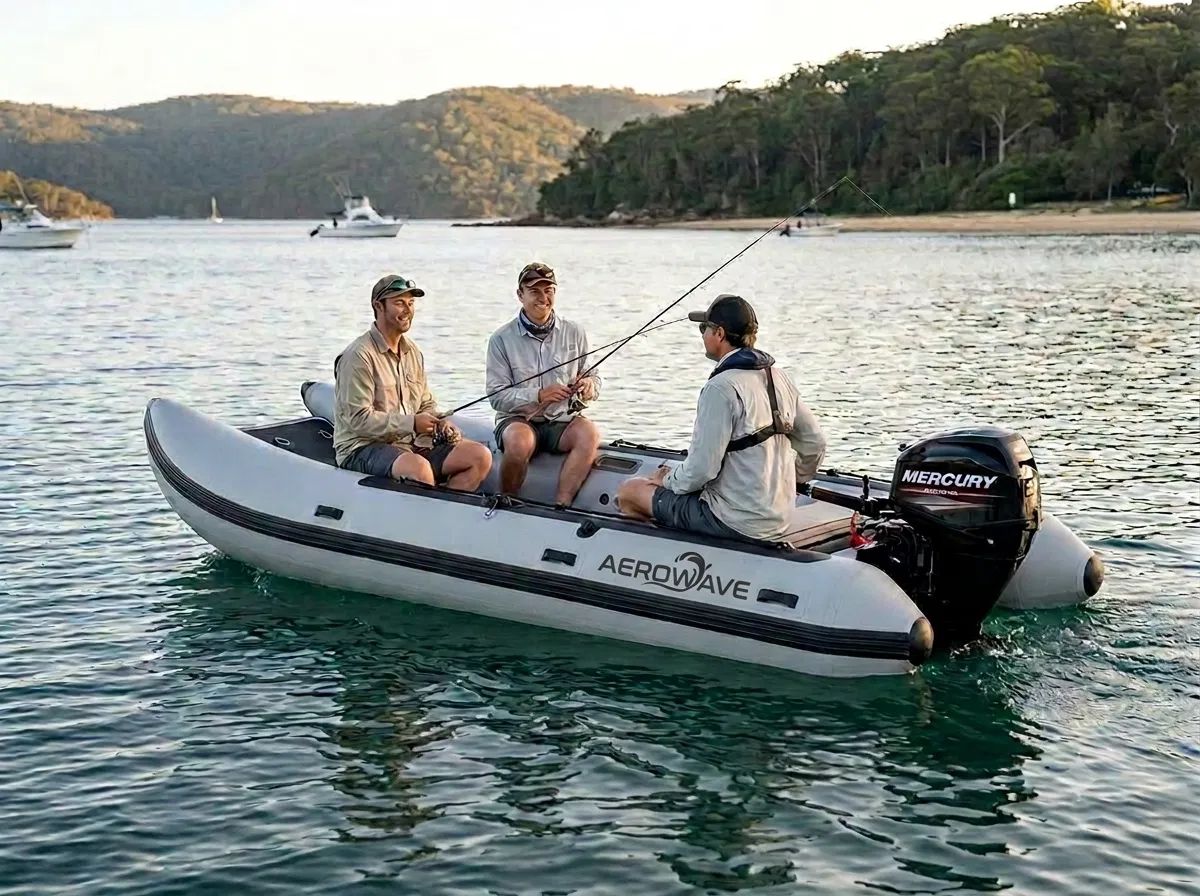
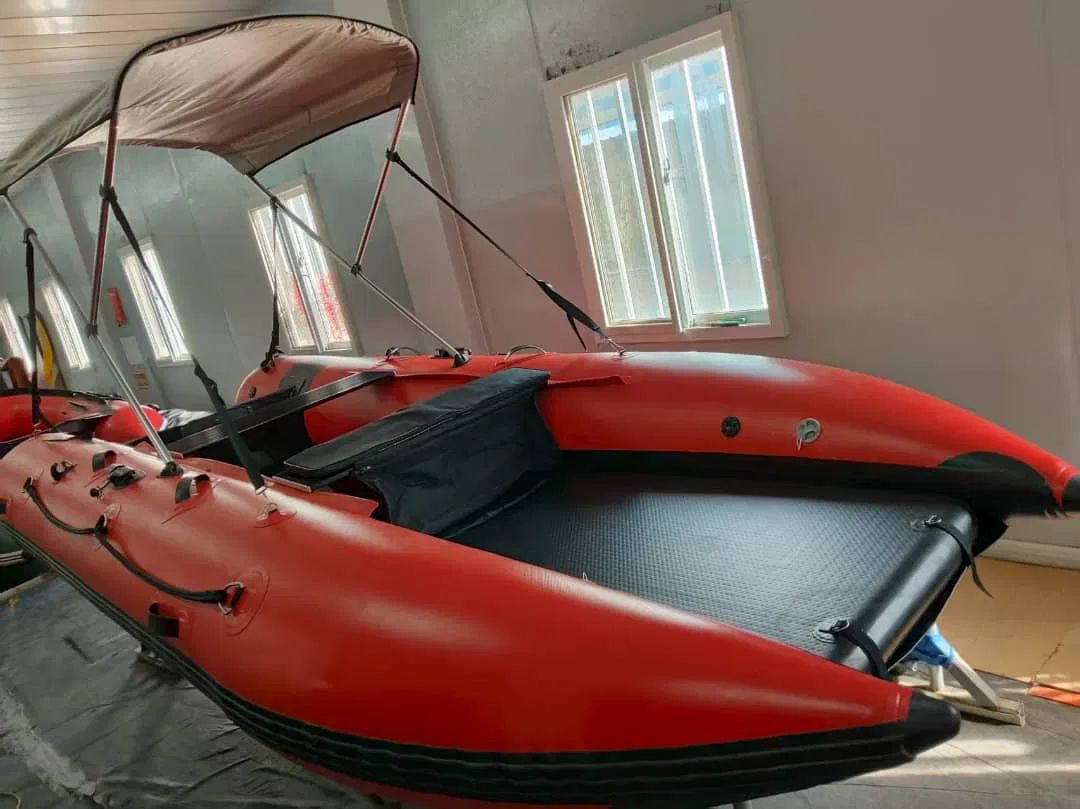
Aerowave Viper 400 Sovereign
US$4,701 USD · delivered to your door