
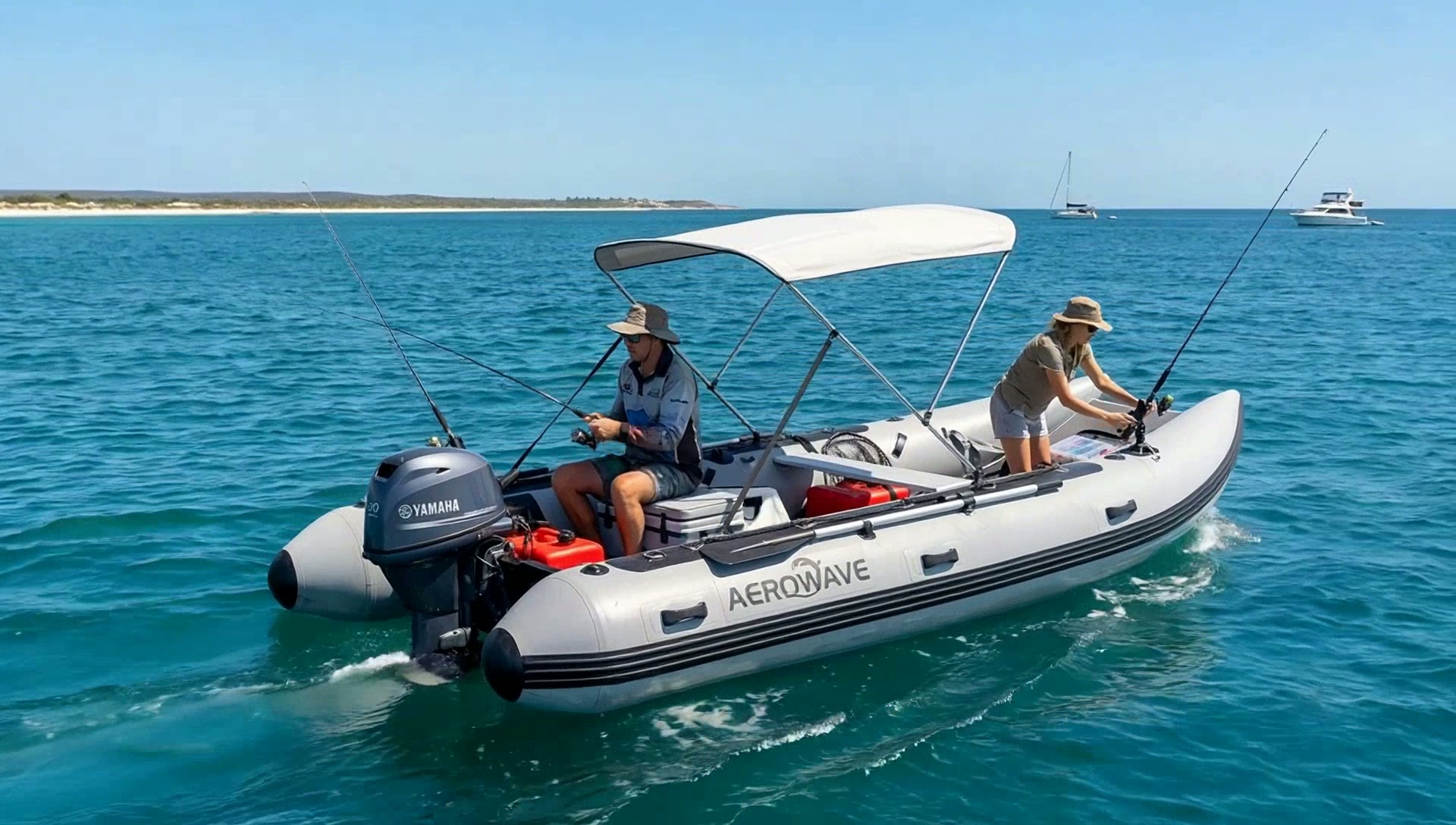
Do You Need a Boat Licence for an Inflatable Boat in Australia? (2026 State-by-State Guide)
Inflatable, catamaran or tinnie — the licence rules are the same. Here is the 2026 state-by-state breakdown of when you need a boat licence in Australia, plus how licence, registration and HIN differ.
Our recommendation
Aerowave Viper 330
1.2 mm fabric is about 33% thicker than common 0.9 mm fabric: more material between your boat and the water for everyday rubbing and knocks during beach launches. Careful handling still matters.
Length
330cm / 10'9"
Beam
165cm / 65"
Inside Beam
69cm / 27"
Tube Diameter
50cm / 19"
Every week someone asks us the same thing before they hit buy: "Do I actually need a boat licence to drive one of these?" It is a fair question. An inflatable catamaran packs into a bag, fits in the back of a ute and launches off a beach without a trailer — so it feels like it should sit outside the rules. It does not. In Australia, the licence question has almost nothing to do with what your boat is made of, and almost everything to do with where you are and how fast you go.
Here is the plain-English version, state by state, plus what it means for a 3.3m–4.5m inflatable with a small outboard on the back.
The short answer
In most of Australia, a recreational boat licence is triggered by one of two things:
- Speed — most states require a licence once you drive a powered vessel at 10 knots (about 18.5 km/h) or more.
- Engine power — Western Australia instead uses horsepower: anything over 6 hp (4.5 kW) needs a ticket.
An Aerowave catamaran with a 9.9hp, 15hp or 20hp outboard will comfortably exceed 10 knots. So for practical purposes: if you are putting a petrol outboard on an inflatable boat and using it properly, assume you need a licence. The Northern Territory is the one exception in the country.
State-by-state: do you need a licence for an inflatable boat?
| State / Territory | Licence needed? | The trigger |
|---|---|---|
| New South Wales | Yes | General Boat Licence to drive a powered vessel at 10 knots or more. Minimum age 12, with restrictions until 16. |
| Queensland | Yes | Recreational Marine Licence for a motorised vessel over 4.5 kW (about 6 hp). Minimum age 16, BoatSafe course, valid for life. |
| Victoria | Yes | Marine Licence for any powered recreational vessel — including small motors and powered paddle craft. |
| South Australia | Yes | Boat Operator's Licence. Ages 12–15 may operate under direct supervision of a licence holder at under 10 knots. |
| Western Australia | Yes | Recreational Skipper's Ticket for any vessel with a motor over 6 hp (4.5 kW). |
| Tasmania | Yes | Motor Boat Licence for powered recreational vessels — confirm the current low-power exemption with MAST. |
| ACT | Yes | Licence required for powered vessels on ACT waters — check Access Canberra before launching on Lake Burley Griffin. |
| Northern Territory | No | The NT has no recreational boat licence and no boat registration requirement — but every other boating law still applies. |
Rules and fees change. Always confirm with your own state's maritime authority before your first launch — the table above is a starting point, not legal advice.
What about an electric outboard?
This is where a lot of buyers get caught out. A small electric outboard feels like a toy, but the law does not always agree:
- Western Australia measures motor output, not fuel type. A motor over 4.5 kW needs a Recreational Skipper's Ticket regardless of whether it burns petrol.
- Victoria explicitly includes powered paddle craft and e-foils in its licensing rules.
- South Australia exempts kayaks and canoes with an electric motor of 150 newtons or less for operators aged 16 and over.
Our Haswing and Fuber electric packages sit well under the WA power threshold, but the speed trigger in states like NSW still depends on how fast you are travelling — not what is pushing you.
Licence, registration and HIN are three different things
Buyers routinely confuse these. They are separate obligations:
- Licence — permission for you to operate the boat.
- Registration — the boat itself, usually triggered by engine power (commonly over 3 kW / 4 hp in several states). We cover this in detail in our guide to registering an inflatable boat in Australia.
- HIN — the Hull Identification Number stamped on the transom. Every Aerowave hull ships with one, which is exactly what your transport authority asks for when you register.
If you buy a boat with no HIN, registration becomes a paperwork nightmare. It is one of the quiet reasons cheap grey-import inflatables end up back on the classifieds.
Does the boat being inflatable change anything?
No. An inflatable catamaran is a recreational vessel like any other. What does change is the practical side of compliance:
- Safety gear still applies in full. Lifejackets, an EPIRB or flares offshore, a bailer, an anchor and rode — the same list as a boat of equivalent length. See our boat safety equipment checklist.
- You still need to know your waters. No licence teaches you a bar crossing.
- You are easier to launch, so you go out more. Which, honestly, is the argument for doing the course properly rather than staying under 10 knots forever.
Doing the course is worth it anyway
Most state courses are a half day and cost less than a set of lifejackets. You come away knowing collision rules, navigation marks, and what to do when the weather turns — which is the part that ends weekends, not the paperwork.
Ready to sit yours? Our companion guide walks through how to get your boat licence in every state.
If you are still choosing a boat, our inflatable catamaran buyer's guide covers hull fabric, floors and outboard sizing. Every Aerowave hull is built from 1500 GSM / 1.2 mm VALMEX® Heavy Plus (or 1100 decitex / 0.9 mm VALMEX® on the AeroCat range) with a stamped HIN, so the registration side is sorted the day it lands.
Explore the Aerowave range
Frequently asked questions
- Do you need a boat licence for an inflatable boat in Australia?
- In most states, yes. A licence is triggered by speed (usually 10 knots or more) or engine power (over 6 hp / 4.5 kW in Western Australia), not by whether the hull is inflatable. Any inflatable running a 9.9hp or larger outboard will need a licence everywhere except the Northern Territory.
- Which Australian state does not require a boat licence?
- The Northern Territory. It has no recreational boat licence and no vessel registration requirement, although all other boating and safety laws still apply.
- Do I need a licence for an inflatable boat with an electric outboard?
- It depends on the state. Western Australia looks at motor output — over 4.5 kW needs a Recreational Skipper's Ticket. Victoria licenses powered recreational vessels broadly, including powered paddle craft. South Australia exempts kayaks and canoes with electric motors of 150 newtons or less for operators 16 and over.
- Is a boat licence the same as boat registration?
- No. A licence covers you as the operator, registration covers the vessel, and the HIN is the hull identification number stamped on the transom. Most states trigger registration on engine power, commonly over 3 kW.
- What is the minimum age for a boat licence in Australia?
- It varies: 12 in NSW with restrictions until 16, and 16 in Queensland and South Australia. South Australia allows 12 to 15 year olds to operate under direct supervision at under 10 knots.
Finance this boat from $24/week
Estimate only — powered by Australian Motorcycle & Marine Finance (AMMF).
Paid upfront (AUD)
$550
10% of price
Term
5 years
60 monthly repayments
Comparison rate
9.95% p.a.
Subject to AMMF approval
Weekly
$24
Monthly
$105
Amount financed
$4,945
Indicative only. Actual repayments depend on your AMMF credit assessment, term, fees and the balloon you select. Talk to AMMF for a personalised quote on Aerowave Viper 330.
Like this guide? Get the next one in your inbox.
Owner-tested tips and Aussie boating know-how — no spam.
Ready when you are
Build your Viper 330 in under 3 minutes.
1500 GSM / 1.2 mm VALMEX® hull. Five-year limited hull warranty plus two years of extended limited structural hull cover, subject to conditions. Free freight to United States · taxes included, nothing to pay on arrival.
delivered to your door
See it for yourself
Real boats. Real owners. Real people behind them.
Plenty of what you read online these days is generated. Check us out properly — the factory, the reviews and the owners are all one click away. Why we use AI, and how to check we’re real
How our boats are built
Walk the production line: thermo-welded seams, 1.2 mm VALMEX Heavy Plus hulls, over-pressure relief valves on every chamber.
See the buildGoogle Maps reviews
Real Australian owners, five stars, published on our Google Business Profile with the map — read them there, not just on our own site.
Open Google Maps reviewsOwner stories
Boats in use — offshore, on rivers, on rescue duty. Photos and words from the people who actually own them.
Read owner stories
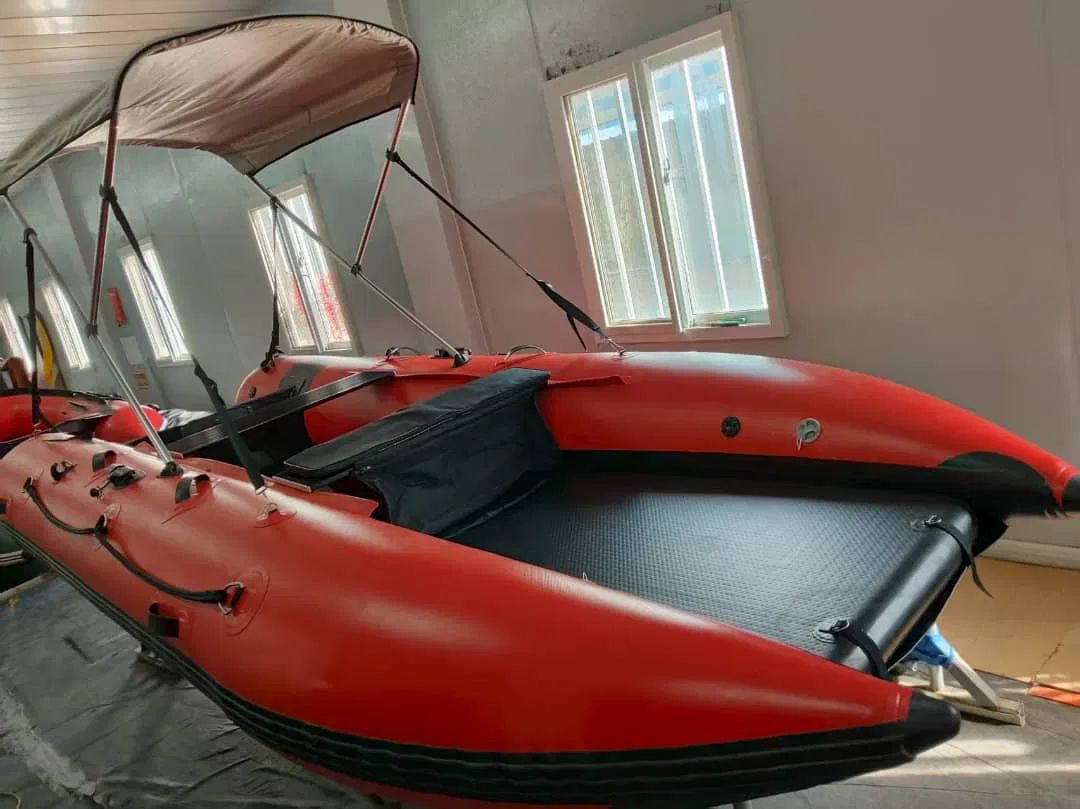
Aerowave Viper 330
US$4,187 USD · delivered to your door