Inflatable Catamaran Buyer’s Guide: Is the WaveRunner 380 Right for You?
A practical inflatable catamaran buying guide built around the Aerowave WaveRunner 380: stability, packing, fabric, floor pressure, outboard limits and the right questions to ask.
At a glance
A practical inflatable catamaran buying guide built around the Aerowave WaveRunner 380: stability, packing, fabric, floor pressure, outboard limits and the right questions to ask.
- What changes when the hull is a catamaran?
- The WaveRunner 380 in numbers
- Read the fabric specification, not just the word “premium”
- Floor pressure, setup and what is in the package
What we'd put you in
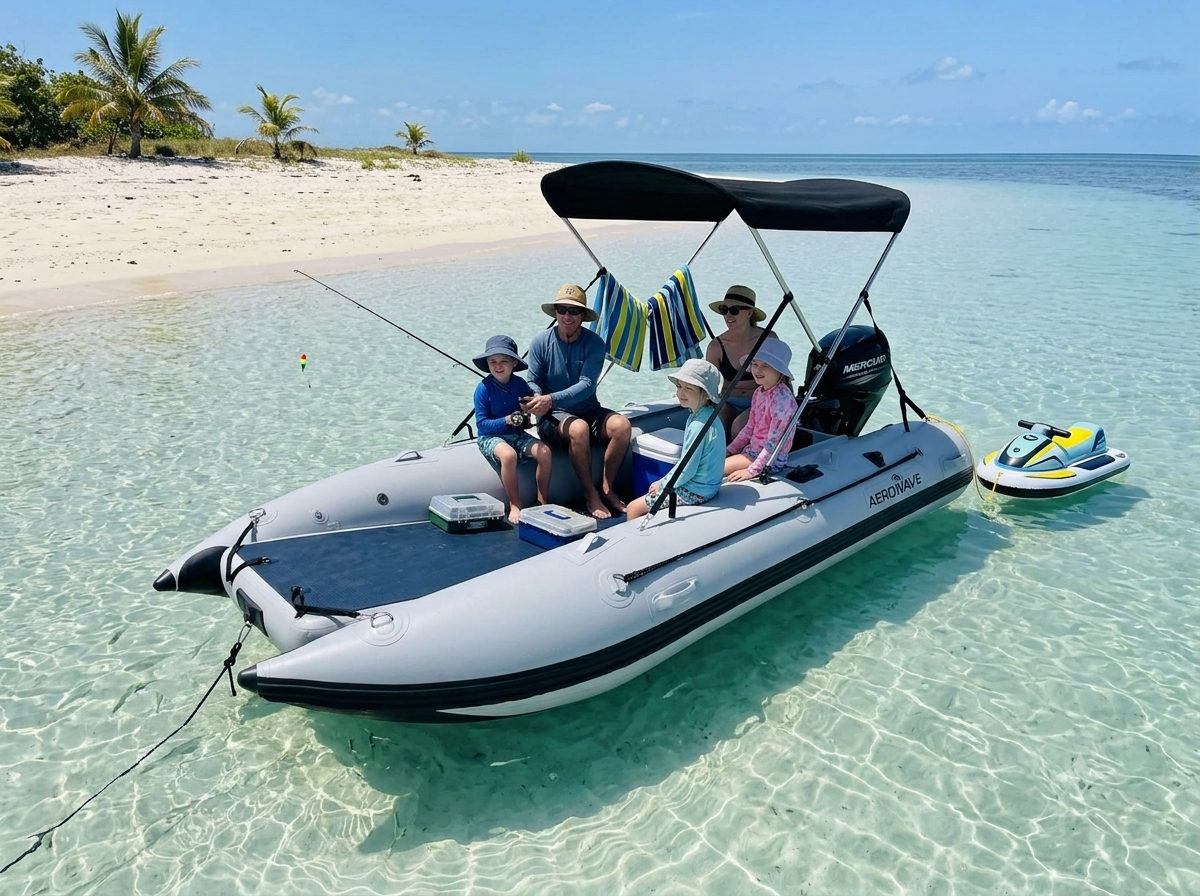
Aerowave WaveRunner 380 Series 3 Catamaran Package
3.8 m Series 3 catamaran with the 380 mm transom — no ventilation, no cavitation.
US$2,662 USD
Delivered to your door, today's rate
- Free freight to United States · local taxes payable on arrival
- 7-year hull warranty
🇺🇸 Shipping to United States · landed price quoted in writing
Yes — we ship the Aerowave WaveRunner 380 Series 3 Catamaran Package to United States. Here's the landed price.
3.8 m Series 3 catamaran with the 380 mm transom — no ventilation, no cavitation.
Aerowave WaveRunner 380 Series 3 Catamaran Package
- Boat package (export price)
- US$3,132
- 15% tariff relief credit
- − US$470
- Express air freight to United States
- Included
- Import duty, taxes & customs clearance
- Payable on arrival
- Estimated landed, USD
- US$2,662
Indicative, converted at today's rate, before local duty and tax on arrival. Ask below and we'll put a fixed figure in writing, valid 30 days.
- 7-year hull warranty
- 1500 GSM / 1.2 mm VALMEX® Heavy Plus hull
- CE certified to ISO 6185-3 and EU Directive 2013/53/EU
- Door-to-door, tracked the whole way
Your price, delivered to your door — freight included.
We email the full PDF quote (spec, freight, finance, WavePay) to your inbox in under 60 seconds. No spam — one quote, one follow-up.
See it for yourself
Real boats. Real owners. Real people behind them.
Plenty of what you read online these days is generated. Check us out properly — the factory, the reviews and the owners are all one click away. Why we use AI, and how to check we’re real
How our boats are built
Walk the production line: thermo-welded seams, 1.2 mm VALMEX Heavy Plus hulls, over-pressure relief valves on every chamber.
See the buildGoogle Maps reviews
Real Australian owners, five stars, published on our Google Business Profile with the map — read them there, not just on our own site.
Open Google Maps reviewsOwner stories
Boats in use — offshore, on rivers, on rescue duty. Photos and words from the people who actually own them.
Read owner stories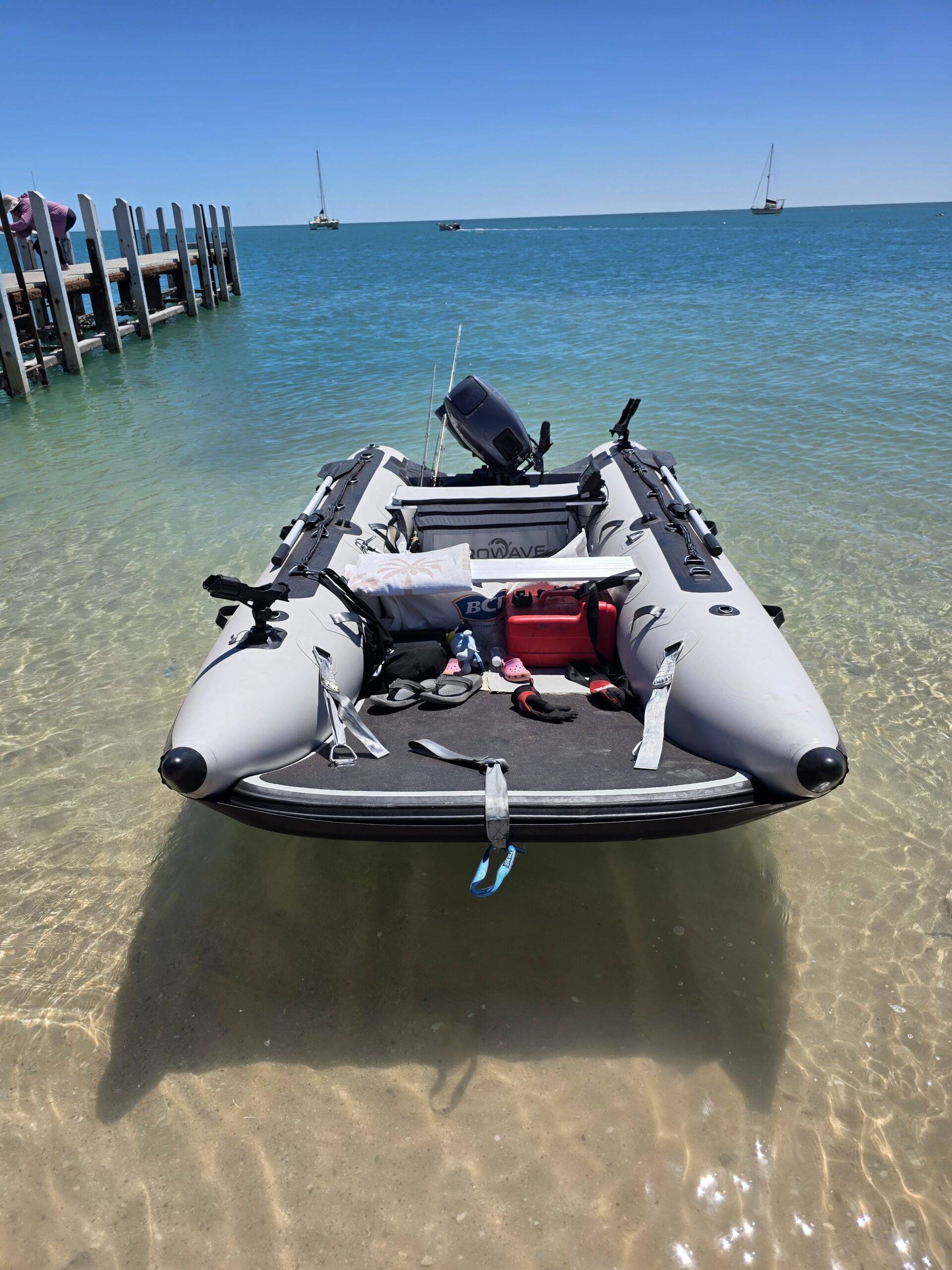
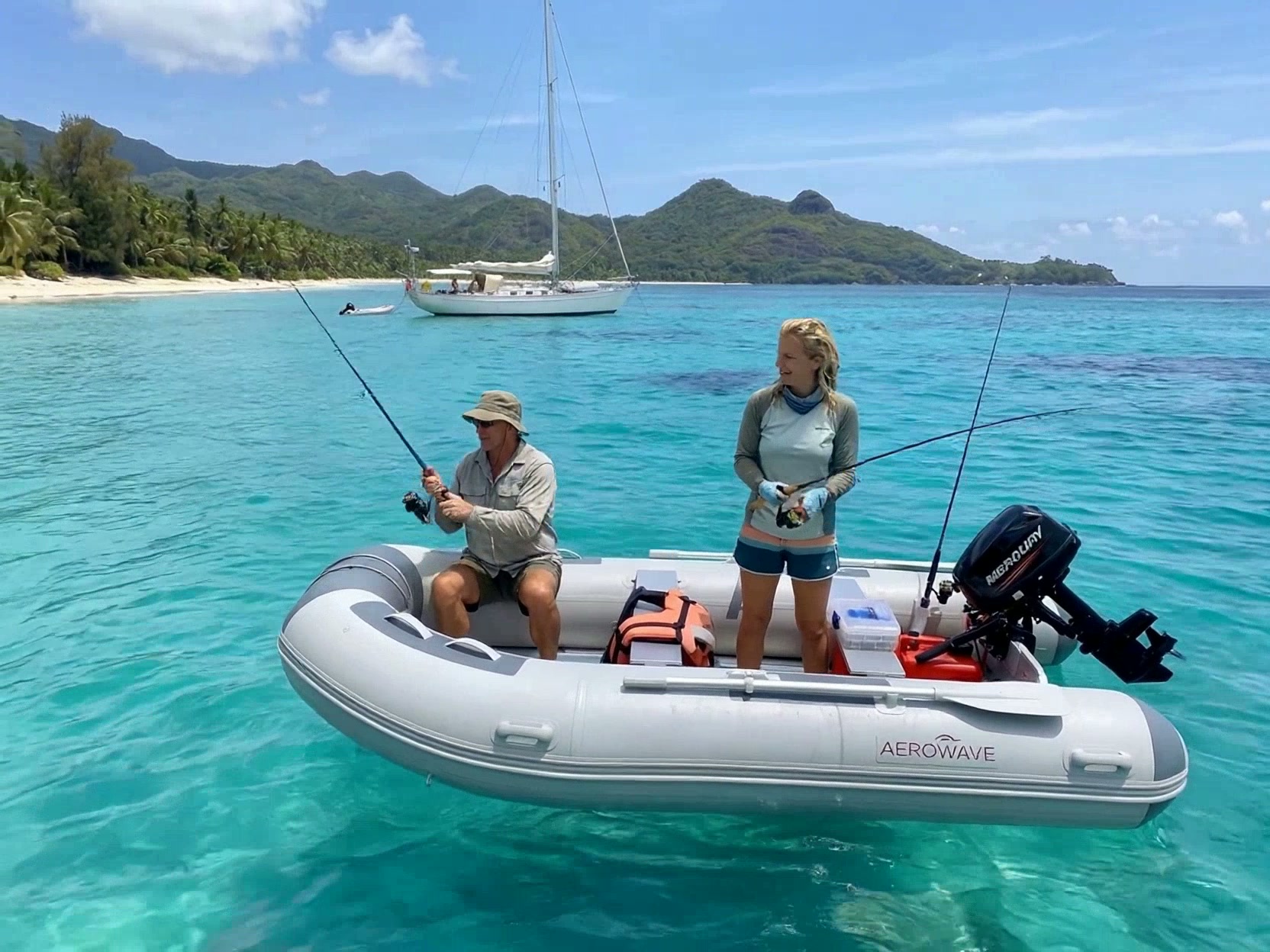
An inflatable catamaran is a portable twin-hull boat with buoyancy spread to either side of the deck. That wide footprint helps it resist roll when you move about at rest. It can be a useful platform for fishing, family days and beach launches; it is not automatically the right choice for every sea state or every person lifting a boat into a car.
The Aerowave WaveRunner 380 Series 3 makes those trade-offs concrete. This is a guide to the questions you should ask before choosing a 3.8 m inflatable catamaran, not a claim that one model is perfect for everybody. For a bigger enclosed-bow boat, read our Viper 400 catamaran guide.
What changes when the hull is a catamaran?
Two inflatable hulls spread buoyancy apart. When one passenger shifts position, that wide stance helps limit roll compared with a narrower single-hull design. It is the reason many buyers shortlist a cat for fishing, getting aboard from the water or spending time stopped at anchor. The open space and shallow draft can also make a beach launch practical. But a shallow draft is not permission to run across rocks or ignore tides.
A twin hull is not a Deep-V monohull. If your priorities are long runs into steep chop or the softest possible ride while moving, compare hull shapes in the conditions you really use. Wind, loading, speed and skipper decisions matter; no inflatable catamaran guarantees a dry ride. If you mostly fish at rest, prize stability and want to pack the boat away, the cat design earns a closer look.
The WaveRunner 380 in numbers
The WaveRunner 380 Series 3 is 3.80 m long and 1.55 m wide. Its listed boat weight is 47 kg, with a listed load rating of 650 kg, six-person capacity (five recommended) and a 20 hp maximum outboard rating. Ratings are ceilings, not instructions to load to the limit: leave room for people, fuel, safety gear and sensible handling. The product listing gives a packed size of approximately 130 × 75 × 40 cm across two bags for hull and floor/accessories. Measure your boot opening as well as the space inside the car; think about whether you can lift each load, not just whether the boat fits.
The listed transom height is 380 mm. Confirm short-shaft motor compatibility, total engine weight and any mounting questions before you order. Hidea motors and trailers are Australian-only products; international customers can still enquire about the boat, without assuming a motor can be supplied overseas.
Read the fabric specification, not just the word “premium”
WaveRunner uses German-made 1500 GSM / 1.2 mm VALMEX® 7321 Heavy Plus hull fabric with thermo-welded seams. GSM is material mass per square metre; millimetres tell you thickness. Ask for both when comparing fabrics. That specification is a tangible part of the value: it is a more useful answer to “why does it cost more?” than an unsupported promise that no other boat will wear out.
The WaveRunner carries a 5-year limited hull warranty, not the Viper’s extended 5–7 year coverage. Read the full warranty terms before buying. With proper care, the stated premium-fabric lifespan is 10–12 years; actual service life depends on storage, use and maintenance. Rinse and dry the boat, keep it away from prolonged UV when stored and inspect fittings regularly. No fabric specification replaces responsible care.
Floor pressure, setup and what is in the package
The WaveRunner uses a high-pressure 8–10 PSI AirDeck. The included lithium pump gets the floor to approximately 2–2.5 PSI; switch to the supplied manual pump for the final pressure. An underinflated floor will not feel like the firm platform you expected. Check the pressure guidance before your first outing and make time for a practice setup at home.
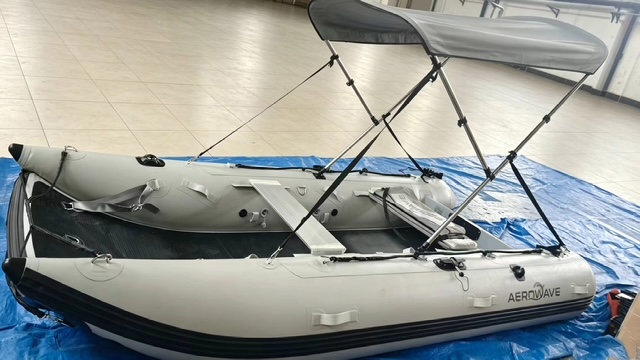
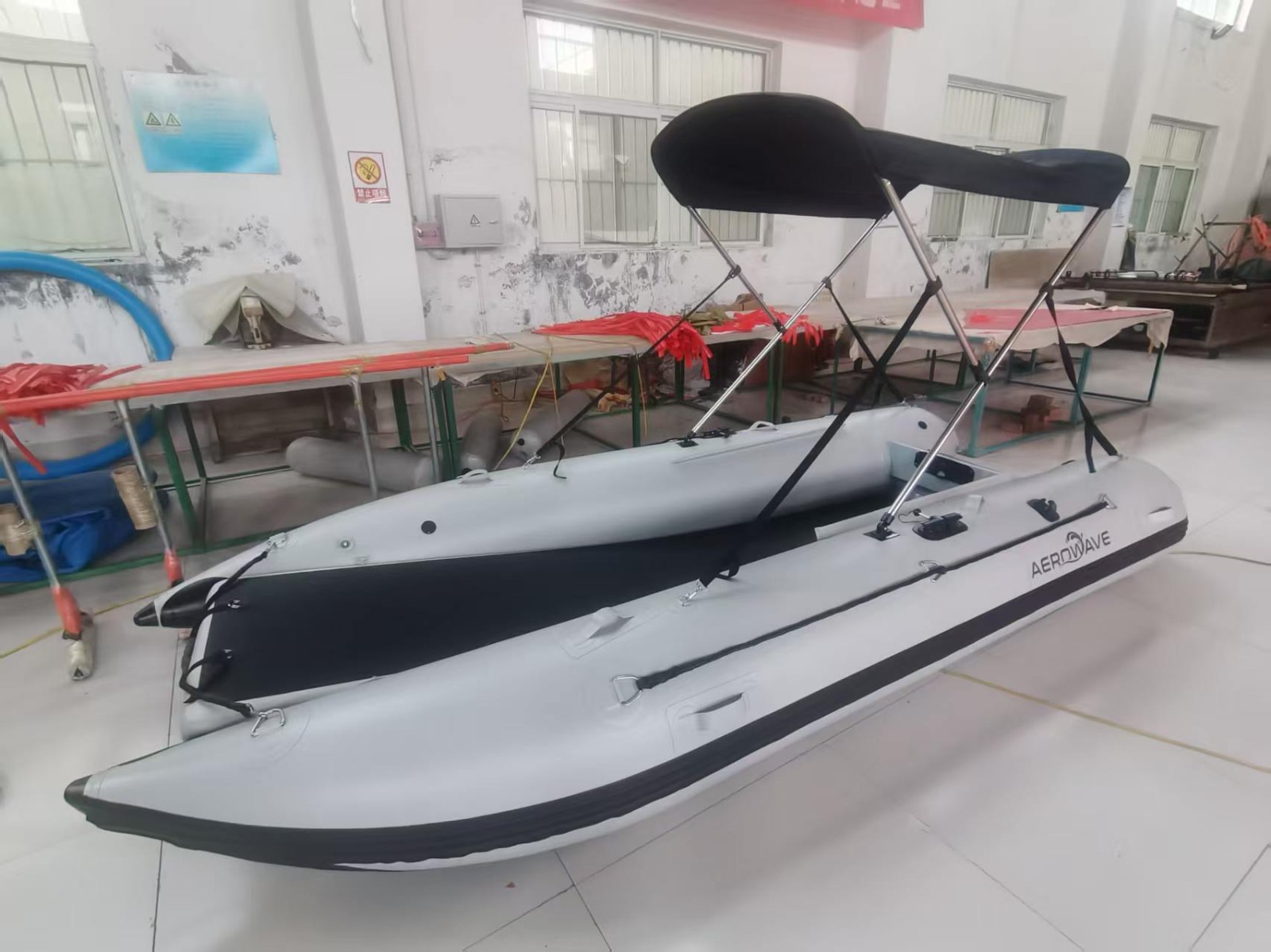
The WaveRunner package lists LockNLoad launch wheels and a grey/black Bimini as standard. Look at the actual WaveRunner product listing for the latest configuration, what is included and the current price. Ask for a written quote itemising the boat, accessories, any optional extras, destination and delivered price; do not compare a full package with a hull-only advertisement.
Which inflatable catamaran should you shortlist?
Start with how you launch. If you must lift the boat solo into a vehicle, the weight and two packed loads may decide the purchase faster than the hull length. If a team will set up on a beach, ask how the fitted wheels, shade and deck layout work for your crew. For longer runs, consider your usual chop, forecast limits and fuel planning rather than buying by maximum horsepower alone.
Then compare sizes honestly. A Viper 365 Open Bow is another portable cat to measure for your car and launch routine. The Viper 400 Sovereign offers a larger enclosed-bow layout and an optional aluminium floorboard/inflatable-keel configuration, but the listed bare boat weight is 66 kg. The WaveRunner 380 sits between those lengths with its own 47 kg listed weight and standard Bimini and wheel kit. These are different layouts and loads, not a universal best-to-worst ranking.
Finally, understand delivery and payment. Australian delivery is quoted as a landed price with duty and clearance covered. Overseas delivery terms vary by destination; get the destination-specific landed-cost position in writing rather than assuming every country is duty-paid. A 50% deposit starts a custom build; once building starts the deposit is non-refundable. The remaining balance is only due when the boat is finished and has passed quality checks. Get the exact configuration, delivery terms and payment stages in writing before paying.
For a side-by-side look at the ranges, compare inflatable catamarans. If you already know your car dimensions, crew size, launch location and usual waters, contact the team for a specific WaveRunner quote rather than guessing from a photo.
Weekend-Proof Score 17 questions · about 2 minutes
Will the boat you're about to buy survive an Australian summer?
Seventeen straight questions about where you'll use it, what you'll ask of it and the boat you're weighing up. You get a score out of 100, the exact weak points in your plan, and the one boat that genuinely fits.
Free · your result shows on screen · no email required
So which one is yours?
Pick how you'll actually use it and we'll take you straight to the right hull.
I want to fish it
Open bow, rod holders, deck space you can stand and cast from.
Viper Sport 400Family, diving and the beach
3.8 m Series 3 catamaran — low bow to climb back in wearing fins or a tank.
WaveRunner 380Tender / one-person launch
3.3 m hard-floor boat that packs into a bag and still takes a beach landing.
Viper 330Shop gear featured in this guide
Aerowave WaveRunner 380 Series 3 Catamaran Package
The WaveRunner 380 Series 3 is a premium 3.8m inflatable catamaran package built for Australian and worldwide families, fishing, and coastal day boating — ideal for snorkeling and spearfishing — offering serious stability and premium German Valmex® construction.
Free freight to United States · local taxes payable on arrival
Aerowave Viper 400 Sovereign
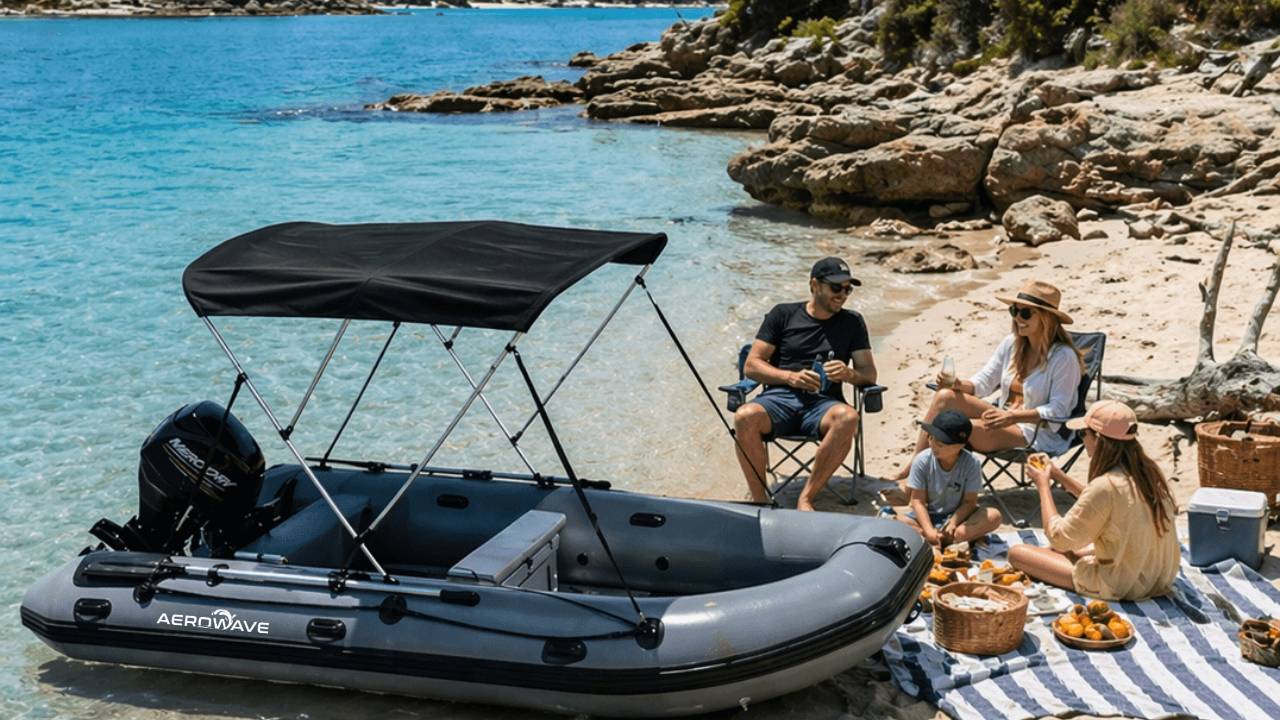
Flagship 4m enclosed-bow inflatable catamaran. German VALMEX® 7321 Heavy Plus 1.2mm commercial-grade fabric, 10 PSI high-pressure drop-stitch air deck floor with VALMEX non-slip surface, LockPro wheels, full Bimini and FREE express delivery Australia-wide included. Winter special — save $1,000 until 31 August 2026.
Free freight to United States · local taxes payable on arrival
Aerowave Viper 365 Open Bow
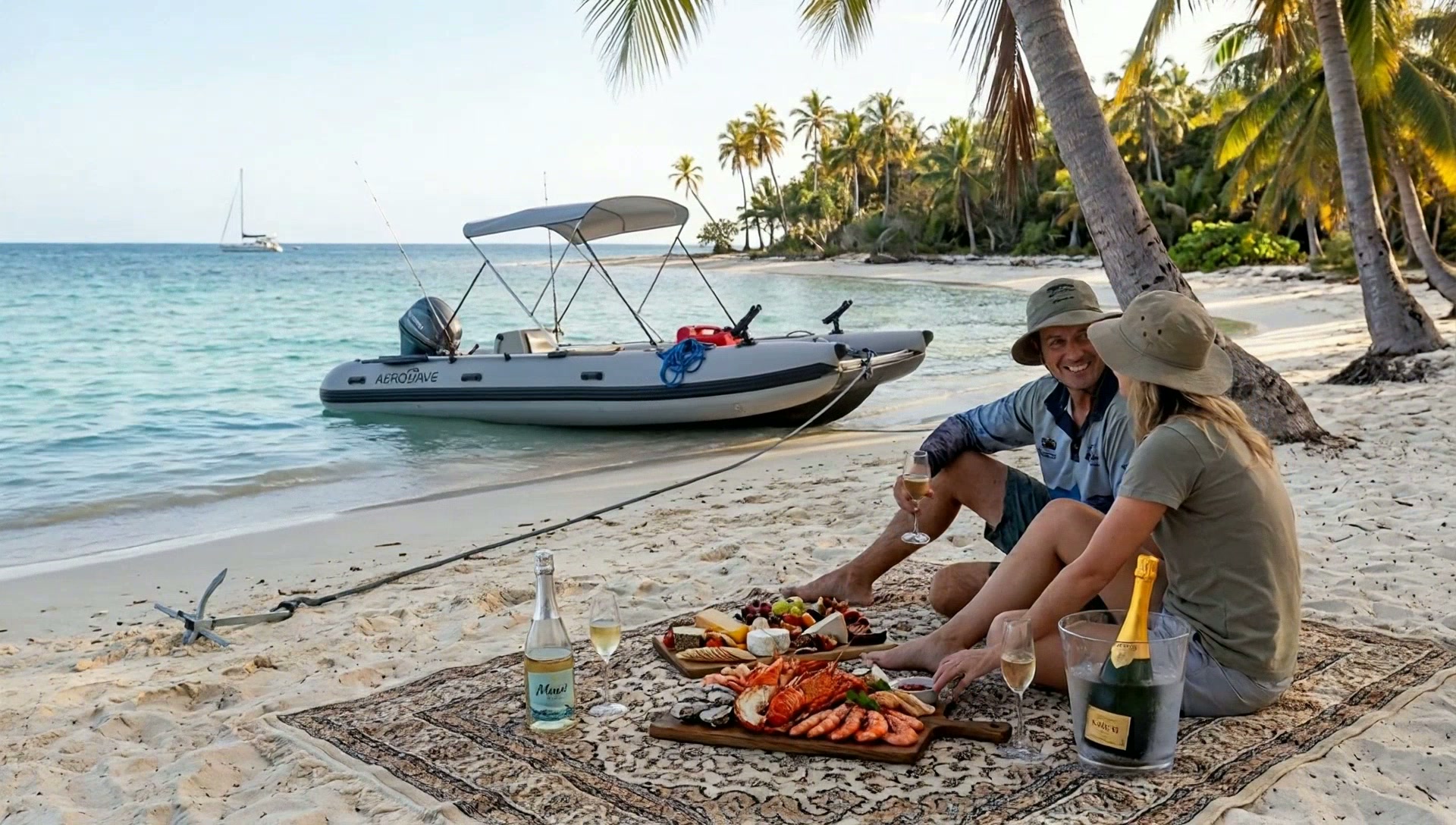
Premium 3.65m Inflatable catamaran — built the same way as our flagship Viper 400 sports boat, just 35cm shorter. German VALMEX® 7321 Heavy Plus 1.2mm commercial-grade fabric, 10 PSI high-pressure drop-stitch air deck floor with VALMEX non-slip surface, LockPro wheels, full Bimini and FREE express delivery Australia-wide included.
Free freight to United States · local taxes payable on arrival
Not sure which suits you? Talk to a real boat owner.
Before you spend a cent
Buying from Australia, delivered to United States
You have never heard of us, we are on the other side of the world, and the internet is full of fakes. Fair enough. Here is everything you would need to check us out, in one place — no forms, no chat bot.
Australian designed business
Easy Inflatables, Avoca Beach NSW 2251. ABN 96 856 548 613. International orders ship from our Hong Kong hub.
222 owner reviews, 4.8 average
Read them in full, good and bad, on our reviews page.
CE certified, 7-year hull warranty
ISO 6185-3 and EU Directive 2013/53/EU. Warranty honoured worldwide.
Tracked, insured, door to door
FREE freight to United States · local tax/duty on arrival.
- Who am I actually buying from?
- Easy Inflatables, Avoca Beach NSW 2251, Australia. ABN 96 856 548 613. Sean is the owner and skipper, Gary Stewart handles sales on +61 2 4335 1603, Karen Matthews handles email. The boats are Australian designed; international orders ship from our Hong Kong dispatch hub so your landed price stays competitive. Phone us before you pay a cent — a real person answers.
- Is this really an Australian product?
- Yes — Australian designed and engineered on the NSW Central Coast. Manufacturing is done offshore to our spec, and international orders ship direct from our Hong Kong dispatch hub. If we routed every boat through Australia first, the freight alone would roughly double or triple your cost for the same hull.
- What do I pay, and what is not included?
- The delivery and import terms depend on your country. EU, UK, New Zealand and named Asia/Pacific lanes include duty and tax; US freight is free but US buyers pay import charges on arrival. Other destinations show their terms before payment.
- How do I pay safely?
- Card through Stripe (Visa, Mastercard, Amex, Apple Pay, Google Pay) or bank transfer. Card payments carry your bank's own dispute protection. We never ask for crypto, gift cards or payment to a personal account.
- What if it arrives damaged?
- Every boat ships fully tracked and insured door to door. Photograph the carton and the boat on arrival and email us — transit damage is claimed and replaced through us, not left with you and the courier.
- Is the warranty real outside Australia?
- Yes. The 7-year hull warranty on 1.2 mm VALMEX Heavy Plus and Orca Hypalon hulls applies wherever you are. Replacement parts are held in Australia and at our overseas hub and go out by express courier to your door.
- Is the boat actually certified?
- All Aerowave catamarans are CE certified to ISO 6185-3 and EU Directive 2013/53/EU. Certification paperwork is supplied with the boat — ask and we will send it before you order.
Frequently asked questions
- What is an inflatable catamaran?
- It is a boat with two inflatable hulls set apart under the deck. That wider stance helps reduce rolling at rest, particularly useful when fishing or moving about, but performance still depends on load and conditions.
- How much does the WaveRunner 380 weigh?
- Its product record lists a 47 kg boat weight and an approximately 130 × 75 × 40 cm packed size across two bags. Check your vehicle opening and whether you can lift each load safely.
- What fabric and warranty does the WaveRunner 380 have?
- It uses 1500 GSM / 1.2 mm German VALMEX® 7321 Heavy Plus with thermo-welded seams and carries a 5-year limited hull warranty. Read the written warranty terms for scope and exclusions.
- Can an overseas buyer order a motor with a WaveRunner?
- No. Boats can be enquired about for overseas delivery, but Hidea outboards and trailers are supplied in Australia only. Get a destination-specific written boat and freight quote.
Ready to set sail?
Premium German-fabric inflatable catamarans, built to order and delivered to your door. Talk to our team or browse the fleet.
Like this guide? Get the next one in your inbox.
Owner-tested tips, gear deep-dives and Aussie boating know-how — no spam.