
Do You Need to Register an Inflatable Boat in Australia? 2026 State-by-State Rules
Registration and licence rules for inflatable boats in every Australian state, the power and speed thresholds that trigger them, and how a new import gets onto the register.
Our recommendation
Aerowave Viper 330
1.2 mm fabric is about 33% thicker than common 0.9 mm fabric: more material between your boat and the water for everyday rubbing and knocks during beach launches. Careful handling still matters.
Length
330cm / 10'9"
Beam
165cm / 65"
Inside Beam
69cm / 27"
Tube Diameter
50cm / 19"
You can buy an inflatable boat in Australia today and have it on the water this weekend — but only if the registration and licence side is sorted before you launch.
Every state runs its own rules, and they hinge on two things: how much power is on the transom, and how fast the boat can go. Get those two right and the paperwork is straightforward. Get them wrong and the first thing you meet on the ramp is a fine.
This guide walks through what actually applies to an inflatable boat, state by state, in plain English.
Are inflatable boats treated differently to other boats?
No. In the eyes of every Australian maritime authority an inflatable boat is a vessel like any other. There is no separate "inflatable" category, no exemption because the hull is fabric, and no shortcut because it deflates and lives in the garage.
What decides your obligations is:
- Engine power — measured in kilowatts, not horsepower, in most legislation.
- Speed capability — some states trigger registration at 10 knots.
- Where you use it — enclosed waters, coastal waters, or a lake with its own by-laws.
An unpowered inflatable you row or paddle is generally exempt from registration everywhere. The moment an outboard goes on the transom, the rules start.
Registration and licence rules, state by state
Use this as your starting point, then confirm with the authority linked below before you launch. Rules change and local waterways can add their own conditions.
| State / territory | Registration | Licence to drive |
|---|---|---|
| NSW | Required if the vessel is capable of 10 knots or more | Required to drive at 10 knots or more |
| VIC | All powered recreational vessels | Marine licence required for any powered vessel |
| QLD | Motor over 3 kW (about 4 hp) | Licence for motors over 4.5 kW (about 6 hp) |
| SA | All powered vessels | Boat operator licence for motors over 4 kW |
| WA | Powered vessels on WA waters | Recreational Skipper's Ticket for motors over 4.5 kW |
| TAS | All motorised vessels | Licence for motors over 4 hp |
| NT | Generally not required for recreational vessels | Generally not required |
| ACT | Powered vessels on ACT waters | Licence required |
Official sources: NSW boating, Victoria boating, Maritime Safety Queensland, Department of Transport WA, SA boating and marine.
The bit most buyers miss: getting a new import on the register
If you buy a boat that was built overseas — which covers most inflatable boats sold in Australia, whatever the badge on the tube — the state will not simply register it off an invoice. You need evidence of the vessel identity and build first.
In practice that means a Boat Code operator certificate, commonly called a "pink slip". A licensed Boat Code agent inspects the boat, records the hull identification number, and issues the certificate. You then take that certificate to your state authority and register the boat in the normal way.
It is a one-off step, it usually costs well under a couple of hundred dollars, and every Aerowave boat we sell is fully registerable in Australia through this pathway. If a seller cannot tell you how their boat gets onto the register, that is the question to keep asking.
How your engine choice changes the paperwork
This is where a lot of first-time buyers accidentally create work for themselves.
1. Small engines can keep you under the threshold
In Queensland, a 3 kW (roughly 4 hp) motor sits under the registration trigger. In South Australia, a 4 kW motor sits under the licence trigger. If your use is a quiet tender run out to a mooring, a small motor genuinely simplifies life.
2. Anything that makes the boat useful will cross the line
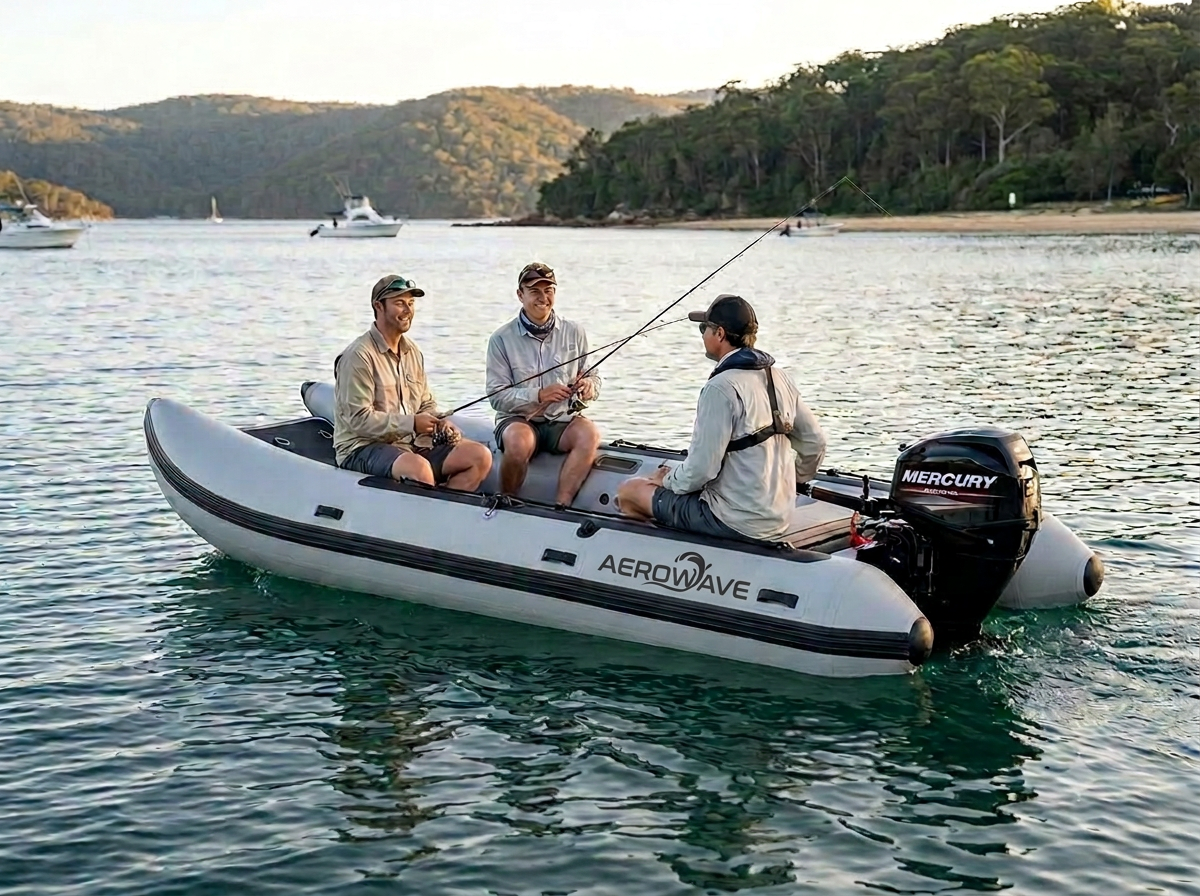
A 9.9 hp, 15 hp or 20 hp outboard — the range that turns a 3.3 m to 4.0 m inflatable into a real fishing and family boat — puts you over the threshold in every state that has one. Plan on registering and licensing.
3. Speed capability matters in NSW
NSW keys off 10 knots rather than kilowatts. A 3.3 m inflatable with a 9.9 hp on the back will comfortably exceed 10 knots, so it needs registration and a licence, even though the motor is small.
If you are still deciding on power, our outboard size guide for inflatable boats walks through hull length versus horsepower.
What you need on hand when you register
Have these ready and the process is usually a single visit or one online form:
- Proof of purchase — tax invoice with your name on it.
- Hull identification number (HIN).
- Boat Code operator certificate if the boat is a new import.
- Engine details — make, model, serial number, power in kilowatts.
- Your identification, and your licence if you already hold one.
- Payment for the registration fee, which varies by state and vessel length.
Registration numbers must then be displayed on both sides of the bow. On an inflatable, self-adhesive vinyl numbers applied to a clean, dry tube work well — just avoid the seams and the rub strake.
Insurance, safety gear and the rest of the launch-day list
Registration is only one part of being legal and sensible on the water. Two things worth reading next:
- Safety equipment is mandatory and varies by state and by how far offshore you go — lifejackets, flares, EPIRB, bailer and more. See our inflatable boat safety gear checklist.
- Insurance is not compulsory for recreational boats in Australia, but a boat that lives on a trailer and gets towed to the ramp is worth covering. Our inflatable boat insurance guide explains what actually gets covered.
Which boat suits the rules you will be under?
If you want to stay under the smallest thresholds, a light tender with a small motor is the answer. If you want a boat that fishes, tows kids and handles chop, accept the registration and licence and buy the boat that does the job properly.
- See the full Aerowave range and prices
- Viper Series catamarans — stand-up casting decks, big-water capability
- AeroCat 380 — the value pick for families and caravanners
- Swift Series tenders — the light, simple option for yacht owners
Not sure which side of the thresholds your plan lands on? Tell us where you launch and what you will do on the water and we will tell you straight — call +61 2 4335 1603 or take the 2-minute Weekend-Proof Score and we will match a boat to how you will actually use it.
Frequently asked questions
- Do I need to register an inflatable boat in Australia?
- If it has an outboard, almost certainly yes. Most states require registration for any powered recreational vessel, Queensland triggers at motors over 3 kW, and NSW triggers when the boat is capable of 10 knots or more. An unpowered inflatable you row or paddle is generally exempt.
- Do I need a boat licence to drive an inflatable boat?
- In most states yes, once the motor passes a threshold — about 4.5 kW in Queensland and WA, 4 kW in South Australia, 4 hp in Tasmania, and any powered vessel in Victoria. NSW requires a licence to drive at 10 knots or more. The Northern Territory generally requires neither.
- How does a new imported inflatable boat get registered?
- Through a Boat Code operator certificate, often called a pink slip. A licensed Boat Code agent inspects the boat and records the hull identification number, then you register with your state authority using that certificate. Every Aerowave boat is fully registerable in Australia this way.
- Where do registration numbers go on an inflatable boat?
- On both sides of the bow, clearly visible. Self-adhesive vinyl numbers applied to a clean, dry section of tube work well — keep them off the seams and the rub strake so they do not lift.
- Does the registration fee depend on the size of the boat?
- Yes. Most states scale the fee by vessel length, so a 3.3 m inflatable costs less to register than a 4.5 m one. Check your state authority for the current schedule.
Finance this boat from $24/week
Estimate only — powered by Australian Motorcycle & Marine Finance (AMMF).
Paid upfront (AUD)
$550
10% of price
Term
5 years
60 monthly repayments
Comparison rate
9.95% p.a.
Subject to AMMF approval
Weekly
$24
Monthly
$105
Amount financed
$4,945
Indicative only. Actual repayments depend on your AMMF credit assessment, term, fees and the balloon you select. Talk to AMMF for a personalised quote on Aerowave Viper 330.
Like this guide? Get the next one in your inbox.
Owner-tested tips and Aussie boating know-how — no spam.
Ready when you are
Build your Viper 330 in under 3 minutes.
1500 GSM / 1.2 mm VALMEX® hull. Five-year limited hull warranty plus two years of extended limited structural hull cover, subject to conditions. Free freight to United States · taxes included, nothing to pay on arrival.
delivered to your door
See it for yourself
Real boats. Real owners. Real people behind them.
Plenty of what you read online these days is generated. Check us out properly — the factory, the reviews and the owners are all one click away. Why we use AI, and how to check we’re real
How our boats are built
Walk the production line: thermo-welded seams, 1.2 mm VALMEX Heavy Plus hulls, over-pressure relief valves on every chamber.
See the buildGoogle Maps reviews
Real Australian owners, five stars, published on our Google Business Profile with the map — read them there, not just on our own site.
Open Google Maps reviewsOwner stories
Boats in use — offshore, on rivers, on rescue duty. Photos and words from the people who actually own them.
Read owner stories
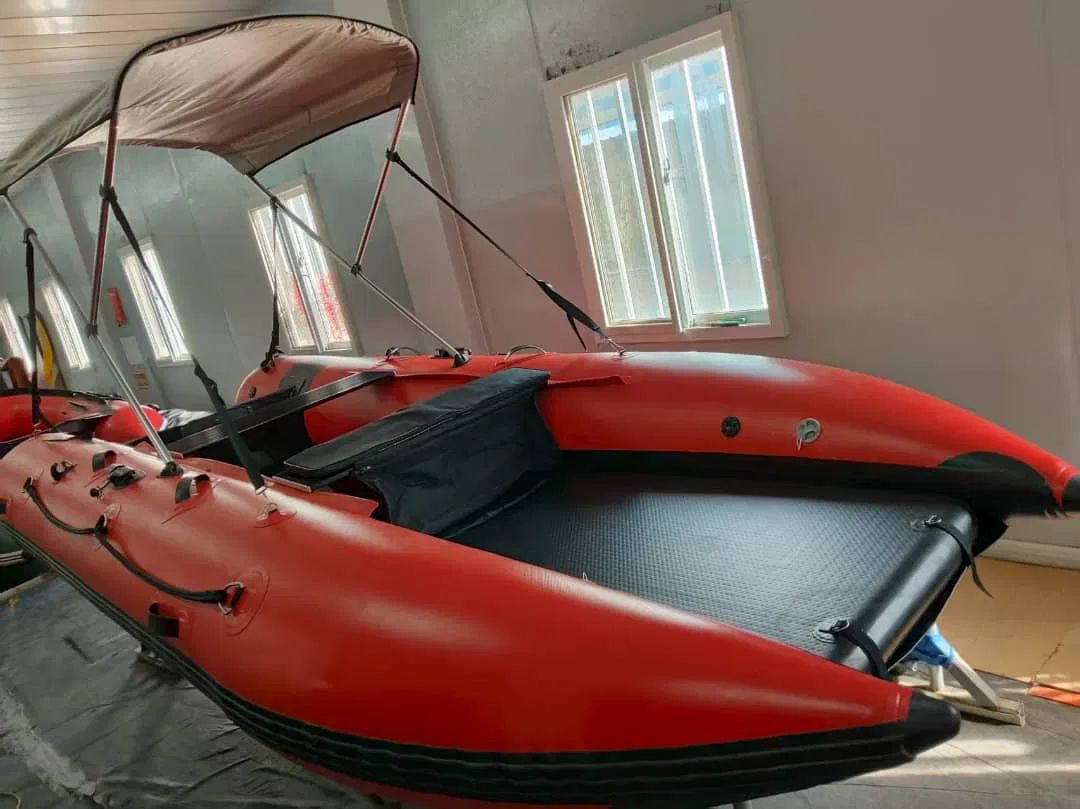
Aerowave Viper 330
US$4,187 USD · delivered to your door