
Inflatable Boats vs Tinnies: Which Is Right for Australian Waters?
Inflatable catamaran or aluminium tinnie? An honest, side-by-side comparison of weight, storage, stability and cost for Australian boaters.
Our recommendation
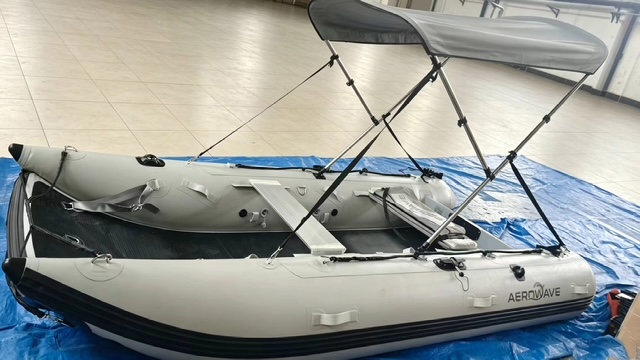
AeroWave AeroCat 380 Inflatable Catamaran
Length
3.80m / 12'6"
Beam
1.80m / 70"
Tube Diameter
50cm
Bare Boat Weight (without Bimini & wheel kit)
~54kg / 119lbs
Neither wins outright — an inflatable catamaran suits people who prioritise stability, easy storage and light towing; a tinnie suits people who prioritise raw toughness against rocks and reefs.
This is one of the most searched comparisons in Australian boating, and most articles pick a side. We'd rather give you the honest trade-offs so you can decide based on how you actually launch, store and use a boat — not on brand loyalty.
The core difference
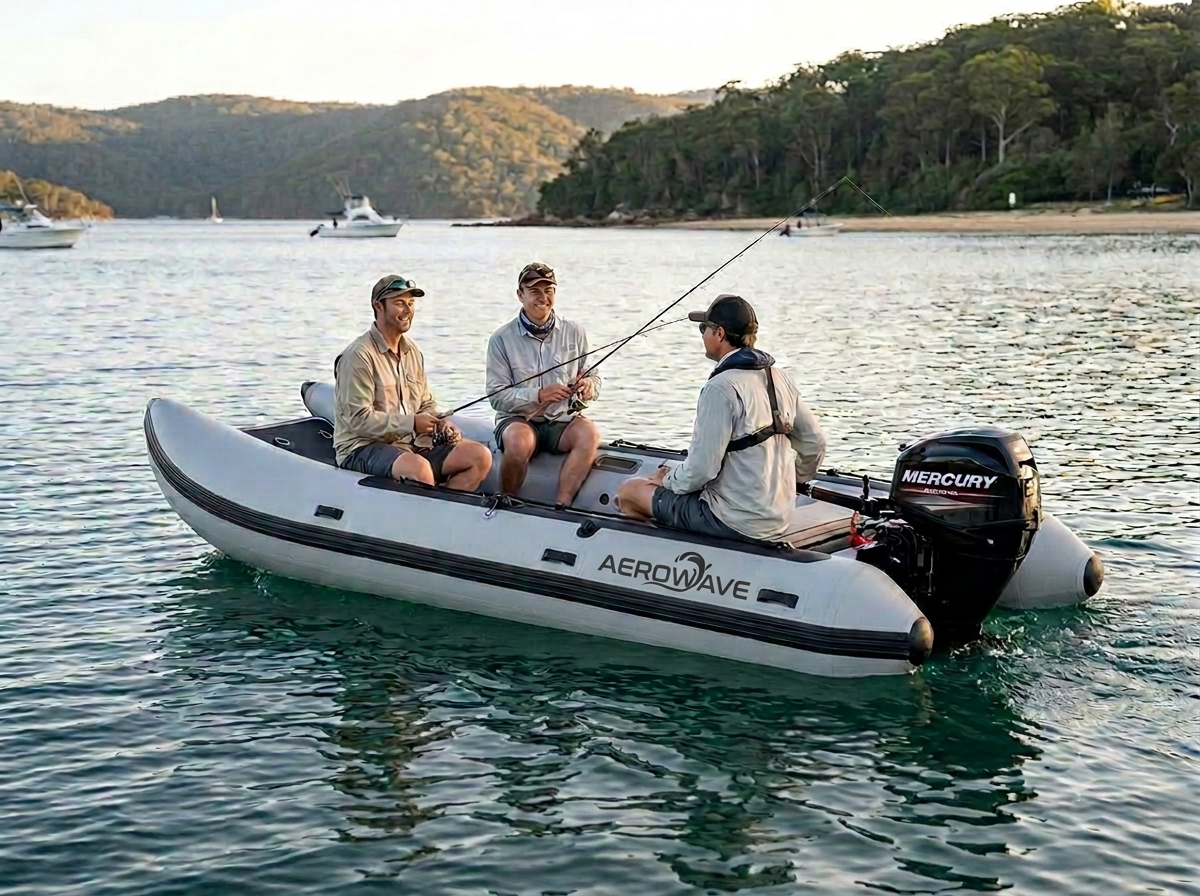
A tinnie is a rigid aluminium hull. It's tough against impact, holds its shape permanently, and needs a trailer or a solid rack to store and move. An inflatable catamaran, like the Aerowave range, has two inflatable tubes either side of a rigid deck. It deflates for storage, is dramatically lighter to tow and lift, and sits with a wider, more stable footprint at rest for the same length.
Head-to-head comparison
| Factor | Inflatable catamaran | Aluminium tinnie |
|---|---|---|
| Weight | Substantially lighter than an equivalent tinnie — one or two people can launch and retrieve | Heavier — usually needs a proper trailer and ramp |
| Storage | Deflates and folds into a bag; fits in a garage, shed corner or ute tray | Needs trailer storage or a dedicated bay |
| Stability at rest | Wide, stable stance from the twin-tube hull — a good fishing platform | Stable but narrower for the same length, especially smaller models |
| Impact resistance | Fabric tubes flex rather than dent, but are not designed for deliberate rock or reef contact | Aluminium shrugs off knocks that would concern a fabric hull |
| Towing | Often no trailer at all — ute tray, roof or boot | Needs a registered boat trailer in almost all cases |
| Hull life | 1500 GSM / 1.2 mm VALMEX® Heavy Plus (Viper) or 1100 GSM / 0.9 mm VALMEX® (AeroCat), rated 10–12 years | Aluminium doesn't degrade the same way but is prone to corrosion and dents over decades |
| Typical entry price (AUD) | From $3,995 | Varies widely, often comparable or higher for an equivalent-length rigged package with trailer |
| Registration | Registerable via a Boat Code operator certificate, then state registration | Standard state registration |
Where an inflatable catamaran genuinely wins
- You store at home, not at a marina. Deflated, an inflatable packs into a bag that fits in a cupboard or car boot — no trailer, no rego for the trailer, no crane at the yacht club.
- You launch solo. Lighter hulls mean one person can drag, carry or wheel the boat to the water without a winch.
- You fish from it. The wide, stable stance of a catamaran hull at rest suits standing to cast better than many narrow tinnies of the same length.
- You're towing behind a caravan or camping rig where every kilogram matters.
Where a tinnie genuinely wins
- You regularly beach on rock, oyster shell or reef where a fabric hull would rather you didn't.
- You want zero setup time — a rigid hull is always assembled; an inflatable needs a few minutes to inflate (though a good electric pump makes this fast).
- You want decades of structural life and accept the trade-offs of weight, storage and a trailer.
Fabric quality if you go inflatable
Not all inflatable boats are built the same, and fabric is where the difference shows up first. Always check both numbers together — GSM and mm — never one alone. Aerowave's range:
- AeroCat: 1100 GSM / 0.9 mm VALMEX®, a strong value-tier fabric, 10–12 year rated life.
- Viper and WaveRunner: 1500 GSM / 1.2 mm VALMEX® Heavy Plus, the premium tier, also rated 10–12 years but built for harder, more frequent use.
Every Aerowave catamaran is CE certified to ISO 6185-3 and EU Directive 2013/53/EU.
Cost over time
A tinnie's ongoing costs are mostly trailer registration, antifouling if kept in the water, and occasional hull repair. An inflatable's ongoing costs are mostly care — rinsing salt and storing out of direct UV. Upfront, Aerowave boats start at $3,995 and a comparably rigged tinnie of similar length is often priced similarly or higher once trailer and registration are included.
Which one is right for you
- Home storage, solo launching, fishing stability: go inflatable catamaran — start with the AeroCat 380 or Viper 365 Open Bow.
- Rock, reef or oyster-lease work, decades of use without fabric concerns: a tinnie suits you better.
- Not sure which category fits your actual weekends? Try the Weekend-Proof Score™, or browse the full range on our Catamarans page.
- Ready to compare a landed price: get an Australian quote.
If you've settled on inflatable and now need a motor, our companion guide covers Best Inflatable Boat With Motor in Australia (2026) and matched packages under Hidea Outboards. For the full picture on sizes and pricing across the inflatable range, see our Inflatable Boat Buyer's Guide.
Delivery
Delivery is by 7–14 day express air freight (customer share fixed at A$810) or free sea freight in 30–40 days — either way it lands ready to inflate and go.
The short version
- Inflatable catamarans win on weight, storage and stability at rest; tinnies win on rock/reef impact resistance and zero setup time.
- Fabric quality always comes down to GSM and mm together — Viper (1500 GSM / 1.2 mm) and AeroCat (1100 GSM / 0.9 mm) are both rated 10–12 years.
- Entry pricing for a quality inflatable catamaran starts at $3,995 in Australia.
- Both categories are registerable — inflatables via a Boat Code operator certificate then state registration.
Frequently asked questions
- Is an inflatable boat as tough as a tinnie?
- Not for deliberate impact against rock or reef — aluminium wins there. But quality inflatable fabric like 1500 GSM / 1.2 mm VALMEX® Heavy Plus is built to handle normal Australian boating knocks without the weight and storage demands of a rigid hull.
- Which is cheaper, an inflatable boat or a tinnie?
- It varies by model, but a quality inflatable catamaran often starts at a lower price than a comparably rigged tinnie once you factor in a trailer and its registration.
- Can I store an inflatable boat at home without a trailer?
- Yes — that's one of the main advantages. Deflated, most Aerowave models pack into a bag that fits in a shed, garage corner or car boot, with no trailer required.
- How long do inflatable boats last compared to aluminium?
- Aerowave's VALMEX® fabric has a realistic 10–12 year service life with proper care. Aluminium doesn't have a comparable fabric-life limit, but has its own long-term issues like corrosion and dents.
- Are inflatable catamarans more stable than tinnies for fishing?
- At rest, the twin-tube hull of a catamaran gives a wider stance than many tinnies of the same length, which many anglers prefer for standing and casting.
- Do I need a boat licence for an inflatable boat in Australia?
- The same state licensing rules that apply to tinnies generally apply to inflatable catamarans with a motor. Inflatables are registerable via a Boat Code operator certificate followed by state registration.
- How fast can I set up an inflatable boat compared to a tinnie?
- A tinnie is always ready to launch. An inflatable needs to be inflated first, which takes a matter of minutes with a good electric pump — quick, but not instant.
- Which is better for towing behind a caravan?
- Inflatable catamarans are usually the better choice here — they're lighter, often trailer-free, and take up far less space than a tinnie and its trailer.
Finance this boat from $21/week
Estimate only — powered by Australian Motorcycle & Marine Finance (AMMF).
Deposit (AUD)
$480
10% of price
Term
5 years
60 monthly repayments
Comparison rate
9.95% p.a.
Subject to AMMF approval
Weekly
$21
Monthly
$92
Amount financed
$4,315
Indicative only. Actual repayments depend on your AMMF credit assessment, term, fees and the balloon you select. Talk to AMMF for a personalised quote on AeroWave AeroCat 380 Inflatable Catamaran.
Like this guide? Get the next one in your inbox.
Owner-tested tips and Aussie boating know-how — no spam.
Ready when you are
Build your AeroCat 380 Inflatable Catamaran in under 3 minutes.
1100 decitex / 0.9 mm VALMEX® hull. Five-year limited hull warranty. Free freight to United States · local taxes payable on arrival.
delivered to your door
See it for yourself
Real boats. Real owners. Real people behind them.
Plenty of what you read online these days is generated. Check us out properly — the factory, the reviews and the owners are all one click away. Why we use AI, and how to check we’re real
How our boats are built
Walk the production line: thermo-welded seams, 1.2 mm VALMEX Heavy Plus hulls, over-pressure relief valves on every chamber.
See the buildGoogle Maps reviews
Real Australian owners, five stars, published on our Google Business Profile with the map — read them there, not just on our own site.
Open Google Maps reviewsOwner stories
Boats in use — offshore, on rivers, on rescue duty. Photos and words from the people who actually own them.
Read owner stories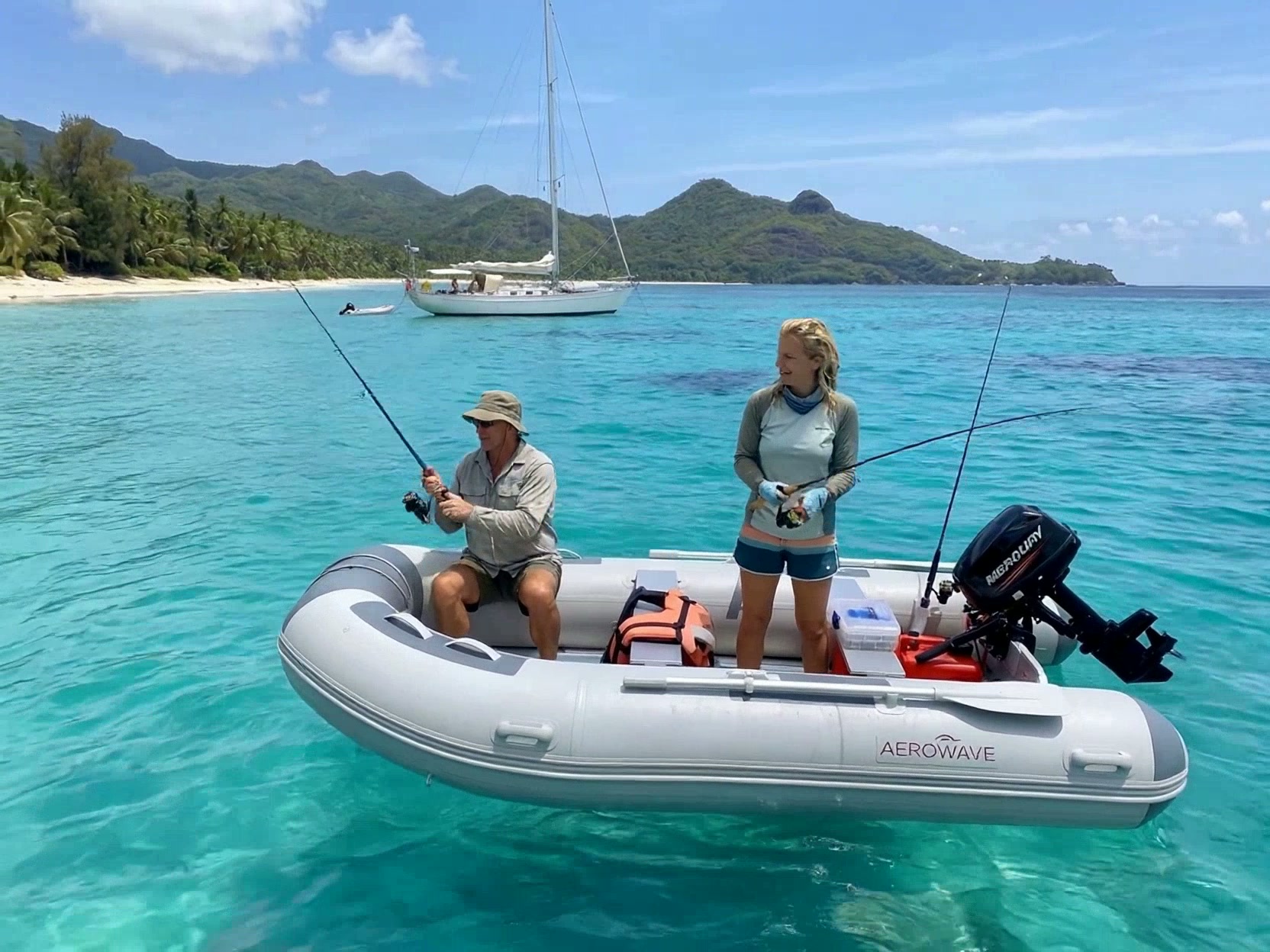
AeroWave AeroCat 380 Inflatable Catamaran
US$2,690 USD · delivered to your door