Inflatable Boat Fuel Range: How Far Will 12 Litres Actually Take You? (Australia 2026)
Real-world fuel burn, cruising range and tank sizing for inflatable boats and catamarans in Australia — with worked numbers for 9.9HP, 15HP and 20HP four-strokes.
At a glance
Real-world fuel burn, cruising range and tank sizing for inflatable boats and catamarans in Australia — with worked numbers for 9.9HP, 15HP and 20HP four-strokes.
- How much fuel does an inflatable boat use per hour?
- Typical fuel burn by horsepower
- Why catamaran hulls sip fuel
- Working out your real cruising range
What we'd put you in
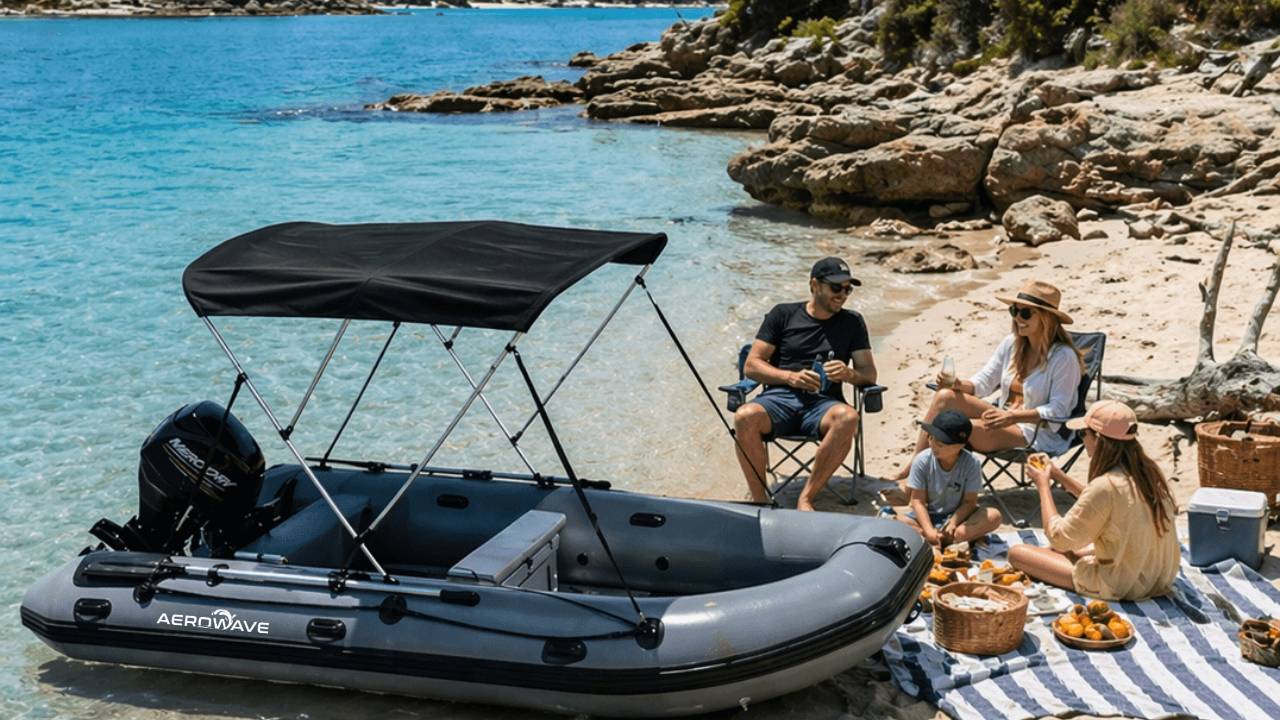
Aerowave Viper 400 Sovereign
Our best-selling boat: 4.0 m, 1.2 mm VALMEX hull, 7-year hull warranty.
US$3,167 USD
Delivered to your door, today's rate
- Free freight to United States · local taxes payable on arrival
- 7-year hull warranty
🇺🇸 Shipping to United States · landed price quoted in writing
Yes — we ship the Aerowave Viper 400 Sovereign to United States. Here's the landed price.
Our best-selling boat: 4.0 m, 1.2 mm VALMEX hull, 7-year hull warranty.
Written for Australian readers — but the boat ships to you. We are an Australian builder and this article is written from Australian waters. That changes nothing about what you can order: the same hull, the same 7-year warranty and the same certification go out to United States every week.
Aerowave Viper 400 Sovereign
- Boat package (export price)
- US$3,726
- 15% tariff relief credit
- − US$559
- Express air freight to United States
- Included
- Import duty, taxes & customs clearance
- Payable on arrival
- Estimated landed, USD
- US$3,167
Indicative, converted at today's rate, before local duty and tax on arrival. Ask below and we'll put a fixed figure in writing, valid 30 days.
- 7-year hull warranty
- 1500 GSM / 1.2 mm VALMEX® Heavy Plus hull
- CE certified to ISO 6185-3 and EU Directive 2013/53/EU
- Door-to-door, tracked the whole way
Your price, delivered to your door — freight included.
We email the full PDF quote (spec, freight, finance, WavePay) to your inbox in under 60 seconds. No spam — one quote, one follow-up.
See it for yourself
Real boats. Real owners. Real people behind them.
Plenty of what you read online these days is generated. Check us out properly — the factory, the reviews and the owners are all one click away. Why we use AI, and how to check we’re real
How our boats are built
Walk the production line: thermo-welded seams, 1.2 mm VALMEX Heavy Plus hulls, over-pressure relief valves on every chamber.
See the buildGoogle Maps reviews
Real Australian owners, five stars, published on our Google Business Profile with the map — read them there, not just on our own site.
Open Google Maps reviewsOwner stories
Boats in use — offshore, on rivers, on rescue duty. Photos and words from the people who actually own them.
Read owner storiesMost people buying their first inflatable boat ask about length, fabric and horsepower. Almost nobody asks the question that actually decides how far you can explore: how much fuel does it burn, and how far will one tank take you?
This guide gives you real Australian numbers — litres per hour, cruising range, tank sizing and the mistakes that quietly halve your range.
How much fuel does an inflatable boat use per hour?
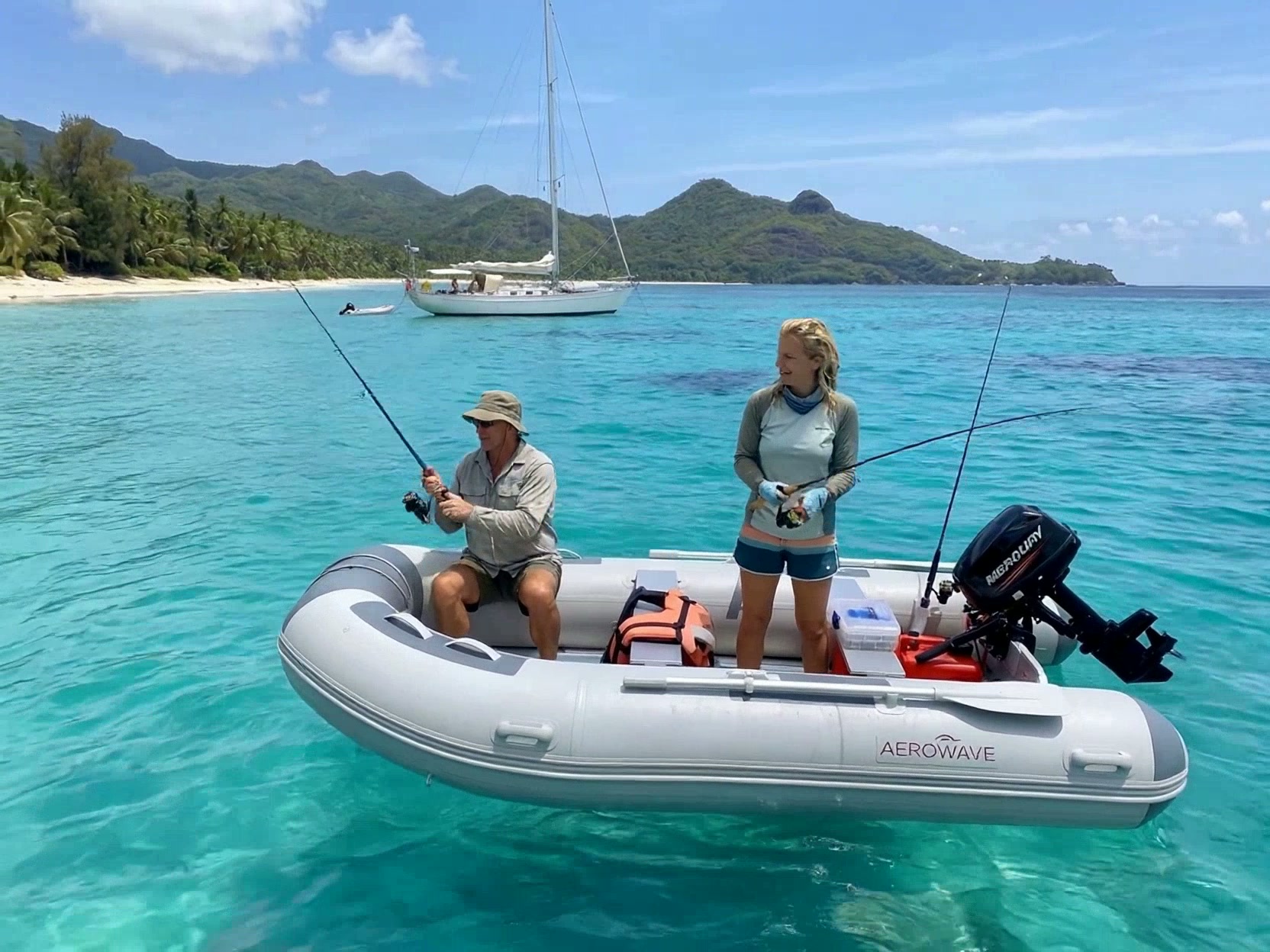
A modern four-stroke outboard on a light inflatable hull is extremely economical compared with a fibreglass runabout of the same length, simply because there is far less weight to push.
Typical fuel burn by horsepower
| Outboard | Gentle cruise | Fast cruise | Wide open |
|---|---|---|---|
| 9.9HP four-stroke | 1.2–1.8 L/h | 2.5–3.2 L/h | 4.0–4.5 L/h |
| 15HP four-stroke | 1.5–2.2 L/h | 3.2–4.5 L/h | 5.5–6.5 L/h |
| 20HP four-stroke | 1.8–2.5 L/h | 4.0–5.5 L/h | 7.0–8.0 L/h |
These are the figures owners report on 3.3–4.5 m inflatable hulls with two adults aboard on protected water. Load the boat with four people, an esky, an anchor and a full day of gear and you can add roughly 15–20 percent.
Why catamaran hulls sip fuel
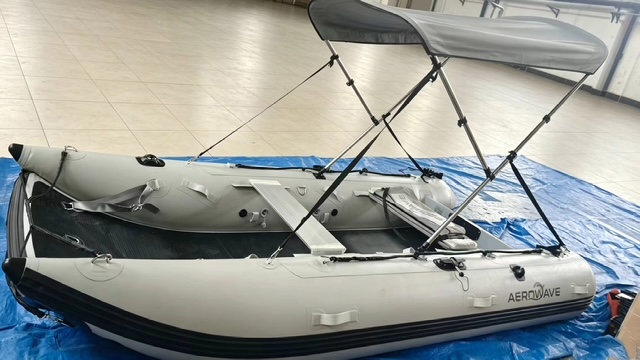
An inflatable catamaran rides on two slender tubes with air between them. There is less wetted surface dragging through the water than a deep-V of the same length, so the boat planes earlier and holds plane at lower revs. Planing at 4,000 rpm instead of 5,200 rpm is where the real saving lives — fuel burn rises roughly with the cube of engine speed, not in a straight line.
Working out your real cruising range
Range is simple arithmetic once you know your burn:
Usable fuel ÷ litres per hour × cruise speed = range
Worked example: 12 L tank, 15HP, 4.0 m catamaran
- Usable fuel: 12 L, minus a one-third reserve = 8 L
- Fast cruise burn: 3.5 L/h
- Time on the water: 2.3 hours
- Cruise speed: about 32 km/h
- Realistic range: roughly 70 km
Worked example: 24 L tank, 20HP, four adults
- Usable fuel: 24 L, minus reserve = 16 L
- Loaded fast cruise: 5.0 L/h
- Time on the water: 3.2 hours
- Realistic range: roughly 95–100 km
For most Australian owners — a bay, an estuary, an offshore island run, a day chasing flathead — a 12 L tank is plenty and a 24 L tank is a full weekend.
The one-third rule
Plan on one third out, one third back, one third in reserve. Wind, chop and a running tide change consumption more than throttle position does. A headwind home after a comfortable run out is the single most common reason people arrive back on fumes.
What actually kills your fuel range
Under-inflated tubes
This is the big one. Tubes at 6 PSI instead of 8–10 PSI let the hull flex, the boat pushes water instead of skimming it, and burn can climb 20–30 percent. Check pressure at the ramp, not at home in the driveway — cold air in the morning reads lower than the same air at midday.
Wrong propeller pitch
If the motor cannot reach its rated rpm range at full throttle, it is over-propped and labouring. If it screams past redline, it is under-propped. Either way you are paying in fuel. A prop change is the cheapest performance upgrade on any inflatable.
Weight in the wrong place
Inflatables are sensitive to trim. Gear stacked in the bow makes the boat plough; everything at the transom makes it porpoise. Spread the load and the same engine burns less.
Dirty fuel and stale petrol
Ethanol-blended fuel left over winter absorbs water and gums carburettors. Use fresh 95 RON, add a stabiliser if the boat sits, and drain the line before long storage.
Choosing a tank size
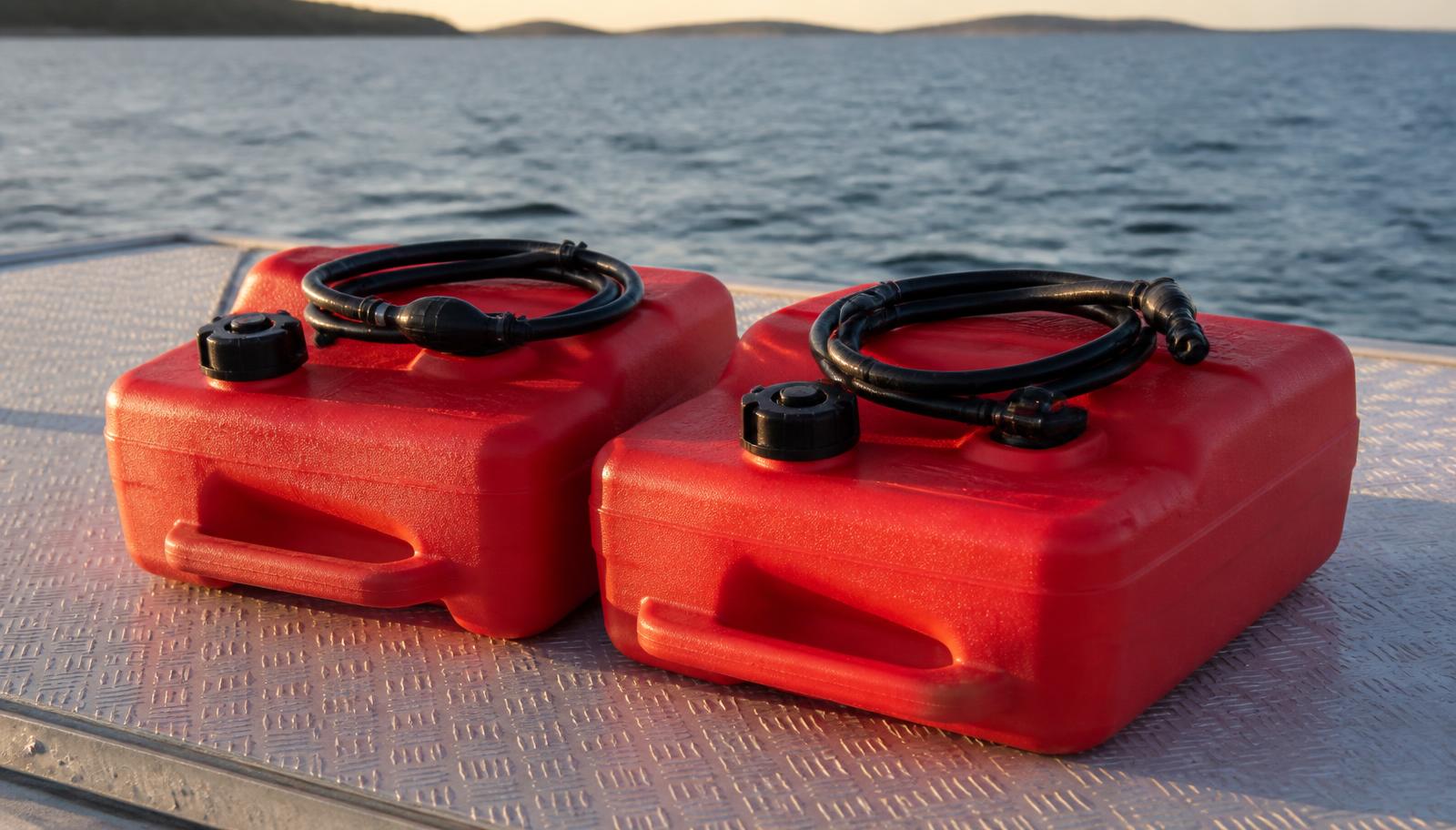
- 6 L integrated tank — tender work, short crossings, calm harbour days.
- 12 L portable tank — the sweet spot for a day's fishing on a 3.3–4.0 m boat.
- 24 L portable tank — long-range fishing, island hops, boat camping.
Two 12 L tanks beat one 24 L tank for handling: they are easier to carry down a beach, easier to stow, and you always have a spare.
Which Aerowave suits your range needs?
- Aerowave AeroCat 330 — lightest package, happiest with a 9.9HP and a 12 L tank.
- Aerowave Viper 365 Open Bow — the all-rounder; 15HP and 12 L covers almost any day.
- Aerowave Viper 400 Sovereign — four adults, 20HP, twin 12 L tanks for genuine all-weekend range.
Every boat is built on 1500 GSM / 1.2 mm VALMEX® Heavy Plus or 1100 GSM / 0.9 mm VALMEX® fabric with welded seams, and every boat page includes a finance calculator so you can see the fortnightly cost before you commit.
Not sure what suits your water? Call +61 2 4335 1603 or take the two-minute Weekend-Proof Score™ and we will tell you honestly which size fits.
Related reading
Weekend-Proof Score 17 questions · about 2 minutes
Will the boat you're about to buy survive an Australian summer?
Seventeen straight questions about where you'll use it, what you'll ask of it and the boat you're weighing up. You get a score out of 100, the exact weak points in your plan, and the one boat that genuinely fits.
Free · your result shows on screen · no email required
So which one is yours?
Pick how you'll actually use it and we'll take you straight to the right hull.
I want to fish it
Open bow, rod holders, deck space you can stand and cast from.
Viper Sport 400Family, diving and the beach
3.8 m Series 3 catamaran — low bow to climb back in wearing fins or a tank.
WaveRunner 380Tender / one-person launch
3.3 m hard-floor boat that packs into a bag and still takes a beach landing.
Viper 330Shop gear featured in this guide
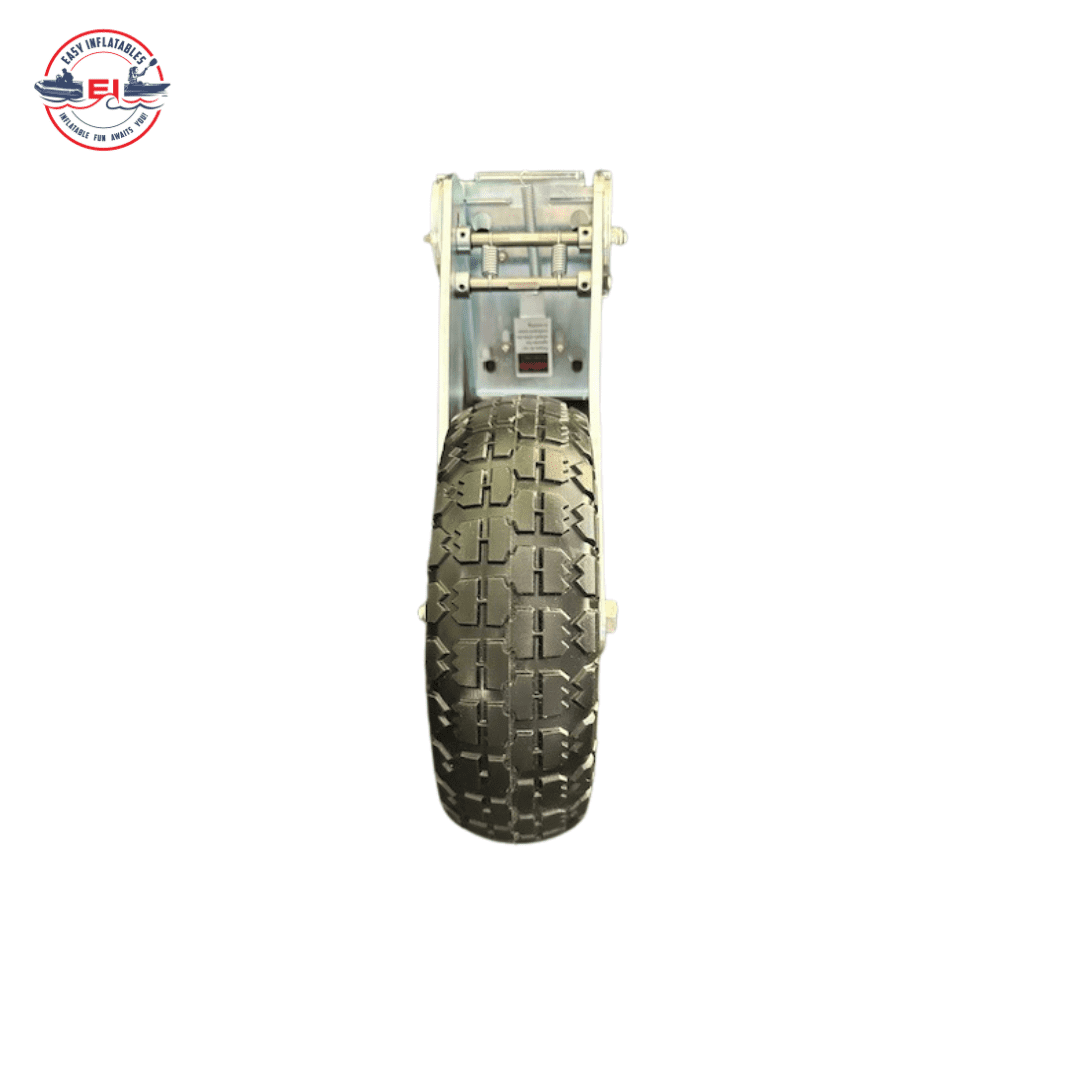
LockPro Plus Inflatable Boat Wheel Set
The LockPro Plus Inflatable Boat Wheel Set offers a premium solution for easy and safe loading of inflatable boats, featuring an Italian stainless steel quick-lock system.
Free freight to United States · local taxes payable on arrival
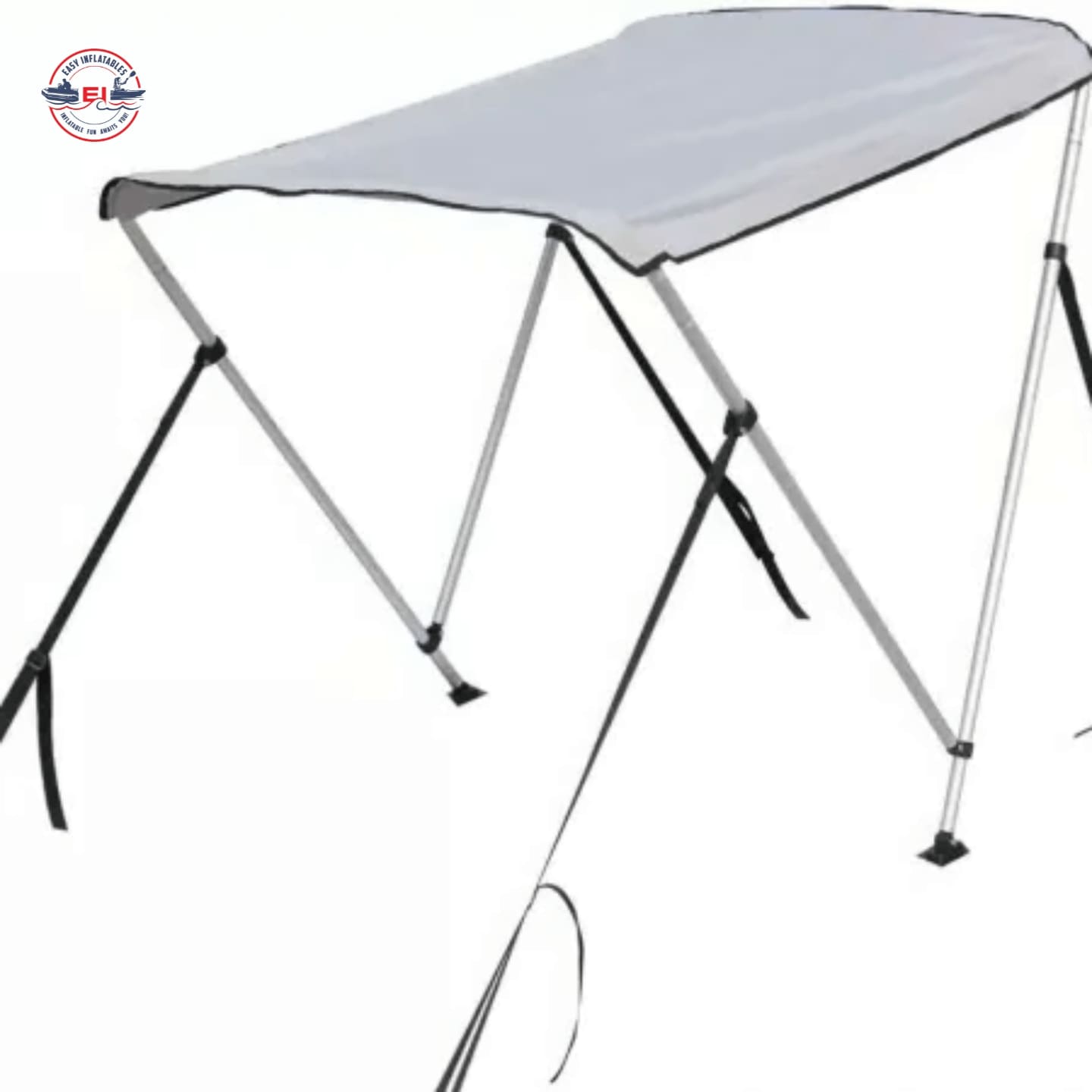
Aerowave Inflatable Boat Bimini
Lightweight inflatable UV sun-shade canopy for inflatable boats, SIBs and catamarans. Now available in two colours — Light Grey and Black. Fast setup, compact storage and premium UV protection for Australian boating.
Free freight to United States · local taxes payable on arrival
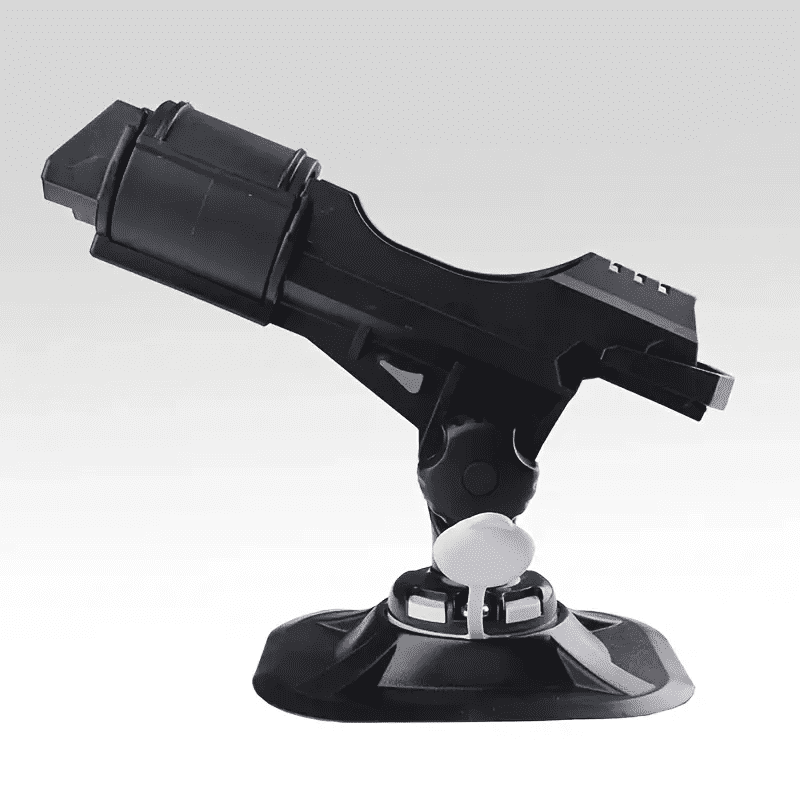
Inflatable Boat Rod Holder Mount
Factory-installed fishing mount designed for Easy Inflatables boats, providing a clean and secure installation for serious anglers.
Free freight to United States · local taxes payable on arrival
Not sure which suits you? Talk to a real boat owner.
Before you spend a cent
Buying from Australia, delivered to United States
You have never heard of us, we are on the other side of the world, and the internet is full of fakes. Fair enough. Here is everything you would need to check us out, in one place — no forms, no chat bot.
Australian designed business
Easy Inflatables, Avoca Beach NSW 2251. ABN 96 856 548 613. International orders ship from our Hong Kong hub.
222 owner reviews, 4.8 average
Read them in full, good and bad, on our reviews page.
CE certified, 7-year hull warranty
ISO 6185-3 and EU Directive 2013/53/EU. Warranty honoured worldwide.
Tracked, insured, door to door
FREE freight to United States · local tax/duty on arrival.
- Who am I actually buying from?
- Easy Inflatables, Avoca Beach NSW 2251, Australia. ABN 96 856 548 613. Sean is the owner and skipper, Gary Stewart handles sales on +61 2 4335 1603, Karen Matthews handles email. The boats are Australian designed; international orders ship from our Hong Kong dispatch hub so your landed price stays competitive. Phone us before you pay a cent — a real person answers.
- Is this really an Australian product?
- Yes — Australian designed and engineered on the NSW Central Coast. Manufacturing is done offshore to our spec, and international orders ship direct from our Hong Kong dispatch hub. If we routed every boat through Australia first, the freight alone would roughly double or triple your cost for the same hull.
- What do I pay, and what is not included?
- The delivery and import terms depend on your country. EU, UK, New Zealand and named Asia/Pacific lanes include duty and tax; US freight is free but US buyers pay import charges on arrival. Other destinations show their terms before payment.
- How do I pay safely?
- Card through Stripe (Visa, Mastercard, Amex, Apple Pay, Google Pay) or bank transfer. Card payments carry your bank's own dispute protection. We never ask for crypto, gift cards or payment to a personal account.
- What if it arrives damaged?
- Every boat ships fully tracked and insured door to door. Photograph the carton and the boat on arrival and email us — transit damage is claimed and replaced through us, not left with you and the courier.
- Is the warranty real outside Australia?
- Yes. The 7-year hull warranty on 1.2 mm VALMEX Heavy Plus and Orca Hypalon hulls applies wherever you are. Replacement parts are held in Australia and at our overseas hub and go out by express courier to your door.
- Is the boat actually certified?
- All Aerowave catamarans are CE certified to ISO 6185-3 and EU Directive 2013/53/EU. Certification paperwork is supplied with the boat — ask and we will send it before you order.
Frequently asked questions
- How much fuel does a 15HP outboard use per hour?
- On a light inflatable hull, roughly 1.5–2.2 L/h at a gentle cruise, 3.2–4.5 L/h at a fast cruise and 5.5–6.5 L/h at wide open throttle with two adults aboard.
- How far can an inflatable boat go on 12 litres of fuel?
- Allowing a one-third reserve, a 4.0 m inflatable catamaran with a 15HP four-stroke will comfortably cover about 70 km of mixed cruising on a 12 L tank.
- Are inflatable catamarans more fuel efficient than monohulls?
- Generally yes. Twin slender tubes create less wetted surface, so the hull planes earlier and holds plane at lower revs, which is where most of the fuel saving comes from.
- What tank size should I buy for an inflatable boat?
- A 12 L portable tank suits a full day of fishing on a 3.3–4.0 m boat. Choose 24 L, or two 12 L tanks, for boat camping or long island runs.
- Does tube pressure affect fuel consumption?
- Significantly. Tubes 2–3 PSI below the recommended 8–10 PSI let the hull flex and can increase fuel burn by 20–30 percent.
- How much fuel should I keep in reserve?
- Use the one-third rule: one third of the tank out, one third back and one third untouched as reserve for wind, tide and chop.
- Does a four-stroke use less fuel than a two-stroke?
- Yes. A modern four-stroke typically uses 30–40 percent less fuel than an equivalent carburetted two-stroke, and it is far quieter at cruise.
Ready to set sail?
Premium German-fabric inflatable catamarans, built to order and delivered to your door. Talk to our team or browse the fleet.
Like this guide? Get the next one in your inbox.
Owner-tested tips, gear deep-dives and Aussie boating know-how — no spam.