
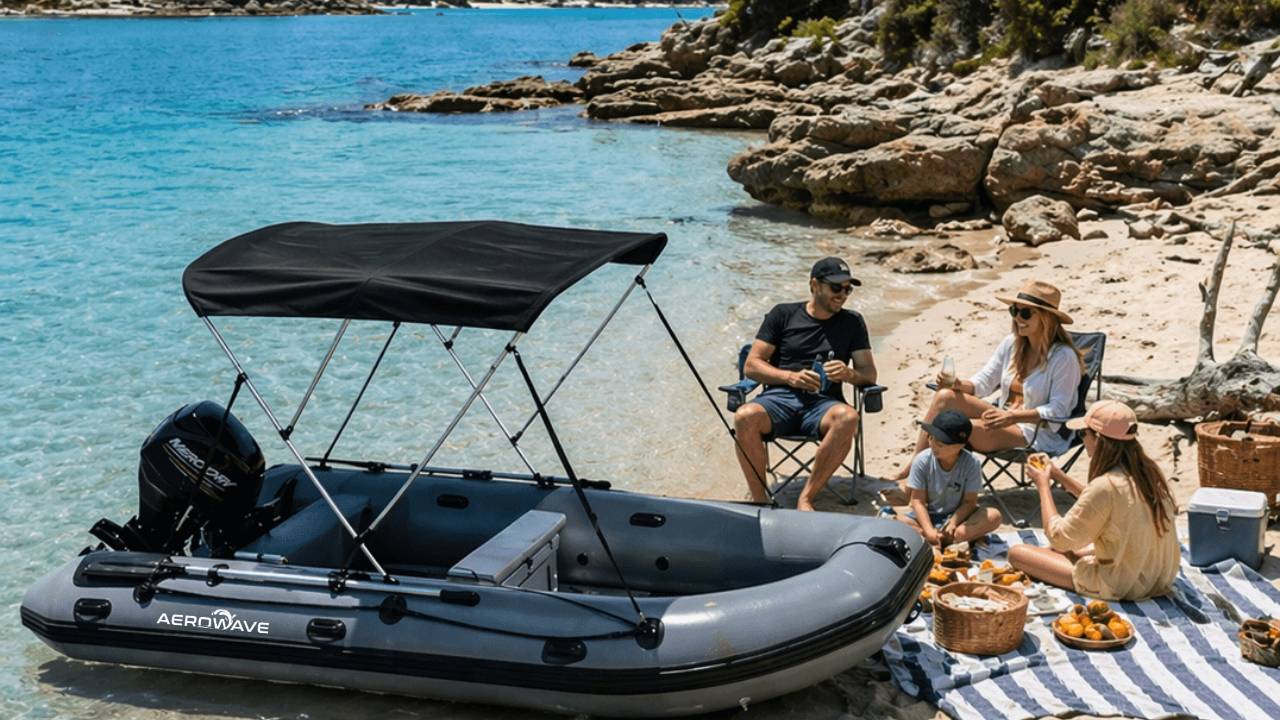
Inflatable Boat vs Fibreglass Boat: Which Actually Suits Australian Boating?
A straight comparison of inflatable catamarans and fibreglass runabouts for Australian owners — cost, storage, launching, maintenance, resale and real-world running costs in 2026.
Our recommendation
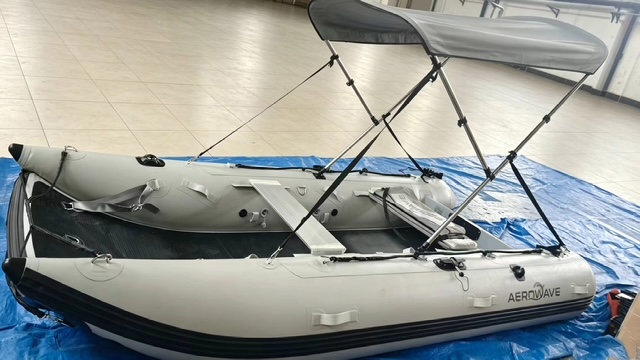
Aerowave Viper 400 Sovereign
Length
4.0m / 13'1"
Beam
1.80m / 71"
Tube Diameter
51cm
Bare Boat Weight (without Bimini & wheel kit)
66kg / 145lbs
Short answer: a fibreglass runabout wins on offshore ride quality and fit-out. An inflatable catamaran wins on everything that decides whether the boat actually gets used — storage, launching, running cost and where you can beach it.
Most Australians buying their first "proper" boat compare a 4–5 m fibreglass runabout against an inflatable. They are very different ownership experiences, and the honest answer depends on where you launch and where the boat lives between trips.
The five differences that actually matter
1. Where the boat lives
A fibreglass runabout needs a registered trailer and a driveway, carport or paid storage. An inflatable catamaran deflates into two bags and lives in a garage corner, a shed or the back of a wagon. No trailer registration, no marina berth, no monthly storage bill.
2. Where you can launch
Fibreglass needs a ramp. That means queues, ramp fees, tide windows and reversing a trailer. An inflatable launches off sand, grass, a riverbank or a ramp — two people can walk a Viper 330 down a beach on wheels.
3. What it costs to own
Purchase price is only part of it. Over five years a fibreglass rig adds trailer rego, trailer servicing, bearings, tyres, antifoul or wash-down, and higher insurance. Our full breakdown is in Tinny vs Inflatable Boat: the true cost of ownership — the same maths applies to fibreglass, only steeper.
4. Ride and dryness
This is where fibreglass earns its money. In a 1.5 m short chop offshore, a deep-vee fibreglass hull is more comfortable than any inflatable. Inside the bar, in estuaries, on lakes and in coastal bays, an inflatable catamaran is drier and far more stable at rest because the load sits between two buoyant hulls.
5. Damage and repair
A fibreglass hull cracks and gelcoat chips; repairs go to a shop. A welded VALMEX hull takes an oyster rack scrape that would gouge gelcoat, and a puncture is a field repair with glue and patch. Our hulls use 1.2 mm VALMEX Heavy Plus (1500 GSM) with a 10–12 year fabric service life.
Head to head
| Inflatable catamaran | Fibreglass runabout | |
|---|---|---|
| Storage | Bags in a garage | Trailer + driveway/storage |
| Launching | Beach, bank or ramp | Ramp only |
| Trailer rego | Not required | Required |
| Stability at rest | Excellent (twin hull) | Moderate |
| Offshore chop | Good inshore/coastal | Best |
| Typical AU price | From A$4,680 | A$25,000+ |
| Delivery | Free, freight included | Pickup or transport cost |
Which boat suits which owner
Buy fibreglass if
You fish 20+ nm offshore most weekends, you already have somewhere to park a trailer, and you want a permanent fit-out with a hard-mounted sounder, live well and rod lockers.
Buy an inflatable catamaran if
You launch off beaches or banks, you have no room for a trailer, you want to fish, dive, crab or run the family without a ramp queue, and you want the whole thing to fit in a garage in ten minutes.
The boats we would put against a fibreglass runabout
- Aerowave WaveRunner 380 Series 3 — A$4,680. Full package with Bimini, pump and wheel kit. The best value entry into a 3.8 m catamaran.
- Aerowave Viper 365 Open Bow — A$5,595. Open bow for casting, crab pots and dive gear.
- Aerowave Viper 400 Sovereign — A$6,970. Our closest answer to a small fibreglass runabout: 4 m, huge deck, offshore-capable inshore and coastal.
All boats include free delivery Australia-wide and a 7-year hull warranty. Compare the range side by side on the boats page, or read the 2026 buying guide.
Running costs, five years
A 4 m inflatable with a 15 hp four-stroke burns a fraction of the fuel of a 5 m fibreglass hull with a 90 hp, needs no trailer maintenance, and carries no ramp or storage fees. For most weekend owners that difference is thousands of dollars a year — before you count the trips you actually take because the boat is easy to launch.
Our honest position
We build inflatable catamarans, so of course we are biased. But we tell people the truth: if your boating is genuinely offshore in rough water every weekend, buy fibreglass. If your boating is estuaries, bays, lakes, islands, crabbing, diving and family days on the water — the inflatable will get used far more often, cost far less to own, and never sit unused because it was too hard to hitch up.
Not sure which size? Read the size guide or talk to us before you buy.
Frequently asked questions
- Is an inflatable boat as safe as a fibreglass boat?
- Yes for its intended use. Our catamarans are CE certified to ISO 6185-3 and EU Directive 2013/53/EU, and multiple sealed air chambers mean the boat stays afloat even if one chamber is damaged — something a holed fibreglass hull cannot do.
- How long does an inflatable boat last compared to fibreglass?
- Premium VALMEX fabric has a 10–12 year service life in Australian conditions. Fibreglass lasts longer as a shell, but requires gelcoat, trailer and antifoul maintenance the whole time.
- Can an inflatable catamaran handle offshore conditions?
- Coastal and inshore offshore work, yes — within the CE design category and sensible conditions. For sustained rough offshore water 20+ nm out, a deep-vee fibreglass hull is more comfortable.
- Do I need a trailer for an inflatable boat?
- No. The boat deflates into bags and can be launched off a beach or bank with a wheel kit. Many owners never register a trailer at all.
- How much cheaper is an inflatable boat to own?
- Purchase price starts at A$4,680 versus A$25,000+ for a comparable fibreglass rig, and you avoid trailer registration, trailer servicing, ramp fees and storage costs.
- Do you need a boat licence for an inflatable boat in Australia?
- It depends on your state and engine power. See our state-by-state guide at /blog/do-you-need-a-boat-licence-for-an-inflatable-boat-australia.
- Is delivery included?
- Yes. Every boat ships with freight included Australia-wide, and duty-paid delivery to New Zealand and the United Kingdom.
Finance this boat from $25/week
Estimate only — powered by Australian Motorcycle & Marine Finance (AMMF).
Deposit (AUD)
$565
10% of price
Term
5 years
60 monthly repayments
Comparison rate
9.95% p.a.
Subject to AMMF approval
Weekly
$25
Monthly
$108
Amount financed
$5,080
Indicative only. Actual repayments depend on your AMMF credit assessment, term, fees and the balloon you select. Talk to AMMF for a personalised quote on Aerowave Viper 400 Sovereign.
Like this guide? Get the next one in your inbox.
Owner-tested tips and Aussie boating know-how — no spam.
Ready when you are
Build your Viper 400 Sovereign in under 3 minutes.
1500 GSM / 1.2 mm VALMEX® hull. Five-year limited hull warranty plus two years of extended limited structural hull cover, subject to conditions. Free freight to United States · local taxes payable on arrival.
delivered to your door
See it for yourself
Real boats. Real owners. Real people behind them.
Plenty of what you read online these days is generated. Check us out properly — the factory, the reviews and the owners are all one click away. Why we use AI, and how to check we’re real
How our boats are built
Walk the production line: thermo-welded seams, 1.2 mm VALMEX Heavy Plus hulls, over-pressure relief valves on every chamber.
See the buildGoogle Maps reviews
Real Australian owners, five stars, published on our Google Business Profile with the map — read them there, not just on our own site.
Open Google Maps reviewsOwner stories
Boats in use — offshore, on rivers, on rescue duty. Photos and words from the people who actually own them.
Read owner stories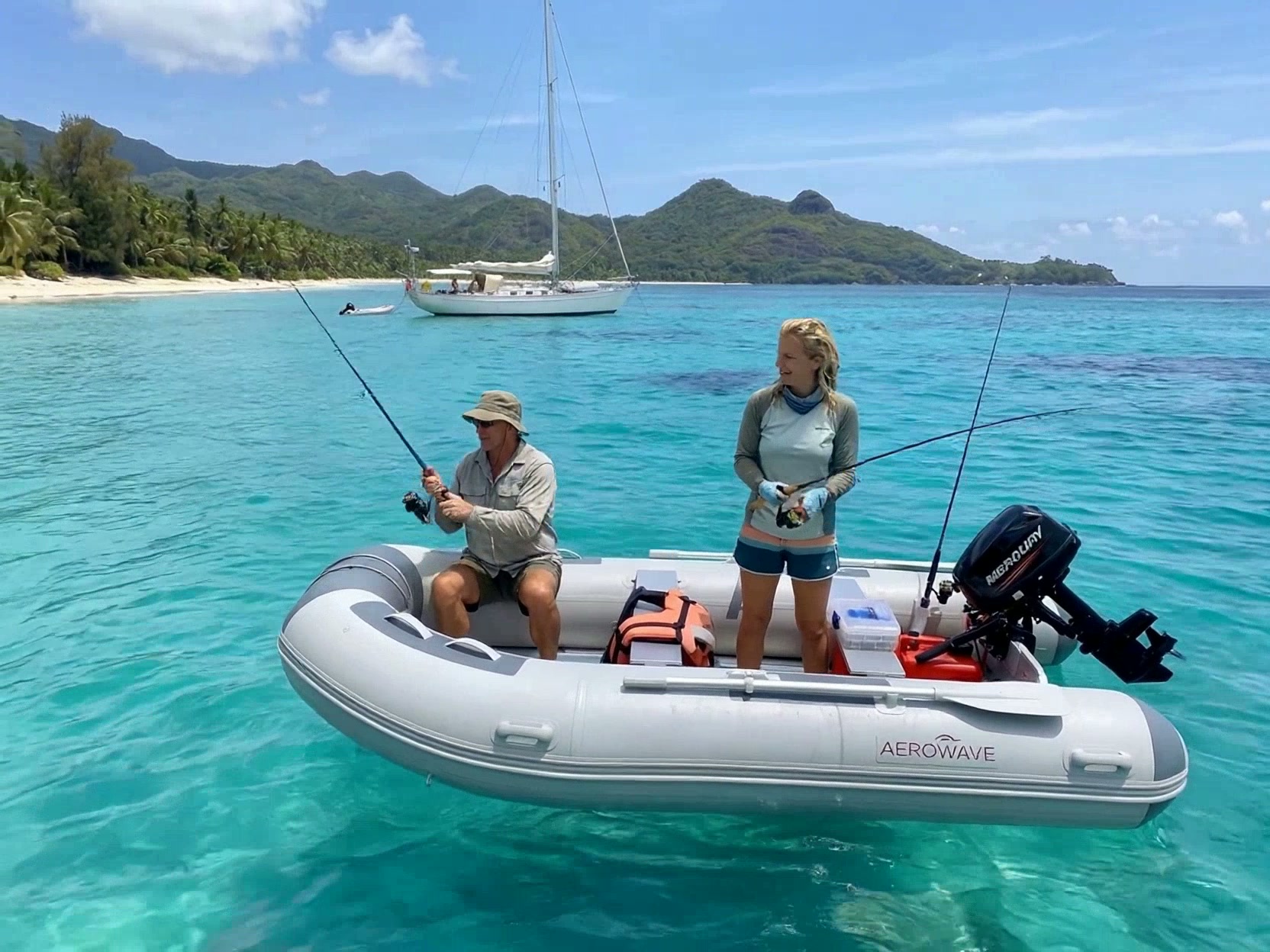
Aerowave Viper 400 Sovereign
US$3,167 USD · delivered to your door