A Practical Guide to STA-BIL Fuel Stabiliser for Inflatable Boats in 2026
Using a quality fuel stabiliser like STA BIL is one of the smartest, simplest things you can do to protect your outboard motor. It's your first line of defence against stale fuel, stopping degradation in its tracks and p…
At a glance
Using a quality fuel stabiliser like STA BIL is one of the smartest, simplest things you can do to protect your outboard motor. It's your first line of defence against stale fuel, stopping degradation in its tracks and p…
- Why Stale Fuel Is an Inflatable Boater’s Worst Enemy
- The Problem with Degraded Fuel
- The Australian Context
- Mastering the Mix for Optimal Engine Protection
What we'd put you in
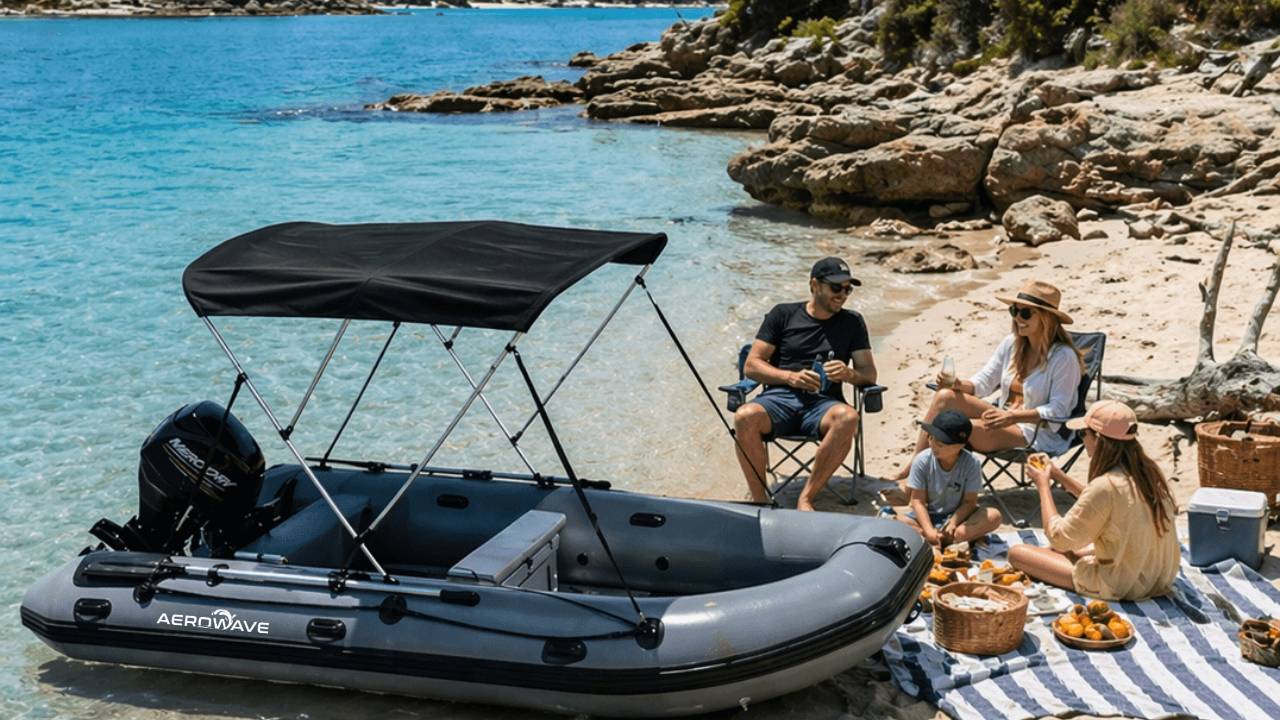
Aerowave Viper 400 Sovereign
Our best-selling boat: 4.0 m, 1.2 mm VALMEX hull, 7-year hull warranty.
US$3,167 USD
Delivered to your door, today's rate
- Free freight to United States · local taxes payable on arrival
- 7-year hull warranty
🇺🇸 Shipping to United States · landed price quoted in writing
Yes — we ship the Aerowave Viper 400 Sovereign to United States. Here's the landed price.
Our best-selling boat: 4.0 m, 1.2 mm VALMEX hull, 7-year hull warranty.
Aerowave Viper 400 Sovereign
- Boat package (export price)
- US$3,726
- 15% tariff relief credit
- − US$559
- Express air freight to United States
- Included
- Import duty, taxes & customs clearance
- Payable on arrival
- Estimated landed, USD
- US$3,167
Indicative, converted at today's rate, before local duty and tax on arrival. Ask below and we'll put a fixed figure in writing, valid 30 days.
- 7-year hull warranty
- 1500 GSM / 1.2 mm VALMEX® Heavy Plus hull
- CE certified to ISO 6185-3 and EU Directive 2013/53/EU
- Door-to-door, tracked the whole way
Your price, delivered to your door — freight included.
We email the full PDF quote (spec, freight, finance, WavePay) to your inbox in under 60 seconds. No spam — one quote, one follow-up.
See it for yourself
Real boats. Real owners. Real people behind them.
Plenty of what you read online these days is generated. Check us out properly — the factory, the reviews and the owners are all one click away. Why we use AI, and how to check we’re real
How our boats are built
Walk the production line: thermo-welded seams, 1.2 mm VALMEX Heavy Plus hulls, over-pressure relief valves on every chamber.
See the buildGoogle Maps reviews
Real Australian owners, five stars, published on our Google Business Profile with the map — read them there, not just on our own site.
Open Google Maps reviewsOwner stories
Boats in use — offshore, on rivers, on rescue duty. Photos and words from the people who actually own them.
Read owner storiesUsing a quality fuel stabiliser like STA-BIL is one of the smartest, simplest things you can do to protect your outboard motor. It's your first line of defence against stale fuel, stopping degradation in its tracks and preventing the gum and varnish that can cripple an engine. Think of it as cheap insurance for reliable starts, every single time.
Why Stale Fuel Is an Inflatable Boater’s Worst Enemy
There’s nothing worse than having a perfect day on the water cut short by an outboard that coughs, splutters, and dies. For owners of inflatable boats—from a compact Aerowave tender to a bigger fishing rig with a Hidea outboard—this all-too-common frustration usually points back to one culprit: stale fuel.
Modern Aussie petrol, especially the common E10 blend, goes off surprisingly fast. The ethanol in the fuel is hygroscopic, which is a fancy way of saying it loves to suck moisture right out of the air. This kicks off a process called phase separation, where water literally drops out of the petrol and settles at the bottom of your tank, just waiting to get sucked into your engine.
The Problem with Degraded Fuel
When fuel goes bad, it doesn't just lose its punch. It triggers a whole chain reaction of problems that are a real headache for any boatie. The most common issues we see are:
- Gum and Varnish Formation: As petrol breaks down, it leaves behind sticky, tar-like gunk that clogs the tiny, precise passages in your carburettor and fuel injectors.
- Fuel Line Blockages: Those same sticky deposits can choke off your entire outboard motor fuel line, effectively starving the engine.
- Corrosion: Water sitting in the fuel system is a recipe for rust and corrosion, eating away at critical metal parts inside your outboard.
A motor that splutters and struggles, or just plain refuses to start after a few months in storage? That’s the classic calling card of fuel trouble. For inflatable boat owners who count on portability and a quick getaway, an unreliable engine defeats the whole purpose.
The Australian Context
This isn't just a minor annoyance; it's a massive, and often expensive, issue right across the country. On the Aussie boating scene, fuel stability is a total game-changer. The market for fuel stabilisers in Australia hit $8.419 million in sales revenue back in 2023, and that number is only growing.
With ethanol-blended E10 fuel now standard at over 98% of service stations, the problem is widespread. This fuel can degrade rapidly, with gum and varnish clogging carburettors in as many as 35% of motors left in storage each year. A quality product like STA-BIL acts as essential insurance against these headaches before they even start. You can dive deeper into these market trends and how they affect boaters in this detailed report.
Mastering the Mix for Optimal Engine Protection
Getting the most out of your STA-BIL fuel stabiliser isn't about guesswork—it's about knowing exactly how much to use and when. Whether you're just keeping the fuel fresh between weekend trips or prepping your outboard for its long winter nap, getting the mix right is the key to protecting your engine.
A precise ratio keeps your fuel potent and ready to go, shielding your outboard's delicate components from the damage caused by stale fuel. It’s the secret to confident, one-pull starts every time. To really get a handle on how this works, it's worth reading up on What Are Fuel Additives And How Do They Work.
Bad fuel is a boater's worst enemy, leading to everything from water contamination to serious engine problems.
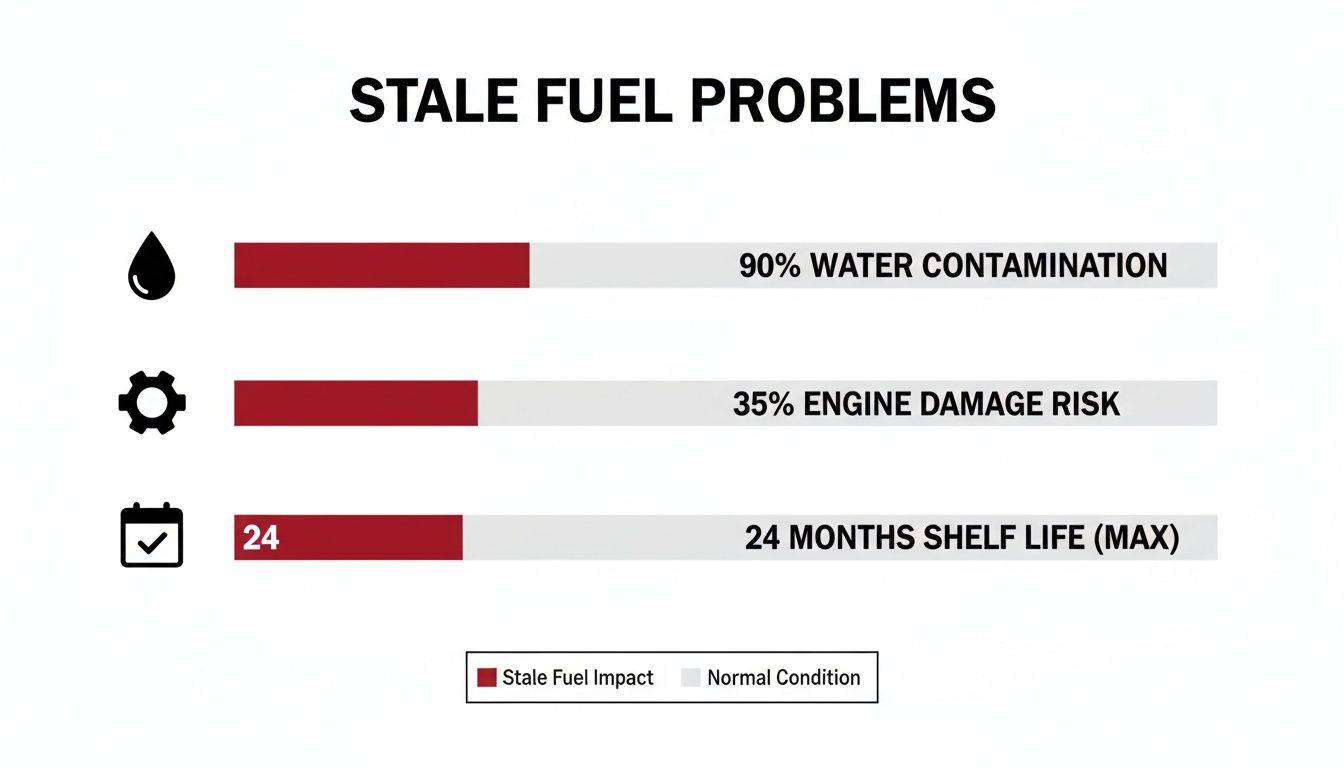
The data shows just how critical treatment is. STA-BIL is engineered to fight these issues, preventing phase separation by a massive 90% and keeping fuel fresh for up to 24 months.
Calculating the Perfect Ratio
Precision is everything when it comes to fuel treatment. While the bottle gives you the basic instructions, let's break that down into real-world scenarios for your portable tank. If you're running a small Aerowave tender with a 12L tank, your needs will be different from someone with a larger Hidea outboard on a 24L tank.
Here are the two golden rules to remember:
- Short-Term Storage (Up to 3 months): This is your go-to for regular use, like trips out on the water every few weeks. A standard dose is all you need to keep today's ethanol-blended fuel from going off.
- Long-Term Storage (Up to 24 months): This is for the off-season. When you're packing the boat away for winter, a double dose gives you maximum protection against oxidation, gumming, and moisture build-up.
Think of it this way: using the right amount of stabiliser is like giving your engine a tailored defence. An incorrect mix leaves it vulnerable, completely defeating the purpose of treating the fuel in the first place.
To make things even easier, here's a quick-reference chart. It takes the guesswork out of mixing for the most common portable tank sizes.
STA-BIL Fuel Stabiliser Dosage Quick Reference
Use this guide to mix the correct amount of STA-BIL for common fuel quantities, covering both short-term use and long-term storage.
| Fuel Volume (Litres) | Short-Term Storage (Dosage) | Long-Term Storage (Dosage) |
|---|---|---|
| 10L | 15 ml | 30 ml |
| 12L | 18 ml | 36 ml |
| 20L | 30 ml | 60 ml |
| 24L | 36 ml | 72 ml |
| 50L | 75 ml | 150 ml |
Keep this chart handy, and you'll have perfectly stabilised fuel every single time, ensuring your motor is ready for action when you are. If you’re also thinking about power, be sure to check out our guide on choosing the right engine for your inflatable boat to make sure your setup is perfectly matched to your adventures.
The Right Way to Add and Circulate Stabiliser
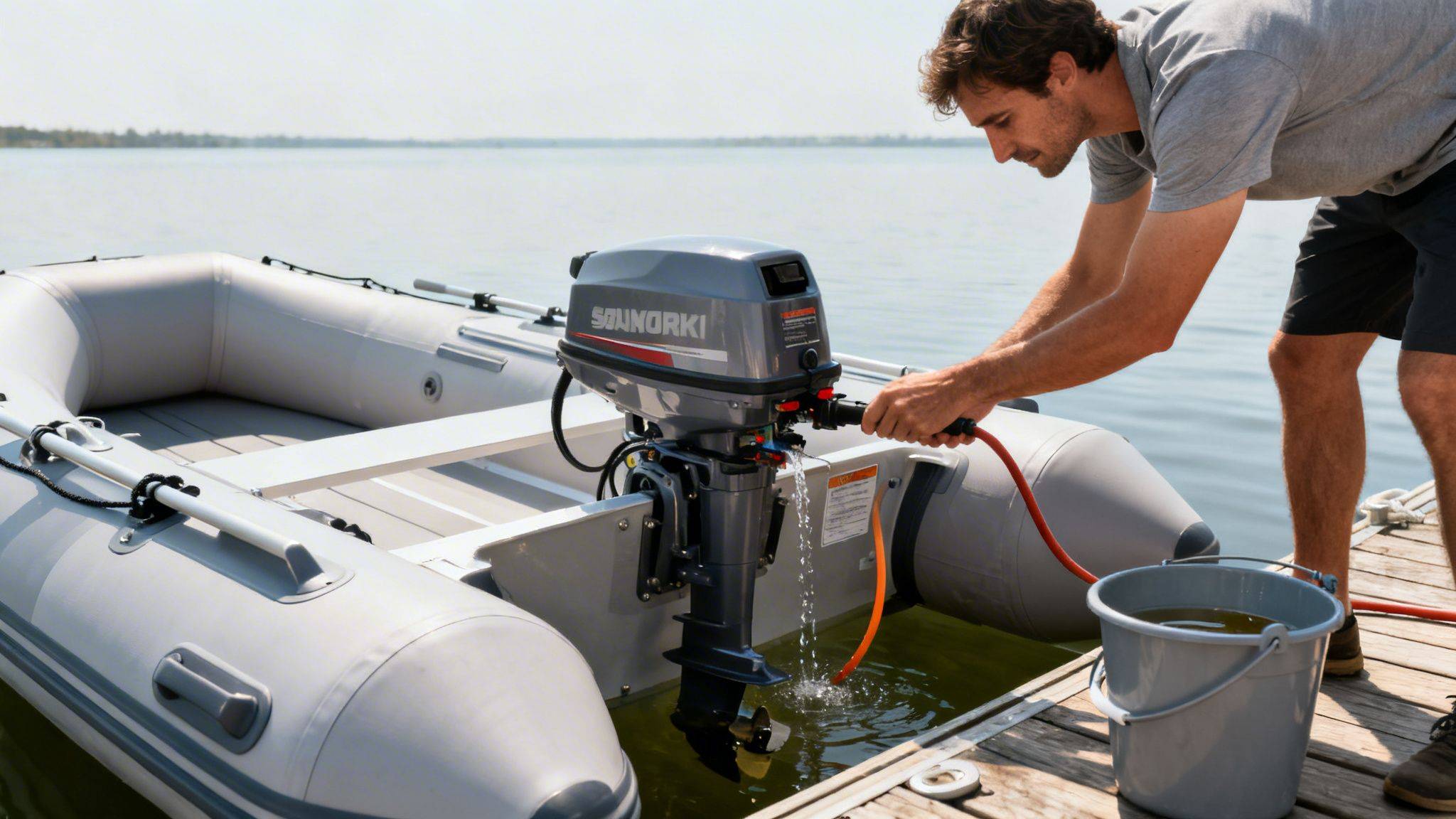
Just tipping some STA-BIL fuel stabiliser into your tank isn't enough to do the job properly. To truly protect your outboard, that treated fuel needs to get everywhere inside the motor. It’s an easy step, but one that’s often missed, leaving vital parts like the carburettor completely exposed.
The real secret is when you add the stabiliser. A lot of boaters will fill their tank first, then pour in the stabiliser afterwards. This is basically just guesswork, hoping a bit of sloshing on the way to the ramp mixes it all together.
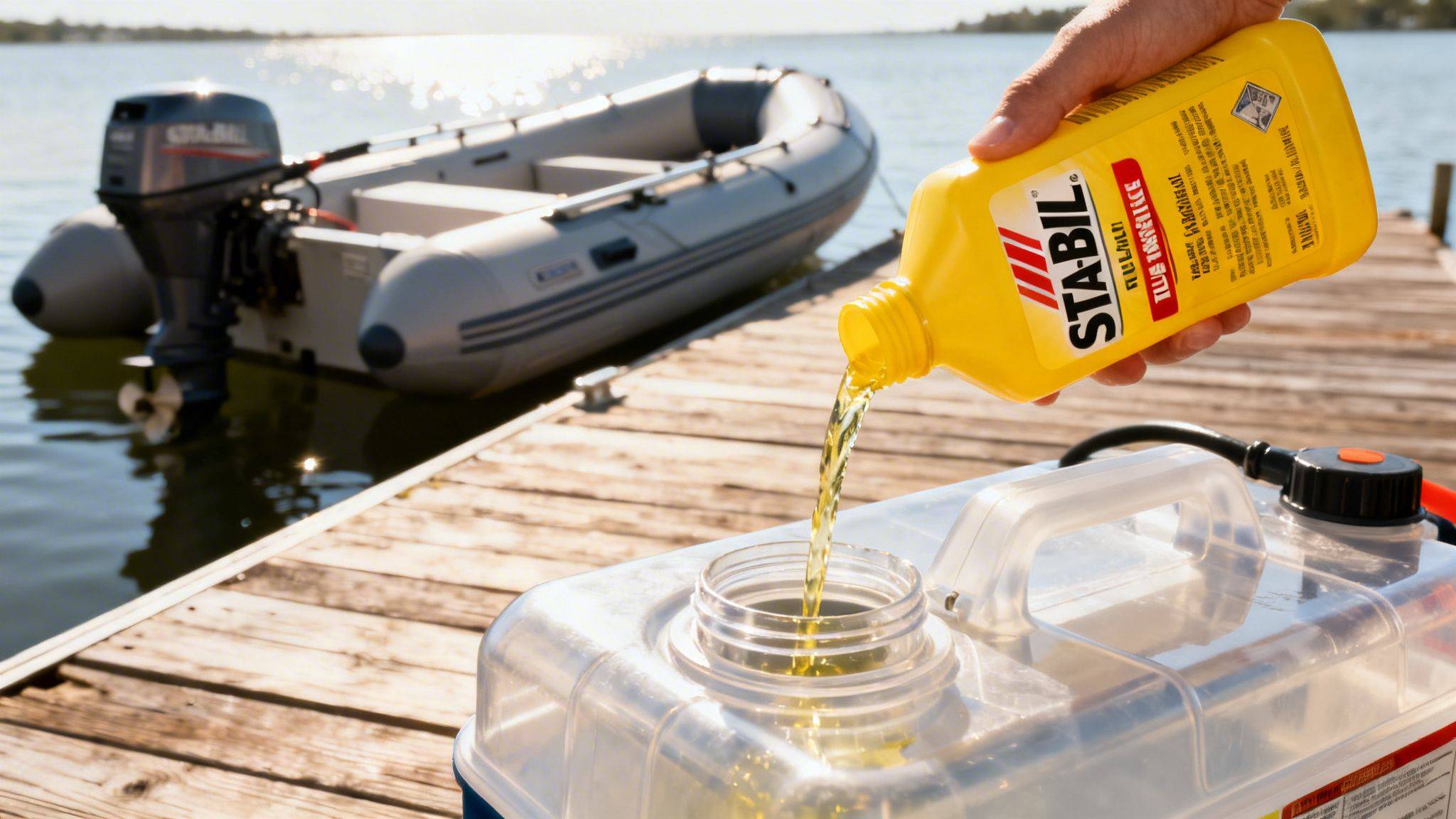
For a perfect, even blend, always add your STA-BIL before you put the petrol in. Pour the measured dose straight into your almost-empty portable fuel tank. As you fill it up with fresh fuel, the powerful flow does all the mixing for you, ensuring every single drop is treated.
Circulating the Treated Fuel
Once your tank is filled and the stabiliser is mixed in, you’ve hit the most important step: running the engine. This isn't just a suggestion—it's absolutely essential for flushing out the old, untreated fuel and filling the entire system with your stabilised mix.
You’ll want to run the outboard for about 5 to 10 minutes. That’s all the time it takes for the good stuff to travel from the tank, through the fuel lines and filter, and right into the carburettor’s float bowl and all its tiny passages. You're basically building a protective shield inside the heart of your motor.
This quick engine run-through is the difference between doing half the job and getting total protection. Without it, the untreated petrol left sitting in your carby is still going to degrade, leaving behind the gum and corrosion you were trying to prevent in the first place.
For inflatable boat owners, getting this done is a piece of cake. You can either do it on the water in the last few minutes of your trip or back at home.
- On the Water: As you’re heading back to the boat ramp, just connect your freshly treated tank and let the motor run for 5-10 minutes before you pull the boat out. Easy.
- At Home: Grab a large bucket of water or a set of "earmuffs" (a motor flusher that connects to your garden hose). This lets you safely run the outboard out of the water, circulating the stabilised fuel and flushing the cooling system at the same time.
Following this simple routine ensures every part of your fuel system is protected, guaranteeing your outboard will be ready to fire up on your next trip. Speaking of fuel systems, it can be really handy to know your way around the different components. Our guide on choosing the right petrol tank for your outboard engine has some great tips on portable tanks.
Tailoring Your Strategy for Short vs Long Term Storage
How you use your inflatable boat will completely change how you should be using a fuel stabiliser. Someone taking the tender out for weekend trips has very different needs to an adventurer packing their "boat-in-a-bag" away for the winter. To get it right, your fuel protection strategy needs to match your boating habits.
For many inflatable boat owners, the boat is a ticket to spontaneous fun. You might use it every other weekend in the warmer months, but then let it sit for a few weeks between adventures. We call this short-term storage, and it’s where modern ethanol-blended petrol can be surprisingly deceptive.
Protecting Your Engine for Short-Term Use
Even in just a few weeks, E10 petrol can start to absorb moisture right out of the air. This process, known as phase separation, is bad news. It’s when water clumps together, separates from the fuel, and sinks to the bottom of your tank, just waiting to get sucked into your engine.
A standard dose of STA-BIL is your best defence here. It acts as a powerful preventative, keeping the fuel fresh and stopping those water molecules from bonding and dropping out. This simple step ensures the petrol you use on your next trip is just as clean and potent as the day you filled the tank. For those quick trips, this is your best bet against the usual culprits of rough idling and hard starts.
For short-term storage, the goal is simple: keep the fuel fresh and stop phase separation before it starts. This protects your engine from the slow, creeping damage caused by ethanol-blended petrol between uses.
Treating your fuel for short-term use is a dead-simple part of a good maintenance routine. Just add the standard dose of STA-BIL to your tank before you fill up, and you’re covered for up to three months. This keeps your engine ready for action whenever you are. You can check out our full range of fuel system gear, including our high-quality portable petrol tanks, to build a bulletproof setup.
A Robust Plan for a Long-Term Lay-up
When the boating season draws to a close, you need a more robust plan. It doesn't matter if you're a yachtie winterising your tender or an adventurer packing away your inflatable catamaran for the off-season—long-term storage demands a tougher approach. The biggest threat here isn't just fuel going stale; it's condensation.
An empty or half-full fuel tank is mostly just air. As temperatures rise and fall, the moisture in that air condenses on the inside walls of the tank, dripping water directly into your fuel system. This is a perfect recipe for corrosion, gunked-up carburettors, and major engine headaches come springtime.
The best practice for long-term storage is a simple three-step process:
- Fill the tank to 95% capacity. This leaves very little air space inside, dramatically reducing how much condensation can form.
- Add a double dose of STA-BIL. This gives you extended protection, keeping the fuel stable for up to 24 months and adding extra corrosion inhibitors to shield your engine's delicate internal parts.
- Run the engine for 5-10 minutes. This is the crucial final step. It circulates the stabiliser-rich fuel through the entire system, making sure the carburettor, fuel pump, and lines are all fully coated and protected.
Following this approach ensures that when it's time to hit the water again, your outboard will fire up reliably, free from the damaging effects of a long winter's rest.
Identifying and Fixing Common Fuel System Issues
We've all been there. You've been meticulous with your outboard care, but after a longer-than-expected break, the motor just sputters, coughs, or refuses to start. A moment of forgetfulness or some bad fuel can be all it takes.
Before you reach for the phone to call a mechanic, let's run through some common fuel system issues you can often diagnose and fix yourself right on the spot.
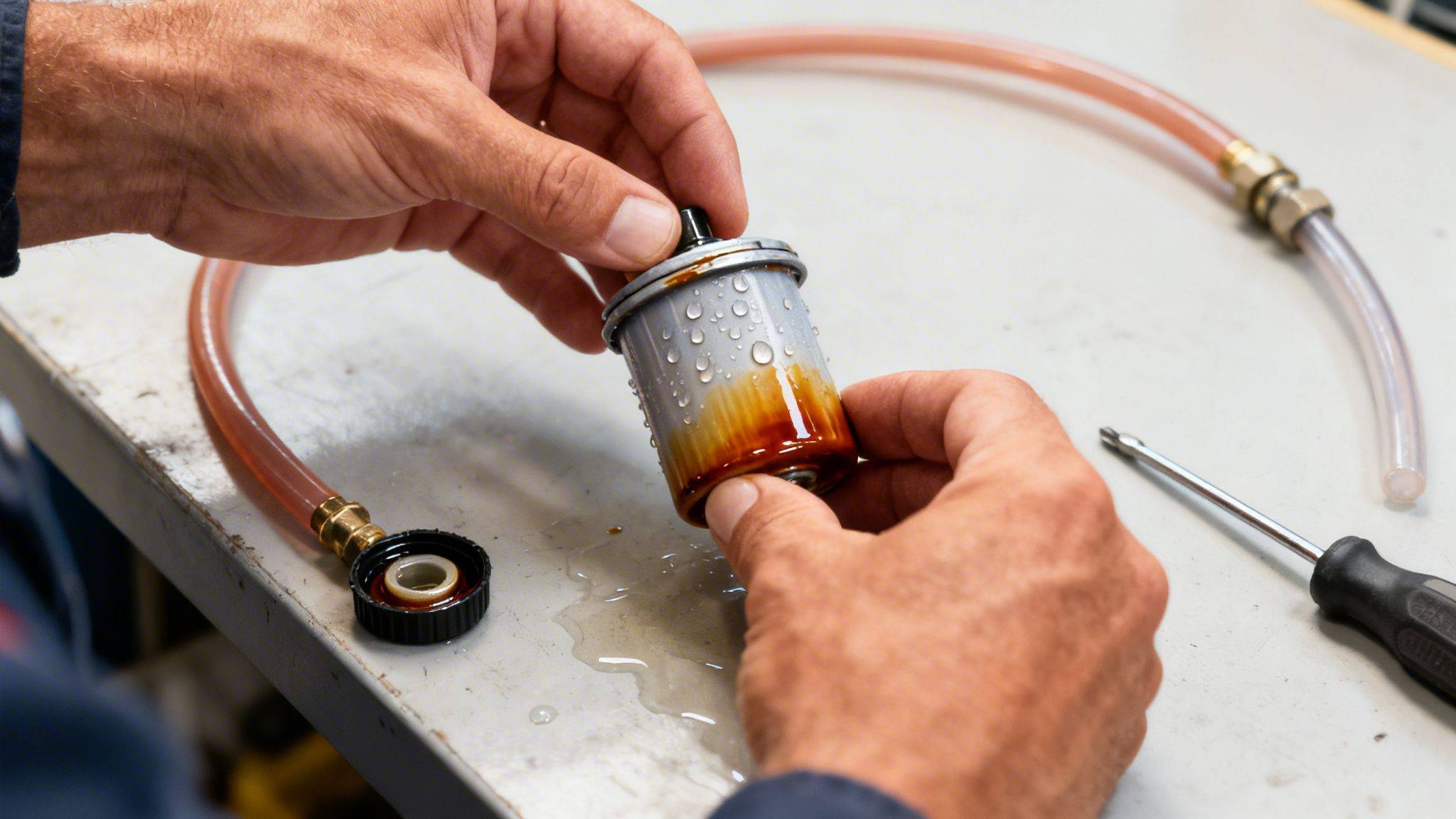
The first signs of stale fuel are usually subtle. Your outboard might become a little harder to start, the idle might sound rougher than usual, or you'll notice it just doesn't have the same punch it used to. These are classic symptoms of degraded fuel starting to clog up carburettor jets.
What if you just forgot to add STA-BIL fuel stabiliser? If the fuel is only a few weeks old, you're likely in the clear. Just add a "shock treatment" dose (usually double the normal amount) to the tank. Then, make sure you run the engine for at least 10-15 minutes. This circulates the treated fuel through the entire system, helping to dissolve any gunk that's started to form.
What to Do When Your Outboard Won’t Start
So, the motor won't start at all after being stored. Don't panic. A few simple checks are all it takes to solve the most common problems, and you won't need a workshop full of specialised tools.
Start with the basics. Check that your fuel line is properly connected at both the tank and the engine. Squeeze the primer bulb—it should feel firm. If it stays soft or won't prime, you’ve likely got an air leak somewhere in the line stopping fuel from being drawn. For a deeper dive, our guide to the outboard engine fuel line has some great visuals on what to look for.
Next, it’s time to give the fuel itself a quick inspection.
- Look for water: Check the clear bowl of your water-separating fuel filter. If you see bubbles, separate layers of liquid, or a cloudy, milky appearance, that’s water contamination.
- Do the sniff test: Fresh petrol has a sharp, distinct chemical smell. Stale fuel smells off—almost sour or varnish-like. It's a dead giveaway that the fuel has gone bad.
If you find a significant amount of water or the fuel has that tell-tale sour smell, your best bet is to safely drain and dispose of it. Don't try to run it through the engine, even with additives. It’s just not worth the risk of serious damage.
Inspecting Your Fuel System Components
Finally, do a quick visual check of the fuel system itself. Follow the fuel lines from the tank to the motor, looking for any cracks, brittleness, or swelling. These components break down over time, especially with exposure to sun and ethanol, creating the perfect entry point for air leaks.
If you’ve run through all these checks and the engine still won't fire, it's a strong sign the stale fuel has already gummed up the carburettor. At this stage, the job is best left to a professional. A proper carburettor clean from a qualified marine mechanic will get you back on the water safely and without causing further issues.
Common Questions About Using STA-BIL Fuel Stabiliser
Getting your head around a new product like STA-BIL fuel stabiliser always brings up a few questions. We see the same queries from inflatable boat owners pop up time and again, so let's get them answered right here.
We want you to feel confident you're doing the right thing for your outboard, so you can stop worrying and get back on the water.
Can I Use STA-BIL with Any Petrol?
You sure can. STA-BIL is designed to work with all grades of unleaded petrol you'll find at an Australian servo, from standard to premium.
In fact, with E10 ethanol-blended fuels becoming more common, using it is more important than ever. Ethanol is notorious for attracting moisture and causing fuel to go stale fast, so a quality stabiliser is your best line of defence.
Remember, the marine environment is uniquely tough on engines. Constant exposure to moisture, salt spray, and humidity accelerates corrosion, demanding a specialised defence that goes beyond what a typical automotive product offers.
Should I Use the Red or Blue STA-BIL Marine Formula?
While the classic red STA-BIL is a great all-rounder for any petrol engine, the blue STA-BIL Marine formula is the only one you should be reaching for. It's purpose-built for the job.
The marine version is packed with extra rust and corrosion inhibitors designed specifically to combat the harsh, moisture-rich environment your outboard lives in. Whether it’s on a small tender or an inflatable catamaran, that blue formula gives you an essential layer of protection against salt and water. For Aussie boaters, it’s a no-brainer.
What Happens If I Accidentally Add Too Much STA-BIL?
It’s a common worry—what if your hand slips while you’re pouring? Don’t sweat it. Accidentally adding a bit too much STA-BIL fuel stabiliser won't do any harm to your engine.
While the formula is concentrated, it's designed to be safe even if you’re a little heavy-handed. Of course, sticking to the recommended dose is best for performance and your wallet, but a slight overdose won't cause any damage. It's good to know there's a built-in safety margin.
Thinking about upgrading your whole setup? Your fuel system is just one part of the equation. Finding the right inflatable boat for your needs is where the real adventure begins. If you are asking yourself "What are the best inflatable boats for recreational use available near me?", or want to compare prices and features of inflatable boats in your area, doing your research pays off.
Many of our customers start by wondering, "Can you recommend a place in Australia to hire inflatable boats for a family outing?" just to get a feel for them. This hands-on experience often leads them to explore ownership, where options like inflatable catamarans—a very popular type of inflatable catamaran—become very appealing for their stability and space.
Ready to ensure your outboard starts every time? Explore our full range of boat packages and accessories at Easy Inflatables and get the right gear for your next adventure. Find your perfect setup at .
Explore the Aerowave range
Weekend-Proof Score 17 questions · about 2 minutes
Will the boat you're about to buy survive an Australian summer?
Seventeen straight questions about where you'll use it, what you'll ask of it and the boat you're weighing up. You get a score out of 100, the exact weak points in your plan, and the one boat that genuinely fits.
Free · your result shows on screen · no email required
So which one is yours?
Pick how you'll actually use it and we'll take you straight to the right hull.
I want to fish it
Open bow, rod holders, deck space you can stand and cast from.
Viper Sport 400Family, diving and the beach
3.8 m Series 3 catamaran — low bow to climb back in wearing fins or a tank.
WaveRunner 380Tender / one-person launch
3.3 m hard-floor boat that packs into a bag and still takes a beach landing.
Viper 330Shop gear featured in this guide
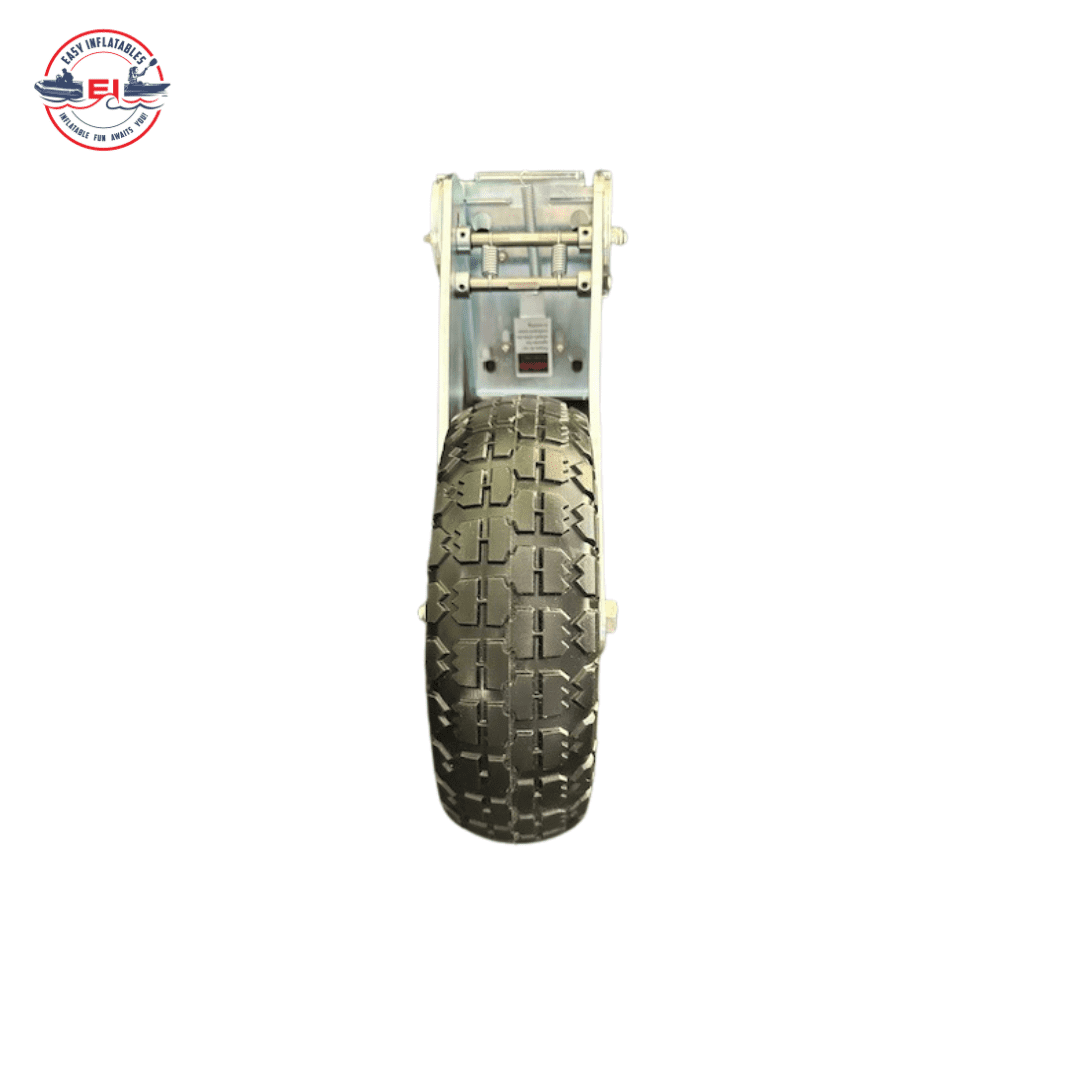
LockPro Plus Inflatable Boat Wheel Set
The LockPro Plus Inflatable Boat Wheel Set offers a premium solution for easy and safe loading of inflatable boats, featuring an Italian stainless steel quick-lock system.
Free freight to United States · local taxes payable on arrival
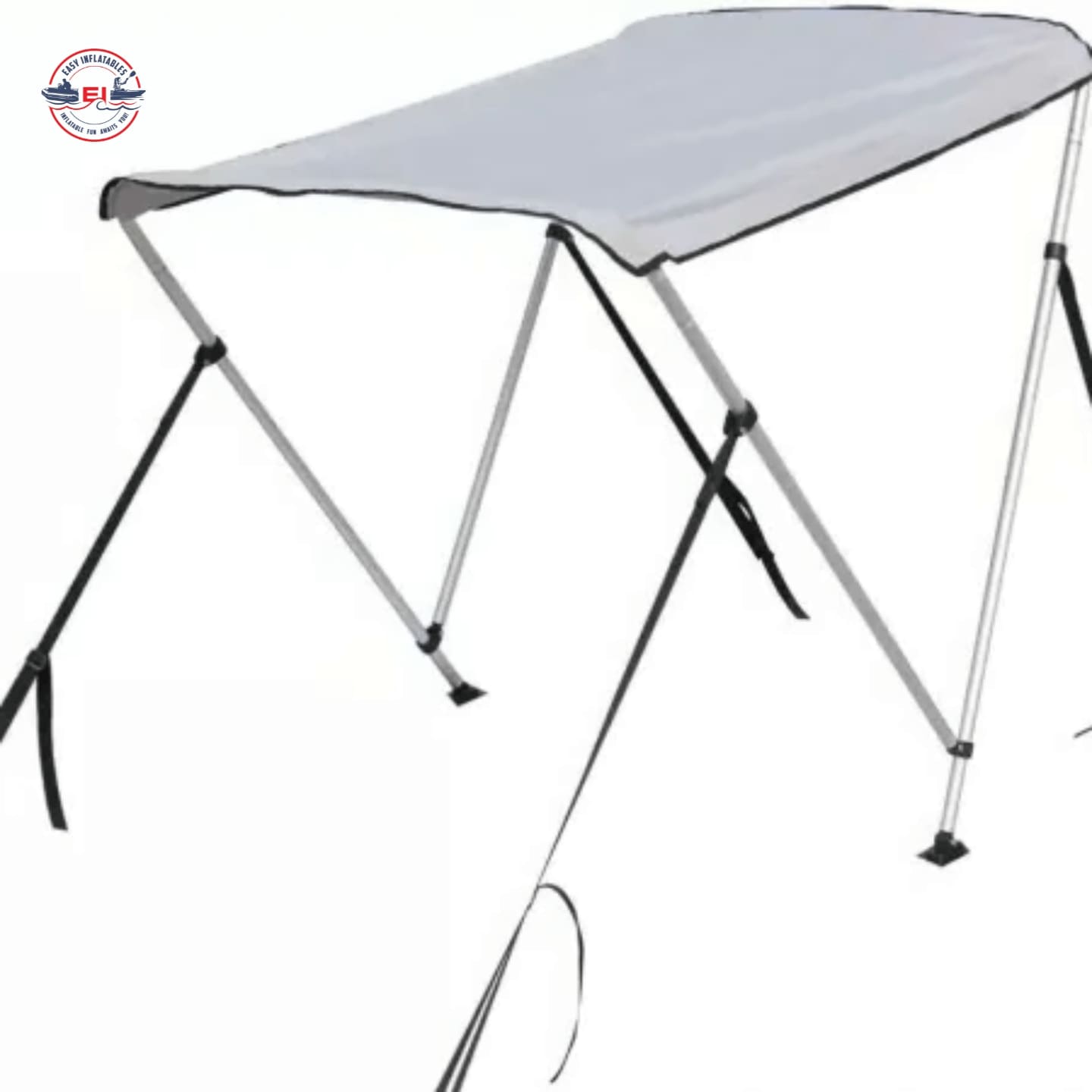
Aerowave Inflatable Boat Bimini
Lightweight inflatable UV sun-shade canopy for inflatable boats, SIBs and catamarans. Now available in two colours — Light Grey and Black. Fast setup, compact storage and premium UV protection for Australian boating.
Free freight to United States · local taxes payable on arrival
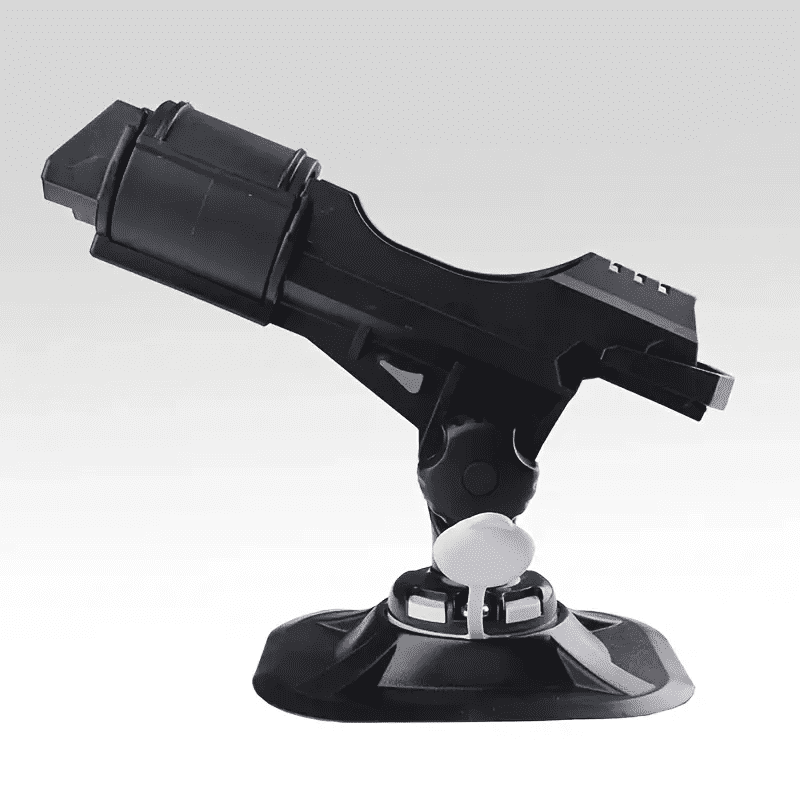
Inflatable Boat Rod Holder Mount
Factory-installed fishing mount designed for Easy Inflatables boats, providing a clean and secure installation for serious anglers.
Free freight to United States · local taxes payable on arrival
Not sure which suits you? Talk to a real boat owner.
Before you spend a cent
Buying from Australia, delivered to United States
You have never heard of us, we are on the other side of the world, and the internet is full of fakes. Fair enough. Here is everything you would need to check us out, in one place — no forms, no chat bot.
Australian designed business
Easy Inflatables, Avoca Beach NSW 2251. ABN 96 856 548 613. International orders ship from our Hong Kong hub.
222 owner reviews, 4.8 average
Read them in full, good and bad, on our reviews page.
CE certified, 7-year hull warranty
ISO 6185-3 and EU Directive 2013/53/EU. Warranty honoured worldwide.
Tracked, insured, door to door
FREE freight to United States · local tax/duty on arrival.
- Who am I actually buying from?
- Easy Inflatables, Avoca Beach NSW 2251, Australia. ABN 96 856 548 613. Sean is the owner and skipper, Gary Stewart handles sales on +61 2 4335 1603, Karen Matthews handles email. The boats are Australian designed; international orders ship from our Hong Kong dispatch hub so your landed price stays competitive. Phone us before you pay a cent — a real person answers.
- Is this really an Australian product?
- Yes — Australian designed and engineered on the NSW Central Coast. Manufacturing is done offshore to our spec, and international orders ship direct from our Hong Kong dispatch hub. If we routed every boat through Australia first, the freight alone would roughly double or triple your cost for the same hull.
- What do I pay, and what is not included?
- The delivery and import terms depend on your country. EU, UK, New Zealand and named Asia/Pacific lanes include duty and tax; US freight is free but US buyers pay import charges on arrival. Other destinations show their terms before payment.
- How do I pay safely?
- Card through Stripe (Visa, Mastercard, Amex, Apple Pay, Google Pay) or bank transfer. Card payments carry your bank's own dispute protection. We never ask for crypto, gift cards or payment to a personal account.
- What if it arrives damaged?
- Every boat ships fully tracked and insured door to door. Photograph the carton and the boat on arrival and email us — transit damage is claimed and replaced through us, not left with you and the courier.
- Is the warranty real outside Australia?
- Yes. The 7-year hull warranty on 1.2 mm VALMEX Heavy Plus and Orca Hypalon hulls applies wherever you are. Replacement parts are held in Australia and at our overseas hub and go out by express courier to your door.
- Is the boat actually certified?
- All Aerowave catamarans are CE certified to ISO 6185-3 and EU Directive 2013/53/EU. Certification paperwork is supplied with the boat — ask and we will send it before you order.
Ready to set sail?
Premium German-fabric inflatable catamarans, built to order and delivered to your door. Talk to our team or browse the fleet.
Like this guide? Get the next one in your inbox.
Owner-tested tips, gear deep-dives and Aussie boating know-how — no spam.