
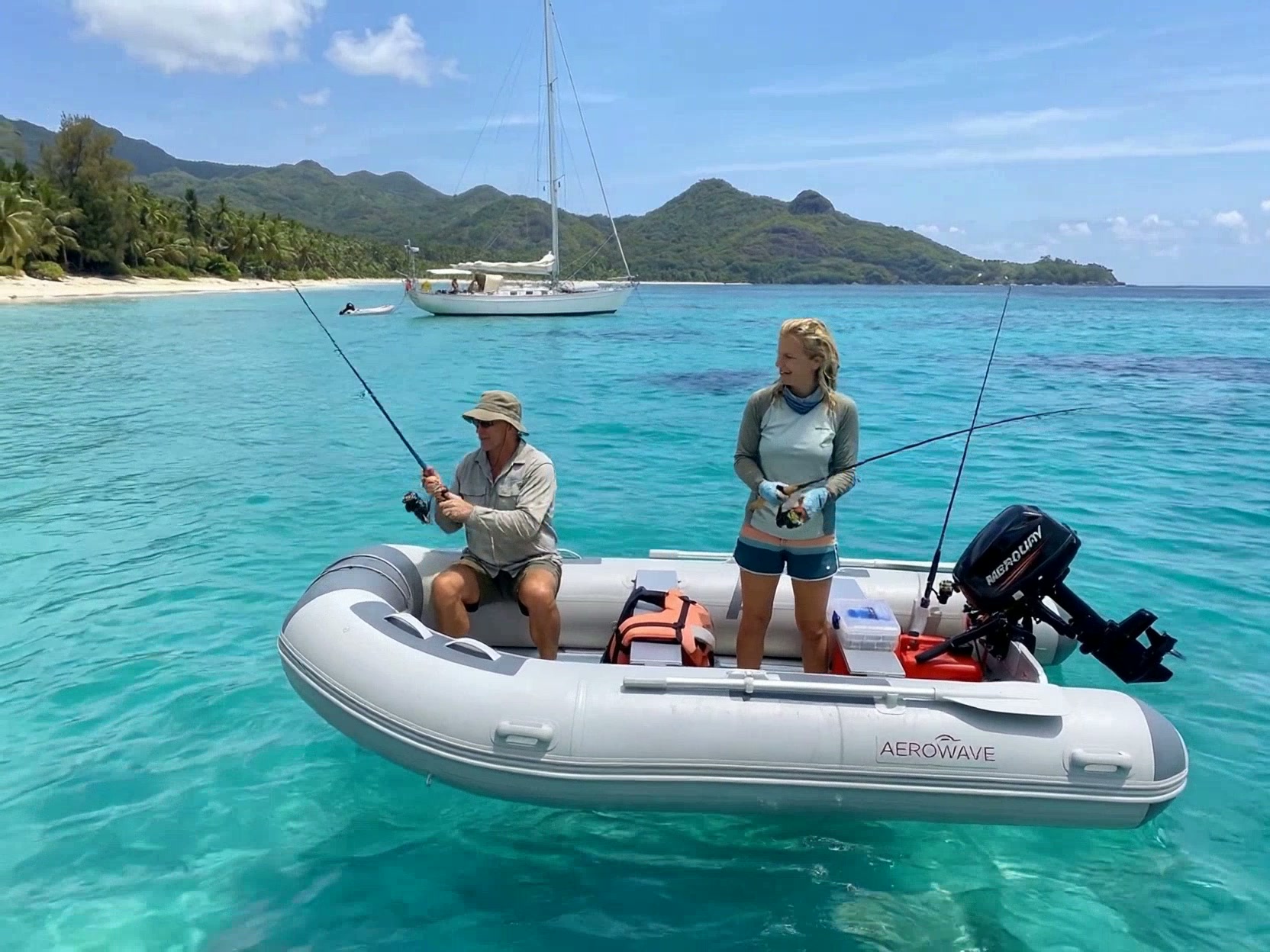
Superyacht & Sailing Yacht Tenders: What Crews Actually Look For
What superyacht and sailing yacht crews check before choosing a tender: payload, boarding, davit limits, stowage, towing and durable construction.
Our recommendation
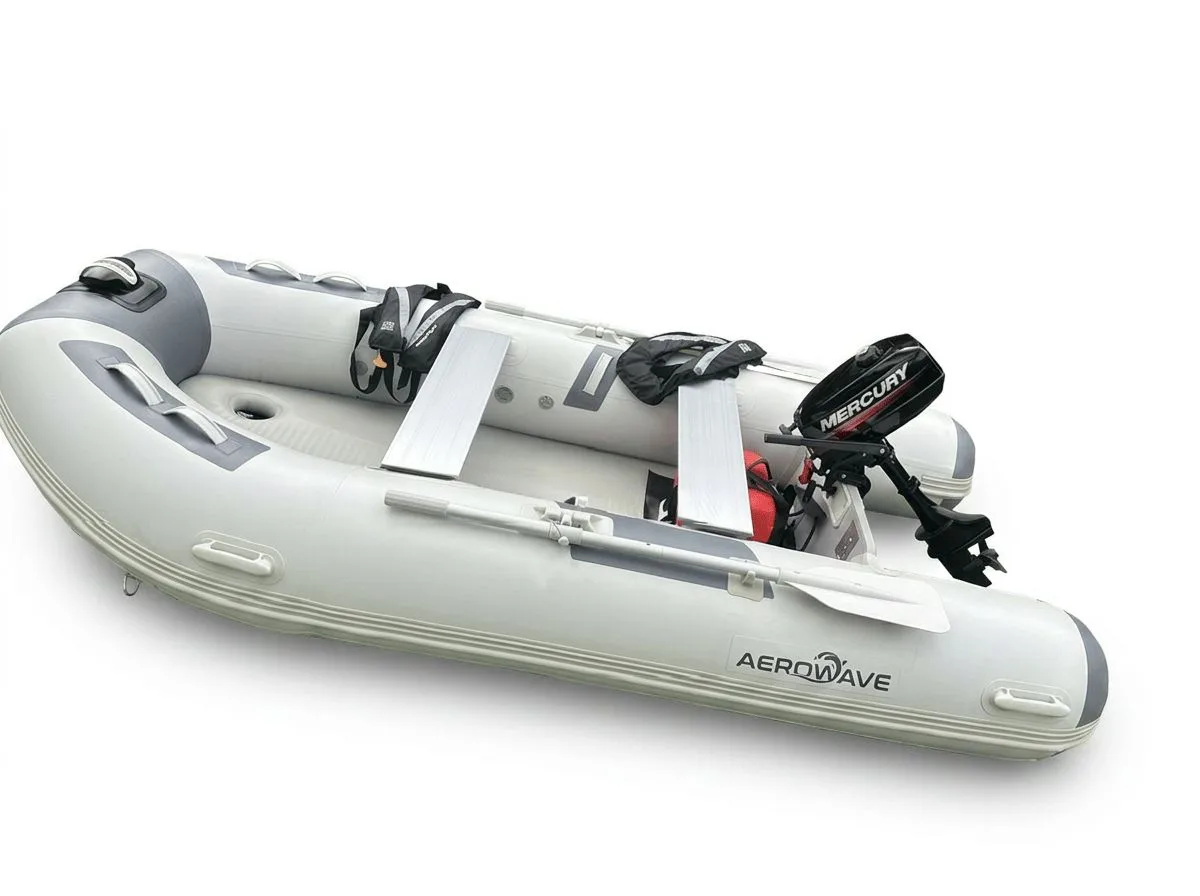
Aerowave Swift Tender 290 SI
Length
290cm / 9'6"
Width
152cm / 4'11"
Tube diameter
42cm
Chambers
3+1
A yacht tender has a simple job description: make every trip between the yacht and shore feel safe, smooth and dependable. But for the crew, choosing one is rarely simple. The tender has to fit the yacht, its davit or crane, its storage space and the way people actually use it, not just look right in a specification sheet.
That is true whether you’re sourcing a superyacht tender for a vessel over 40 metres or a sailing yacht tender for a 15–25-metre yacht. Captains and deck crews tend to focus on the same fundamentals: useful payload, predictable boarding, manageable lifting and storage, robust construction and straightforward upkeep.
Start with the yacht, not the brochure
Before comparing models, define the tender’s regular duties. Will it mostly carry guests ashore, shuttle crew, bring provisions aboard, make beach landings, or support longer coastal excursions? A tender selected around its most frequent role is more likely to work well day after day.
Next, measure the yacht’s real-world constraints. Check the clear opening to the garage or deck storage area, turning and handling space, tie-down positions, deck loading limits and the tender’s footprint both inflated and packed. A stated length alone won’t tell you whether the boat will clear a hatch, sit securely in a cradle or stow without blocking access.
For a sailing yacht, these details can be especially important. Deck space may already be committed to sail handling and movement around the vessel. A tender that’s awkward to manoeuvre or stow can quickly become a daily inconvenience. On a larger yacht, a garage may offer more room, but the lift system and operating procedure still determine what is practical.
Payload means the whole load
“Four people” is a starting point, not a complete payload plan. Include the skipper, guests, bags, provisions, fuel, safety equipment and anything else that travels aboard. Keep the total within the tender’s rated capacity, and consider how people and gear are distributed: particularly when passengers are boarding or moving around.
The yacht’s lifting arrangement has its own limit. Compare the tender’s all-up weight with the davit or crane’s safe working load, taking account of the engine, fuel, batteries, fittings and equipment. Confirm the yacht’s approved operating procedures and the lifting equipment manufacturer’s requirements. Never assume that a tender’s dry weight is its lift weight, or that a towing ring, handle or cleat is an approved lifting point.
For lifts involving people, use only an arrangement approved for that purpose. The CIS guidance on tender lifting points is a useful reference for understanding why lifting points and procedures deserve specific attention. The captain and relevant technical specialists should confirm what applies to the vessel and operation.
Boarding should feel controlled
Guests may be stepping down from a high swim platform or boarding in a little swell. A suitable tender should make that transfer feel calm and well managed. Crews look for stable behaviour at rest, accessible handholds, a clear boarding area and a layout that doesn’t require guests to step over bags or equipment.
Test the approach from the actual boarding point on the yacht. Look at the relative height of the tube and platform, how the tender sits when loaded, and whether the crew can keep it alongside without awkward reaching. Give passengers a clear briefing, seat them before getting underway and avoid overloading one side.
A soft-hull inflatable can also provide a forgiving contact surface alongside a yacht, but the tube is not a substitute for fendering, good line handling or a safe boarding routine. The best setup is the one the crew can repeat confidently in the conditions the yacht expects to encounter.
Towability, footprint and handling matter every day
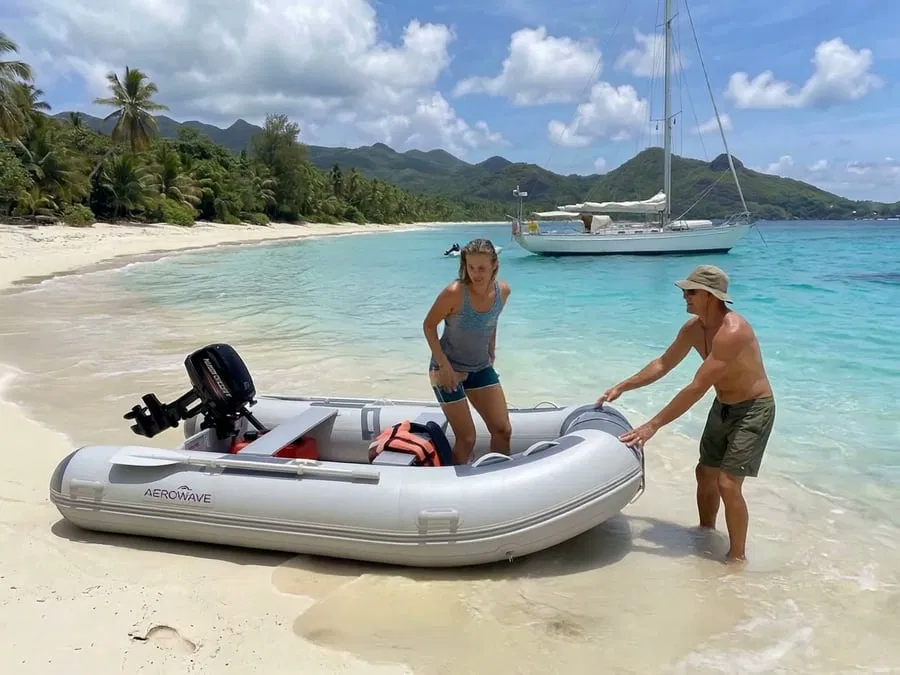
A tender may be towed behind the yacht, carried on deck, stowed in a garage, or used in more than one configuration. Confirm that the boat has suitable towing points for the intended arrangement, and that the yacht’s towing plan, bridle and attachment points are appropriate. Aerowave’s Swift Tender 290 SI includes bow and stern towing rings; these should not be treated as lifting points unless the manufacturer and yacht’s lifting system specifically approve them for that use.
Storage deserves equal attention. The Swift Tender 290 SI’s published packed dimensions are 110 × 75 × 40 cm, while its inflated length is 2.9 metres. Its published net weight is 52 kg; that is not the all-up weight with an engine and operating equipment. Confirm the complete stowed footprint and lift weight for the exact configuration being considered.
The model is rated for up to four people and a maximum load of 510 kg. Those figures are useful for planning, but the real working load still needs to account for people, fuel, gear and the tender’s operating limits. For a particular tender for a 40m yacht, the deciding question is not simply whether a model is compact or capable: it is whether the yacht’s handling, storage and lifting arrangements suit that model and its loaded configuration.
Construction is a crew-efficiency issue
A tender used often will face repeated inflation, lifting, contact with platforms and jetties, saltwater, sun and storage. Durable construction is therefore more than a specification detail. It can mean fewer interruptions and less time spent managing repairs.
The Swift Tender 290 SI uses 1.2 mm German VALMEX fabric and thermo-welded seams. The Viper range is also built with 1500 GSM / 1.2 mm VALMEX fabric and thermo-welded PVC seams. Heat-relief valves are fitted as standard across the range to help manage pressure changes in warm conditions. These features are designed for longevity, but they don’t remove the need for routine inspection and sensible care.
A low-maintenance routine is straightforward: rinse away salt and dirt, allow the boat to dry before long-term storage, check valves and fittings, and inspect the hull and seams regularly. Follow the owner’s manual for inflation pressures, cleaning products and storage. No tender is maintenance-free; good materials and consistent care simply make dependable ownership easier.
Matching the tender to the yacht
For a 15–25-metre sailing yacht, portability and deck stowage often carry particular weight. The tender should be practical for the available crew to prepare, launch and recover, while fitting around sailing operations. A compact tender that packs away can be attractive where a permanently inflated boat would take up valuable deck space.
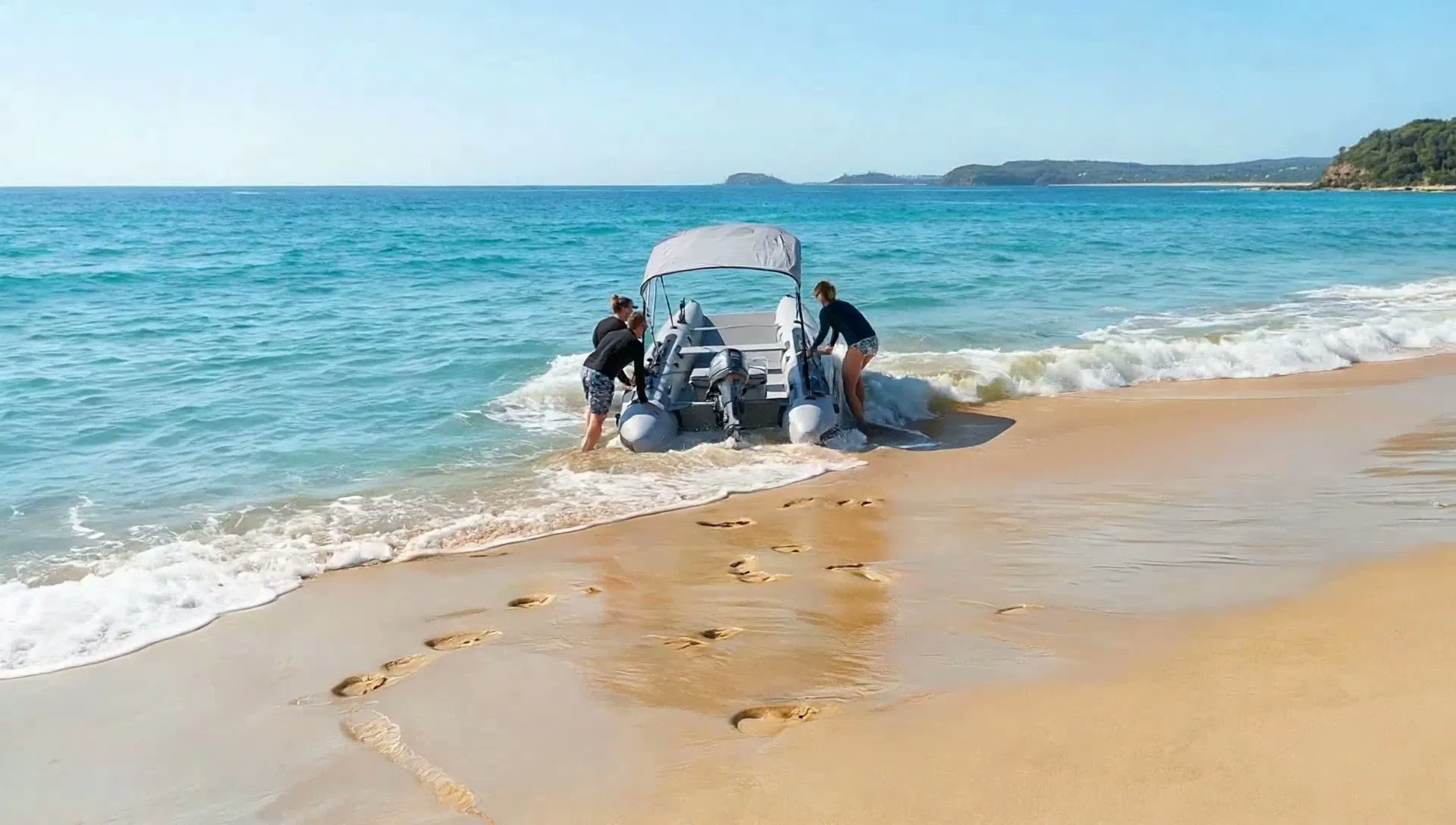
For a 40-metre-plus superyacht, the tender brief may include more frequent guest transfers, provisioning runs and a larger range of day-to-day duties. The Swift Tender 290 SI offers a compact soft-hull option, while the larger models in the Viper range provide more room for crews assessing a larger catamaran format. The Viper 400, for example, has a published maximum load of 750 kg and six adults. That capacity does not by itself establish suitability: check the actual model’s dimensions, all-up weight, lift arrangement and intended use with the yacht’s responsible crew.
Whatever the yacht’s size, a product’s leisure-boat certification or conformity documentation should not be mistaken for approval as a rescue or man-riding tender. Check the applicable flag, class, insurance and local operating requirements for the specific role.
A practical yacht crew tender checklist
Before selecting or accepting a tender, work through these points with the captain and deck team:
- Role: What will it do most often, and what other tasks must it support?
- Capacity: Does the rated payload cover the expected people, fuel, provisions and equipment?
- Boarding: Can guests board comfortably from the yacht’s actual platform or ladder?
- Handling: Can the available crew launch, recover, manoeuvre and secure it confidently?
- Davit or crane: Is the all-up lift weight within the approved limits for the complete arrangement?
- Lifting points: Are the points specifically approved for lifting, and do they match the yacht’s system?
- Storage: Will the inflated or packed tender fit through the access route and secure in its intended stowage?
- Towing: Are the towing points and yacht’s planned setup suitable for the intended use?
- Construction: Are the fabric, seams, valves and fittings appropriate for frequent service?
- Upkeep: Can the crew rinse, dry, inspect and store it without creating extra work?
- Documentation: Are the operating limits, owner’s instructions and documents suitable for the yacht’s intended use?
If the yacht’s setup allows it, request a practical demonstration with representative loads and the intended engine and equipment. Check boarding, handling, storage and the full launch-and-recovery procedure, not just the tender at rest.
Choose for quiet confidence
A well-chosen tender should fit into the yacht’s routines without demanding attention. That means balancing payload and passenger comfort with storage, towability, lifting limits and durable construction. It also means having clear information before the decision is made.
Explore the Swift Tender series or read more about choosing an inflatable yacht tender. If you’d like to compare a specific yacht’s requirements with a model, request a free written quote. Aerowave tenders take approximately 15 minutes to set up; actual preparation time depends on the crew and conditions.
Frequently asked questions
- What do yacht crews look for in a tender?
- Payload for people, fuel and provisions, controlled boarding, davit and stowage fit, predictable towing and handling, and construction that keeps maintenance low.
- What payload should a yacht tender have?
- Include the skipper, guests, bags, provisions, fuel and safety gear, and keep the total within the rated load. The Swift Tender 290 SI is rated for four people and 510 kg.
- How small does the Swift Tender 290 SI pack?
- Its published packed size is 110 × 75 × 40 cm, with an inflated length of 2.9 m and a net weight of 52 kg.
- Can a tender be lifted with people aboard?
- Only with a lifting arrangement approved for that purpose. The captain and technical specialists should confirm what applies to the vessel and operation.
- Is a soft-hull tender suitable for a sailing yacht?
- Yes, for many sailing yachts. It packs away for passages, is gentle alongside the hull and is light to recover by a small crew.
Finance this boat from $14/week
Estimate only — powered by Australian Motorcycle & Marine Finance (AMMF).
Paid upfront (AUD)
$320
10% of price
Term
5 years
60 monthly repayments
Comparison rate
9.95% p.a.
Subject to AMMF approval
Weekly
$14
Monthly
$61
Amount financed
$2,879
Indicative only. Actual repayments depend on your AMMF credit assessment, term, fees and the balloon you select. Talk to AMMF for a personalised quote on Aerowave Swift Tender 290 SI.
Like this guide? Get the next one in your inbox.
Owner-tested tips and Aussie boating know-how — no spam.
Ready when you are
Build your Swift Tender 290 SI in under 3 minutes.
1500 GSM / 1.2 mm VALMEX® hull. Five-year limited hull warranty. Free freight to United States · taxes included, nothing to pay on arrival.
delivered to your door
See it for yourself
Real boats. Real owners. Real people behind them.
Plenty of what you read online these days is generated. Check us out properly — the factory, the reviews and the owners are all one click away. Why we use AI, and how to check we’re real
How our boats are built
Walk the production line: thermo-welded seams, 1.2 mm VALMEX Heavy Plus hulls, over-pressure relief valves on every chamber.
See the buildGoogle Maps reviews
Real Australian owners, five stars, published on our Google Business Profile with the map — read them there, not just on our own site.
Open Google Maps reviewsOwner stories
Boats in use — offshore, on rivers, on rescue duty. Photos and words from the people who actually own them.
Read owner stories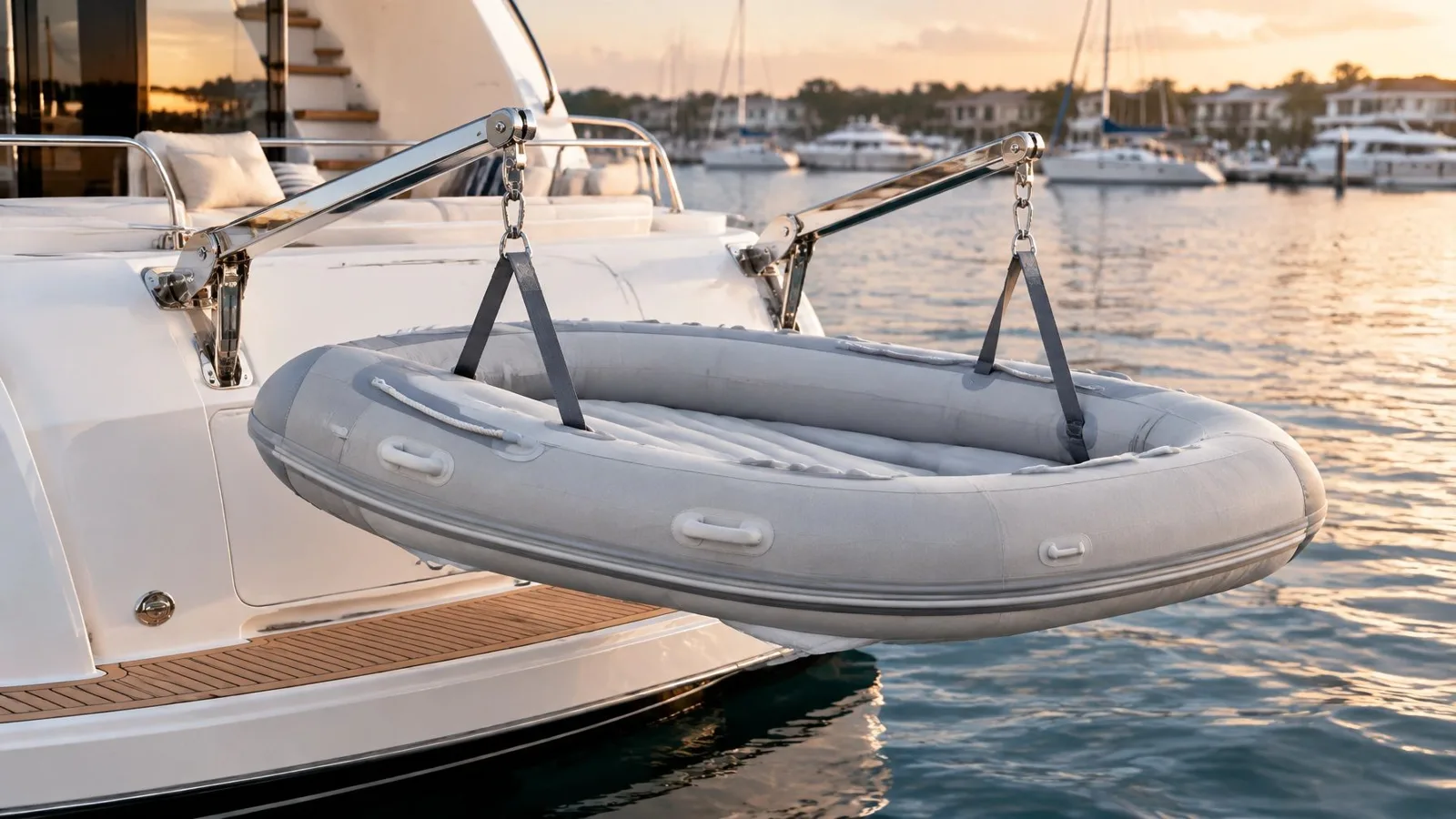
Aerowave Swift Tender 290 SI
US$2,279 USD · delivered to your door