
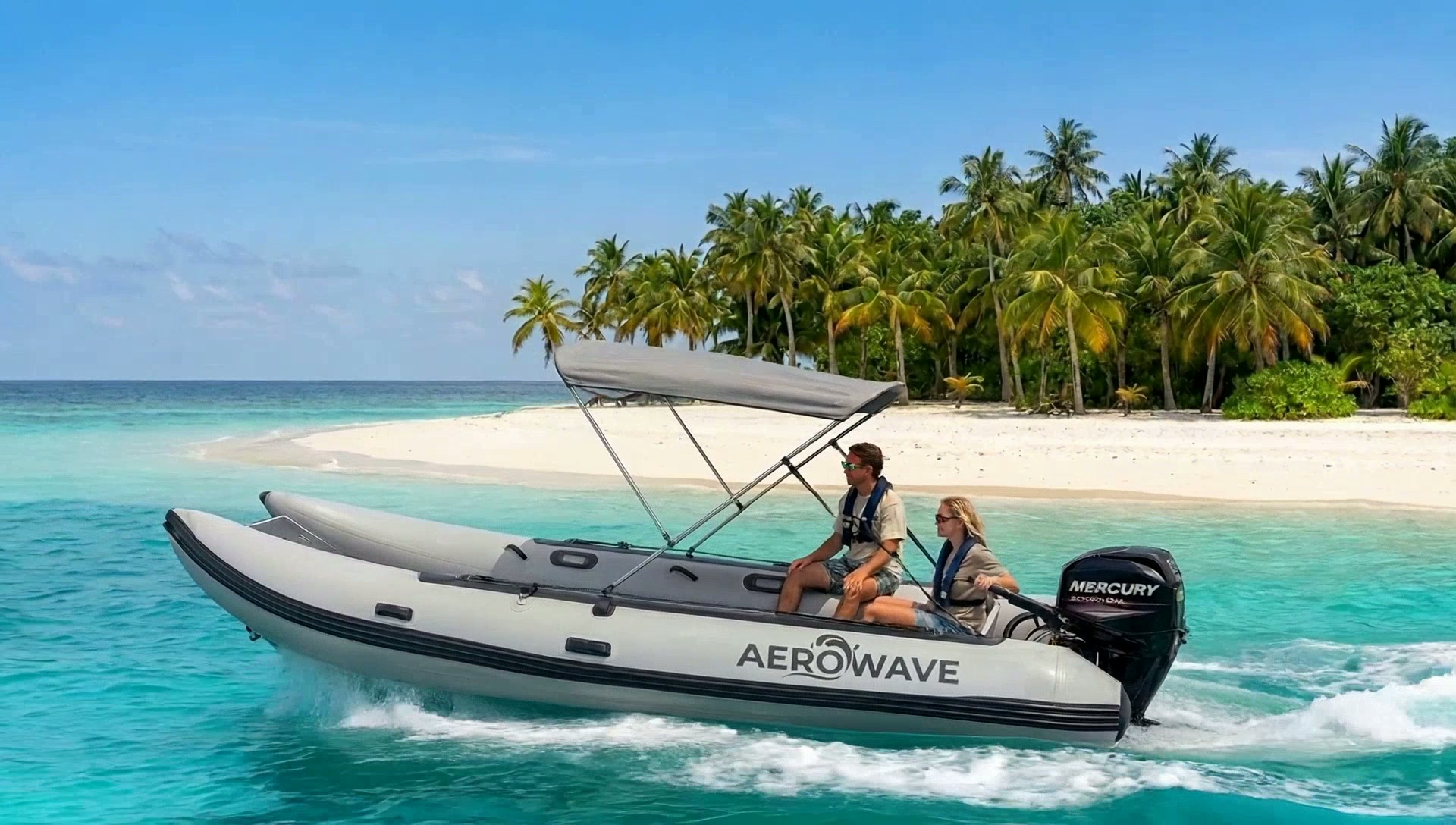
Outboard Shaft Length Explained: Get It Wrong and You'll Feel It in the Chop
Short shaft, long shaft or extra-long? How to measure your transom, why catamarans are different, and which outboard shaft suits an Aerowave inflatable boat.
Our recommendation
Aerowave Viper 400 Open Bow + Hidea 20HP 4-Stroke Short Shaft Package
— BOAT: AEROWAVE VIPER 400 OPEN BOW CATAMARAN —
Length
4.00 m / 13'1"
Beam
1.80 m / 71"
Tube diameter
500 mm
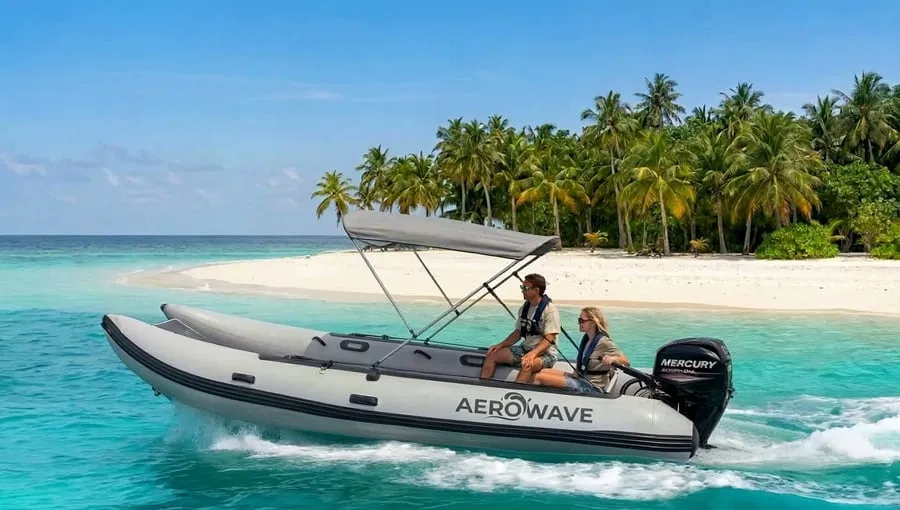
Choosing an outboard isn't just about horsepower. The motor also has to match the height of your boat's transom. Get the shaft length right and the propeller bites in solid water through acceleration, turns and chop.
Get the outboard shaft length wrong and the propeller can lose its grip just when you need it most: pulling away from a beach, carving a turn or running home through a short, sharp chop. Get it right and the motor puts its power into the water, not into a sudden burst of revs.
This guide explains short, long and extra-long shafts, how to measure your inflatable or dinghy, why catamaran transoms deserve a closer look, and exactly which shaft suits an Aerowave boat.
What does outboard shaft length mean?
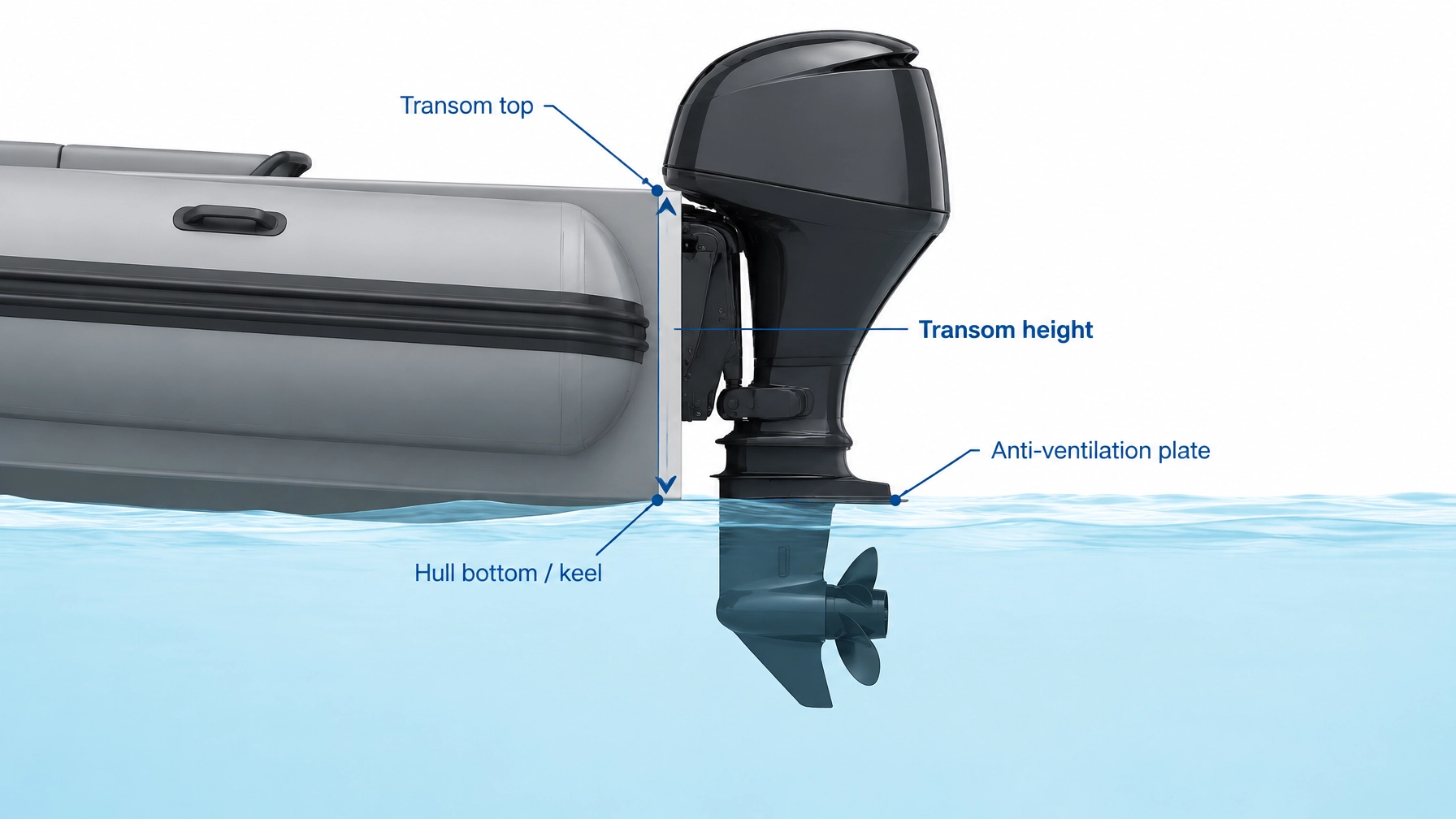
Outboard shaft length is the distance from the motor's mounting reference point in its clamp bracket down to the anti-ventilation plate above the propeller. That plate is often called the "cavitation plate", although ventilation and cavitation are different problems (more on that below).
Boat owners also use "shaft length" to mean the height a motor needs to suit the boat. The two are related but not identical: you measure the boat's transom height to help choose the motor's shaft length.
The goal is simple: match the motor to the boat so the propeller sits at the right depth while the boat is running. Always use the motor manufacturer's stated measurement for the exact model you're considering, because nominal categories don't always match the real dimension to the millimetre.
Short shaft vs long shaft outboard: what's the difference?
| Shaft type | Nominal length | Typical fit |
|---|---|---|
| Short | 15 in / 381 mm | Lower transoms — most inflatables, dinghies and inflatable catamarans |
| Long | 20 in / 508 mm | Higher transoms or boats built with a raised long-shaft transom |
| Extra-long | 25 in / 635 mm | Boats or mounting arrangements designed for this length |
As a starting point, a transom of around 15–17 inches is commonly paired with a short-shaft motor, while a transom of around 20–22 inches commonly calls for a long shaft. Borderline measurements, raised brackets and catamaran transoms are good reasons to check with the boat maker before ordering.
A longer shaft is not automatically better in rough water. The correct shaft is the one that suits your boat's mounting height and keeps the propeller properly immersed without dragging the gearcase unnecessarily deep.
Which shaft suits an Aerowave boat?
The standard Aerowave transom is 380 mm, built for a short-shaft (15") outboard. That height puts more propeller in the water, gives the motor more bite and helps stop ventilation in chop — exactly what you want on a lively inflatable catamaran.
- Buying a new motor? Choose a short-shaft model. Our Hidea 20HP Carburettor 4-Stroke and Hidea 20HP EFI 4-Stroke are both short shaft, and our boat-and-motor packages such as the Viper 400 Open Bow + Hidea 20HP Short Shaft Package and Viper 330 + Hidea 9.9HP Short Shaft Package arrive correctly matched.
- Already own a long-shaft (20") motor? Ask for the Long-Shaft Transom Upgrade. It raises the transom to suit your motor and is built into the hull during production, so the anti-ventilation plate sits exactly where it should.
- Not sure what you have? Measure your motor from the top of its mounting bracket to the anti-ventilation plate: roughly 15" is short shaft, roughly 20" is long shaft. Call Gary on +61 2 4335 1603 and we'll confirm it with you before you order.
Browse every model on our boats page or compare motors on the Hidea outboards page.
How to measure transom height correctly
Measure the boat, not the outboard, and set the boat up exactly as you'll use it.
- Inflate the boat fully to its normal operating pressure. An inflatable's shape and transom position change when it's underinflated.
- Place it on level ground and find the motor's mounting position — usually the centreline of the transom.
- Measure vertically from the top surface where the motor clamps onto the transom, down to the hull bottom or keel line directly behind that mounting point.
- Record the figure in millimetres and inches, then compare it with the motor's actual shaft specification and the boat maker's recommendation.
- Check it on the water. The anti-ventilation plate's position relative to the hull bottom is your best guide once the boat is running with its normal load.
For a conventional planing hull, the anti-ventilation plate usually sits roughly level with, or a little below, the hull bottom. The best position varies by boat, so follow the boat and outboard manufacturers' instructions rather than adjusting from a diagram alone.
Why the right shaft matters in chop
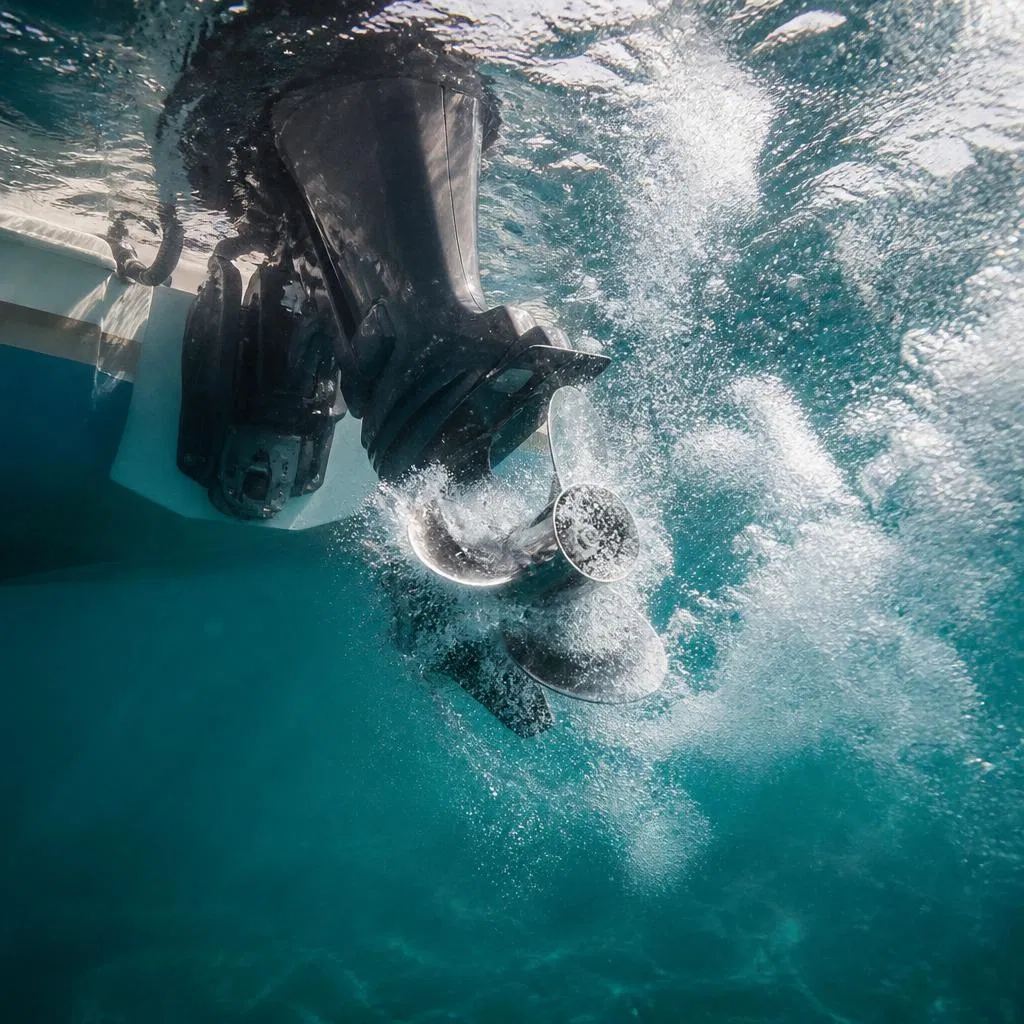
When the propeller sits too close to the surface, it can draw in air from the surface or the disturbed water behind the boat. This is ventilation. Revs suddenly rise while thrust drops away — you feel it as surging, a loss of grip in a turn or slow acceleration, especially as the stern lifts over a wave.
A shaft that's too long brings a different set of issues. The gearcase and propeller sit deeper than they need to, adding drag, making the motor harder to tilt and leaving the gearcase more exposed when you run into shallow water or beach the boat.
Ventilation vs cavitation
- Ventilation is air reaching the propeller from the surface.
- Cavitation is vapour bubbles forming as pressure drops around the blades, often from a damaged or wrong-pitch prop.
The symptoms can feel similar, and many people use "cavitation" for any prop that has lost its bite. Shaft height is a common factor in ventilation, but trim, passenger and gear placement, propeller condition and the water flowing behind the boat all play a part. Our guide Outboard Cavitating or Prop Blowing Out? walks through every fix, and the Hidea cavitation and aeration guide covers trim and prop set-up.
Chop shows up a set-up that seems fine in calm water. Before reaching for a longer shaft, check the actual mounting height first — the right answer always starts with the boat.
Why catamaran transoms are different
An inflatable catamaran doesn't behave like a single-hull dinghy. The motor sits between two hulls, where the water flowing to the propeller differs from what you'd expect by measuring a nearby tube.
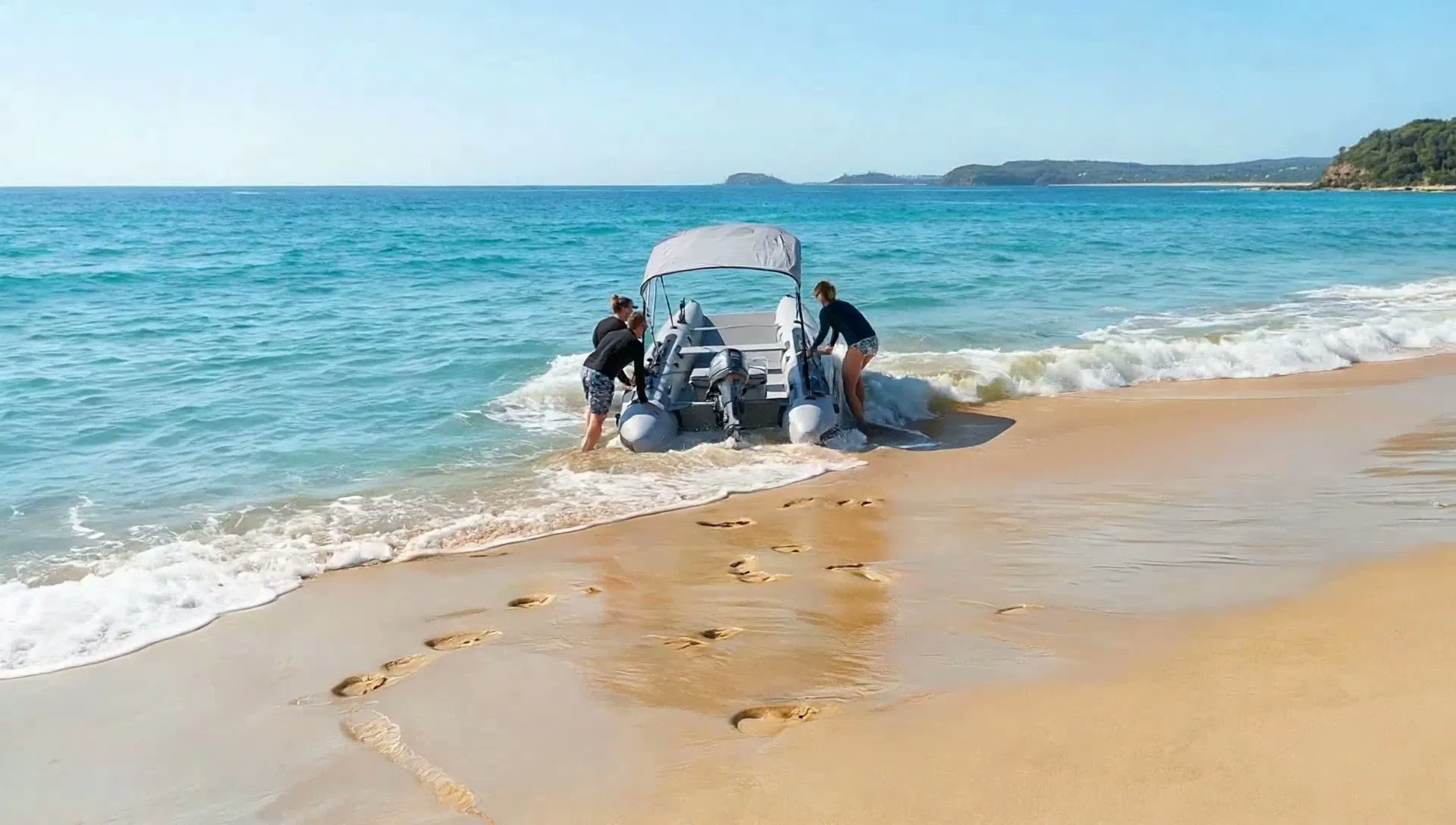
That's why a tape-measure check is only part of the decision. The propeller needs clean, solid water rather than aerated flow from the hulls or wake. Aerowave catamarans are designed around this: the 380 mm short-shaft transom places the propeller in solid water between the hulls, so a correctly matched short-shaft motor grips cleanly from the first run.
If you're fitting a motor to a different catamaran, ask the maker for its specific transom and motor-fit details rather than relying on a generic dinghy measurement.
Common outboard shaft-length buying mistakes
- Choosing by horsepower alone. Horsepower tells you engine output, not whether the leg suits your transom. Check both the boat's maximum rated power and the required shaft length.
- Assuming every "15-inch" motor measures exactly 15 inches. Shaft categories are nominal. Check the real specification and the manufacturer's measuring point.
- Measuring an uninflated boat. Measure with the boat fully inflated and set up as normal.
- Measuring to the wrong point. Don't measure from the floor, a tube bottom or the waterline. Start at the motor mounting surface and measure to the hull or keel line at the mounting position.
- Buying a long shaft "for safety" in rough water. A long shaft on a low transom sits too deep. Match the motor to the boat first.
- Ignoring motor mounts and catamaran geometry. A raised bracket or twin-hull layout can change the required fit. Ask the boat maker rather than guessing.
A simple pre-purchase checklist
Before you order, confirm:
- Your boat's recommended shaft category and maximum horsepower.
- The transom height, measured on a fully inflated boat at the motor mounting position.
- The motor's actual shaft dimension, not only its short, long or extra-long label.
- Whether the boat has a raised mount, long-shaft transom or catamaran-specific fit advice.
- That the propeller stays immersed and runs smoothly during a careful first run on the water.
If your measurement falls between the usual ranges, send us your boat model, transom measurement and motor model and we'll confirm compatibility in writing. Registration questions? See our registration and boat coding guide.
The bottom line
Getting shaft length right lets your outboard put its power into the water instead of into a burst of revs. For an Aerowave boat it's straightforward: 380 mm transom, short-shaft (15") motor — or the Long-Shaft Transom Upgrade built in if you already own a 20" motor. A few careful measurements and a quick model check make the difference between a frustrating set-up and a confident run home through the chop.
Frequently asked questions
- What is the difference between a short shaft and a long shaft outboard?
- A short-shaft outboard is nominally 15 inches (381 mm) from the mounting bracket to the anti-ventilation plate, and a long shaft is nominally 20 inches (508 mm). Short shafts suit lower transoms such as most inflatables and inflatable catamarans; long shafts suit higher transoms.
- What shaft length do I need for an Aerowave inflatable boat?
- The standard Aerowave transom is 380 mm, built for a short-shaft (15 inch) outboard. If you already own a long-shaft (20 inch) motor, the Long-Shaft Transom Upgrade is built into the hull during production to suit it.
- How do I measure my boat's transom height?
- Inflate the boat fully, place it on level ground, then measure vertically from the top of the transom where the motor clamps down to the hull bottom or keel line directly behind the mounting point. Compare that figure with the motor's actual shaft specification.
- How do I tell if my outboard is short or long shaft?
- Measure from the top of the motor's mounting bracket down to the anti-ventilation plate above the propeller. Roughly 15 inches is a short shaft and roughly 20 inches is a long shaft. Check the manufacturer's specification for the exact figure.
- Can I put a long shaft outboard on a short shaft transom?
- It is not recommended. A long shaft on a low transom sits too deep, adding drag and leaving the gearcase exposed in shallow water. Either choose a short-shaft motor or have the boat built with a raised long-shaft transom.
- Why does my outboard over-rev in chop or turns?
- That is usually ventilation: surface air reaching the propeller because it sits too shallow, the motor is trimmed out too far, or the shaft is the wrong length for the transom. Check the mounting height and trim before changing the motor.
- Are Hidea 20HP outboards short shaft?
- Yes. The Hidea 20HP Carburettor 4-Stroke and the Hidea 20HP EFI 4-Stroke sold by Easy Inflatables are both short-shaft models, matched to the 380 mm Aerowave transom.
Finance this boat from $43/week
Estimate only — powered by Australian Motorcycle & Marine Finance (AMMF).
Paid upfront (AUD)
$979
10% of price
Term
5 years
60 monthly repayments
Comparison rate
9.95% p.a.
Subject to AMMF approval
Weekly
$43
Monthly
$187
Amount financed
$8,806
Indicative only. Actual repayments depend on your AMMF credit assessment, term, fees and the balloon you select. Talk to AMMF for a personalised quote on Aerowave Viper 400 Open Bow + Hidea 20HP 4-Stroke Short Shaft Package.
Like this guide? Get the next one in your inbox.
Owner-tested tips and Aussie boating know-how — no spam.
Ready when you are
Build your Viper 400 Open Bow + Hidea 20HP 4-Stroke Short Shaft Package in under 3 minutes.
1500 GSM / 1.2 mm VALMEX® hull. Five-year limited hull warranty plus two years of extended limited structural hull cover, subject to conditions. Free freight to United States · taxes included, nothing to pay on arrival.
delivered to your door
See it for yourself
Real boats. Real owners. Real people behind them.
Plenty of what you read online these days is generated. Check us out properly — the factory, the reviews and the owners are all one click away. Why we use AI, and how to check we’re real
How our boats are built
Walk the production line: thermo-welded seams, 1.2 mm VALMEX Heavy Plus hulls, over-pressure relief valves on every chamber.
See the buildGoogle Maps reviews
Real Australian owners, five stars, published on our Google Business Profile with the map — read them there, not just on our own site.
Open Google Maps reviewsOwner stories
Boats in use — offshore, on rivers, on rescue duty. Photos and words from the people who actually own them.
Read owner stories
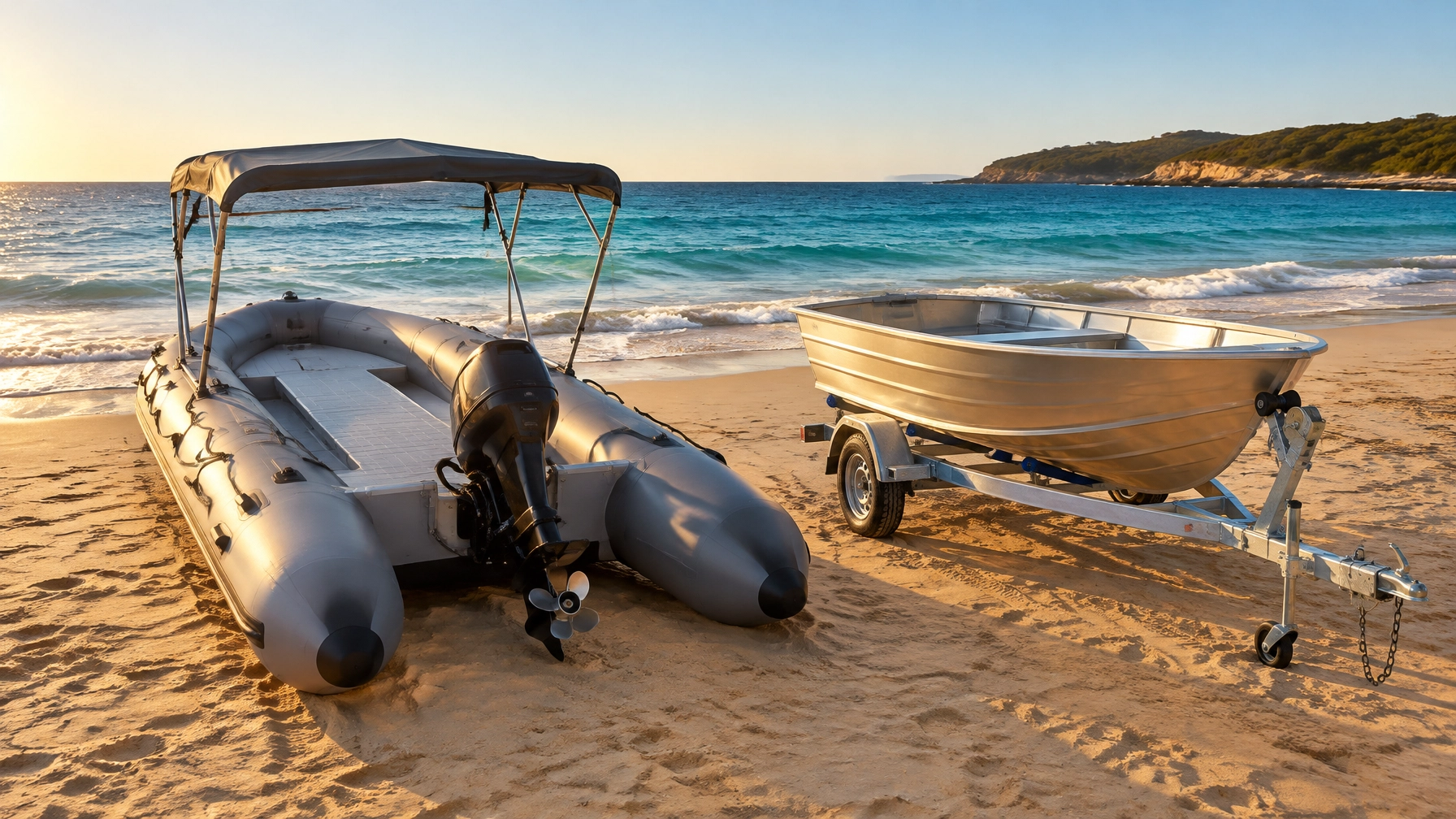
Aerowave Viper 400 Open Bow + Hidea 20HP 4-Stroke Short Shaft Package
US$6,972 USD · delivered to your door