Best Inflatable Boat for Beach Use: Saltwater, Sand and Shallow Launching
Beach launching is the hardest thing you can ask of an inflatable. Here is what to look for in fabric, seams, transom and wheels — plus care that doubles hull life.
🇺🇸 Boats shipping to United States
See landed prices in USD before you bounce.
Door-to-door delivery to United States in 7–14 days. Choose a boat, see local-currency pricing, or request a fixed landed quote from the sales team.
Beach launching is the hardest thing you can ask of a boat
Ramps are easy. Beaches are not. Sand grinds, salt corrodes, UV bakes, and every launch and retrieve drags the hull across abrasive ground with the full weight of the motor and gear on it. A boat that is perfect on a marina pontoon can be worn out in three summers of beach work.
If your boating is beach-launched — surf-side, estuary sandbar, island camping, mooring tender work off a sandy shore — the selection criteria change completely. Here is what actually matters, and which of our boats we would put on a beach.
Why catamarans own the beach
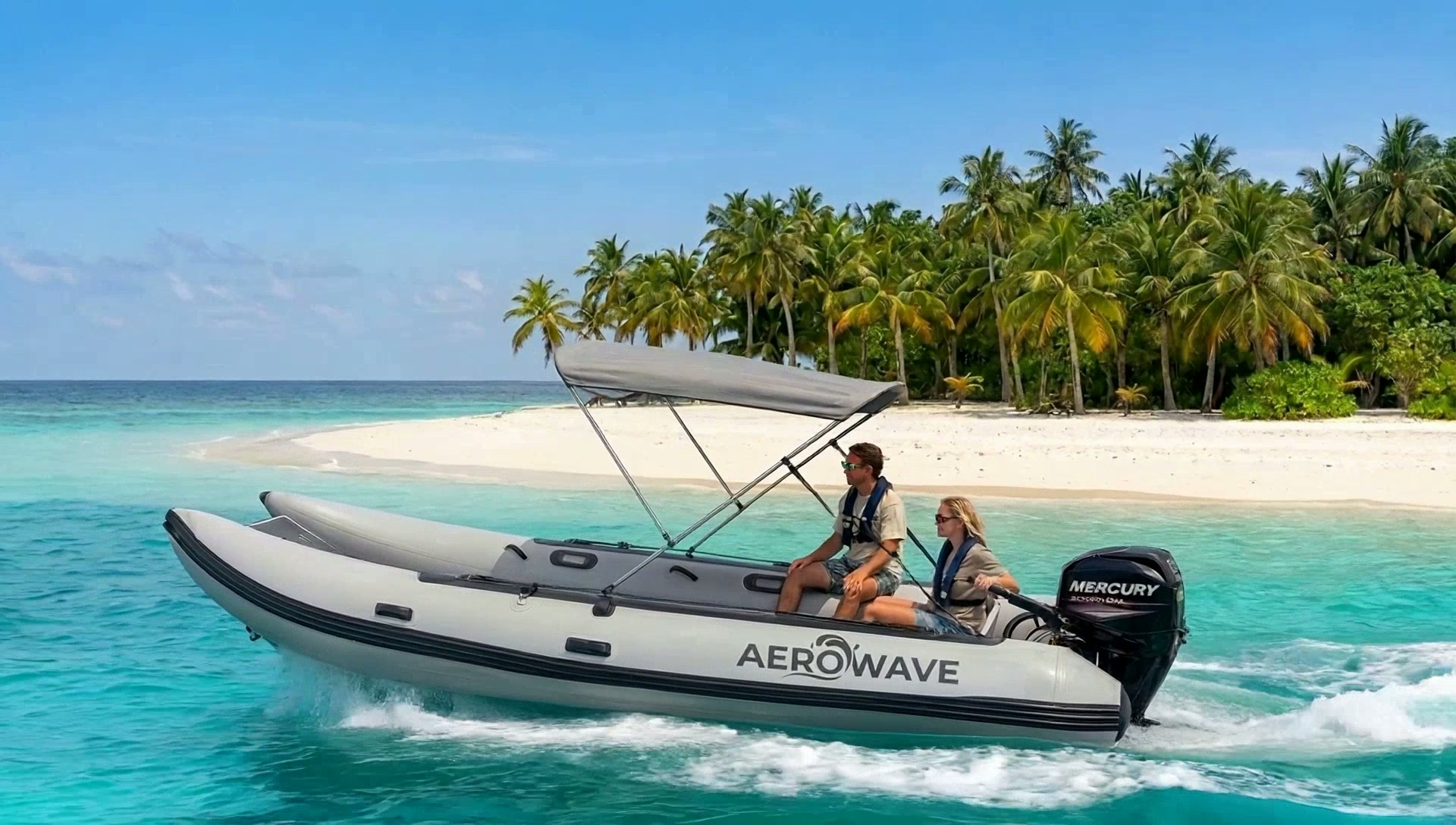
Beach use rewards one thing above all: shallow draft with high stability.
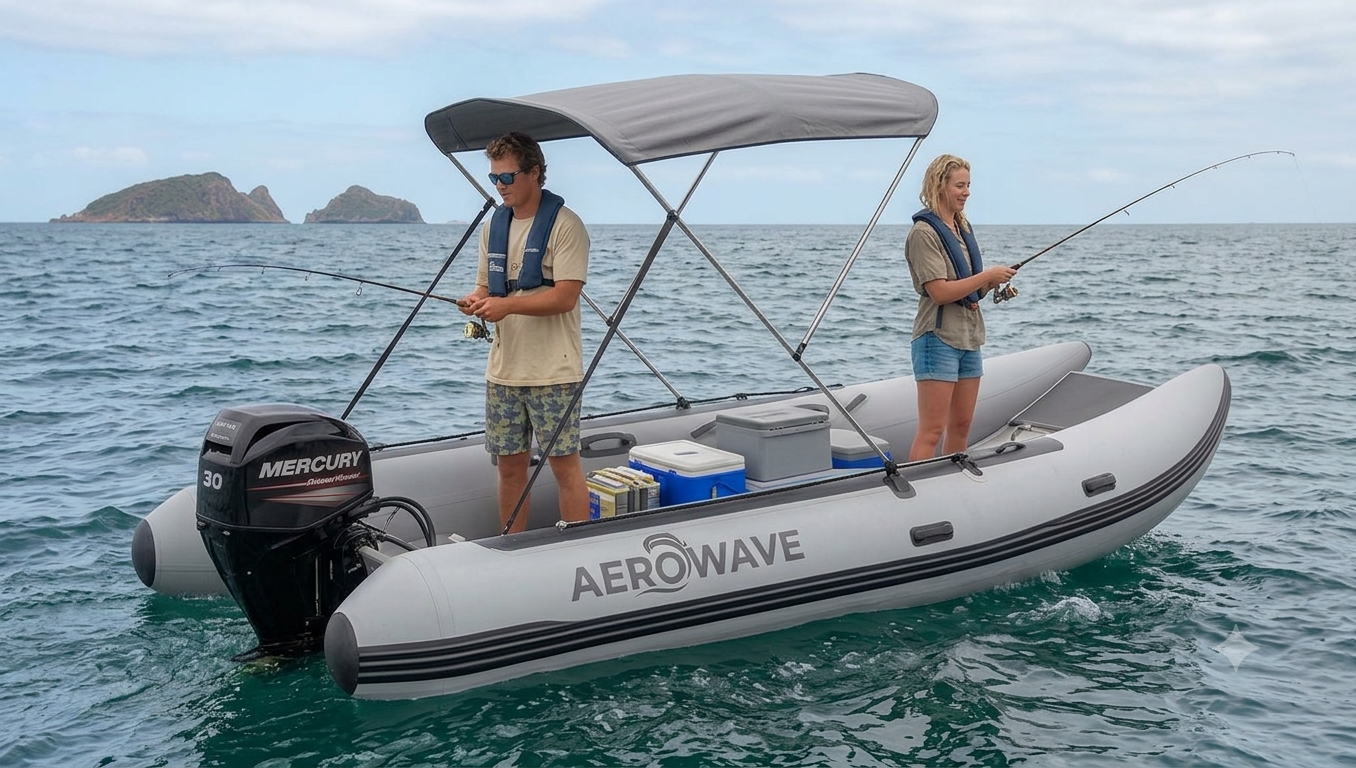
An inflatable catamaran sits on top of the water on two widely spaced tubes with an open tunnel between them. Loaded with four adults it still draws only a few centimetres, which means you can:
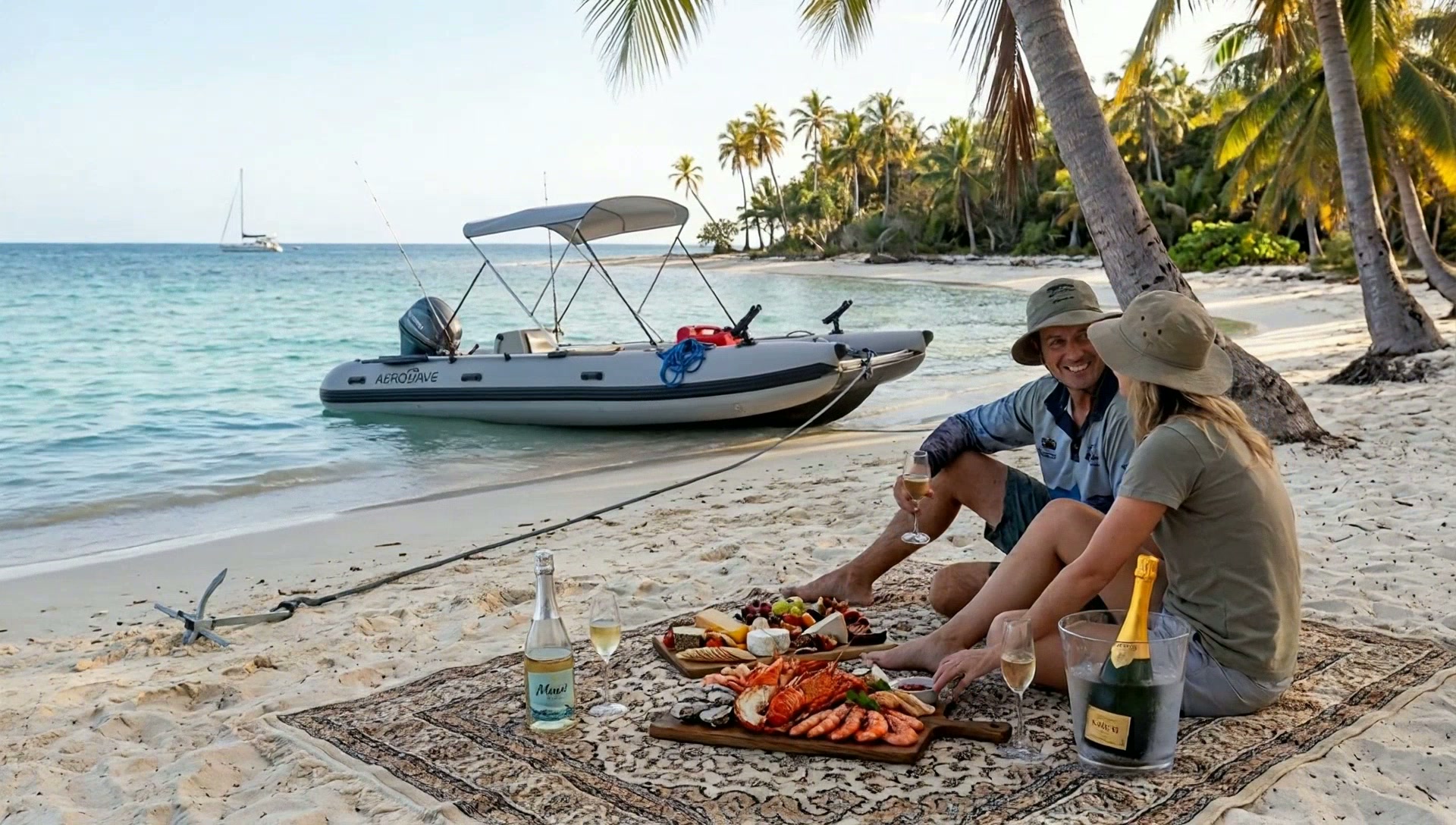
- Nose straight onto sand and step off dry
- Float off a sandbar that would strand a deeper hull
- Work in and out of shallow estuaries at any tide
- Stand on one side to load without the boat leaning hard
That last point matters more than people expect. Beach loading happens in knee-deep water with everyone on one side of the boat passing gear in. A monohull rolls under that. A catamaran barely notices.
Add the flat, open deck and you get a boat you can drag a cooler, a camping swag and a dog into without a fight.
The four specifications that survive sand and salt
1. Fabric thickness, measured in millimetres
Sand is an abrasive. Every drag up the beach removes a tiny amount of material. On 1.2 mm VALMEX® Heavy Plus you have a genuine margin; on 0.9 mm you have a third less material to lose before it matters. This is the whole reason we build the Viper range on 1500 GSM / 1.2 mm.
2. Welded seams
Salt water wicks into any adhesive line it can find. Welded seams have no adhesive layer. Every Aerowave hull is welded, which is why we are comfortable recommending them for permanent beach and saltwater use.
3. Transom design and height
Beach launching means running the motor in shallow water and tilting frequently. Our catamaran transoms are 380 mm — deliberately lower than the industry norm so more of the prop stays in the water. Less ventilation, less cavitation, more bite when you are trying to power off sand into a wave.
The transoms are grilled with no plastic components — plastic is what fails first in UV and salt.
4. Wheels
A beach boat without wheels is a two-person job. Our LockNLoad wheel kit and the LockPro Plus option let one person move a fully rigged boat across soft sand. If you only add one accessory to a beach boat, make it wheels.
Our beach picks
Best all-round beach boat — Aerowave Viper 400 Sovereign (4.0 m catamaran). Six adults, 750 kg, 1.2 mm VALMEX, seven-year warranty. Nose it onto the sand, unload the camp, push off at any tide. The deck space is what sells it — beach days generate an absurd amount of gear and this boat swallows it.
Best compact beach boat — Aerowave Viper 330 (3.3 m catamaran). Fits in an SUV boot, carries four, and one person with wheels can get it down a soft-sand track. The right answer for apartment storage and spontaneous beach days.
Best value beach boat — Aerowave AeroCat 330 (3.3 m catamaran). Genuine VALMEX 0.9 mm at a sharper price. Same shallow-draft catamaran geometry. If beach use is occasional rather than weekly, this is a smart buy.
Best big-load beach boat — Aerowave Viper 430 / 450. Seven adults, 40 hp, 2.0 m beam. Island camping trips, multiple families, serious loads across soft sand.
Best surf-side monohull — Aerowave Sport Series. If you launch through actual surf and then run distance in open water, the Deep-V monohull cuts through the swell better once you are clear. Different tool for a different beach.
Saltwater and sand care that actually extends life
Do these and a premium hull lasts a decade. Skip them and you will halve it.
- Rinse with fresh water after every saltwater trip — hull, transom, motor, wheels, and especially the valves. Two minutes with a hose.
- Get the sand out before you fold. Grit trapped in a folded hull grinds the fabric every time it moves in storage. Rinse, lift the floor, sweep it out.
- Dry before storage. Folding a damp hull in a hot car is how mould and delamination start.
- Store out of UV. A boat bag is not a luxury on a beach boat — it is the cheapest life-extension you can buy. Our Australian-made heavy-duty bags exist for exactly this.
- Check valves quarterly. Sand in a valve seat is the most common cause of a "leaking" boat that has no leak at all.
- Deflate slightly in extreme heat. Air expands. A hull left rock-hard on 40 °C sand is under real stress.
- Rinse and grease the wheel kit. Salt kills bearings faster than anything else on the boat.
Beach launching technique, briefly
- Rig on the sand, not in the water. Motor, fuel, safety gear and anchor on before the hull gets wet.
- Wheels down, bow to the water, walk it in. Do not drag a loaded hull.
- Motor down and started before you commit to the first wave.
- Retrieve stern-first onto the wheels and let the swell push you up rather than dragging against it.
- Anchor from the bow with a length of chain if you are leaving it beached — a rising tide reclaims boats.
What we would tell you before you buy
Beach use is the most demanding thing you can do to an inflatable, and it is also where the difference between fabric tiers shows up fastest. If the beach is your normal launch, buy the thicker hull, buy the wheels, and buy the bag. That combination is the difference between a boat you replace in three years and one you are still using in year ten.
Tell us your beach, your tide range and your load and we will tell you honestly which model fits — including when the smaller boat is enough.
Shop gear featured in this guide
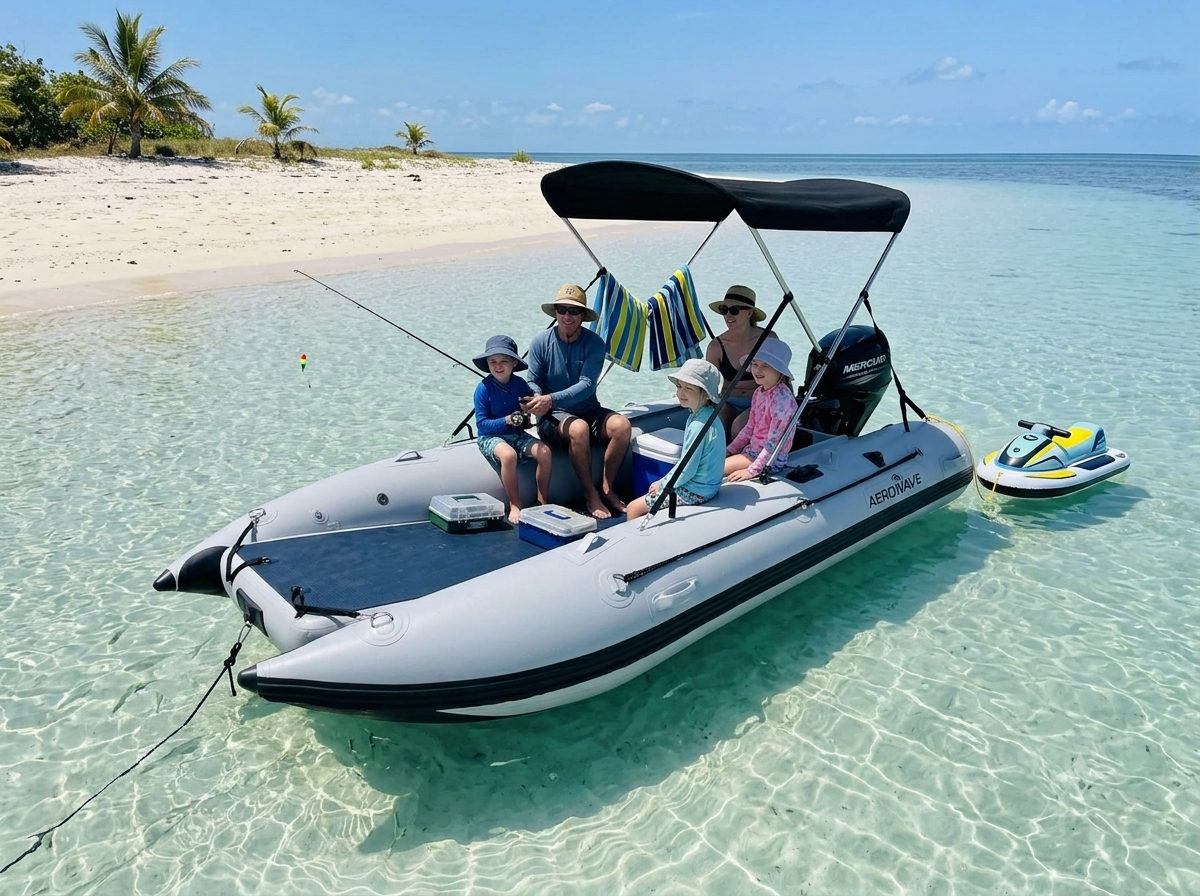
Aerowave WaveRunner 380 Series 3 Catamaran Package
The WaveRunner 380 Series 3 is a premium 3.8m inflatable catamaran package built for Australian and worldwide families, fishing, and coastal day boating — ideal for snorkeling and spearfishing — offering serious stability and premium German Valmex® construction.
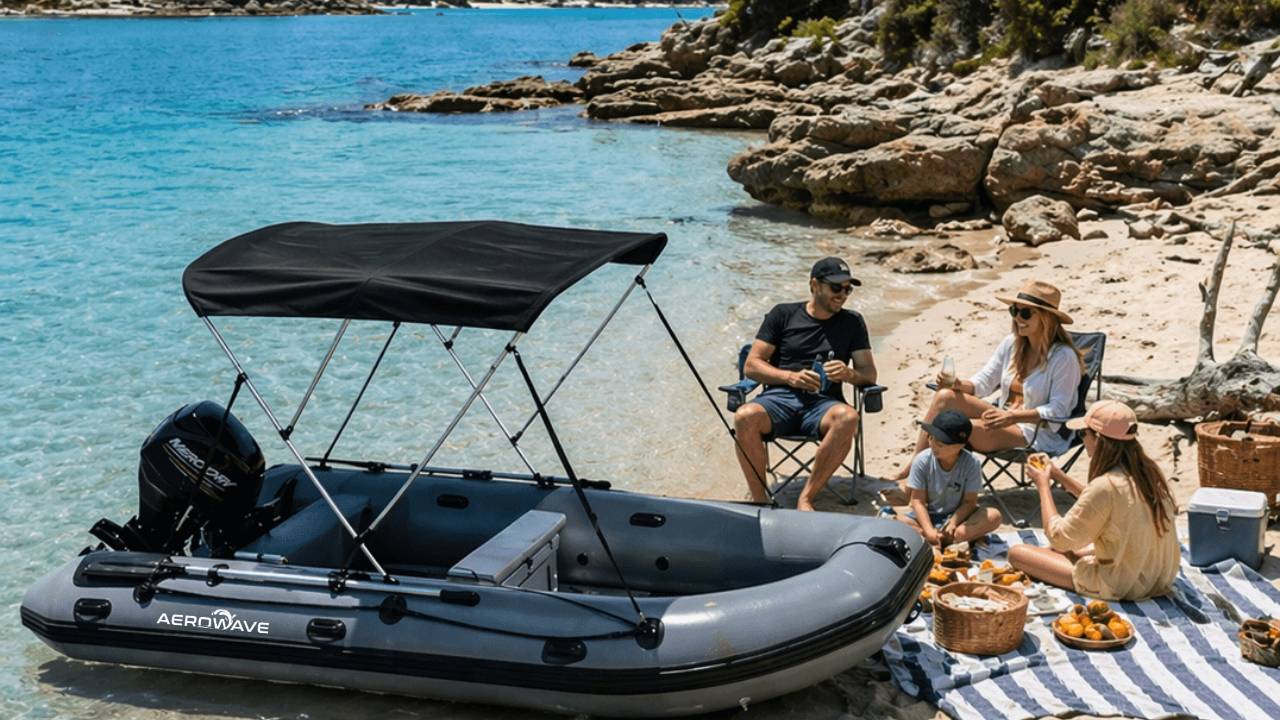
Aerowave Viper 400 Sovereign
Flagship 4m enclosed-bow inflatable catamaran. German VALMEX® 7321 Heavy Plus 1.2mm commercial-grade fabric, 10 PSI high-pressure drop-stitch air deck floor with VALMEX non-slip surface, LockPro wheels, full Bimini and FREE express delivery Australia-wide delivery included. Winter special — save $1,000 until 31 August 2026.
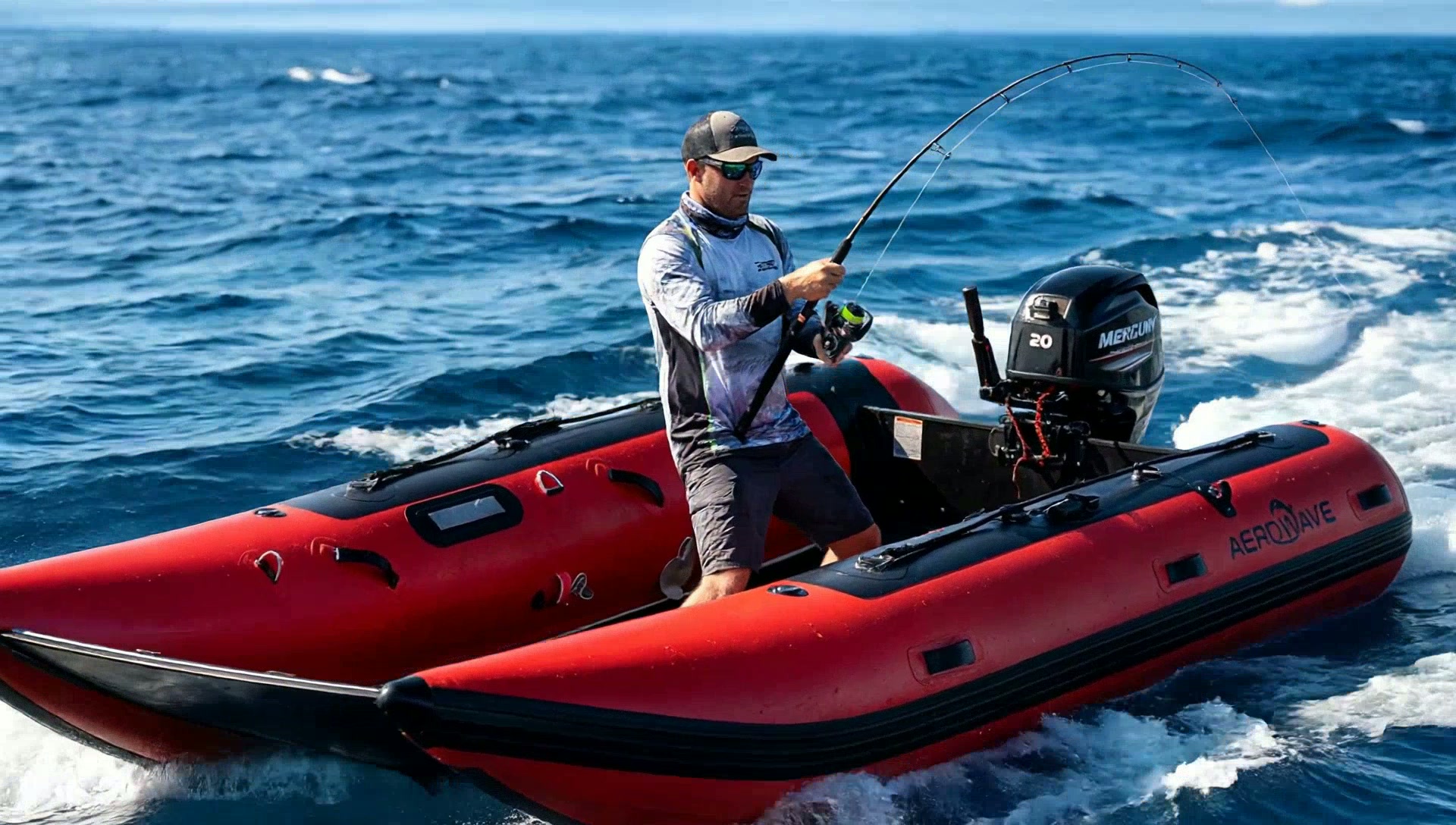
AeroWave AeroCat 360 Inflatable Catamaran
Same proven hull design, shape and look as our flagship Aerowave Viper catamarans — built lighter using 0.9mm Valmex® fabric instead of the Viper's 1.2mm. The AeroWave AeroCat 360 is our 3.6m inflatable catamaran built from 0.9mm Valmex® fabric — intentionally lighter than our 1.2mm Viper hulls so it folds smaller, packs lighter and is easy to handle solo. Twin-hull stability, 5-Year Warranty with global support and priced ~$500 below comparable 0.9mm imports.
Not sure which suits you? Talk to a real boat owner.
Frequently asked questions
- What is the best inflatable boat for beach use?
- An inflatable catamaran, because it combines very shallow draft with high stability — you can nose straight onto sand, load with everyone standing on one side, and float off at any tide. Our pick is the Viper 400 Sovereign for all-round beach use, or the Viper 330 if storage space is tight.
- Are inflatable catamarans better than monohulls for beach launching?
- For most beach work, yes. Twin widely spaced tubes give shallow draft and enormous stability when loading in knee-deep water. A Deep-V monohull is the better choice only if you regularly launch through real surf and then run distance in open water.
- Does sand damage an inflatable boat?
- Sand is abrasive and grit trapped in a folded hull grinds the fabric in storage. Rinse the hull, lift the floor and sweep the sand out before folding. Thicker fabric — 1.2 mm VALMEX rather than 0.9 mm — gives you materially more margin against abrasion.
- How do I protect an inflatable boat from saltwater?
- Rinse hull, transom, valves, motor and wheel kit with fresh water after every saltwater trip, dry fully before folding, store out of UV in a boat bag, and grease the wheel bearings regularly. Welded seams matter here too, because salt wicks into glued seams.
- Do I need wheels for beach launching?
- Effectively yes. A wheel kit turns a two-person drag into a one-person walk and stops you dragging a loaded hull across abrasive sand. If you buy one accessory for a beach boat, buy the wheels.
- Should I let air out of my inflatable boat in hot weather?
- Yes, slightly. Air expands in heat and a hull left rock-hard on 40 °C sand is under real stress. Bleed a little pressure when the boat is sitting in full sun and top it back up before you launch.
- What transom height is best for beach launching?
- A lower transom keeps more of the prop in the water when you are powering off shallow sand. Our catamarans use a 380 mm transom for exactly that reason — less ventilation and cavitation, more bite when it matters.
Ready to set sail?
Premium German-fabric inflatable catamarans with FREE Sea Freight or Express Air Delivery — your choice at cart. Talk to our team or browse the fleet.
Like this guide? Get the next one in your inbox.
Owner-tested tips, gear deep-dives and Aussie boating know-how — no spam.