
Inflatable Boat With Motor: The Complete Buyer's Guide for Australia
How to match an outboard to an inflatable boat: ratings, horsepower classes, shaft length, petrol vs electric, weight and safety — plus which motor suits each Aerowave model.
Our recommendation
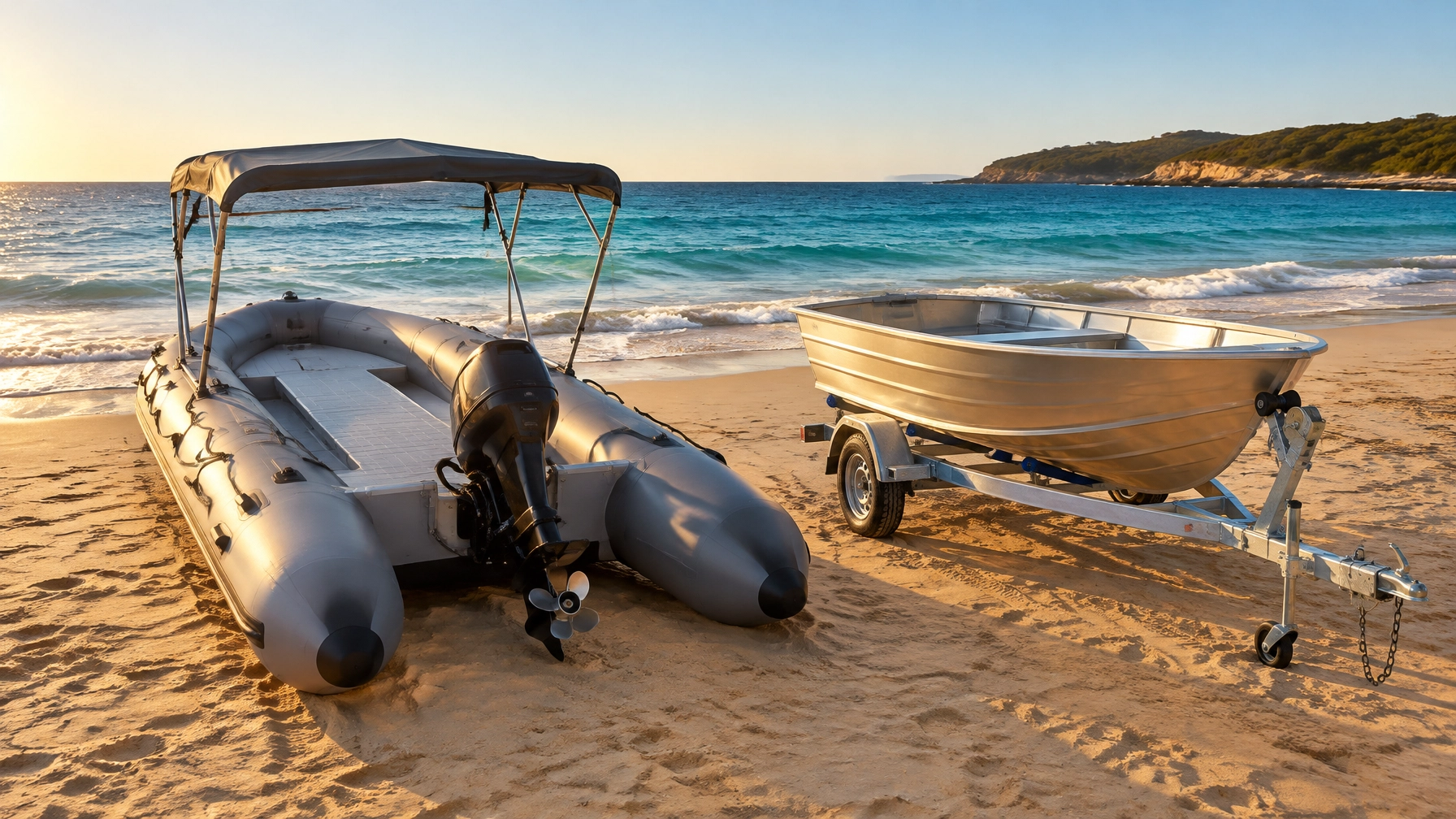
Aerowave Viper 330 + Hidea 9.9HP 4-Stroke Short Shaft Package
— BOAT: AEROWAVE VIPER 330 CATAMARAN —
Length
3.30 m / 10'10"
Beam
1.70 m / 67"
Tube diameter
450 mm / 17.7"
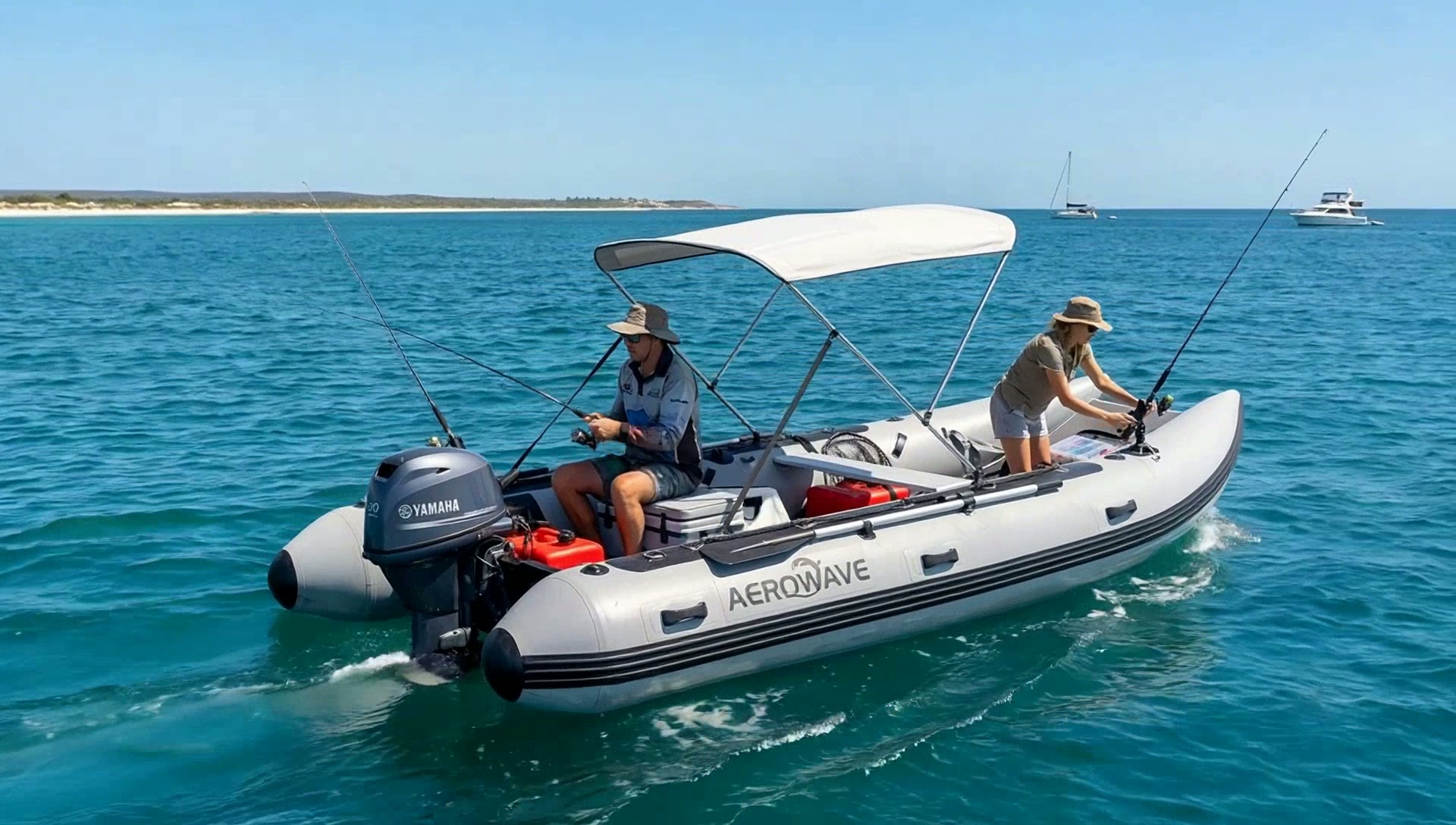
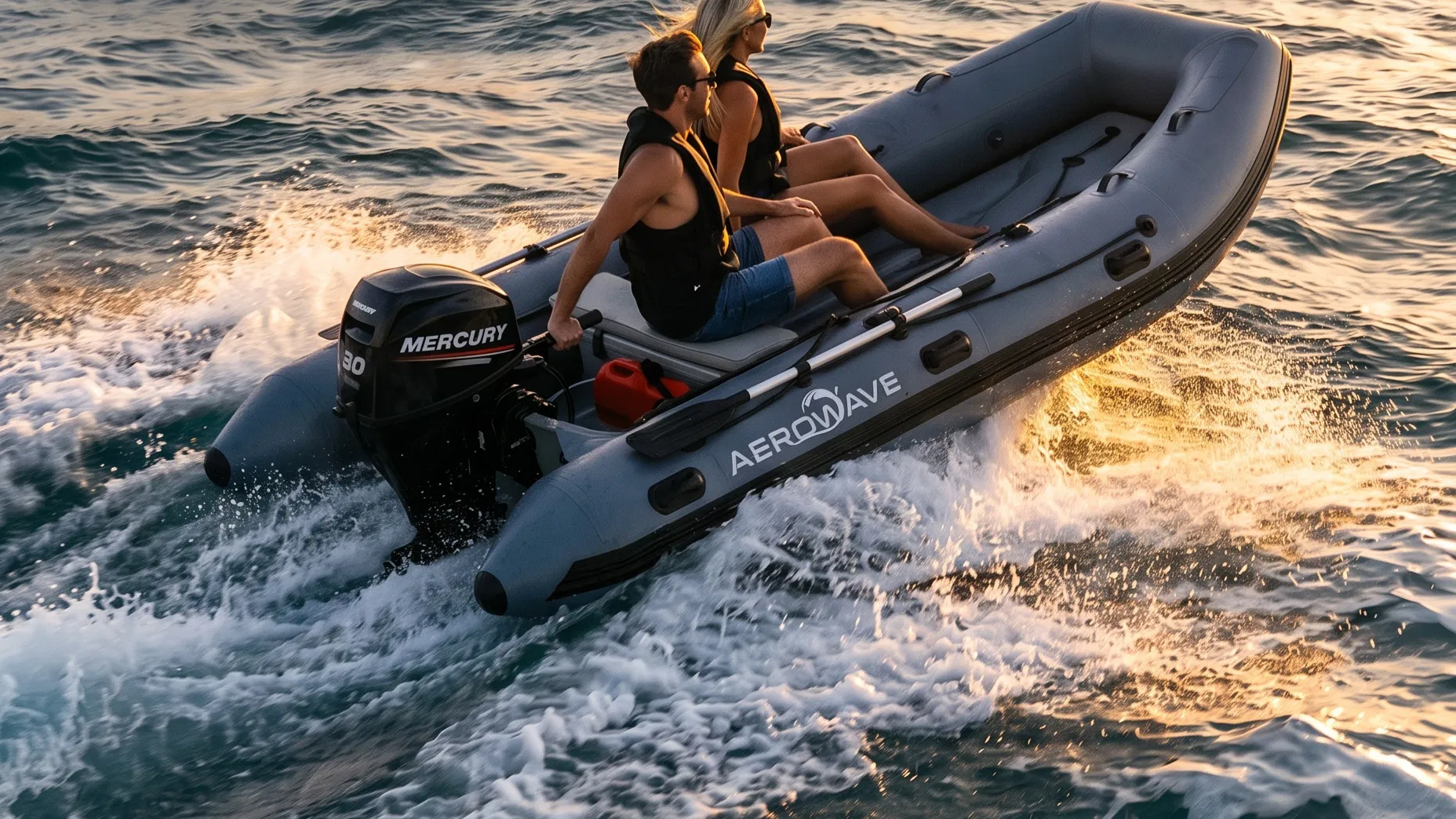
An inflatable boat with a motor makes fishing trips, beach launches and weekend escapes easy — no trailer, no queue at the ramp. The secret is matching the outboard to the boat, not just buying the most horsepower you can afford.
The right set-up depends on the boat's rating, its transom, the load you carry, where you'll use it and how you plan to move the motor. This guide explains what Australian buyers should check before choosing a petrol or electric outboard, from compact 2 hp motors to larger engines for rated catamarans.
Start with the boat's rating, not the motor
Before shopping, find the boat's capacity plate and read the owner's manual. Check:
- Maximum outboard power
- Maximum outboard weight, if listed
- Maximum number of people and total load
- Transom and shaft-length guidance
In Australia, many boats carry the Australian Builders Plate (ABP). Inflatable boats certified to the European Recreational Craft Directive 2013/53/EU are specifically excluded from the ABP Standard, so every Aerowave boat instead carries the manufacturer's European compliance plate and a Declaration of Conformity showing its capacity, engine and identification details. See our Safety & Compliance page for the full explanation.
The engine, fuel, people, safety equipment and gear all count towards the load. Stay within the boat's limits, and don't assume a larger model's engine rating applies to every boat in a series. If a plate is missing or unclear, ask the manufacturer for written guidance before fitting a motor.
What outboard size do you need?
A 2 hp motor and a 20 hp motor suit very different jobs. The right choice comes down to the boat's rating and your priorities, not a universal horsepower-per-metre formula.
| Outboard class | Common use | Keep in mind |
|---|---|---|
| 2–6 hp | Small tenders, sheltered-water trips and low-speed manoeuvring | Chosen for simple handling and portability; performance drops under heavy load. |
| 6–15 hp | Smaller inflatables and light recreational use | A practical middle ground for short trips, depending on boat, load and conditions. |
| 15–20 hp | Larger inflatables carrying more people or gear | Check the transom rating and the engine's actual weight, not just its horsepower. |
| 20 hp and above | Larger, suitably rated boats where stronger performance is wanted | Only use an engine within the exact boat's power and weight limits. |
These are broad shopping categories, not a substitute for your boat's plate. A boat may be limited by motor weight or transom design before it reaches a particular horsepower — a 20 hp outboard can be ideal on one larger inflatable and unsuitable on another.
Matching an outboard to an Aerowave model
Use this as a starting point for a conversation, then confirm the rating for the exact boat and package you're buying.
- Swift Tender 290 SI: a compact 2.9 m tender rated up to 15 hp, usually paired with a modest motor for ship-to-shore trips.
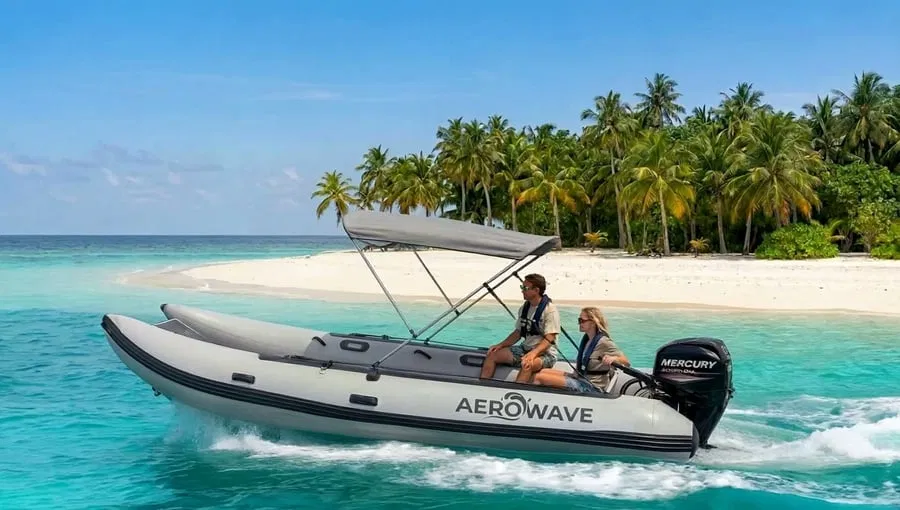
- AeroCat 335 and Viper 330: the smaller catamarans, ideal for comparing portable outboards in the lower power classes. The Viper 330 + Hidea 9.9HP Short Shaft Package arrives correctly matched.
- AeroCat 365 and Viper 365 Open Bow: mid-size boats where a 15–20 hp motor is a useful starting point, checked against the full load you expect to carry.
- AeroCat 380 and the Viper 400, 430 and 450: the larger models suit higher-powered set-ups within each boat's plate. The Viper 400 Open Bow + Hidea 20HP Short Shaft Package is the combination most owners choose.
Explore the Viper Series, AeroCat Series, Tender Series or every model on our boats page. When asking for a quote, tell us the model, your expected passenger and gear load, and the water you'll use it on.
Short shaft or long shaft?
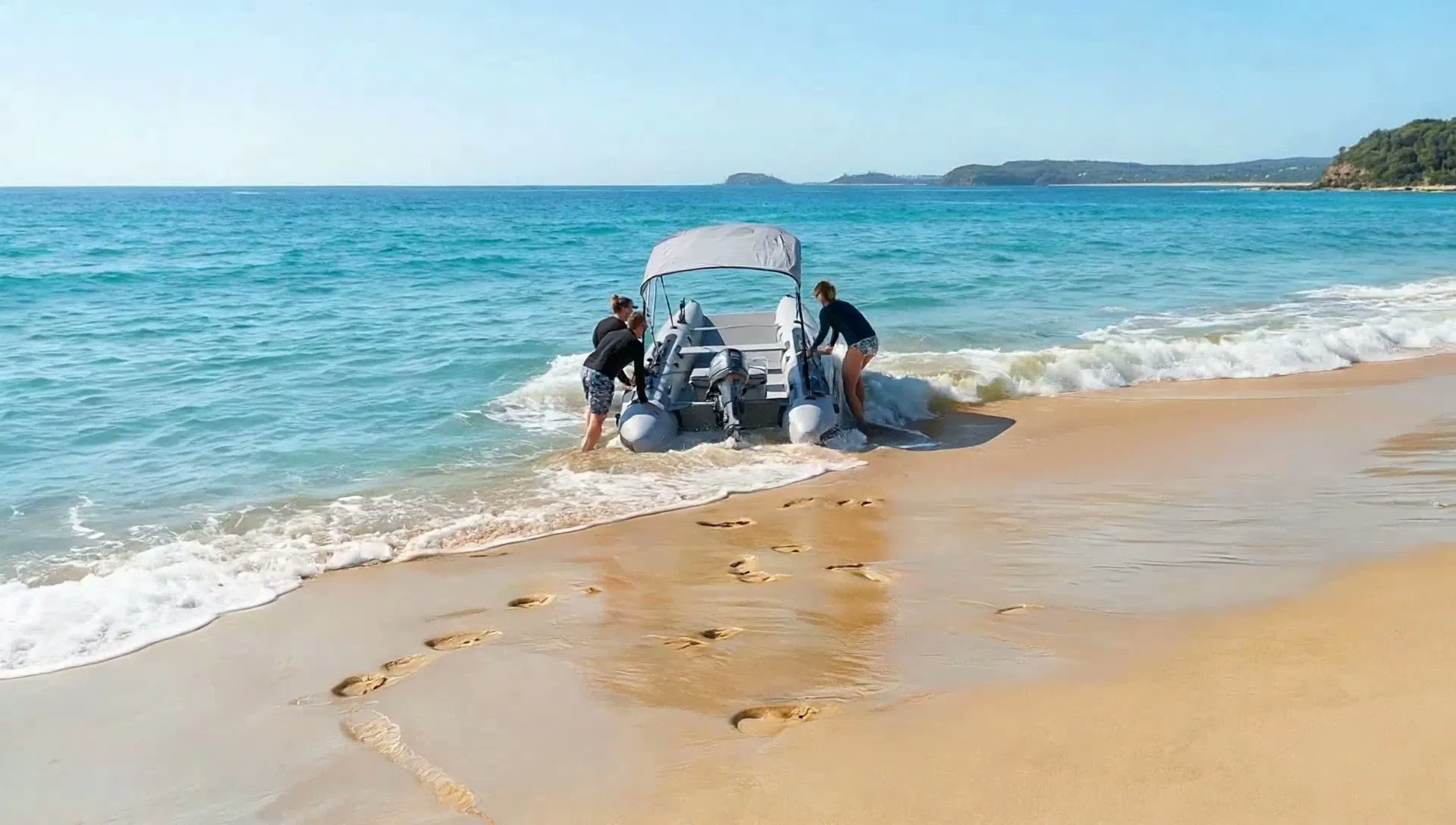
Outboard shaft length must match the boat's transom. Too short and the propeller sits near the surface and loses grip in disturbed water; too long and it sits unnecessarily deep, adding drag.
Measure from the top of the transom where the motor clamps down to the hull bottom at the centreline. Shafts are usually described as short (about 15 inches) or long (about 20 inches). The standard Aerowave transom is 380 mm, built for a short-shaft (15") outboard — it puts more propeller in the water and gives the motor more bite in chop. Already own a long-shaft motor? The Long-Shaft Transom Upgrade is built into the hull during production.
Read the full guide: Outboard Shaft Length Explained.
Petrol or electric?
Petrol outboards are the familiar choice for longer outings and stronger performance. Compare weight, fuel requirements and servicing, not just horsepower — a motor that's awkward to lift takes the convenience out of a portable boat. Our Hidea outboards range runs from 2.5 hp to 40 hp.
Electric outboards suit quiet trips, sheltered waterways and low-speed use. Running time depends on the motor, battery capacity, load, speed and conditions, so include the battery's weight and storage in your plans and recharge before setting off.
Think about weight as well as performance
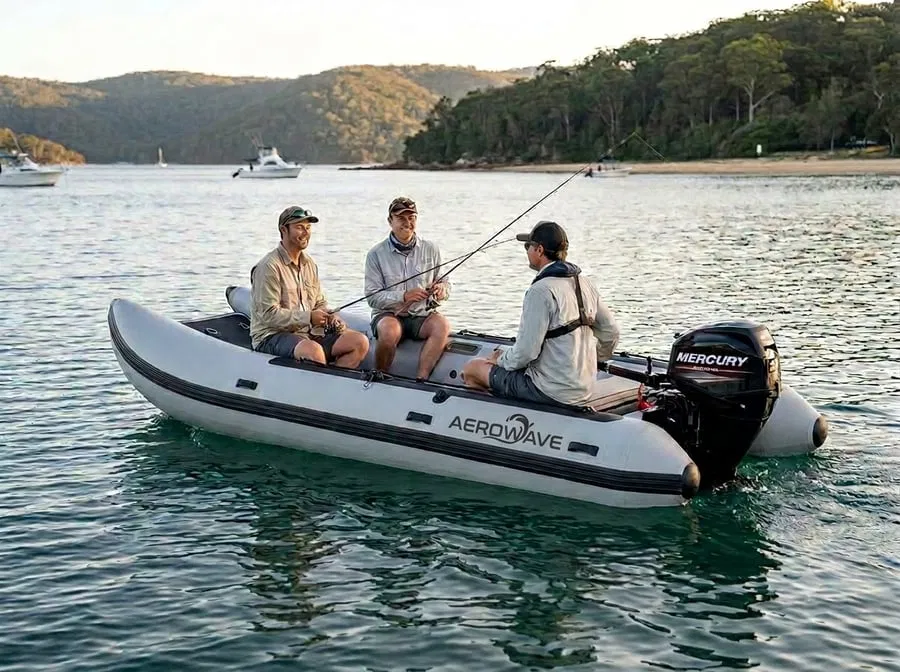
More horsepower usually means more weight on the transom, which affects trim, handling and the load left for passengers and gear. A lighter motor is easier to carry from the car to the water; a heavier one may need a second person or a motor trolley.
Compare the complete installed weight — including any battery or fuel — with the boat's limits. Think about your typical trip too: a solo angler with light gear has different needs from a family carrying a full day's equipment.
Mounting and safety basics
Use the correct clamps or mounting hardware for the transom, follow the engine maker's instructions and check that steering and throttle move freely. Never modify the transom or fit a motor beyond the boat's rating.
Before heading out:
- Load people and equipment within the boat's stated limits.
- Carry the safety equipment required for your location, including lifejackets for everyone on board. See our safety gear guide.
- Attach the engine kill-switch lanyard where fitted.
- Check the weather, fuel or battery charge, and local boating rules.
- Reduce your load when conditions are poor or you're heading into open water.
Registration and licence rules differ between states and territories. Every Aerowave boat is fully registerable in Australia: a Boat Code certifier checks the compliance plate and Statement of Conformity and issues the certificate you take to your state authority. Our registration and boat coding guide explains each step.
The simple checklist before you buy
- Choose the boat for your intended trips and passenger load.
- Check its plate and manual for maximum engine power, weight and total load.
- Match the outboard's shaft length to the transom.
- Compare the complete motor and battery or fuel weight, not horsepower alone.
- Confirm your local registration, licence and safety-equipment requirements.
- Get the exact boat-and-motor pairing confirmed before ordering.
The best inflatable boat with a motor is the one that suits your real trips and stays within its maker's limits. Tell us how you plan to use it — or call Gary on +61 2 4335 1603 — and we'll confirm the right set-up before you buy.
Frequently asked questions
- What size outboard do I need for an inflatable boat?
- It depends on the boat's rated maximum power and weight, your usual load and where you boat. As a guide, 2–6 hp suits small tenders, 6–15 hp suits smaller inflatables, and 15–20 hp suits larger inflatables and catamarans — always within the boat's plate.
- Do Aerowave inflatable boats have an Australian Builders Plate?
- No. Inflatable boats certified to EU Directive 2013/53/EU are specifically excluded from the Australian Builders Plate Standard. Every Aerowave boat carries the manufacturer's European compliance plate and a Declaration of Conformity showing its capacity and engine limits.
- Should I choose a short shaft or long shaft outboard?
- Match the shaft to the transom. The standard Aerowave transom is 380 mm, built for a short-shaft (15 inch) outboard. If you already own a long-shaft motor, the Long-Shaft Transom Upgrade is built into the hull during production.
- Is a petrol or electric outboard better for an inflatable boat?
- Petrol suits longer trips and stronger performance. Electric suits quiet, low-speed trips on sheltered water. For electric, include the battery's weight and plan running time around your load, speed and conditions.
- Can I put a bigger motor on my inflatable boat?
- Never exceed the boat's rated maximum power or motor weight. Extra weight on the transom also affects trim, handling and the load left for passengers and gear.
- Do I need to register an inflatable boat with a motor?
- Rules vary by state and territory, so check where you'll boat. Every Aerowave boat is fully registerable in Australia via a Boat Code certificate, then state registration.
- Do you sell boat and motor packages?
- Yes. Packages such as the Viper 330 + Hidea 9.9HP and Viper 400 Open Bow + Hidea 20HP arrive correctly matched with a short-shaft motor. Call Gary on +61 2 4335 1603 to confirm the right pairing for you.
Finance this boat from $38/week
Estimate only — powered by Australian Motorcycle & Marine Finance (AMMF).
Paid upfront (AUD)
$860
10% of price
Term
5 years
60 monthly repayments
Comparison rate
9.95% p.a.
Subject to AMMF approval
Weekly
$38
Monthly
$164
Amount financed
$7,735
Indicative only. Actual repayments depend on your AMMF credit assessment, term, fees and the balloon you select. Talk to AMMF for a personalised quote on Aerowave Viper 330 + Hidea 9.9HP 4-Stroke Short Shaft Package.
Like this guide? Get the next one in your inbox.
Owner-tested tips and Aussie boating know-how — no spam.
Ready when you are
Build your Viper 330 + Hidea 9.9HP 4-Stroke Short Shaft Package in under 3 minutes.
1500 GSM / 1.2 mm VALMEX® hull. Five-year limited hull warranty plus two years of extended limited structural hull cover, subject to conditions. Free freight to United States · taxes included, nothing to pay on arrival.
delivered to your door
See it for yourself
Real boats. Real owners. Real people behind them.
Plenty of what you read online these days is generated. Check us out properly — the factory, the reviews and the owners are all one click away. Why we use AI, and how to check we’re real
How our boats are built
Walk the production line: thermo-welded seams, 1.2 mm VALMEX Heavy Plus hulls, over-pressure relief valves on every chamber.
See the buildGoogle Maps reviews
Real Australian owners, five stars, published on our Google Business Profile with the map — read them there, not just on our own site.
Open Google Maps reviewsOwner stories
Boats in use — offshore, on rivers, on rescue duty. Photos and words from the people who actually own them.
Read owner stories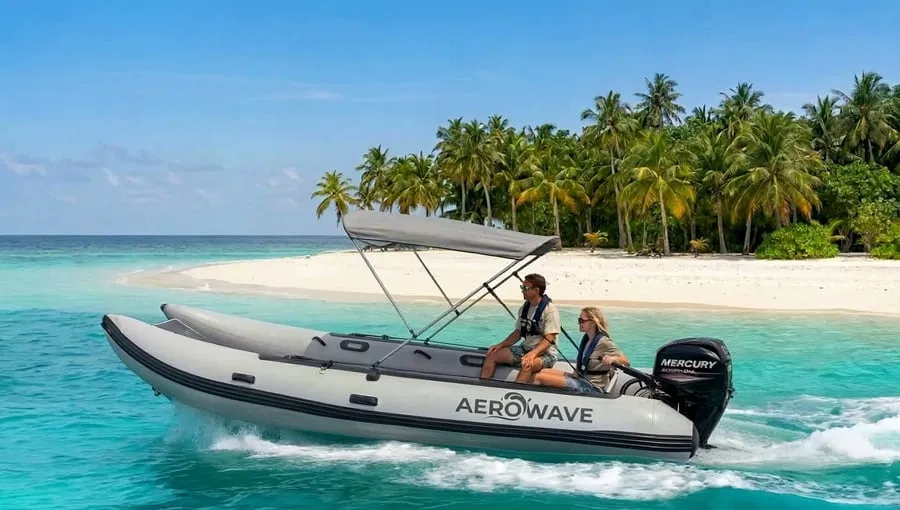
Aerowave Viper 330 + Hidea 9.9HP 4-Stroke Short Shaft Package
US$6,124 USD · delivered to your door