
Fast Tenders: What Speed Really Costs a Yacht Owner
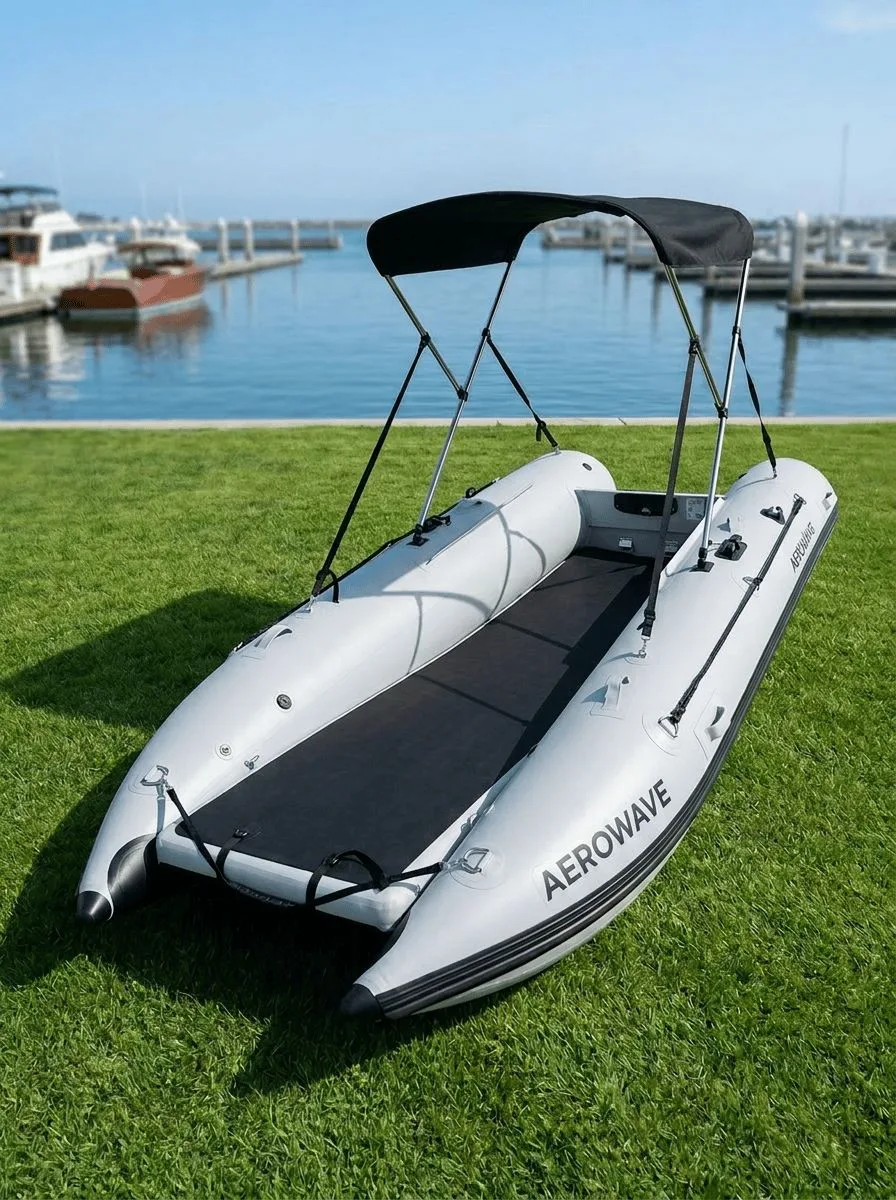
What makes a fast tender perform: twin-hull design, a stiff air deck, the 380 mm transom, outboard pairing and load. Inside the WaveRunner 380.
Our recommendation
Aerowave WaveRunner 380 Series 3 Catamaran Package
Length
3.80m
Width
1.55m
Tube Diameter
52cm
Weight
47kg
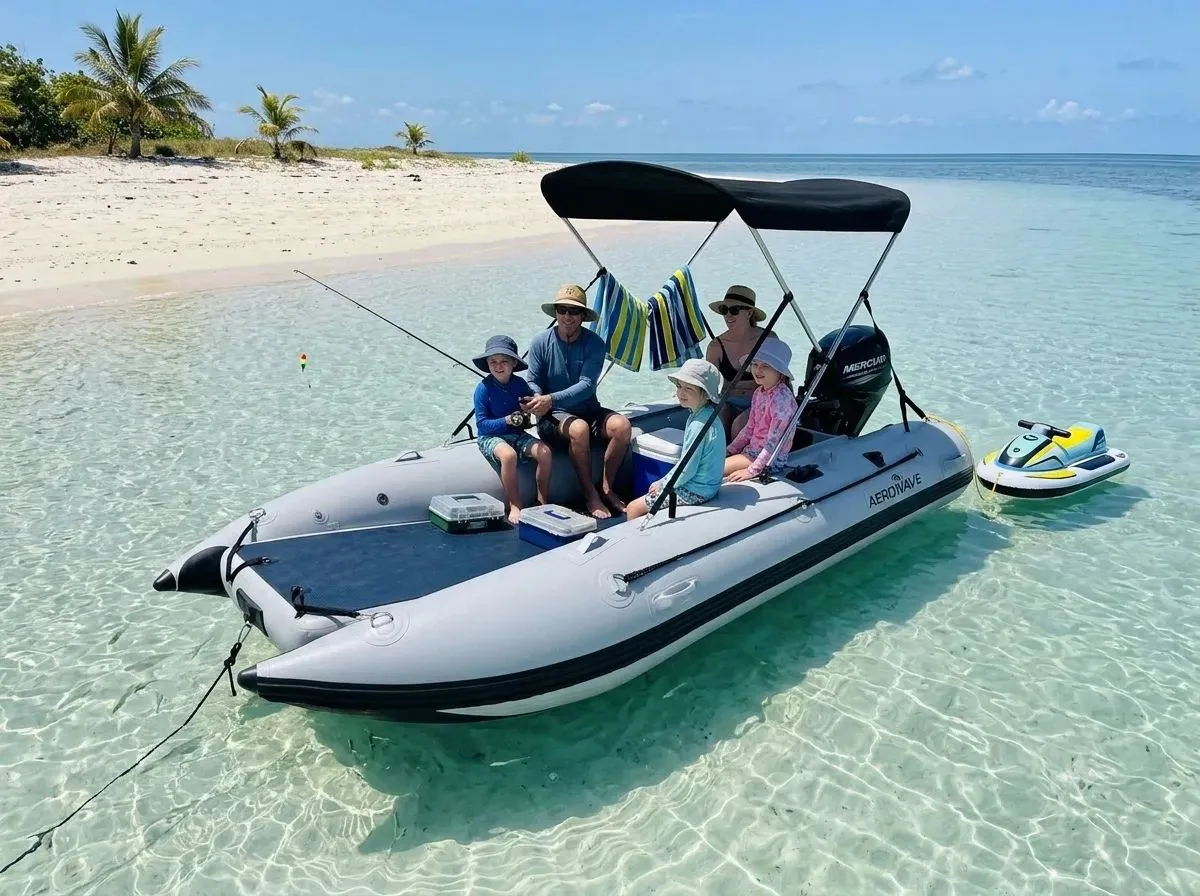
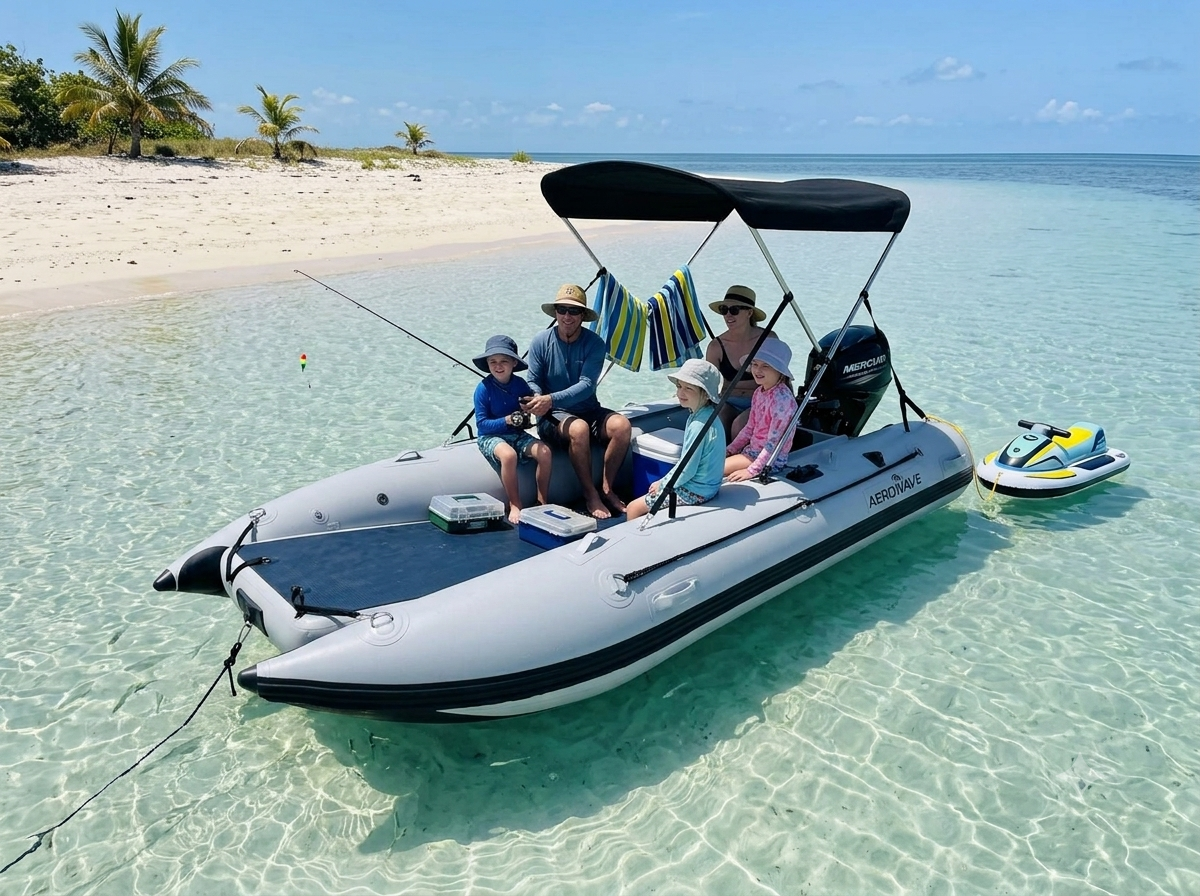
For a yacht owner, a fast tender is more than a way to get to shore quickly. It’s a practical extension of the vessel: a way to move people and provisions, reach a quiet anchorage, or make the trip between boat and beach with confidence.
But speed is not bought by horsepower alone. Hull form, floor stiffness, transom geometry, propeller setup and the weight aboard all work together. Get that balance right and a tender can feel brisk, composed and useful. Get it wrong and extra power may bring little more than noise, fuel use and a less settled ride.
What makes a tender fast?
A tender accelerates and holds speed when its hull can move efficiently through the water and, where designed to do so, rise onto the plane. The useful question is not simply “How fast can it go?” It’s “How does it perform with the people, gear and outboard I’ll actually carry?”
Three details matter especially:
- A clean, appropriately shaped hull helps limit unnecessary drag.
- A firm floor supports a more consistent running surface instead of flexing under load.
- A properly matched outboard and transom help deliver thrust without the propeller losing its grip on the water.
A soft, sagging floor can compromise the shape beneath the boat. An outboard that is incorrectly sized or poorly matched to the transom can waste power. And a tender that runs quickly with one person aboard may behave quite differently once it is carrying passengers, fuel and equipment.
Twin hulls versus monohulls: a different kind of performance
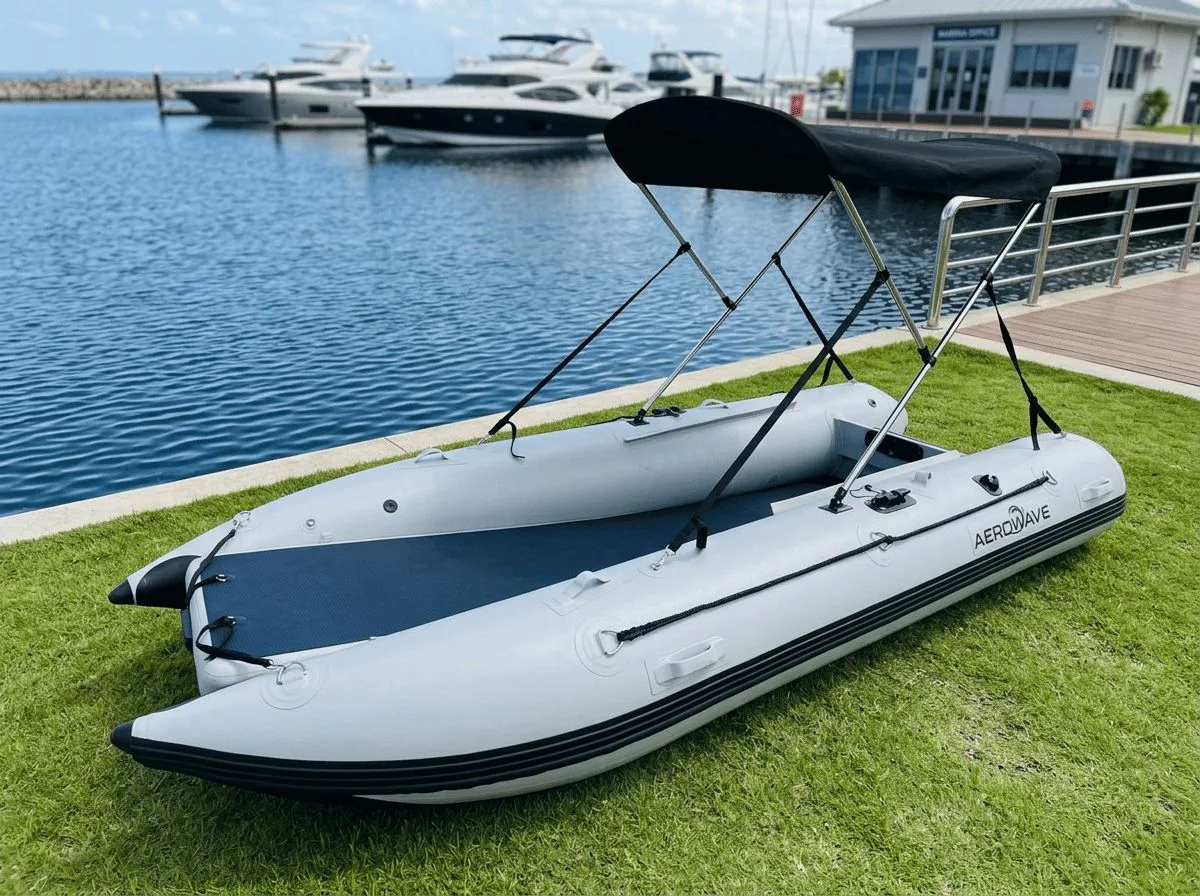
A conventional inflatable monohull has one central hull form. An inflatable catamaran has two buoyant hulls with an open tunnel between them. That twin-hull layout can reduce the wetted area and create a stable platform, particularly at rest and at low speeds. Depending on the hull’s shape, load and conditions, it can also help the tender move efficiently at speed.
That doesn’t make every catamaran faster than every monohull. Hull design and weight still matter, and a monohull with a suitable planing shape may be the better match for a particular use. A catamaran’s tunnel geometry, hull spacing and load distribution all affect how it performs.
For yacht owners, the appeal is often the balance: a wide, steady feel for boarding and carrying people, paired with lively performance when conditions and setup suit. Catamarans can feel drier than a basic inflatable because the twin hulls help keep the central floor clear of the water. They are not spray-proof, though, and no tender should be expected to feel the same in a chop as it does on a calm day. In rougher conditions, a catamaran may feel bouncier than a suitable V-hull monohull.
Why floor stiffness matters
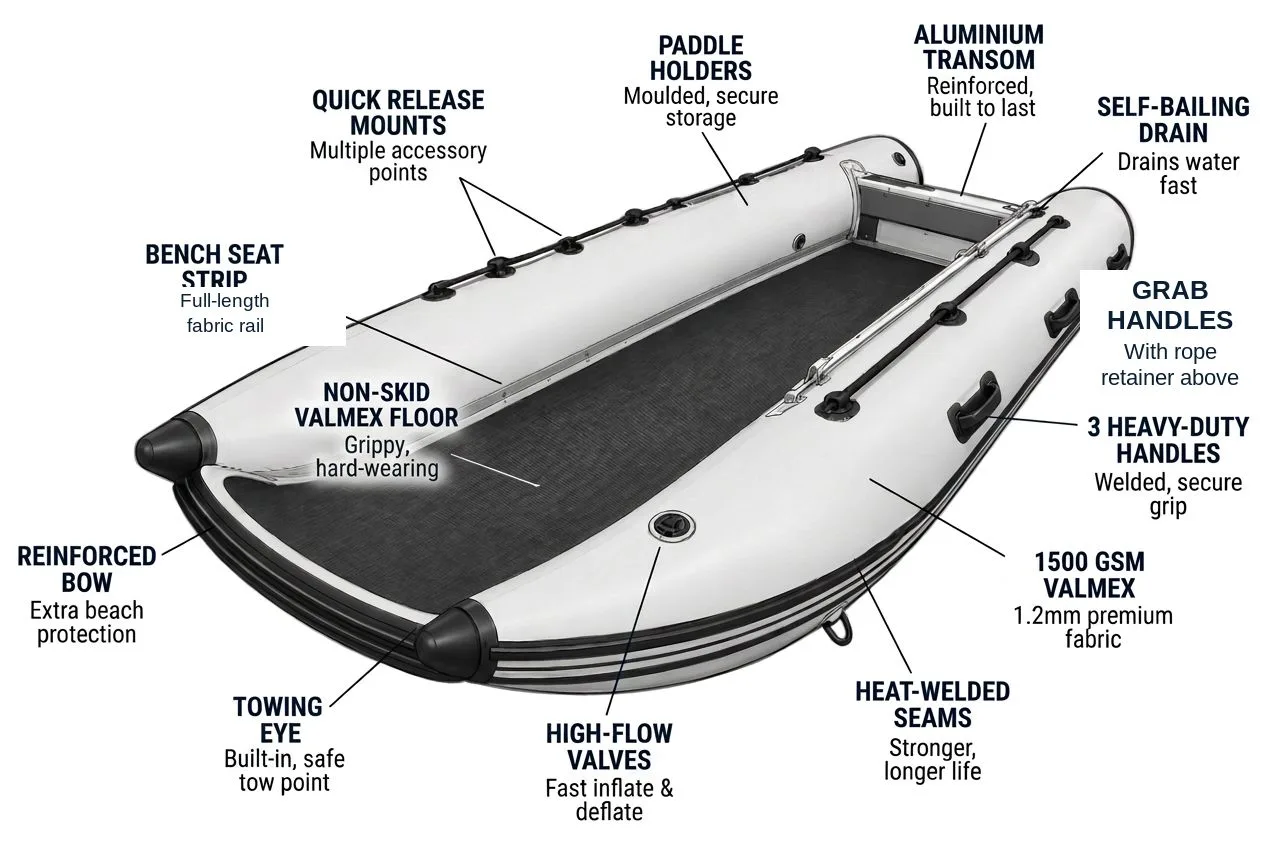
An inflatable floor is not just something to stand on. It helps support the shape of the boat when underway. A high-pressure air deck, when inflated to its specified pressure, creates a firm platform without the weight and packing demands of a rigid floor.
The Aerowave WaveRunner 380 uses a hard AirDeck floor specified at 8–10 PSI. Following the manufacturer’s inflation instructions matters: a floor that is too soft may flex more than intended, while overinflation can cause damage. The product page also advises using the manual pump to reach the floor’s final pressure.
A firm floor won’t guarantee a particular speed. It is one part of a whole system that includes the hull, the motor, the propeller and the load aboard.
The 380 mm transom: helping the prop stay engaged
At speed, the propeller needs a clean supply of water. If it ventilates, drawing air into the propeller rather than biting solid water, the outboard can lose thrust, particularly during acceleration or a turn.
The WaveRunner 380 Series 3 has a 380 mm transom. Transom height and the correct outboard shaft length help position the propeller where it can work effectively. The right setup depends on the particular outboard and manufacturer instructions; never assume that a motor will suit because its horsepower is within the boat’s rating. Outboard height and propeller setup are specialist adjustments, not a shortcut to guaranteed speed.
The WaveRunner 380 is rated for a maximum 20 HP outboard. That’s a ceiling, not a recommendation to fit the largest motor regardless of your needs. Check the tender’s specifications, the outboard manual, shaft length, total load and your intended use before choosing a motor.
What speeds are realistic?
Speed depends on the whole setup: load, motor condition, propeller, trim, water state and wind all change the result. That’s why we match the outboard to how you’ll actually use the boat rather than lead with a single headline number. The most meaningful measure is a safe, correctly loaded run in suitable conditions, checked by GPS. For motor-by-motor guidance, see How fast does an inflatable catamaran go?
The WaveRunner 380 is 3.8 metres long, with a listed 650 kg load rating, a capacity of six people and five recommended. That load rating is not a target speed load. Every passenger, outboard, fuel container, battery, anchor and piece of safety equipment contributes to the total. As weight increases, acceleration and top speed generally fall, and the boat may take longer to plane.
If speed is a priority, talk through the complete setup, not just the engine’s horsepower. Start with how many people you’ll usually carry, how much kit comes aboard, and whether you value quick acceleration, economical cruising or the highest possible speed within the boat’s rating.
The WaveRunner 380: high performance, considered as a whole
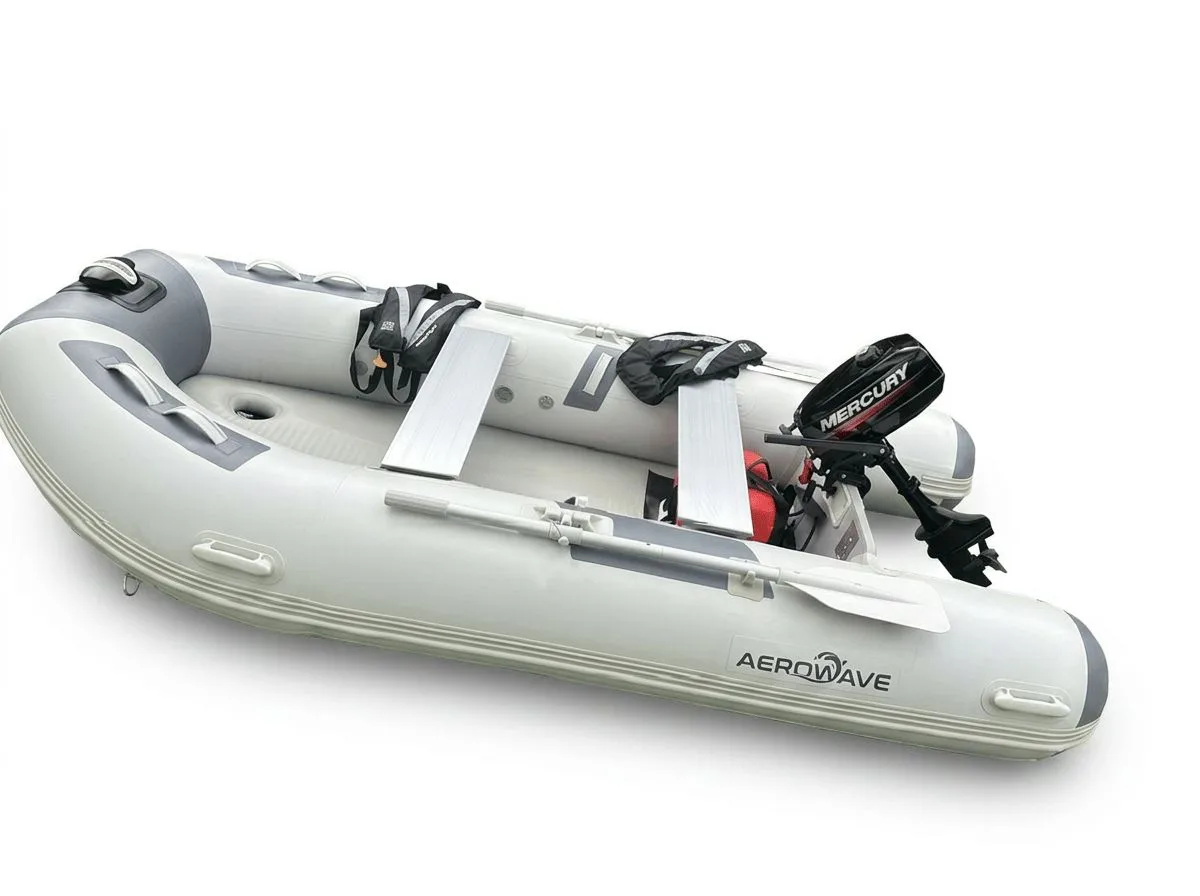
The Aerowave WaveRunner 380 Series 3 is Easy Inflatables’ high-performance inflatable catamaran model. Its specification brings together a twin-hull platform, high-pressure AirDeck floor, 380 mm transom and a maximum 20 HP outboard rating. The listed boat weight is 47 kg, before adding an outboard and operating equipment.
For owners who want to compare hulls and specifications, see the WaveRunner range and the boat comparison page. A suitable choice should account for the yacht’s storage and handling arrangements as well as on-water performance. Consider how the tender will be lifted, where it will be stowed and who will launch it. A fast tender that is awkward to manage can be a poor fit for everyday yacht use.
Speed is part of ownership, not the whole brief
For yacht owners, the best performance tender is one that fits the way the yacht is used. Speed should come alongside stability, passenger comfort, ease of handling and durability. A well-matched inflatable catamaran can offer an appealing combination of a steady platform and efficient performance, while remaining packable when space is at a premium.
The WaveRunner 380 sets up in about 15 minutes. For a tailored recommendation on motor pairing and your intended load, request a free written quote. Include your typical passenger count, gear and boating conditions so the conversation can start with the right details.
Further reading
Frequently asked questions
- What makes an inflatable tender fast?
- Hull form, floor stiffness, transom height, propeller setup and the weight aboard working together, not horsepower alone.
- What is the maximum outboard for the WaveRunner 380?
- The WaveRunner 380 is rated for a maximum 20 hp outboard. Match the motor to your usual load rather than simply fitting the largest.
- Why does the WaveRunner 380 have a 380 mm transom?
- The lower 380 mm transom puts more prop in the water for more bite and helps stop ventilation and cavitation.
- How many people does the WaveRunner 380 carry?
- It is rated for six people with five recommended, and a 650 kg load rating.
- What fabric is the WaveRunner 380 made from?
- 1500 GSM / 1.2 mm German VALMEX Heavy Plus with fully thermo-welded seams.
- How long does the WaveRunner 380 take to set up?
- About 15 minutes.
Finance this boat from $22/week
Estimate only — powered by Australian Motorcycle & Marine Finance (AMMF).
Paid upfront (AUD)
$495
10% of price
Term
5 years
60 monthly repayments
Comparison rate
9.95% p.a.
Subject to AMMF approval
Weekly
$22
Monthly
$94
Amount financed
$4,450
Indicative only. Actual repayments depend on your AMMF credit assessment, term, fees and the balloon you select. Talk to AMMF for a personalised quote on Aerowave WaveRunner 380 Series 3 Catamaran Package.
Like this guide? Get the next one in your inbox.
Owner-tested tips and Aussie boating know-how — no spam.
Ready when you are
Build your WaveRunner 380 Series 3 Catamaran Package in under 3 minutes.
1500 GSM / 1.2 mm VALMEX® hull. Five-year limited hull warranty. Free freight to United States · taxes included, nothing to pay on arrival.
delivered to your door
See it for yourself
Real boats. Real owners. Real people behind them.
Plenty of what you read online these days is generated. Check us out properly — the factory, the reviews and the owners are all one click away. Why we use AI, and how to check we’re real
How our boats are built
Walk the production line: thermo-welded seams, 1.2 mm VALMEX Heavy Plus hulls, over-pressure relief valves on every chamber.
See the buildGoogle Maps reviews
Real Australian owners, five stars, published on our Google Business Profile with the map — read them there, not just on our own site.
Open Google Maps reviewsOwner stories
Boats in use — offshore, on rivers, on rescue duty. Photos and words from the people who actually own them.
Read owner stories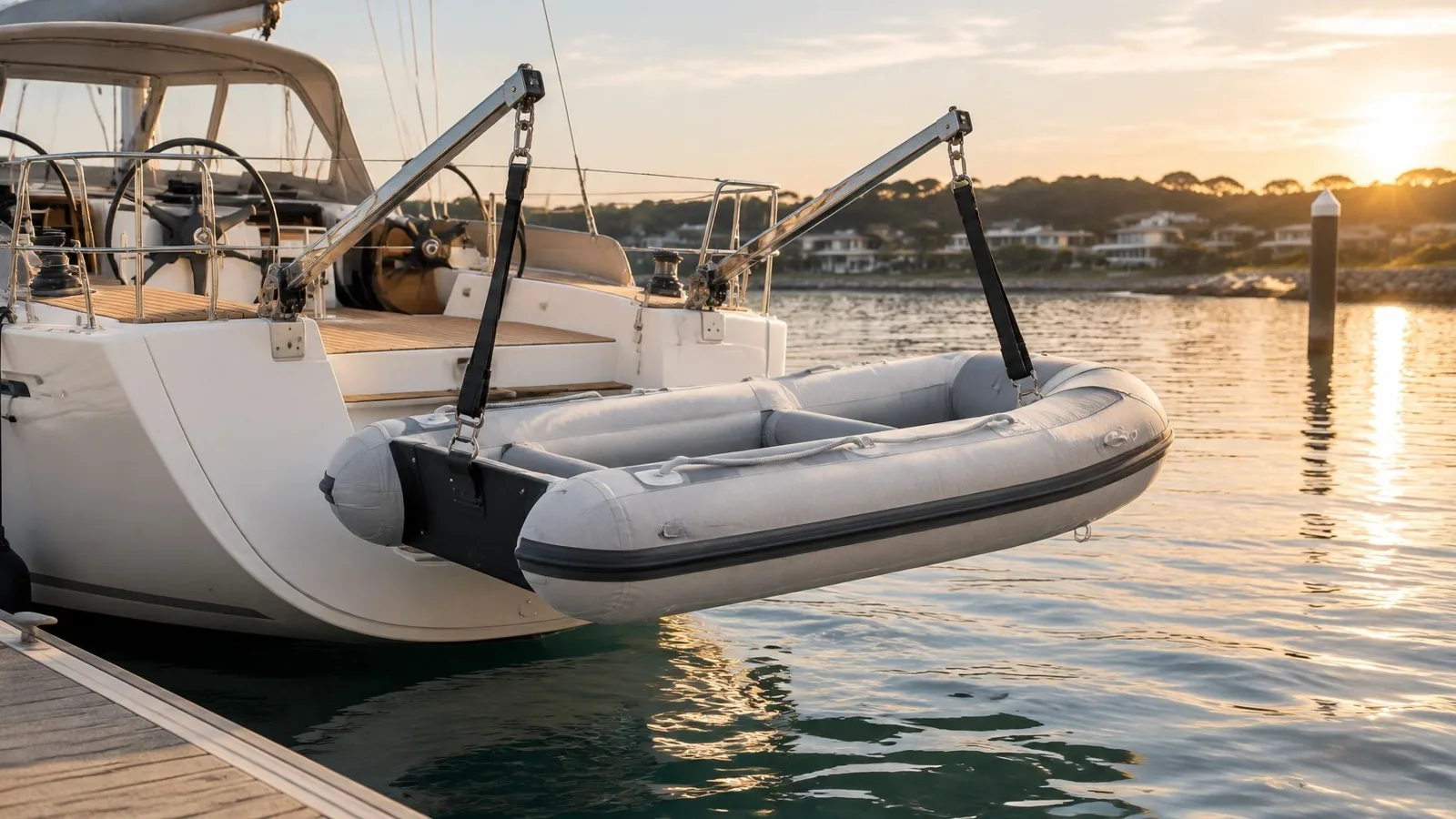
Aerowave WaveRunner 380 Series 3 Catamaran Package
US$3,523 USD · delivered to your door