
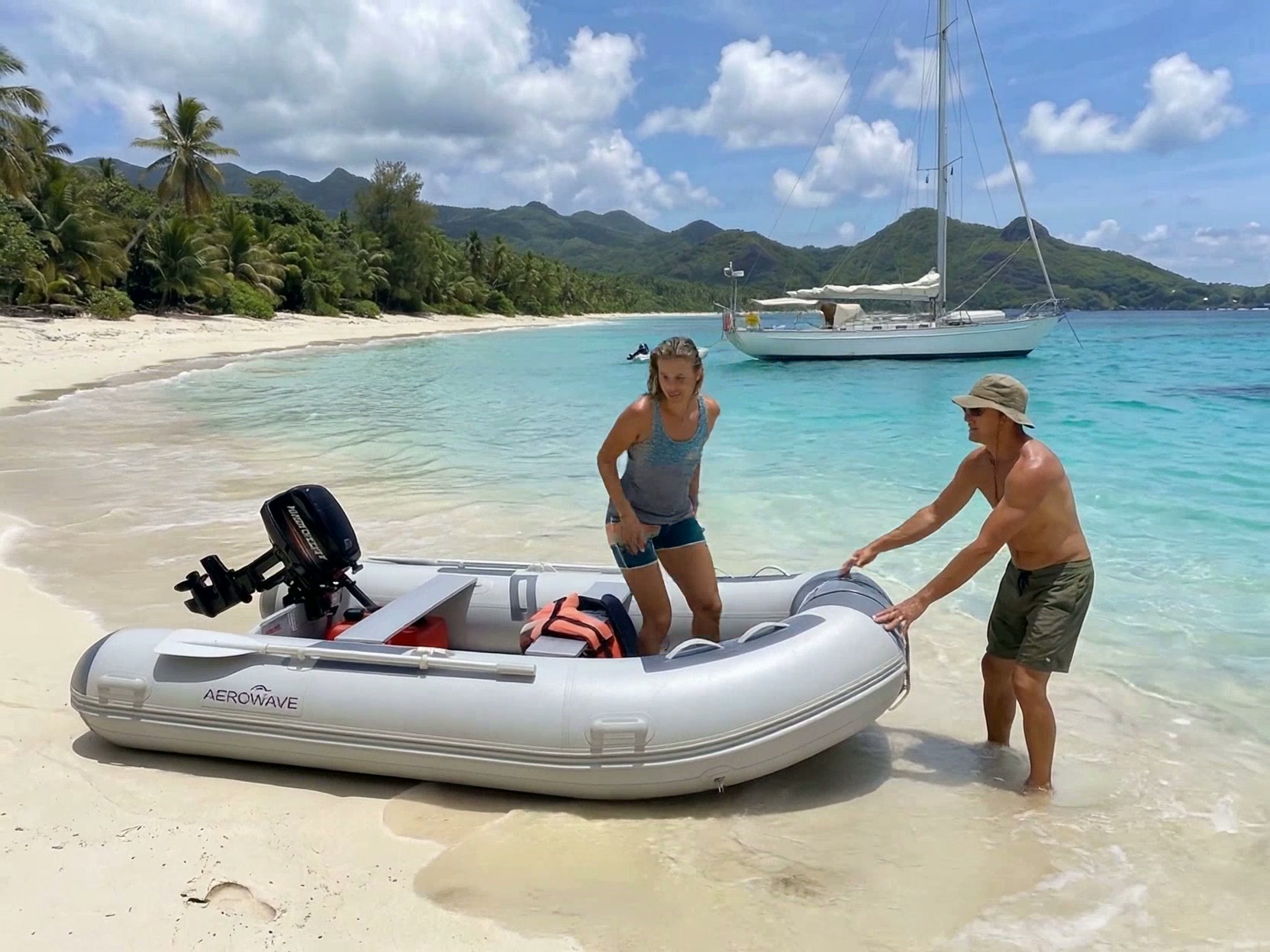
Why Heavy-Duty Inflatables Suit Marina Life
How a heavy-duty soft-hull inflatable tender simplifies marina storage, avoids a separate tender berth and handles Australian sun with durable fabric and welded seams.
Our recommendation
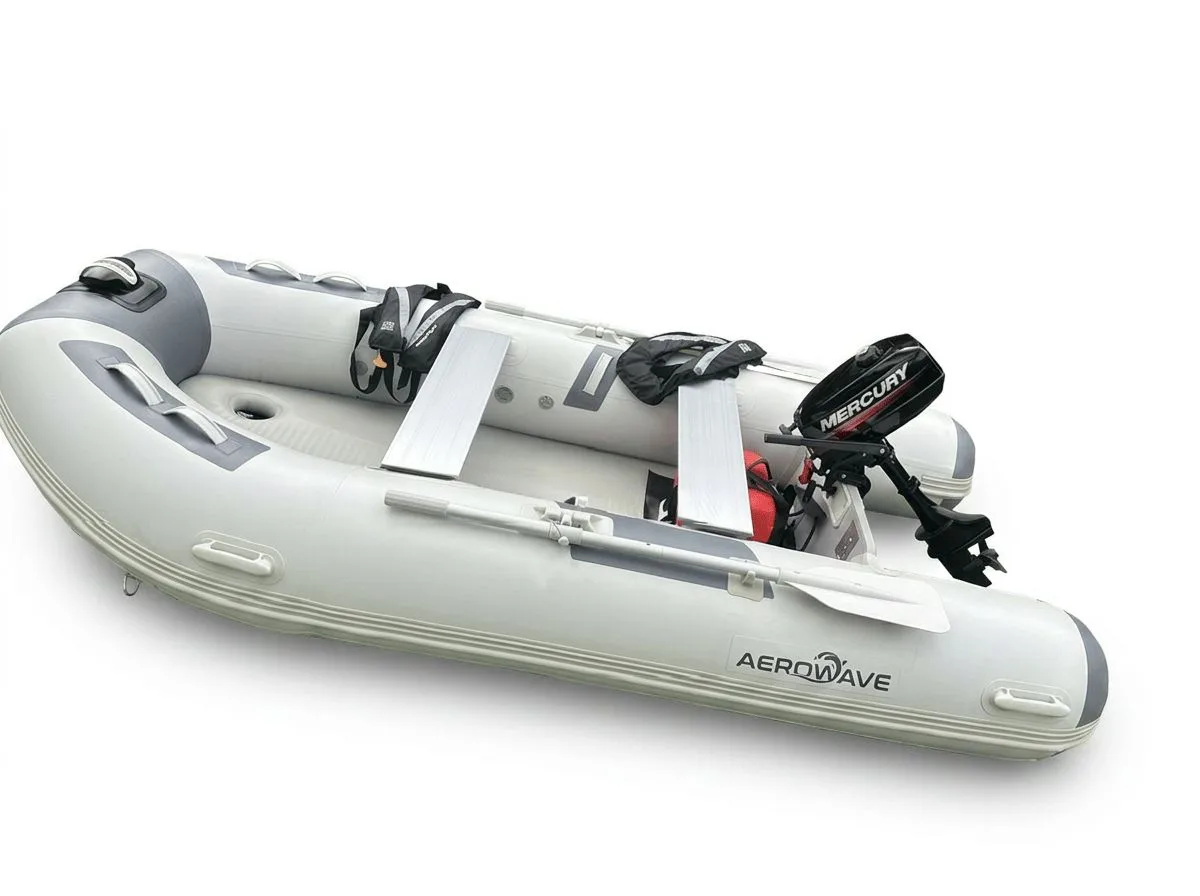
Aerowave Swift Tender 270 SI
Length
270cm / 8'10"
Width
152cm / 4'11"
Tube diameter
40cm
Chambers
3+1
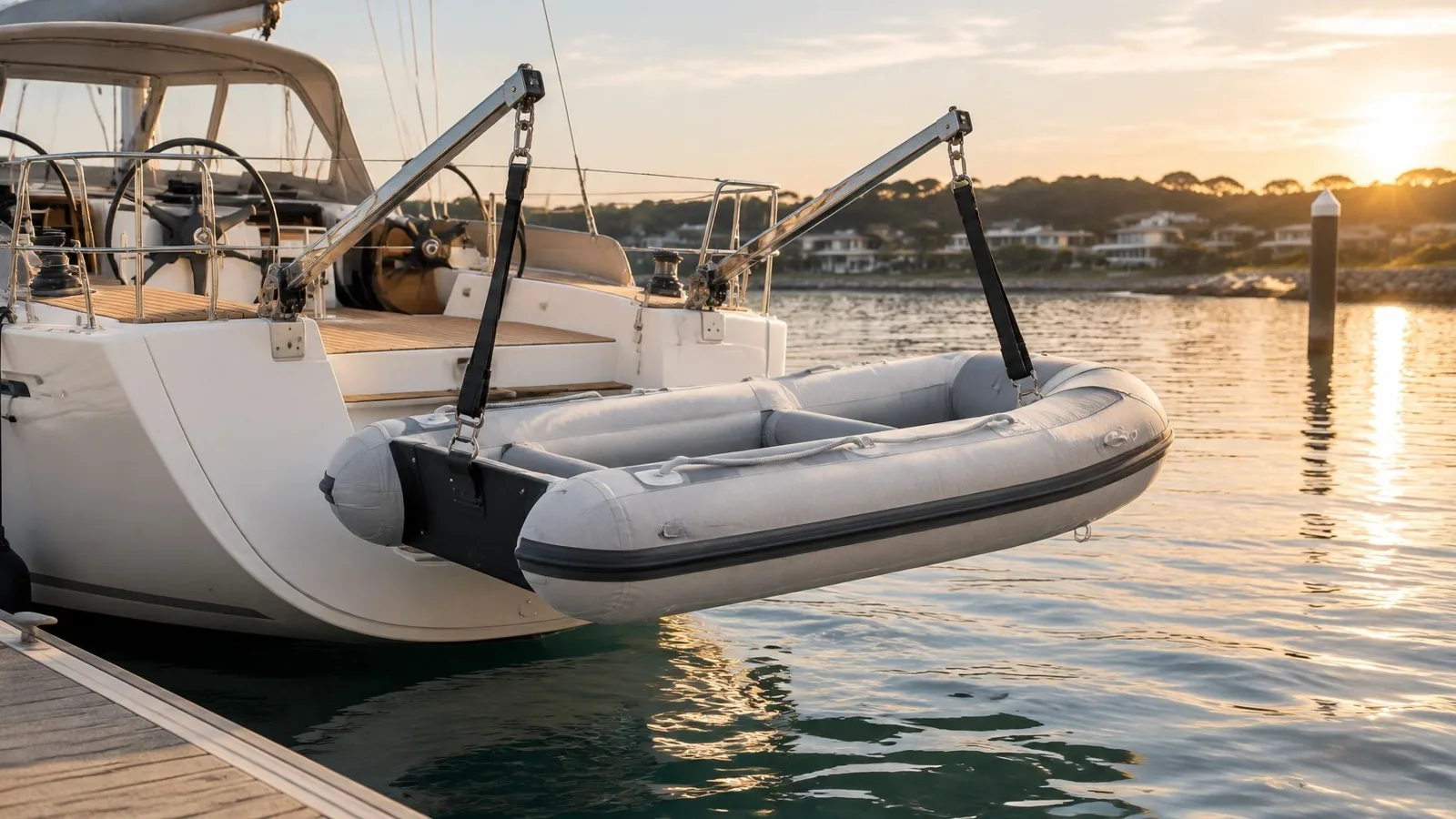
For yacht owners, a tender should make time on the water simpler, not add another storage problem, maintenance schedule or recurring marina bill. A heavy-duty soft-hull inflatable can be a practical, considered choice: it can ride on suitable davits, stow on deck or pack away when not needed, while its flexible tubes are well suited to the close quarters of marina life.
The key is choosing a tender for the way it will be kept and used. A robust inflatable is not maintenance-free, and davit use depends on the tender’s lifting points, weight and the yacht’s equipment. But when those details are right, it can offer a discreet and space-conscious alternative to a rigid tender.
Marina costs are more than the berth
A yacht’s berth is only one line in the ownership picture. A rigid tender may also need a cradle, hard-stand space or trailer when it is not on the yacht. If left in the water, it may need regular hull cleaning and, depending on the hull and local conditions, antifouling. There may also be costs for repairs to gelcoat, paint or other hard surfaces.
These costs vary by boat, marina and storage arrangement. As one local example, the Royal Yacht Club of Victoria’s storage rates from 1 July 2026 list upright tender storage at $267 per year and flat tender storage at $522 per year. Careel Bay Marina lists dinghy storage at $30 per month. These are examples, not universal rates, but they show that even a small tender can have a separate storage cost.
A soft-hull inflatable may reduce the need for a dedicated tender berth or storage space when it can be carried aboard the yacht. Whether it can be kept on davits, on deck or in a locker depends on your vessel, tender dimensions and marina rules. “No mooring fees for a tender” is therefore a possible outcome of the storage arrangement, not a blanket promise that every marina will charge nothing.
The ownership costs of a rigid tender
A hard-hulled tender can be the right choice for an owner who values a permanently assembled boat, a particular ride or a specific performance capability. But its rigid shape does not fold away. When it is not secured to the yacht, it still needs a place to live.
That can mean paying for a separate tender-storage space, arranging a trailer or cradle, or making room on the yacht for a larger lifting system. Davits can be a good solution for rigid tenders too, but the tender’s weight, dimensions and lifting arrangement need to suit the yacht. If a rigid tender is kept in the water, regular cleaning and possible antifouling add to its care. If it is kept out of the water, storage and handling still need to be considered.
A soft-hull inflatable changes the space equation. It can be lifted aboard, secured on suitable davits or, if deflated and packed, stored in a locker or another appropriate onboard space. There is no rigid hull taking up a permanent footprint when the boat is packed away. For owners whose tender is used for shore runs, guest transfers or reaching an anchorage, that flexibility can be worth more than a small difference in purchase price.
A soft tube is a practical marina feature
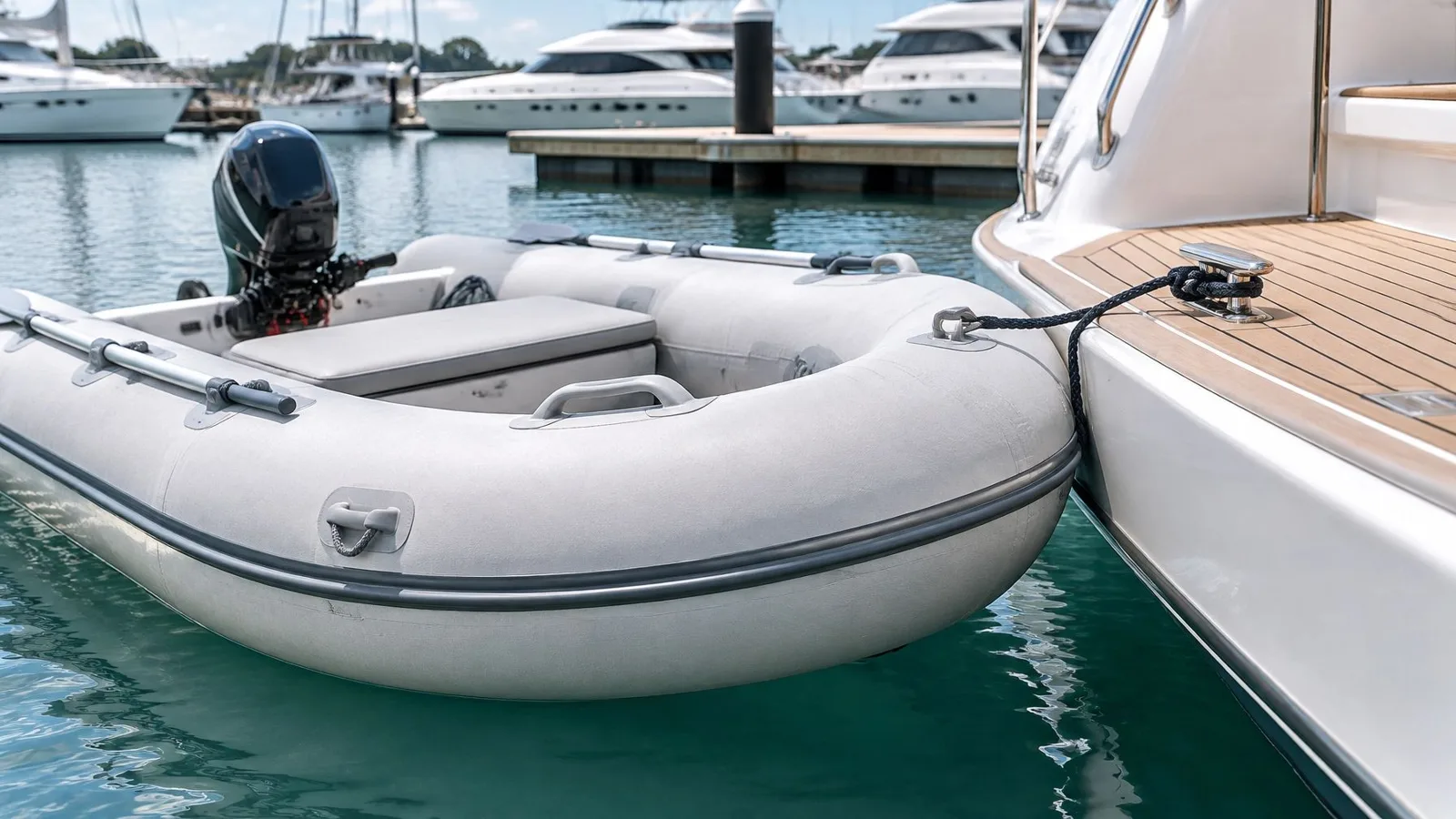
Marinas are busy, confined places. Tenders move beside hulls, boarding steps and pontoons, and may need to be secured in changing wind and wake conditions. Inflatable tubes provide a soft contact surface that can help protect both the tender and nearby surfaces during careful manoeuvring.
That is not the same as being damage-proof. Tubes can still be punctured, abraded or damaged by sharp edges, rough handling or poor mooring practice. Use suitable lines and fenders, keep an eye on contact points and avoid relying on the tube as a substitute for safe tender handling.
When selecting a yacht tender, look beyond its overall length. Check its packed size and weight, the position and strength of its lifting points, and whether the yacht’s davits are rated for the tender and its intended load. A correctly matched setup matters for both safe lifting and comfortable day-to-day use.
Australian sun makes fabric and construction matter
Marina tenders may spend long periods exposed to sun and heat. That makes fabric specification, seams and pressure management important, not just marketing details.
The Viper range uses 1500 GSM / 1.2 mm German VALMEX Heavy Plus. The company’s fabric guide describes its denser fabric construction and gives an estimated service life of 10–12 years under Australian UV conditions. That is a guide, not a lifespan guarantee: exposure, storage, cleaning and handling all affect how long a boat lasts.
The seams are thermo-welded, fusing the coated fabric with heat rather than relying on a glued seam. The Viper’s four-step construction includes internal and external welds, a reinforced overlap and a capped finish. For a tender that is regularly handled, lifted and used around a marina, those construction details are relevant to long-term durability.
Heat deserves separate attention. Air inside an inflatable expands as temperatures rise, including on a sunny marina deck. Aerowave boats have automatic pressure-relief valves fitted as standard to release excess pressure. They add a useful safeguard, but they do not replace following the manufacturer’s inflation guidance, checking the boat and using a cover or shade where practical.
For owners comparing fabrics, the lighter AeroCat range uses 0.9 mm VALMEX, while the Viper’s 1.2 mm Heavy Plus construction is the heavier-duty option. The right choice depends on how the tender will be stored, carried and used. For a tender expected to spend a lot of time in Australian sun or around abrasive marina surfaces, it is worth asking for the fabric specification in writing.
Davits or deck storage: plan the whole routine
A tender on davits can stay assembled and ready, which is convenient for frequent shore trips. Before choosing this arrangement, check the yacht’s davit capacity, lifting geometry and tender attachment points, and follow the yacht and davit manufacturers’ guidance. The tender and outboard together may weigh more than the boat alone, so include the engine and any gear in your calculations.
For less frequent use, or where davits are not suitable, a deflated inflatable can be packed and stowed aboard. Allow room for the boat, pump and accessories, and consider how you will move them safely from storage to the water. Setup takes approximately 15 minutes, depending on the model and conditions. That is a short preparation step in exchange for avoiding a permanently bulky tender arrangement.
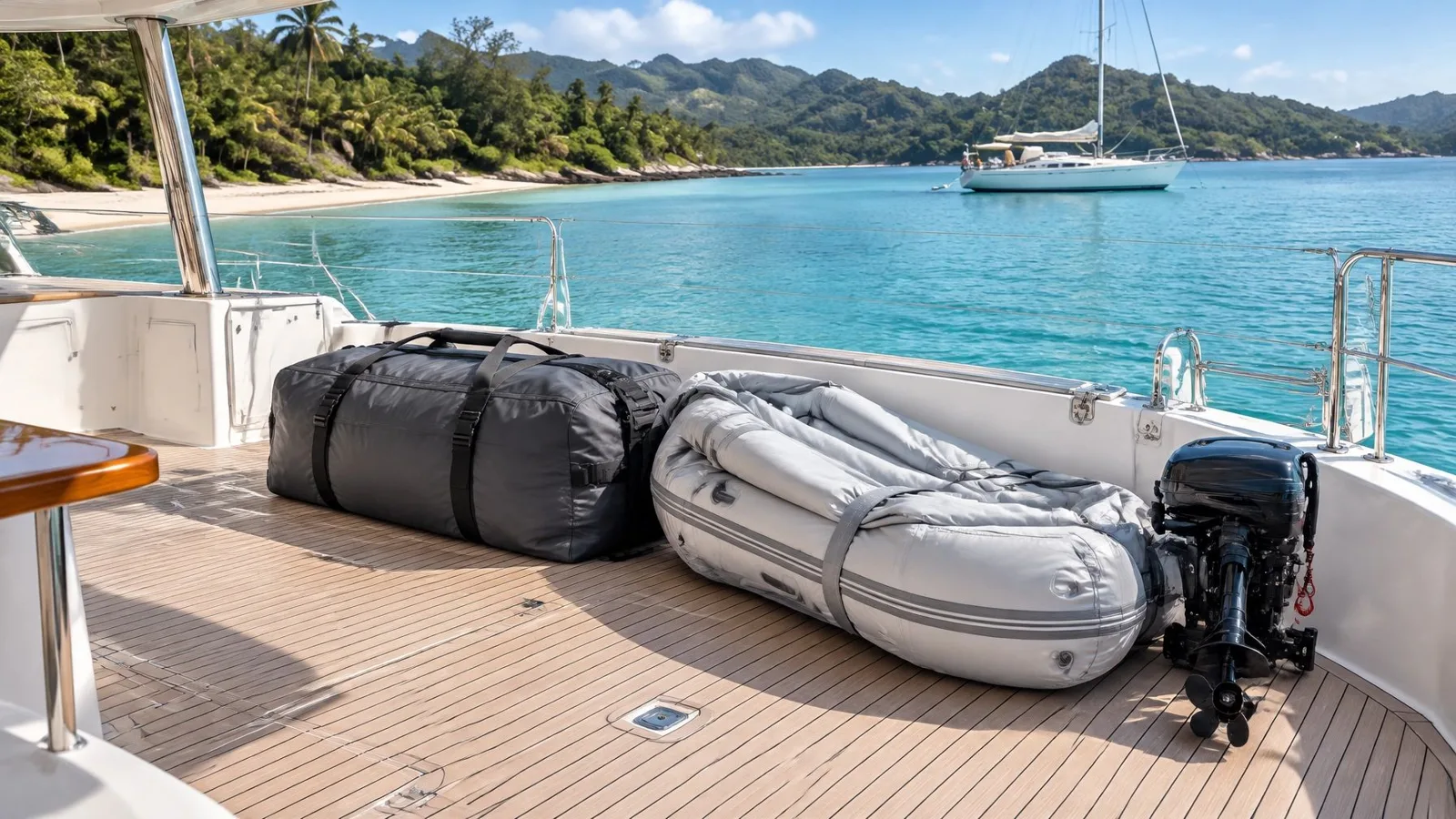
The storage and transport guide has more detail on packed storage. For owners seeking a compact yacht tender, the Swift Tender range includes soft-hull models designed for tender and ship-to-shore use.
Longevity comes from the whole specification
Thicker fabric alone does not determine service life. Seams, valves, fittings, protective rubbing strakes, storage and regular care all play a part. Rinse away salt and grime, inspect valves and attachment points, dry the boat before long-term storage, and check for abrasion or pressure loss as part of routine use.
A heavy-duty inflatable is not the right answer for every yacht. A rigid tender may better suit owners who need a permanently assembled craft or have specific performance requirements. But for many marina-based owners, a soft-hull tender offers a useful balance: it can be carried aboard, stowed compactly, and handled with less concern about hard surfaces making contact in close quarters.
If you are weighing up the options, consider your yacht’s storage space, davit capacity, local marina rules and how often you use the tender. You can also request a free written quote for an Aerowave model through the Australian quote page.
Frequently asked questions
- Can an inflatable tender save on marina storage costs?
- Often, yes. A soft-hull tender can sit on suitable davits or pack into a locker aboard, so you may not need a separate tender rack or berth. Check your marina's rules.
- What fabric suits a tender that lives in the sun?
- A heavy fabric with welded seams. Our premium ranges use 1500 GSM / 1.2 mm German VALMEX Heavy Plus, with an estimated 10–12 year service life under Australian UV.
- Is a soft tube better than a rigid hull at a marina?
- A soft tube is kinder to topsides and pontoons during gentle contact, though it is no substitute for fenders and good line handling.
- Should I keep my tender on davits or packed away?
- Davits keep it ready for frequent trips if the davit rating covers the full load. For occasional use, a packed tender stows aboard out of the sun.
- Are welded seams better than glued seams?
- Thermo-welded seams fuse the fabric with heat rather than relying on adhesive, which suits tenders that are regularly handled, lifted and left in the sun.
Finance this boat from $13/week
Estimate only — powered by Australian Motorcycle & Marine Finance (AMMF).
Paid upfront (AUD)
$290
10% of price
Term
5 years
60 monthly repayments
Comparison rate
9.95% p.a.
Subject to AMMF approval
Weekly
$13
Monthly
$55
Amount financed
$2,609
Indicative only. Actual repayments depend on your AMMF credit assessment, term, fees and the balloon you select. Talk to AMMF for a personalised quote on Aerowave Swift Tender 270 SI.
Like this guide? Get the next one in your inbox.
Owner-tested tips and Aussie boating know-how — no spam.
Ready when you are
Build your Swift Tender 270 SI in under 3 minutes.
1500 GSM / 1.2 mm VALMEX® hull. Five-year limited hull warranty. Free freight to United States · taxes included, nothing to pay on arrival.
delivered to your door
See it for yourself
Real boats. Real owners. Real people behind them.
Plenty of what you read online these days is generated. Check us out properly — the factory, the reviews and the owners are all one click away. Why we use AI, and how to check we’re real
How our boats are built
Walk the production line: thermo-welded seams, 1.2 mm VALMEX Heavy Plus hulls, over-pressure relief valves on every chamber.
See the buildGoogle Maps reviews
Real Australian owners, five stars, published on our Google Business Profile with the map — read them there, not just on our own site.
Open Google Maps reviewsOwner stories
Boats in use — offshore, on rivers, on rescue duty. Photos and words from the people who actually own them.
Read owner stories
Aerowave Swift Tender 270 SI
US$2,065 USD · delivered to your door