Inflatable Catamaran Australia: The Marine-Premium Buyer's Guide (2026)
Why marine-premium inflatable catamarans are quietly replacing aluminium RIBs and hard tenders on Australian coasts — and the 7 build-quality markers that separate a 12-year boat from a 3-summer balloon.
🇺🇸 Boats shipping to United States
See landed prices in USD before you bounce.
Door-to-door delivery to United States in 7–10 days. Choose a boat, see local-currency pricing, or request a fixed landed quote from the sales team.
If you are searching for an inflatable catamaran in Australia, the smart buy is not the cheapest hull online — it is the boat that stays stable, packs down, and survives Australian sun, salt and ramp abuse.
Australian buyers are not just looking for another small boat. They want something that can fish an estuary, run as a tender, handle family weekends, fit in the garage, and not become a repair project after one summer.
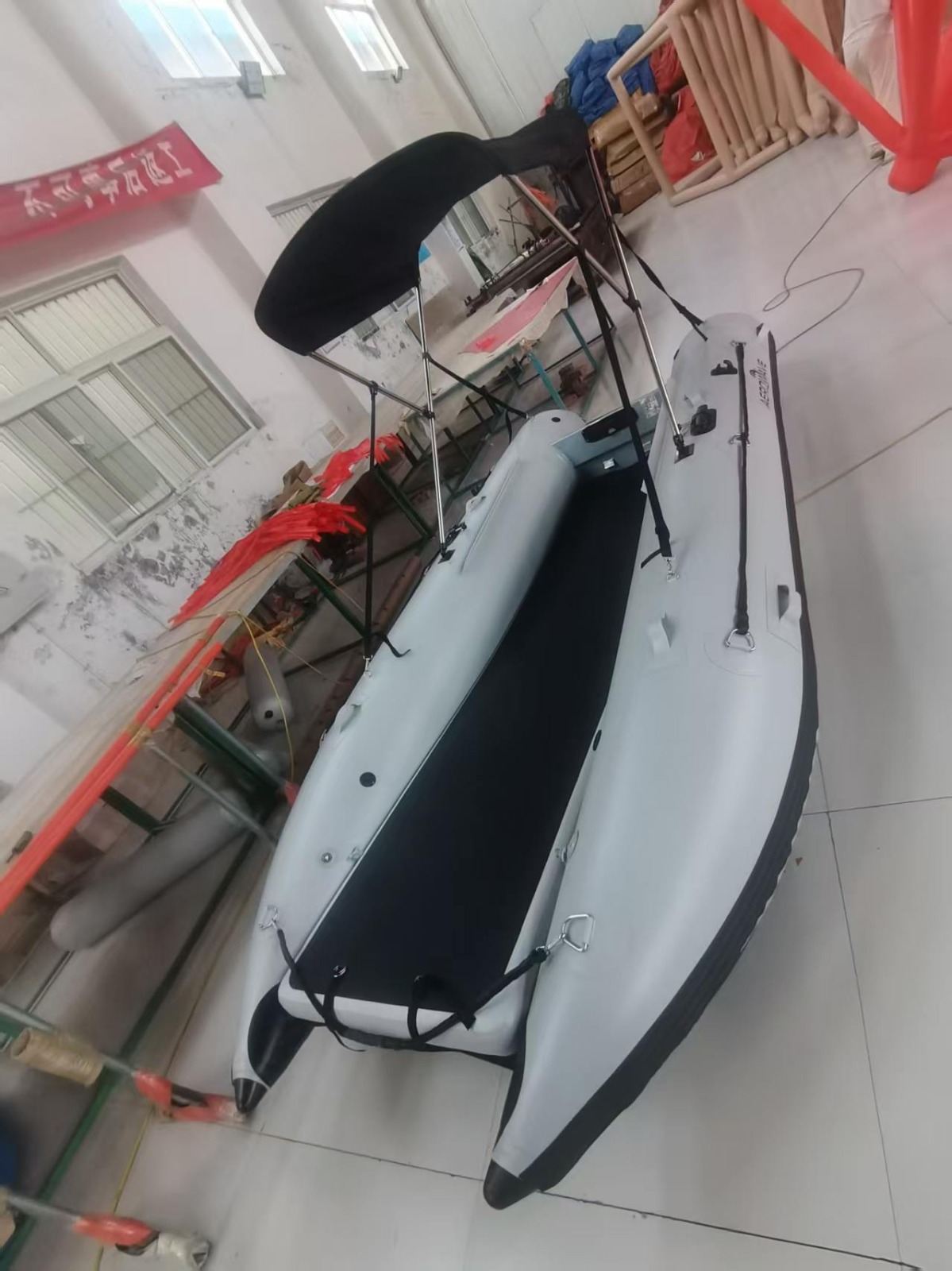
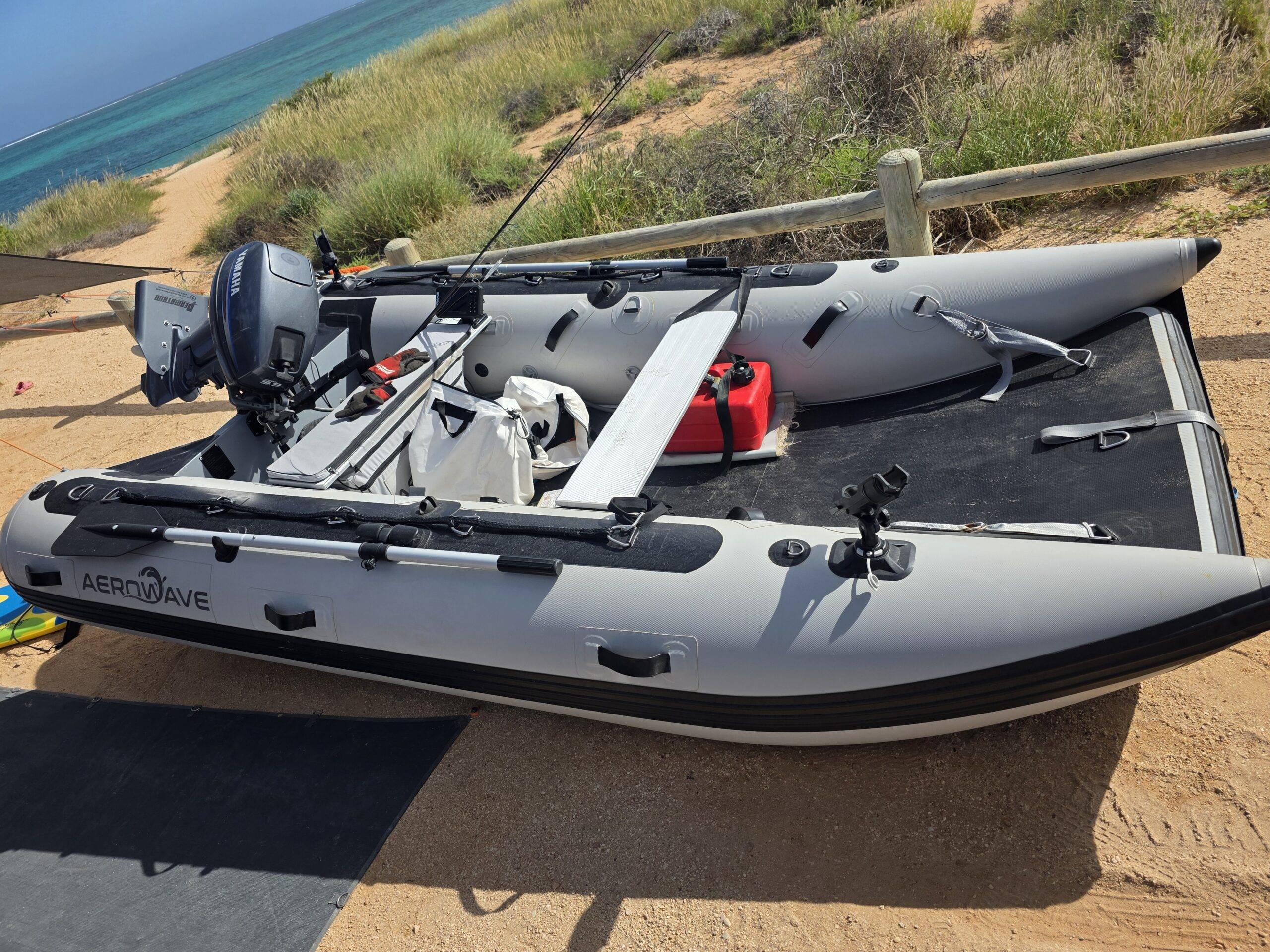
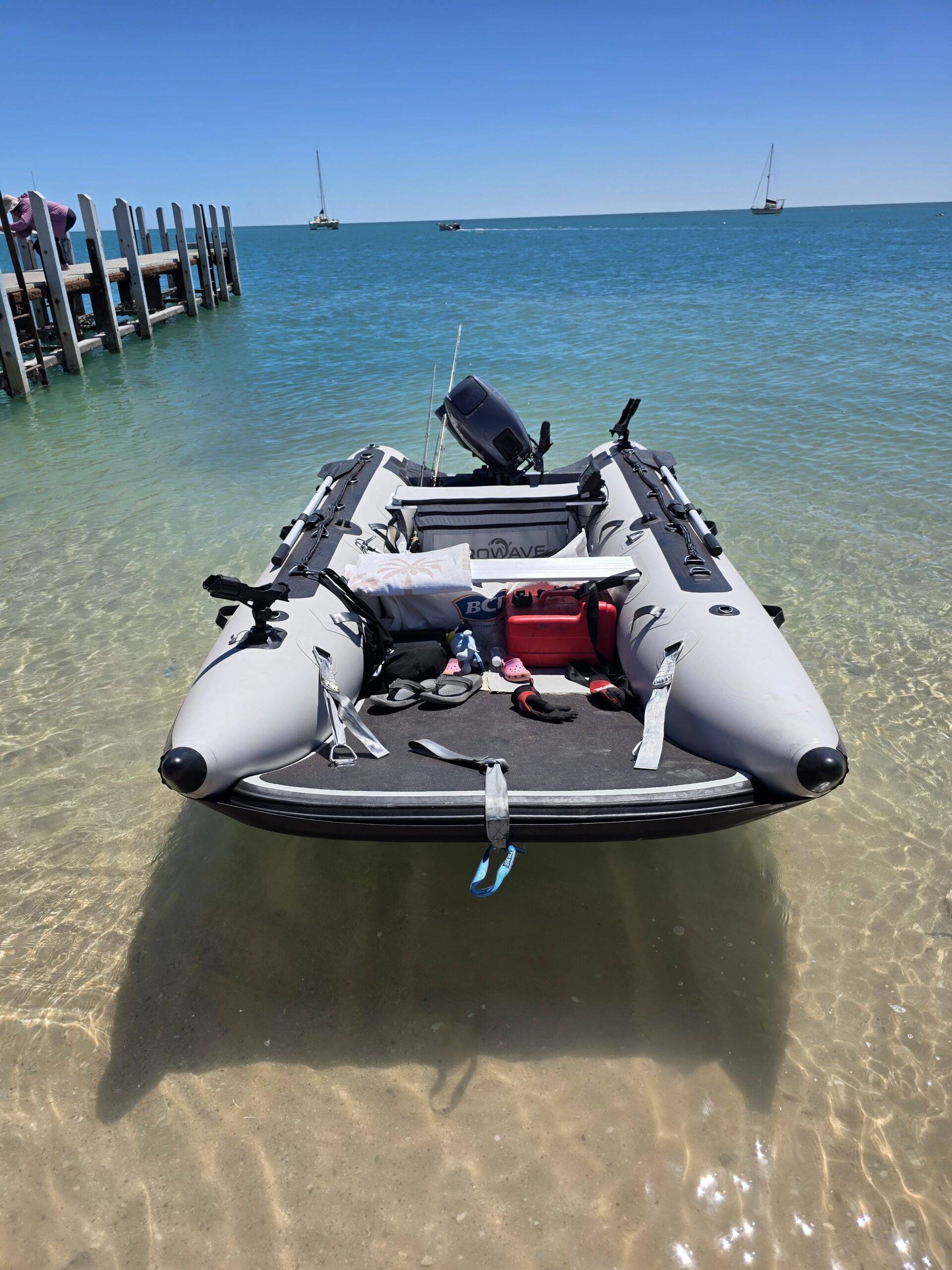
That is where a marine-premium inflatable catamaran makes sense. The point is simple: wide twin-hull stability, a shallow draft, serious fabric, welded seams, and a package that is practical from the first launch.
Why inflatable catamarans are winning in Australia
Five years ago, most buyers looking for a serious small boat were pushed toward a tinny, a trailer boat, or a rigid-hull tender. Those still suit some owners, but they do not solve the storage and launching problem for everyone.
A properly built inflatable catamaran changes the equation:
- Twin-hull stability — the boat sits flatter at rest, so casting, boarding and moving around feel calmer.
- Shallow draft — useful for rivers, sand flats, beaches, lakes and protected coastal water.
- Packdown storage — no permanent trailer, no marina berth and no wasted driveway space.
- Lower launch stress — easier to handle for solo owners, caravanners and families.
- Useful payload — a wide deck carries people and gear without feeling cramped.
The real advantage is not just that the boat is inflatable. It is that the right inflatable catamaran removes the friction that stops owners using their boat often.
What “marine-premium” actually means
The phrase gets used too loosely. For Easy Inflatables, a marine-premium inflatable boat has to be built for real Australian ownership, not just a showroom photo.
That means the spec sheet needs to show the things that actually matter:
- Fabric GSM and thickness quoted together — serious buyers should see both numbers, not just one convenient measurement.
- Welded seams — welded construction is the standard to look for when heat, UV and pressure are part of daily use.
- A proper transom — the outboard mount must be sealed, reinforced and built for repeated load.
- Independent air chambers — if one chamber loses pressure, the boat still has reserve buoyancy.
- Reinforced wear points — rub strakes, tube protection and deck contact points matter around ramps, sand and jetty posts.
- Real valves and fittings — cheap hardware is often where otherwise decent-looking boats start to disappoint.
- A written warranty — the seller should be prepared to put the hull claim in writing.
For premium Aerowave hulls, the headline material is 1500 GSM / 1.2mm VALMEX® Heavy Plus. AeroCat models use 1100 GSM / 0.9mm VALMEX®. Those numbers matter because Australian UV and heat punish soft fabrics harder than most brochures admit.
Inflatable catamaran vs rigid-hull alternative
Most people searching for an inflatable catamaran Australia guide are really asking one question: “Will this replace the small rigid boat I thought I needed?”
For many owners, yes — especially if storage, portability and easy launching matter.
| What matters | Rigid-hull alternative | Marine-premium inflatable catamaran |
|---|---|---|
| Storage | Trailer, davit or large shed | Packs down for garage, caravan or 4WD storage |
| Launching | Ramp and tow vehicle usually needed | Beach, ramp or riverbank friendly |
| Stability at rest | Depends on hull width and shape | Twin tubes create a wide, planted platform |
| Draft | Usually deeper | Very shallow in protected water |
| Repairs | Often workshop-based | Many minor tube repairs can be patched |
| Ownership friction | Higher | Lower for casual and regular users |
A rigid hull can still win for heavy offshore abuse. But for fishing, tender work, camping, family use and protected coastal runs, the inflatable catamaran is often the boat that gets used more.
The 7-point quality checklist before you buy
Before paying for any inflatable boat, slow down and check the build details. Photos sell the dream; the spec sheet tells the truth.
1. Fabric specification
Do not accept vague wording like “heavy duty PVC” without numbers. Look for GSM and thickness together. For premium hulls, 1500 GSM / 1.2mm VALMEX® Heavy Plus is a serious benchmark. For lighter packdown hulls, 1100 GSM / 0.9mm VALMEX® is a practical marine-grade standard.
2. Seam method
Welded seams are preferred for Australian heat. Glued seams can be fine for low-use budget products, but they are not what we would choose for a boat expected to last through repeated summer use.
3. Stability and deck layout
A catamaran hull should give you a wide, useful platform. If you fish, carry kids, load camping gear or board from a yacht, stability at rest matters more than top speed.
4. Transom build
The transom takes the engine load. It should feel solid, sealed and properly reinforced. A soft or flexing transom is a warning sign.
5. Valves and chambers
Independent chambers add safety and confidence. Quality valves also make setup easier and reduce slow-leak frustration.
6. Included gear
Check what is actually included. A boat that looks cheaper can become expensive once you add wheels, pump, seats, bags, shade and freight.
7. Warranty and support
A written hull warranty and local support matter. If a seller cannot clearly explain parts, warranty handling and after-sales help, that is not a premium ownership experience.
Which Aerowave catamaran suits which buyer?
The right model depends on how you actually use the boat.
- Viper 330 — a compact, stable catamaran for fishing, tender work and owners who want easier handling.
- AeroCat 330 / 360 / 380 — lighter VALMEX catamarans for buyers who prioritise packdown, portability and value.
- Viper 400 Sovereign — the larger premium package for families, heavier gear loads and buyers wanting the strongest 1.2mm VALMEX hull.
- WaveRunner 380 Series 3 — a practical option where deck space, fishing layout and included shade matter.
If you are unsure, start with your storage space, crew size and outboard choice. Those three answers usually narrow the decision fast.
Delivery, ownership and real-world use
A good inflatable catamaran should make ownership easier, not create a new list of problems.
Easy Inflatables offers two Australian delivery paths: Express Air Delivery in 7–14 days with an A$810 customer contribution, or FREE Economy Sea Freight in 30–40 days. International buyers should use the quote request path so delivery can be matched properly to the destination.
Once the boat arrives, the routine is straightforward:
- Inflate to the recommended pressure.
- Fit the deck, seats and accessories.
- Mount the outboard correctly.
- Rinse after saltwater use.
- Dry before long-term storage.
- Store out of direct sun when not in use.
Look after premium VALMEX fabric and the expected useful life is 10–12 years. That is the difference between buying a proper boat and buying the same cheap hull twice.
Final buying advice
Do not buy an inflatable catamaran just because it folds. Buy it because the hull design, fabric, transom, seams, warranty and package make sense for the way you boat.
If you want a stable, packable boat for Australian water, start with the Aerowave Viper range, compare the AeroCat models, or browse the full boats and boat packages.
Questions before choosing? Call +61 2 4335 1603 and we will help match the boat to your storage, crew size and waterway.
Related
Shop gear featured in this guide
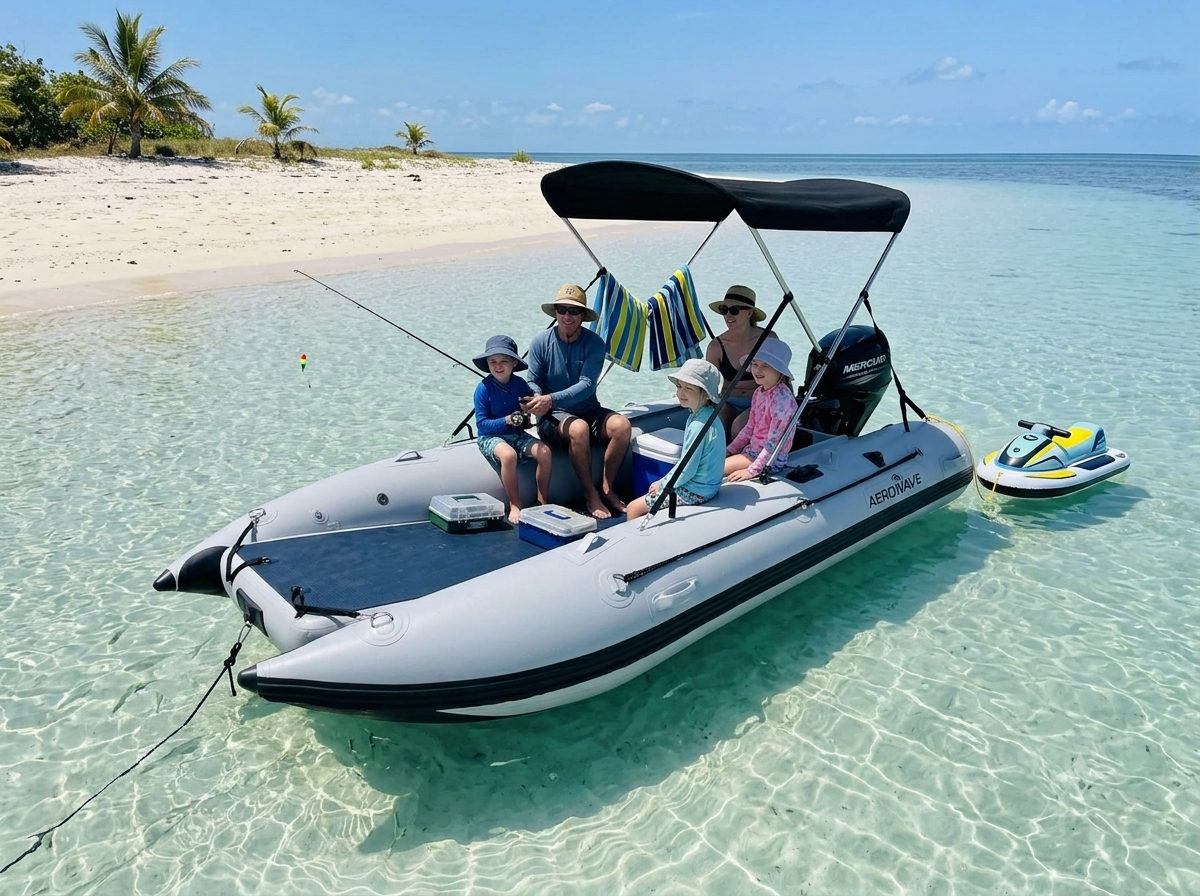
Aerowave WaveRunner 380 Series 3 Catamaran Package
The WaveRunner 380 Series 3 is a premium 3.8m inflatable catamaran package built for Australian and worldwide families, fishing, and coastal day boating — ideal for snorkeling and spearfishing — offering serious stability and premium German Valmex® construction.
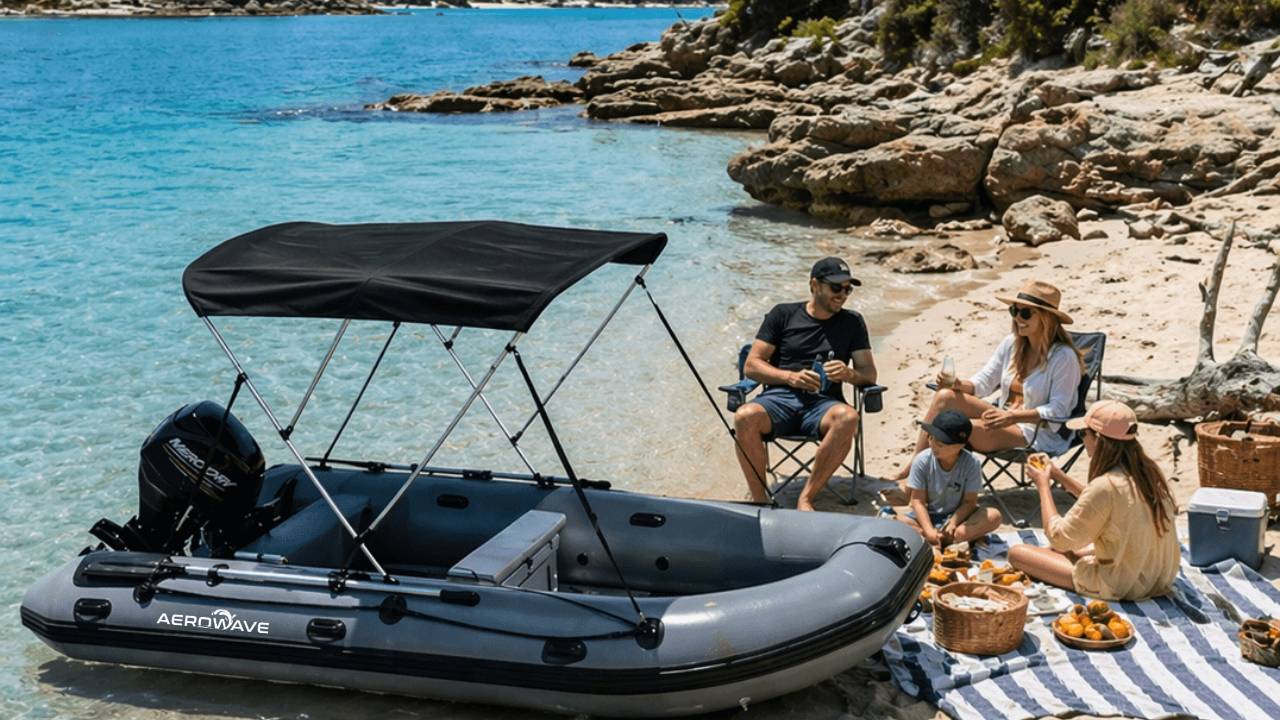
Aerowave Viper 400 Sovereign
Flagship 4m enclosed-bow inflatable catamaran. German VALMEX® 7321 Heavy Plus 1.2mm commercial-grade fabric, 10 PSI high-pressure drop-stitch air deck floor with VALMEX non-slip surface, LockPro wheels, full Bimini and FREE express delivery Australia-wide delivery included. Winter special — save $1,000 until 31 August 2026.
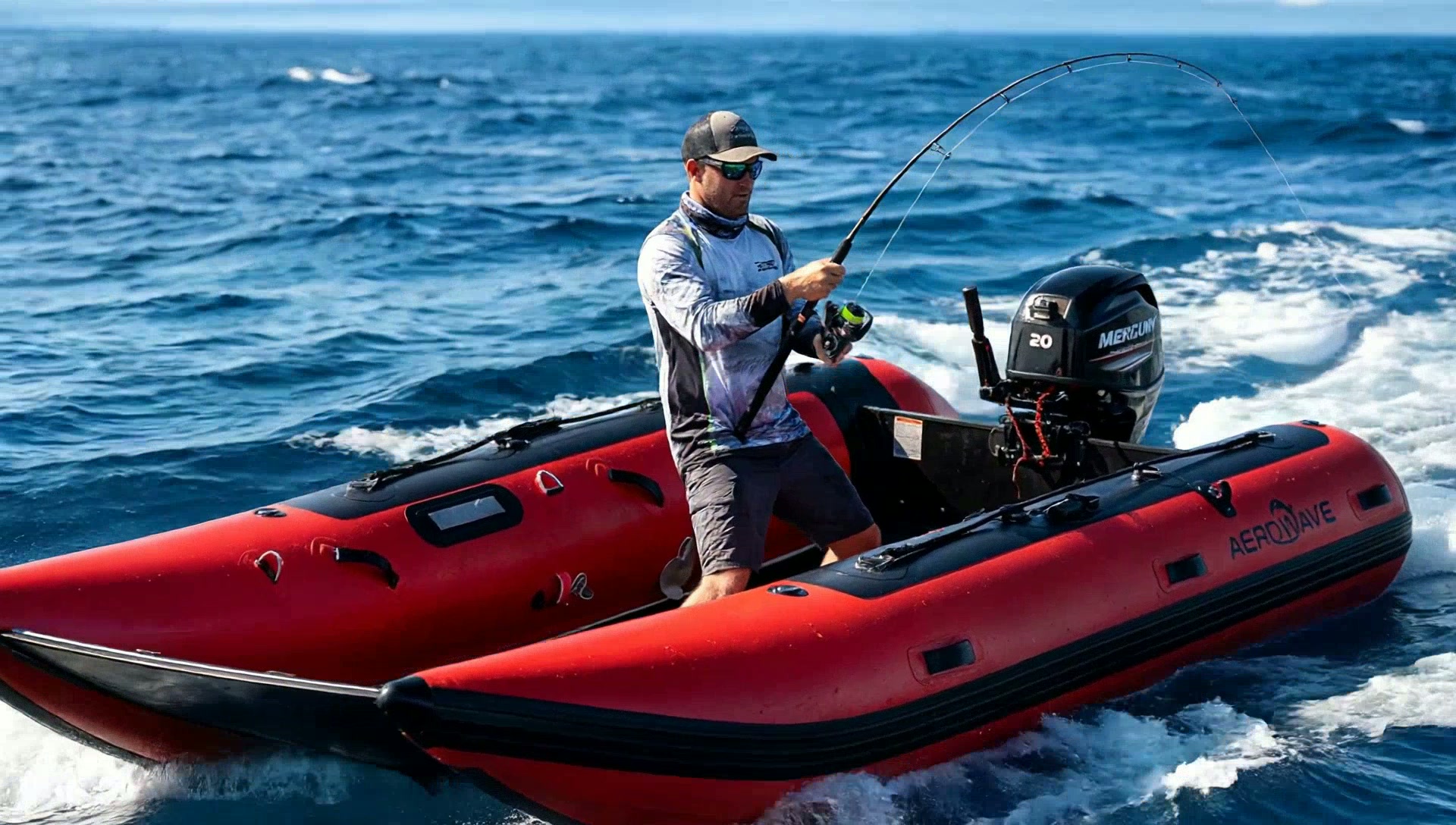
AeroWave AeroCat 360 Inflatable Catamaran
Same proven hull design, shape and look as our flagship Aerowave Viper catamarans — built lighter using 0.9mm Valmex® fabric instead of the Viper's 1.2mm. The AeroWave AeroCat 360 is our 3.6m inflatable catamaran built from 0.9mm Valmex® fabric — intentionally lighter than our 1.2mm Viper hulls so it folds smaller, packs lighter and is easy to handle solo. Twin-hull stability, 5-Year Warranty with global support and priced ~$500 below comparable 0.9mm imports.
Not sure which suits you? Talk to a real boat owner.
Frequently asked questions
- Is an inflatable catamaran safe for Australian offshore conditions?
- A marine-premium catamaran built to ISO 6185-3 with 4–5 independent air chambers, welded seams and 1.2 mm VALMEX hull is rated for coastal and partially-sheltered waters. For open ocean, match the boat category to the trip — same as any small craft.
- How long does a quality inflatable catamaran last in Australia?
- On premium VALMEX fabric (1100–1500 GSM) with welded seams and proper rinsing after salt use, expect 10–12 years of useful life. Cheaper PVC fabrics typically chalk and delaminate within 3–4 Australian summers.
- Do I need to register an inflatable catamaran in Australia?
- It depends on engine size and state. Most states require registration once you fit a powered outboard above a small threshold (typically 4 kW / ~5 hp). See our state-by-state guide for the current rules.
- Is an inflatable catamaran better than an aluminium RIB?
- For storage, packdown, draft, stability and price — yes. For raw hull lifespan in extreme abuse — the aluminium RIB still wins. Most Australian owners use their boat more often when it lives in the garage, which makes the inflatable catamaran the better real-world choice.
- What''s the difference between a 0.9 mm and 1.2 mm hull?
- About 33% more puncture resistance, noticeably more UV life, and a stiffer ride at the same PSI. The 1.2 mm VALMEX Heavy Plus is what we use on the Viper 400 Sovereign; 0.9 mm VALMEX is the AeroCat standard.
Ready to set sail?
Premium German-fabric inflatable catamarans with express courier delivery included in the price — 7–10 days door-to-door. Talk to our team or browse the fleet.
Like this guide? Get the next one in your inbox.
Owner-tested tips, gear deep-dives and Aussie boating know-how — no spam.