Thundercat Boats Explained: What Inflatable Catamaran Racing Teaches You About Buying One
Thundercat racing throws inflatable catamarans through surf at 100 km/h. Here is what that sport proves about hull fabric, welded seams and transom height — and how to buy the sane version.
At a glance
Thundercat racing throws inflatable catamarans through surf at 100 km/h. Here is what that sport proves about hull fabric, welded seams and transom height — and how to buy the sane version.
- 1. What a thundercat actually is
- Why racers chose catamarans in the first place
- 2. Three lessons from racing that apply to your boat
- Lesson one: the hull fabric is the whole boat
What we'd put you in
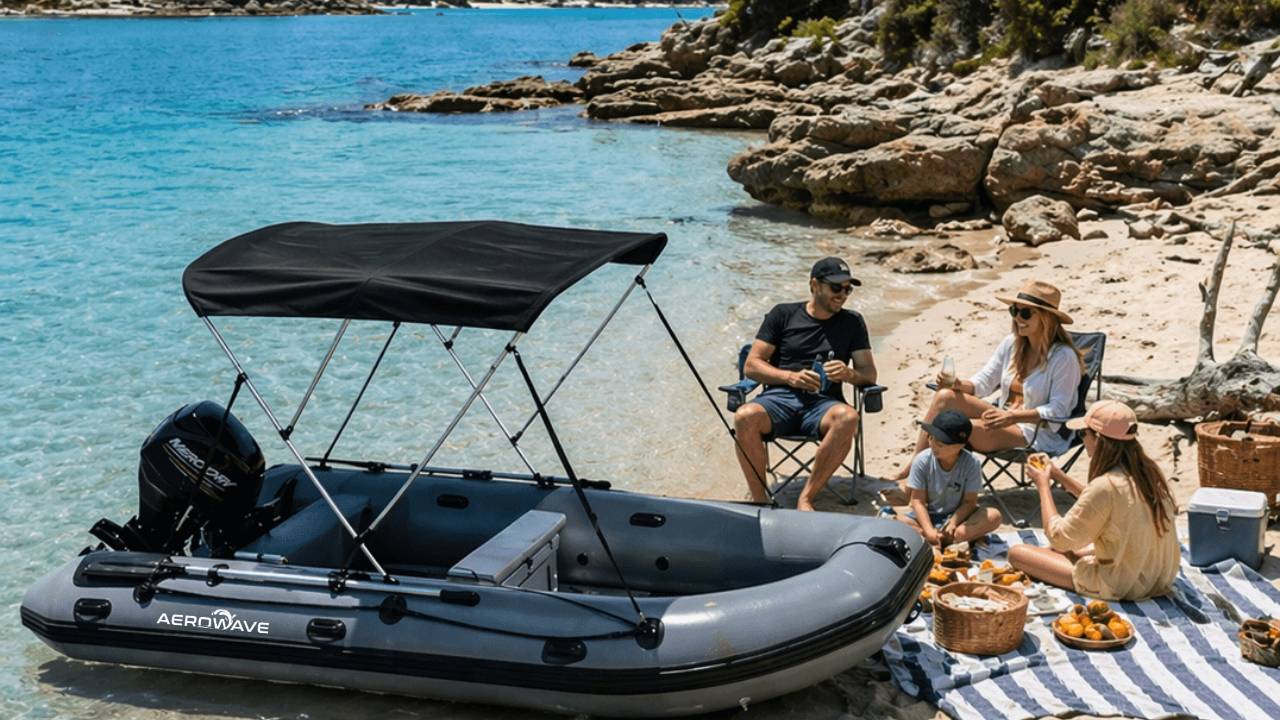
Aerowave Viper 400 Sovereign
If you're reading about catamarans, this is the one we build most of.
US$3,167 USD
Delivered to your door, today's rate
- Free freight to United States · local taxes payable on arrival
- 7-year hull warranty
🇺🇸 Shipping to United States · landed price quoted in writing
Yes — we ship the Aerowave Viper 400 Sovereign to United States. Here's the landed price.
If you're reading about catamarans, this is the one we build most of.
Aerowave Viper 400 Sovereign
- Boat package (export price)
- US$3,726
- 15% tariff relief credit
- − US$559
- Express air freight to United States
- Included
- Import duty, taxes & customs clearance
- Payable on arrival
- Estimated landed, USD
- US$3,167
Indicative, converted at today's rate, before local duty and tax on arrival. Ask below and we'll put a fixed figure in writing, valid 30 days.
- 7-year hull warranty
- 1500 GSM / 1.2 mm VALMEX® Heavy Plus hull
- CE certified to ISO 6185-3 and EU Directive 2013/53/EU
- Door-to-door, tracked the whole way
Your price, delivered to your door — freight included.
We email the full PDF quote (spec, freight, finance, WavePay) to your inbox in under 60 seconds. No spam — one quote, one follow-up.
See it for yourself
Real boats. Real owners. Real people behind them.
Plenty of what you read online these days is generated. Check us out properly — the factory, the reviews and the owners are all one click away. Why we use AI, and how to check we’re real
How our boats are built
Walk the production line: thermo-welded seams, 1.2 mm VALMEX Heavy Plus hulls, over-pressure relief valves on every chamber.
See the buildGoogle Maps reviews
Real Australian owners, five stars, published on our Google Business Profile with the map — read them there, not just on our own site.
Open Google Maps reviewsOwner stories
Boats in use — offshore, on rivers, on rescue duty. Photos and words from the people who actually own them.
Read owner stories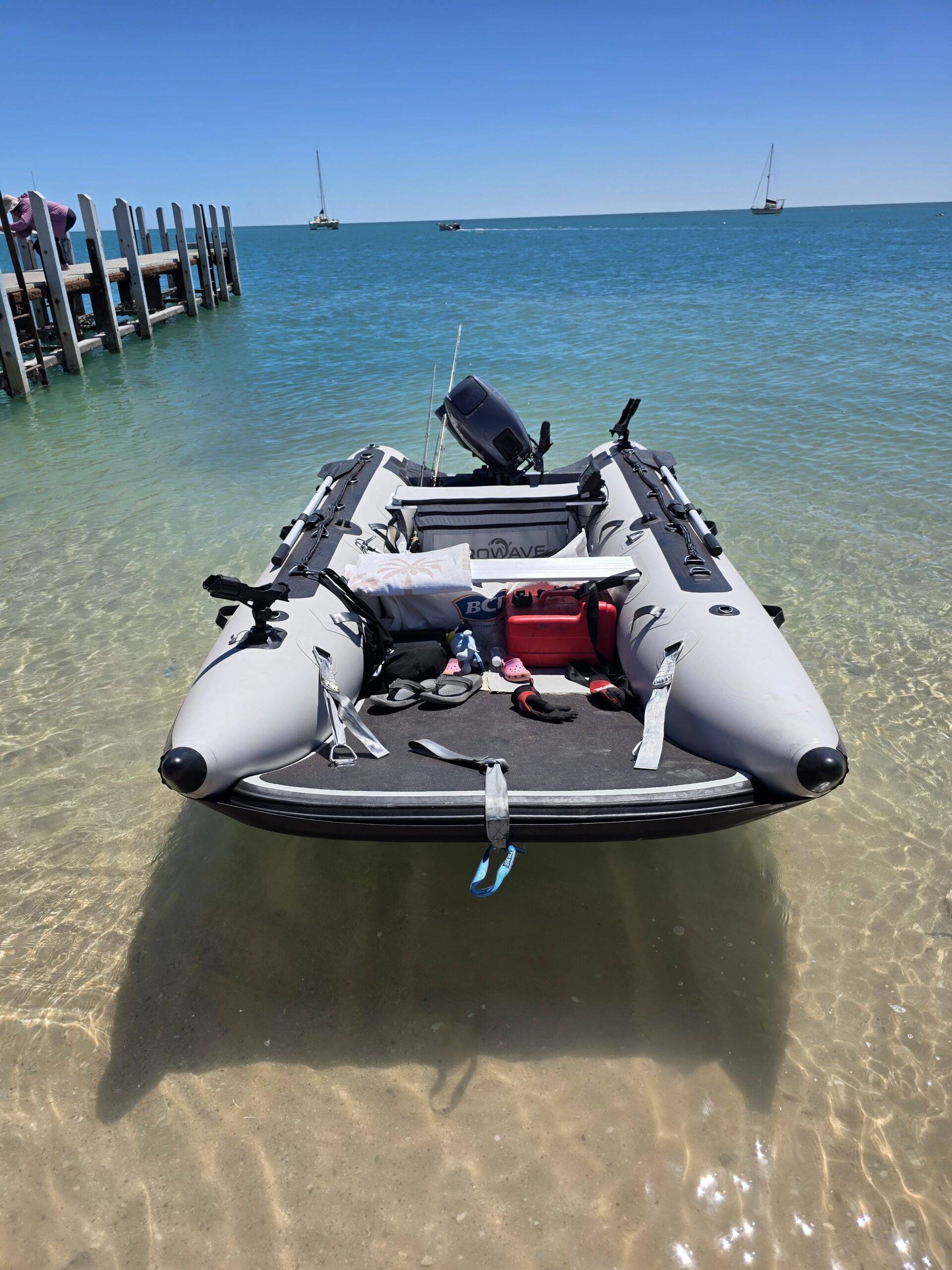
Thundercat racing is inflatable catamarans driven flat out through surf at 100 km/h. Nothing tests a twin-tube hull harder. The lessons that come out of that sport are the same ones that decide whether your weekend boat survives ten Australian summers.
Most Australians meet the phrase "thundercat boat" after watching a two-person inflatable catamaran launch off a beach break and land without folding. It looks unhinged. It is also the best available demonstration of why the catamaran layout works — and which parts of a hull matter when things get rough.
1. What a thundercat actually is
A thundercat is a surf-racing inflatable catamaran: two long tubes, a tensioned deck between them, a short-shaft outboard on the transom, and a crew of two — a driver and a bouncer who moves body weight to keep the bow down.
| Feature | Race boat | Recreational catamaran |
|---|---|---|
| Length | About 4.0 m | 3.3 – 4.5 m |
| Power | 50 hp two-stroke | 9.9 – 20 hp four-stroke |
| Crew | 2, standing | 3 – 5, seated |
| Purpose | Surf racing | Fishing, family, tender |
The format is the same. The tuning is not. That is the useful part: the sport stress-tests a layout you can buy in a mild-mannered version.
Why racers chose catamarans in the first place
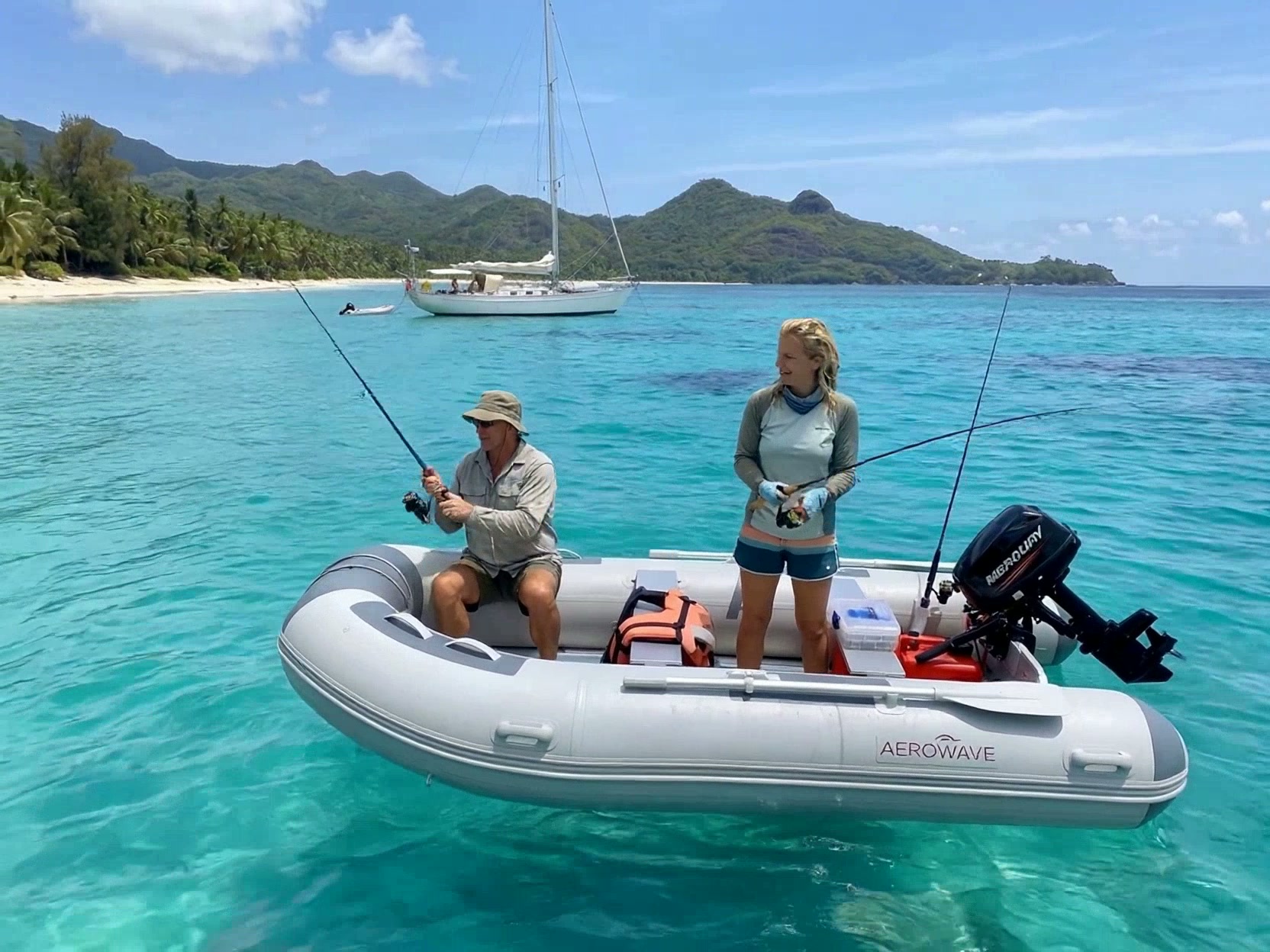
Two tubes and a flat span between them give stability without a deep V. The boat sits on the water instead of in it, planes early, and can be driven straight onto sand. In a race that means speed off the beach. On your weekend that means launching solo without a ramp.
2. Three lessons from racing that apply to your boat
Lesson one: the hull fabric is the whole boat
Race hulls take repeated slamming loads that would split a thin tube. This is where the difference between 1100 decitex 0.7 / 0.9 mm fabric and 1500 GSM / 1.2 mm VALMEX Heavy Plus stops being a spec-sheet argument. A third more material is a third more to abrade through on sand, oyster edges and ramp concrete.
You will never race. You will still drag the boat up a beach a few hundred times. Read the detail in 0.9 mm vs 1.2 mm: what hull fabric really buys you.
Lesson two: seams fail before fabric does
Race boats are hot-air welded, not glued, because glue lines creep under heat and shock. Australian summers do a slower version of the same thing to a boat left on a trailer in the sun. Our welded vs glued seams article shows what each failure looks like.
Lesson three: transom and prop set-up decide performance
Racers obsess over prop depth because a ventilating prop loses drive at exactly the wrong moment. The same physics ruins ordinary days: an outboard sitting too high blows out on every turn. The WaveRunner series runs a 380 mm transom for that reason — more prop in the water, more bite, less ventilation. Full explanation in outboard cavitating or prop blowing out.
3. What a race boat gets wrong for everyday use
Buying a race-tuned hull for family boating is a mistake. Racing trades away everything you actually want:
- No seats and no floor comfort. Crews stand and take the hits.
- Extreme power-to-weight. A 50 hp motor on a 4.0 m inflatable is unusable with kids aboard, and outside the transom rating of a recreational hull.
- Short service life. Race hulls are consumables. Yours should last 10 to 12 years.
- No storage, no bimini, no shade. Nothing that makes a full day on the water bearable.
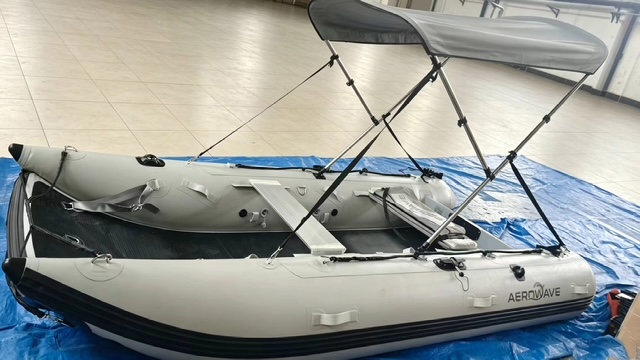
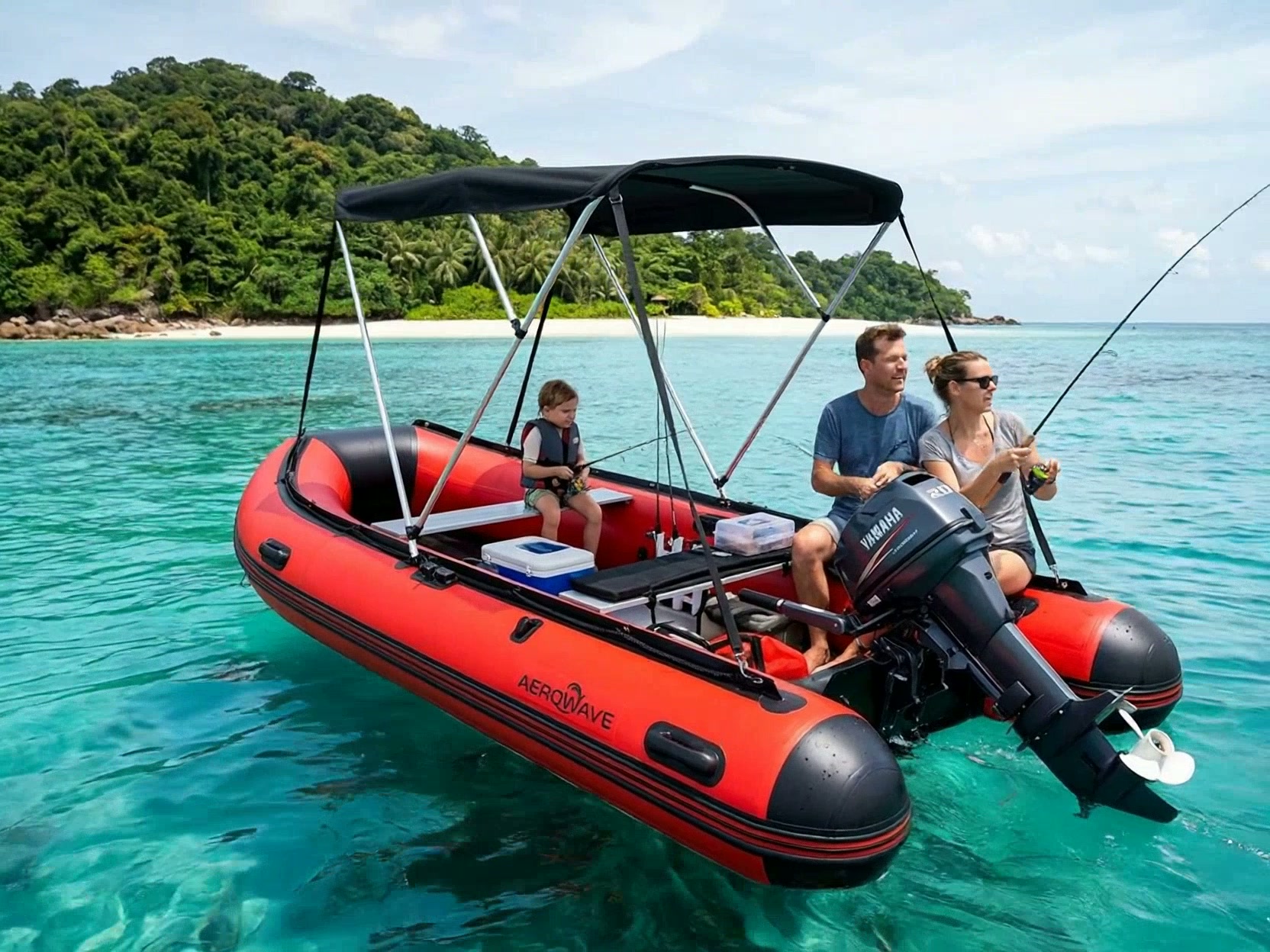
The right buy is the race layout, detuned: same twin-tube stability and beach-launch ability, with seating, shade, dry storage and a sane four-stroke.
4. Choosing the recreational version
| If you want | Look at | Motor |
|---|---|---|
| Solo launch, estuary, one or two aboard | Aerowave Viper 330 | 9.9 hp |
| Shade included, mid-size all-rounder | Aerowave WaveRunner 380 | 15 hp |
| Family and serious fishing | Aerowave Viper 400 Sovereign | 20 hp |
| Longer runs, bigger water | Aerowave Viper 450 | 20 – 30 hp |
Every one uses the layout the sport proved, built in 1500 GSM / 1.2 mm VALMEX Heavy Plus with hot-air welded seams, CE certified to ISO 6185-3 and EU Directive 2013/53/EU, and delivered freight and duty paid.
5. Can you race one?
Thundercat racing in Australia runs through organised clubs with class rules covering hull dimensions, buoyancy, kill switches, helmets and impact vests. If the sport interests you, join a club day as crew before buying anything — the entry cost is a weekend, not a boat.
For everyone else, the honest takeaway is simpler. The reason a race format survives being thrown through surf is the same reason it shrugs off a decade of Australian beach launches: two tubes, welded seams, and enough fabric to take the abuse. That is the boat you want under you on a Saturday.
Not sure which size fits your water? Start with how to choose an inflatable catamaran, or see the full catamaran range.
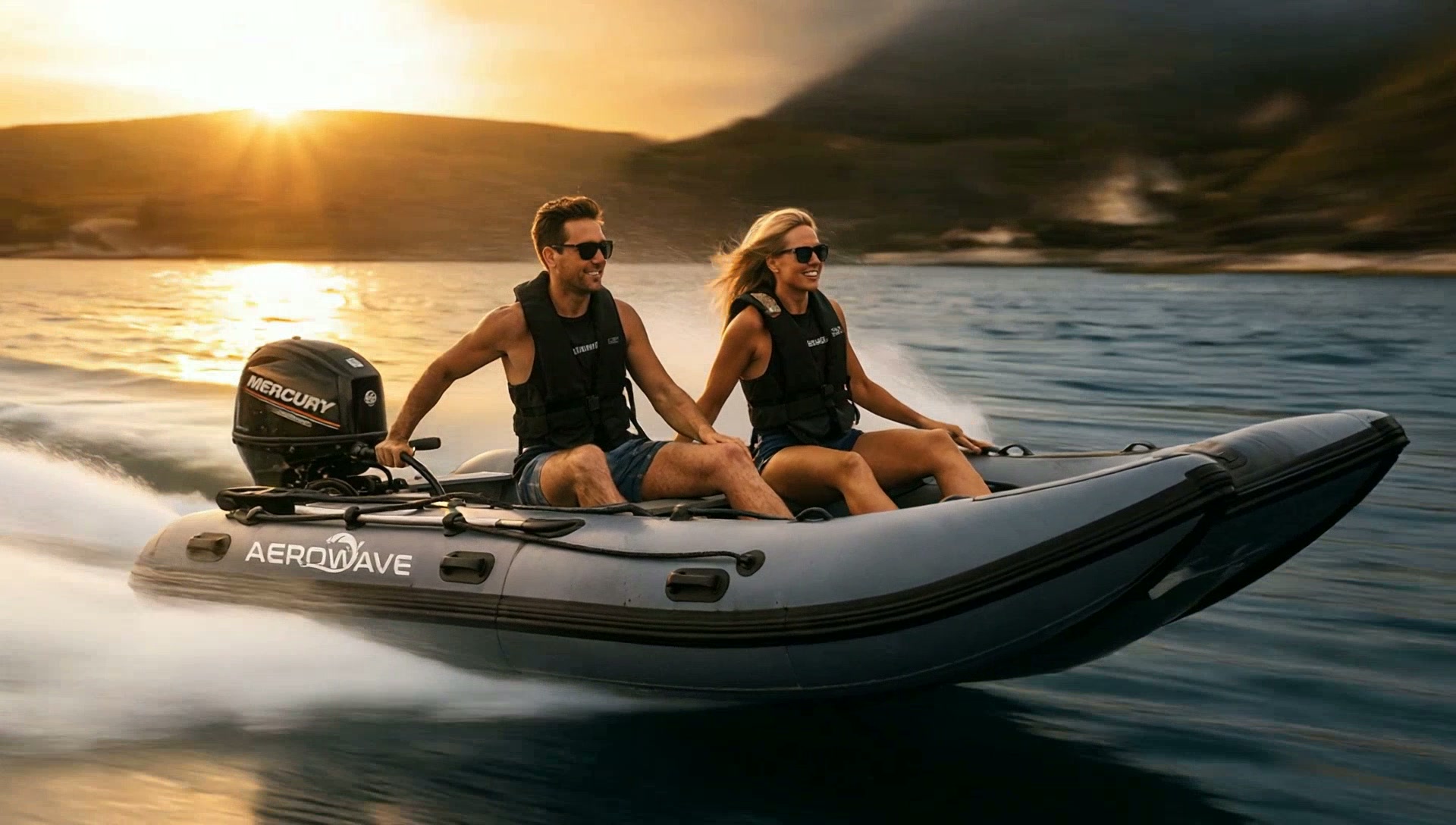
Weekend-Proof Score 17 questions · about 2 minutes
Will the boat you're about to buy survive an Australian summer?
Seventeen straight questions about where you'll use it, what you'll ask of it and the boat you're weighing up. You get a score out of 100, the exact weak points in your plan, and the one boat that genuinely fits.
Free · your result shows on screen · no email required
So which one is yours?
Pick how you'll actually use it and we'll take you straight to the right hull.
I want to fish it
Open bow, rod holders, deck space you can stand and cast from.
Viper Sport 400Family, diving and the beach
3.8 m Series 3 catamaran — low bow to climb back in wearing fins or a tank.
WaveRunner 380Tender / one-person launch
3.3 m hard-floor boat that packs into a bag and still takes a beach landing.
Viper 330Shop gear featured in this guide
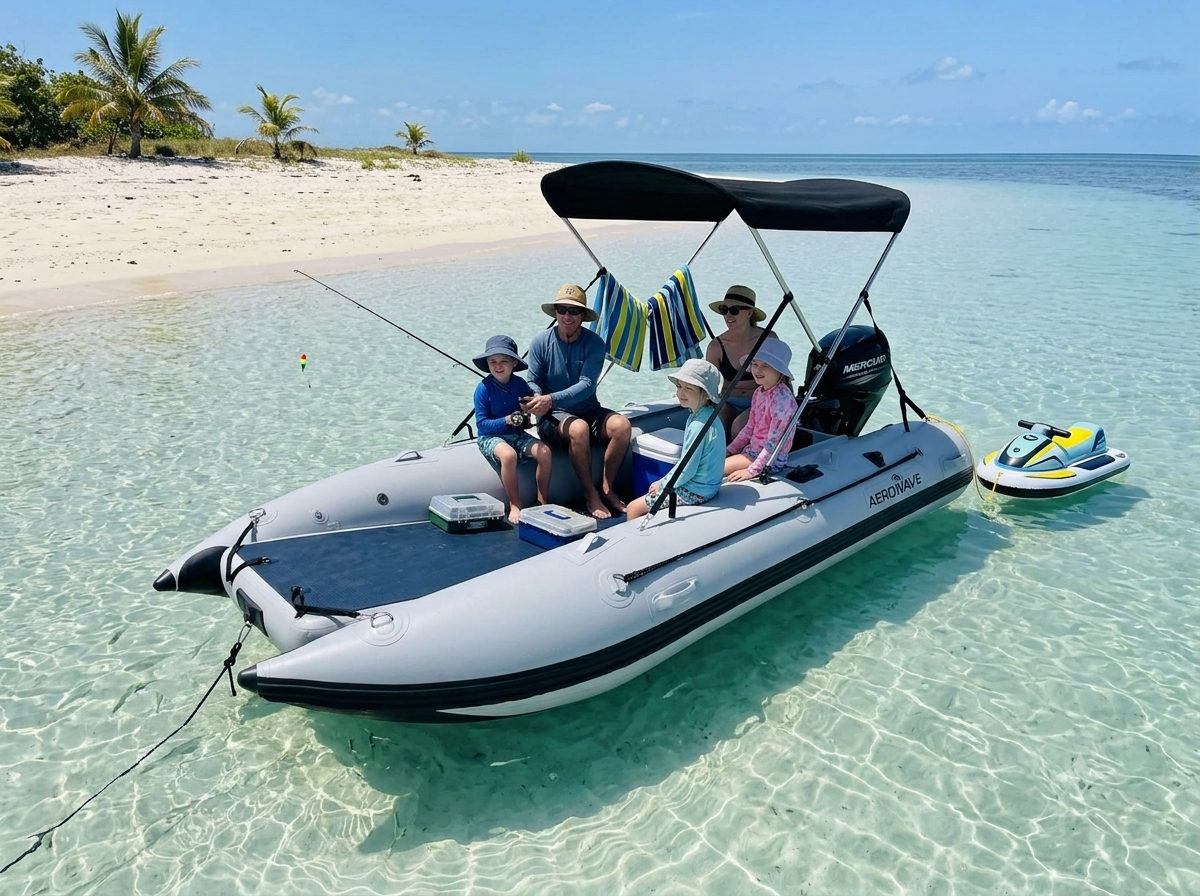
Aerowave WaveRunner 380 Series 3 Catamaran Package
The WaveRunner 380 Series 3 is a premium 3.8m inflatable catamaran package built for Australian and worldwide families, fishing, and coastal day boating — ideal for snorkeling and spearfishing — offering serious stability and premium German Valmex® construction.
Free freight to United States · local taxes payable on arrival
Aerowave Viper 400 Sovereign
Flagship 4m enclosed-bow inflatable catamaran. German VALMEX® 7321 Heavy Plus 1.2mm commercial-grade fabric, 10 PSI high-pressure drop-stitch air deck floor with VALMEX non-slip surface, LockPro wheels, full Bimini and FREE express delivery Australia-wide included. Winter special — save $1,000 until 31 August 2026.
Free freight to United States · local taxes payable on arrival
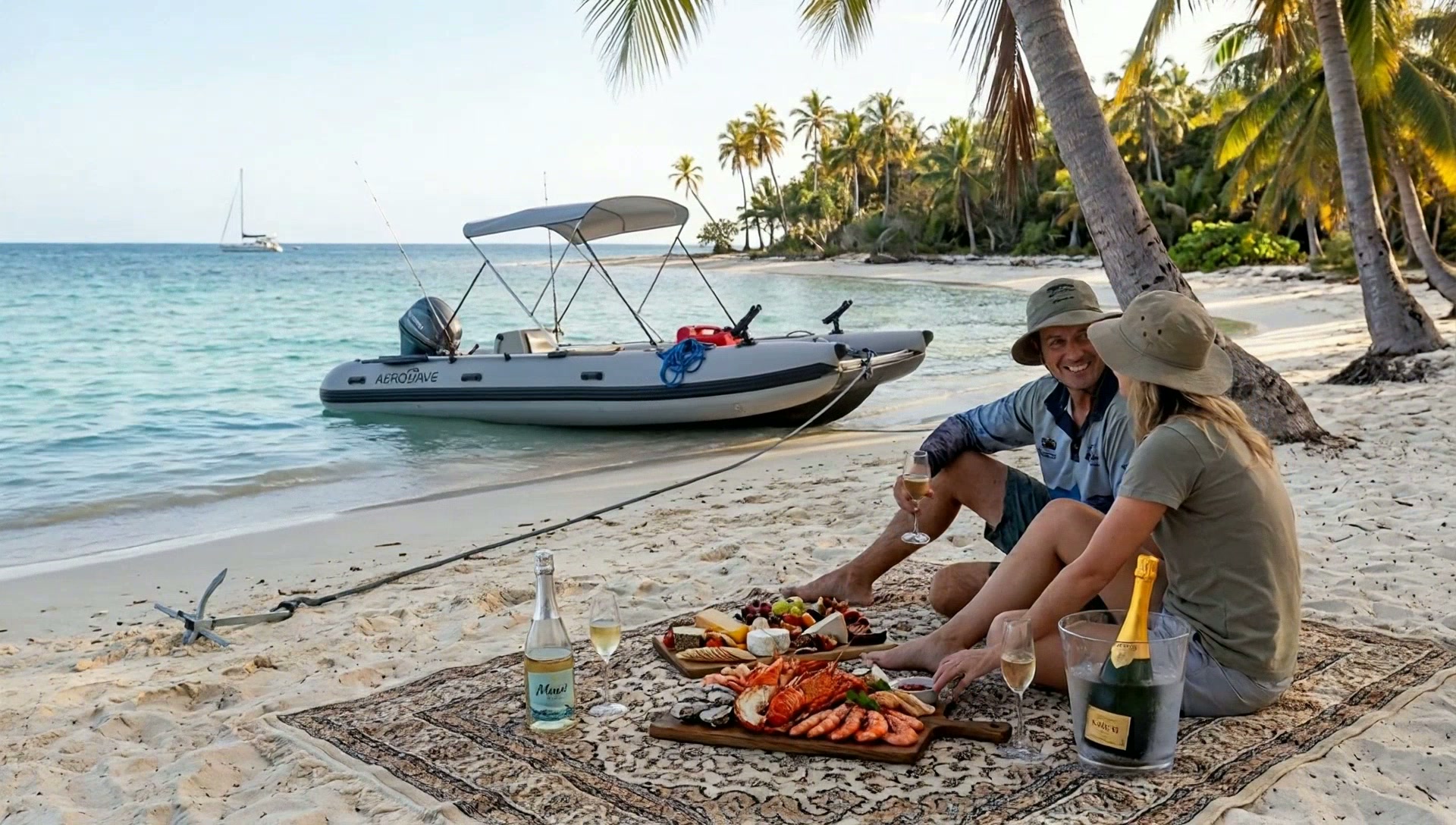
Aerowave Viper 365 Open Bow
Premium 3.65m Inflatable catamaran — built the same way as our flagship Viper 400 sports boat, just 35cm shorter. German VALMEX® 7321 Heavy Plus 1.2mm commercial-grade fabric, 10 PSI high-pressure drop-stitch air deck floor with VALMEX non-slip surface, LockPro wheels, full Bimini and FREE express delivery Australia-wide included.
Free freight to United States · local taxes payable on arrival
Not sure which suits you? Talk to a real boat owner.
Before you spend a cent
Buying from Australia, delivered to United States
You have never heard of us, we are on the other side of the world, and the internet is full of fakes. Fair enough. Here is everything you would need to check us out, in one place — no forms, no chat bot.
Australian designed business
Easy Inflatables, Avoca Beach NSW 2251. ABN 96 856 548 613. International orders ship from our Hong Kong hub.
222 owner reviews, 4.8 average
Read them in full, good and bad, on our reviews page.
CE certified, 7-year hull warranty
ISO 6185-3 and EU Directive 2013/53/EU. Warranty honoured worldwide.
Tracked, insured, door to door
FREE freight to United States · local tax/duty on arrival.
- Who am I actually buying from?
- Easy Inflatables, Avoca Beach NSW 2251, Australia. ABN 96 856 548 613. Sean is the owner and skipper, Gary Stewart handles sales on +61 2 4335 1603, Karen Matthews handles email. The boats are Australian designed; international orders ship from our Hong Kong dispatch hub so your landed price stays competitive. Phone us before you pay a cent — a real person answers.
- Is this really an Australian product?
- Yes — Australian designed and engineered on the NSW Central Coast. Manufacturing is done offshore to our spec, and international orders ship direct from our Hong Kong dispatch hub. If we routed every boat through Australia first, the freight alone would roughly double or triple your cost for the same hull.
- What do I pay, and what is not included?
- The delivery and import terms depend on your country. EU, UK, New Zealand and named Asia/Pacific lanes include duty and tax; US freight is free but US buyers pay import charges on arrival. Other destinations show their terms before payment.
- How do I pay safely?
- Card through Stripe (Visa, Mastercard, Amex, Apple Pay, Google Pay) or bank transfer. Card payments carry your bank's own dispute protection. We never ask for crypto, gift cards or payment to a personal account.
- What if it arrives damaged?
- Every boat ships fully tracked and insured door to door. Photograph the carton and the boat on arrival and email us — transit damage is claimed and replaced through us, not left with you and the courier.
- Is the warranty real outside Australia?
- Yes. The 7-year hull warranty on 1.2 mm VALMEX Heavy Plus and Orca Hypalon hulls applies wherever you are. Replacement parts are held in Australia and at our overseas hub and go out by express courier to your door.
- Is the boat actually certified?
- All Aerowave catamarans are CE certified to ISO 6185-3 and EU Directive 2013/53/EU. Certification paperwork is supplied with the boat — ask and we will send it before you order.
Frequently asked questions
- What is a thundercat boat?
- A thundercat is a surf-racing inflatable catamaran: two long tubes with a tensioned deck between them, a short-shaft outboard and a crew of two. The format is the same twin-tube layout used in recreational inflatable catamarans, tuned for speed.
- How fast do thundercat boats go?
- Race boats running around 50 hp reach roughly 100 km/h in flat conditions. Recreational catamarans with a 9.9 to 20 hp four-stroke sit in the 25 to 45 km/h range, which is where they are comfortable and safe.
- Can you buy a thundercat for recreational use?
- You can, but it is a poor everyday boat. Race hulls have no seating, no shade, no storage and a short service life. A recreational catamaran keeps the stability and beach-launch ability with seats, bimini, dry storage and a sane motor.
- Why do racers use catamarans instead of monohulls?
- Two tubes with a flat span between them give stability without a deep V. The boat planes early, sits on the water rather than in it, and can be driven straight onto sand.
- What hull fabric do serious inflatable catamarans use?
- Premium hulls use 1500 GSM / 1.2 mm VALMEX Heavy Plus with hot-air welded seams. Lighter boats in this class commonly use 1100 decitex 0.7 / 0.9 mm fabric, which has about a third less material to abrade through.
- Why does transom height matter?
- An outboard mounted too high ventilates and loses drive in turns. A 380 mm transom keeps more prop in the water, which improves bite and stops the prop blowing out.
- Is thundercat racing available in Australia?
- Yes, through organised clubs with class rules covering hull dimensions, buoyancy, kill switches, helmets and impact vests. Joining a club day as crew is the cheapest way to try it.
Ready to set sail?
Premium German-fabric inflatable catamarans, built to order and delivered to your door. Talk to our team or browse the fleet.
Like this guide? Get the next one in your inbox.
Owner-tested tips, gear deep-dives and Aussie boating know-how — no spam.