Outboard Cavitating or Prop Blowing Out? It's the Prop Set-Up, Not the Boat
Revs spike, thrust dies, boat squats? Nine times out of ten it is the prop sitting too shallow, the wrong shaft length, or too much trim — not the engine and not the boat. Here is how to fix it for free.
At a glance
Revs spike, thrust dies, boat squats? Nine times out of ten it is the prop sitting too shallow, the wrong shaft length, or too much trim — not the engine and not the boat. Here is how to fix it for free.
- Cavitation vs ventilation — they are not the same thing
- Ventilation (what nearly everyone actually has)
- Cavitation (rarer, and destructive)
- Shaft length: the number that decides everything
Ships to United States 🇺🇸 · tracked door to door
The motor for your inflatable — petrol or electric, in stock now.
Hidea 4-strokes from 2.5 to 20 hp, plus the Haswing Ultima 3.0HP and Fuber Global 1.5 electric outboards. Every one of them is matched to a soft-transom inflatable.
- Hidea 4-stroke range: 2.5, 5, 6, 8, 9.9, 15 and 20 hp — carby or EFI
- Haswing Ultima 3.0HP and Fuber Global 1.5 electric — quiet, no fuel, no service
- Shaft length, transom height and thrust matched to our hulls before it ships
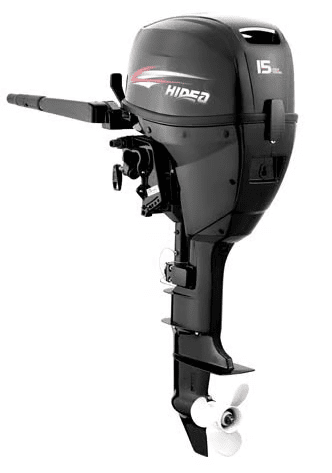 Hidea 15HP 4-Stroke OutboardUS$2,801 · in stock, ships now
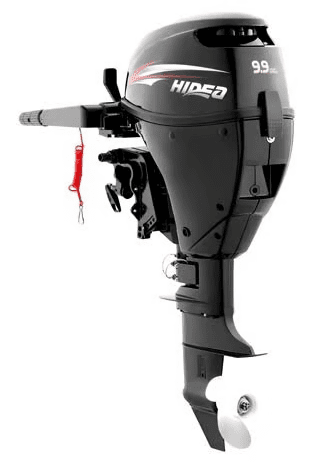 Hidea 9.9HP 4-Stroke OutboardUS$2,508 · in stock, ships now
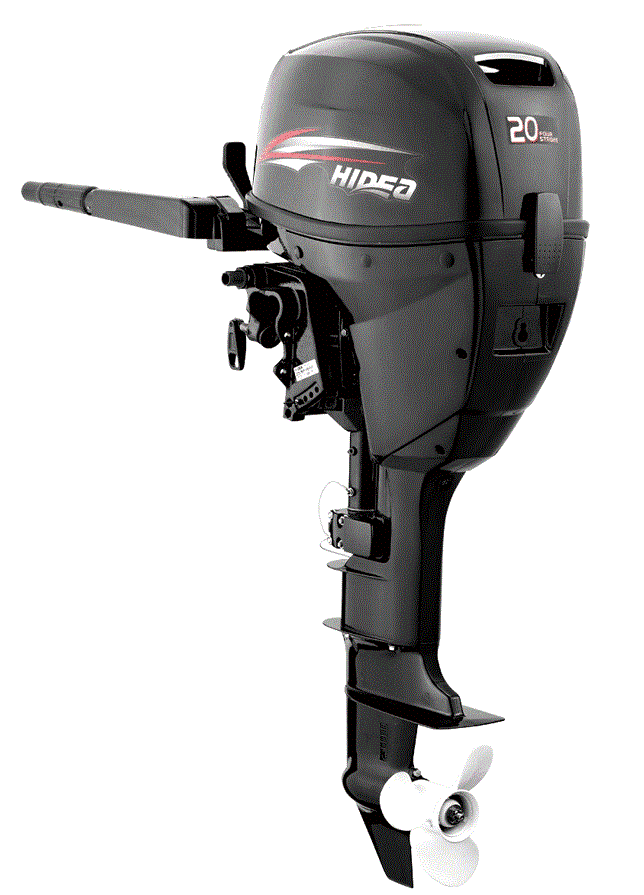 Hidea 20HP Carburettor 4-Stroke Outboard — Short Shaft, Electric StartUS$2,640 · in stock, ships now
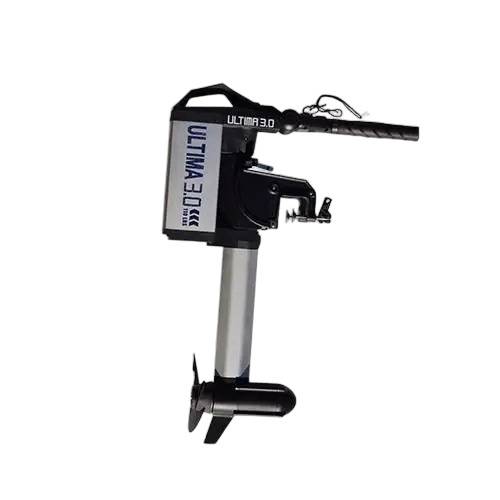 Haswing Ultima 3.0HP Electric OutboardUS$1,947 · in stock, ships now
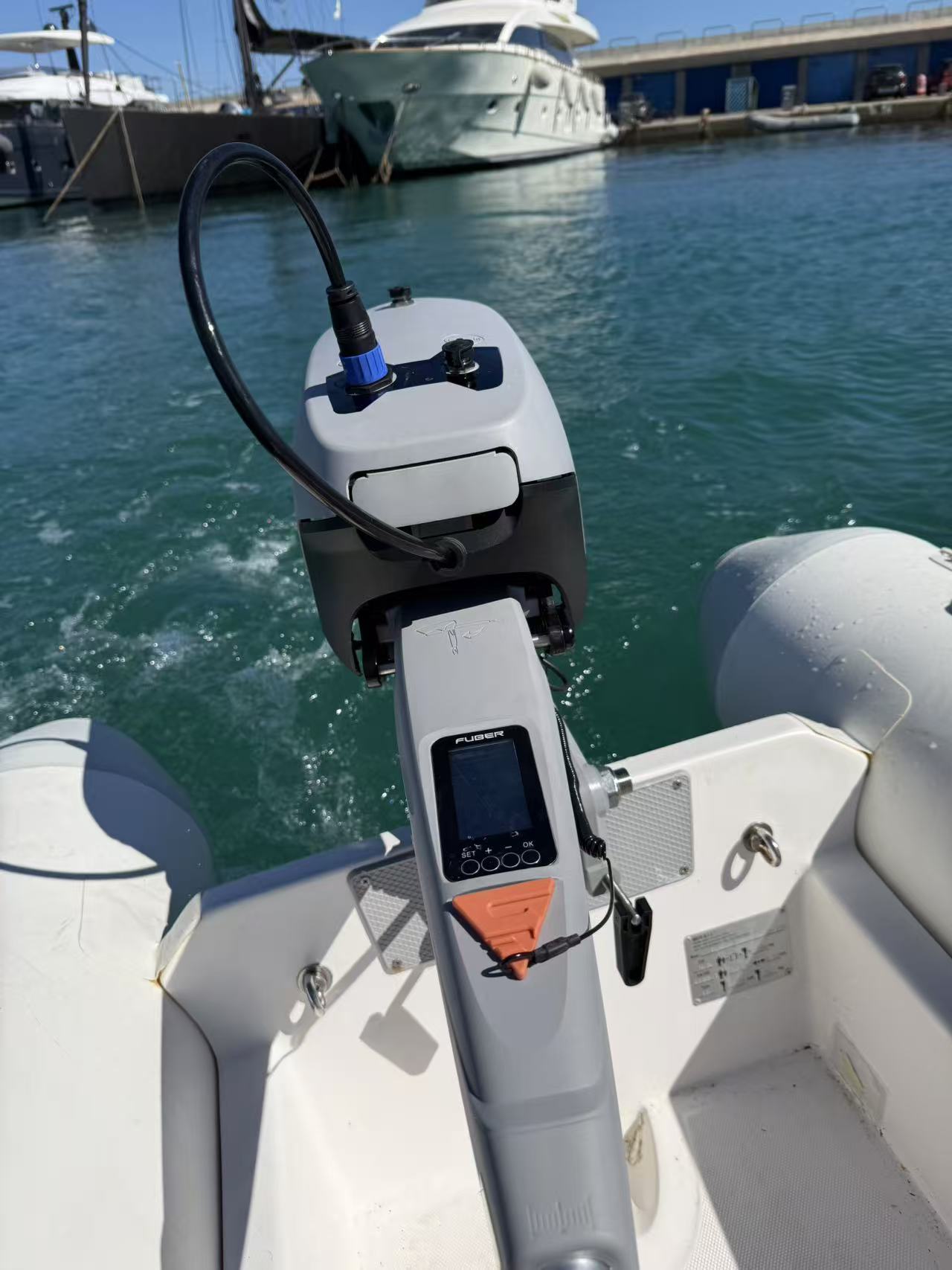 Fuber Global 1.5 Electric Outboard — Short ShaftUS$2,475 · in stock, ships now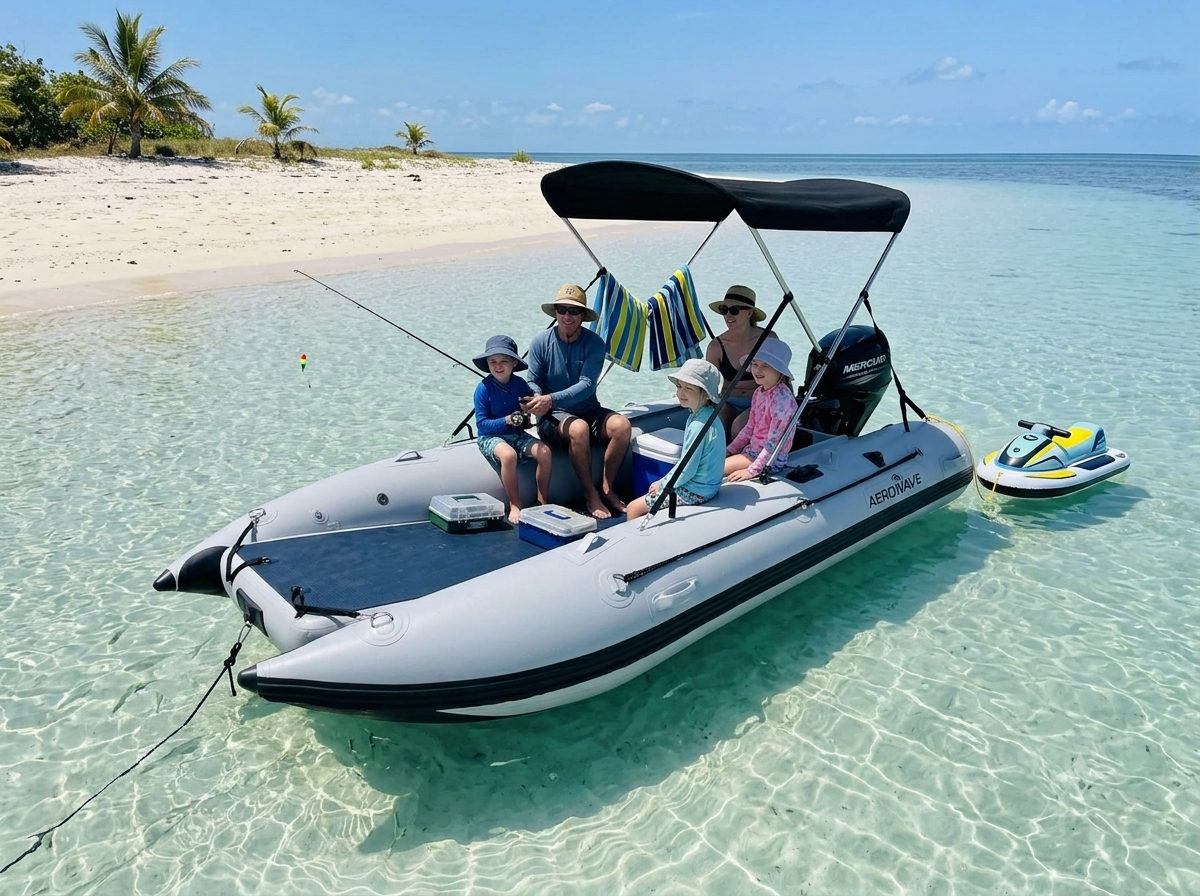
Or replace the boat entirely
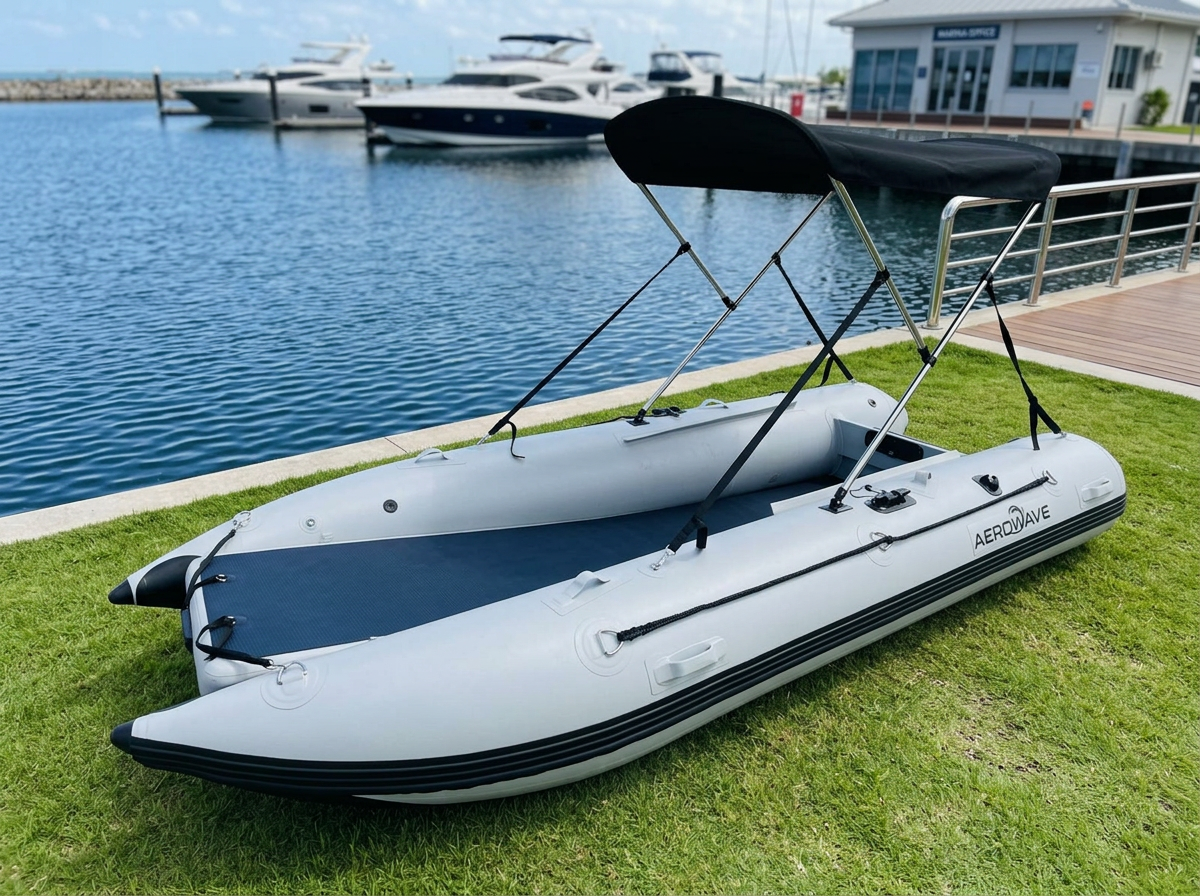
Aerowave WaveRunner 380 Series 3 Catamaran Package
Delivered to United States — freight included in the figure below.
US$2,774landed, USD
- 7-year hull warranty
- CE certified to ISO 6185-3 and EU Directive 2013/53/EU
- Door-to-door, tracked the whole way
See it for yourself
Real boats. Real owners. Real people behind them.
Plenty of what you read online these days is generated. Check us out properly — the factory, the reviews and the owners are all one click away. Why we use AI, and how to check we’re real
How our boats are built
Walk the production line: thermo-welded seams, 1.2 mm VALMEX Heavy Plus hulls, over-pressure relief valves on every chamber.
See the buildGoogle Maps reviews
Real Australian owners, five stars, published on our Google Business Profile with the map — read them there, not just on our own site.
Open Google Maps reviewsOwner stories
Boats in use — offshore, on rivers, on rescue duty. Photos and words from the people who actually own them.
Read owner storiesIf your outboard screams, the revs spike and the boat stops accelerating, the boat is almost never the problem. The prop and engine set-up are.
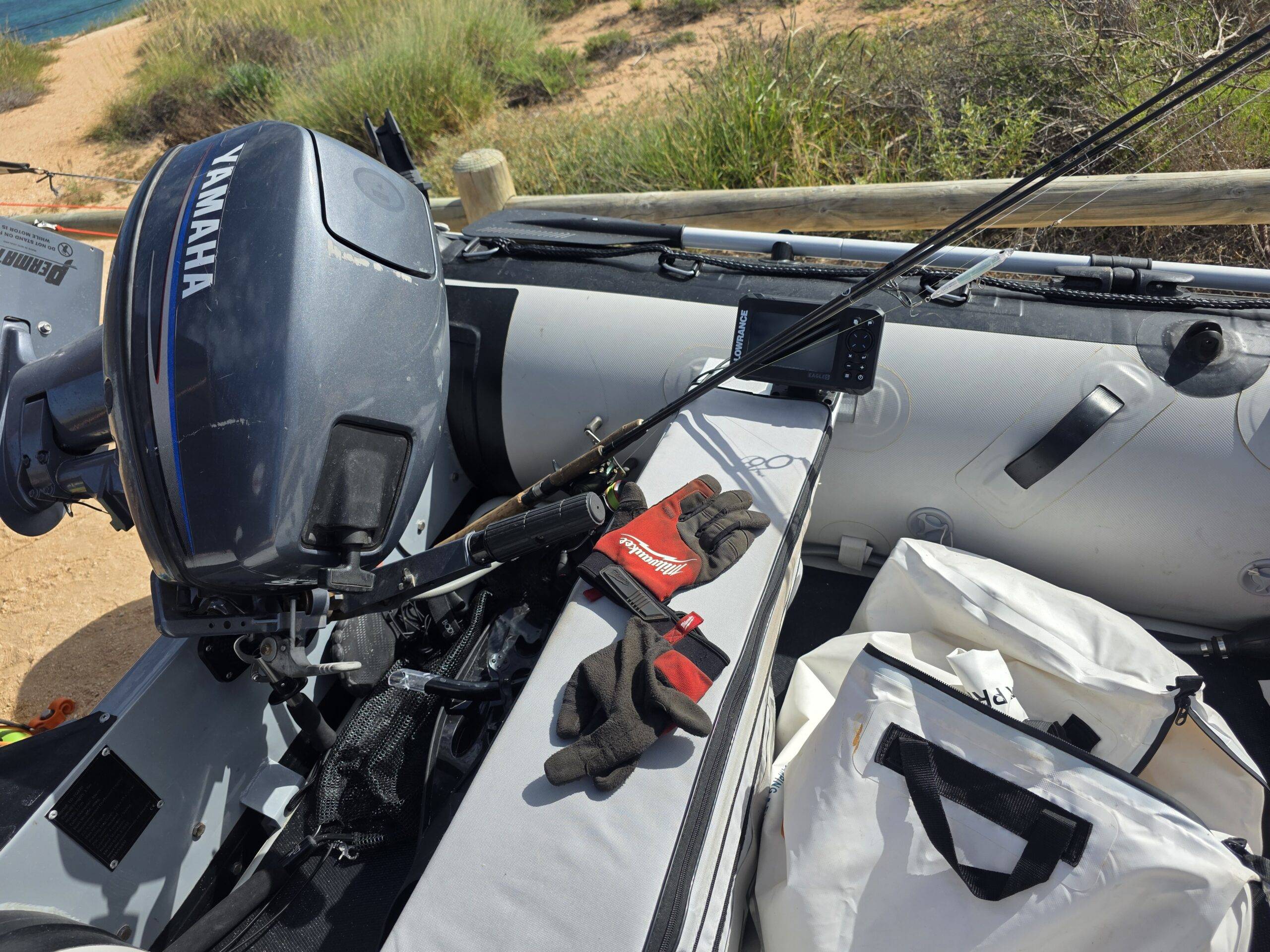
It shows up the same way every time. Light chop, a turn, or a passenger moving forward — the prop breaks the surface, the motor over-revs, and the boat squats and wallows until you back off the throttle. Owners blame the engine, change the prop, then blame the fuel.
The real cause is almost always at the prop itself: the prop sitting too shallow relative to the hull, the wrong shaft length on the engine, or too much positive trim. Get those right and the problem disappears.
Cavitation vs ventilation — they are not the same thing
Getting this right tells you which fix you need.
Ventilation (what nearly everyone actually has)
Surface air gets sucked down into the prop. The blades spin in an air-and-water froth instead of solid water, so thrust collapses and revs climb. Causes: prop sitting too shallow, the engine trimmed too far out, the boat trimmed bow-down, or a long-shaft engine on a short-shaft setup.
Cavitation (rarer, and destructive)
Water vaporises on the low-pressure face of the blade and the bubbles collapse against the metal. Over time it pits the blade edges. Usually caused by a damaged or wrong-pitch prop, or a badly set-up anti-ventilation plate.
If your blades are clean and the revs only spike in chop or turns, you have ventilation, and it is fixable — usually in five minutes with the trim pin.
Shaft length: the number that decides everything
Small outboards are built to two shaft lengths: short shaft (nominally 15 inch / 381 mm) and long shaft (20 inch / 508 mm). The engine's anti-ventilation plate has to sit just below the hull bottom, or the prop spends all day in the wrong water.
Prop sitting too high
The anti-ventilation plate rides at or above the water surface. In flat water it feels fine. The moment you turn or hit a wake, the plate lets surface air straight down onto the blades and the revs run away. This is the classic symptom of a long-shaft engine where a short-shaft belongs — the fix is the correct shaft length, not a new boat.
Prop sitting too low
Extra drag, spray up the back, and a gearcase that fouls on shallow launches.
Getting the plate where it belongs
The target is simple: anti-ventilation plate roughly 25–50 mm below the hull bottom with a standard short-shaft engine. Most modern short-shaft outboards are built around that geometry, so the correct engine, clamped tight and trimmed correctly, puts the prop exactly where it needs to be.
Our current transoms are built at 380 mm, which gives a short-shaft outboard maximum blade depth in solid water — more bite, more grip in chop, and extra margin before the prop can ever pull air. Earlier boats with 405 mm transoms are equally sound: with a correctly matched short-shaft engine and the trim set properly, the plate still sits exactly where it should. If you own one, nothing needs changing — the checklist below applies to both heights.
Flex: the hidden contributor
An outboard is a lever. A 15 hp four-stroke hanging off the back weighs around 45 kg and puts a constant twisting load into the transom every time you accelerate. If the board is soft, that load changes the prop angle constantly — and a prop that keeps changing angle keeps finding air.
What a soft transom does to your day
- The engine nods under load, so the prop angle changes constantly
- Thrust wanders, steering feels vague, the boat porpoises
- Water pushes through around the clamp area
- Eventually a thin board delaminates and the mounting hardware works loose
What to look for
Solid marine plywood of real thickness, fully encapsulated, bonded into the hull structure rather than glued to a flap of fabric. Our boats use 36 mm timber transoms because a thin board is where cheap inflatables quietly fail after two seasons of towing and holeshots.
Sit in the boat at rest, have someone shove the engine leg side to side and watch the transom face. It should not visibly move.
Weight, rating and why "more horsepower" backfires
Overpowering is a very common self-inflicted problem.
| Symptom | Usual cause | Fix |
|---|---|---|
| Revs spike in turns | Prop ventilating, plate too high | Correct shaft length, trim in |
| Bow rises, boat will not plane | Weight too far aft, over-trimmed | Move gear and crew forward |
| Stern squats, water at the transom | Engine heavier than the rating | Lighter engine within the rated max |
| Steering wanders at speed | Engine or clamps moving | Retighten, check mounting |
| Vibration, pitted blades | Damaged or wrong prop | Replace the prop |
Fitting an engine above the rated maximum does not make the boat faster. It buries the stern, raises the bow, makes the boat ventilate more easily and voids the warranty on the hull. Every one of our boats is rated, and the rating is a structural limit, not a suggestion.
Trim and load: free fixes before you spend a cent
- Trim the engine in one notch. Excess positive trim lifts the prop and is the fastest way to make a healthy setup ventilate.
- Move weight forward. Two adults on the rear bench is the single most common cause of a squatting stern on a 3.3–3.6 m boat.
- Check the tube pressure first. A soft tube changes the running attitude of the whole hull. Rated pressure, cold, before you launch.
- Clean the prop. Fishing line wrapped behind the hub throws the blade balance out and feels exactly like cavitation.
- Tighten the clamps and safety-lanyard them. A creeping engine slowly changes its own mounting height.
When to change the prop, not the boat
If you have matched the shaft length, trimmed in, moved weight forward and it still ventilates in mild chop, look at the prop itself. A worn or wrong-pitch prop, a spun hub, or a bent blade will ventilate in water a healthy prop would grip. A fresh prop of the correct pitch cures most stubborn cases for a fraction of the cost of anything else.
Only after all of that should anyone start pointing at hulls and transoms — and on a properly built boat with a solid transom and the right engine, you will almost never get that far.
Quick pre-launch checklist
- Tube pressure at rating, measured with a gauge
- Anti-ventilation plate 25–50 mm below the hull bottom
- Engine clamps tight, lanyard fitted
- Prop clean, blades undamaged
- Heaviest crew and gear forward of the mid-bench
- Engine within the boat's rated maximum horsepower
Work through that list and the vast majority of "my outboard is cavitating" complaints disappear before you leave the ramp.
Weekend-Proof Score 17 questions · about 2 minutes
Will the boat you're about to buy survive an Australian summer?
Seventeen straight questions about where you'll use it, what you'll ask of it and the boat you're weighing up. You get a score out of 100, the exact weak points in your plan, and the one boat that genuinely fits.
Free · your result shows on screen · no email required
So which one is yours?
Pick how you'll actually use it and we'll take you straight to the right hull.
I want to fish it
Open bow, rod holders, deck space you can stand and cast from.
Viper Sport 400Family, diving and the beach
3.8 m Series 3 catamaran — low bow to climb back in wearing fins or a tank.
WaveRunner 380Tender / one-person launch
3.3 m hard-floor boat that packs into a bag and still takes a beach landing.
Viper 330Shop gear featured in this guide
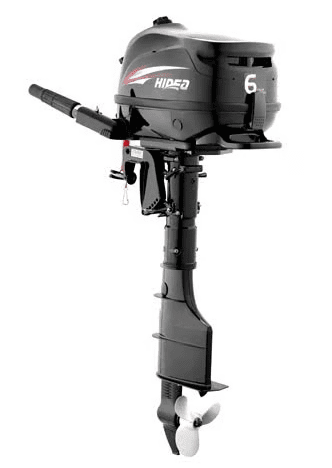
Hidea 6HP 4-Stroke Outboard
The 6HP 4-Stroke is built for tenders, skiffs and smaller inflatable boats. Quiet, easy to handle and reliable everyday power.
Australia-only item or unlisted country — ask for a price
Hidea 9.9HP 4-Stroke Outboard
Twin-cylinder smoothness for dinghies, inflatables and small aluminium boats. A confident step-up from 6HP.
Australia-only item or unlisted country — ask for a price
Hidea 15HP 4-Stroke Outboard
Strong, dependable mid-range power for bigger inflatables, tenders and small runabouts.
Australia-only item or unlisted country — ask for a price
Not sure which suits you? Talk to a real boat owner.
Before you spend a cent
Buying from Australia, delivered to United States
You have never heard of us, we are on the other side of the world, and the internet is full of fakes. Fair enough. Here is everything you would need to check us out, in one place — no forms, no chat bot.
Australian designed business
Easy Inflatables, Avoca Beach NSW 2251. ABN 96 856 548 613. International orders ship from our Hong Kong hub.
222 owner reviews, 4.8 average
Read them in full, good and bad, on our reviews page.
CE certified, 7-year hull warranty
ISO 6185-3 and EU Directive 2013/53/EU. Warranty honoured worldwide.
Tracked, insured, door to door
FREE freight to United States · local tax/duty on arrival.
- Who am I actually buying from?
- Easy Inflatables, Avoca Beach NSW 2251, Australia. ABN 96 856 548 613. Sean is the owner and skipper, Gary Stewart handles sales on +61 2 4335 1603, Karen Matthews handles email. The boats are Australian designed; international orders ship from our Hong Kong dispatch hub so your landed price stays competitive. Phone us before you pay a cent — a real person answers.
- Is this really an Australian product?
- Yes — Australian designed and engineered on the NSW Central Coast. Manufacturing is done offshore to our spec, and international orders ship direct from our Hong Kong dispatch hub. If we routed every boat through Australia first, the freight alone would roughly double or triple your cost for the same hull.
- What do I pay, and what is not included?
- The delivery and import terms depend on your country. EU, UK, New Zealand and named Asia/Pacific lanes include duty and tax; US freight is free but US buyers pay import charges on arrival. Other destinations show their terms before payment.
- How do I pay safely?
- Card through Stripe (Visa, Mastercard, Amex, Apple Pay, Google Pay) or bank transfer. Card payments carry your bank's own dispute protection. We never ask for crypto, gift cards or payment to a personal account.
- What if it arrives damaged?
- Every boat ships fully tracked and insured door to door. Photograph the carton and the boat on arrival and email us — transit damage is claimed and replaced through us, not left with you and the courier.
- Is the warranty real outside Australia?
- Yes. The 7-year hull warranty on 1.2 mm VALMEX Heavy Plus and Orca Hypalon hulls applies wherever you are. Replacement parts are held in Australia and at our overseas hub and go out by express courier to your door.
- Is the boat actually certified?
- All Aerowave catamarans are CE certified to ISO 6185-3 and EU Directive 2013/53/EU. Certification paperwork is supplied with the boat — ask and we will send it before you order.
Frequently asked questions
- Why does my outboard over-rev when I turn or hit chop?
- That is ventilation: surface air being pulled down onto the prop. The usual causes are the prop sitting too shallow, too much positive trim, or a long-shaft engine where a short-shaft belongs. Trim the engine in one notch first — it fixes most cases in seconds.
- Is cavitation the same as the prop blowing out?
- No. Blowing out is ventilation — air on the blades. True cavitation is water vapour bubbles collapsing on the blade face, which pits the metal over time and is usually caused by a damaged or wrong-pitch prop.
- I have a 405 mm transom boat. Do I need a new transom?
- No. A 405 mm transom with a correctly matched short-shaft outboard and proper trim puts the anti-ventilation plate exactly where it should be. Current 380 mm transoms simply give more blade depth and extra margin in chop. Nothing about a 405 mm boat needs changing.
- What shaft length outboard do I need?
- Match the shaft to the boat: most 3–4 m inflatables are built for short shaft (15 inch / 381 mm). A long shaft sits too deep; a prop set too high ventilates. The anti-ventilation plate should sit roughly 25–50 mm below the hull bottom.
- Will a bigger engine stop the prop blowing out?
- No — it usually makes it worse. Excess weight buries the stern, lifts the bow and makes ventilation easier, and exceeding the rated maximum horsepower voids the hull warranty. Fix the shaft length, trim and prop instead.
- When should I replace the prop?
- If shaft length, trim, tube pressure and load are all correct and it still ventilates, inspect the prop: a bent blade, spun hub or wrong pitch will ventilate in water a healthy prop would grip. A correct-pitch replacement cures most stubborn cases.
Ready to set sail?
Premium German-fabric inflatable catamarans, built to order and delivered to your door. Talk to our team or browse the fleet.
Like this guide? Get the next one in your inbox.
Owner-tested tips, gear deep-dives and Aussie boating know-how — no spam.