Welded vs Glued: The Seam That Defines Your Inflatable Boat's Lifespan
Don't get caught out by failing seams. Discover why a hot air welded inflatable boat offers vastly superior durability and long-term value over cheaper, glued alternatives in harsh Aussie conditions.
At a glance
Don't get caught out by failing seams. Discover why a hot air welded inflatable boat offers vastly superior durability and long-term value over cheaper, glued alternatives in harsh Aussie conditions.
- The Anatomy of an Inflatable Boat Seam
- The Old Way: Understanding Glued Seams
- How Gluing Works
- The Inevitable Weakness of Glued Seams
What we'd put you in
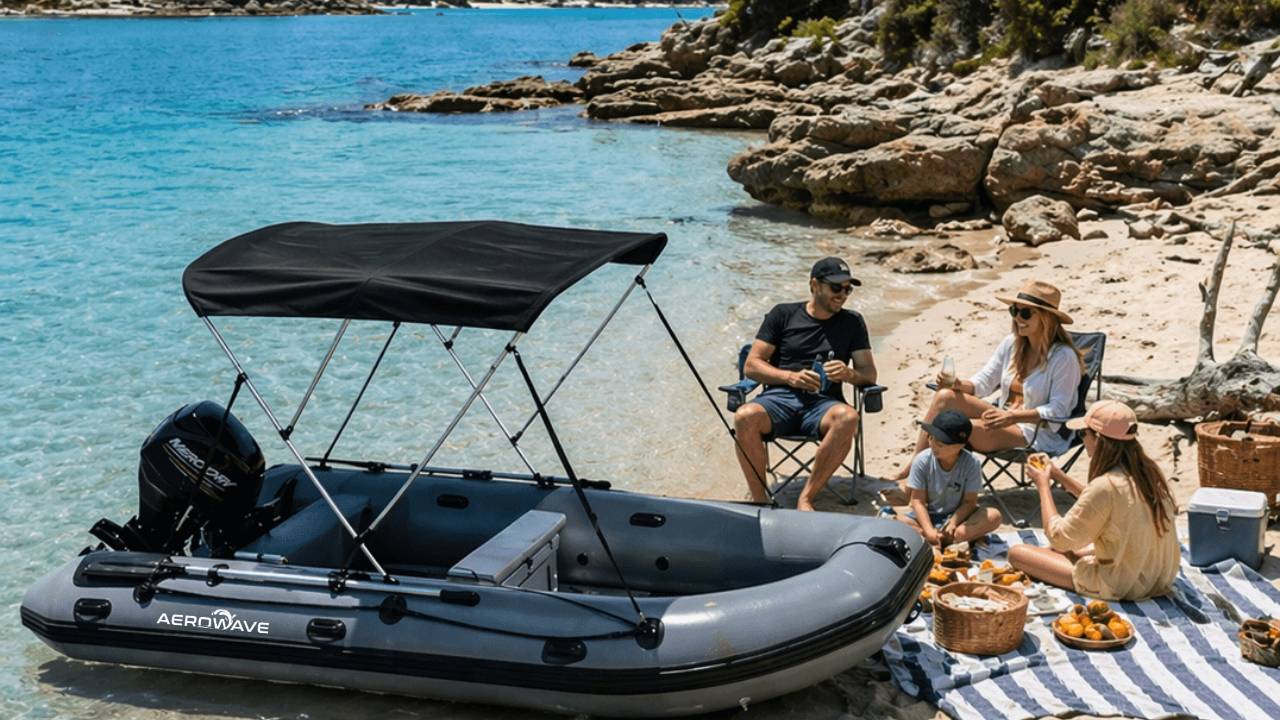
Aerowave Viper 400 Sovereign
1500 GSM / 1.2 mm VALMEX Heavy Plus — the fabric this article is really about.
US$3,167 USD
Delivered to your door, today's rate
- Free freight to United States · local taxes payable on arrival
- 7-year hull warranty
Ships to United States 🇺🇸 · tracked door to door
Fixing a hull today? Get the kit that actually holds.
Two-part PVC adhesive, matched fabric patches and a seam roller — the same kit our factory uses on 1500 GSM VALMEX®.
- Two-part adhesive — single-part hardware-store glue lets go in the sun
- Patch fabric matched to hull weight, not generic vinyl
- Written step-by-step for a wet-season repair that lasts
We're putting this into production. Want first run at cost-plus pricing?
Add your email — no spam, one message when it ships. We use this list to tell our factory what to build next.
Or replace the boat entirely
Aerowave Viper 400 Sovereign
Delivered to United States — freight included in the figure below.
US$3,167landed, USD
- 7-year hull warranty
- CE certified to ISO 6185-3 and EU Directive 2013/53/EU
- Door-to-door, tracked the whole way
See it for yourself
Real boats. Real owners. Real people behind them.
Plenty of what you read online these days is generated. Check us out properly — the factory, the reviews and the owners are all one click away. Why we use AI, and how to check we’re real
How our boats are built
Walk the production line: thermo-welded seams, 1.2 mm VALMEX Heavy Plus hulls, over-pressure relief valves on every chamber.
See the buildGoogle Maps reviews
Real Australian owners, five stars, published on our Google Business Profile with the map — read them there, not just on our own site.
Open Google Maps reviewsOwner stories
Boats in use — offshore, on rivers, on rescue duty. Photos and words from the people who actually own them.
Read owner storiesA premium inflatable boat is not just a collection of parts; it's a unified structure. And the single most critical point of failure—or strength—is its seams.
When you're looking at a new inflatable boat, it's easy to get drawn in by the sleek design, the promise of adventure, and the specs on paper. You check the length, the payload, the recommended outboard size. But there's a hidden detail, one that rarely makes it into the glossy brochures of budget importers, that will single-handedly determine whether your boat gives you a decade of faithful service or becomes a leaky liability in just a few seasons. That detail is how it’s held together.
Every inflatable boat is an assembly of precisely cut panels of fabric. Where those panels meet, you have a seam. And in the world of inflatable boats, there are fundamentally only two ways to join them: with glue, or by welding. While they might look similar from a distance, the difference in technology, durability, and long-term performance is night and day. Understanding this distinction is the most important piece of knowledge you can have when investing in a new vessel.
A quality hot air welded inflatable boat represents the pinnacle of modern construction, creating a bond that's stronger than the material itself. In contrast, glued seams, common in mass-market budget boats, introduce a fundamental weakness that is guaranteed to fail over time, especially under the relentless Aussie sun. This isn't just about minor repairs; it's about the core integrity and safety of your boat. Let’s dive deep into the science behind the seams.
The Anatomy of an Inflatable Boat Seam
Before we compare methods, it's crucial to appreciate the incredible forces a seam has to endure. It isn't just a simple join. An inflatable boat seam is a high-stress, dynamic component that is constantly under attack from multiple fronts.
First, there's the internal air pressure. A high-pressure air deck floor, for instance, is inflated to a board-like 8-10 PSI. The main tubes, while at a lower pressure, contain a massive volume of air that exerts a constant, uniform force on every square centimetre of the seam. This isn't static; as the boat flexes over waves, hits a wake, or bumps against a jetty, that pressure creates powerful shear and peel forces that try to pull the fabric panels apart.
Then, there are the external factors, which are particularly brutal in Australia. UV radiation from the sun bombards the boat, breaking down chemical compounds. Extreme heat cycles—think of a dark-coloured boat sitting on a trailer in a Western Sydney driveway in January—cause the materials and the air inside to expand and contract. Saltwater is a corrosive agent that works its way into any microscopic imperfection. Add in the abrasion from being dragged onto a sandy beach, the flexing from being rolled up for storage, and the occasional splash of fuel or oil, and you have one of the most demanding environments imaginable for a textile join.
A perfect seam, therefore, must be completely airtight, unbelievably strong, and as resistant to all these environmental factors as the parent fabric. This is the engineering challenge, and how a manufacturer chooses to solve it speaks volumes about their commitment to quality.
The Old Way: Understanding Glued Seams
For decades, gluing was the only way to construct an inflatable boat, and it remains the method of choice for budget manufacturers and for fabrics that cannot be welded, like Hypalon. The process involves a chemical adhesive, typically a polyurethane-based glue for PVC boats, which is applied to the two overlapping surfaces of the fabric before they are pressed together.
How Gluing Works
Think of it like using contact cement on a grand scale. The process is almost entirely manual. A worker must meticulously prepare the surfaces, apply a precise amount of adhesive, wait for it to become tacky, and then join the pieces with firm, even pressure. The quality of the bond is highly dependent on a number of volatile factors: the skill and consistency of the worker, the ambient temperature and humidity in the factory, the correct mixing of the two-part adhesive, and the cleanliness of the material.
If the conditions aren't perfect, or if the worker is having an off day, the resulting bond can be compromised from the moment it's made. This creates a hidden defect that will only reveal itself months or years later, usually at the most inconvenient time. The critical thing to understand is that glue creates a surface bond. The adhesive sticks to the outer layers of the two pieces of fabric, acting as a separate, intermediate layer. It does not fuse the material itself.
The Inevitable Weakness of Glued Seams
Herein lies the fatal flaw: the glue is the weak link. All adhesives have a finite lifespan. Over time, they degrade, become brittle, or lose their cohesive strength. This process is massively accelerated by heat and UV radiation. In the Australian climate, a dark-coloured boat left in the sun can reach surface temperatures that cause the glue to soften and 'creep'. The constant internal air pressure then begins to push the seams apart, starting a slow delamination process.
You'll see it as a small, persistent leak at first. Then, the edge of the seam overlay may begin to lift or peel. You might try to patch it, but the reality is that the entire adhesive system within the boat is failing at the same rate. You're not fixing a single fault; you're witnessing the beginning of the end for the boat's structural integrity. This is why many cheap, glued PVC imports look great for the first summer but are often seen listed for sale with 'slow leaks' just two or three years later. They were built with a ticking clock inside them.
The Modern Standard: Why a Hot Air Welded Inflatable Boat Prevails
Recognising the inherent limitations of adhesives, premium manufacturers moved to a far superior technology: thermo-welding. This process, often called hot air welding, eliminates glue entirely, creating a permanent, fused bond that is fundamentally more durable.
The Thermo-Welding Process Explained
Instead of applying glue, a sophisticated machine directs a precise jet of superheated air, often at temperatures exceeding 600°C, exactly at the point where the two layers of PVC fabric overlap. This intense heat melts the PVC material on both surfaces to a liquid state. Instantly, a pressure roller passes over the seam, pressing the two molten surfaces together.
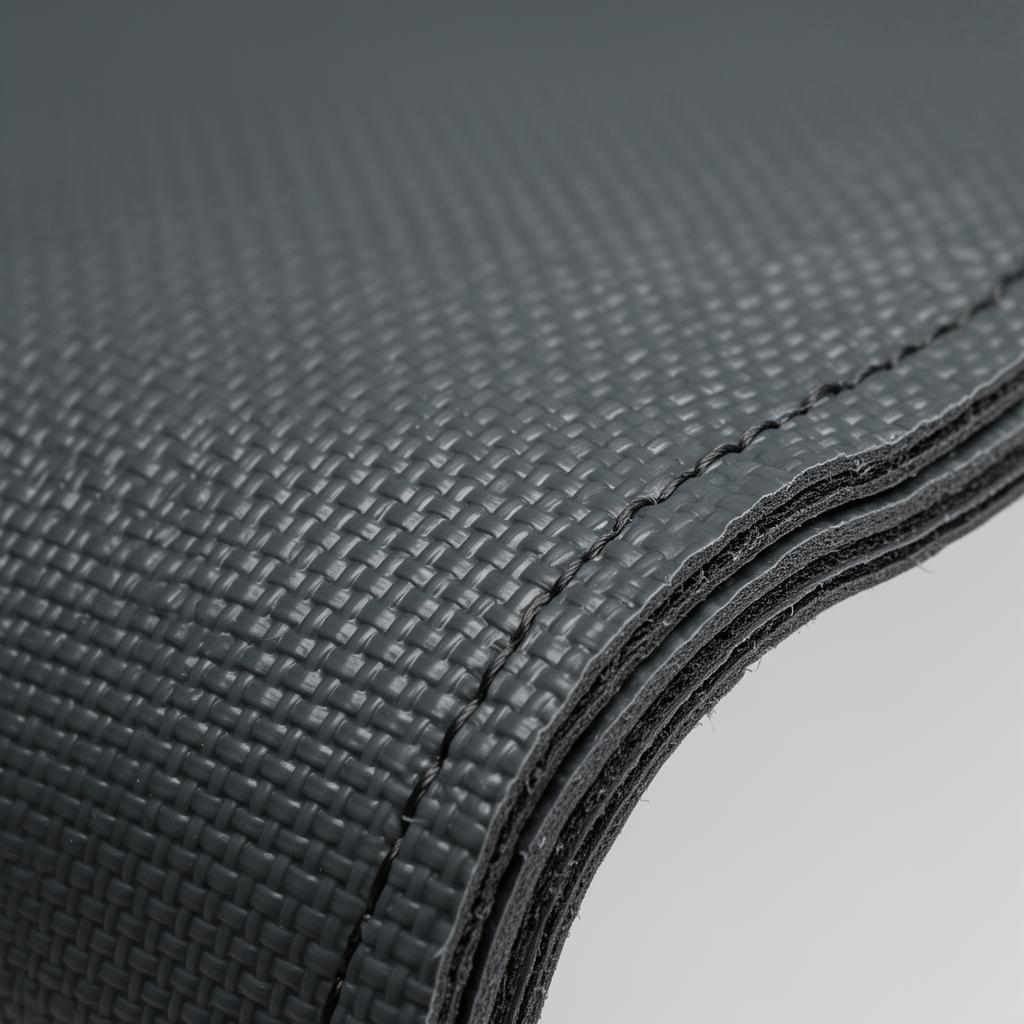
The result is a molecular bond. The two separate pieces of fabric are literally fused into a single, monolithic piece of material. There is no intermediate layer, no adhesive, nothing to break down. The seam becomes an integrated part of the fabric itself. It is the PVC equivalent of welding two pieces of steel together; you are not sticking them, you are making them one.
This process is controlled by precision machinery, ensuring a perfectly consistent temperature, speed, and pressure for every centimetre of the seam. This removes the variables of human error and ambient conditions that plague glued construction. It's a repeatable, scientific process that delivers a flawless result, every time.
The Unbeatable Durability of a Welded Seam
The benefits are astounding. A properly welded seam is stronger than the fabric surrounding it. In laboratory stress tests, when a welded boat is deliberately over-inflated to the point of catastrophic failure, it's the fabric panel that will tear, not the seam. The seam is no longer the weakest point in the construction; it's the strongest.
Most importantly, a welded seam has the same lifespan as the fabric itself. There is no glue to be attacked by UV rays or to soften in the heat. A hot air welded inflatable boat can be left on a mooring in the Whitsundays or trailered across the Nullarbor without any fear of the seams degrading. The bond will hold true for the entire life of the boat. This is why a premium German VALMEX® fabric, with a proven lifespan of 10-12 years, is always paired with welded seams. Using glue on such a high-quality fabric would be like putting cheap retread tyres on a Porsche. Our Aerowave Viper models use an incredibly tough 1.2mm, 1500 GSM VALMEX Heavy Plus fabric, while the AeroCat range uses a still-premium 0.9mm, 1100 GSM VALMEX fabric—both are thermo-welded to ensure the construction lasts as long as the material.
PVC vs. Hypalon: A Note on Fabric and Seam Technology
A common point of confusion for buyers is the debate between PVC and Hypalon fabrics. For years, Hypalon (a type of synthetic rubber) was marketed as the premium choice due to its excellent UV resistance. However, what often goes unsaid is that Hypalon cannot be thermo-welded. It must be glued.
This means that even the most expensive Hypalon boats on the market are built with the same fundamental weakness as a budget PVC boat: a reliance on chemical adhesives. While the Hypalon fabric itself might resist UV damage for a long time, its glued seams are still a ticking clock, susceptible to the same heat and chemical degradation over the years. They require more maintenance and will eventually fail.
Modern, high-quality PVC, such as the multi-layer VALMEX® material we use, has closed the gap significantly in terms of UV resistance and durability, but it retains one massive advantage: it can be welded. This combination of a top-tier, durable PVC fabric and advanced thermo-welding technology creates a boat that is lighter, more affordable, and has far superior seam integrity than any glued boat, regardless of fabric type.
Glued vs. Welded Seams: A Head-to-Head Comparison
Let's break down the differences in a simple table. When you see the direct comparison, the choice becomes clear.
| Feature | Glued Seams | Hot Air Welded Seams |
|---|---|---|
| Construction Method | Manual application of chemical adhesive. | Machine-controlled application of hot air and pressure. |
| Bond Type | Surface adhesion (glue sticks to the fabric). | Molecular fusion (fabric layers melt into one piece). |
| Strength | Weaker than the parent fabric; a known failure point. | As strong or stronger than the parent fabric. |
| Longevity | Limited by adhesive lifespan (3-7 years typically). | Lasts the full lifespan of the fabric (10-12+ years). |
| Heat & UV Resistance | Poor. Glue softens in the heat and degrades under UV. | Excellent. Unaffected by heat or UV radiation. |
| Manufacturing Consistency | Variable; depends on worker skill and climate control. | Highly consistent and repeatable digital process. |
| Failure Mode | Seam delamination, peeling, slow leaks. | Fabric tearing elsewhere under extreme over-stress. |
| Typical Use | Budget imports, most tenders under $2,000, all Hypalon boats. | A premium hot air welded inflatable boat like our Viper and AeroCat series. |
How to Spot the Difference: An Owner’s Checklist
So you're at a boat show or looking at a second-hand vessel. How can you tell if you're looking at a welded or a glued boat? While the only certain method is to check the manufacturer's specs, here are a few tell-tale signs:
- Ask the Dealer Directly: This is the easiest first step. Ask them, point-blank: "Are the main tube seams on this boat hot-air welded or are they glued?" A reputable dealer selling a quality product will answer immediately and proudly. Any hesitation, vague language like "chemically bonded," or attempts to change the subject are major red flags. They know the answer, and if they're not telling you, it's because it's glued.
- Look at the Seam Edge: Welded seams tend to have a very clean, narrow, and precise look. You might see a very thin, slightly shiny line right on the edge of the overlap where the material flowed—this is a good sign. Glued seams are often less uniform and may have a wider, flatter appearance. On older glued boats, you can sometimes spot a very fine, discoloured line of aged glue squeezing out of the join.
- Check the Warranty Card: A manufacturer's confidence in their product is written in their warranty. A short, one or two-year warranty suggests a product built to a price, not to a standard. A long-term warranty that explicitly covers the seams and fabric, like the 7-year warranty on our Viper Sovereign models or the 5-year warranty on our WaveRunner 380, is a powerful indicator of welded construction. No company can afford to offer such a long warranty on a product with a built-in failure point.
- Consider the Source and Price: Be deeply sceptical of boats sold through massive online marketplaces or from temporary importers with no long-term presence in Australia. If a price for a 3-metre+ boat seems too good to be true, it's almost certainly a glued PVC import. The savings are achieved by using cheaper fabric and, most significantly, by using low-cost manual labour for gluing instead of investing in the sophisticated machinery required for welding.
The Financial Case for a Welded Seam Boat
It can be tempting to save a couple of thousand dollars upfront by opting for a cheaper, glued boat. This is almost always a false economy. The true cost of a boat is not its purchase price, but its total cost of ownership divided by its years of service.
A $2,500 glued boat that develops irreparable seam leaks after its third season has cost you over $800 per year, and its resale value is effectively zero. In contrast, consider our AeroCat 380 at $3,480. Built with thermo-welded seams and premium VALMEX fabric with a 10-12 year lifespan, its cost per year is closer to $300. It provides far greater safety, reliability, and peace of mind, and it will still have significant resale value after five or even seven years.
Take it a step further with the flagship Viper 400 Sovereign Full Package. At $5,995, it's a serious investment. But it's built to last over a decade in the toughest conditions. Its annual cost of ownership is remarkably low for a vessel of its capability. When you factor in the money saved on frustrating repair kits, wasted days off the water, and the eventual cost of replacing a failed boat, the welded option is not just the better boat—it's the smarter financial decision.
Furthermore, when you buy from Easy Inflatables, the price you see is the price you pay, delivered to your door. Our prices for all our boats—from the AeroCat 330 at $2,910 to the WaveRunner 380 at $4,000—include express courier delivery anywhere in Australia. There are no hidden charges for sea freight or customs clearance that can surprise you with other suppliers. It's a complete, transparent package.
The Bottom Line
Choosing an inflatable boat is about more than just size and colour. The decision between glued and welded seam construction is a fundamental one that impacts every aspect of ownership, from safety and reliability to long-term value and, ultimately, your enjoyment on the water.
Glued seams are a compromise, a cost-saving measure that introduces an inherent weakness into the very fabric of the boat. A hot air welded inflatable boat, on the other hand, is a fully integrated structure, built with modern technology to provide maximum strength and longevity. It is the only sensible choice for the harsh, unforgiving, and magnificent Australian marine environment.
If you're serious about your boating, don't compromise on the one thing that holds it all together. We invite you to explore the specifications of our Aerowave Viper and AeroCat inflatable catamarans, all of which are proudly built using premium German VALMEX® fabric and state-of-the-art thermo-welding. If you have any questions, give our team a call on +61 2 4335 1603 or email sales@easyinflatables.com.au. We're boaties, and we're here to help you make the right choice.
Related
Weekend-Proof Score 17 questions · about 2 minutes
Will the boat you're about to buy survive an Australian summer?
Seventeen straight questions about where you'll use it, what you'll ask of it and the boat you're weighing up. You get a score out of 100, the exact weak points in your plan, and the one boat that genuinely fits.
Free · your result shows on screen · no email required
So which one is yours?
Pick how you'll actually use it and we'll take you straight to the right hull.
I want to fish it
Open bow, rod holders, deck space you can stand and cast from.
Viper Sport 400Family, diving and the beach
3.8 m Series 3 catamaran — low bow to climb back in wearing fins or a tank.
WaveRunner 380Tender / one-person launch
3.3 m hard-floor boat that packs into a bag and still takes a beach landing.
Viper 330Shop gear featured in this guide
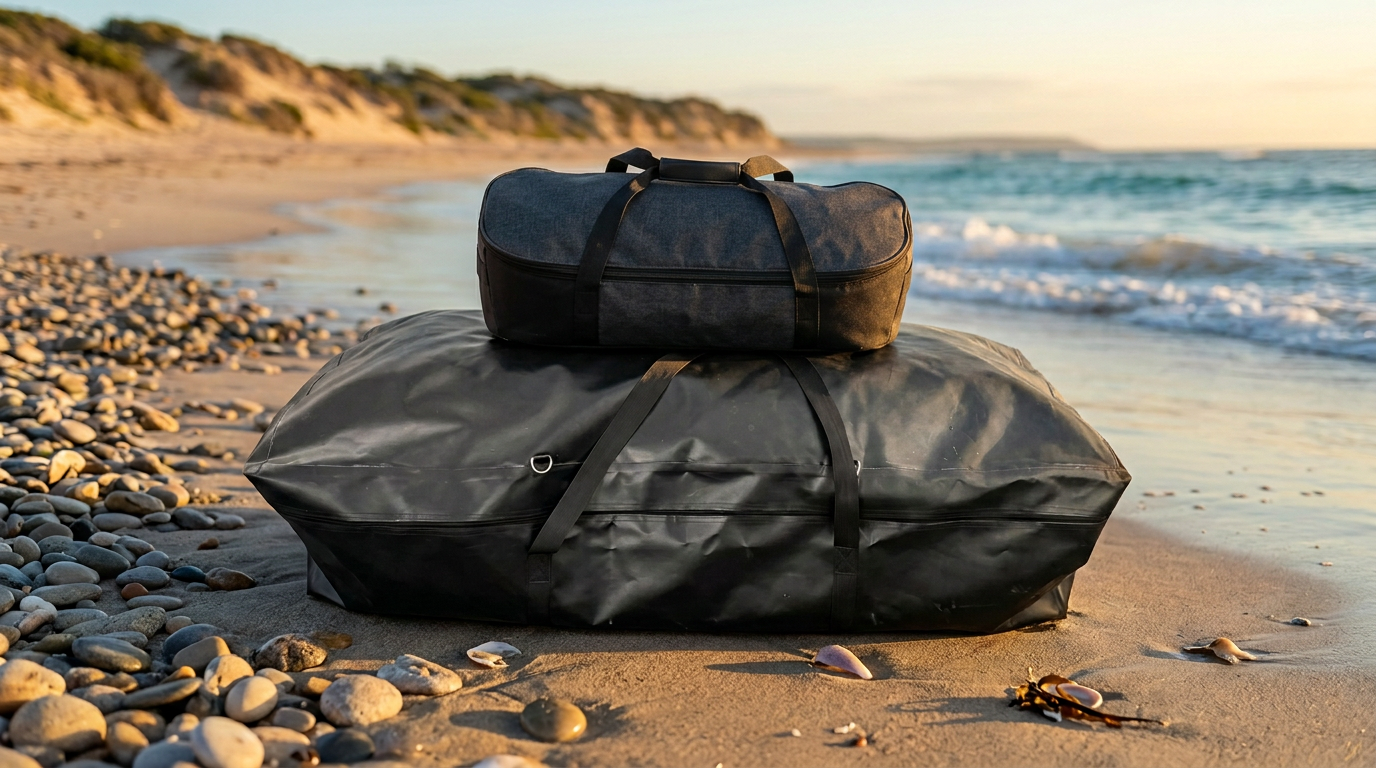
Aerowave Boat Bag & Wheel Bag Set — Australian-Made
The Aerowave Set — an Australian-made inflatable boat carry bag plus the matching launching wheel bag. Same 500 GSM European-spec ripstop PVC, same YKK zippers, boats up to 4.3 m, one price, postage included.
Free freight to United States · local taxes payable on arrival
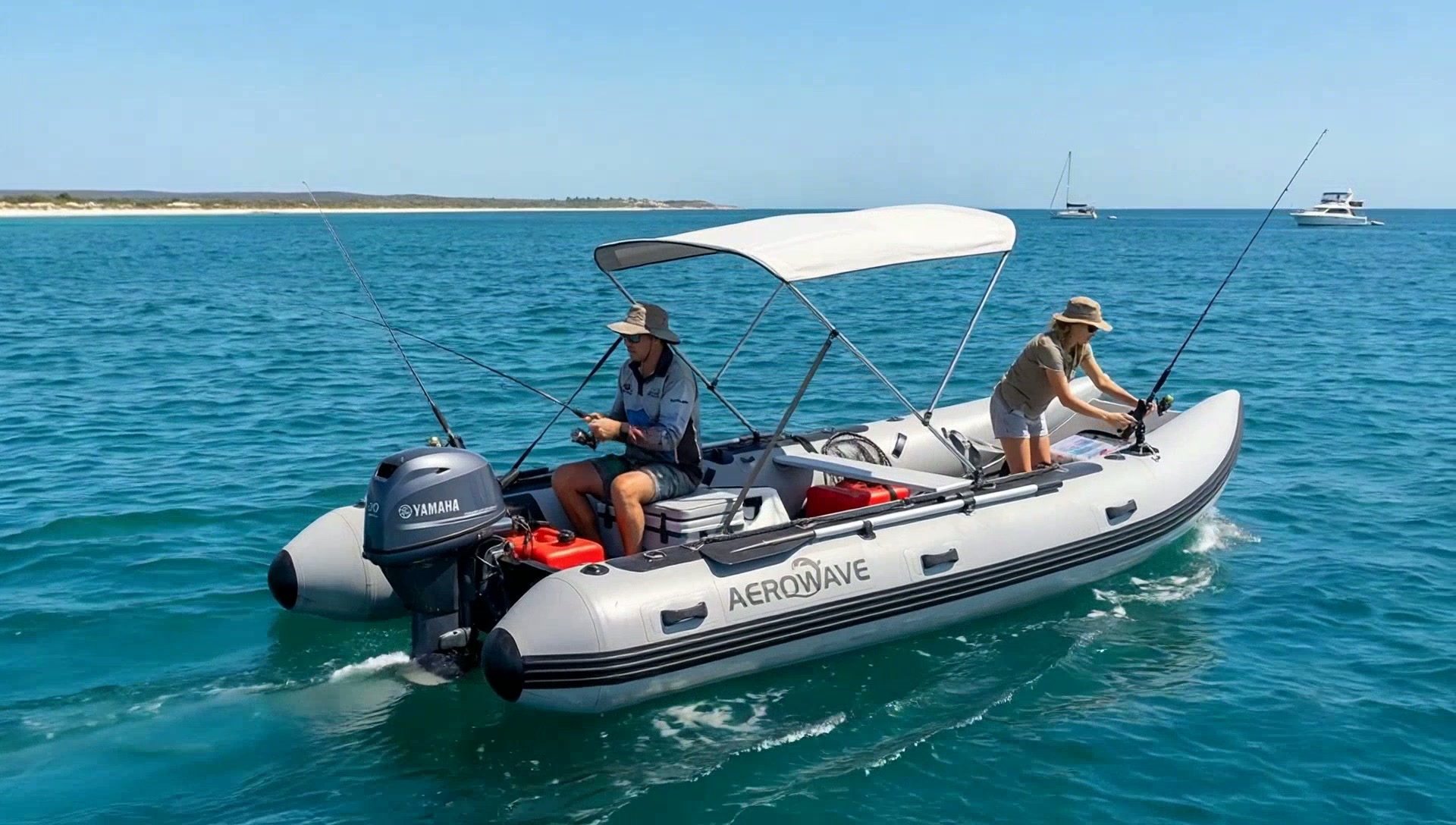
Aerowave Viper 330
The compact premium Viper catamaran package built for buyers who want serious stability, easy transport, premium materials and real global support in a 3.3m boat. German VALMEX® 1.2mm fabric, 10 PSI high-pressure drop-stitch air deck floor with VALMEX non-slip surface, 5–7 year hull warranty and FREE express delivery Australia-wide.
Free freight to United States · local taxes payable on arrival
Aerowave Viper 400 Sovereign
Flagship 4m enclosed-bow inflatable catamaran. German VALMEX® 7321 Heavy Plus 1.2mm commercial-grade fabric, 10 PSI high-pressure drop-stitch air deck floor with VALMEX non-slip surface, LockPro wheels, full Bimini and FREE express delivery Australia-wide included. Winter special — save $1,000 until 31 August 2026.
Free freight to United States · local taxes payable on arrival
Not sure which suits you? Talk to a real boat owner.
Before you spend a cent
Buying from Australia, delivered to United States
You have never heard of us, we are on the other side of the world, and the internet is full of fakes. Fair enough. Here is everything you would need to check us out, in one place — no forms, no chat bot.
Australian designed business
Easy Inflatables, Avoca Beach NSW 2251. ABN 96 856 548 613. International orders ship from our Hong Kong hub.
222 owner reviews, 4.8 average
Read them in full, good and bad, on our reviews page.
CE certified, 7-year hull warranty
ISO 6185-3 and EU Directive 2013/53/EU. Warranty honoured worldwide.
Tracked, insured, door to door
FREE freight to United States · local tax/duty on arrival.
- Who am I actually buying from?
- Easy Inflatables, Avoca Beach NSW 2251, Australia. ABN 96 856 548 613. Sean is the owner and skipper, Gary Stewart handles sales on +61 2 4335 1603, Karen Matthews handles email. The boats are Australian designed; international orders ship from our Hong Kong dispatch hub so your landed price stays competitive. Phone us before you pay a cent — a real person answers.
- Is this really an Australian product?
- Yes — Australian designed and engineered on the NSW Central Coast. Manufacturing is done offshore to our spec, and international orders ship direct from our Hong Kong dispatch hub. If we routed every boat through Australia first, the freight alone would roughly double or triple your cost for the same hull.
- What do I pay, and what is not included?
- The delivery and import terms depend on your country. EU, UK, New Zealand and named Asia/Pacific lanes include duty and tax; US freight is free but US buyers pay import charges on arrival. Other destinations show their terms before payment.
- How do I pay safely?
- Card through Stripe (Visa, Mastercard, Amex, Apple Pay, Google Pay) or bank transfer. Card payments carry your bank's own dispute protection. We never ask for crypto, gift cards or payment to a personal account.
- What if it arrives damaged?
- Every boat ships fully tracked and insured door to door. Photograph the carton and the boat on arrival and email us — transit damage is claimed and replaced through us, not left with you and the courier.
- Is the warranty real outside Australia?
- Yes. The 7-year hull warranty on 1.2 mm VALMEX Heavy Plus and Orca Hypalon hulls applies wherever you are. Replacement parts are held in Australia and at our overseas hub and go out by express courier to your door.
- Is the boat actually certified?
- All Aerowave catamarans are CE certified to ISO 6185-3 and EU Directive 2013/53/EU. Certification paperwork is supplied with the boat — ask and we will send it before you order.
Frequently asked questions
- Is a welded PVC boat better than a glued Hypalon boat?
- From a seam-integrity perspective, absolutely. While Hypalon fabric has excellent UV resistance, it must be glued, meaning its seams are its weak point. A premium PVC boat with thermo-welded seams has a bond that is stronger than the material itself and will last the full lifespan of the fabric without degrading from heat or UV.
- How long do hot air welded seams actually last?
- A welded seam will last as long as the fabric it joins. For our boats made with high-quality German VALMEX® fabric, that means a realistic lifespan of 10 to 12 years, even with regular use in the Australian sun and saltwater. The seam will not fail before the fabric does.
- Can you repair a welded seam if it gets punctured?
- Yes. While it's extremely rare for a welded seam to fail, any part of an inflatable boat tube can be punctured. A puncture on or near a seam is repaired in the same way as a puncture anywhere else: with a simple, effective patch kit. The integrity of the surrounding weld is unaffected.
- Are all Easy Inflatables boats built with welded seams?
- Yes. All of our premium inflatable boats, including the Aerowave Viper, AeroCat, and WaveRunner series, are constructed using state-of-the-art hot air welding technology. We believe this is the only acceptable construction method for a durable, sea-worthy vessel for Australian conditions.
- Why are glued boats so much cheaper?
- Glued boat construction relies on low-cost manual labour rather than expensive, specialised welding machinery. Combined with the use of cheaper, lower-grade PVC fabric, this allows manufacturers to hit a very low price point, but at the direct expense of durability, safety, and longevity.
- Can I weld an inflatable boat seam myself?
- No, this is not a DIY task. Thermo-welding requires industrial machinery that costs tens of thousands of dollars and provides precise digital control over temperature and pressure. It is a factory process, not a repair method.
- Does the Easy Inflatables warranty cover the seams?
- Absolutely. Our warranties, like the 7-year comprehensive warranty on the Viper Sovereign, are designed to give you complete peace of mind. They cover the entire boat's construction, and we consider the integrity of our thermo-welded seams to be a cornerstone of our quality guarantee.
- What's the main cause of seam failure on glued boats?
- The primary culprits are heat and UV radiation. In Australia, a boat left in the sun can get hot enough to soften the adhesive, allowing the internal air pressure to slowly push the seam apart. UV light also breaks down the chemical structure of the glue over time, making it brittle and weak.
Ready to set sail?
Premium German-fabric inflatable catamarans, built to order and delivered to your door. Talk to our team or browse the fleet.
Like this guide? Get the next one in your inbox.
Owner-tested tips, gear deep-dives and Aussie boating know-how — no spam.