
Choosing a Yacht Tender: Why Inflatable Catamarans Win for Cruising
How to choose a yacht tender: weight, davits, stowage, stability, capacity, outboard and towing — and why inflatable catamarans suit cruising couples.
Our recommendation
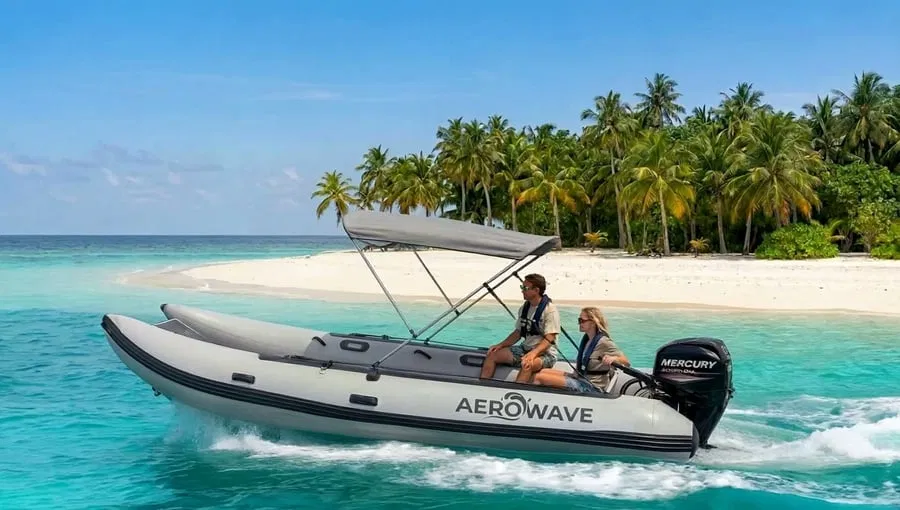
Aerowave Swift Tender 290 SI
Length
290cm / 9'6"
Width
152cm / 4'11"
Tube diameter
42cm
Chambers
3+1
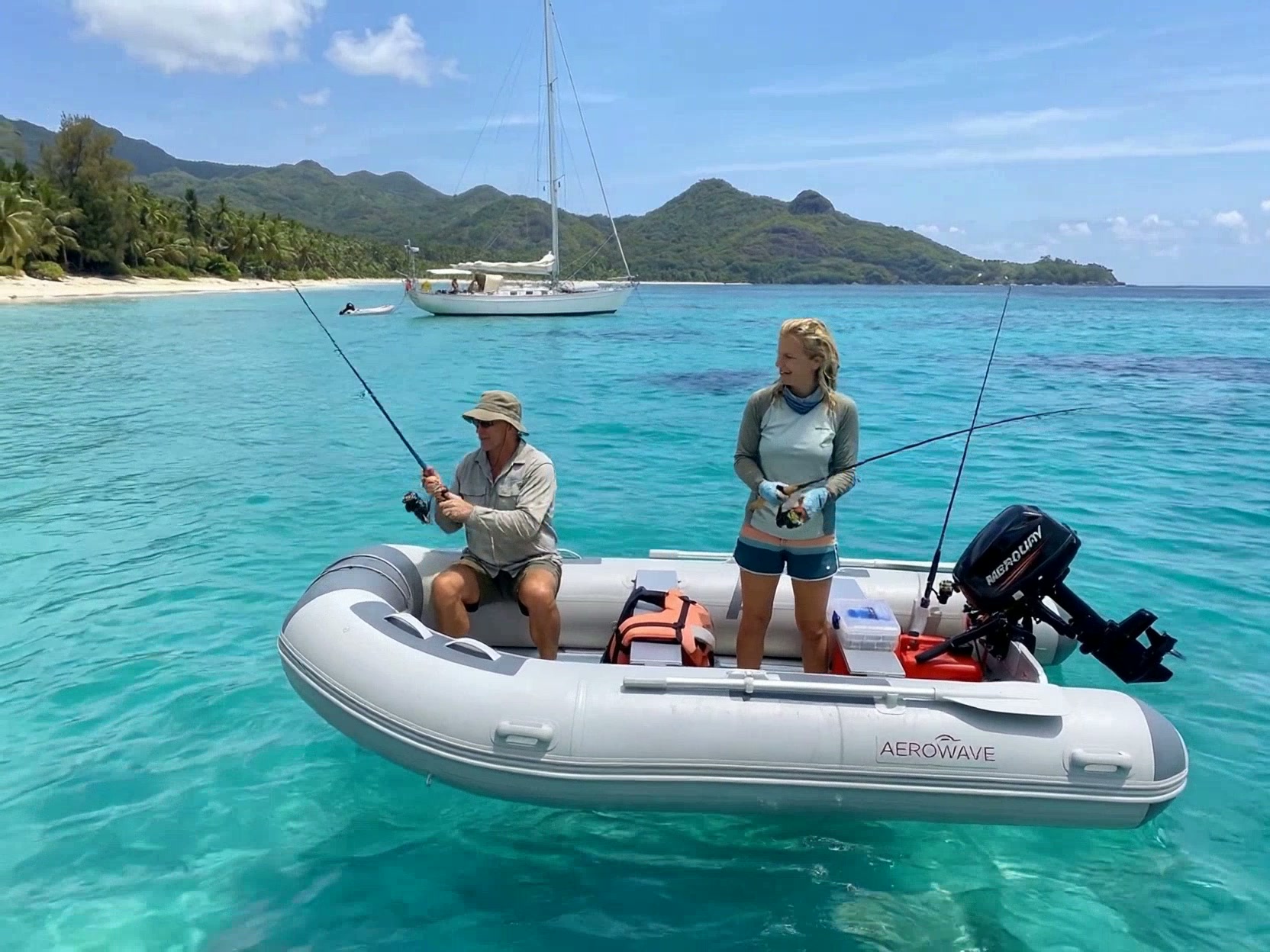
A tender is more than a small boat — it's your daily link between the yacht and shore. It carries people, provisions and gear, and it has to stay manageable when the weather or the crew's energy changes.
For many cruising couples, an inflatable yacht tender with a catamaran-style hull offers a strong combination of stability, carrying space and packability. The best tender for cruising is the one that fits your davits or storage, carries your normal load, and can be launched, recovered and secured by the crew who actually use it.
What makes a good yacht tender?
Start with the job, then check the constraints. A tender that's too heavy for its davits, awkward to stow or hard to recover quickly becomes a burden.
Before choosing a model, consider:
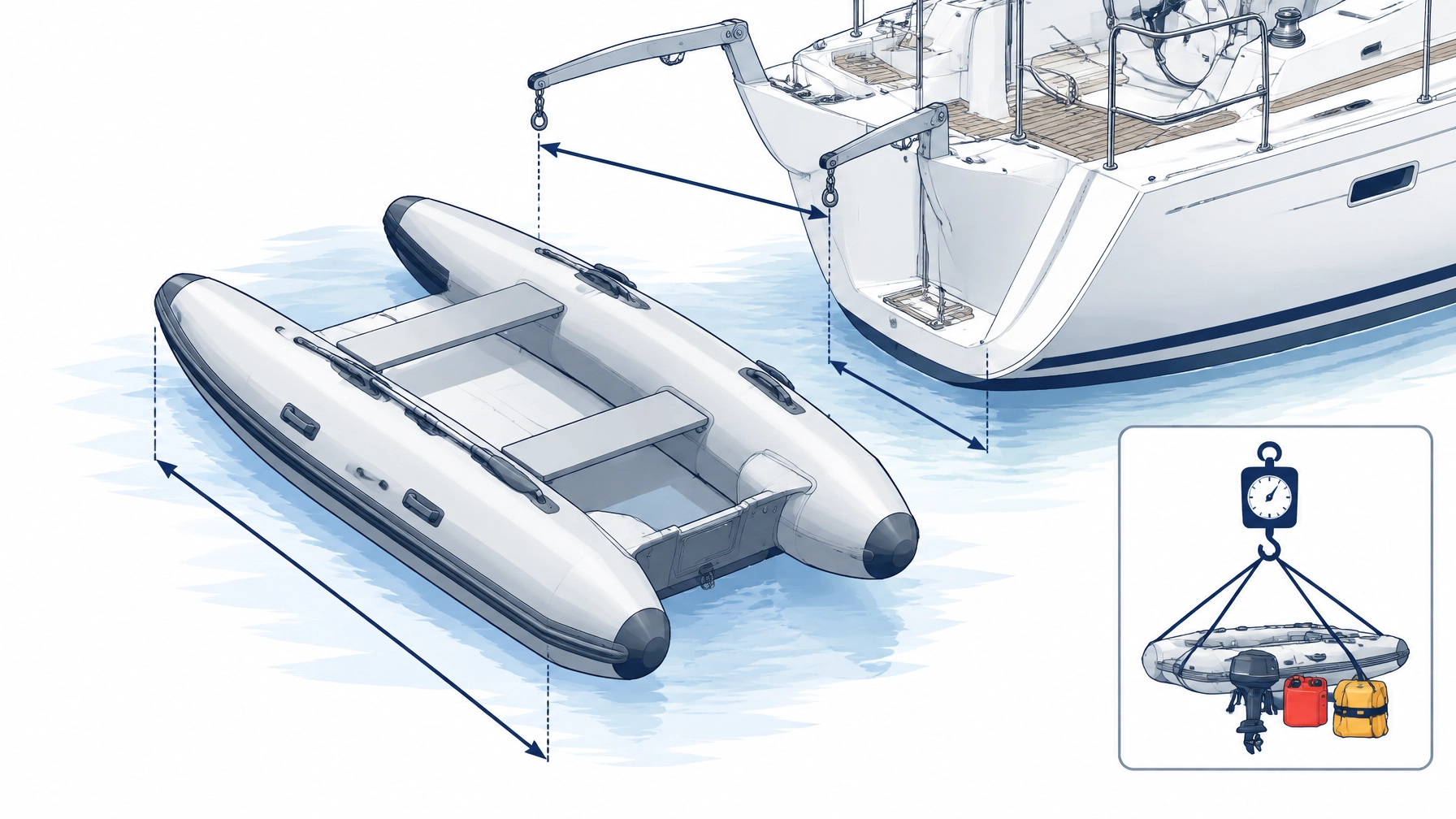
- Weight: work out the complete lifting load, not just the bare hull — outboard, fuel, battery, anchor, safety gear and anything normally left aboard.
- Stowage and dimensions: check your locker, foredeck or davit space, including the tender's widest fittings and lifting-point spacing.
- Stability at the pick-up: think about boarding from the swim platform, helping someone in from the water, or loading bulky shopping.
- Useful capacity: make sure there's room and rated payload for your usual passengers and gear. Maximum capacity isn't the same as a comfortable everyday load.
- Ease of recovery: can the regular crew bring the tender aboard, secure it and prepare for passage without extra help?
Measure your available space and davit rating before shopping, and assess the whole tender system — storage, load, complete weight and recovery — rather than choosing from yacht length alone.
Why inflatable catamarans appeal to cruisers
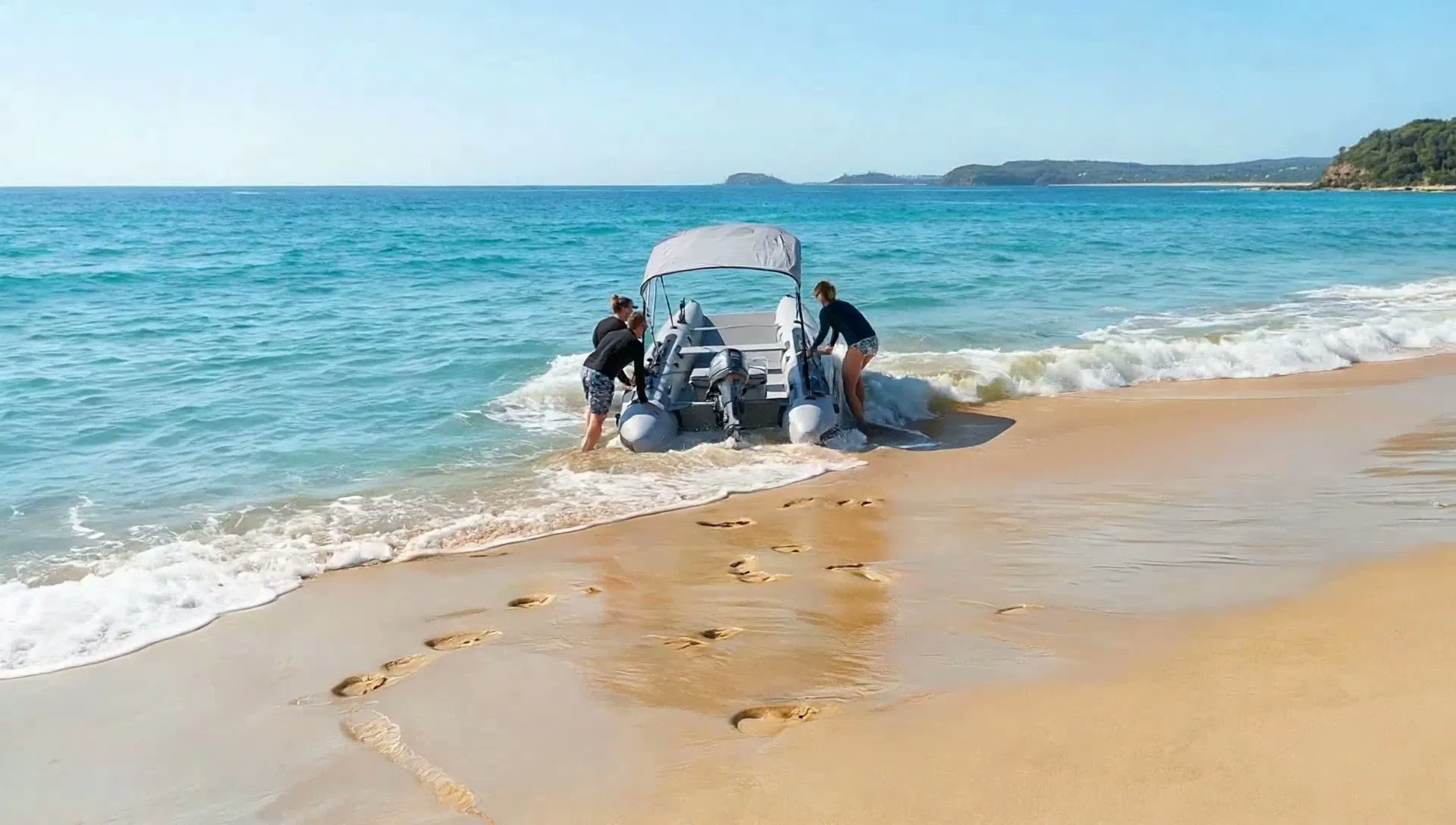
An inflatable catamaran's two spaced hulls create a broad footprint. That gives a reassuringly steady platform at rest, especially when people step aboard, shift seats or load supplies. The twin-hull layout also leaves a useful open area between the tubes for everyday cruising gear.
For a cruising couple these details matter in ordinary moments: stepping down from the stern, passing bags aboard, or climbing back in after a swim.
Inflatable construction brings practical advantages around a yacht too. Soft tubes are kind to topsides during gentle contact, and a deflatable boat packs away when davit storage isn't available or the tender needs stowing for a longer passage.
A light inflatable cat is ideal for shore transfers and sheltered cruising. Match the boat's stated operating limits to your planned use, especially for repeated fast runs in exposed chop. See Why Inflatable Catamarans for more.
A compact option: the Swift Tender 290 SI
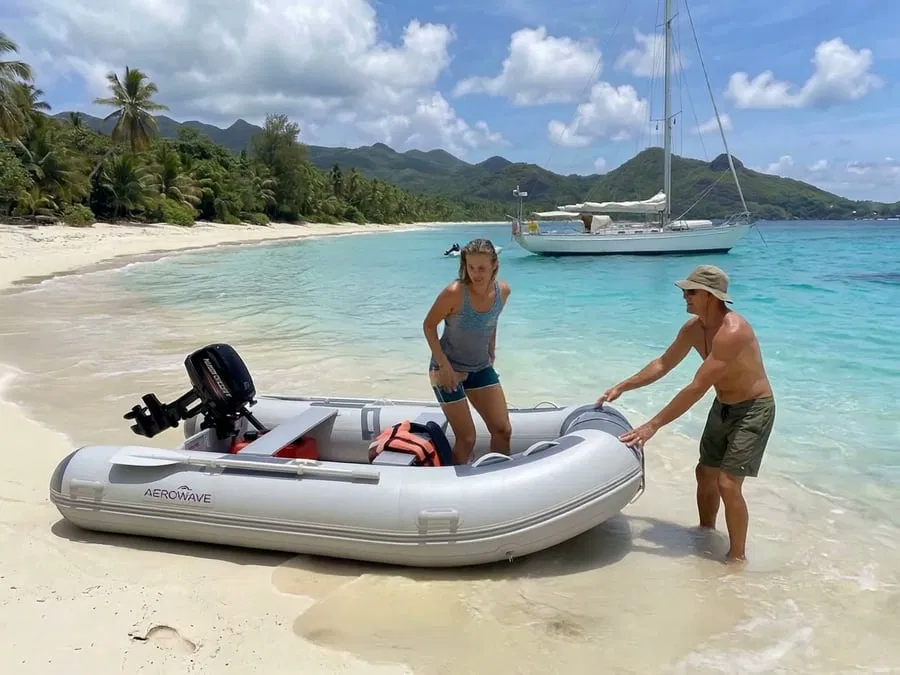
For yacht owners wanting a compact inflatable tender, the Aerowave Swift Tender 290 SI is designed for ship-to-shore use and pack-away storage aboard. It's built from 1500 GSM / 1.2 mm German VALMEX® Heavy Plus with a high-pressure woven air deck floor, seats four, is rated up to 15 hp, and has over-pressure relief valves on every chamber.
The Swift is a monohull tender, separate from the catamaran hulls discussed above. Compare its listed dimensions, weight, rated capacity and recommended outboard with your davit or storage limits — the complete ready-to-use weight matters more than the model name. Smaller sizes are available in the Tender Series.
A compact tender is a great match when the main jobs are carrying a couple ashore, moving supplies and making short trips from an anchorage. If you regularly carry more people, a dog, dive gear or a big load of provisions, look at a larger catamaran such as the Viper 330.
Measure your davits before you decide
If you're buying a tender for davits, treat the lifting system as a key part of the decision.
Measure the distance between davit arms and lifting points, the clear width at the stern, and the space for the tender's tubes and outboard. Check the davit maker's safe working load and whether it applies to the complete suspended package — boat, engine, fuel, safety equipment and anything else left aboard.
Then think about the tender while the yacht is moving. A tender hanging from davits is exposed to motion and windage, so the installation and securing arrangement must suit your vessel and conditions. Confirm the set-up with the davit or yacht manufacturer and use the recommended lifting points.
Choosing the right outboard
Start with the tender's capacity plate and recommended power range. The right engine depends on the tender, the load and how you'll use it.
Plan for your normal trip, not an empty-boat test. Two people and a small bag need a different set-up from several passengers, fuel and provisions. A heavy engine also adds to the davit load and the balance of a small tender. Check the transom and shaft-length requirements — read Outboard Shaft Length Explained — and keep the motor within the rated limits. Compare light, easy-to-lift options in our Hidea outboards range.
Practise starting, steering, stopping and recovering the tender in safe conditions before relying on it for routine trips.
Towing: convenient, but plan for conditions
Towing saves time between nearby sheltered spots, but it isn't a substitute for proper storage or davits on every passage. Water conditions, speed, wind, the tender's design and the yacht's stern all affect whether towing is appropriate.
Use suitable attachment points, check for chafe and keep the painter clear of the propeller and steering gear. Reassess when the weather changes and be ready to bring the tender aboard. Secure or remove the outboard, fuel and loose equipment as the manufacturers recommend.
A note for Australian and European cruising
The same buying checks apply in Australian and European waters: confirm the tender's rated capacity and operating limits, keep its documentation and safety equipment in order, and check the rules for the waters you'll use. Aerowave boats are certified to EU Directive 2013/53/EU and EN ISO 6185-3 and ship with a European compliance plate and Declaration of Conformity — see Safety & Compliance.
UV and storage matter for liveaboards and boats kept in the sun. Durable fabric, sound construction and accessible parts support count when a tender is used daily — read Inflatable Boat Fabric: PVC vs Hypalon vs VALMEX®.
So, is an inflatable catamaran the best tender for a cruising yacht?
It's a strong choice when you value a stable platform, useful carrying space and inflatable convenience. The best tender for any cruising yacht is the one that fits your davits or stowage, carries your normal load and stays manageable for your crew.
Measure first, calculate the complete weight, and compare real specifications with your boat's limits. If a compact pack-away tender is the priority, explore the Swift Tender 290 SI; for more space, browse the Viper Series. Questions? Call Gary on +61 2 4335 1603.
Frequently asked questions
- What makes a good yacht tender?
- A good tender fits your davits or stowage, carries your normal load comfortably, feels stable when boarding and can be launched and recovered by your regular crew.
- Why choose an inflatable catamaran as a tender?
- Two spaced hulls give a steady platform for boarding, loading supplies and climbing in after a swim, plus open space between the tubes for gear. It also deflates for stowage on longer passages.
- How heavy can a tender be for my davits?
- Check the davit maker's safe working load against the complete suspended package — boat, outboard, fuel, safety equipment and anything left aboard — not just the bare hull weight.
- What outboard suits a yacht tender?
- Start with the tender's capacity plate and recommended power range, then choose for your normal trip. A lighter motor is easier to lift and keeps the davit load down.
- Is the Swift Tender 290 SI a good yacht tender?
- It's designed for ship-to-shore use and pack-away storage: 1500 GSM / 1.2 mm VALMEX Heavy Plus, a high-pressure air deck, seats four and is rated up to 15 hp.
- Is it safe to tow a tender behind a yacht?
- Towing suits short sheltered hops. Use proper attachment points, check for chafe, keep the painter clear of the propeller and bring the tender aboard when conditions change.
Finance this boat from $14/week
Estimate only — powered by Australian Motorcycle & Marine Finance (AMMF).
Paid upfront (AUD)
$320
10% of price
Term
5 years
60 monthly repayments
Comparison rate
9.95% p.a.
Subject to AMMF approval
Weekly
$14
Monthly
$61
Amount financed
$2,879
Indicative only. Actual repayments depend on your AMMF credit assessment, term, fees and the balloon you select. Talk to AMMF for a personalised quote on Aerowave Swift Tender 290 SI.
Like this guide? Get the next one in your inbox.
Owner-tested tips and Aussie boating know-how — no spam.
Ready when you are
Build your Swift Tender 290 SI in under 3 minutes.
1500 GSM / 1.2 mm VALMEX® hull. Five-year limited hull warranty. Free freight to United States · taxes included, nothing to pay on arrival.
delivered to your door
See it for yourself
Real boats. Real owners. Real people behind them.
Plenty of what you read online these days is generated. Check us out properly — the factory, the reviews and the owners are all one click away. Why we use AI, and how to check we’re real
How our boats are built
Walk the production line: thermo-welded seams, 1.2 mm VALMEX Heavy Plus hulls, over-pressure relief valves on every chamber.
See the buildGoogle Maps reviews
Real Australian owners, five stars, published on our Google Business Profile with the map — read them there, not just on our own site.
Open Google Maps reviewsOwner stories
Boats in use — offshore, on rivers, on rescue duty. Photos and words from the people who actually own them.
Read owner stories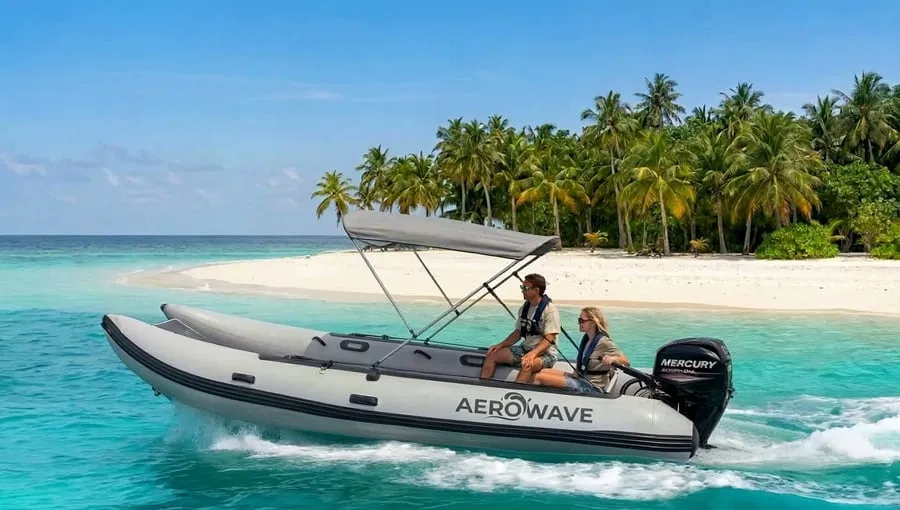
Aerowave Swift Tender 290 SI
US$2,279 USD · delivered to your door