
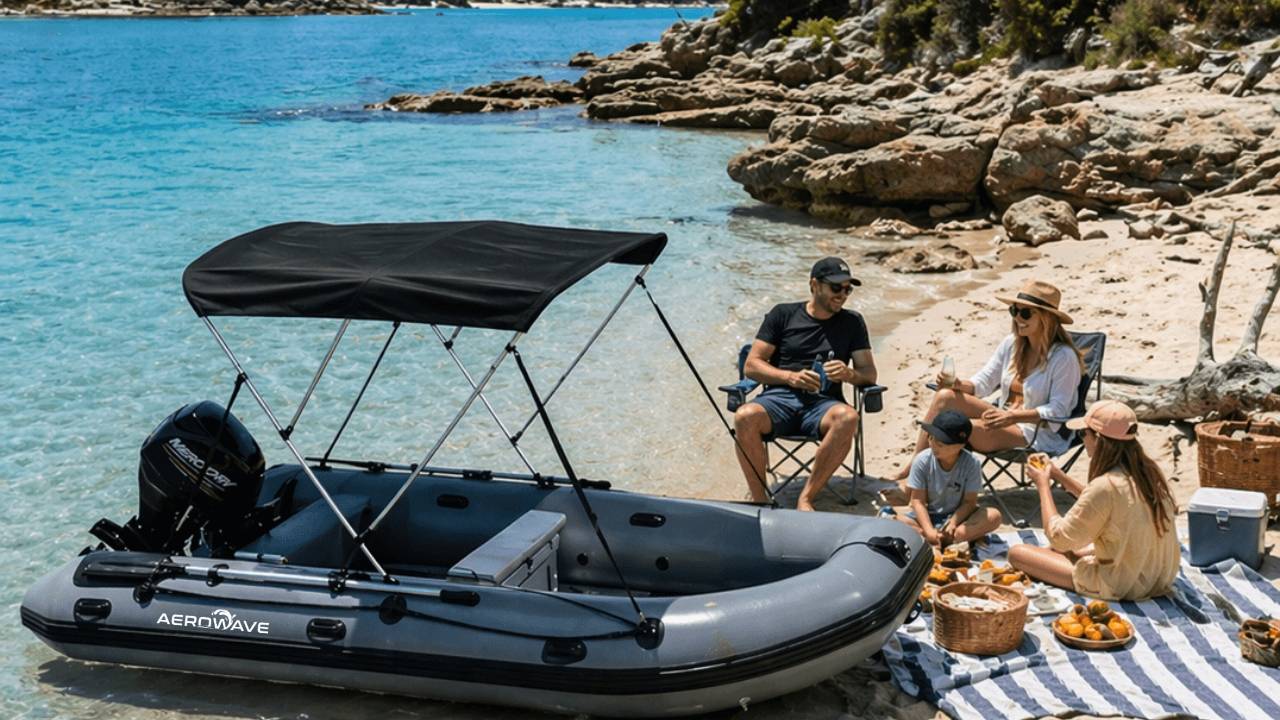
Disadvantages of Inflatable Boats: 9 Honest Downsides Before You Buy
We sell inflatables and we will still tell you what is wrong with them. Nine real disadvantages, what each costs you, and which ones you can design out before you buy.
Our recommendation
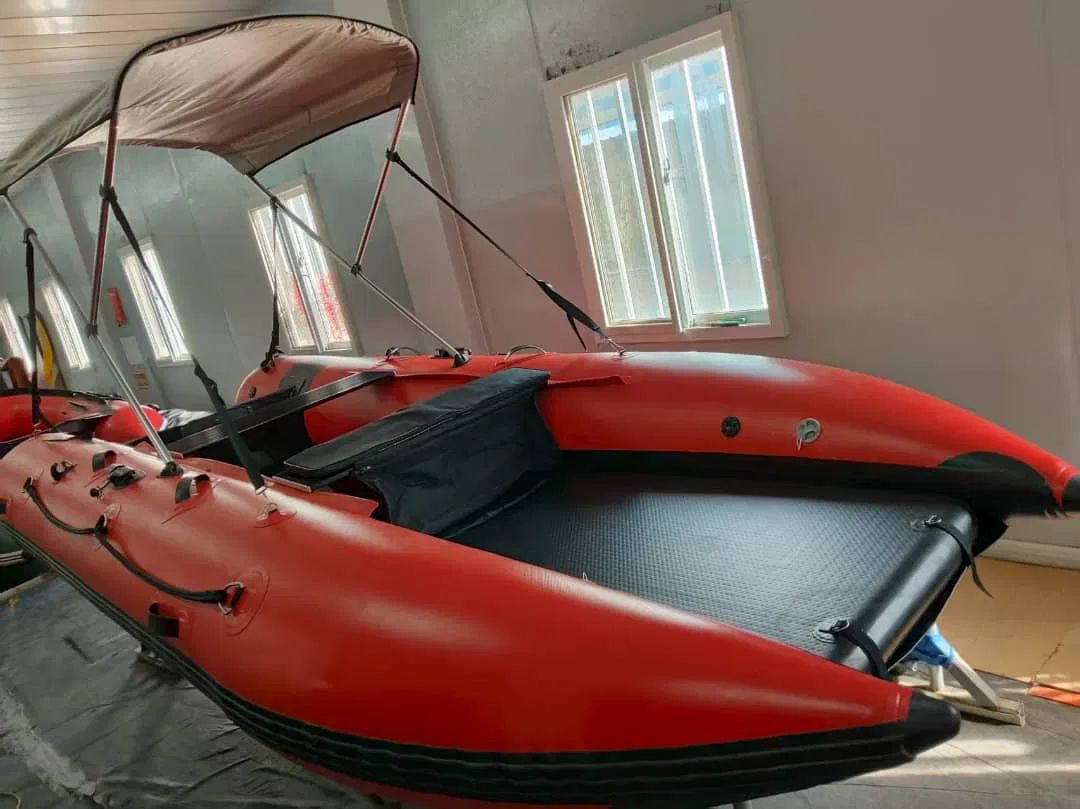
Aerowave Viper 400 Sovereign
1.2 mm fabric is about 33% thicker than common 0.9 mm fabric: more material between your boat and the water for everyday rubbing and knocks during beach launches. Careful handling still matters.
Length
4.0m / 13'1"
Beam
1.80m / 71"
Tube Diameter
51cm
Bare Boat Weight (without Bimini & wheel kit)
66kg / 145lbs
We sell inflatable boats, and we will still tell you plainly: they are not the right boat for everyone. Here are nine real disadvantages, what each one costs you in practice, and which ones you can design out before you buy.
Every boat type is a set of trade-offs. Inflatables trade rigidity and permanence for weight, storage and stability. If you know the downsides before you spend, you either avoid the wrong purchase or you buy the version that engineers around them.
1. UV is the real killer, not punctures
Sunlight, not rocks, ends most inflatable boats. PVC left uncovered on a trailer through Australian summers hardens, chalks and eventually splits at the fold lines.
What it costs you: years off the hull. Lighter 1100 decitex 0.7 / 0.9 mm fabric typically gives 3 – 7 years depending on exposure; 1500 GSM / 1.2 mm VALMEX® Heavy Plus is built for 10 – 12.
How to design it out: buy heavier fabric, and cover or bag the boat between trips. That single habit is worth more than any accessory.
2. They need somewhere clean and dry to live
Rolling a wet, sandy boat into a bag is how mould and abrasion start. You need somewhere to hose it, and somewhere to let it dry.
How to design it out: ten minutes of rinsing and a shaded dry before packing. Or keep it inflated in a carport if you have the room.
3. Setup time is not zero
An electric pump gets a mid-size boat up in 8 – 12 minutes. A tinny on a trailer is on the water in three. If you launch several times a week from the same ramp, that difference adds up.
How to design it out: a high-volume 12 V pump and a wheel kit. Full detail in how quickly can you inflate and deflate a boat.
4. Repairs are a skill, not a phone call
A tinny gets welded at any workshop. An inflatable needs the right adhesive, the right patch material and dry conditions. Most owners can do it; some won't want to.
How to design it out: carry a repair kit that matches your hull material, and read the inflatable boat repair guide before you need it.
5. Pressure changes with temperature
A boat inflated in cool morning air will over-pressure in the midday sun on a beach. Ignore it and you stress seams and valves.
How to design it out: over-pressure relief valves on every chamber, standard. Not every brand fits them. See the $10 part that decides if your inflatable lasts.
6. Cheap fittings peel off
D-rings, handles and rubbing strakes are bonded, not bolted. On cheaply built boats they lift, and once one lifts the rest follow.
How to design it out: buy boats with hot-air welded seams and properly prepared fitting patches — here's why they peel.
7. A soft floor is not a casting platform
Basic air floors flex underfoot. If you stand and cast all day, that flex is tiring and it feels less secure than it is.
How to design it out: high-pressure woven air decks (10 PSI) or an aluminium floor. Compared honestly in air deck vs aluminium floor.
8. Wind pushes a light boat around
Low weight is the selling point and the drawback. At anchor or drifting, an inflatable moves more in a breeze than a heavy hull.
How to design it out: a properly sized anchor and chain, and a drogue for drift fishing. Twin-tube catamarans track better than round-tube monohulls at drift.
9. Resale is brand-dependent
A well-known aluminium hull holds value predictably. Inflatables split hard: premium fabric with welded seams and documented service holds strong money; unbranded imports are close to worthless at five years.
How to design it out: buy fabric and construction you can name, and keep receipts. Best inflatable boat brands, honestly reviewed.
What inflatables still do better than anything else
For balance, the reasons people accept the list above: no trailer, no rego on the trailer, no boat park, beach launching without a ramp, stability well beyond the boat's length, and storage in a cupboard. The full cost comparison is in tinny vs inflatable boat: the true cost of ownership.
Who should not buy one
- You launch from the same ramp five times a week and value three-minute setup above all else.
- You have no space to rinse and dry the boat.
- You want a fixed hardtop, a big permanent console and a boat that lives on a mooring year-round.
Who should
- Apartment, townhouse or shed-poor owners.
- Anyone launching off sand without a ramp.
- Anyone who wants standing stability in a boat one person can move alone.
If that's you, start with the Aerowave range or the size guide.
Frequently asked questions
- What are the main disadvantages of inflatable boats?
- UV degradation, needing space to rinse and dry the boat, setup time of about 8 to 12 minutes, specialised repairs, pressure changes with temperature, bonded fittings that can peel on cheap boats, floor flex on basic air decks, wind drift, and brand-dependent resale.
- How long do inflatable boats really last?
- It depends on fabric and care. 1100 decitex 0.7 / 0.9 mm PVC typically gives 3 to 7 years depending on UV exposure and storage, while 1500 GSM / 1.2 mm VALMEX Heavy Plus is built for 10 to 12 years.
- Are inflatable boats hard to repair?
- They are straightforward but skill-based. You need the correct adhesive and patch material for your hull and dry conditions. Most owners handle small punctures themselves; seam work is better left to a specialist.
- Do inflatable boats get blown around in the wind?
- More than a heavy hull, because low weight is the whole point. A correctly sized anchor with chain and a drogue for drifting largely solves it, and twin-tube catamarans track better at drift than round-tube monohulls.
- Is UV or puncture the bigger risk to an inflatable boat?
- UV, by a wide margin. Most hulls die from sun exposure hardening the fabric, not from punctures. Covering or bagging the boat between trips is the single highest-value habit an owner can adopt.
- Who should not buy an inflatable boat?
- Owners who launch from the same ramp several times a week and want three-minute setup, owners with nowhere to rinse and dry the boat, and anyone wanting a fixed hardtop or a boat kept permanently on a mooring.
- Do inflatable boats hold their value?
- It splits hard by build quality. Premium fabric with hot-air welded seams and documented service holds strong resale; unbranded imports are worth very little by around five years.
Finance this boat from $27/week
Estimate only — powered by Australian Motorcycle & Marine Finance (AMMF).
Paid upfront (AUD)
$617
10% of price
Term
5 years
60 monthly repayments
Comparison rate
9.95% p.a.
Subject to AMMF approval
Weekly
$27
Monthly
$118
Amount financed
$5,552
Indicative only. Actual repayments depend on your AMMF credit assessment, term, fees and the balloon you select. Talk to AMMF for a personalised quote on Aerowave Viper 400 Sovereign.
Like this guide? Get the next one in your inbox.
Owner-tested tips and Aussie boating know-how — no spam.
Ready when you are
Build your Viper 400 Sovereign in under 3 minutes.
1500 GSM / 1.2 mm VALMEX® hull. Five-year limited hull warranty plus two years of extended limited structural hull cover, subject to conditions. Free freight to United States · taxes included, nothing to pay on arrival.
delivered to your door
See it for yourself
Real boats. Real owners. Real people behind them.
Plenty of what you read online these days is generated. Check us out properly — the factory, the reviews and the owners are all one click away. Why we use AI, and how to check we’re real
How our boats are built
Walk the production line: thermo-welded seams, 1.2 mm VALMEX Heavy Plus hulls, over-pressure relief valves on every chamber.
See the buildGoogle Maps reviews
Real Australian owners, five stars, published on our Google Business Profile with the map — read them there, not just on our own site.
Open Google Maps reviewsOwner stories
Boats in use — offshore, on rivers, on rescue duty. Photos and words from the people who actually own them.
Read owner stories
Aerowave Viper 400 Sovereign
US$4,701 USD · delivered to your door