
Portable Fishing Boat With Motor: Australian Buyer's Guide (2026)
Which portable fishing boat and motor combo actually suits Australian estuaries, dams and sheltered coastal water — hull choice, Hidea motor matching, packing into an SUV or caravan, safety rules and real prices.
Our recommendation
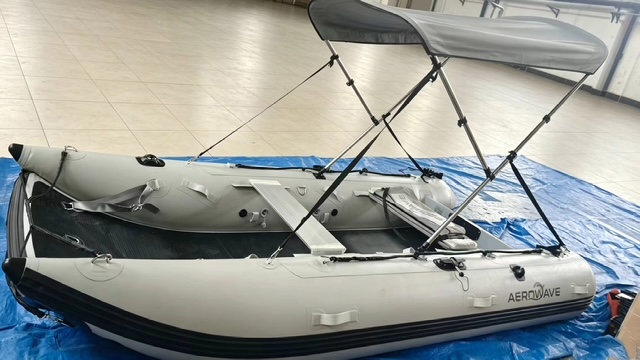
AeroWave AeroCat 380 Inflatable Catamaran
Length
3.80m / 12'6"
Beam
1.80m / 70"
Tube Diameter
50cm
Bare Boat Weight (without Bimini & wheel kit)
~54kg / 119lbs
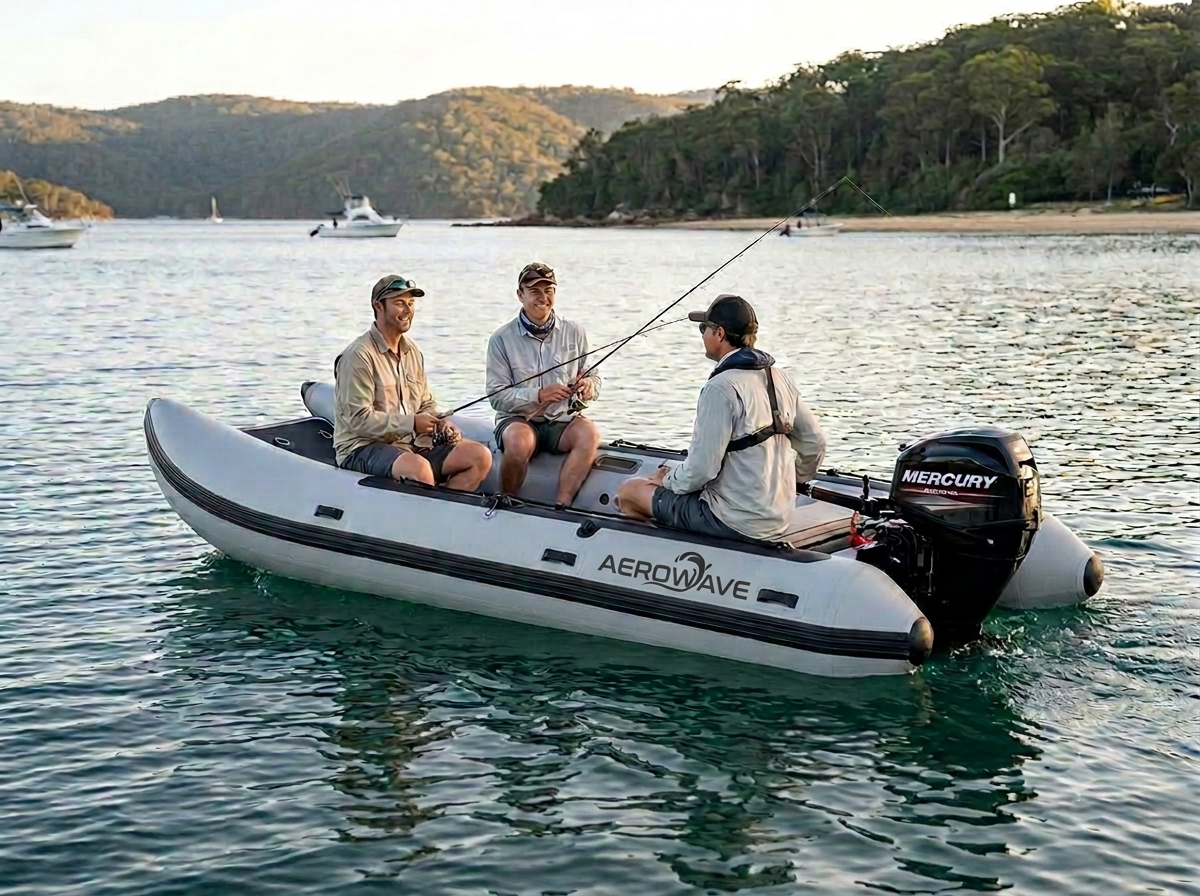
If you want to fish more often, the boat that wins is the one you can actually get to the water. A portable fishing boat with motor packs into the back of an SUV, rides in a caravan bay or a ute canopy, and launches straight off a beach or a bank — no trailer, no ramp queue, no second parking spot at home.
Short answer: for most Australian anglers, a 3.3 m to 4.0 m inflatable catamaran or sports monohull paired with a 6 HP to 20 HP four-stroke is the sweet spot. It carries two to four people, packs down into two bags, and handles estuaries, dams, rivers and sheltered coastal water. Below is how to choose the hull, match the motor, load the car and stay legal.
What is a portable fishing boat with motor?
A portable fishing boat is a hull that deflates, folds or breaks down small enough to travel inside a vehicle, plus an outboard you can lift on your own. The three things that make it a fishing boat rather than a toy are a reinforced transom rated for an outboard, a floor you can stand on, and a certified load that covers you, your mate and your gear.
Modern drop-stitch floors and heavy PVC fabric have moved this category a long way. Our hulls use 1500 GSM / 1.2 mm VALMEX® Heavy Plus on the premium range and 1100 GSM / 0.9 mm VALMEX® on the AeroCat range — commercial-grade fabric, not pool-toy vinyl. Expect a 10–12 year fabric life with normal care.
Why anglers are going portable
- No trailer registration, bearings, tyres, lights or servicing.
- Deflated storage in a garage, shed, caravan bay or apartment locker.
- Beach, bank and remote launching where a trailer boat simply can't go.
- One person can be on the water in about 10 minutes with an electric pump.
The trade-off is honest: a packable hull is not the boat for a 25-knot onshore blow or long offshore runs. It is the boat for the trips you actually take most weekends.
Which portable fishing boat is best for Australian fishing?
| Hull type | Best water | Fishing strength | Packs into |
|---|---|---|---|
| Inflatable catamaran (AeroCat, Viper) | Estuaries, bays, dams, sheltered coastal | Twin-hull stability at rest, big flat deck, shallow draft | Two bags, SUV boot or ute canopy |
| Sports Series monohull | Bays, rivers, sheltered coastal, tender work | Classic V-nose ride, softer in chop | One roll-up bag plus floor bag |
| Swift Tender | Marinas, anchorages, short shore runs | Yacht tender and dam duty, lightest option | Single locker-sized bag |
Inflatable catamarans
Two pontoons and a flat, low deck between them means you stand up, cast and net a fish without the boat rolling under you. The wide-open floor also means no bow seat in the way when two people fish. Our inflatable catamaran range starts with the AeroCat 330 Ready-to-Fish Pack at A$3,995 and runs up to the Viper 400 Sovereign at A$6,970.
The catamaran layout also beach-launches nose-first, which matters if you fish sandbars, dam edges and creek mouths rather than concrete ramps.
Sports Series monohulls
If you want the traditional inflatable shape, the Sport Series offshore monohulls start at A$3,550 and cut through short chop with a deeper V-nose. They suit anglers who run a bit further, tow-behind tender duty and buyers moving off a small tinny.
Tenders and small packages
A Swift Tender 230 SI at A$3,050 is the yacht-locker option: light, quick to inflate, happy with a 2.5 HP four-stroke for marina and anchorage runs.
What size outboard motor do I need?
Start with the boat's capacity label, not the horsepower you'd like. It sets maximum rated horsepower, maximum persons and maximum total load — and the outboard, fuel tank, battery, anchor and tackle all come out of that load before people do.
Read the label in this order
- Maximum rated horsepower. Never exceed it. Sitting slightly under is fine when the performance suits your water; going over creates insurance and warranty problems.
- Maximum load. Subtract the motor, fuel, battery and fixed gear first, then count people and tackle.
- Maximum persons. Seating room is not the same as certified capacity.
Matching a Hidea four-stroke
| Hull length | Typical motor | Typical use |
|---|---|---|
| 2.3–2.7 m tender | Hidea 2.5–4 HP | Marina runs, anchorage transfers, small dams |
| 3.3–3.6 m catamaran | Hidea 6–9.9 HP | Solo and two-up estuary fishing, dams, rivers |
| 3.8–4.0 m catamaran or monohull | Hidea 15–20 HP | Family loads, longer runs, sheltered coastal |
Two adults, roughly 20 kg of tackle and a 15 kg motor eat a serious slice of a small hull's certified load, so do the sums before you buy. Our Hidea outboard range covers 2.5 HP to 20 HP with a 5-year warranty, and the Hidea outboard motor guide explains shaft length and transom height in detail. If you're unsure about shaft length, the motor matching guide walks through it.
Short shaft or long shaft?
Our WaveRunner-series transom is 380 mm, which puts more prop in the water and kills the ventilation and cavitation you get when a short-shaft motor sits too high. Short shaft suits our standard transoms; long shaft is a build option if you're moving an existing motor across. If you already own an electric outboard — a 2 kW class unit, for example — it will bolt straight to a reinforced transom, and a transducer can be mounted for a sounder.
How stable is a portable boat for fishing?
Stability at rest is the number that matters to an angler, not top speed. A catamaran's two pontoons sit wide apart with a flat deck between them, so the boat resists the roll that makes a narrow monohull feel lively when you stand to cast.
Deck space and layout
- Catamaran: best open casting area, easiest to move around, best for two anglers plus an esky.
- Monohull: more sheltered ride, slightly less usable floor for its length.
- Tender: one angler, seated fishing, short sessions.
Rod holders, sounders and storage
Don't glue accessories wherever they look convenient. Use reinforced mounting areas, D-rings and purpose-made glued bases, and mount transducers on the transom bracket rather than through the fabric. Dry bags, console bags and an under-seat bag keep tackle out of the wet. A Bimini sun top is the accessory most Aussie owners add first.
How does it pack into an SUV, 4WD or caravan?
Measure the bag, the motor and the cargo opening together — including the pump, fuel tank, seats and rods. A boat that fits with the seats folded can still fail once everything else goes in.
Practical loading rules
- The motor travels upright in a cradle or padded bag, never loose against the hull fabric.
- Never rest a prop or skeg directly on PVC.
- Pack boat, floor, seats, pump and accessories in separate labelled bags so setup is repeatable.
- Use a wheel kit for the walk from car to water — our LockPro Plus wheel kit turns the carry into a roll.
A dual-cab with the rear seats folded, a caravan front boot or a wagon boot will all take a deflated package plus soft gear. The storage and transport guide covers packing the complete kit rather than just the hull, and the launch and retrieve guide covers beach work.
Portable rig or trailer boat — which is the better buy?
For most weekend anglers the portable rig wins, because it removes the friction that stops you going. No ramp queue, no reversing a trailer at first light, no second parking space, no trailer servicing bill. It also gets to shallow billabongs, sandbars and inland dams where a trailer boat is awkward.
A trailer boat still earns its keep if you regularly run offshore, carry heavy family loads or fish exposed coastal water. The blunt test: if you must tow every trip, pay for storage and queue at a ramp before you fish, you probably bought too much boat.
Best portable rig by angler profile
| You are | Buy this | Motor | Price from |
|---|---|---|---|
| Solo estuary and bream fisher | AeroCat 330 Ready-to-Fish | Hidea 6 HP | A$3,995 |
| Two-up dam and river angler | AeroCat 380 | Hidea 9.9 HP | A$4,535 |
| Family day boat | WaveRunner 380 Series 3 Package | Hidea 15 HP | A$4,680 |
| Serious offshore-capable fisher | Viper 400 Open Bow Sports Package | Hidea 20 HP | A$5,895 |
| Yacht owner needing a tender | Swift Tender 230 SI | Hidea 2.5 HP | A$3,050 |
Boat-and-motor packages are also available — the Viper 400 Open Bow + Hidea 20HP package arrives as one matched rig with the correct shaft length already sorted.
Australian safety rules most buyers miss
Packing a boat in a bag changes transport, not your obligations on the water. Once you fit an outboard, the boat is a powered vessel and the standard safety-equipment and lifejacket rules for your state apply.
- Lifejacket rules tightened on 1 December 2024 — including boating alone, operating an open boat under 4.8 m at night, and carrying children aged 1 to under 12 on open boats.
- Small-craft exemptions generally fall away the moment an engine or fuel is aboard, or you travel beyond the stated distance from shore.
- Registration requirements vary by state and by engine power — check with your state authority before your first launch.
Carry a bailer, paddles, torch, sound signal and correctly sized lifejackets regardless of what an exemption seems to allow. Our boating safety equipment guide has the state-by-state detail. All Aerowave catamarans are CE certified to ISO 6185-3 and EU Directive 2013/53/EU.
Which one should you order?
If you fish estuaries and dams solo or two-up, order the AeroCat 330 or 380 with a 6–9.9 HP Hidea. If the family comes along or you want more coastal range, step up to the WaveRunner 380 or the Viper 400 Open Bow with a 20 HP. Every boat ships with a 5-year hull warranty and finance available through AMMF.
Browse the full inflatable boat range, or tell us your vehicle, target water and load and we'll spec the rig properly.
Frequently asked questions
- What is the best portable fishing boat with motor in Australia?
- For most Aussie anglers a 3.3 m to 4.0 m inflatable catamaran paired with a 6 HP to 20 HP four-stroke is the best all-round choice. The AeroCat 330 (A$3,995) suits solo estuary fishing, while the Viper 400 Open Bow Sports Package (A$5,895) handles family loads and sheltered coastal water.
- What size motor do I need on a portable inflatable boat?
- Match the motor to the boat's capacity label, never above the maximum rated horsepower. As a guide: 2.5–4 HP on a 2.3–2.7 m tender, 6–9.9 HP on a 3.3–3.6 m catamaran, and 15–20 HP on a 3.8–4.0 m hull.
- Can a portable fishing boat fit in an SUV?
- Yes. Our boats pack into two bags — hull and floor — plus a pump. With the rear seats folded, a wagon, SUV, ute canopy or caravan boot will take the complete package. The outboard should travel upright in a padded cradle, never loose against the fabric.
- Can I fit a transducer or fish finder to an inflatable boat?
- Yes. Mount the transducer on the transom bracket rather than through the hull fabric, and run the cable along an existing D-ring line. Our reinforced 380 mm transom takes standard sounder and electric-motor mounts.
- Is an inflatable boat stable enough to stand and cast?
- An inflatable catamaran is. Two pontoons set wide apart with a flat deck between them resist the roll that makes a narrow monohull feel lively, so you can stand, cast and net a fish comfortably.
- Do I need to register a portable inflatable boat in Australia?
- Registration depends on your state and the engine power fitted. Once you fit an outboard the boat is a powered vessel, so check with your state maritime authority before your first launch and carry the required safety equipment.
- How long does an inflatable fishing boat last?
- Our premium hulls use 1500 GSM / 1.2 mm VALMEX Heavy Plus fabric, with an expected fabric life of 10–12 years with normal care. Every boat carries a 5-year hull warranty and replacement parts are held in Australia and our Hong Kong hub.
Finance this boat from $21/week
Estimate only — powered by Australian Motorcycle & Marine Finance (AMMF).
Deposit (AUD)
$480
10% of price
Term
5 years
60 monthly repayments
Comparison rate
9.95% p.a.
Subject to AMMF approval
Weekly
$21
Monthly
$92
Amount financed
$4,315
Indicative only. Actual repayments depend on your AMMF credit assessment, term, fees and the balloon you select. Talk to AMMF for a personalised quote on AeroWave AeroCat 380 Inflatable Catamaran.
Like this guide? Get the next one in your inbox.
Owner-tested tips and Aussie boating know-how — no spam.
Ready when you are
Build your AeroCat 380 Inflatable Catamaran in under 3 minutes.
1100 decitex / 0.9 mm VALMEX® hull. Five-year limited hull warranty. Free freight to United States · local taxes payable on arrival.
delivered to your door
See it for yourself
Real boats. Real owners. Real people behind them.
Plenty of what you read online these days is generated. Check us out properly — the factory, the reviews and the owners are all one click away. Why we use AI, and how to check we’re real
How our boats are built
Walk the production line: thermo-welded seams, 1.2 mm VALMEX Heavy Plus hulls, over-pressure relief valves on every chamber.
See the buildGoogle Maps reviews
Real Australian owners, five stars, published on our Google Business Profile with the map — read them there, not just on our own site.
Open Google Maps reviewsOwner stories
Boats in use — offshore, on rivers, on rescue duty. Photos and words from the people who actually own them.
Read owner stories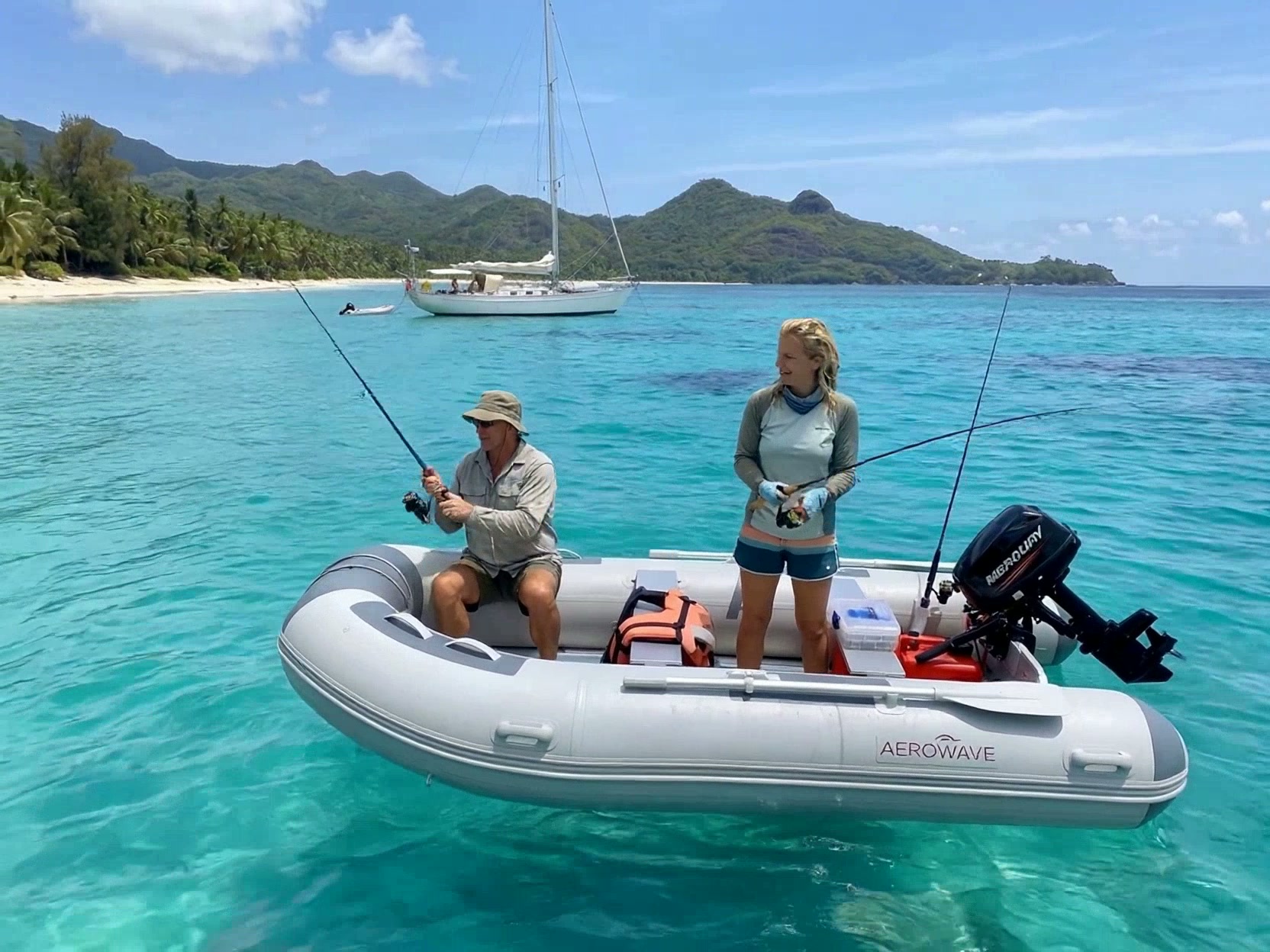
AeroWave AeroCat 380 Inflatable Catamaran
US$2,690 USD · delivered to your door