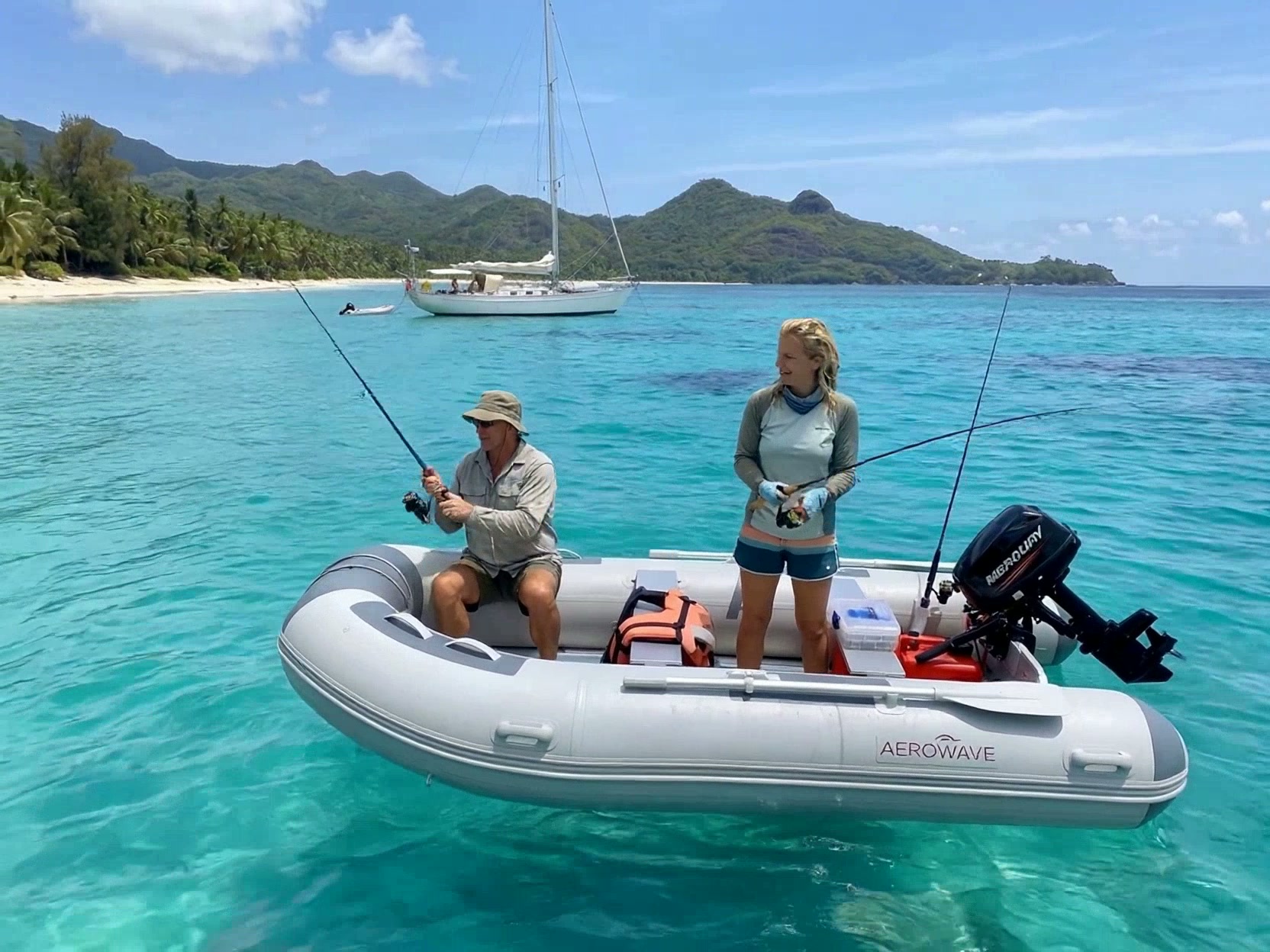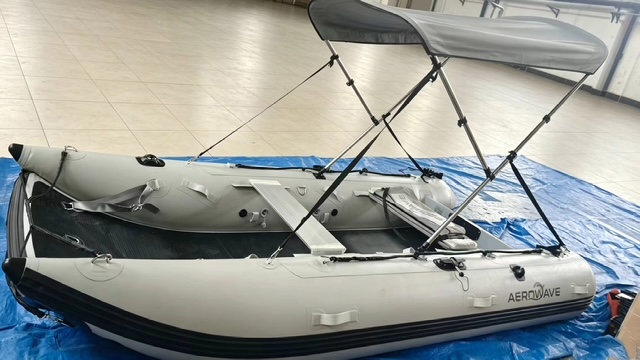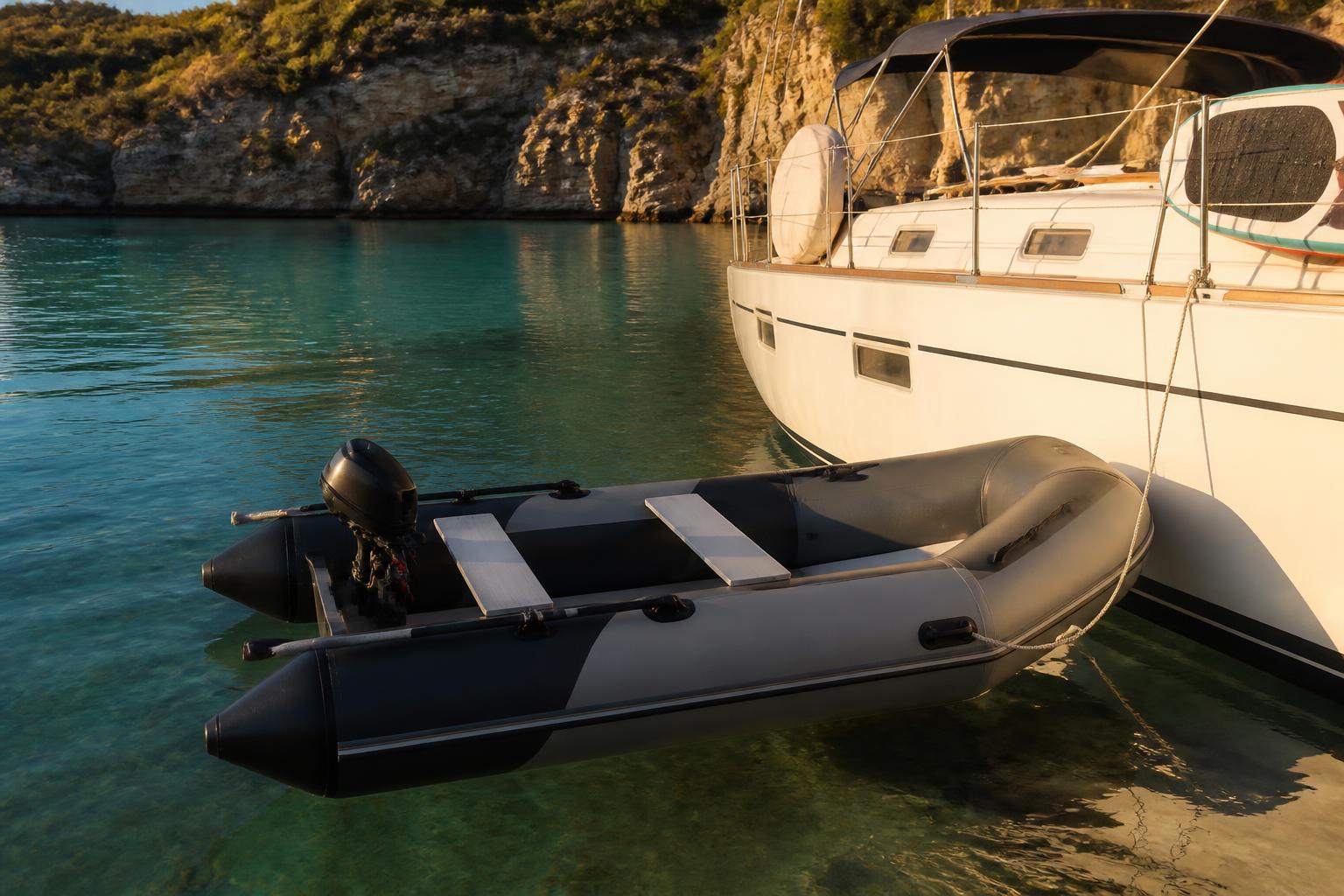
Yacht Tender Australia: Why an Inflatable Catamaran Beats a Hard Tender (2026 Buyer's Guide)
The right yacht tender stops dings, blown shoulders and 2am drifting. Here's the honest Australian guide to picking a soft inflatable catamaran tender — sizing, weight, davits, towing and outboard pairings.
At a glance
The right yacht tender stops dings, blown shoulders and 2am drifting. Here's the honest Australian guide to picking a soft inflatable catamaran tender — sizing, weight, davits, towing and outboard pairings.
- What makes a good yacht tender
- The four kinds of yacht tender
- 1. Hard fibreglass dinghy
- 2. Rigid RIB tender
What we'd put you in
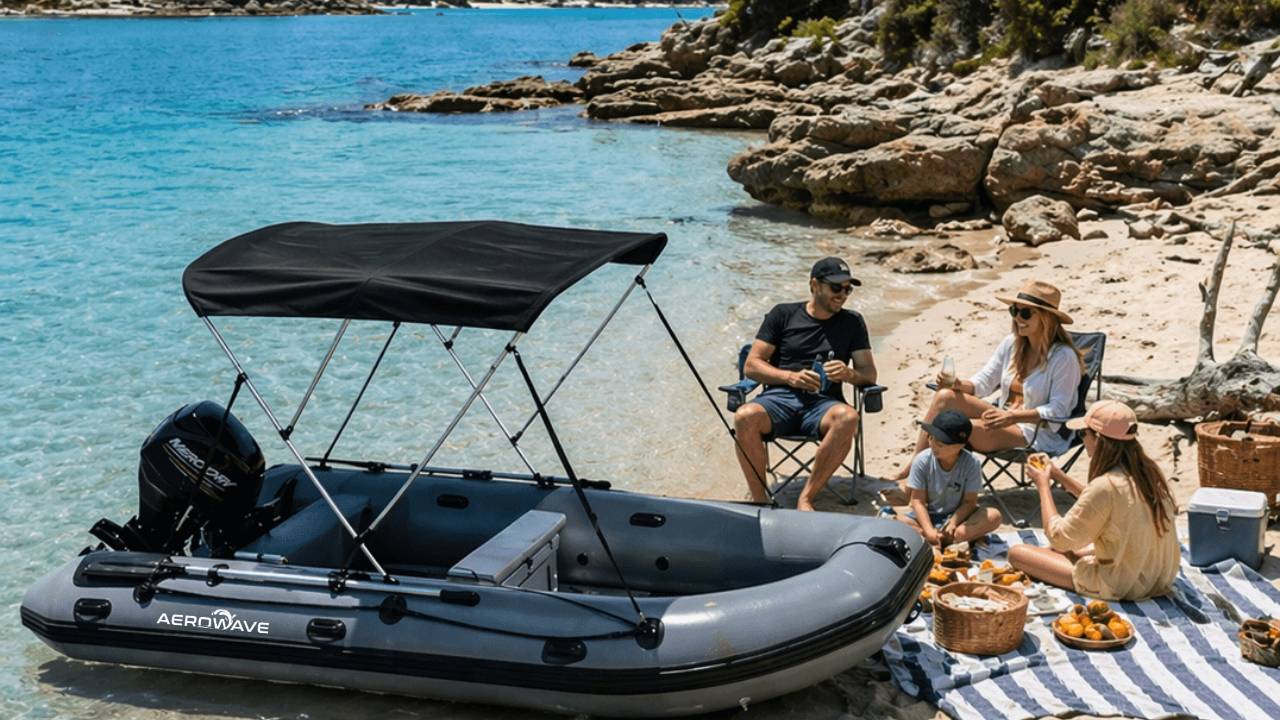
Aerowave Viper 400 Sovereign
If you're reading about catamarans, this is the one we build most of.
US$3,167 USD
Delivered to your door, today's rate
- Free freight to United States · local taxes payable on arrival
- 7-year hull warranty
🇺🇸 Shipping to United States · landed price quoted in writing
Yes — we ship the Aerowave Viper 400 Sovereign to United States. Here's the landed price.
If you're reading about catamarans, this is the one we build most of.
Written for Australian readers — but the boat ships to you. We are an Australian builder and this article is written from Australian waters. That changes nothing about what you can order: the same hull, the same 7-year warranty and the same certification go out to United States every week.
Aerowave Viper 400 Sovereign
- Boat package (export price)
- US$3,726
- 15% tariff relief credit
- − US$559
- Express air freight to United States
- Included
- Import duty, taxes & customs clearance
- Payable on arrival
- Estimated landed, USD
- US$3,167
Indicative, converted at today's rate, before local duty and tax on arrival. Ask below and we'll put a fixed figure in writing, valid 30 days.
- 7-year hull warranty
- 1500 GSM / 1.2 mm VALMEX® Heavy Plus hull
- CE certified to ISO 6185-3 and EU Directive 2013/53/EU
- Door-to-door, tracked the whole way
Your price, delivered to your door — freight included.
We email the full PDF quote (spec, freight, finance, WavePay) to your inbox in under 60 seconds. No spam — one quote, one follow-up.
See it for yourself
Real boats. Real owners. Real people behind them.
Plenty of what you read online these days is generated. Check us out properly — the factory, the reviews and the owners are all one click away. Why we use AI, and how to check we’re real
How our boats are built
Walk the production line: thermo-welded seams, 1.2 mm VALMEX Heavy Plus hulls, over-pressure relief valves on every chamber.
See the buildGoogle Maps reviews
Real Australian owners, five stars, published on our Google Business Profile with the map — read them there, not just on our own site.
Open Google Maps reviewsOwner stories
Boats in use — offshore, on rivers, on rescue duty. Photos and words from the people who actually own them.
Read owner stories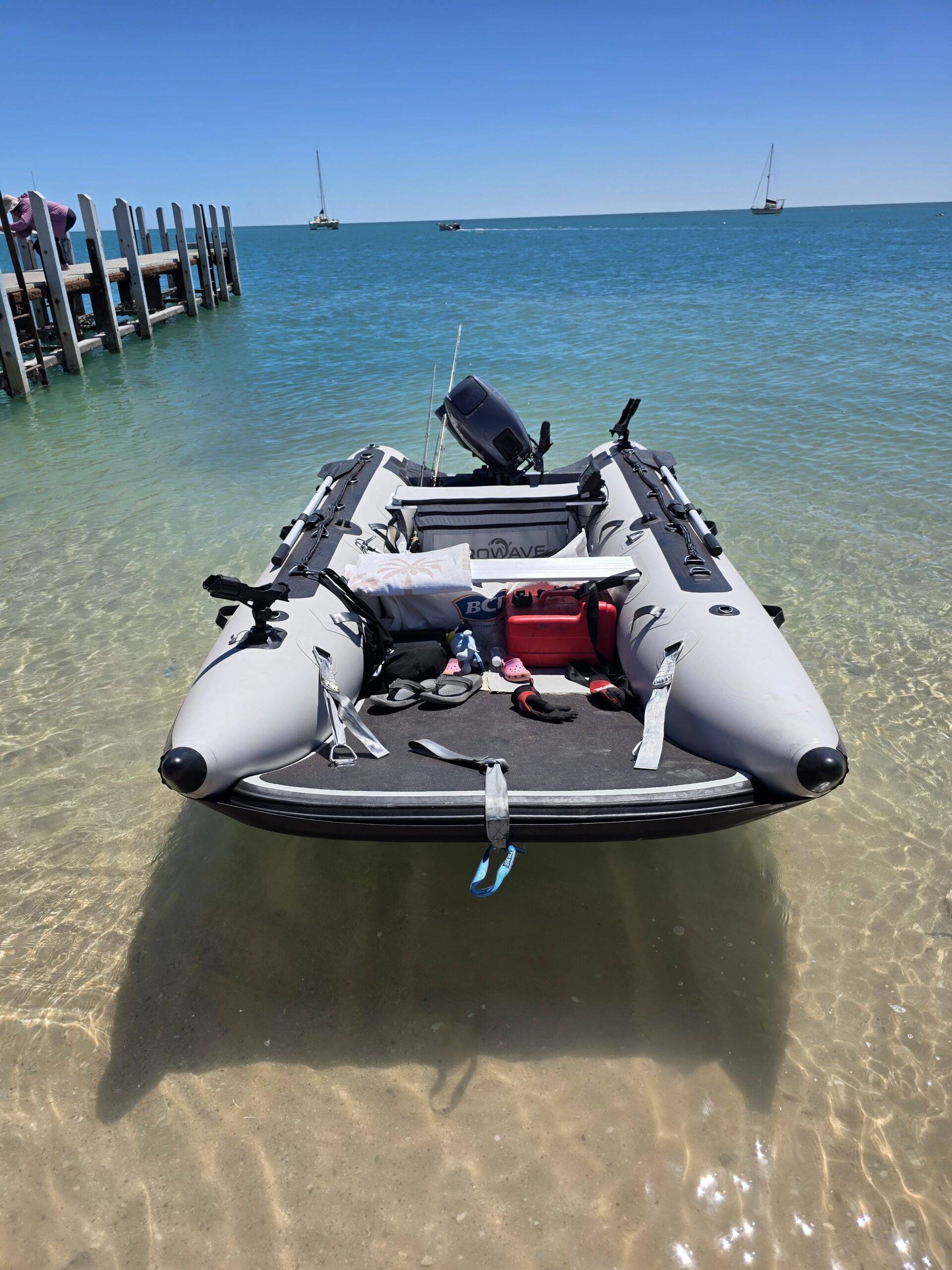
A yacht is only as good as the tender that gets you onto it — and most cruising sailors are putting up with a dinghy that quietly ruins every weekend.
Hard fibreglass tenders ding the topsides. Rigid RIBs are too heavy for cruising davits. The old roll-up from 1998 is the reason your shoulder hurts on Monday. This is the honest 2026 Australian guide to choosing a yacht tender — the four real options, why a soft inflatable catamaran has quietly become the smart pick for cruising sailors, and exactly how to size one to your boat.
What makes a good yacht tender
A yacht tender is the small boat you use to get from a moored or anchored yacht to shore, run anchors, ferry guests, deliver groceries, dive or fish. A good one does five things well:
- Carries weight without squatting — two to four adults plus an esky, fuel and shore bags.
- Stows or tows without drama — fits on davits, foredeck or behind a painter without sailing sideways.
- Doesn't damage the mothership — soft tubes against gelcoat, every time.
- Launches and recovers single-handed — because half the time it's just you.
- Survives sun, salt and UV — Australian sun destroys cheap fabric in two to three seasons.
The four kinds of yacht tender
1. Hard fibreglass dinghy
Stows on davits or the foredeck. Best for long mooring runs in chop. Heavy, dings the topsides, expensive to repair when you do.
2. Rigid RIB tender
Lives on davits or a hydraulic platform. Sensible for big motoryachts and sport-fishing setups. 50–120 kg means engineered davits and overkill for most cruisers.
3. Roll-up inflatable with slatted floor
Stows in a cockpit locker. Fine for coastal hops and occasional use. Slow, unstable, and you're boarding with your knees in the water.
4. Soft inflatable catamaran
Lives on davits or the foredeck — deflates into a lazarette for passages. Built for cruising couples, families, and dive or fishing tenders. The honest downside is it's not a blue-water surf boat in big seas — but neither is any tender.
Why a soft inflatable catamaran is taking over the yacht-tender market
Twin-pontoon (catamaran) inflatables have changed what a tender can do. The shape gives you a wider, flatter standing platform than a single-hull dinghy of the same length, which means more capacity, better stability, and a boat that planes on a small outboard. For yacht owners specifically, the practical wins are:
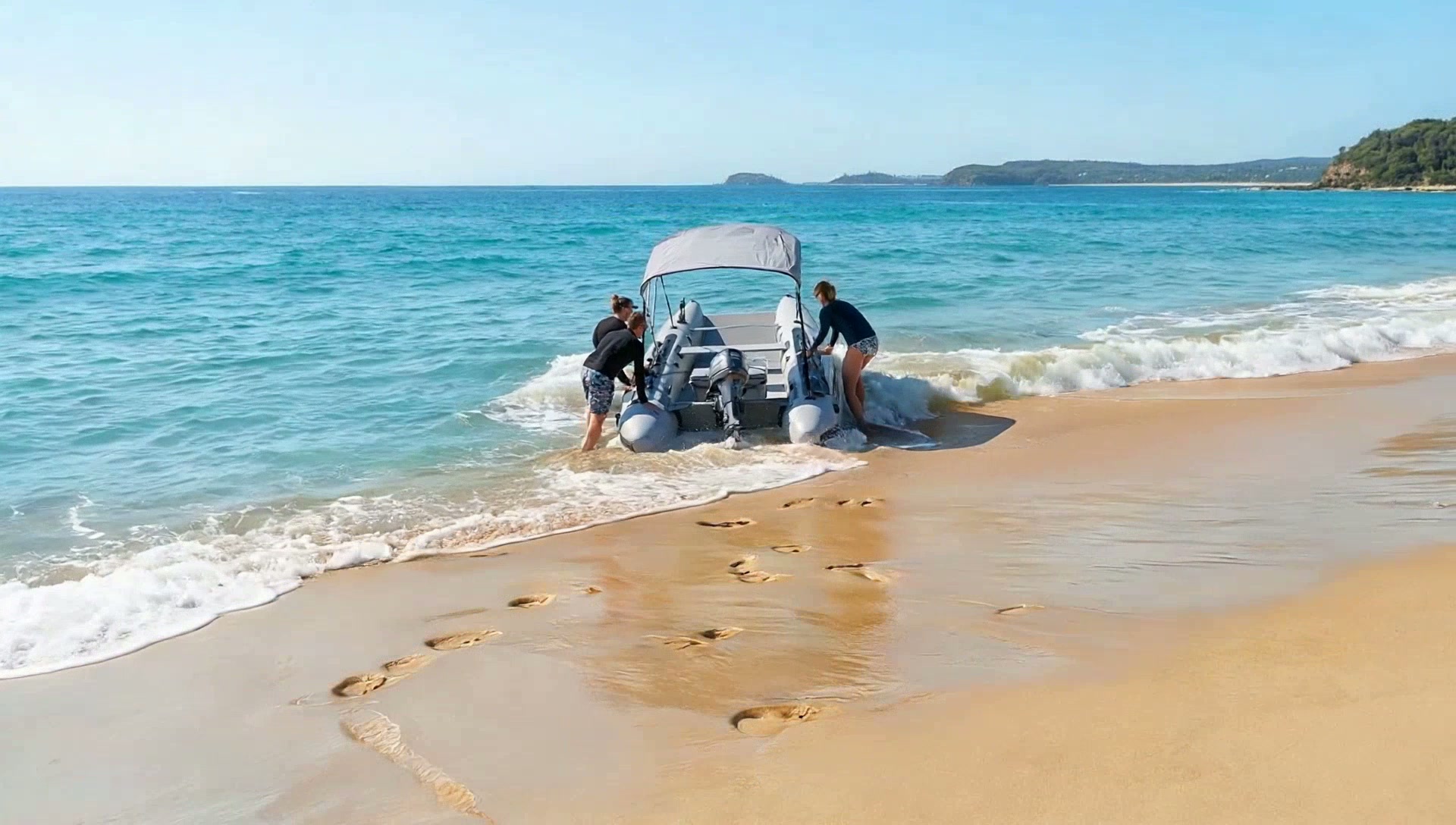
1. Soft tubes save your topsides
Every hard tender eventually marks your hull. Soft tubes don't — even when the wind clocks at 2am and the tender swings into the transom.
2. Half the weight on davits
A 3.3 m soft inflatable catamaran like the Aerowave Viper 330 weighs around 38 kg dry hull. A comparable rigid RIB is 70–90 kg. That gap means standard cruising davits handle it without re-engineering, and you can hoist it single-handed.
3. Deflates into a locker if you need to passage
Going offshore? Drop the air, fold it down to roughly 1.1 m × 0.55 m × 0.35 m and stow it. You can't do that with a hard tender.
4. Planes on a 5–9.9 hp outboard
Twin-hull lift means a small, light, easy-to-store outboard does the job a 15 hp would on a roll-up. Less fuel on board, less weight to lift on and off the pushpit bracket.
5. Australian sun resistance
Our catamarans are built from 1500 GSM / 1.2 mm VALMEX® Heavy Plus on the Viper range, or 1100 GSM / 0.9 mm VALMEX® on the AeroCat range. Both carry a realistic 10–12 year lifespan in Australian conditions — three to four times longer than the budget PVC tenders sold at chandleries. Hypalon equivalents are 15–20 years, but cost roughly double up front; for most cruisers, VALMEX is the better cost-per-year.
Sizing your tender to your yacht
The old rule of thumb — tender length = LOA ÷ 4 — still holds. For a typical Australian cruising fleet:
- 10–11 m yacht (33–36 ft): 3.0–3.3 m tender. The AeroCat 330 or Viper 330 fits davits and the foredeck cleanly.
- 12–13 m yacht (40–43 ft): 3.6–3.65 m. The Viper 365 Open Bow gives you four-adult capacity without overhanging the davits.
- 14 m+ catamaran or motoryacht: 3.8–4.0 m. The AeroCat 380 or Viper 400 Sovereign handles dive gear, four divers and a chilly bin.
Davits, foredeck or tow?
For soft inflatable catamarans you have three realistic carry options:
- Davits. Best for short passages and overnight stops. Hoist motor-on if your davits are rated, motor-off if not. Always rig a snug bow-up tilt so green water drains out the transom.
- Foredeck, deflated. Best for offshore passages. Roll it, lash it under the boom, motor in the cockpit locker on a bracket. The whole package weighs about as much as a single sail bag.
- Towed on a painter. Fine for short bay hops in calm water. Never tow a soft inflatable in a following sea — they'll surf the wake and pitchpole. Recover and hoist before you turn downwind in anything over 15 knots.
The outboard pairing most yacht owners get wrong
You don't need a big outboard on a catamaran tender. A 4–5 hp will get two adults onto the plane on a Viper 330. A 9.9 hp will plane four adults with shopping. We sell Hidea four-stroke outboards matched to each hull, but any reputable Japanese-built short-shaft engine in the 4–9.9 hp range works. The constraints that matter:
- Short shaft only (15") — never a 20" long shaft on an inflatable transom.
- Weight under 40 kg so you can lift it onto the pushpit bracket alone.
- Tiller steer for a cruising tender — no console, no steering wheel, more usable deck space and easier to balance on davits.
What about a hard RIB tender?
If your yacht is a 45 ft+ motoryacht with a hydraulic swim platform and you're using the tender as a sportsboat, a RIB makes sense. For everyone else — which is most Australian sailing cruisers — a hard RIB is a lot of weight, money and topside-damage risk for capability you almost never use.
Buying tips specific to Australian conditions
- UV first, everything else second. Insist on a properly named fabric (VALMEX® or Mehler) at 1100 GSM minimum — not vague "marine-grade PVC".
- Overinflation valves matter more here than anywhere else. A dark inflatable tube left in 38°C Queensland sun will gain 20+ kPa over its starting pressure. Without an overinflation valve, that's a burst seam.
- Replaceable rubbing strake — a sacrificial rub strip you can rebond yourself when it gets chewed on a marina ladder.
- Aluminium or air-floor over slats. Slatted floors flex under a planing outboard; air-floor or aluminium gives you a proper standing platform.
- Lifting strap points built in — not glued aftermarket. Davit loads will rip aftermarket D-rings off in eighteen months.
What it costs in 2026 (Australia)
Realistic landed prices for a properly built soft inflatable catamaran tender, delivered free anywhere on the Australian mainland:
- 3.3 m AeroCat 330 boat-only: from A$3,295
- 3.3 m Viper 330 Sports Package (1.2 mm hull, Bimini, pump, wheel kit): A$5,195
- 3.65 m Viper 365 Open Bow: A$4,895
- 3.8 m AeroCat 380 boat-only: from A$3,795
- 4.0 m Viper 400 Sovereign: A$5,095
All builds qualify for WavePay — four interest-free fortnightly payments managed end-to-end by Stripe, so you can lock in a build slot today without paying it all up front.
Bottom line
If you're shopping for a yacht tender in Australia in 2026, the question isn't really inflatable vs hard anymore — it's single-hull inflatable vs catamaran inflatable. The twin-hull format gives you more usable deck, more capacity per kilo, a flatter ride on a smaller outboard, and a hull that won't mark your topsides at 2am. For most cruising sailors, that's the whole game.
If you'd like a real human to size a tender against your specific yacht — LOA, davit reach, lazarette dimensions — reply to any email from us or call +61 2 4335 1603. We'll send you a sized recommendation the same business day.
Weekend-Proof Score 17 questions · about 2 minutes
Will the boat you're about to buy survive an Australian summer?
Seventeen straight questions about where you'll use it, what you'll ask of it and the boat you're weighing up. You get a score out of 100, the exact weak points in your plan, and the one boat that genuinely fits.
Free · your result shows on screen · no email required
So which one is yours?
Pick how you'll actually use it and we'll take you straight to the right hull.
I want to fish it
Open bow, rod holders, deck space you can stand and cast from.
Viper Sport 400Family, diving and the beach
3.8 m Series 3 catamaran — low bow to climb back in wearing fins or a tank.
WaveRunner 380Tender / one-person launch
3.3 m hard-floor boat that packs into a bag and still takes a beach landing.
Viper 330Shop gear featured in this guide
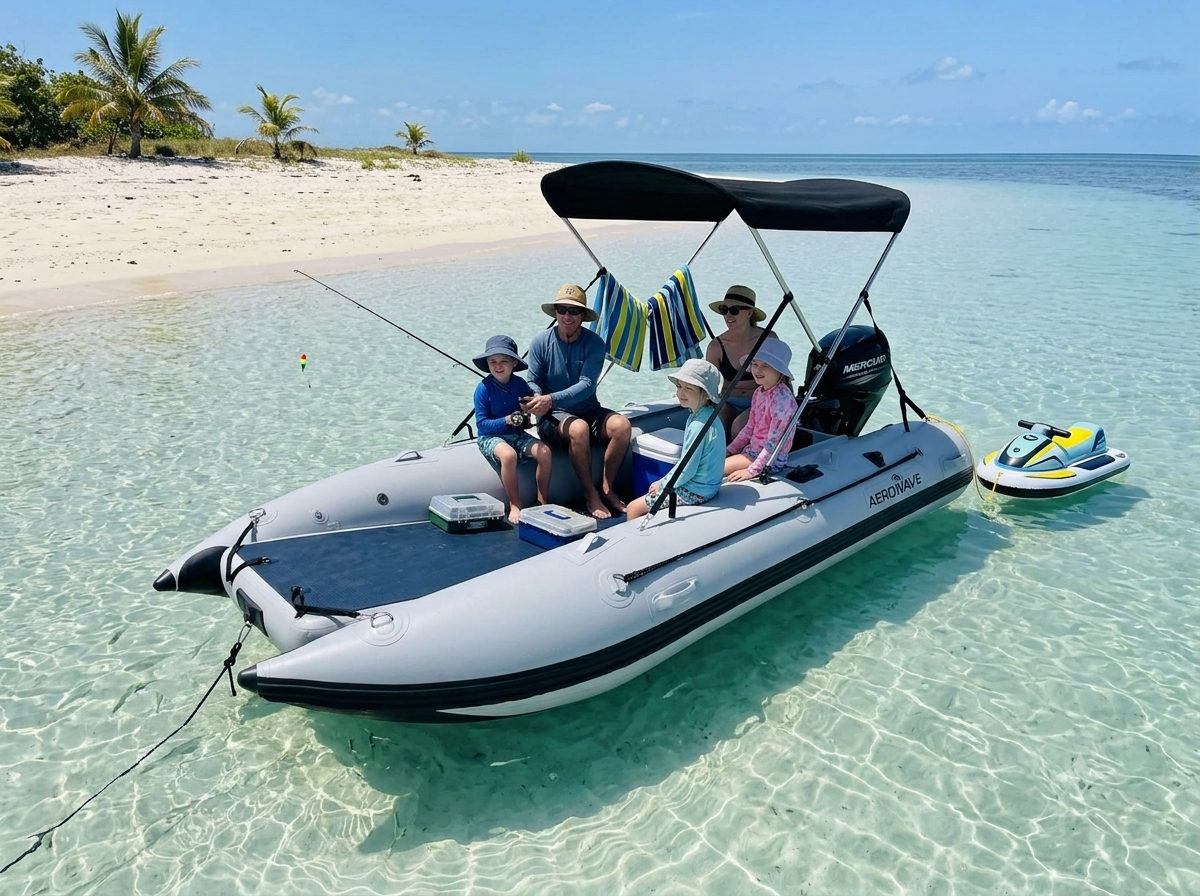
Aerowave WaveRunner 380 Series 3 Catamaran Package
The WaveRunner 380 Series 3 is a premium 3.8m inflatable catamaran package built for Australian and worldwide families, fishing, and coastal day boating — ideal for snorkeling and spearfishing — offering serious stability and premium German Valmex® construction.
Free freight to United States · local taxes payable on arrival
Aerowave Viper 400 Sovereign
Flagship 4m enclosed-bow inflatable catamaran. German VALMEX® 7321 Heavy Plus 1.2mm commercial-grade fabric, 10 PSI high-pressure drop-stitch air deck floor with VALMEX non-slip surface, LockPro wheels, full Bimini and FREE express delivery Australia-wide included. Winter special — save $1,000 until 31 August 2026.
Free freight to United States · local taxes payable on arrival
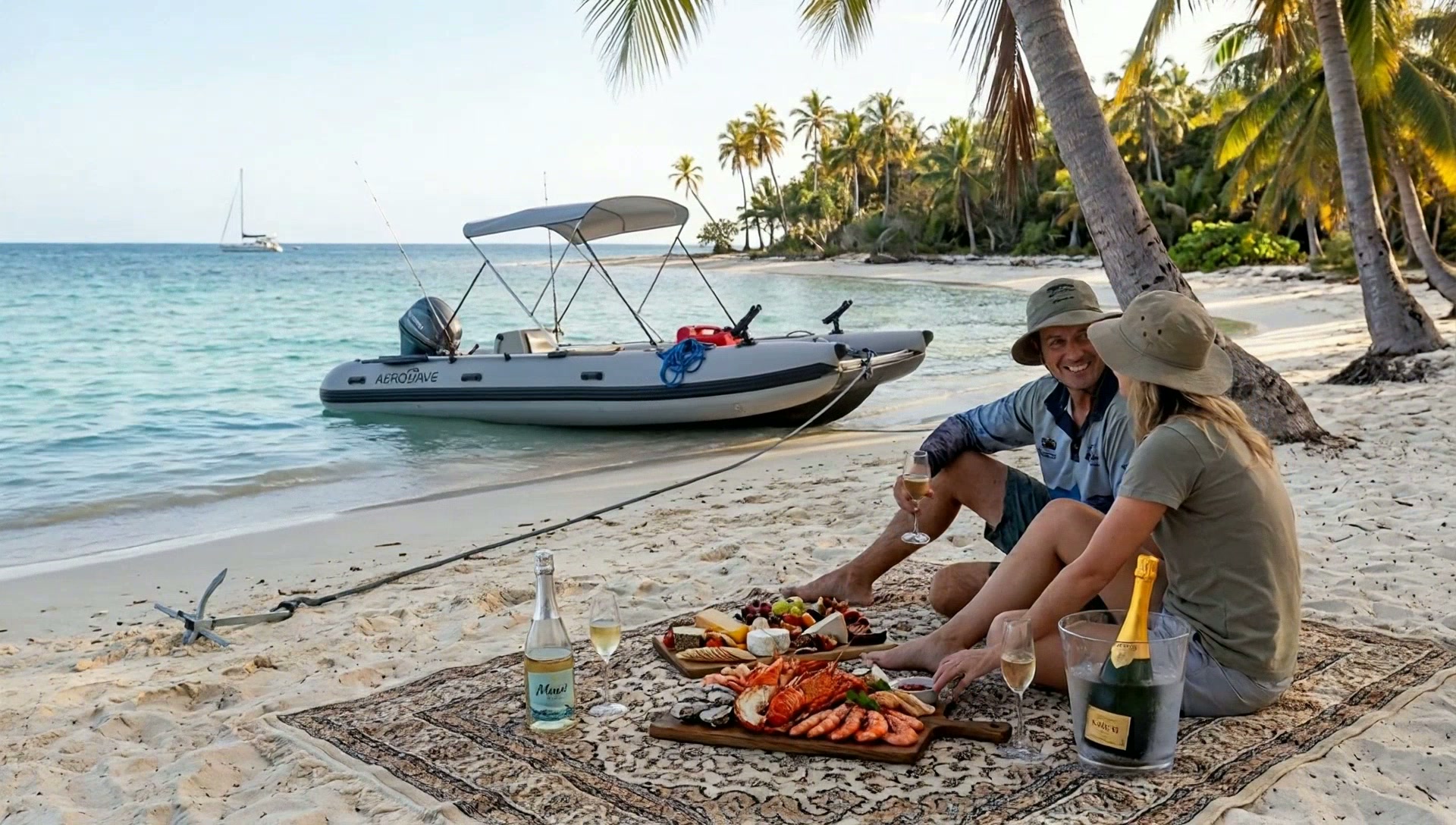
Aerowave Viper 365 Open Bow
Premium 3.65m Inflatable catamaran — built the same way as our flagship Viper 400 sports boat, just 35cm shorter. German VALMEX® 7321 Heavy Plus 1.2mm commercial-grade fabric, 10 PSI high-pressure drop-stitch air deck floor with VALMEX non-slip surface, LockPro wheels, full Bimini and FREE express delivery Australia-wide included.
Free freight to United States · local taxes payable on arrival
Not sure which suits you? Talk to a real boat owner.
Before you spend a cent
Buying from Australia, delivered to United States
You have never heard of us, we are on the other side of the world, and the internet is full of fakes. Fair enough. Here is everything you would need to check us out, in one place — no forms, no chat bot.
Australian designed business
Easy Inflatables, Avoca Beach NSW 2251. ABN 96 856 548 613. International orders ship from our Hong Kong hub.
222 owner reviews, 4.8 average
Read them in full, good and bad, on our reviews page.
CE certified, 7-year hull warranty
ISO 6185-3 and EU Directive 2013/53/EU. Warranty honoured worldwide.
Tracked, insured, door to door
FREE freight to United States · local tax/duty on arrival.
- Who am I actually buying from?
- Easy Inflatables, Avoca Beach NSW 2251, Australia. ABN 96 856 548 613. Sean is the owner and skipper, Gary Stewart handles sales on +61 2 4335 1603, Karen Matthews handles email. The boats are Australian designed; international orders ship from our Hong Kong dispatch hub so your landed price stays competitive. Phone us before you pay a cent — a real person answers.
- Is this really an Australian product?
- Yes — Australian designed and engineered on the NSW Central Coast. Manufacturing is done offshore to our spec, and international orders ship direct from our Hong Kong dispatch hub. If we routed every boat through Australia first, the freight alone would roughly double or triple your cost for the same hull.
- What do I pay, and what is not included?
- The delivery and import terms depend on your country. EU, UK, New Zealand and named Asia/Pacific lanes include duty and tax; US freight is free but US buyers pay import charges on arrival. Other destinations show their terms before payment.
- How do I pay safely?
- Card through Stripe (Visa, Mastercard, Amex, Apple Pay, Google Pay) or bank transfer. Card payments carry your bank's own dispute protection. We never ask for crypto, gift cards or payment to a personal account.
- What if it arrives damaged?
- Every boat ships fully tracked and insured door to door. Photograph the carton and the boat on arrival and email us — transit damage is claimed and replaced through us, not left with you and the courier.
- Is the warranty real outside Australia?
- Yes. The 7-year hull warranty on 1.2 mm VALMEX Heavy Plus and Orca Hypalon hulls applies wherever you are. Replacement parts are held in Australia and at our overseas hub and go out by express courier to your door.
- Is the boat actually certified?
- All Aerowave catamarans are CE certified to ISO 6185-3 and EU Directive 2013/53/EU. Certification paperwork is supplied with the boat — ask and we will send it before you order.
Frequently asked questions
- What size tender do I need for my yacht?
- The rule of thumb is yacht length divided by four. For a 10–11 m sailing yacht, a 3.0–3.3 m tender (e.g. Viper 330 or AeroCat 330) fits davits cleanly. For a 12–13 m yacht, step up to a 3.65 m. For 14 m+ catamarans and motoryachts, a 3.8–4.0 m tender carries four adults plus dive gear.
- Can I tow an inflatable catamaran tender behind my yacht?
- Yes for short bay hops in calm water under 15 knots — set a long painter and a bridle through both bow eyes. Never tow a soft inflatable in a following sea over 15 knots; recover and hoist it on davits or stow it deflated on the foredeck before you turn downwind.
- How much does a yacht tender weigh on the davits?
- A 3.3 m soft inflatable catamaran weighs around 38 kg dry hull. Add a 4-stroke 5 hp outboard (≈26 kg) and a 12 L fuel tank, and you're at roughly 75–80 kg on the davits. That's half the loaded weight of a rigid RIB tender of the same length.
- What outboard size should I pair with an inflatable tender?
- A 4–5 hp short-shaft four-stroke planes two adults on a 3.3 m catamaran. A 9.9 hp planes four adults plus gear on a 3.65–4.0 m. Keep it under 40 kg so you can lift it on the pushpit bracket alone. Tiller steer only — no console — for the most usable deck space.
- How long does an inflatable yacht tender last in Australia?
- On premium 1100 GSM (0.9 mm) or 1500 GSM (1.2 mm) VALMEX® fabric, expect 10–12 years of UV and salt exposure in Australian conditions before the tubes need replacing. Hypalon tenders last 15–20 years but cost roughly double up-front, so VALMEX is the better cost-per-year for most owners.
- Do I need an overinflation valve on a yacht tender?
- Yes — non-negotiable in Australia. Dark tube colour plus a 38°C Queensland summer can lift internal pressure 20+ kPa above your starting setting. Without overinflation (pressure relief) valves, a tender left on davits in the sun can burst a seam.
Ready to set sail?
Premium German-fabric inflatable catamarans, built to order and delivered to your door. Talk to our team or browse the fleet.
Like this guide? Get the next one in your inbox.
Owner-tested tips, gear deep-dives and Aussie boating know-how — no spam.