Air Deck vs Aluminium Floor Inflatable Boats: Which Is Right For You?
Deciding between an air deck and an aluminium floor for your inflatable boat can be a tough choice. We unpack the pros and cons of each, helping you choose the best option for your Aussie adventures, considering factors like weight, rigidity, and packability.
🇺🇸 Boats shipping to United States
See landed prices in USD before you bounce.
Door-to-door delivery to United States in 7–10 days. Choose a boat, see local-currency pricing, or request a fixed landed quote from the sales team.
Air Deck vs Aluminium Floor Inflatable Boats: Which Is Right For You?
Choosing the right inflatable boat for your Australian adventures involves a raft of decisions, and one of the most critical is the floor type. For many, it boils down to the classic debate: air deck vs aluminium floor. Both have their ardent fans and their specific applications, offering distinct advantages in terms of weight, rigidity, setup time, and overall boating experience. At Easy Inflatables, we offer boats with both advanced air decks, like the high-pressure 12 PSI air deck found in our Aerowave Viper catamarans, and traditional aluminium floor options in various tender ranges, allowing us to speak from experience about their real-world performance.
This guide will delve deep into the characteristics of each, helping you navigate the options to find the perfect inflatable boat floor for your needs, whether you're chasing barra up north, exploring sheltered harbours down south, or simply need a reliable tender for your yacht.
The High-Pressure Air Deck Advantage
Modern air decks are a far cry from the saggy, inefficient inflatable floors of yesteryear. Today's high-pressure air decks are remarkably rigid, offering a stable platform that rivals traditional hard floors, yet retain the inherent benefits of an inflatable. Our Aerowave Viper catamarans, for example, feature a formidable 12 PSI (pounds per square inch) air deck. To put that into perspective, most standard inflatable floors might only be 3-5 PSI, and even typical inflatable boat tubes operate around 3.6 PSI. This significantly higher pressure creates a truly solid, unyielding surface.
Weight and Portability
One of the most compelling arguments for an air deck is its significantly lighter weight compared to an aluminium floor. This translates directly to easier transport and handling, especially for solo operators or those with limited vehicle capacity. Imagine lugging a heavy, bulky aluminium floor down to the boat ramp or across a sandy beach; with an air deck, the entire boat, floor and all, can often be rolled into a single, manageable bag. This makes them ideal for packing into a caravan, SUV, or even a smaller car boot. For instance, an Aerowave Viper 380, despite its considerable size and stability, packs down surprisingly well, making it a true go-anywhere vessel.
Setup and Pack-down
The speed and ease of setup are another major draw. With an air deck, once the boat tubes are inflated, the deck inflates simultaneously (or in a separate, quick step) to its high pressure. There are no heavy, cumbersome panels to slot together and lock into place, which can be a fiddly and frustrating process, especially in inclement weather or tight spaces. Similarly, pack-down is a breeze. Deflate, roll, and you're good to go. This efficiency is a huge plus for those who frequently, or even sporadically, deflate and transport their boat.
Comfort and Rigidity
While an air deck is fundamentally soft when deflated, once inflated to its specified high pressure (e.g., 12 PSI for the Viper), it becomes remarkably firm. The sensation underfoot is solid, offering excellent stability for standing, fishing, or moving around the boat. They also tend to absorb vibrations better than rigid floors, offering a slightly softer ride in choppy conditions. Furthermore, the single, seamless surface means no gaps or crevices for small items to fall into, or for dirt and sand to accumulate.
Thermal Properties
On hot Aussie days, an aluminium floor can become scorching hot under the sun, often requiring rubber mats or footwear to stand on comfortably. Air decks, being inflated with air, tend to insulate better, staying cooler to the touch and providing a more comfortable surface for bare feet.
The Robust Aluminium Floor Option
Aluminium floors have been a staple in the inflatable boat world for decades, and for good reason. They offer a level of rigidity and durability that, until recently, was unmatched. Many of our popular monohull tenders in the Sport Series utilise robust aluminium floors, catering to those who prioritise absolute stiffness and heavy-duty use.
Unparalleled Rigidity and Stability
When assembled correctly, an aluminium floor creates an exceptionally rigid and stable platform. This can be particularly beneficial in larger tenders or for commercial applications where heavy loads are routinely moved around. For serious fishing or diving, the unyielding surface can feel more secure underfoot, especially when bracing against waves or hauling in a big catch. Competitors like older 3D Tender models or some Chinese imports often rely on aluminium floors for their larger, more utility-focused boats.
Durability and Puncture Resistance
Aluminium is a tough material. It's highly resistant to punctures, abrasions, and impact, making it ideal for environments where sharp objects or rough handling might be an issue. If you're constantly dropping tools, diving weights, or need to hose down a fish-filled deck, an aluminium floor can withstand more abuse than an air deck. Unlike an air deck, which, while tough, is still an inflatable structure susceptible (albeit minimally) to puncture by very sharp objects, an aluminium floor is less of a concern in this regard.
Load Bearing and Gear Attachment
For those who need to carry heavy or awkwardly shaped gear, the absolute rigidity of an aluminium floor can be advantageous. It distributes weight very effectively across the entire hull. Additionally, some boat owners find it easier to attach custom accessories or mounts to the solid cross-members often found with aluminium floors, though clever attachment points are becoming more common on modern inflatable boats across the board.
Comparing Air Deck vs Aluminium Floor
Let's break down the key differences in a comparable way:
| Feature | High-Pressure Air Deck (e.g., Viper 12 PSI) | Aluminium Floor (e.g., Sport Series Tenders) |
|---|---|---|
| Rigidity | Very rigid when fully inflated (e.g., 12 PSI), slight flex possible. | Extremely rigid, no flex. |
| Weight | Significantly lighter. | Heavier than air deck equivalent. |
| Portability | Excellent. Rolls up compactly, often in one bag. Easier to handle. | Good, but panels are heavy and bulky. Usually multiple bags. |
| Setup Time | Fast and simple, primarily inflation. | Slower, involves assembling multiple panels and stringers. |
| Pack-down Time | Fast, deflation and rolling. | Slower, disassembly of panels and stringers. |
| Comfort | Moderately cushioning, stays cooler, seamless surface. | Hard underfoot, can get hot in sun, panel gaps. |
| Durability | Excellent, marine-grade PVC/VALMEX. Puncture risk (minor). | Excellent, very high puncture/impact resistance. Dents possible. |
| Noise | Quieter, no rattling. | Can rattle or creak slightly over chop if not installed perfectly. |
| Cost | Often represents premium technology, can be slightly higher for full packages like the Viper. | Generally common in standard tenders, price varies by quality. |
| Cleaning | Easy to wipe down, no crevices. | Requires careful cleaning around joins for trapped dirt. |
| Best For | Weekend warriors, caravanners, tender applications, catamarans, performance. | Heavy-duty utility, commercial use, absolute maximum rigidity. |
The Easy Inflatables Perspective: Catamarans and Tenders
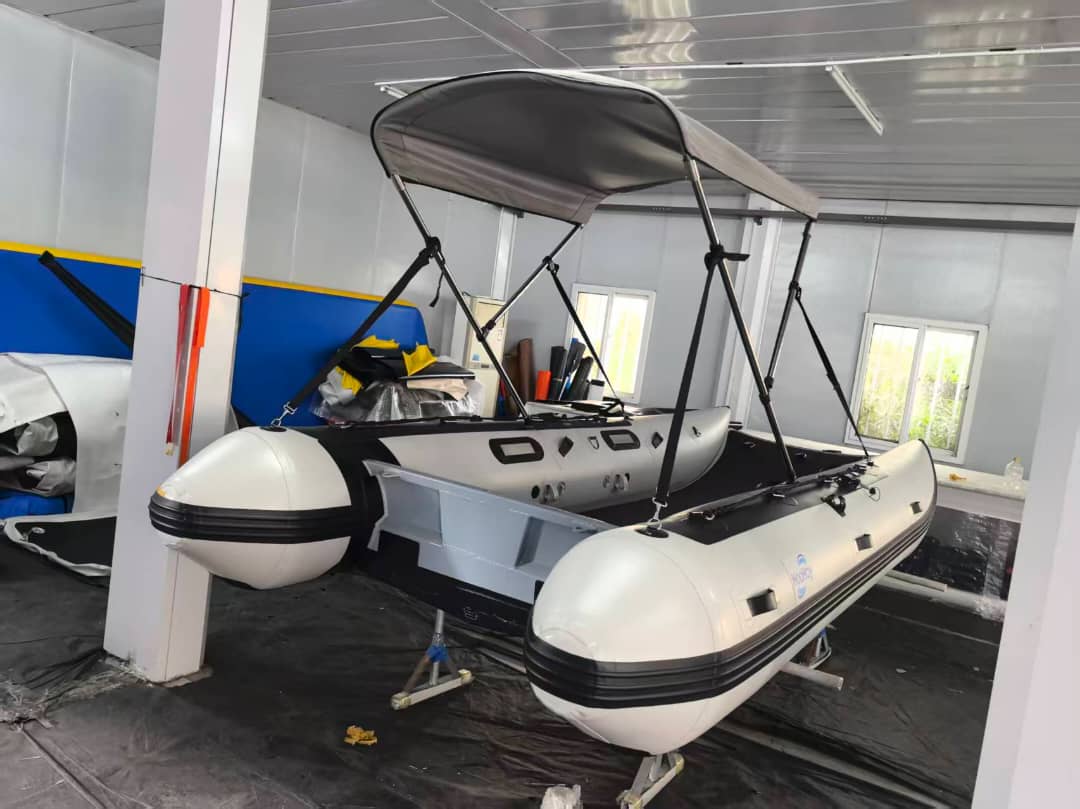
At Easy Inflatables, we're particularly passionate about inflatable catamarans, and our flagship Aerowave Viper range perfectly illustrates the benefits of a high-pressure air deck. The Viper 400 Sovereign Full Package, for example, combines a robust 1.2mm VALMEX hull with a high-pressure air deck, offering exceptional stability, performance, and portability. With a 5-year structural hull warranty, you can trust their build quality. This approach allows us to deliver a boat that is quick to deploy, easy to transport, and incredibly stable on the water.
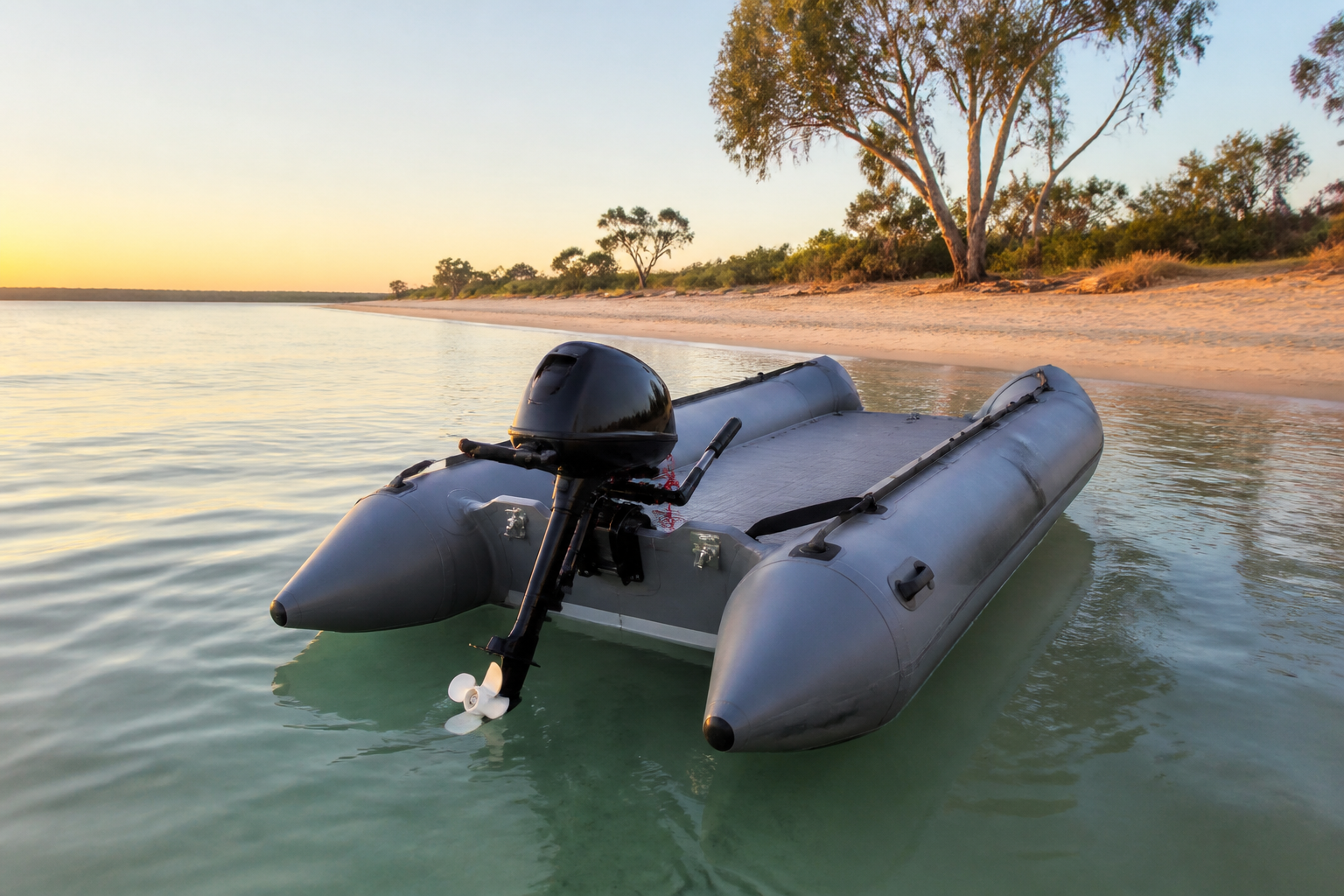
Our AeroCat 330, AeroCat 360, and AeroCat 380 catamarans also feature sophisticated air decks, making them lightweight and easy to manage, while still providing the renowned stability and efficiency of a twin-hull design. Even our WaveRunner 380 monohull tender offers an excellent alternative, also utilising a high-quality air deck for ease of use.
Why our AeroWave Viper chooses air deck over aluminium floor?
The reason is simple: for a performance inflatable catamaran designed for ease of use, speed, and comfort, the high-pressure air deck is the superior choice. The light weight of the air deck contributes to better planing, higher top speeds with smaller outboards (like our Hidea 4-stroke range), and improved fuel efficiency. The rapid setup means more time on the water and less time wrestling with boat parts. For anyone considering a TrueKit or TakaCat from New Zealand, or even a 3D Tender, it's worth noting the excellent air deck technology employed in these designs and comparing it with the robust construction and free Australia-wide DDP delivery offered by Easy Inflatables.
For different applications, such as a heavy-duty work tender or a boat permanently moored, an aluminium floor might still be considered. However, for most recreational users who value portability and quick deployment, the advanced air deck technology, especially when inflated to 12 PSI like in our Viper range, is a clear winner.
Making Your Decision: Which Floor is Right For You?
To make an informed choice, consider your primary usage and priorities:
- Portability & Storage: If you need to regularly pack down, transport, or store your boat in a smaller space (caravan, garage, limited car boot), an air deck is almost certainly the better option. Its lighter weight and compact roll-up are undefeated here.
- Setup Time: For quick, spontaneous outings, an air deck will get you on the water faster. If you don't mind a longer, more involved setup process, an aluminium floor is fine.
- Rigidity Preference: If absolute, unyielding rigidity is your top priority for heavy loads or specific activities, an aluminium floor delivers. However, be aware that modern high-pressure air decks offer exceptional stiffness that satisfies most users.
- Boating Environment: For general recreational use in sheltered waters, estuaries, or along the coast, an air deck is fantastic. For truly rugged, commercial, or heavy-duty use in very demanding conditions, an aluminium floor might be a more robust choice.
- Budget & Value: While the initial cost can sometimes be similar for equivalent boat sizes, consider the long-term value in terms of ease of use and enjoyment. Our Aerowave range, for example, represents excellent value with prices like the AeroCat 330 at $2,910 or the WaveRunner 380 at $4,000, all with FREE DDP delivery Australia-wide.
Ultimately, both air deck and aluminium floor boats offer fantastic ways to enjoy the water. Your ideal choice will depend on your specific needs, your boating style, and what you prioritise most in an inflatable vessel. We encourage you to weigh up these factors carefully. If you have any further questions or would like to discuss which Easy Inflatables option is best for your adventures, don't hesitate to reach out to us at +61 2 4335 1603 or sales@easyinflatables.com.au. We're always happy to help fellow boating enthusiasts find their perfect vessel.
Related
Shop gear featured in this guide
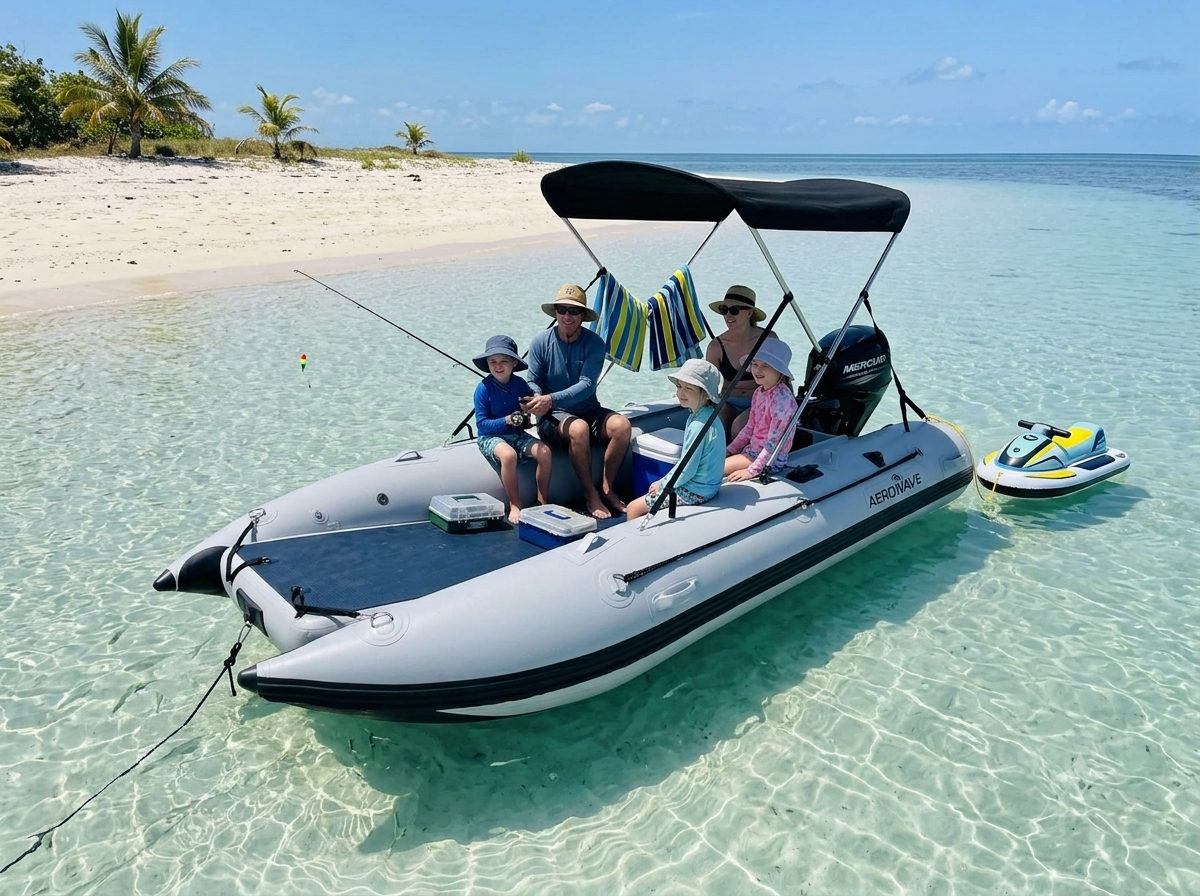
Aerowave WaveRunner 380 Series 3 Catamaran Package
The WaveRunner 380 Series 3 is a premium 3.8m inflatable catamaran package built for Australian and worldwide families, fishing, and coastal day boating — ideal for snorkeling and spearfishing — offering serious stability and premium German Valmex® construction.
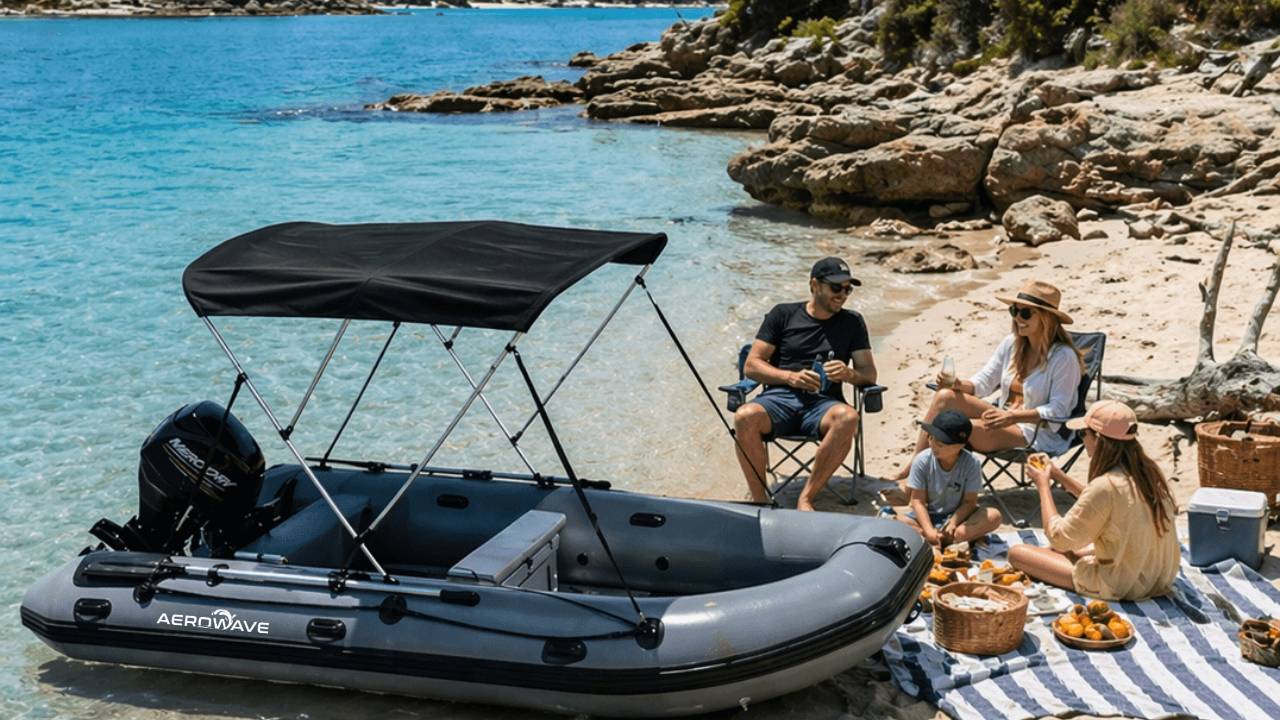
Aerowave Viper 400 Sovereign
Flagship 4m enclosed-bow inflatable catamaran. German VALMEX® 7321 Heavy Plus 1.2mm commercial-grade fabric, 10 PSI high-pressure drop-stitch air deck floor with VALMEX non-slip surface, LockPro wheels, full Bimini and FREE express delivery Australia-wide delivery included. Winter special — save $1,000 until 31 August 2026.
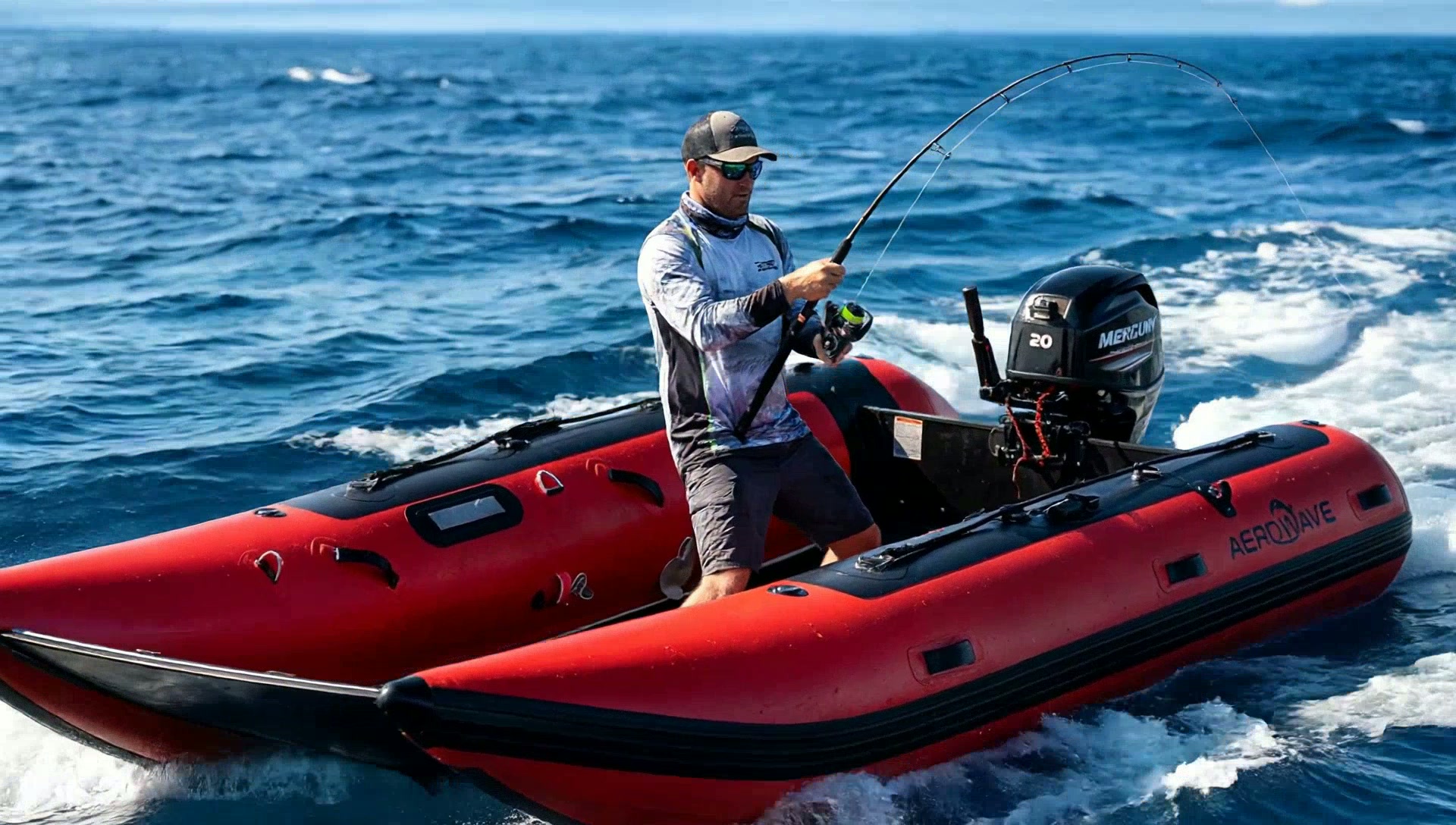
AeroWave AeroCat 360 Inflatable Catamaran
Same proven hull design, shape and look as our flagship Aerowave Viper catamarans — built lighter using 0.9mm Valmex® fabric instead of the Viper's 1.2mm. The AeroWave AeroCat 360 is our 3.6m inflatable catamaran built from 0.9mm Valmex® fabric — intentionally lighter than our 1.2mm Viper hulls so it folds smaller, packs lighter and is easy to handle solo. Twin-hull stability, 5-Year Warranty with global support and priced ~$500 below comparable 0.9mm imports.
Not sure which suits you? Talk to a real boat owner.
Ready to set sail?
Premium German-fabric inflatable catamarans with express courier delivery included in the price — 7–10 days door-to-door. Talk to our team or browse the fleet.
Like this guide? Get the next one in your inbox.
Owner-tested tips, gear deep-dives and Aussie boating know-how — no spam.