
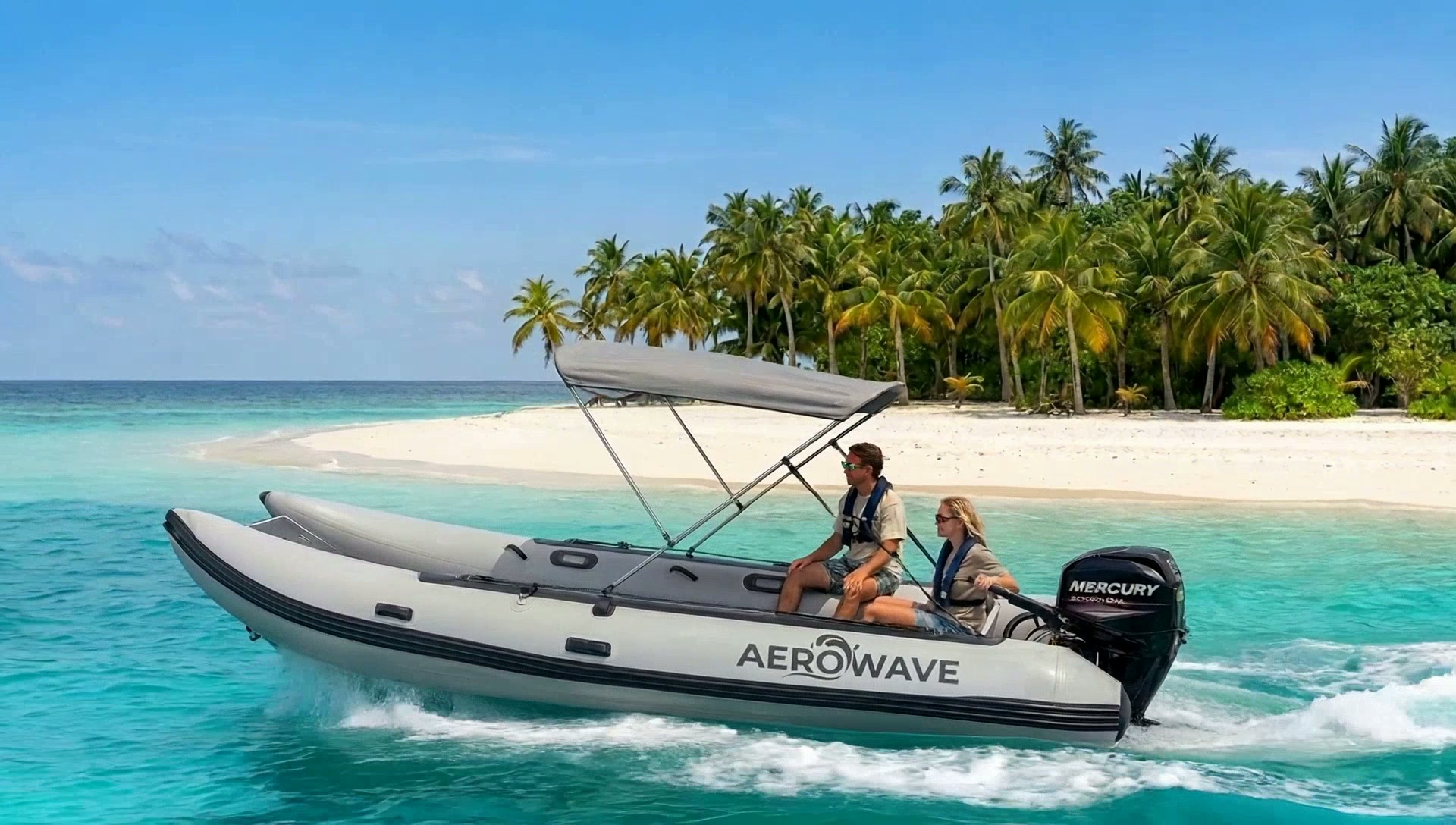
Thermo-Welded vs Glued Seams: The Reason Some Inflatable Boats Last and Others Don't
How glued and thermo-welded inflatable boat seams are made, why Australian heat and sun matter, how VALMEX and ORCA Hypalon differ, and what to ask before you buy.
Our recommendation
Aerowave Viper 400 Open Bow — Sports Package
Length
4.0m / 13'1"
Beam
1.80m / 71"
Tube Diameter
50cm
Bare Boat Weight (without Bimini & wheel kit)
~56kg / 123lbs
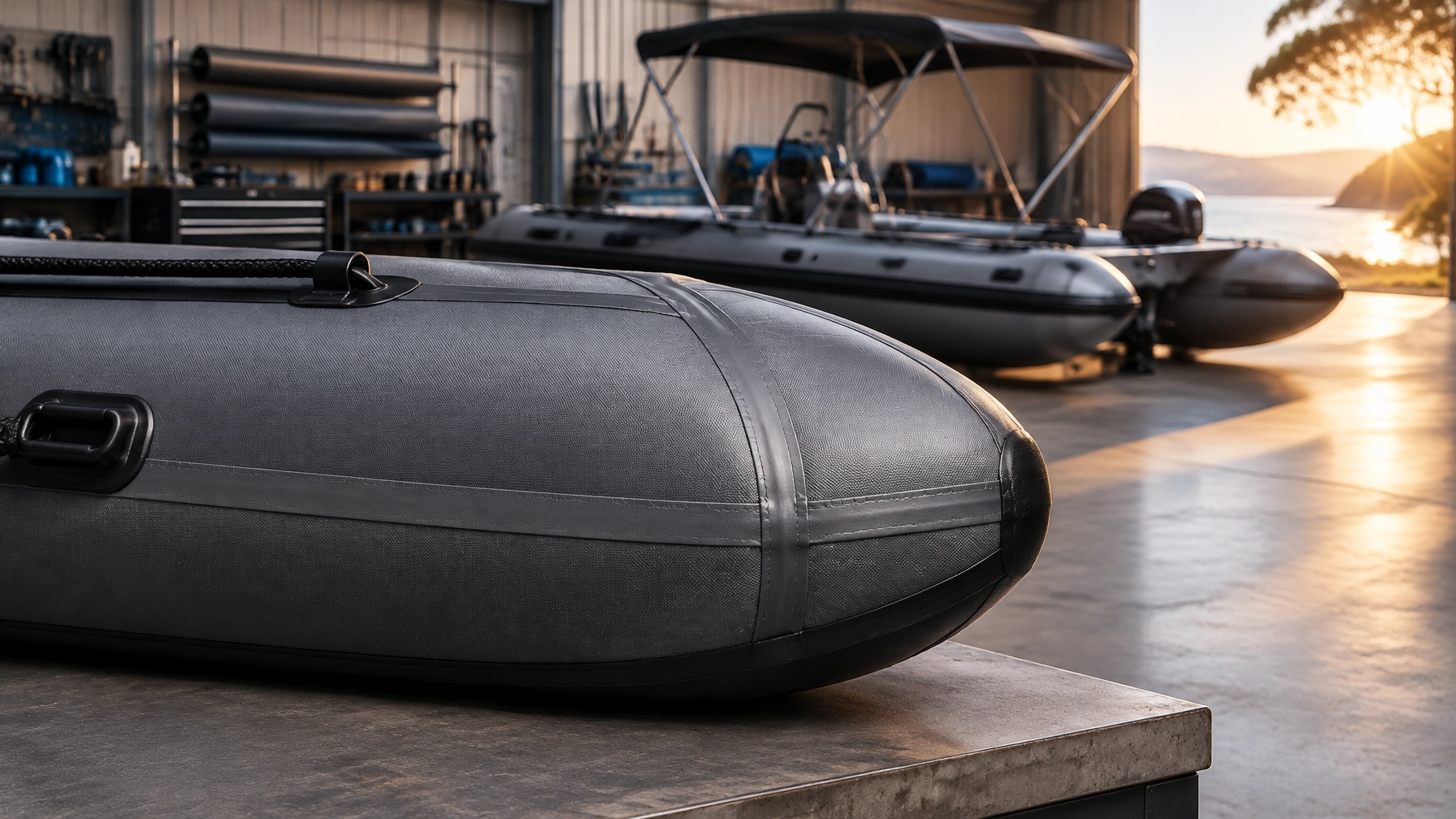
When you compare premium inflatable boats, it's easy to focus on fabric thickness, horsepower or floor design. The seams deserve just as much attention — they join the fabric that holds the air, and their construction decides how a boat stands up to years of use, storage and Australian weather.
The difference between thermo-welded and glued seams comes down to how the fabric panels are joined. Materials, workmanship, design and care all matter — and understanding the process helps you ask better questions before you buy.
How glued inflatable boat seams are made
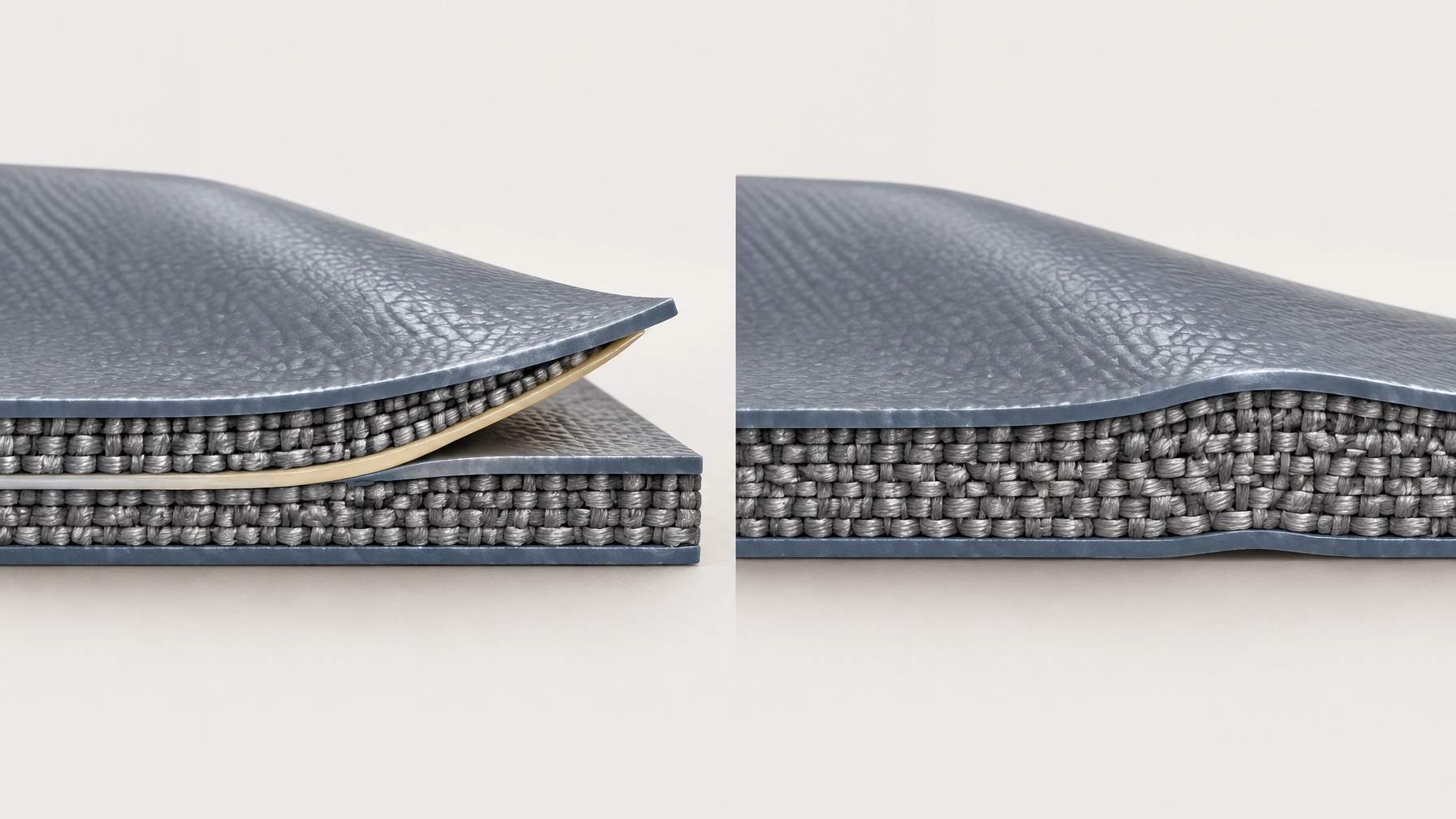
A glued seam is made by preparing the fabric surfaces, applying adhesive and joining the pieces, usually with an overlap. The surfaces must be properly prepared, and the adhesive applied and cured exactly to the manufacturer's process.
The finished bond depends on suitable adhesive, clean and well-prepared surfaces, accurate assembly and controlled curing. If any step is inconsistent, the seam can be less reliable than intended.
Adhesive bonding isn't poor construction in itself — it's essential for some materials. ORCA Hypalon, for example, can't be heat-welded like PVC, so a well-made Hypalon boat relies on carefully executed glued seams and good seam design.
Why heat and sun matter for seams
Adhesives age over time. Ultraviolet light, heat and weather can gradually weaken some adhesive bonds. The result depends on the fabric, adhesive, construction, use and care.
Australian conditions make it especially sensible to ask how a boat is built. A boat used and stored in strong sun and high temperatures faces tougher conditions than one kept cool and covered.
It's also important to separate seam ageing from pressure changes. Air inside a sealed tube expands as it heats, raising the internal pressure. Repeated excess pressure puts extra stress on seams, valves and attachments — which is why correct inflation and pressure-relief valves matter.
What happens in a thermo-welded seam?
In thermo-welding, heat and pressure fuse compatible thermoplastic-coated fabric surfaces together. Rather than relying on a separate layer of adhesive between the panels, the coated surfaces bond directly to each other.
For PVC inflatable boats, welding methods include hot-air and high-frequency processes, depending on the material and the manufacturer's equipment. The aim is a continuous, reliable join — and fabric compatibility, machine settings, operator skill and quality checks all count.
A properly made thermo-welded seam avoids the adhesive interface used in a glued PVC seam. That makes it a strong choice for buyers who want a PVC boat for regular use in sunny, warm conditions. Read our full guide: Welded vs Glued: The Seam That Defines Your Boat's Lifespan.
Fabric matters too: VALMEX® Heavy Plus and ORCA Hypalon
A seam is only part of the construction story. Fabric grade matters as well — and a heavier fabric works best alongside a well-made seam.
Easy Inflatables uses 1500 GSM / 1.2 mm German VALMEX® Heavy Plus on its heavy-duty range, rated for a 10–12 year service life, with an ORCA Hypalon upgrade available. See the fabrics page and Why a 1.2 mm Hull.
VALMEX® Heavy Plus is a PVC-coated fabric, so compatible panels can be thermo-welded. Its thickness and weight help with abrasion and puncture resistance; ask about the construction of the complete boat as well as the fabric specification.
ORCA Hypalon is a different material choice. Because it can't be thermo-welded like PVC, its seams are glued — and Hypalon boats can have very durable glued construction when the seam design, preparation and workmanship are right. The fair comparison is a well-built welded PVC boat versus a well-built glued Hypalon boat.
Pressure-relief valves: useful protection
A pressure-relief valve releases air if pressure rises to its set point. It helps reduce the risk of excess pressure as temperatures change, alongside correct inflation, regular checks and sensible storage.
Every Aerowave Viper, Sovereign, AeroCat catamaran, WaveRunner 380 and Sport Series Offshore has an automatic over-pressurisation valve on each air chamber. Learn more in our guide to over-pressurisation valves.
When inflating, follow the maker's instructions and use a pressure gauge. Recheck pressure as conditions change, especially after the boat has sat in direct sun. A relief valve is an extra safeguard, not permission to inflate beyond the specified working pressure.
What to check when comparing inflatable boat brands
Before choosing a boat, ask the manufacturer clear, specific questions:
- What fabric is used? Ask for the material name, thickness and weight (GSM + mm), not just "heavy-duty fabric".
- How are the tube seams joined? Is PVC thermo-welded, glued, or a combination? For Hypalon, how are the glued seams designed and finished?
- Which other parts are bonded? Ask about internal baffles, transom attachments, handles and other high-load areas.
- How is quality checked? Ask what testing each boat receives and what construction details are available.
- What does the warranty cover? Understand how claims and repairs are handled in Australia — see our warranty.
- How should the boat be cared for? Ask about correct pressure, cleaning, drying and storage for your climate.
A visual inspection helps too. Look for consistent, tidy finishing and no lifting, bubbling or separation. If something looks questionable, ask the seller to explain it before you buy. See how we build our boats on the manufacturing page.
So, which seam type should you choose?
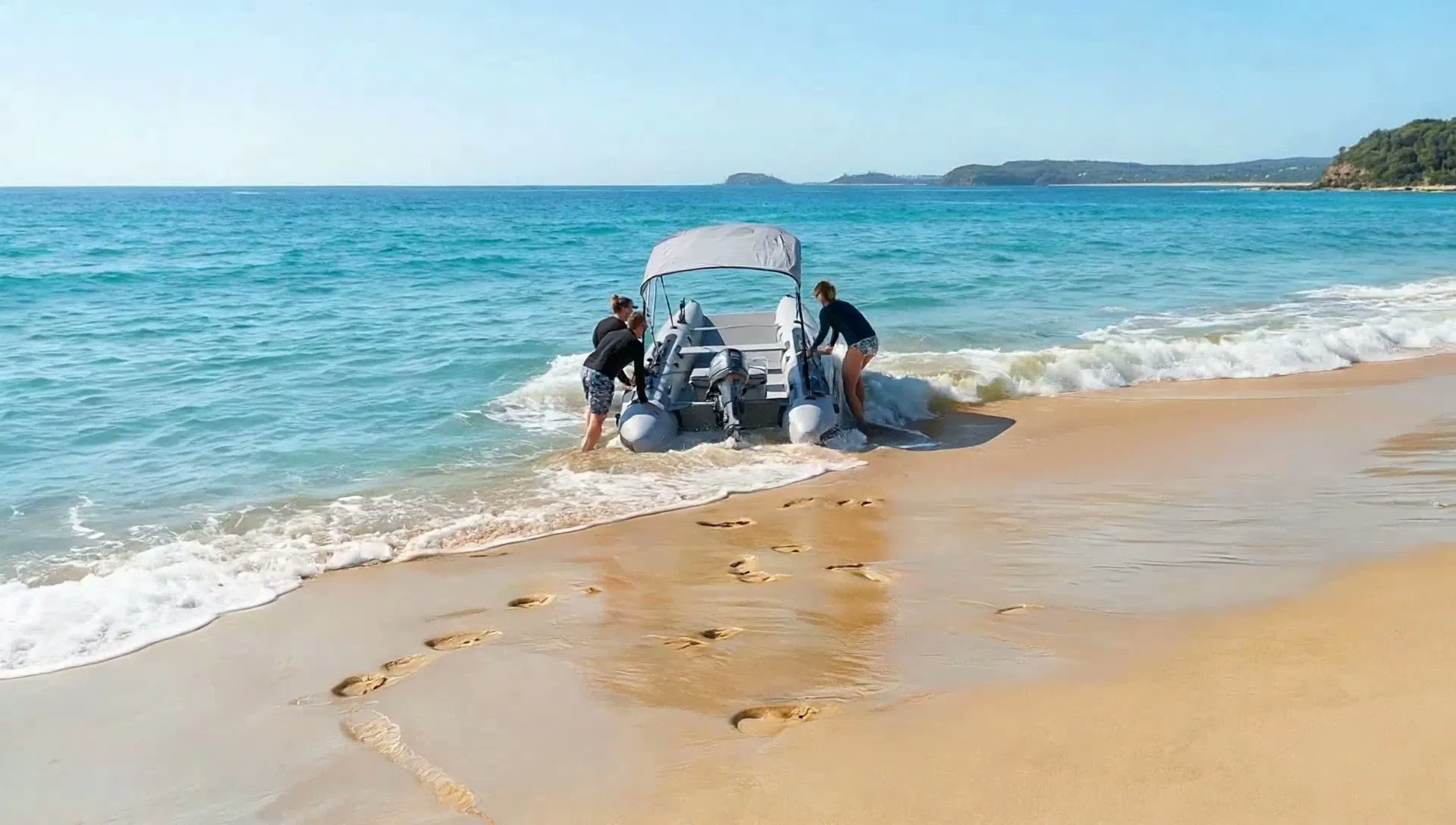
If you're buying a PVC inflatable for Australian use, a properly made thermo-welded seam is a feature worth insisting on — it avoids relying on an adhesive bond between PVC panels. Check the fabric, seam design, attachments, pressure protection, testing and after-sales support alongside it.
If you prefer ORCA Hypalon, glued seams are part of that material's construction — ask how they're made and what care the manufacturer recommends.
Compare the complete build, not a single label, and choose a manufacturer willing to explain how its boat is put together. Explore the Viper Series or call Gary on +61 2 4335 1603 to talk through the specifications that matter for your use.
Frequently asked questions
- What is the difference between thermo-welded and glued seams?
- Thermo-welding fuses compatible PVC-coated fabric with heat and pressure, so the panels bond directly. Glued seams join panels with an adhesive layer, prepared and cured to the maker's process.
- Are welded seams better than glued seams?
- For PVC boats used in Australian sun and heat, a properly made welded seam avoids relying on an adhesive bond. Glued seams are the correct method for Hypalon and are very durable when well made.
- Why can't Hypalon be heat-welded?
- ORCA Hypalon uses CSM and chloroprene rubber coatings that don't fuse with heat like PVC, so its seams are glued by skilled technicians.
- Does heat affect inflatable boat seams?
- Heat and UV can age adhesives over time, and heat also raises the air pressure inside the tubes. Correct inflation, shade and pressure-relief valves all help.
- Do Aerowave boats have pressure-relief valves?
- Yes. Every Aerowave Viper, Sovereign, AeroCat catamaran, WaveRunner 380 and Sport Series Offshore has an automatic over-pressurisation valve on each air chamber.
- What fabric do Aerowave boats use?
- The heavy-duty range uses 1500 GSM / 1.2 mm German VALMEX Heavy Plus with heat-welded seams, rated for a 10–12 year service life, with an ORCA Hypalon upgrade available.
Finance this boat from $26/week
Estimate only — powered by Australian Motorcycle & Marine Finance (AMMF).
Paid upfront (AUD)
$600
10% of price
Term
5 years
60 monthly repayments
Comparison rate
9.95% p.a.
Subject to AMMF approval
Weekly
$26
Monthly
$114
Amount financed
$5,395
Indicative only. Actual repayments depend on your AMMF credit assessment, term, fees and the balloon you select. Talk to AMMF for a personalised quote on Aerowave Viper 400 Open Bow — Sports Package.
Like this guide? Get the next one in your inbox.
Owner-tested tips and Aussie boating know-how — no spam.
Ready when you are
Build your Viper 400 Open Bow — Sports Package in under 3 minutes.
1500 GSM / 1.2 mm VALMEX® hull. Five-year limited hull warranty plus two years of extended limited structural hull cover, subject to conditions. Free freight to United States · taxes included, nothing to pay on arrival.
delivered to your door
See it for yourself
Real boats. Real owners. Real people behind them.
Plenty of what you read online these days is generated. Check us out properly — the factory, the reviews and the owners are all one click away. Why we use AI, and how to check we’re real
How our boats are built
Walk the production line: thermo-welded seams, 1.2 mm VALMEX Heavy Plus hulls, over-pressure relief valves on every chamber.
See the buildGoogle Maps reviews
Real Australian owners, five stars, published on our Google Business Profile with the map — read them there, not just on our own site.
Open Google Maps reviewsOwner stories
Boats in use — offshore, on rivers, on rescue duty. Photos and words from the people who actually own them.
Read owner stories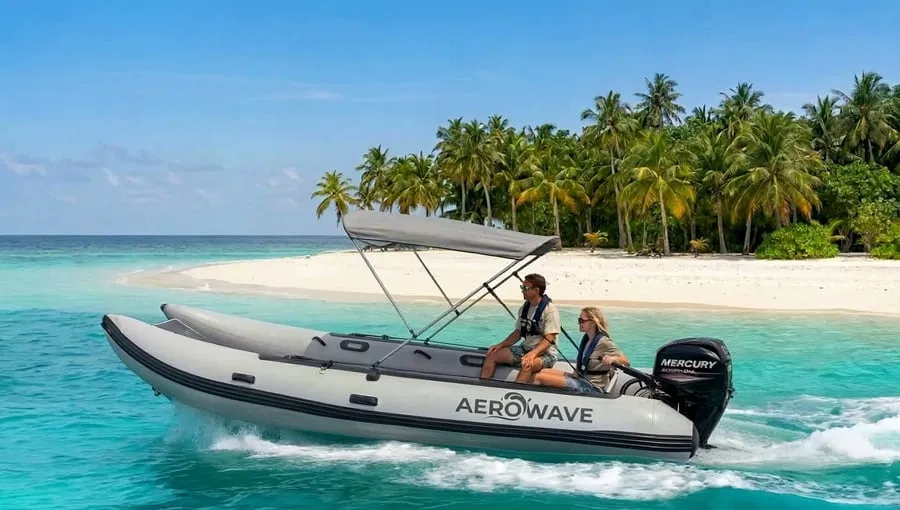
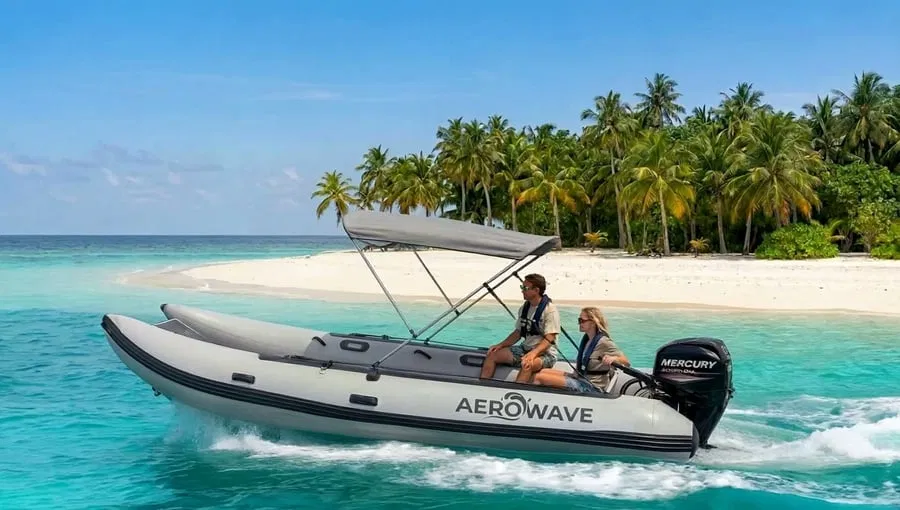
Aerowave Viper 400 Open Bow — Sports Package
US$4,272 USD · delivered to your door