Wheels For Inflatable Boat A Guide to Effortless Launching
Let's be honest, dragging your inflatable boat across hot sand, sharp gravel, or a steep boat ramp is a terrible way to start a day on the water. It can quickly turn a fun outing into a frustrating chore. The right wheel…
At a glance
Let's be honest, dragging your inflatable boat across hot sand, sharp gravel, or a steep boat ramp is a terrible way to start a day on the water. It can quickly turn a fun outing into a frustrating chore. The right wheel…
- Why Launching Wheels Are a Must-Have Accessory
- More Than Just Convenience
- Why Inflatable Boat Wheels Are a Smart Investment
- Selecting the Right Wheels for Your Boat and Terrain
What we'd put you in
Aerowave Viper 400 Sovereign
Our best-selling boat: 4.0 m, 1.2 mm VALMEX hull, 7-year hull warranty.
US$3,167 USD
Delivered to your door, today's rate
- Free freight to United States · local taxes payable on arrival
- 7-year hull warranty
Ships to United States 🇺🇸 · tracked door to door
One person, one launch. No trailer.
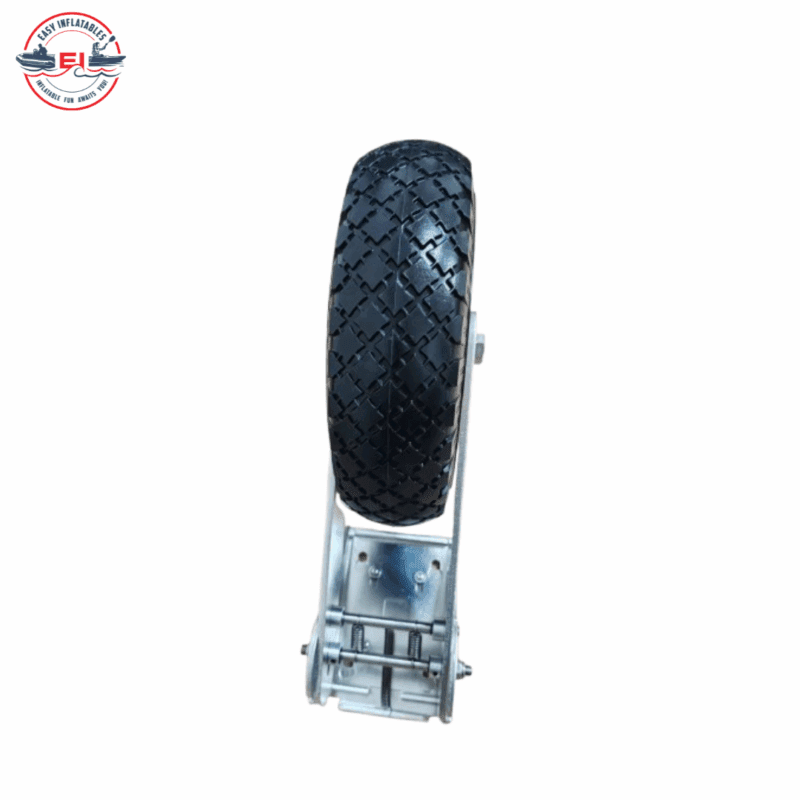
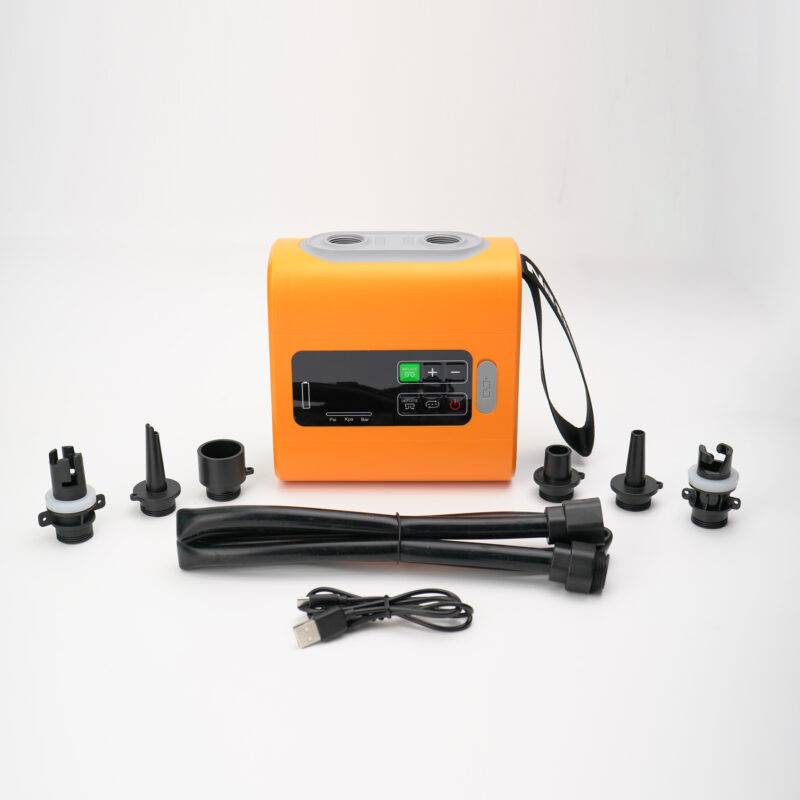
LockPro Plus transom wheels and the 22 PSI lithium pump — the two things that decide whether the boat gets used.
- Transom wheels rated for a loaded 4 m boat over soft sand
- 22 PSI lithium pump for the tubes; use it on the AirDeck only to approximately 2–2.5 PSI, then finish the floor to 8–10 PSI with the manual pump
- Ships worldwide, tracked door to door
Or replace the boat entirely
Aerowave Viper 400 Sovereign
Delivered to United States — freight included in the figure below.
US$3,167landed, USD
- 7-year hull warranty
- CE certified to ISO 6185-3 and EU Directive 2013/53/EU
- Door-to-door, tracked the whole way
See it for yourself
Real boats. Real owners. Real people behind them.
Plenty of what you read online these days is generated. Check us out properly — the factory, the reviews and the owners are all one click away. Why we use AI, and how to check we’re real
How our boats are built
Walk the production line: thermo-welded seams, 1.2 mm VALMEX Heavy Plus hulls, over-pressure relief valves on every chamber.
See the buildGoogle Maps reviews
Real Australian owners, five stars, published on our Google Business Profile with the map — read them there, not just on our own site.
Open Google Maps reviewsOwner stories
Boats in use — offshore, on rivers, on rescue duty. Photos and words from the people who actually own them.
Read owner storiesLet's be honest, dragging your inflatable boat across hot sand, sharp gravel, or a steep boat ramp is a terrible way to start a day on the water. It can quickly turn a fun outing into a frustrating chore. The right wheels for an inflatable boat are a complete game-changer, transforming what was a tough, two-person job into a simple solo task. They don't just save your back; they protect your boat's hull from all sorts of nasty scratches and scrapes.
Why Launching Wheels Are a Must-Have Accessory
We’ve all been there. You've driven for hours to find that perfect, secluded Aussie beach for a family day out. The only catch? There's a 50-metre trek across soft sand from the car park to the water's edge. Without wheels, you're looking at a strenuous, awkward drag that risks scuffing up your boat's PVC or Hypalon fabric. Now, picture that same scene with a quality set of transom wheels. You just fold them down, lift the bow, and effortlessly roll your fully loaded boat—motor, gear, and all—right to the shoreline. That convenience alone is the number one reason to invest in a proper launching system.
More Than Just Convenience
But the benefits go far beyond just making life easier. A good set of wheels is about maximising your time on the water and protecting your investment.
- Protect Your Hull: Every scrape against concrete or drag across rocks is a potential puncture waiting to happen. Wheels keep your boat safely off the ground, preserving its condition and saving you from costly repairs down the track.
- Save Your Body: Lifting and carrying even a supposedly "lightweight" inflatable boat with a motor attached is a recipe for back strain. Wheels take the heavy lifting completely out of the equation.
- Launch Solo with Confidence: You no longer have to wait around for a mate to help you. Anglers can get their tenders into remote spots single-handedly, and families can get on the water faster without any of the usual hassle.
For anyone who travels with an RV or owns a yacht, these accessories are pretty much indispensable. They make deploying a tender from your yacht or getting a compact boat out of the caravan a quick, simple process. This level of easy transport isn't just for personal use; it's a huge advantage for commercial operations too, like guided rafting adventures in Slovenia.
In fact, the demand for practical accessories like these is stronger than ever. In the Australian small boats market, import volumes saw a notable decline of -8.78% from 2023 to 2024. This reflects a shift towards local retailers like us who can support the high demand for portable boats that are made even better with robust wheel systems.
Ultimately, all the fantastic benefits of buying an inflatable boat are amplified when you realise how simple accessories like wheels make them truly practical for real-world use.
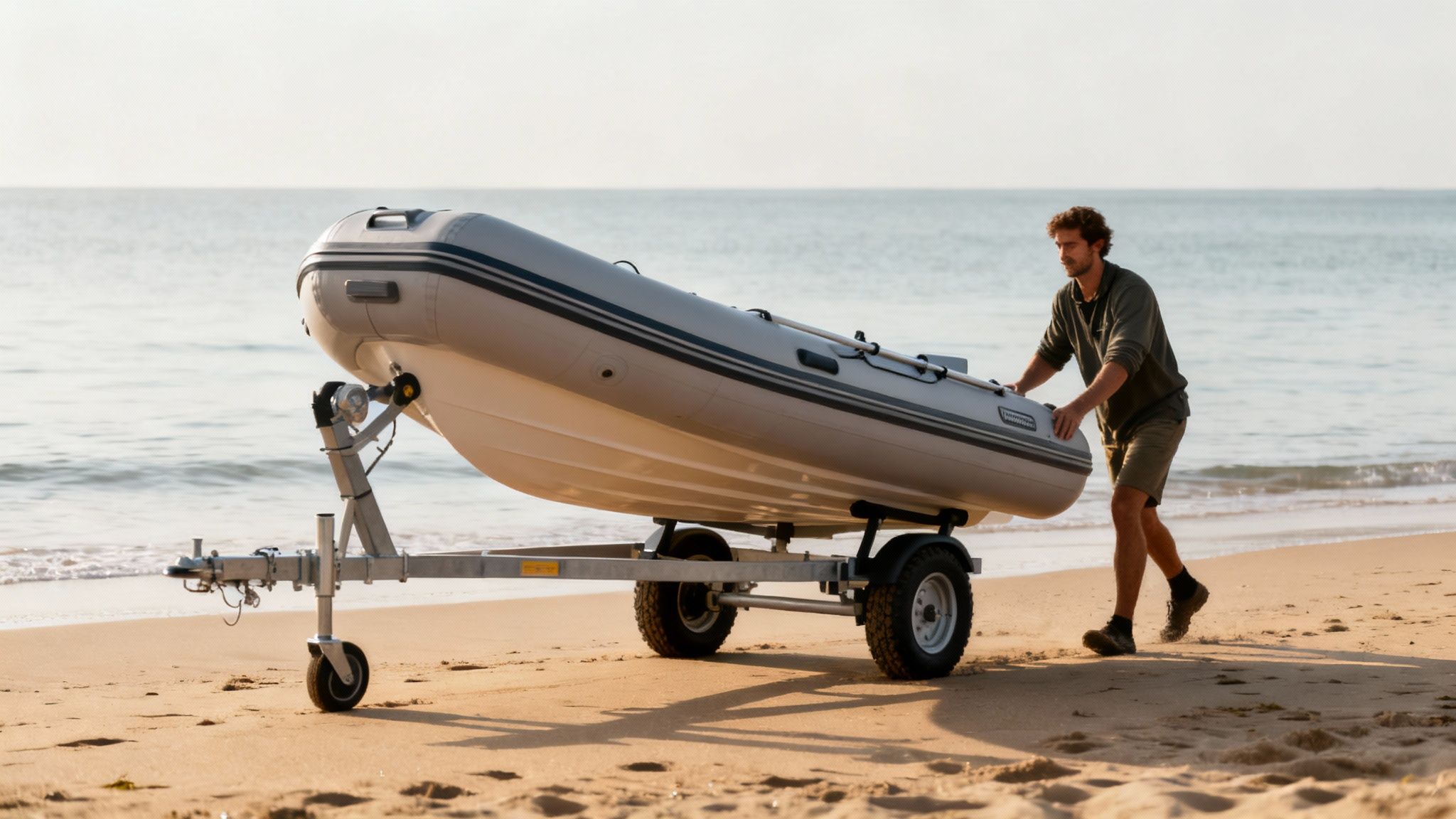 Here's a quick look at the key advantages that launching wheels bring to every boat owner.
Why Inflatable Boat Wheels Are a Smart Investment
| Benefit | How It Helps You | Ideal For |
|---|---|---|
| Effortless Transport | Move your fully loaded boat from the car to the water without any heavy lifting or dragging. | Solo boaters, families with kids, and anyone launching from tricky spots. |
| Hull Protection | Keeps the boat's fabric off abrasive surfaces like sand, gravel, and concrete, preventing punctures. | Owners who want to maintain their boat's value and avoid costly repairs. |
| Solo Launching | Enables one person to easily launch and retrieve the boat, even with a motor attached. | Anglers heading out early, yacht owners deploying tenders, and RV travellers. |
| Saves Time & Energy | Gets you on the water faster and with less physical strain, so you have more energy for your adventure. | Everyone! Why waste energy before you've even started your day? |
In short, wheels aren't just an accessory; they're an essential upgrade that makes boating simpler, safer, and more enjoyable for everyone.
Selecting the Right Wheels for Your Boat and Terrain
Choosing the wrong wheels for your inflatable boat isn't just an inconvenience; it can lead to a failed launch, damaged gear, or even an injury. The perfect set of launching wheels isn’t about what looks good—it’s a calculated decision based on your boat's weight, the terrain you’ll be crossing, and the durability you need. Get this right, and you'll have a reliable system that makes every trip to the water a total breeze. First things first, you need to work out your total operational weight. This isn't the "dry weight" listed in your boat's manual. You have to account for absolutely everything you’ll be rolling across the ground.
- Boat Weight: The starting weight of your inflatable.
- Motor Weight: Outboards are surprisingly heavy. Don't guess this figure; look it up.
- Fuel Weight: A full tank adds a significant number of kilograms.
- Gear Weight: Tally up your battery, anchor, fishing gear, esky, and all your safety equipment.
Once you have this total, add a buffer of at least 20-25%. This safety margin is critical. It ensures your wheels can handle the dynamic stress of bouncing over uneven ground without buckling. Never buy wheels rated for your exact calculated weight; always aim higher.
Matching Tyre Type to Your Terrain
The surfaces you launch from will dictate the best tyre for your needs. The two main options each have distinct advantages, especially when dealing with varied Australian conditions. Pneumatic (Air-Filled) Tyres These are brilliant for shock absorption and perform exceptionally well on soft sand. By lowering the air pressure, you increase the tyre's footprint, allowing it to "float" over loose ground rather than digging in. Their major drawback, however, is the risk of punctures from sharp rocks, glass, or oyster shells. Solid Polyurethane (Puncture-Proof) Tyres For a dependable, all-around solution, solid tyres are tough to beat. They are completely immune to punctures, making them ideal for boat ramps, gravel tracks, and mixed terrain where hidden hazards are common. While they don't offer the same cushioning as pneumatic tyres, their maintenance-free nature is a huge plus for boaters who just want a "set-and-forget" system.
When in doubt, a high-quality, puncture-proof tyre offers the best balance of performance and reliability for the majority of Australian launch sites, from hard-packed sand to concrete boat ramps.
A Prime Example of Durability and Design
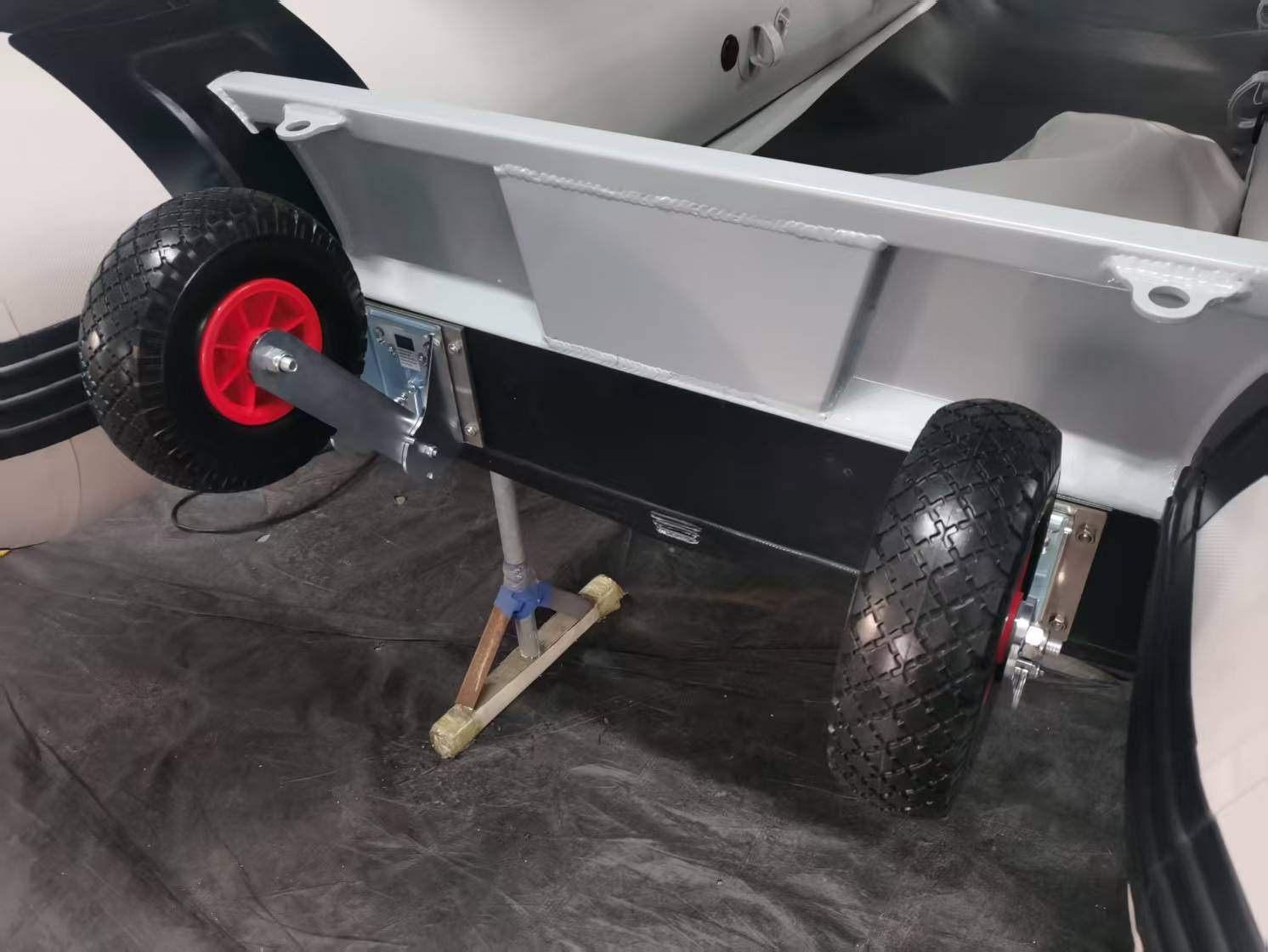
A fantastic example of a system built for demanding use is the LocKPro Plus Wheel Kit for Inflatable Boats. Made in Italy from marine-grade AISI 316 stainless steel, this kit is engineered to withstand harsh saltwater environments without giving in to corrosion—a common failure point for cheaper aluminium systems. Its puncture-proof, foam-filled tyres and impressive 300kg load rating make it more than capable of handling a fully loaded inflatable catamaran or a heavy tender. The quick-lock mechanism allows for one-handed operation, meaning the wheels can be attached or removed in seconds without fumbling for tools. This is exactly the kind of robust, user-friendly design that serious boaters look for in a quality set of wheels for an inflatable boat. You can explore a great selection of these and other premium options in this boat accessories and wheels category. Investing in a proven system like this ensures your focus stays on the water, not on wrestling with your gear.
A Practical Guide to Installing Your Launching Wheels
Mounting a set of wheels to your inflatable boat’s transom is probably one of the most rewarding DIY jobs you'll ever do. It’s a pretty straightforward task, but the payoff in convenience is massive. This guide will walk you through the practical steps for a secure, waterproof installation, focusing on the tough, reliable transom-mounted systems. With the right tools and a bit of care, you can get a professional-quality result that’ll protect your transom from water damage and give you a hassle-free launch for years to come.
Gathering Your Essential Tools
Before you even think about drilling, getting your tools lined up is the key to a smooth installation. You don’t need a full workshop, but a few items are absolutely essential for doing the job right.
- Power Drill and Bits: A good quality drill with a set of sharp bits will make all the difference for getting clean holes.
- Marine-Grade Sealant: This is the most important part of the whole job. You need a high-strength polyurethane sealant like 3M 5200 or Sikaflex 291 to create a permanent, waterproof seal. Don't skimp here.
- Measuring Tape and Marker: Accuracy is everything. Remember the old rule: measure twice, drill once.
- Spanners or a Socket Set: For tightening up the nuts and bolts nice and securely.
- Safety Gear: At a minimum, wear safety glasses. Wood or fibreglass dust in your eyes is no fun.
Having everything laid out and ready to go just makes the whole process less frustrating and much quicker.
This simple infographic breaks down how to choose your wheels before you even get to the installation stage.
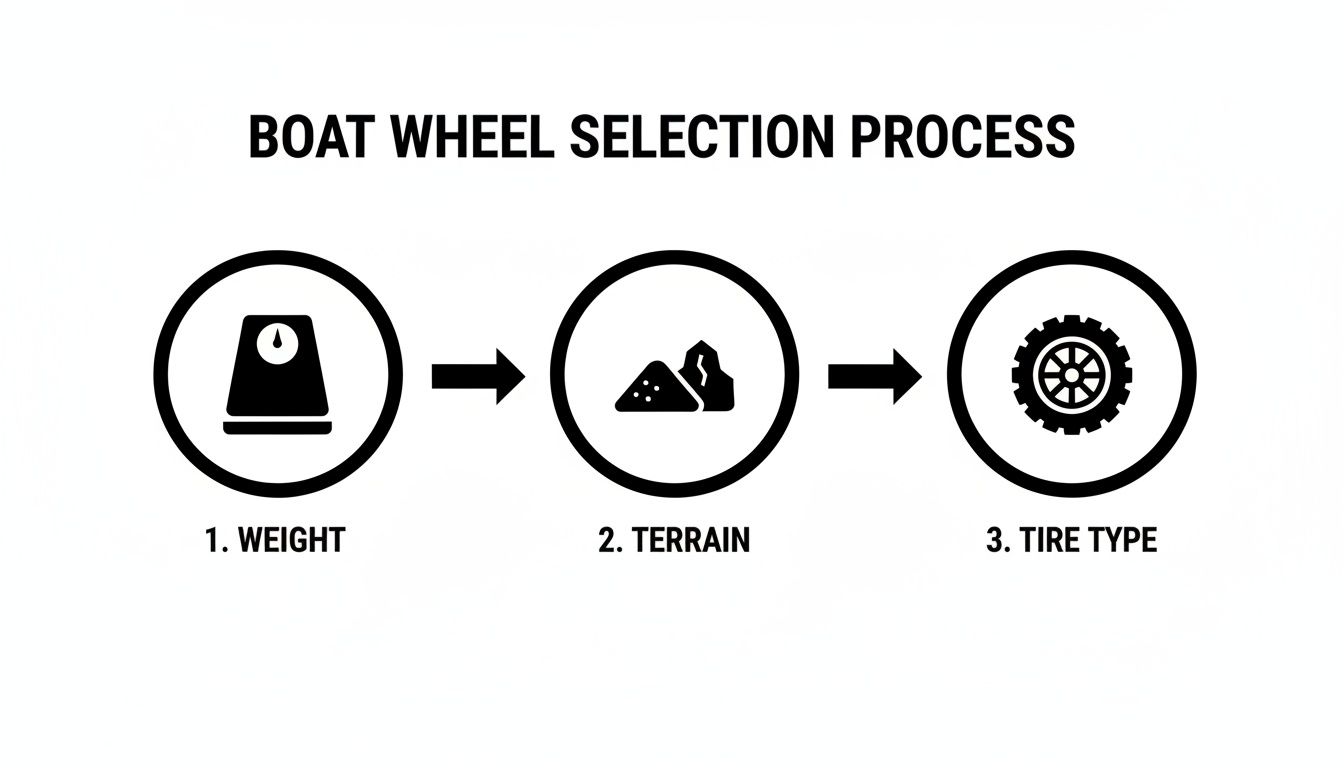 As you can see, figuring out your total weight is the first, most critical step. That single factor directly influences the wheel capacity you need and the right type of tyre for the terrain you'll be tackling.
Positioning and Mounting Your Wheels
Getting the placement right is vital. The mounting plates need to be high enough on the transom so the wheels don’t get in the way of your outboard motor’s tilt and turn radius when they're flipped up. At the same time, they have to be low enough to give you plenty of ground clearance when they're down for moving the boat. Hold a mounting bracket against the transom and carefully mark your drill holes with a pencil. Double-check that they’re level and an equal distance from the centreline. This is your last chance to make adjustments before you start drilling permanent holes.
Pro Tip: When you’re drilling, use gentle, steady pressure. Let the drill bit do the work. This prevents splintering the transom’s gel coat or timber, and a clean hole is much easier to seal properly.
Once the holes are drilled, go heavy on the marine-grade sealant. Apply a generous bead to the back of the mounting plate, around the bolts themselves, and right inside the drill holes. This is the one step you absolutely can't skip—it’s what stops water from seeping into the transom core and causing rot down the line. Tighten the bolts securely, but don’t go overboard and crack the transom. The Aussie inflatable boat market has seen some serious growth lately. Research shows that leisure use is driving 44.1% of demand, with portable boats featuring wheels dominating 52.8% of the market share in the popular 2.5-4m category. Whether you're a yacht owner in Sydney or a beach camper on the coast, these wheels are a genuine game-changer. For a system that really simplifies this whole process, check out the LocKPro Plus Wheel Kit for Inflatable Boats. It comes with pre-drilled stainless steel transom plates that take all the guesswork out of getting your alignment perfect. That kind of attention to detail makes a DIY installation far more reliable.
Mastering Launches and Retrievals Like a Pro
With your launching wheels securely installed, the real fun begins. Getting your inflatable in and out of the water shouldn't be a workout—it's a skill that, once mastered, removes all the usual stress and hassle from your day. It’s about working smarter, not harder. The trick is to use the wheels as a pivot point, letting you steer the boat into position with surprisingly little effort. Whether you're dealing with deep, soft sand or a steep, slippery boat ramp, the core principles stay the same.
Navigating Challenging Surfaces
Different terrains call for slightly different tactics. On soft sand, for example, momentum is your best friend. Take a wider path if you can and keep a steady pace to stop the wheels from digging in. If you do get bogged down, a little side-to-side wiggle can often be enough to regain traction and get moving again. On a steep or slippery concrete ramp, control is everything.
- Going Downhill: Always stay between the boat and the water. This lets you control its descent and stops it from getting away from you.
- Coming Uphill: Turn around to face the boat and pull it up backwards. This position gives you far better leverage and a much more stable footing, dramatically cutting down the risk of a slip.
This is where a quality wheel system really proves its worth. Its large, puncture-proof tyres and solid stainless steel build provide the stability and smooth roll you need to tackle these tricky surfaces with confidence.
The Waterside Sequence
The transition from land to water should be a smooth, practiced routine. As you get to the water's edge, roll the boat in until the motor is deep enough to be lowered without hitting the bottom. Before you do anything else, it's time to deal with the wheels. The correct sequence is simple but absolutely vital. With the boat partially floating, it's easy to lift the stern slightly and flip the wheels up into their locked, upright position. You should hear or feel a solid click as they lock securely in place. Never, ever leave them down in the water.
A classic rookie mistake is forgetting to raise the wheels before starting the motor. Leaving them down creates a huge amount of drag, puts unnecessary strain on your transom, and can easily damage the wheel mechanism itself. Make it a non-negotiable part of your pre-launch checklist.
Once the wheels are up and locked, you're clear to lower your motor and get underway. The same logic applies in reverse when you return. Bring the boat in, tilt the motor up, deploy the wheels down into the water, and then effortlessly roll your vessel out. After a few trips, this whole process becomes second nature, making every launch and retrieval completely seamless. You can browse a complete range of these essential boat transfer wheels to find the perfect fit for your setup.
Essential Maintenance for Lasting Performance
A little bit of care goes a long way in keeping your inflatable boat wheels rolling smoothly for years. Just like any bit of good gear, a simple maintenance routine will keep your investment in top shape. We’re not talking about a full mechanical teardown here; it’s more about building simple habits that stop corrosion and wear in their tracks.
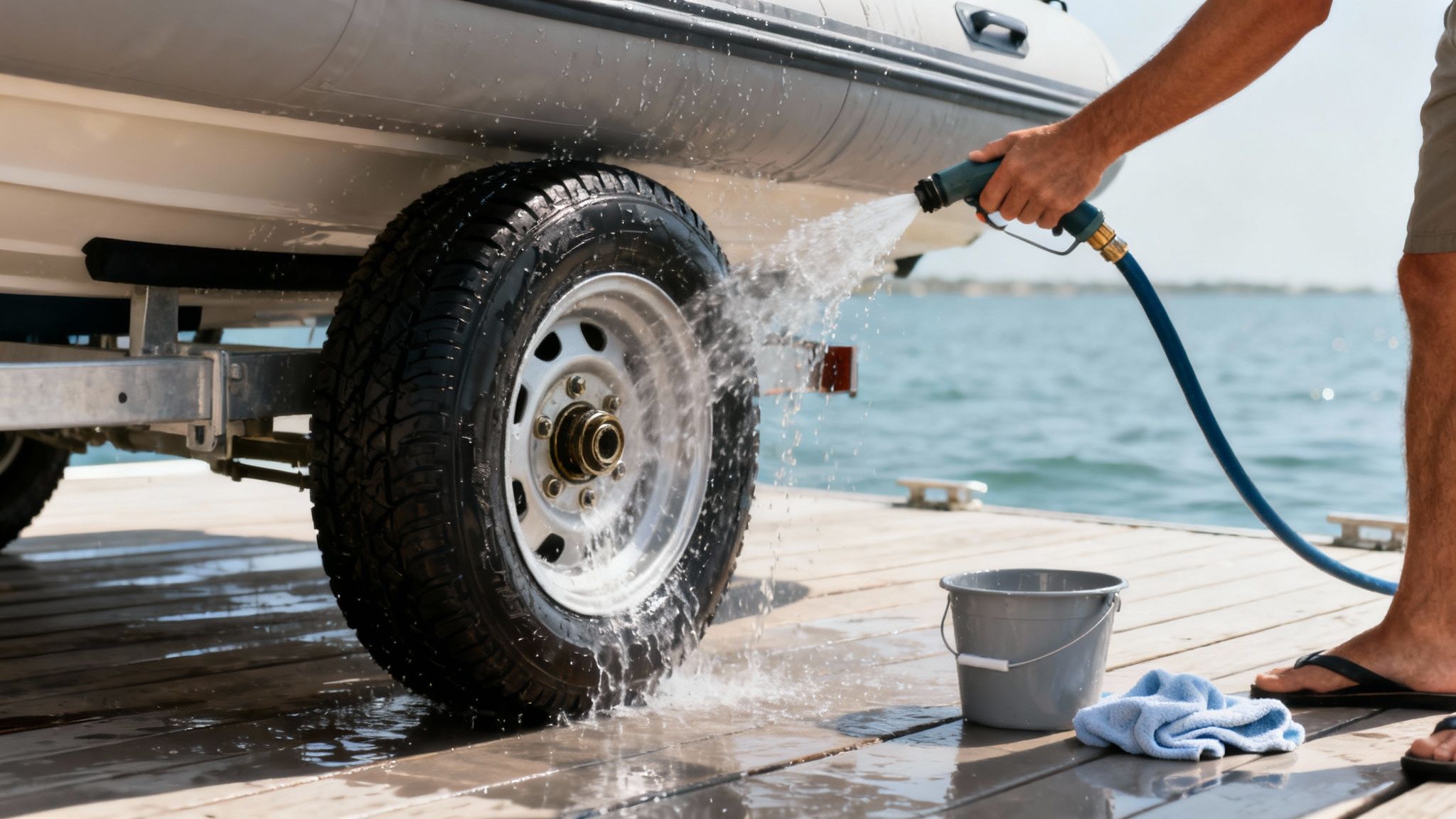
The single most important thing you can do is rinse the entire wheel mechanism with fresh water after every single trip in saltwater. Salt is incredibly corrosive, especially to moving parts like locking pins, springs, and axles. A quick but thorough washdown is your best defence against rust and seizure.
Your Regular Inspection Checklist
Beyond a simple rinse, a quick visual check-up every few trips helps you spot minor issues before they become major headaches. It only takes a couple of minutes and pays off big time in reliability.
- Lubricate Moving Parts: A light spray of marine-grade lubricant on locking pins, springs, and axles keeps the action smooth and pushes out any leftover moisture.
- Check Tyre Pressure: If you have pneumatic (air-filled) tyres, check the pressure regularly. Under-inflation makes the boat harder to roll and can damage the tyre wall over time.
- Inspect for Wear: Keep an eye out for cracks in the tyres, bends in the stainless steel legs, or any bolts that look loose on the transom. Tighten up any hardware as needed.
A well-maintained set of wheels isn't just about convenience; it's a safety measure. Making sure the locking mechanism clicks in properly and the wheels roll freely prevents nasty surprises when you’re moving a heavy, loaded boat.
The logic here is pretty universal. The same principles of preventive maintenance for vehicles that ensure a car runs smoothly apply to your boat wheels—a little attention now saves a lot of trouble later. The good news is that many modern systems, like the LocKPro Plus Wheel Kit, are designed with sealed, maintenance-free bearings that make this whole process even easier.
Smart Off-Season Storage
When you know you won’t be using the boat for a while, it’s a smart move to take the wheels off completely. Store them somewhere cool and dry, out of direct sunlight. This protects the rubber and plastic bits from UV damage and stops any unnecessary strain on the components, ensuring they’re in perfect nick for your next season on the water.
Common Questions About Inflatable Boat Wheels
To help you get the most out of your launching wheels, we've gathered some of the most common questions we hear from fellow boaties. Getting the right setup is key, and having clear answers makes all the difference.
Can the Wheels Stay Attached While I'm Using the Boat?
Yes, absolutely. High-quality launching wheels are designed to do exactly that. They pivot up and lock securely in an upright position, keeping them completely out of the water. This means they won't create drag, mess with your boat's performance, or get in the way of the outboard motor. It’s a clever design that means you never have to detach and store them while you're enjoying a day out.
How Do I Choose the Right Weight Capacity?
This is probably the most important step in getting the right wheels for an inflatable boat. You need to calculate your boat’s total weight on the move. That means adding up the boat's dry weight, the full weight of your motor, a full tank of fuel, and any heavy gear like batteries, fishing tackle, or a loaded-up cooler.
As a solid rule of thumb, always choose wheels with a load capacity that’s significantly higher than your total calculated weight. Think of it as a crucial safety margin to handle the stress of bouncing over uneven ground.
That extra capacity is what stops the brackets from bending or failing when you’re navigating a rocky path or a bumpy boat ramp.
Are Air-Filled or Solid Wheels Better for My Needs?
This really comes down to where you typically launch your boat.
- Pneumatic (air-filled) wheels are fantastic shock absorbers. They're ideal for very soft sand, as you can lower the pressure to increase the tyre's footprint and essentially "float" over the surface. The only real downside is the risk of a puncture.
- Solid polyurethane wheels are completely puncture-proof and pretty much maintenance-free. This makes them a brilliant all-around option for concrete boat ramps, firm sand, and general use where you just want reliability.
For most Aussie boaters, puncture-proof wheels offer the best combination of durability and peace of mind.
Is Drilling Into My Transom the Only Option?
For a safe and durable installation that can actually support the weight of a boat and motor, drilling through the transom is the standard—and most reliable—method. It might sound a bit daunting, but the process is straightforward if you have the right materials. When you use a high-quality marine-grade sealant (like 3M 5200) in the drill holes and around the bolts, you create a powerful, waterproof seal that protects the transom's integrity for the long haul. Glued-on alternatives are generally not strong enough to handle the forces involved and aren’t recommended for a secure setup.
Ready to upgrade your launch experience with a system built to last? The Easy Inflatables team recommends the Italian-made LocKPro Plus Wheel Kit. Its marine-grade stainless steel construction, 300kg load rating, and quick-lock mechanism make it the gold standard for inflatable boat mobility. Explore the LocKPro Plus Wheel Kit and launch with confidence on your next adventure!
Explore the Aerowave range
Weekend-Proof Score 17 questions · about 2 minutes
Will the boat you're about to buy survive an Australian summer?
Seventeen straight questions about where you'll use it, what you'll ask of it and the boat you're weighing up. You get a score out of 100, the exact weak points in your plan, and the one boat that genuinely fits.
Free · your result shows on screen · no email required
So which one is yours?
Pick how you'll actually use it and we'll take you straight to the right hull.
I want to fish it
Open bow, rod holders, deck space you can stand and cast from.
Viper Sport 400Family, diving and the beach
3.8 m Series 3 catamaran — low bow to climb back in wearing fins or a tank.
WaveRunner 380Tender / one-person launch
3.3 m hard-floor boat that packs into a bag and still takes a beach landing.
Viper 330Shop gear featured in this guide
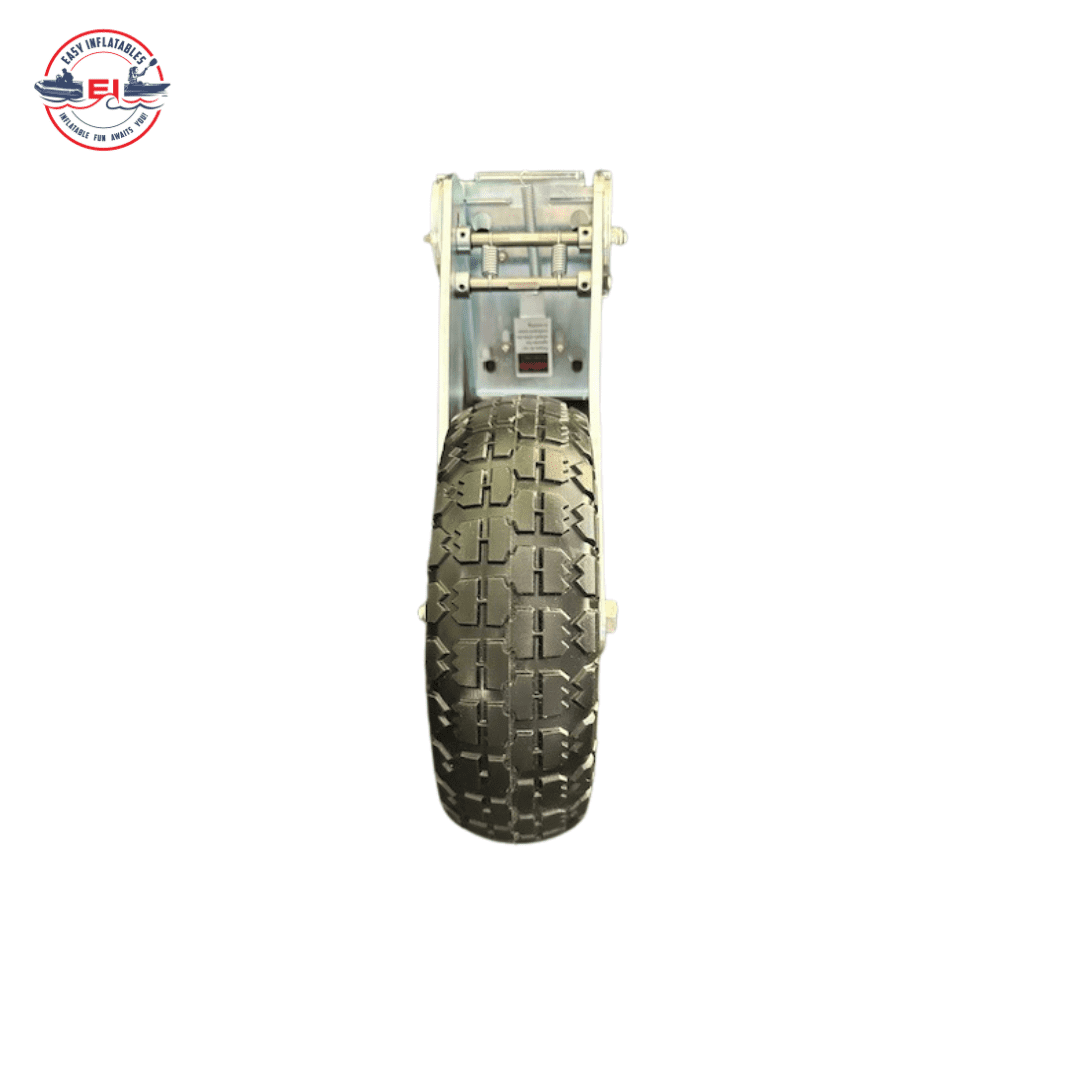
LockPro Plus Inflatable Boat Wheel Set
The LockPro Plus Inflatable Boat Wheel Set offers a premium solution for easy and safe loading of inflatable boats, featuring an Italian stainless steel quick-lock system.
Free freight to United States · local taxes payable on arrival
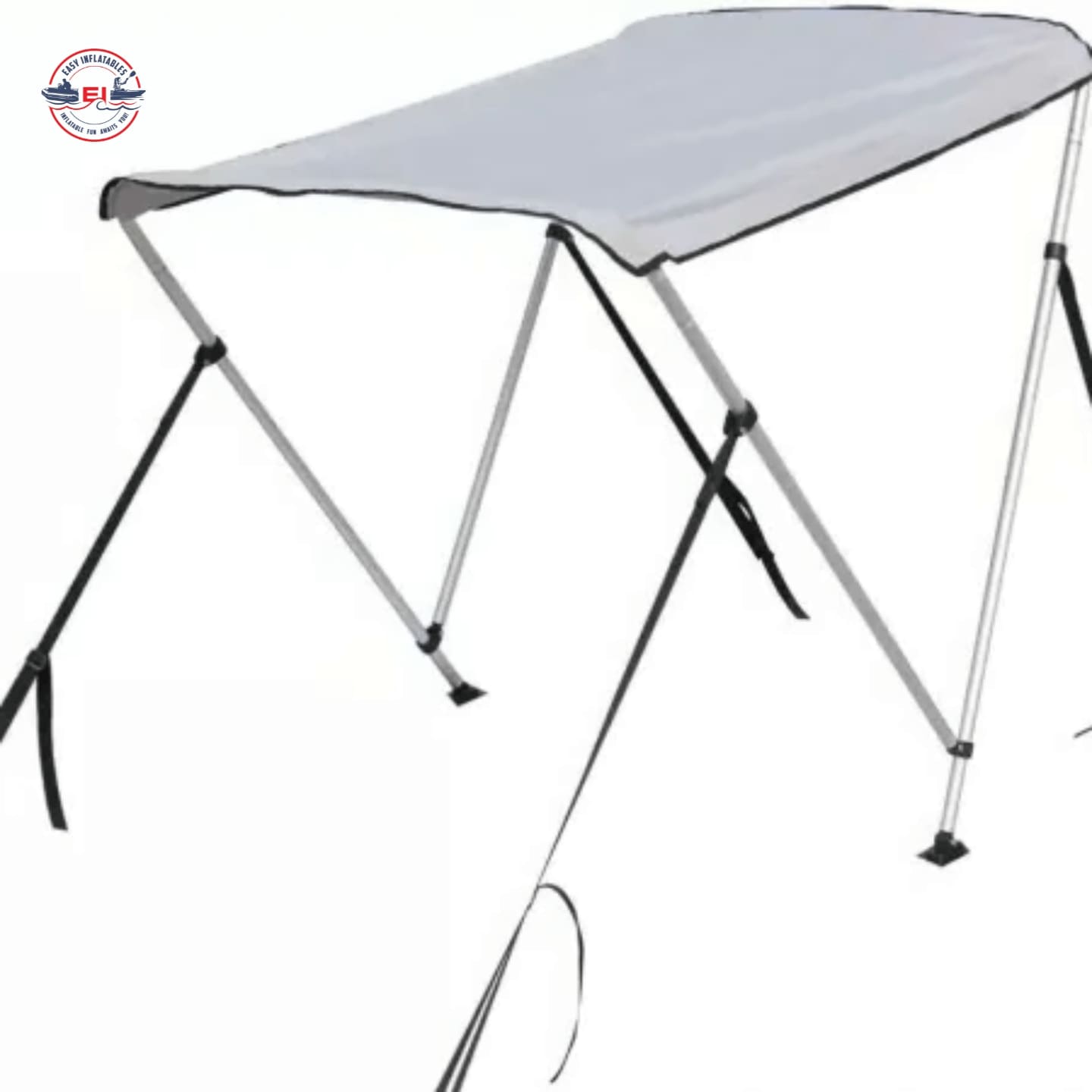
Aerowave Inflatable Boat Bimini
Lightweight inflatable UV sun-shade canopy for inflatable boats, SIBs and catamarans. Now available in two colours — Light Grey and Black. Fast setup, compact storage and premium UV protection for Australian boating.
Free freight to United States · local taxes payable on arrival
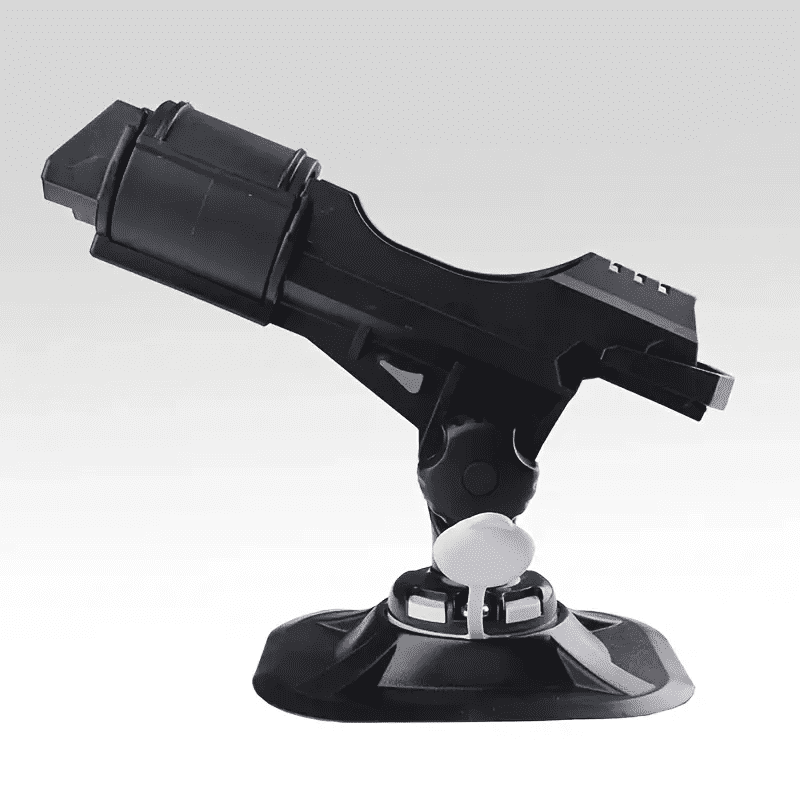
Inflatable Boat Rod Holder Mount
Factory-installed fishing mount designed for Easy Inflatables boats, providing a clean and secure installation for serious anglers.
Free freight to United States · local taxes payable on arrival
Not sure which suits you? Talk to a real boat owner.
Before you spend a cent
Buying from Australia, delivered to United States
You have never heard of us, we are on the other side of the world, and the internet is full of fakes. Fair enough. Here is everything you would need to check us out, in one place — no forms, no chat bot.
Australian designed business
Easy Inflatables, Avoca Beach NSW 2251. ABN 96 856 548 613. International orders ship from our Hong Kong hub.
222 owner reviews, 4.8 average
Read them in full, good and bad, on our reviews page.
CE certified, 7-year hull warranty
ISO 6185-3 and EU Directive 2013/53/EU. Warranty honoured worldwide.
Tracked, insured, door to door
FREE freight to United States · local tax/duty on arrival.
- Who am I actually buying from?
- Easy Inflatables, Avoca Beach NSW 2251, Australia. ABN 96 856 548 613. Sean is the owner and skipper, Gary Stewart handles sales on +61 2 4335 1603, Karen Matthews handles email. The boats are Australian designed; international orders ship from our Hong Kong dispatch hub so your landed price stays competitive. Phone us before you pay a cent — a real person answers.
- Is this really an Australian product?
- Yes — Australian designed and engineered on the NSW Central Coast. Manufacturing is done offshore to our spec, and international orders ship direct from our Hong Kong dispatch hub. If we routed every boat through Australia first, the freight alone would roughly double or triple your cost for the same hull.
- What do I pay, and what is not included?
- The delivery and import terms depend on your country. EU, UK, New Zealand and named Asia/Pacific lanes include duty and tax; US freight is free but US buyers pay import charges on arrival. Other destinations show their terms before payment.
- How do I pay safely?
- Card through Stripe (Visa, Mastercard, Amex, Apple Pay, Google Pay) or bank transfer. Card payments carry your bank's own dispute protection. We never ask for crypto, gift cards or payment to a personal account.
- What if it arrives damaged?
- Every boat ships fully tracked and insured door to door. Photograph the carton and the boat on arrival and email us — transit damage is claimed and replaced through us, not left with you and the courier.
- Is the warranty real outside Australia?
- Yes. The 7-year hull warranty on 1.2 mm VALMEX Heavy Plus and Orca Hypalon hulls applies wherever you are. Replacement parts are held in Australia and at our overseas hub and go out by express courier to your door.
- Is the boat actually certified?
- All Aerowave catamarans are CE certified to ISO 6185-3 and EU Directive 2013/53/EU. Certification paperwork is supplied with the boat — ask and we will send it before you order.
Ready to set sail?
Premium German-fabric inflatable catamarans, built to order and delivered to your door. Talk to our team or browse the fleet.
Like this guide? Get the next one in your inbox.
Owner-tested tips, gear deep-dives and Aussie boating know-how — no spam.