Boat Without a Trailer: The Complete Guide to Trailer-Free Boating in Australia
Ditch boat ramp queues, trailer rego, and storage fees. Learn how high-performance portable inflatable catamarans make owning a boat without a trailer effortless.
At a glance
Ditch boat ramp queues, trailer rego, and storage fees. Learn how high-performance portable inflatable catamarans make owning a boat without a trailer effortless.
- Why Choose a Boat Without a Trailer in Australia?
- Can You Legally and Safely Run a Boat Without a Trailer?
- Maritime Registration Rules for Portable Craft
- Maritime Safety Equipment Requirements
What we'd put you in
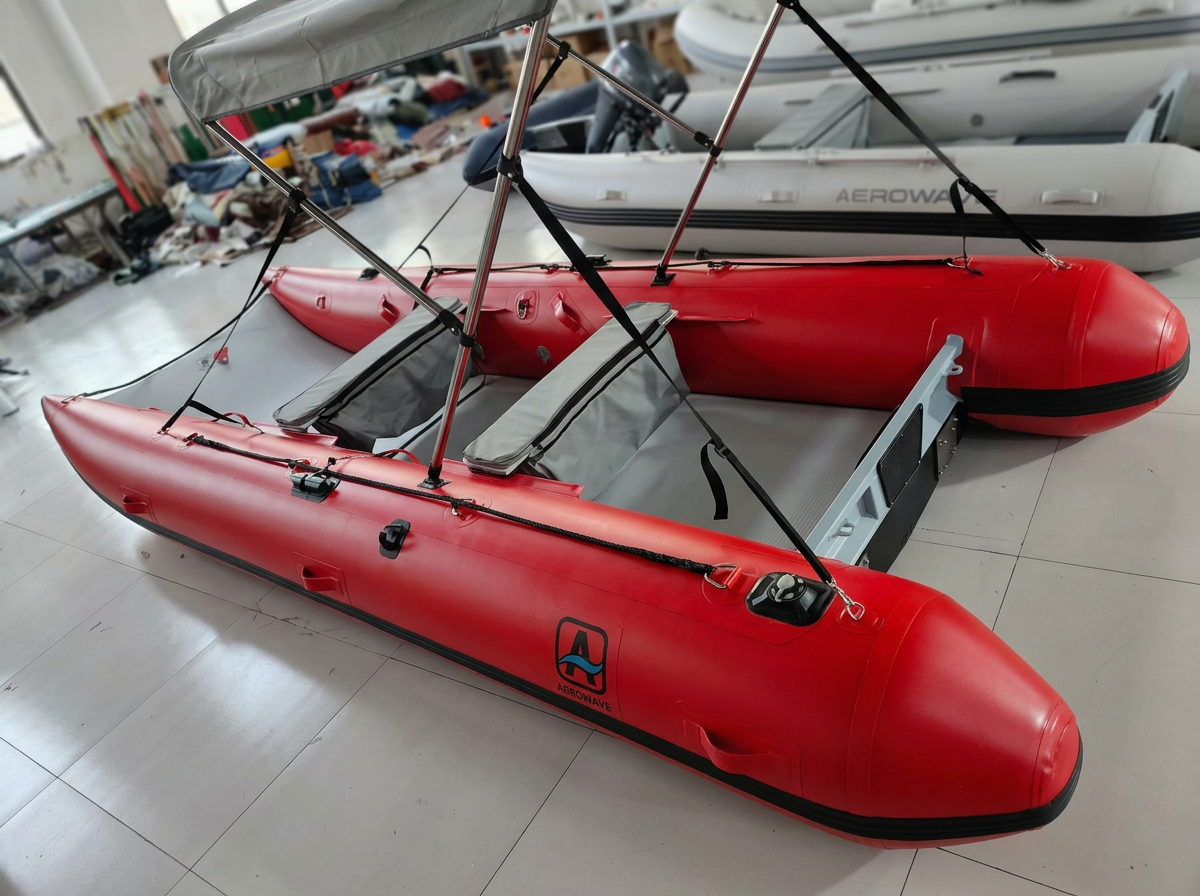
Aerowave Viper 400 Sovereign
Same capability as a small hard boat — without the trailer, the ramp or the rego.
US$4,164 USD
Delivered to your door, today's rate
- Free freight to United States · taxes included, nothing to pay on arrival
- 5 + 2 year hull warranty
🇺🇸 Shipping to United States · duty & taxes prepaid
Yes — we ship the Aerowave Viper 400 Sovereign to United States. Here's the landed price.
Same capability as a small hard boat — without the trailer, the ramp or the rego.
Written for Australian readers — but the boat ships to you. We are an Australian builder and this article is written from Australian waters. That changes nothing about what you can order: the same hull, the same 5 + 2 year warranty and the same certification go out to United States every week.
Aerowave Viper 400 Sovereign
- Boat package (export price)
- US$3,858
- 15% tariff relief credit
- − US$579
- Express air freight to United States
- Included
- Import duty, taxes & customs clearance
- US$885 — prepaid by us
- Estimated landed, USD
- US$4,164
Indicative, converted at today's rate. Ask below and we'll put a fixed figure in writing, valid 30 days.
- 5 + 2 year hull warranty
- 1500 GSM / 1.2 mm VALMEX® Heavy Plus hull
- CE certified to ISO 6185-3 and EU Directive 2013/53/EU
- Delivered duty paid — nothing to pay on arrival
Your price, delivered to your door — freight included.
We email the full PDF quote (spec, freight, finance, WavePay) to your inbox in under 60 seconds. No spam — one quote, one follow-up.
See it for yourself
Real boats. Real owners. Real people behind them.
Plenty of what you read online these days is generated. Check us out properly — the factory, the reviews and the owners are all one click away. Why we use AI, and how to check we’re real
How our boats are built
Walk the production line: thermo-welded seams, 1.2 mm VALMEX Heavy Plus hulls, over-pressure relief valves on every chamber.
See the buildGoogle Maps reviews
Real Australian owners, five stars, published on our Google Business Profile with the map — read them there, not just on our own site.
Open Google Maps reviewsOwner stories
Boats in use — offshore, on rivers, on rescue duty. Photos and words from the people who actually own them.
Read owner storiesOwning a boat without a trailer is the single most liberating choice a modern Australian angler or coastal explorer can make.
For decades, Australian boat ownership followed an unbending formula: buy a rigid aluminium or fibreglass runabout, hitch it to a heavy tow bar, store a steel trailer in a suburban driveway, and spend sunny Saturday mornings trapped in chaotic boat ramp queues. But that equation has broken down. Skyrocketing housing density, narrow suburban streets, escalating council parking fines, dual state registration fees, and rampant trailer maintenance costs have turned conventional boating into a chore before your hull ever touches the water.
Choosing a boat without trailer setup completely rewrites that narrative. When your entire vessel packs down into two padded carry bags that slide into the boot of an SUV or the back of a dual-cab ute, the water opens up in ways trailer owners can only dream about. You bypass crowded concrete ramps entirely, launching straight off secluded sandy beaches, tidal mudflats, and remote estuary foreshores.
This guide breaks down everything required to run a high-performance, trailer-free vessel along the Australian coastline. We examine hull designs, state-by-state maritime registration rules, mechanical rigging workflows, apartment storage, and motor pairings, demonstrating how modern soft inflatable boats (SIBs) deliver true seaworthiness without a tow ball in sight.
Why Choose a Boat Without a Trailer in Australia?
Choosing a boat without a trailer eliminates the four biggest financial and logistical pain points of traditional boating: annual trailer registration, axle maintenance, council storage restrictions, and boat ramp congestion.
In Australia, maintaining a galvanised boat trailer is an ongoing war against salt corrosion. Submerged hubs, corroded leaf springs, seized brake calipers, and perished wheel bearings demand continuous grease and frequent replacement. By eliminating the trailer, you erase that entire mechanical failure vector from your life.
Traditional Trailered Rig: Trailer-Free Inflatable Catamaran: [Car] === [Trailer + Rig] [Car Boot] -> [Air Deck SIB]
- 2x Rego Fees (Car + Trailer) - 1x Rego Fee (Car only; boat rules apply)
- Hub & bearing replacements - Zero axle/bearing maintenance
- Ramp queue delays (30-60 mins) - Beach/bank launch in under 15 mins
- Dedicated driveway space needed - Stores in a closet or apartment cage
Beyond maintenance, the lifestyle benefits of portable boating reshape how often you actually get out on the water:
- No double registration costs: In states like New South Wales, Queensland, and Victoria, registering both a boat trailer and a vessel adds hundreds of dollars in annual recurring fees. A portable craft only requires vessel registration if fitted with a motor exceeding state horsepower thresholds.
- Storage versatility for high-density living: If you live in an apartment, townhouse, or rental with strict body corporate bylaws, a trailer simply is not an option. A deflated boat fits inside a wardrobe, storage cage, or utility cupboard.
- Direct beach and riverbank access: Concrete boat ramps are bottleneck chokepoints during snapper season or summer weekends. A portable boat equipped with fold-down transom wheels can be rolled across hard sand, gravel, or turf, letting you launch into sheltered coves that trailer boats cannot physically reach.
- Lower fuel burn on the road: Towing a 700 kg to 1.5-tonne trailered package increases your vehicle's fuel consumption by 30 to 60 percent. Carrying a 40 kg to 60 kg deflated craft inside the car leaves your vehicle’s aerodynamics untouched.
Can You Legally and Safely Run a Boat Without a Trailer?
Yes, you can legally and safely run a boat without a trailer across every Australian state and territory, provided your craft meets commercial marine construction standards and complies with local maritime equipment laws.
Many boaties mistakenly assume that going trailer-free means settling for a flimsy pool toy or an unrated paddle tender. In reality, modern performance SIBs are built to rigorous international engineering baselines. Commercial-grade inflatable catamarans are certified to CE standard ISO 6185-3, meaning their hulls, chambers, and transoms are independently tested to withstand rigorous offshore sea states, swamping conditions, and structural payload limits.
Maritime Registration Rules for Portable Craft
Maritime laws across Australia govern boats by motor size and operating speed, not whether they arrive on a trailer:
- Queensland (Maritime Safety Queensland): Any boat powered by an engine greater than 3 kW (over 4 HP) must be registered, regardless of length or hull type.
- New South Wales (Transport for NSW): Any vessel powered by a motor of 4 kW (over 5 HP) or operating at speeds of 10 knots or greater must be registered.
- Victoria (Safe Transport Victoria): Any recreational vessel fitted with an engine (regardless of size) must be registered before operating on Victorian waters.
- Western Australia (DoT): Any vessel with an engine of any power rating used in navigable waters must be registered.
If your portable boat requires registration, affixing your registration numbers is straightforward. Flexible marine vinyl lettering can be adhered directly to PVC tubes, or rego numbers can be displayed on a drop-down rigid placard secured to the safety grab ropes.
Maritime Safety Equipment Requirements
Operating a portable craft does not exempt you from marine safety gear. If you plan to head into semi-sheltered estuaries, bays, or offshore coastal fringes, every passenger requires an approved Level 100/150 lifejacket (PFD). You must also carry an audible signalling device (pealess whistle), waterproof floating torch, bailer (or rely on self-draining open transoms), collapsible aluminium oars, and an anchor kit sized to your displacement.
What Types of Portable Craft Work as a Boat Without a Trailer?
The four primary options for trailer-free boating are soft inflatable catamarans (SIBs), soft inflatable monohulls, folding-panel boats, and car-topper aluminium tinnies.
Each approach solves the transport challenge differently, but structural stability, pack-down volume, and water performance vary dramatically between designs.
| Feature | Inflatable Catamaran (SIB) | Inflatable Monohull (SIB) | Folding Hard-Panel Boat | Car-Topper Tinnie |
|---|---|---|---|---|
| Trailer Requirement | None (packs in bags) | None (packs in bag) | None (roof/tray carry) | None (roof rack system) |
| Storage Footprint | Wardrobe / garage shelf | Wardrobe / garage shelf | Wall racks / under ceiling | Bulky ceiling hoist/yard |
| Vehicle Requirement | Any hatchback, sedan, SUV | Any hatchback, sedan, SUV | SUV / Ute with racks | 4WD / Ute with rated racks |
| Primary Stability | Exceptional (twin sponsons) | Moderate (v-keel roll) | Low to Moderate | Fair to Moderate |
| Chop Performance | Cushioned air cushion | Wet, slapping ride | Stiff, rattling ride | Hard, jarring ride |
| On-Water Safety | 4-5 independent chambers | 3-4 independent chambers | Single sealed hull | Buoyancy foam in bench |
| Boat without trailer fit | Optimal all-rounder | Good for tenders | Acceptable for calm dams | Demanding roof loading |
Car-Topper Tinnies vs Inflatable Catamarans
Car-topper aluminium tinnies were the historical Australian standard for trailer-free travel. However, tinnies present serious physical challenges. A 3.5-metre tinnie bare hull weighs between 60 kg and 85 kg. Lifting that deadweight onto a vehicle roof rack after a long day of fishing is an ergonomic hazard that frequently results in damaged vehicle panels or back strains.
By contrast, a modern inflatable catamaran separates into component weights. The main hull packs into a dedicated canvas carrier, the high-pressure drop-stitch floor slips into another, and the outboard is handled individually. No single component demands lifting an unyielding 80 kg sheet of metal overhead.
The Engineering of Inflatable Catamarans: The Ultimate Trailer-Free Platform
Among all trailer-free designs, the soft inflatable catamaran represents the pinnacle of on-water stability, dynamic lift, and structural portability.
Unlike traditional monohulls that push through water with a deep V-keel, twin-hull inflatable catamarans ride on twin longitudinal tubes (sponsons) flanking a raised central deck. This profile captures an aerated cushion of air between the tubes as forward speed increases, lifting the craft on plane with minimal hydrodynamic drag.
Cross-Section View of Inflatable Catamaran:
[ Tube Left ]======( High-Pressure Air Deck )======[ Tube Right ]
     \                                                   /
      \============= [ Air Cushion Tunnel ] ============/
~~~~~~~~~~~~~~~~~~~~~~~~~~~~~~~~~~~~~~~~~~~~~~~~~~~~~~~~~~~~ (Waterline)
High-Pressure Drop-Stitch Air Decks (8–10 PSI)
Historical inflatables relied on interlocking aluminium floorboards or marine plywood slats. While rigid, these systems were heavy, finger-pinching nightmares to assemble on a windswept foreshore.
Modern catamarans utilise drop-stitch technology. Inside a drop-stitch air floor, tens of thousands of polyester threads connect the upper and lower fabric faces. When inflated to an operational pressure of 8 to 10 PSI, the deck becomes as stiff as a solid wooden plank. You can stand to sight-cast lures, shift fuel tanks, and move about the boat without deck flex, yet the floor rolls up like a yoga mat when deflated.
Premium Fabric Construction: 1500 GSM VALMEX
Australia has some of the harshest UV environments in the world. Budget PVC imports using thin 0.7 mm materials often suffer plasticiser breakdown, sticky seams, and tube softening within two to three seasons of exposure to our sun.
High-tier designs, such as the Aerowave Viper series, use 1500 GSM / 1.2 mm VALMEX Heavy Plus fabric, while lighter series like the AeroCat employ 1100 decitex / 0.9 mm VALMEX. Manufactured in Germany by Mehler Texnologies, VALMEX features a high-density polyester base weave encased in vulcanised PVC layers treated with anti-fungal agents and intense UV stabilisers. In Australian coastal conditions, VALMEX fabric delivers a proven service life of 10 to 12 years.
Multiple Airtight Safety Chambers
A premium inflatable catamaran features four to five independent airtight chambers (two in each sponson, plus the drop-stitch air deck). If an errant fish hook, oyster rack, or submerged mangrove root punctures a chamber, the remaining chambers retain full structural integrity, keeping the vessel level and completely buoyant.
How to Transport and Store a Boat Without a Trailer
Transporting and storing a boat without a trailer requires understanding payload distributions and protecting fabric surfaces during storage cycles.
Managing Vehicle Boot Space and Payload
A complete trailer-free package consists of three main hardware groups:
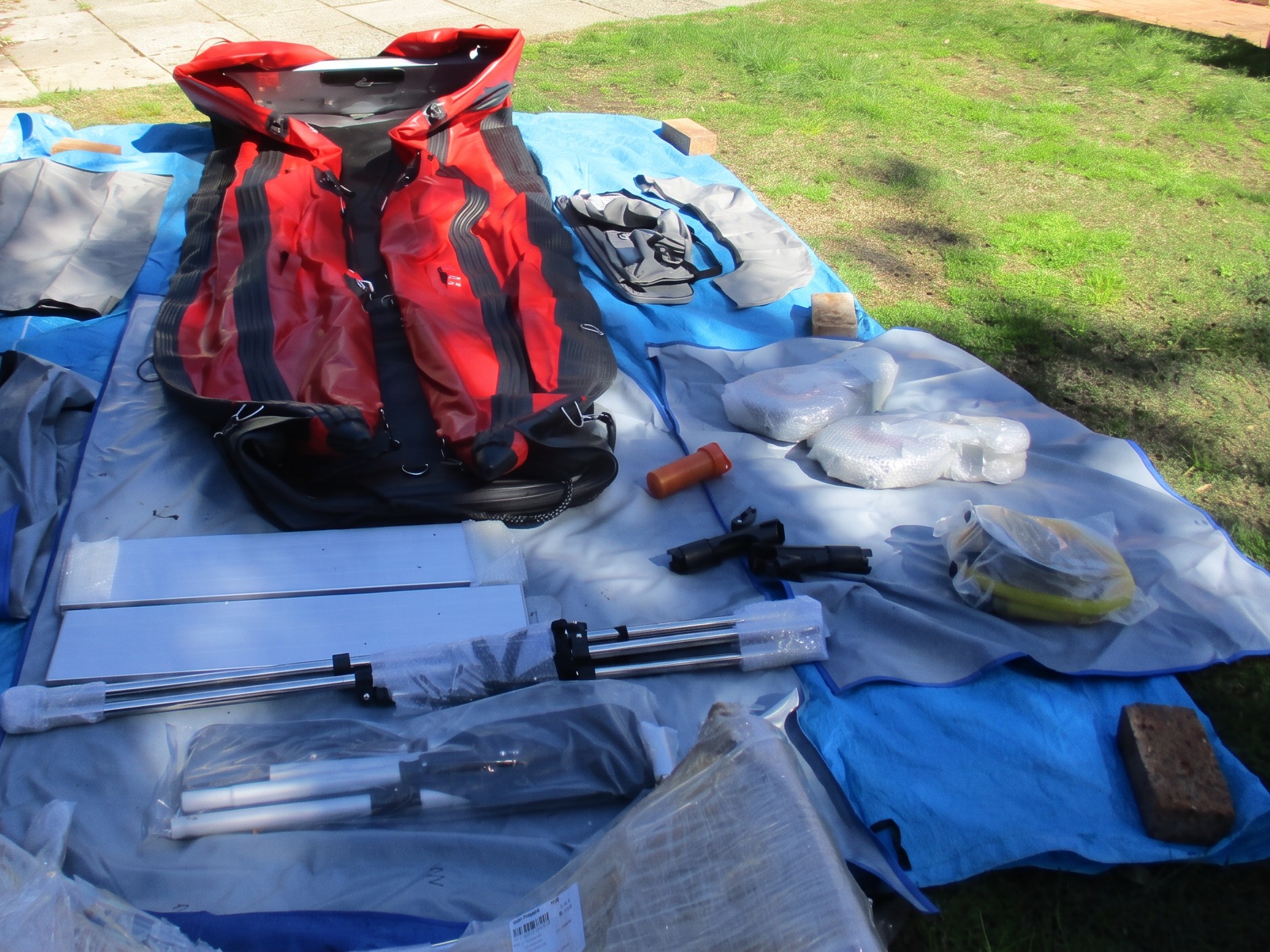
- The deflated boat hull and air deck (stored in a padded heavy-duty boat bag).
- The outboard motor (stowed flat on its designated resting pegs).
- The ancillary kit (12V high-pressure pump, fuel tank, transom wheels, anchor, and lifejackets).
Packing Layout in a Mid-Size SUV Boot: +-------------------------------------------------------------+
| [Outboard Motor - Tiller Face UP] [Fuel Tank (Vented)] |
|---|
| [Deflated Boat Hull Bag] [Air Deck / Accessories] |
| +-------------------------------------------------------------+ |
When loading an outboard into your boot, ensure the motor lies strictly on its designated side (indicated by molded casting feet on the engine casing) to prevent four-stroke sump oil from draining into the cylinder head. Always close the fuel tank breather screw and run the carburettor dry before packing to eliminate petrol fumes inside your car.
To keep your vehicle clean, consider dedicated packing bags. Easy Inflatables crafts the Aerowave Heavy-Duty Boat Bag (A$299) from tough Australian canvas to handle abrasive boots and ute trays. For transporting your launching gear, the Aerowave Australian-Made Heavy-Duty Wheel Bag (A$109) keeps sand and salt away from your vehicle's interior carpets, or you can pick up the complete Aerowave Boat Bag & Wheel Bag Set for A$389.
Storing Your Boat in an Apartment or Unit
For suburban townhouse residents and city apartment dwellers, storing a boat without a trailer is effortlessly practical:
- Dry thoroughly before long-term storage: Always let your boat dry completely after washing to prevent mildew growth on folded fabric.
- Avoid ultra-tight creasing: Fold the tubes loosely using the transom width as your folding template, avoiding sharp mechanical presses.
- Protect from vermin: Store your packed bags off concrete garage floors on a shelf or timber pallet to guard against pests looking for nesting materials.
- Keep out of direct sunlight: Store the pack in a cool, ventilated space away from direct heat sources.
The Step-by-Step Rigging and Launch Workflow
Setting up a boat without a trailer is a straightforward, systematic process. Once you master the routine, you will progress from closed vehicle boot to running on the water in 12 to 15 minutes.
Step 1: Unroll Hull on Beach Mat -> Step 2: High-Pressure Inflation (12V Pump) | Step 4: Roll to Water & Click Wheels Up <- Step 3: Attach Transom Wheels & Engine
Step 1: Site Selection and Unrolling (Minutes 0–3)
Find a level, clear patch of turf, hard-packed sand, or riverbank near your launch point. Unroll your padded ground sheet or unroll the boat bag directly. Unfold the twin sponsons outward and lay the high-pressure drop-stitch deck flat between the hulls.
Step 2: Two-Stage Electric Inflation (Minutes 3–8)
Never use a manual hand pump as your primary inflation tool—it wastes energy before your day even starts. Keep a smart, dual-stage 12V high-pressure marine air pump hooked to your vehicle's 12V battery:
- Stage 1 (Turbine blower): Fills high-volume tube space rapidly at high flow (approx. 350 L/min) up to 1 PSI in under 60 seconds.
- Stage 2 (Piston compressor): Automatically engages to bring the tubes to running pressure (typically 3.0 to 3.5 PSI / 200–250 mbar) and shuts off automatically via digital cut-off.
- Air deck inflation: Switch the hose to the drop-stitch floor valve and set the cut-off to 8.0 to 10.0 PSI.
Step 3: Mounting Transom Wheels and Engine (Minutes 8–11)
With the hull inflated and rigid, lock the quick-release pneumatic transom wheels into their downward position on the standard 380 mm transom. These wheels elevate the stern clear of the ground.
Lift your portable outboard from the boot and clamp it onto the transom pad, securing the safety lanyard and anti-vibration clamp bolts. Connect the external fuel line to the portable fuel bladder or plastic fuel tank.
Step 4: Loading Gear and Rolling into the Water (Minutes 11–14)
Place your tackle boxes, rods, safety bag, and anchor kit inside the forward deck. Secure loose items to the internal D-rings.
Now, pick up the bow grab handle. Because the engine's weight is balanced over the transom wheels at the rear, the bow weight is surprisingly light—typically only 15 to 20 kg in hand. Roll the entire rigged craft across the sand, pebbles, or mud straight into knee-deep water.
Step 5: Floating and Pin Retraction (Minute 15)
Once floating, pull the quick-release stainless steel detent pins on the transom wheels, swing the wheel legs 180 degrees into their upright position, and lock them securely above the waterline. Lower the outboard leg, prime the fuel bulb, pull the start cord, and head out.
Outboard Engine Selection for a Boat Without a Trailer
Selecting the right outboard for a boat without a trailer requires balancing total engine weight against required cruising speeds.
Because you must lift the motor out of your car boot by hand, dry weight is the critical metric. A motor that is too heavy turns every launch into back strain; a motor that is too light leaves you struggling against fast-running tidal currents.
Engine Sizing Matrix for Trailer-Free SIBs:
Motor Class: Dry Weight: Transom Fit: Best Application: 4 HP - 6 HP 24 - 27 kg 380 mm Short Solo exploring, slow trolling, tiny bays 9.9 HP 38 - 41 kg 380 mm Short The sweet spot for solo or light twin fishing 15 HP - 20 HP 45 - 52 kg 380 mm Short High-speed planning, 2-3 adults + heavy gear
4-Stroke Outboard Options
Modern Hidea 4-stroke outboards with short shafts (matching standard 380 mm transoms) are exceptionally popular for portable catamarans due to their reliable torque, clean-running emissions, and frugal fuel consumption.
- Hidea 9.9HP 4-Stroke Short Shaft: Weighing around 39 kg, a 9.9 HP engine hits the absolute sweet spot between single-person lift ergonomics and genuine planing performance. On a hull like the Aerowave Viper 330, a 9.9 HP motor pushes two adults comfortably on the plane at 14 to 17 knots.
- Hidea 15HP or 20HP 4-Stroke: For larger 3.8-metre to 4.3-metre catamarans carrying family loads, diving tanks, or camping gear, a 15 HP or 20 HP powerhead provides effortless acceleration and speeds past 20 knots. However, with engine weights reaching roughly 45 to 50 kg, loading and unloading is best managed as a two-person lift or with a compact folding motor trolley.
Pre-Configured Trailer-Free Packages
To eliminate setup guesswork, factory-matched hull and motor packages pair verified shaft lengths, transom clamps, and hull displacements directly from the build shop:
- AeroWave AeroCat 335 — Ready-to-Fish Pack (A$3,895): The ultimate solo or light-tandem trailer-free fishing rig, built from resilient 1100 decitex VALMEX.
- AeroWave AeroCat 380 (A$4,570): Extra waterline length for improved tracking across open bays and choppy sounds.
- Aerowave WaveRunner 380 Series 3 Catamaran Package (A$4,945): A wide-beam performance tender built for heavy gear loads.
- Aerowave Viper 330 (A$5,145): Commercial-spec 1500 GSM VALMEX construction with unmatched puncture resistance.
- Aerowave Viper 330 + Hidea 9.9HP Package (A$8,245): The benchmark plug-and-play package for trailer-free coastal exploration.
- Aerowave WaveRunner 380 + Hidea 15HP Package (A$8,189): High-speed stability with ample power for multi-passenger bay running.
- Aerowave Viper 400 Open Bow + Hidea 20HP Package (A$9,385): Offshore-rated capacity built to handle heavy conditions without trailering.
Essential Accessories for Trailer-Free Boating
To make your trailer-free launches seamless, you need the right support hardware. Without these accessories, handling a portable boat can be cumbersome; with them, launching feels effortless.
- Heavy-Duty Pneumatic Transom Wheels: Stainless steel drop-down wheels bolted through the marine transom pad. Look for large balloon or wide-profile pneumatic tyres that roll smoothly across soft, dry sand without sinking.
- 12V High-Pressure Digital Air Pump: A dual-stage pump powered by alligator clips straight to your vehicle battery or a standalone lithium jump-starter pack. Digital auto-shutoff ensures you never under- or over-inflate your drop-stitch floor.
- Waterproof Bow Luggage Bags: The Aerowave Viper Sovereign Bow Bag (A$250) secures into the forward open-bow D-rings, transforming empty bow space into dry storage for emergency gear, radios, and dry clothes.
- Custom-Fitted Protective Tube Chaps: If you frequently fish rocky shorelines or oyster-encrusted leases, adding Aerowave Tube Chaps (A$1,000) provides an extra sacrificial layer of heavy-duty fabric over your main buoyancy tubes.
Related
Weekend-Proof Score 17 questions · about 2 minutes
Will the boat you're about to buy survive an Australian summer?
Seventeen straight questions about where you'll use it, what you'll ask of it and the boat you're weighing up. You get a score out of 100, the exact weak points in your plan, and the one boat that genuinely fits.
Free · your result shows on screen · no email required
So which one is yours?
Pick how you'll actually use it and we'll take you straight to the right hull.
I want to fish it
Open bow, rod holders, deck space you can stand and cast from.
Viper Sport 400Family, diving and the beach
3.8 m Series 3 catamaran — low bow to climb back in wearing fins or a tank.
WaveRunner 380Tender / one-person launch
3.3 m hard-floor boat that packs into a bag and still takes a beach landing.
Viper 330Shop gear featured in this guide
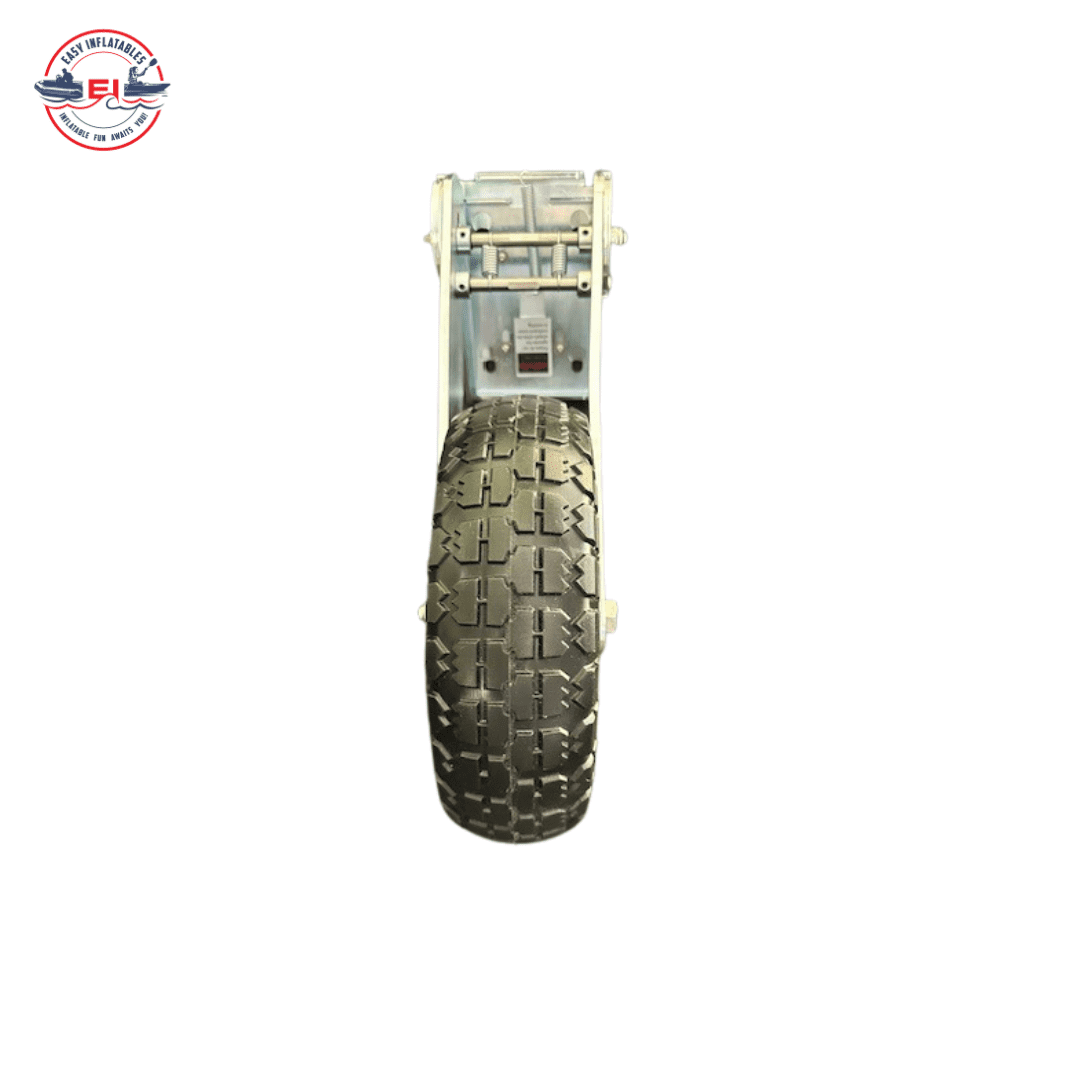
LockPro Plus Inflatable Boat Wheel Set
The LockPro Plus Inflatable Boat Wheel Set offers a premium solution for easy and safe loading of inflatable boats, featuring an Italian stainless steel quick-lock system.
Free freight to United States · taxes included, nothing to pay on arrival
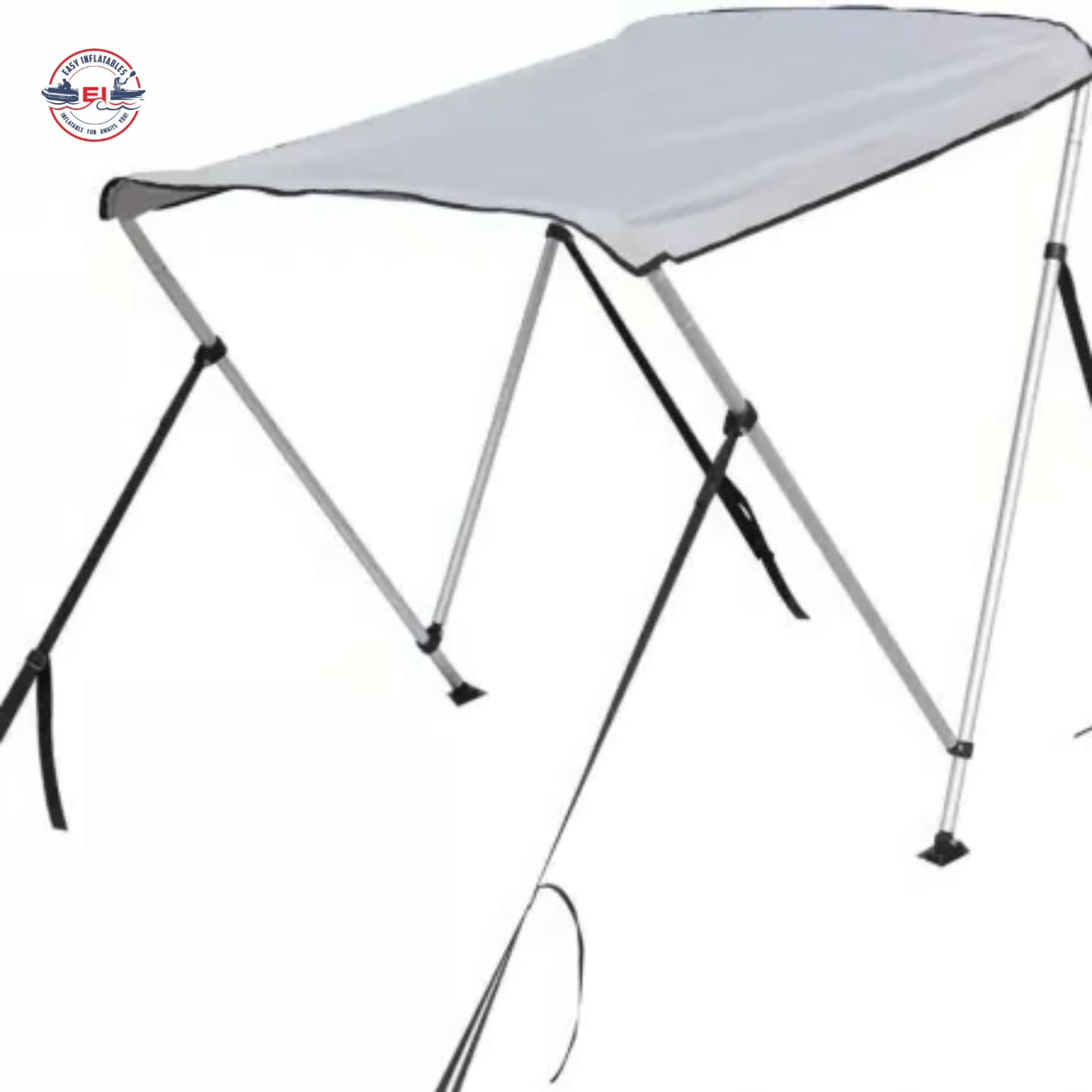
Aerowave Inflatable Boat Bimini
Lightweight inflatable UV sun-shade canopy for inflatable boats, SIBs and catamarans. Now available in two colours — Light Grey and Black. Fast setup, compact storage and premium UV protection for Australian boating.
Free freight to United States · taxes included, nothing to pay on arrival
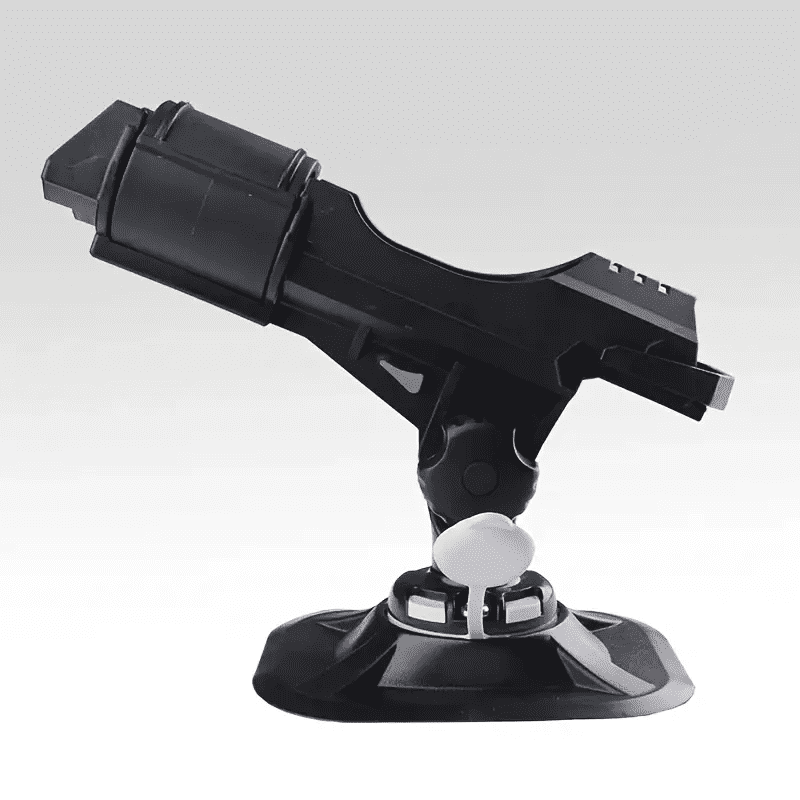
Inflatable Boat Rod Holder + Mount
Swivel rod holder and its star-lock base mount, glued onto your boat during the build. A$100 per unit.
Free freight to United States · taxes included, nothing to pay on arrival
Not sure which suits you? Talk to a real boat owner.
Before you spend a cent
Buying from Australia, delivered to United States
You have never heard of us, we are on the other side of the world, and the internet is full of fakes. Fair enough. Here is everything you would need to check us out, in one place — no forms, no chat bot.
Australian designed business
Easy Inflatables, Avoca Beach NSW 2251. ABN 96 856 548 613. International orders ship from our Hong Kong hub.
Rated 5.0 on Google
Every review is on our Google Business Profile, with the reviewer's name and the date.
CE certified, 5 + 2 year hull warranty
ISO 6185-3 and EU Directive 2013/53/EU. Warranty honoured worldwide.
Tracked, insured, door to door
Freight, duty & taxes included · nothing to pay on arrival.
- Who am I actually buying from?
- Easy Inflatables, Avoca Beach NSW 2251, Australia. ABN 96 856 548 613. Sean is the owner and skipper, Gary Stewart handles sales on +61 2 4335 1603, Karen Matthews handles email. The boats are Australian designed; international orders ship from our Hong Kong dispatch hub so your landed price stays competitive. Phone us before you pay a cent — a real person answers.
- Is this really an Australian product?
- Yes — Australian designed and engineered on the NSW Central Coast. Manufacturing is done offshore to our spec, and international orders ship direct from our Hong Kong dispatch hub. If we routed every boat through Australia first, the freight alone would roughly double or triple your cost for the same hull.
- What do I pay, and what is not included?
- The delivery and import terms depend on your country. US and UK boat orders include free express freight and prepaid import charges — nothing to pay on arrival. New Zealand and named Asia/Pacific lanes include duty and tax. EU buyers pay import charges on arrival. Other destinations show their terms before payment.
- How do I pay safely?
- Card through Stripe (Visa, Mastercard, Amex, Apple Pay, Google Pay) or bank transfer. Card payments carry your bank's own dispute protection. We never ask for crypto, gift cards or payment to a personal account.
- What if it arrives damaged?
- Every boat ships fully tracked and insured door to door. Photograph the carton and the boat on arrival and email us — transit damage is claimed and replaced through us, not left with you and the courier.
- Is the warranty real outside Australia?
- Yes. The 5 + 2 year hull warranty on 1.2 mm VALMEX Heavy Plus and Orca Hypalon hulls applies wherever you are. Replacement parts are held in Australia and at our overseas hub and go out by express courier to your door.
- Is the boat actually certified?
- All Aerowave catamarans are CE certified to ISO 6185-3 and EU Directive 2013/53/EU. Certification paperwork is supplied with the boat — ask and we will send it before you order.
Frequently asked questions
- How long does it take to assemble and inflate a boat without a trailer?
- Using a quality dual-stage 12V electric pump, it takes between 12 and 15 minutes to fully inflate the tubes and drop-stitch floor, click the transom wheels in place, mount a portable outboard, and have the boat ready to roll into the water.
- Can one person launch a boat without a trailer alone?
- Yes. When equipped with retractable transom wheels, all engine and fuel weight is balanced over the rear tyres. The bow handle weighs only 15 to 20 kg to lift, allowing a single adult to roll a fully rigged 3.3m to 3.8m craft across beaches or boat ramps with ease.
- Do I need to register a boat without a trailer in Australia?
- It depends on your state and engine size. In Queensland, any boat with a motor over 4 HP (3 kW) requires vessel registration, while in New South Wales, the threshold is 5 HP (4 kW). In Victoria and Western Australia, all motorised boats must be registered regardless of horsepower. Unpowered craft do not require registration.
- How small does a boat without a trailer pack down for storage?
- A deflated 3.3m to 3.8m inflatable catamaran packs down into two carry bags measuring approximately 115 x 65 x 35 cm for the hull and 95 x 50 x 15 cm for the air deck. This footprint easily fits inside the boot of a standard SUV, a dual-cab ute tray, or an apartment storage cage.
- Are portable boats safe for coastal and offshore fishing in Australia?
- Yes, provided the vessel is CE certified to ISO 6185-3 standards, constructed from heavy-gauge fabric like German VALMEX, and equipped with multiple independent air chambers. Inflatable catamarans offer exceptional secondary stability and a cushioned ride through coastal chop that rival rigid hulls of comparable size.
- How do you wash down a boat without a trailer if you live in an apartment?
- Rinse the hull using the apartment car wash bay or a low-pressure 12V portable pressure washer while the boat is still inflated on its transom wheels. Wipe the surfaces down with a microfibre towel, let the fabric dry thoroughly, and fold the deflated hull directly into its carry bag.
Ready to set sail?
Premium German-fabric inflatable catamarans, built to order and delivered to your door. Talk to our team or browse the fleet.
Like this guide? Get the next one in your inbox.
Owner-tested tips, gear deep-dives and Aussie boating know-how — no spam.