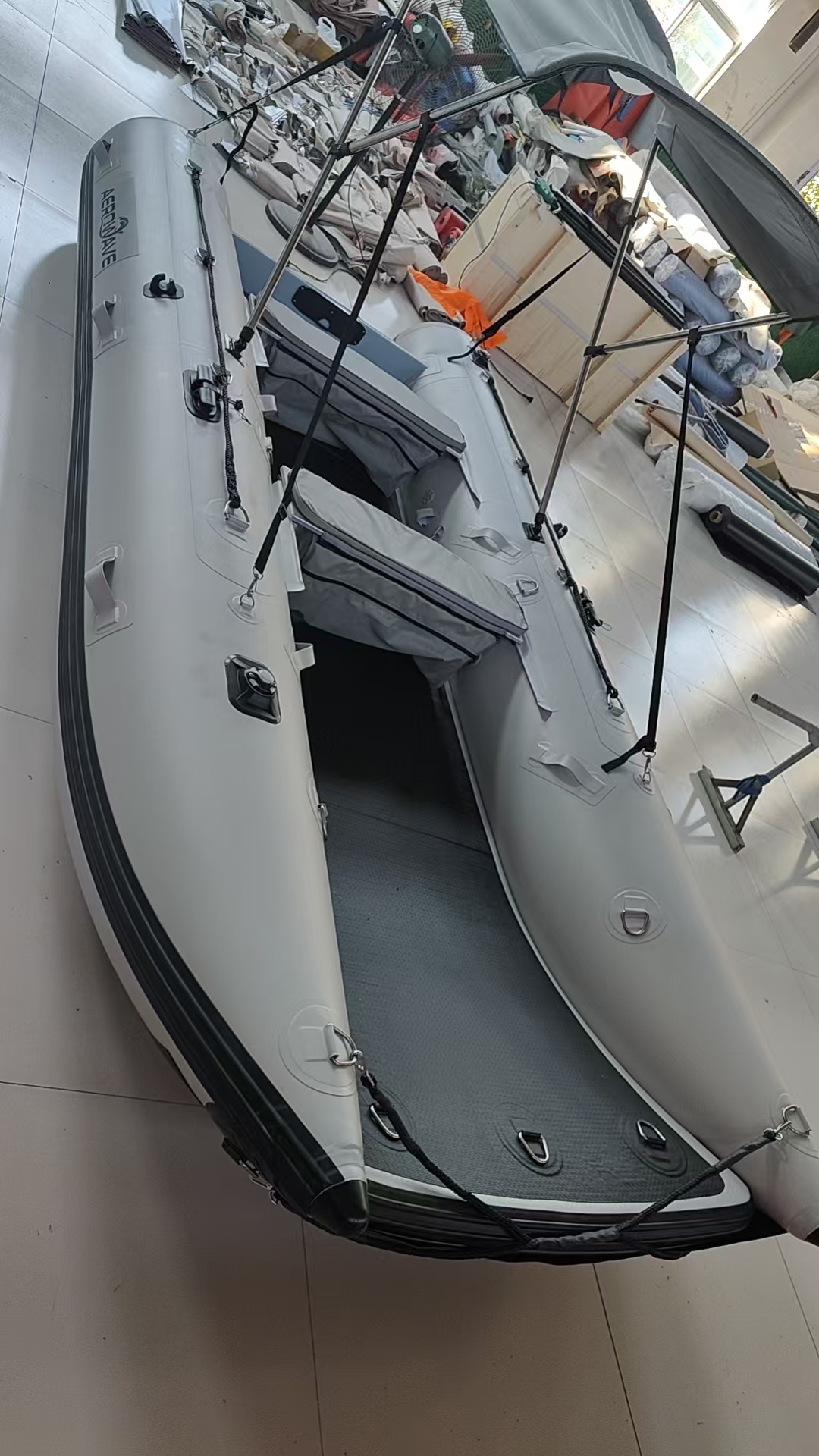
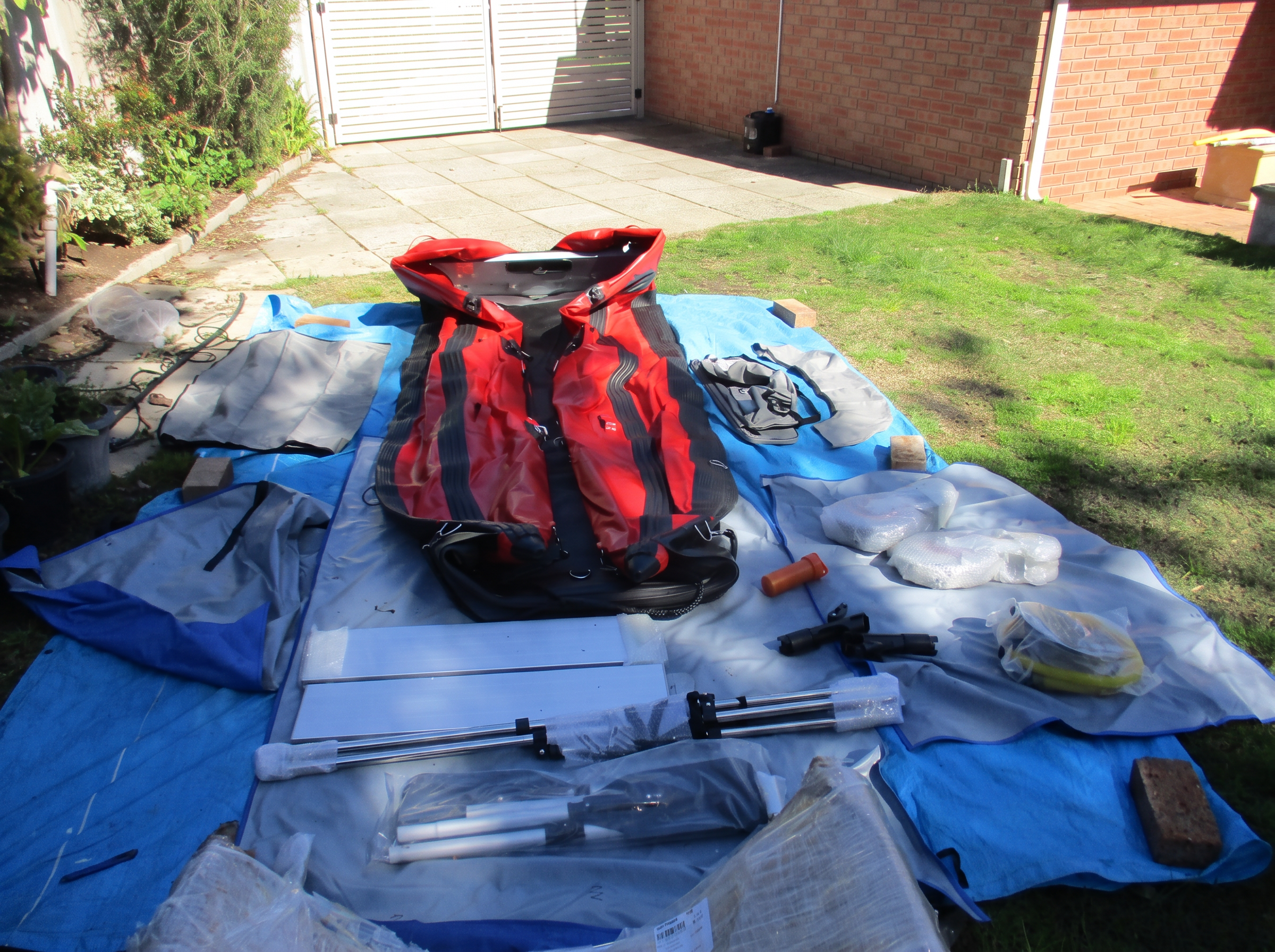
Inflatable Boat Comparison Checklist: 12 Specs to Compare Before You Buy
Looking for the ultimate inflatable boat comparison? Evaluate fabric GSM, welded seams, drop-stitch floors, and transom specs before buying in Australia.
At a glance
Looking for the ultimate inflatable boat comparison? Evaluate fabric GSM, welded seams, drop-stitch floors, and transom specs before buying in Australia.
- The Inflatable Boat Comparison Matrix: Quick Spec Reference Guide
- 1. Tube Fabric Weight and Calibre (GSM vs Millimetres)
- How thick should inflatable boat fabric be for Australian conditions?
- 2. Seam Construction Technique: Thermo-Welded vs Glued
What we'd put you in
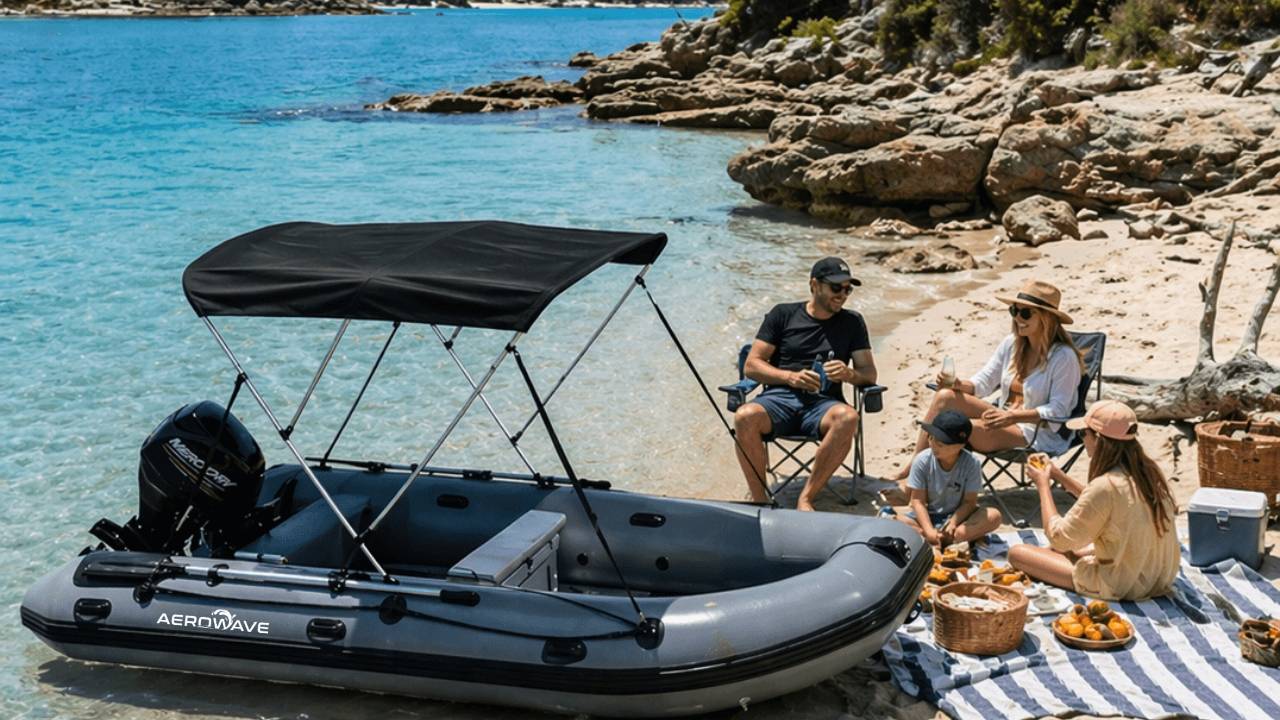
Aerowave Viper 400 Sovereign
Our best-selling boat: 4.0 m, 1.2 mm VALMEX hull, 5 + 2 year hull warranty.
US$4,164 USD
Delivered to your door, today's rate
- Free freight to United States · taxes included, nothing to pay on arrival
- 5 + 2 year hull warranty
🇺🇸 Shipping to United States · duty & taxes prepaid
Yes — we ship the Aerowave Viper 400 Sovereign to United States. Here's the landed price.
Our best-selling boat: 4.0 m, 1.2 mm VALMEX hull, 5 + 2 year hull warranty.
Aerowave Viper 400 Sovereign
- Boat package (export price)
- US$3,858
- 15% tariff relief credit
- − US$579
- Express air freight to United States
- Included
- Import duty, taxes & customs clearance
- US$885 — prepaid by us
- Estimated landed, USD
- US$4,164
Indicative, converted at today's rate. Ask below and we'll put a fixed figure in writing, valid 30 days.
- 5 + 2 year hull warranty
- 1500 GSM / 1.2 mm VALMEX® Heavy Plus hull
- CE certified to ISO 6185-3 and EU Directive 2013/53/EU
- Delivered duty paid — nothing to pay on arrival
Your price, delivered to your door — freight included.
We email the full PDF quote (spec, freight, finance, WavePay) to your inbox in under 60 seconds. No spam — one quote, one follow-up.
See it for yourself
Real boats. Real owners. Real people behind them.
Plenty of what you read online these days is generated. Check us out properly — the factory, the reviews and the owners are all one click away. Why we use AI, and how to check we’re real
How our boats are built
Walk the production line: thermo-welded seams, 1.2 mm VALMEX Heavy Plus hulls, over-pressure relief valves on every chamber.
See the buildGoogle Maps reviews
Real Australian owners, five stars, published on our Google Business Profile with the map — read them there, not just on our own site.
Open Google Maps reviewsOwner stories
Boats in use — offshore, on rivers, on rescue duty. Photos and words from the people who actually own them.
Read owner storiesA glossy brochure will never tell you how an inflatable boat behaves when the afternoon sea breeze whips up 25 knots of chop across Moreton Bay.
Investing in a soft inflatable boat (SIB) or portable tender should open up remote estuaries, coral lagoons, and off-grid camping spots that conventional trailer boats simply cannot reach. Yet, conducting an honest inflatable boat comparison in Australia is notoriously fraught. The market is saturated with low-grade grey imports, ambiguous technical sheets, and marketing jargon designed to disguise cut-corner manufacturing as marine-grade engineering.
To make an informed purchase, you must strip away the lifestyle imagery and scrutinise the raw engineering data. An inflatable hull is fundamentally a collection of mechanical joints, polymer fabrics, structural transoms, and hydrodynamic surfaces. When you subject that craft to blistering southern UV, coarse quartz sand, and relentless hydraulic loading, minor differences in specification dictate whether your vessel lasts two seasons or twelve.
Whether you are sizing up a tender for your cruising yacht or seeking an agile, car-topper fishing craft, use this 12-point inflatable boat comparison checklist to separate purpose-built vessels from overpriced pool toys before handing over a single dollar.
The Inflatable Boat Comparison Matrix: Quick Spec Reference Guide
Before diving into each individual metric, benchmark your prospective craft against standard manufacturing tiers found across the Australian market. This table shows where budget builds compromise and where commercial-grade catamarans excel.
| Specification Item | Entry-Level Budget Imports | Mid-Tier Monohulls | Commercial-Grade Catamarans (e.g. Aerowave Viper) |
|---|---|---|---|
| Tube Fabric Weight | 650–850 GSM PVC (0.5–0.7 mm) | 1000–1100 decitex (0.9 mm) | 1500 GSM / 1.2 mm VALMEX Heavy Plus |
| Seam Method | Hand-glued polyurethane | Cold-glued or basic thermal line | High-frequency hot-air thermo-welded |
| Hull Profile | Inflatable V-keel / flat bottom | Deep-V inflatable keel | High-lift tunnel catamaran with planning skids |
| Floor Architecture | Slatted timber / aluminium panels | 5–6 PSI drop-stitch or ply | 8–10 PSI high-pressure drop-stitch air deck |
| Transom Build | Marine-faced ply, painted | Encapsulated plywood | Solid marine composite / sealed marine timber |
| Transom Height | Inconsistent (350–410 mm) | 380 mm (Short shaft) | Precision 380 mm short-shaft geometry |
| Expected Tube Life | 2–4 years under Aussie sun | 5–7 years with regular covers | 10–12 years (Mehler VALMEX polymer) |
| Chamber Isolation | 2 chambers, shared bulkheads | 3 chambers | 4+ independent chambers with baffle cones |
| Safety Standard | Unverified / basic self-declaration | ISO 6185-1 or 2 | CE Certified to ISO 6185-3 Category C |
| Standard Inclusions | Plastic oars, foot bellows | Basic bag, aluminium oars | Heavy-duty bags, dual-action pump, repair kit |
| Warranty Cover | 12 months return-to-base | 2 to 3 years limited | 5 years (AeroCat/WaveRunner) to 5+2 years (Viper) |
| Inflatable Boat Comparison Rank | Recreational shore use only | General calm-water tender | High-performance offshore & coastal touring |
1. Tube Fabric Weight and Calibre (GSM vs Millimetres)
How thick should inflatable boat fabric be for Australian conditions?
Quality inflatable boat fabric must measure at least 0.9 mm (approx. 1100 decitex) for light tender duties, or 1.2 mm (1500 GSM) for rugged coastal exploration, rock hopping, and beach launching.
Many retail listings deliberately obscure fabric density by quoting decitex (thread count) rather than GSM (grams per square metre) or millimetres of total polymer coating. A fabric can boast a 1100 decitex base polyester mesh, but if the outer PVC or elastomer bath is paper-thin, the craft will puncture on the first cluster of Sydney rock oysters you nudge.
- Entry-level craft (650–900 GSM / 0.5–0.7 mm): Common among mass-produced online listings. Highly susceptible to pinholing, micro-abrasions from sand, and pressure loss after short periods in the sun.
- Mid-range coastal tenders (1100 decitex / 0.9 mm VALMEX): Used on high-efficiency catamarans like the AeroWave AeroCat 335 (A$3,895) and AeroCat 380 (A$4,570). This balances lightweight packability with exceptional tensile strength.
- Commercial-grade heavy platforms (1500 GSM / 1.2 mm VALMEX Heavy Plus): The standard found on the Aerowave Viper series, including the Viper 330 (A$5,145) and Viper 400 Open Bow (A$5,595). Manufactured in Germany by Mehler Texnologies, this fabric features an ultra-dense panama weave that resists tearing, dragging across shell grit, and direct sun exposure.
Demand the true millimetre thickness and GSM from any dealer. If they cannot provide the laboratory data sheet from the textile mill, the fabric has likely been sourced on price rather than survivability.
2. Seam Construction Technique: Thermo-Welded vs Glued
Are glued seams worse than thermo-welded seams on an inflatable boat?
Glued seams will systematically fail under intense UV exposure and ambient heat over 35°C, making hot-air thermo-welded seams the only reliable choice for Australian climates.
In budget assembly plants, workers join tube panels by hand-applying chemical contact adhesives. While cheap and fast to produce, glue acts as a consumable adhesive agent. In regions like Queensland, Western Australia, or the Top End, surface temperatures on a grey or black tube stored outdoors can easily exceed 65°C. At this temperature, adhesive bonds soften, creep under air pressure, and eventually blow out.
Thermo-welding (hot-air or high-frequency radio welding) physically melts the base plastomer coatings of overlapping panels together, fusing them into a singular molecular matrix. The joint becomes structurally stronger than the surrounding virgin material. A welded seam cannot peel apart, will not dissolve under petrol spills, and does not degrade with thermal expansion.
3. Hull Hydrodynamics: Catamaran vs Traditional Monohull
Why are inflatable catamarans outperforming traditional V-keel tenders?
Inflatable catamarans ride on twin narrow sponsons that trap an aerated cushion of air beneath the hull, delivering lower hydrodynamic drag, instantaneous planning at lower speeds, and unmatched lateral stability.
When carrying out an inflatable boat comparison, hull geometry dictates engine efficiency, fuel range, and how dry you stay in open water:
Traditional V-Hull Monohull: Twin-Sponson Tunnel Catamaran:
[ Deck ] [ High Deck ]
/ \ / \ /
/ \ ( ) ( )
(____ ____) _/ Air Tunnel _/
\ / === ===
\ / Twin High-Lift Skids
/ (Deep Displacement Drag) (Low Drag, Planing Hull)
Traditional monohulls with single inflatable keels plough water, requiring substantial horsepower to climb over their own bow wave. When you drop anchor, they rock aggressively gunwale-to-gunwale, making standing to cast or retrieve diving gear precarious.
In contrast, modern tunnel catamarans like the Aerowave WaveRunner 380 Series 3 Catamaran Package (A$4,945) sit on two widely spaced sponsons. This gives you a rock-solid platform—you can stand firmly on the outside tube edge without capsizing the boat. Furthermore, the central tunnel breaks up surface chop into a fine foam, insulating passengers from the spine-jarring impacts typical of flat-bottomed tenders.
4. Floor Architecture and Deck Operating Pressures
What is the best floor type for a portable inflatable boat?
A high-pressure drop-stitch air deck operating between 8 and 10 PSI provides rigid timber-like footing with zero assembly headaches and superior vibration dampening.
Flooring choices directly impact pack-down speed, total craft weight, and structural rigidity:
- Slatted timber/plastic floors: Very fast to roll up, but structurally floppy. You cannot safely stand up to cast, and they twist violently when driven through waves.
- Aluminium panel sectional floors: Incredibly rigid once locked into side stringers, but heavy, cold underfoot, and notorious for pinching fingers. Fitting them into the hull fabric grooves on a sandy foreshore is a gruelling two-person job.
- Drop-stitch air decks (8–10 PSI): Thousands of polyester threads link the top and bottom surfaces, allowing internal pressures up to 10 PSI (nearly five times standard tube pressure). The result is a deck you can strike with a mallet without flexing, rolling away into a compact bundle in 60 seconds flat.
Inspect the manufacturer's specified pressure. Low-quality air decks rated only to 4–5 PSI flex and belly out under power, creating excessive drag and reducing top speed.
5. Transom Geometry, Elevation, and Materials
What transom height is required for a portable outboard?
A standard short-shaft portable outboard motor requires a precise 380 mm (15-inch) transom height to ensure the anti-ventilation plate sits flush with or marginally below the hull running surface.
A transom is not merely a piece of wood jammed into the rear of the tubes; it absorbs all thrust, rotational torque, and dynamic engine weight. In cheaper imports, transoms are often glued directly to tube sleeves with low-grade adhesive and thin PVC webbing. Over time, engine vibrations shear the adhesive bond, leading to water intrusion and catastrophic hull separation.
Look for marine transoms fastened with double-layered structural brackets, fitted with internal drain wells, and protected by non-marking engine clamping pads. Transoms on hulls like the Aerowave Viper 400 Sovereign (A$5,845) are engineered specifically for short-shaft motors—such as the Hidea 20HP 4-stroke—guaranteeing clean water delivery to the propeller without ventilation or spray blowback over the stern.
6. Chamber Isolation and Pressure Relief Valves
Never buy a multi-person boat with fewer than three independent air chambers. At sea, redundancy is survival.
Independent Chamber Bulkheads
Look for internal baffle cones designed to equalise pressure when adjacent chambers are filled, but push outward to lock air in if one chamber is punctured. Catamarans like the AeroWave AeroCat 400 (A$5,235) separate each sponson into isolated forward and aft chambers, alongside independent drop-stitch decks.
Automatic Pressure Relief Valves (PRVs)
As air temperatures fluctuate during an Australian summer day, internal tube pressures rise rapidly. A tube inflated to 3.0 PSI at 7:00 AM can easily spike to 5.5 PSI by midday under full sun. Without automatic PRVs to bleed off excess pressure, your tubes risk bursting seams or distorting internal bulkheads. High-end craft fit PRVs as standard equipment on every main chamber.
7. Inflatable Boat Comparison: Expected Lifespan and UV Stabilisation
How long does an inflatable boat last in Australia?
A craft built with premium German VALMEX polymer delivers an expected lifespan of 10 to 12 years with modest care, whereas generic non-stabilised PVC imports frequently degrade within 24 to 36 months.
Australia’s UV index regularly reaches extreme ratings of 11 to 14+. Ultraviolet radiation breaks down the plasticisers that give PVC its flexibility. Degraded fabric becomes brittle, turns chalky, and begins to peel from the scrim base layer.
Material Longevity Comparison (Australian Sun Exposure):
[ Budget Generic PVC ] ==> 2-4 Years (Plasticiser migration, seam failure) [ Mid-Grade Asian PVC ] =====> 4-6 Years (Requires strict garage storage) [ German Mehler VALMEX ] ============> 10-12 Years (High UV block, thermo-welded) [ Commercial Hypalon ] ===============> 12-15+ Years (Heavy, slow to construct)
High-grade VALMEX uses proprietary surface coatings that reflect solar heat and seal in plasticisers. If your vessel will spend its life on cruiser davits or unshaded moorings, adding handmade custom-fitted protective covers—such as Aerowave Tube Chaps (A$1,000)—protects the tube shoulders from sun bake and abrasive jetty fenders.
8. Safety Standards, Ratings, and Real CE ISO Certifications
Many cheap listings claim "CE Compliance", but when questioned, sellers produce unverified factory test sheets that have no bearing on international maritime safety standards. Ensure the builder adheres to ISO 6185-3, which governs inflatable boats over 2.5 metres with engines rated beyond 4.5 kW.
An ISO 6185-3 builder plate fixed to the inner transom proves that the craft has undergone destructive testing for:
- Static reserve buoyancy with swamped chambers.
- Transom yield strength under peak static thrust.
- Maximum passenger and payload capacity calculations.
- In-water emergency self-bailing speed.
Operating an uncertified craft offshore or in busy waterways can void marine insurance policies and risks infringement by state maritime safety officers.
9. Factory Packaging and Genuine Inclusions vs Hidden Add-Ons
When calculating real costs, evaluate what comes inside the cartons versus what requires a separate trip to a chandlery. Budget boats often lure buyers with a low headline price, only to supply miniature oars that snap under load, fragile nylon carry bags that tear on the first trip, and inadequate foot pumps.
Check for these critical accessories:
- Heavy-duty boat carry bags: Large-aperture, commercial-grade PVC bags with compression straps, like the Aerowave Heavy-Duty Boat Bag (A$299).
- High-volume/high-pressure pump: A dual-action pump equipped with a built-in pressure gauge capable of reaching 10 PSI for drop-stitch floors.
- Padded seating and gear management: Secure under-seat tackle bags, bow storage, or specialised components like the Aerowave Viper Sovereign Bow Bag (A$250).
- Transom wheel compatibility: Pre-reinforced transom mounting zones for fold-down launch wheels, supported by transport options like the Aerowave Australian-Made Heavy-Duty Wheel Bag (A$109).
If you have to spend an extra $800 to buy reliable pumps, sturdy bags, and repair kits, that "budget bargain" has quickly vanished.
10. Inflatable Boat Comparison: Warranty Cover and Consumer Law
Never judge a warranty solely by the number of years splashed on the home page. Read the specific exclusions regarding seam separation, fabric porosity, and transom delamination.
- The "Pro-Rata" Trap: Cheap imports often boast a "3-year warranty", but bury fine-print clauses reducing payouts by 33% per year. By month 24, they cover barely a fraction of repair costs.
- Commercial-Grade Warranties: Look for direct, transparent replacement or repair guarantees. The Aerowave Viper line carries a comprehensive 5 + 2-year hull warranty, while the AeroCat, WaveRunner, and Sport Series provide a solid 5-year warranty on materials and seams (with accessories covered for 1 year).
Crucially, ensure you are buying from an established Australian trading entity governed by Australian Consumer Law (ACL). A warranty offered by an overseas dropshipper on an auction site is practically impossible to enforce once an issue arises.
11. Logistics, Freight Costs, and Deposit Terms
Shipping a 40 kg to 65 kg boxed boat across Australia is expensive. Budget sellers often advertise low pricing, only to calculate an eye-watering $350–$600 regional freight charge at the final checkout screen.
Always ask three key questions:
- Is domestic freight fully included in the quoted price? At Easy Inflatables, full delivery is included for Australian customers across the continent (overseas buyers can find their terms at easyinflatables.com.au/international).
- What is the actual production timeline? Premium custom-built vessels are made to order with pristine, unaged materials. Expect up to three and a half weeks for manufacture (up to four for Hypalon), followed by 10–13 days delivery.
- How is payment structured? Avoid retailers demanding 100% upfront payment months before production begins. Standard professional custom builds require a 50% build deposit to lock your production slot, with the remaining balance due only after the boat passes stringent quality control checks.
12. Support, Spares, and Technical Consultation
What happens when you drop an unthreaded valve core in the sand or need to mount an auxiliary sounder bracket? A company with genuine local technical staff will answer your technical questions, guide you through engine trim setup, and stock replacement spare parts.
Before ordering, test the seller’s customer service. Call their phone number. Do you reach a certified marine technician who understands engine cavitations, transom risers, and valve maintenance, or does it divert to an anonymous third-party call centre?
If you ever need direct advice, you should be able to call real boat builders on +61 2 4335 1603 or email sales@easyinflatables.com.au to clarify technical specifications before signing off on your build.
The Complete Inflatable Boat Comparison Buyer Checklist
Print this section or screenshot it to your mobile phone before browsing showrooms, websites, or boat shows:
- Fabric Specification: Minimum 0.9 mm (1100 decitex) for light tenders; 1.2 mm / 1500 GSM VALMEX Heavy Plus for coastal/expedition hulls.
- Seam Joinery: High-frequency hot-air thermo-welded throughout. No hand-glued exterior seams on main tube chambers.
- Hull Profile: Tunnel catamaran with hydrodynamic planning skids for maximum stability and shallow draft.
- Deck Rigidity: High-pressure drop-stitch air deck operating firmly at 8–10 PSI.
- Transom Build: Sealed marine composite/timber construction, precisely set to 380 mm short shaft height, supported by heavy-duty gussets.
- Air Isolation: Minimum 3 or 4 independent air chambers featuring automatic internal pressure relief valves.
- Certification: Compliant to CE standards under ISO 6185-3 Category C, verified by a permanent transom plate.
- Turnkey Package: Included heavy-duty boat carry bags, dual-action high-pressure pump, structural aluminium bench seats, and commercial repair kits.
- Transparent Terms: Minimum 5-year non-depreciating warranty backed by an Australian business under Australian Consumer Law.
- Payment Security: 50% production deposit, with the final balance payable only upon the boat passing factory quality control.
The Bottom Line
Choosing the right craft comes down to understanding your operational environment. If you only need to row 50 metres across a protected marina once a month, an entry-level monohull will keep you floating. But if your plans involve navigating Australian ocean bars, diving offshore reefs, beaching on coarse shell grit, or powering home across choppy bays with a 15 HP or 20 HP outboard, build quality is non-negotiable.
A precision-engineered catamaran built with 1500 GSM VALMEX, thermo-welded seams, and an 8–10 PSI drop-stitch floor delivers the safety, efficiency, and structural rigidity you need for serious boating. Take the time to demand real specifications, compare verified materials, and invest in a craft built to handle the harshest Australian conditions.
Related
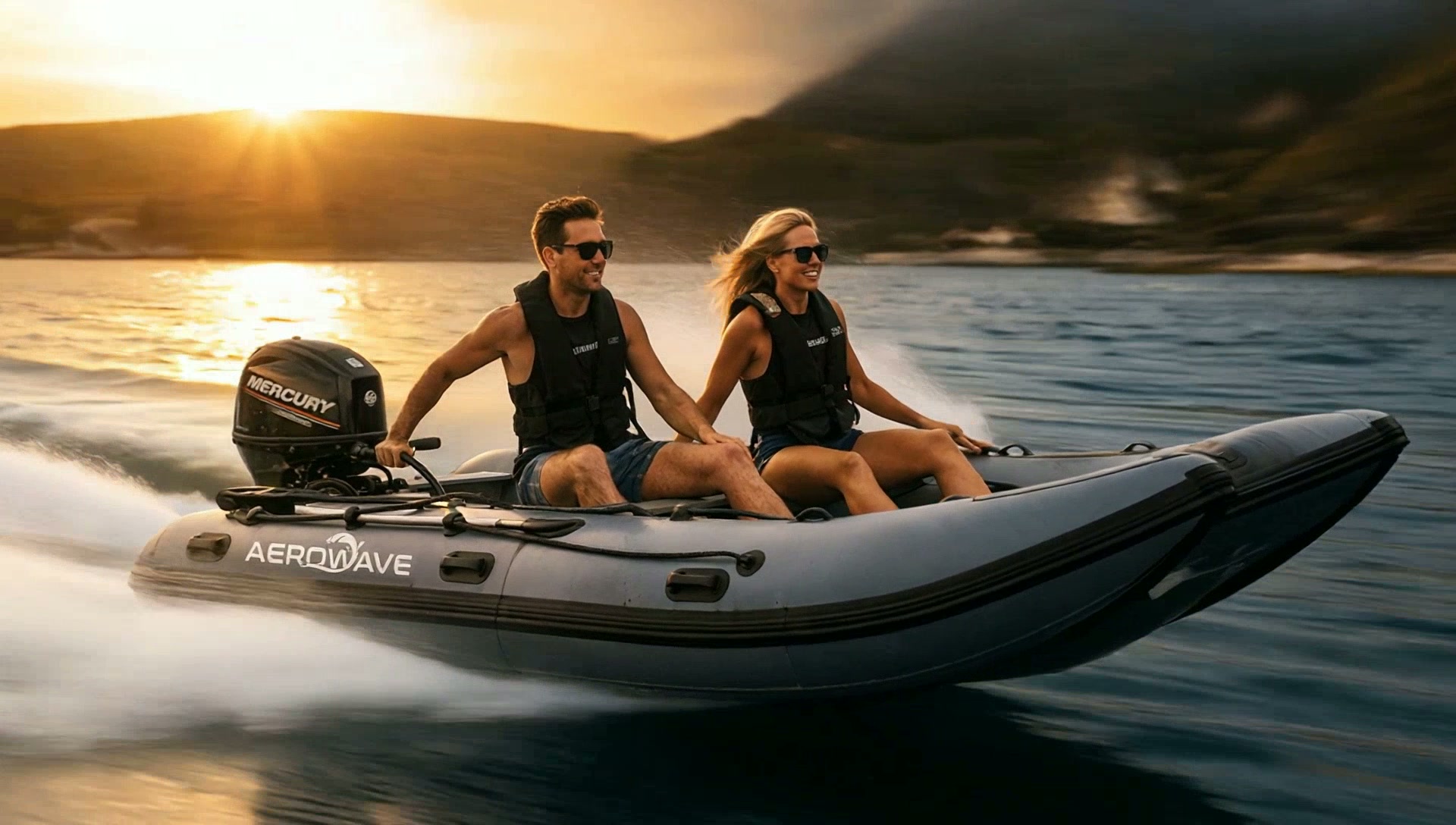
Weekend-Proof Score 17 questions · about 2 minutes
Will the boat you're about to buy survive an Australian summer?
Seventeen straight questions about where you'll use it, what you'll ask of it and the boat you're weighing up. You get a score out of 100, the exact weak points in your plan, and the one boat that genuinely fits.
Free · your result shows on screen · no email required
So which one is yours?
Pick how you'll actually use it and we'll take you straight to the right hull.
I want to fish it
Open bow, rod holders, deck space you can stand and cast from.
Viper Sport 400Family, diving and the beach
3.8 m Series 3 catamaran — low bow to climb back in wearing fins or a tank.
WaveRunner 380Tender / one-person launch
3.3 m hard-floor boat that packs into a bag and still takes a beach landing.
Viper 330Shop gear featured in this guide
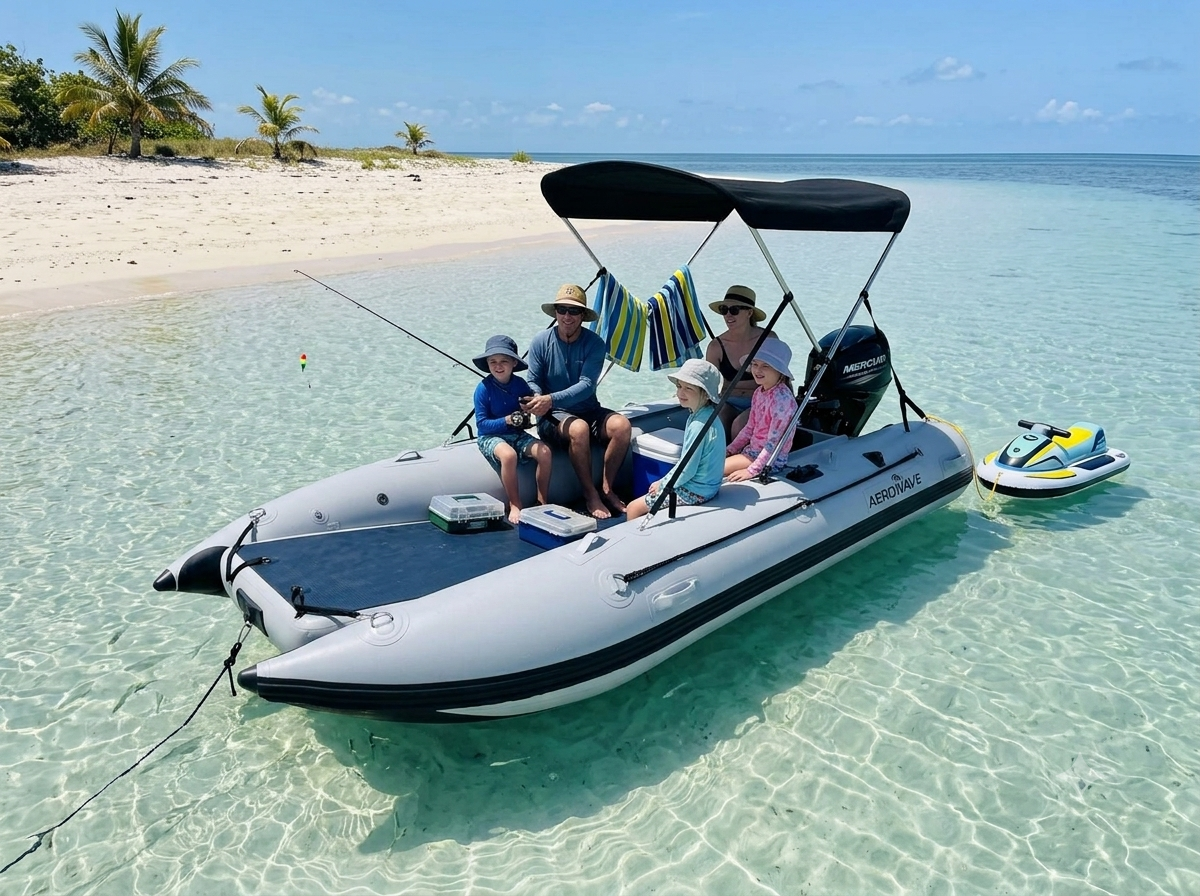
Aerowave WaveRunner 380 Series 3 Catamaran Package
The WaveRunner 380 Series 3 is a premium 3.8m inflatable catamaran package built for Australian and worldwide families, fishing, and coastal day boating — ideal for snorkeling and spearfishing — offering serious stability and premium German Valmex® construction.
Free freight to United States · taxes included, nothing to pay on arrival
Aerowave Viper 400 Sovereign
Flagship 4m enclosed-bow inflatable catamaran. German VALMEX® 7321 Heavy Plus 1.2mm commercial-grade fabric, 10 PSI high-pressure drop-stitch air deck floor with VALMEX non-slip surface, LockPro wheels, full Bimini and FREE express delivery Australia-wide included.
Free freight to United States · taxes included, nothing to pay on arrival
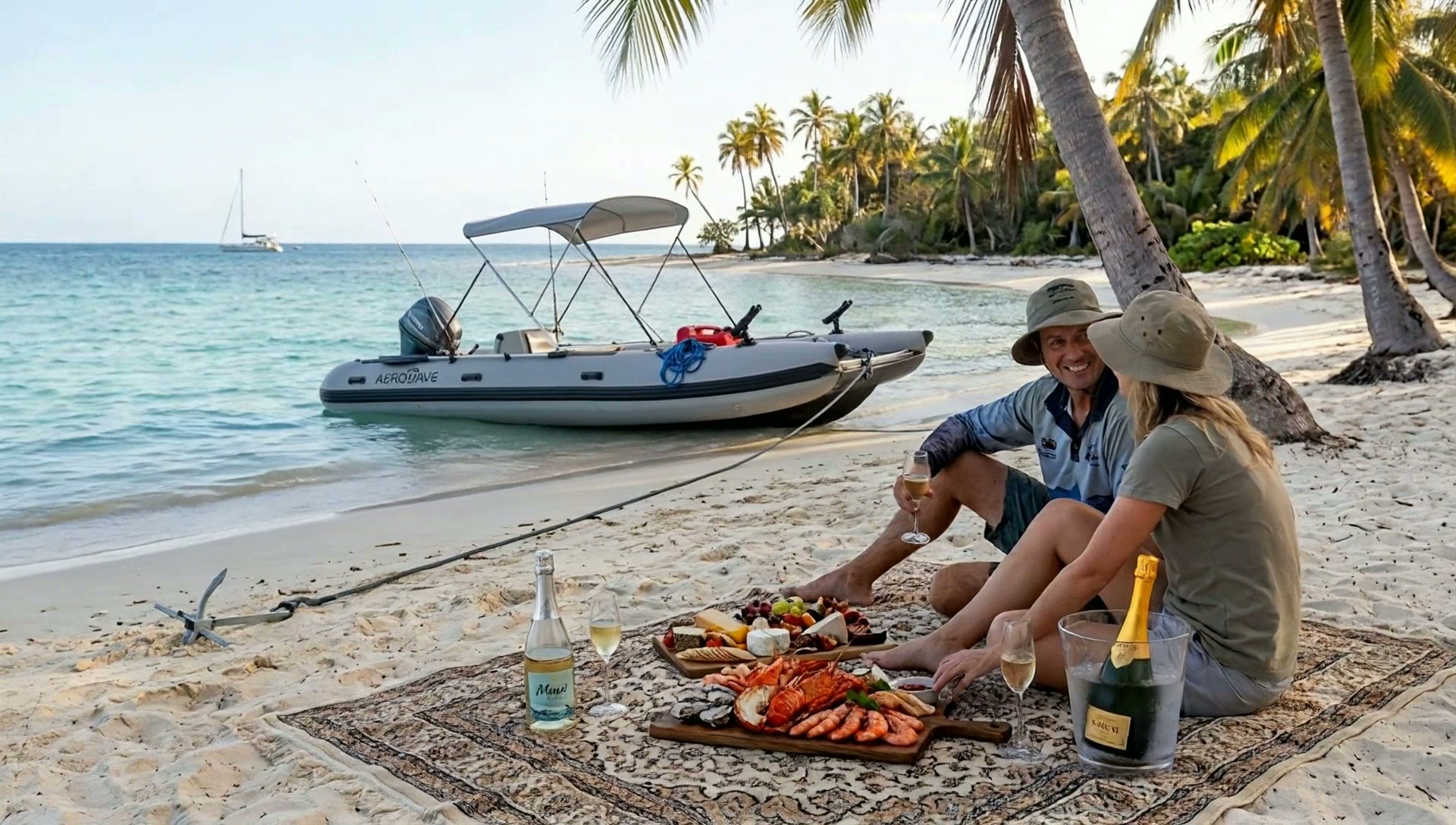
Aerowave Viper 365 Open Bow
Premium 3.65m Inflatable catamaran — built the same way as our flagship Viper 400 sports boat, just 35cm shorter. German VALMEX® 7321 Heavy Plus 1.2mm commercial-grade fabric, 10 PSI high-pressure drop-stitch air deck floor with VALMEX non-slip surface, LockPro wheels, full Bimini and FREE express delivery Australia-wide included.
Free freight to United States · taxes included, nothing to pay on arrival
Not sure which suits you? Talk to a real boat owner.
Before you spend a cent
Buying from Australia, delivered to United States
You have never heard of us, we are on the other side of the world, and the internet is full of fakes. Fair enough. Here is everything you would need to check us out, in one place — no forms, no chat bot.
Australian designed business
Easy Inflatables, Avoca Beach NSW 2251. ABN 96 856 548 613. International orders ship from our Hong Kong hub.
Rated 5.0 on Google
Every review is on our Google Business Profile, with the reviewer's name and the date.
CE certified, 5 + 2 year hull warranty
ISO 6185-3 and EU Directive 2013/53/EU. Warranty honoured worldwide.
Tracked, insured, door to door
Freight, duty & taxes included · nothing to pay on arrival.
- Who am I actually buying from?
- Easy Inflatables, Avoca Beach NSW 2251, Australia. ABN 96 856 548 613. Sean is the owner and skipper, Gary Stewart handles sales on +61 2 4335 1603, Karen Matthews handles email. The boats are Australian designed; international orders ship from our Hong Kong dispatch hub so your landed price stays competitive. Phone us before you pay a cent — a real person answers.
- Is this really an Australian product?
- Yes — Australian designed and engineered on the NSW Central Coast. Manufacturing is done offshore to our spec, and international orders ship direct from our Hong Kong dispatch hub. If we routed every boat through Australia first, the freight alone would roughly double or triple your cost for the same hull.
- What do I pay, and what is not included?
- The delivery and import terms depend on your country. US and UK boat orders include free express freight and prepaid import charges — nothing to pay on arrival. New Zealand and named Asia/Pacific lanes include duty and tax. EU buyers pay import charges on arrival. Other destinations show their terms before payment.
- How do I pay safely?
- Card through Stripe (Visa, Mastercard, Amex, Apple Pay, Google Pay) or bank transfer. Card payments carry your bank's own dispute protection. We never ask for crypto, gift cards or payment to a personal account.
- What if it arrives damaged?
- Every boat ships fully tracked and insured door to door. Photograph the carton and the boat on arrival and email us — transit damage is claimed and replaced through us, not left with you and the courier.
- Is the warranty real outside Australia?
- Yes. The 5 + 2 year hull warranty on 1.2 mm VALMEX Heavy Plus and Orca Hypalon hulls applies wherever you are. Replacement parts are held in Australia and at our overseas hub and go out by express courier to your door.
- Is the boat actually certified?
- All Aerowave catamarans are CE certified to ISO 6185-3 and EU Directive 2013/53/EU. Certification paperwork is supplied with the boat — ask and we will send it before you order.
Frequently asked questions
- What is the difference between PVC and VALMEX inflatable boats?
- Standard PVC is a generic term covering low-cost plastomer fabrics that can degrade quickly under intense Australian UV light. VALMEX is a premium, German-manufactured polymer by Mehler Texnologies that uses a high-density polyester base weave and advanced anti-UV surface treatments, offering a 10 to 12 year lifespan.
- Why do thermo-welded seams last longer than glued seams?
- Thermo-welding uses hot air or radio frequency to melt overlapping fabric layers together, creating a permanent molecular bond that cannot delaminate. Glued seams rely on chemical adhesives that soften, creep, and fail when exposed to high temperatures, direct sun, and petroleum fumes.
- Can I leave my inflatable boat inflated permanently on davits?
- Yes, provided the craft features welded seams, UV-stabilised fabric like VALMEX, and functional pressure relief valves to vent thermal air expansion. Using protective accessories like Aerowave Tube Chaps will also shield the tube tops from sun oxidation and prolong fabric life.
- What outboard shaft length fits most inflatable catamarans?
- Most inflatable catamarans under 4.5 metres, such as the Aerowave Viper and AeroCat series, are built around a standard 380 mm (15-inch) short-shaft outboard transom. Installing a long-shaft engine creates excessive hydrodynamic drag and unwanted stern spray.
- How does an inflatable catamaran compare to an aluminium tinny?
- Inflatable catamarans offer far superior lateral stability, softer riding across choppy water, and significantly higher safety due to multi-chamber reserve buoyancy. They can also be deflated and transported inside a vehicle boot without requiring a trailer or boat ramp.
- What pressure should my inflatable boat floor be inflated to?
- High-pressure drop-stitch air decks require 8 to 10 PSI to achieve structural rigidity and eliminate hull flexing under speed. Standard tube chambers operate at a much lower 2.5 to 3.0 PSI, which is why a two-stage pump with a pressure gauge is essential.
- Are inflatable catamarans safe in coastal ocean conditions?
- Yes, high-end inflatable catamarans certified to CE ISO 6185-3 Category C are engineered for inshore and coastal waters up to 2-metre significant waves and Force 6 winds, offering superior stability and open-bow drainage compared to monohulls.
Ready to set sail?
Premium German-fabric inflatable catamarans, built to order and delivered to your door. Talk to our team or browse the fleet.
Like this guide? Get the next one in your inbox.
Owner-tested tips, gear deep-dives and Aussie boating know-how — no spam.