What Accessories Do You Need for an Inflatable Boat? (2026 Australian Guide)
A no-nonsense Australian guide to the accessories that actually matter on an inflatable boat — what to buy first, what can wait, and what is a waste of money.
At a glance
A no-nonsense Australian guide to the accessories that actually matter on an inflatable boat — what to buy first, what can wait, and what is a waste of money.
- The short answer
- 1. Transport and handling: the accessories that decide whether you go out
- A heavy-duty carry bag
- A wheel bag
What we'd put you in
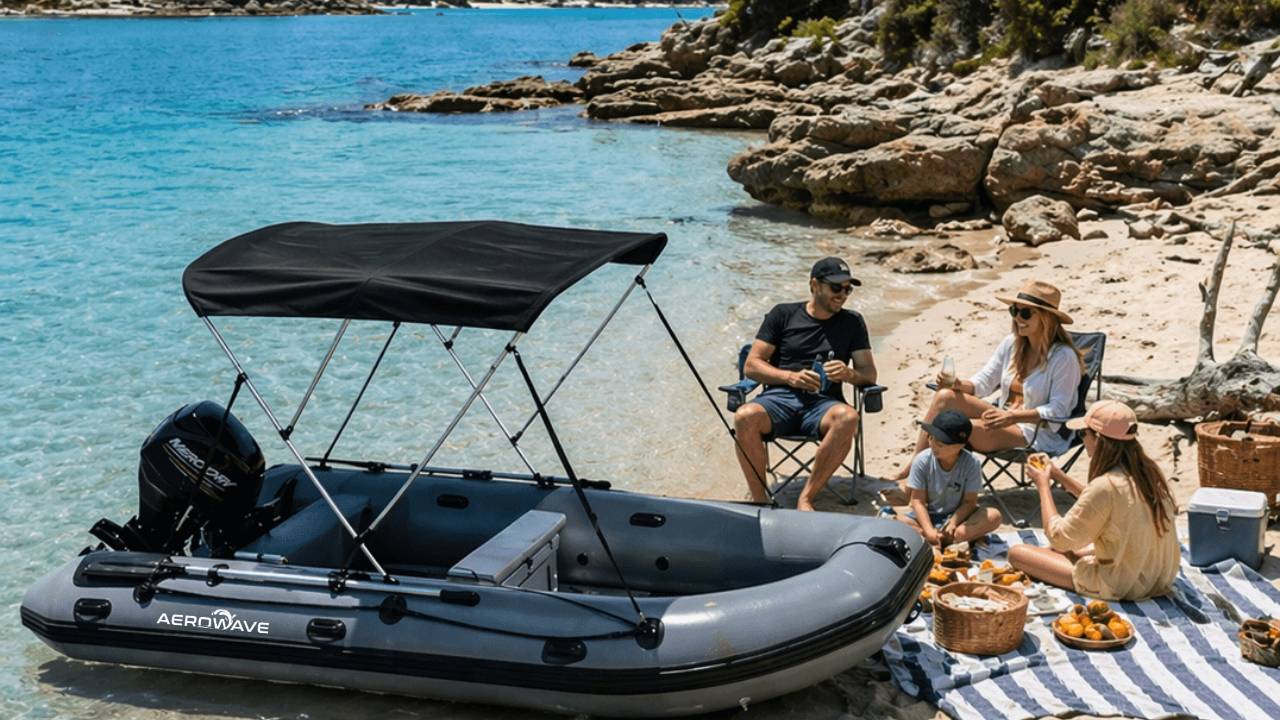
Aerowave Viper 400 Sovereign
Our best-selling boat: 4.0 m, 1.2 mm VALMEX hull, 7-year hull warranty.
US$3,167 USD
Delivered to your door, today's rate
- Free freight to United States · local taxes payable on arrival
- 7-year hull warranty
🇺🇸 Shipping to United States · landed price quoted in writing
Yes — we ship the Aerowave Viper 400 Sovereign to United States. Here's the landed price.
Our best-selling boat: 4.0 m, 1.2 mm VALMEX hull, 7-year hull warranty.
Written for Australian readers — but the boat ships to you. We are an Australian builder and this article is written from Australian waters. That changes nothing about what you can order: the same hull, the same 7-year warranty and the same certification go out to United States every week.
Aerowave Viper 400 Sovereign
- Boat package (export price)
- US$3,726
- 15% tariff relief credit
- − US$559
- Express air freight to United States
- Included
- Import duty, taxes & customs clearance
- Payable on arrival
- Estimated landed, USD
- US$3,167
Indicative, converted at today's rate, before local duty and tax on arrival. Ask below and we'll put a fixed figure in writing, valid 30 days.
- 7-year hull warranty
- 1500 GSM / 1.2 mm VALMEX® Heavy Plus hull
- CE certified to ISO 6185-3 and EU Directive 2013/53/EU
- Door-to-door, tracked the whole way
Your price, delivered to your door — freight included.
We email the full PDF quote (spec, freight, finance, WavePay) to your inbox in under 60 seconds. No spam — one quote, one follow-up.
See it for yourself
Real boats. Real owners. Real people behind them.
Plenty of what you read online these days is generated. Check us out properly — the factory, the reviews and the owners are all one click away. Why we use AI, and how to check we’re real
How our boats are built
Walk the production line: thermo-welded seams, 1.2 mm VALMEX Heavy Plus hulls, over-pressure relief valves on every chamber.
See the buildGoogle Maps reviews
Real Australian owners, five stars, published on our Google Business Profile with the map — read them there, not just on our own site.
Open Google Maps reviewsOwner stories
Boats in use — offshore, on rivers, on rescue duty. Photos and words from the people who actually own them.
Read owner storiesBuy the three things that get you on the water faster. Everything else can wait until you know how you actually use the boat.
Most people over-buy in the first month and under-buy in the first year. They spend hundreds on gadgets that live in the shed, then discover on trip three that they never bought the one item that would have saved their back at the ramp.
This guide is the honest version. It is written from what Australian owners actually reach for — in estuaries, off beaches, on rocky ramps and on the back of yachts — and it is ordered by what earns its place first.
The short answer
If you own an inflatable boat in Australia, four categories cover almost everything:
- Getting it there and back — carry bag, wheel bag, wheel kit, roof or ute setup.
- Getting it hard — a proper high-pressure pump, a gauge, and a repair kit.
- Staying legal and alive — the state-mandated safety gear for your operating area.
- Making the day better — rod holders, seating, bimini, covers, storage bags.
Get 1, 2 and 3 right before you spend a cent on 4.
1. Transport and handling: the accessories that decide whether you go out
An inflatable boat's whole advantage is that it packs down. That advantage disappears the moment moving it is a two-person wrestle.
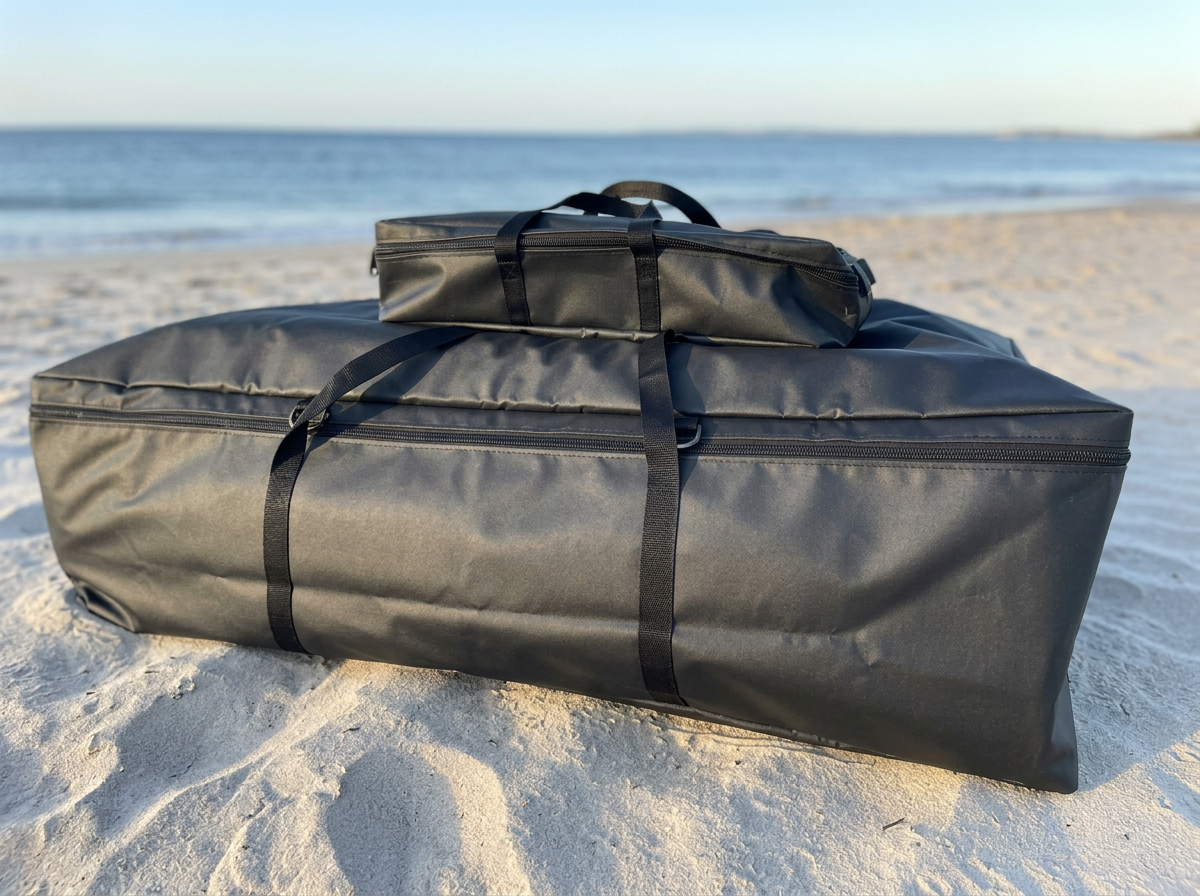
A heavy-duty carry bag
The bag your boat came in is a shipping bag. It is not a bag you want to be dragging over a car park twice a week for five years.
A purpose-built heavy-duty carry bag in 500 GSM ripstop PVC handles the abrasion of concrete, gravel and tailgates. Packed dimensions matter more than people expect — 1200 mm x 650 mm x 370 mm is the difference between a boot that closes and a roof rack you did not want to buy.
A wheel bag
The single most underrated purchase. A wheel bag means your beach wheels are not rolling loose in the boot, scratching paint and losing pins. It also keeps the sand out of the car.
If you are buying both, the bag and wheel bag set is the sensible option.
Beach wheels / launching wheels
If you launch anywhere other than a floating pontoon, launching wheels are not optional. Dragging a rigged boat with a 15 hp outboard across sand is how people hurt themselves and how transoms get scratched.
Two rules:
- Buy wheels rated well above your rigged weight, not your hull weight.
- Buy a set that locks up out of the water. Wheels left down create drag, cavitation and noise.
2. Inflation: the difference between a boat and a banana
An under-inflated inflatable handles badly, uses more fuel and wears its seams faster. Pressure is not a detail — it is the structure of the boat.
A proper high-pressure hand pump
Every Aerowave ships with a high-pressure hand pump. Keep it aboard even if you later buy a second pump for the car — a hand pump is the one that always works, does not flatten a battery and does not care about salt.
A gauge you trust
Most pumps have one. Check it against a second gauge once a season. Chambers should be brought up in stages — partial pressure in each chamber, then top each one to spec — so the boat forms up evenly and no baffle takes a load it was not designed for.
A repair kit
You already own one; it came in the box. The accessory to buy is a second one that permanently lives in the boat, plus a tube of the correct adhesive stored somewhere that is not a hot car. Australian heat kills adhesive faster than it kills fabric.
3. Safety gear: what the law actually asks of you
Requirements differ by state and by how far offshore you go. As a general shape for smooth and partially smooth waters, expect to need:
- A correctly-sized lifejacket for every person aboard
- Bailer or bilge pump, and an anchor with adequate chain and rode
- Waterproof torch, sound signal, and a paddle or oars
- Flares, EPIRB and a marine radio once you head offshore
Do not treat this as a checklist substitute — check your own state authority before your first trip, and re-check when you upgrade to a bigger motor or a longer run. Our safety and registration hub covers what applies where.
The accessory people forget: a kill switch lanyard that actually fits your wrist. The one supplied with the outboard usually clips to a belt loop that is not there.
4. On-water quality of life
This is where personal use decides everything. Fishos and families buy almost opposite lists.
For fishing
- Heavy-duty rod holders. Two is the useful minimum. The light plastic clip-on kind snap in the first decent swell.
- A bait board that mounts and un-mounts in seconds. Anything permanent gets in the way on family days.
- Storage bags. A bow bag turns dead space into dry storage. On catamarans, under-seat bags keep tackle out of the wet.
- A small drift anchor for holding position over structure.
For family days
- Extra seating and cushions — most boats ship with two seats included.
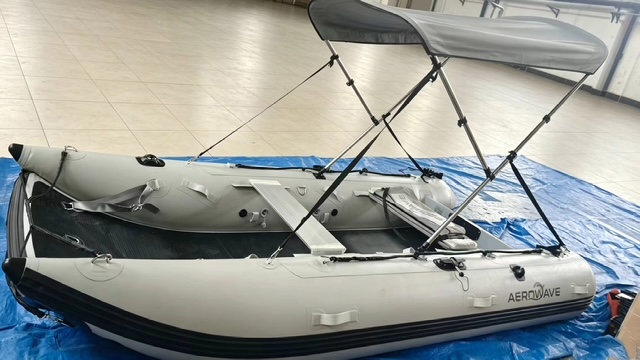
- A bimini for sun cover. Australian UV is the thing that ages both people and boats.
- Dry bags for phones, keys and wallets. Cheap, and the thing you will regret not owning exactly once.
- A boarding ladder if anyone is swimming.
For the yacht tender crowd
- A cover. Sun is the enemy of stowed tubes. A fitted boat cover buys you years.
- Lifting points and a compact davit-friendly setup.
- A lighter outboard than you think you need.
5. What is worth spending more on, and what is not
Spend up: wheels, bags, covers, rod holders, safety gear. Every one of these takes abuse and every one of them fails at the worst moment when bought cheap.
Spend normally: seating, bait boards, dry bags, ladders.
Do not bother: novelty console accessories, anything that permanently drills into a tube, no-name repair glue, and pressure gauges sold as jewellery.
6. The fabric point, because it changes what accessories you need
Accessories protect the boat. But how much protection the boat needs depends on what it is made of.
Aerowave hulls are built on 1.2 mm VALMEX® Heavy Plus — around 33% thicker than the 0.9 mm VALMEX used on comparable imported models — with a 10–12 year service life on the premium fabric. A thicker hull is more forgiving of oyster racks, ramp concrete and gravel car parks, which means you spend less on protective gear and more on gear that actually improves the day.
If you are still choosing a boat, start with the full Aerowave range or the AeroCat series, then come back to this list.
7. A sensible buying order
Month 1: wheels, carry bag, wheel bag, safety gear, second repair kit. Month 2: rod holders or bimini, depending on who is aboard. Month 3: bow bag / under-seat bags, cover. Later: bait board, ladder, upgraded seating, spare parts kit.
Buy in that order and you will never own a shed full of unused marine plastic.
Where to next
- Browse the full accessories range
- Compare boats in the Aerowave lineup
- Read our guide on how to launch and retrieve an inflatable boat
Explore the Aerowave range
Weekend-Proof Score 17 questions · about 2 minutes
Will the boat you're about to buy survive an Australian summer?
Seventeen straight questions about where you'll use it, what you'll ask of it and the boat you're weighing up. You get a score out of 100, the exact weak points in your plan, and the one boat that genuinely fits.
Free · your result shows on screen · no email required
So which one is yours?
Pick how you'll actually use it and we'll take you straight to the right hull.
I want to fish it
Open bow, rod holders, deck space you can stand and cast from.
Viper Sport 400Family, diving and the beach
3.8 m Series 3 catamaran — low bow to climb back in wearing fins or a tank.
WaveRunner 380Tender / one-person launch
3.3 m hard-floor boat that packs into a bag and still takes a beach landing.
Viper 330Shop gear featured in this guide
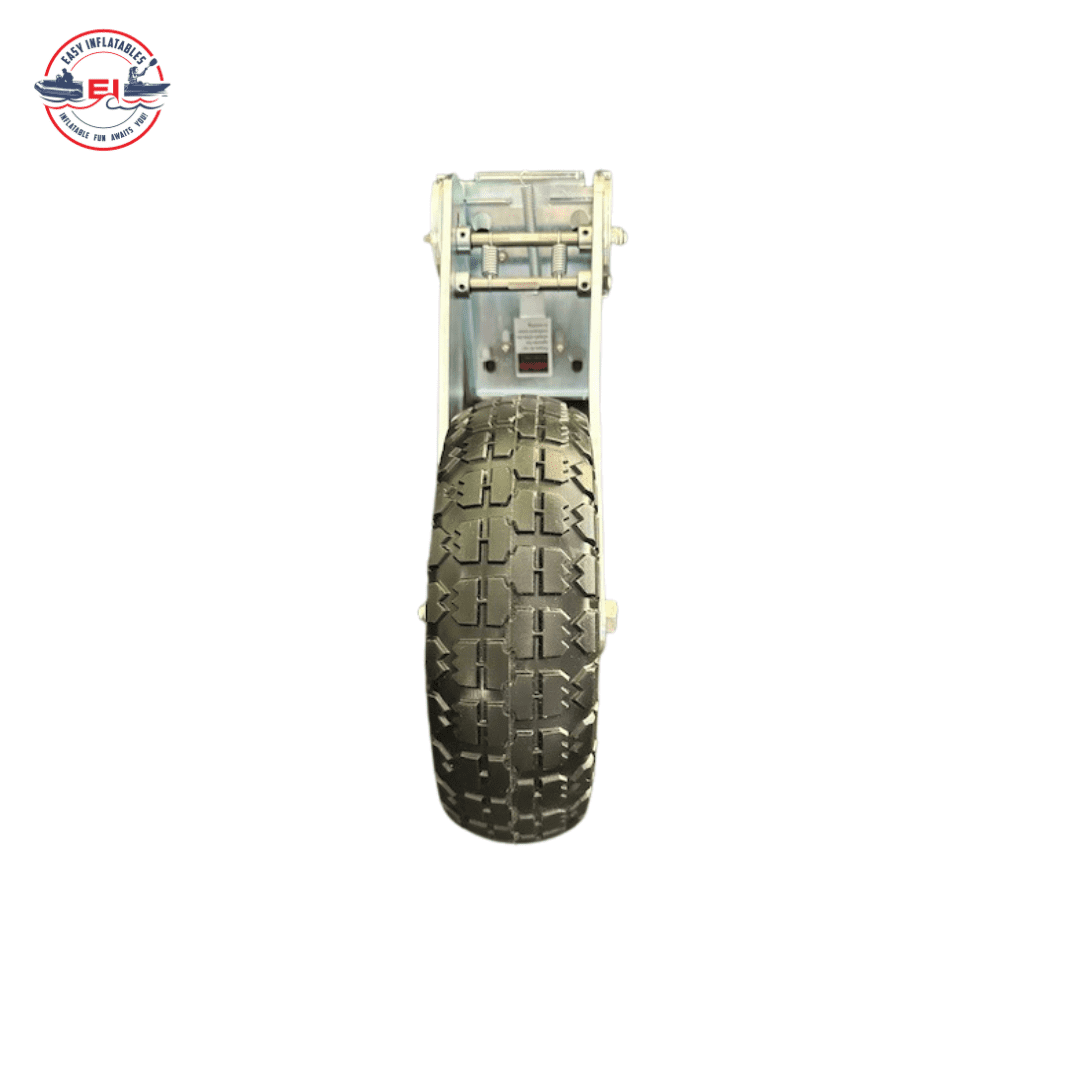
LockPro Plus Inflatable Boat Wheel Set
The LockPro Plus Inflatable Boat Wheel Set offers a premium solution for easy and safe loading of inflatable boats, featuring an Italian stainless steel quick-lock system.
Free freight to United States · local taxes payable on arrival
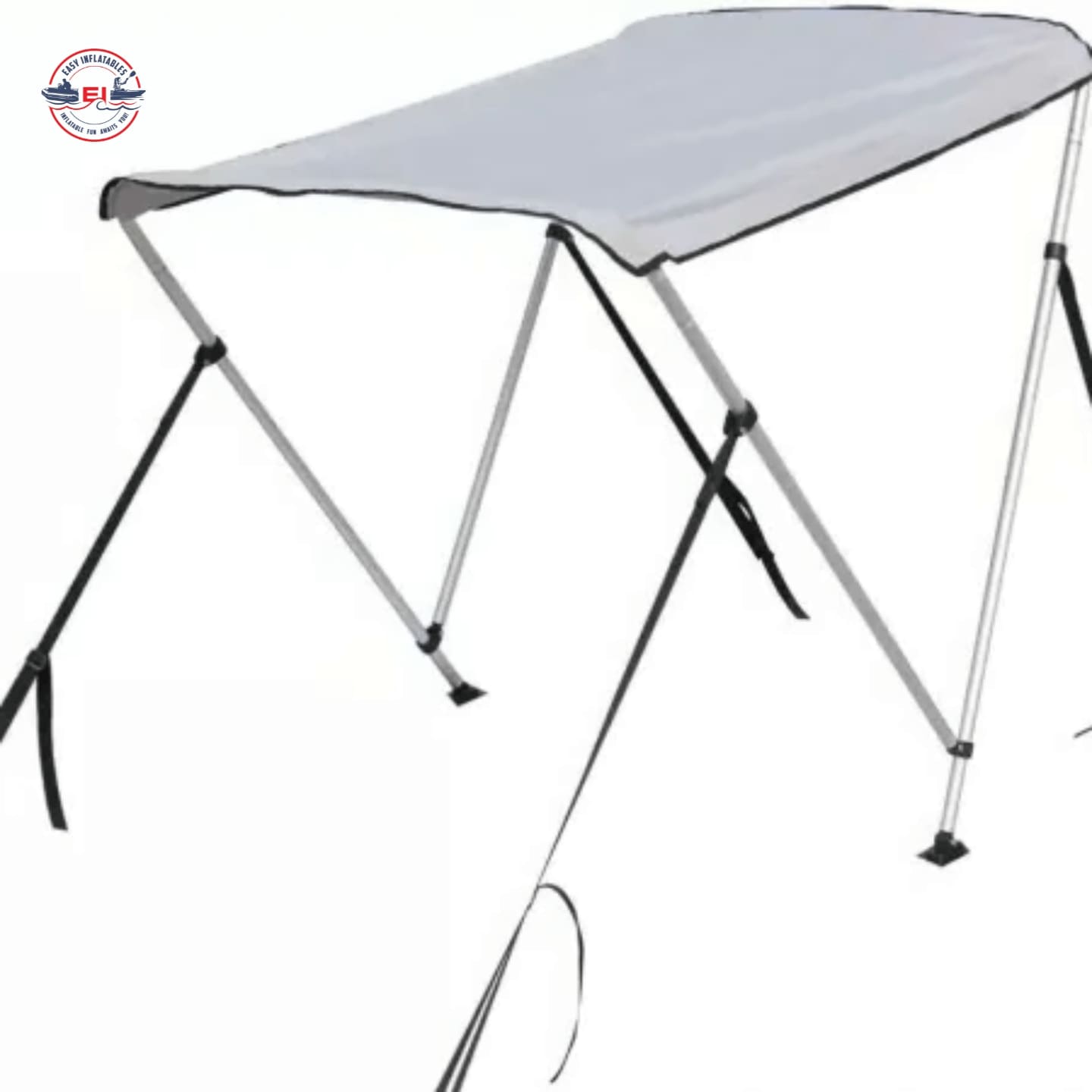
Aerowave Inflatable Boat Bimini
Lightweight inflatable UV sun-shade canopy for inflatable boats, SIBs and catamarans. Now available in two colours — Light Grey and Black. Fast setup, compact storage and premium UV protection for Australian boating.
Free freight to United States · local taxes payable on arrival
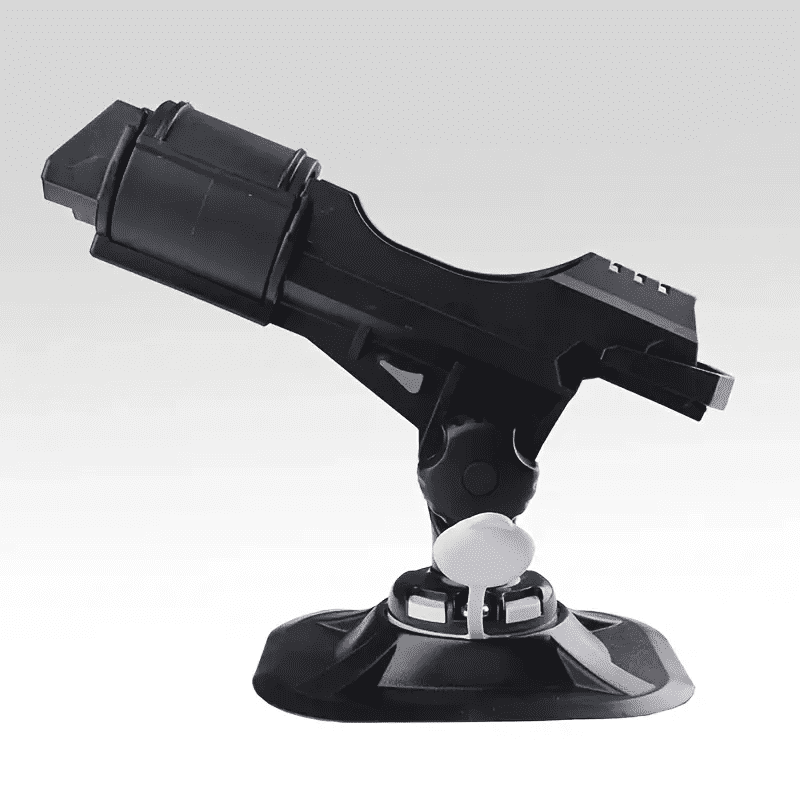
Inflatable Boat Rod Holder Mount
Factory-installed fishing mount designed for Easy Inflatables boats, providing a clean and secure installation for serious anglers.
Free freight to United States · local taxes payable on arrival
Not sure which suits you? Talk to a real boat owner.
Before you spend a cent
Buying from Australia, delivered to United States
You have never heard of us, we are on the other side of the world, and the internet is full of fakes. Fair enough. Here is everything you would need to check us out, in one place — no forms, no chat bot.
Australian designed business
Easy Inflatables, Avoca Beach NSW 2251. ABN 96 856 548 613. International orders ship from our Hong Kong hub.
222 owner reviews, 4.8 average
Read them in full, good and bad, on our reviews page.
CE certified, 7-year hull warranty
ISO 6185-3 and EU Directive 2013/53/EU. Warranty honoured worldwide.
Tracked, insured, door to door
FREE freight to United States · local tax/duty on arrival.
- Who am I actually buying from?
- Easy Inflatables, Avoca Beach NSW 2251, Australia. ABN 96 856 548 613. Sean is the owner and skipper, Gary Stewart handles sales on +61 2 4335 1603, Karen Matthews handles email. The boats are Australian designed; international orders ship from our Hong Kong dispatch hub so your landed price stays competitive. Phone us before you pay a cent — a real person answers.
- Is this really an Australian product?
- Yes — Australian designed and engineered on the NSW Central Coast. Manufacturing is done offshore to our spec, and international orders ship direct from our Hong Kong dispatch hub. If we routed every boat through Australia first, the freight alone would roughly double or triple your cost for the same hull.
- What do I pay, and what is not included?
- The delivery and import terms depend on your country. EU, UK, New Zealand and named Asia/Pacific lanes include duty and tax; US freight is free but US buyers pay import charges on arrival. Other destinations show their terms before payment.
- How do I pay safely?
- Card through Stripe (Visa, Mastercard, Amex, Apple Pay, Google Pay) or bank transfer. Card payments carry your bank's own dispute protection. We never ask for crypto, gift cards or payment to a personal account.
- What if it arrives damaged?
- Every boat ships fully tracked and insured door to door. Photograph the carton and the boat on arrival and email us — transit damage is claimed and replaced through us, not left with you and the courier.
- Is the warranty real outside Australia?
- Yes. The 7-year hull warranty on 1.2 mm VALMEX Heavy Plus and Orca Hypalon hulls applies wherever you are. Replacement parts are held in Australia and at our overseas hub and go out by express courier to your door.
- Is the boat actually certified?
- All Aerowave catamarans are CE certified to ISO 6185-3 and EU Directive 2013/53/EU. Certification paperwork is supplied with the boat — ask and we will send it before you order.
Frequently asked questions
- What accessories does an inflatable boat actually come with?
- Every Aerowave ships with a high-pressure hand pump, two seats, a repair kit, oars or paddles, and the relevant bags depending on the package. Catamaran packages also include a free under-seat bag. Everything on top of that is chosen for how you use the boat.
- Do I need beach wheels for an inflatable boat?
- If you launch off sand, gravel or a rough ramp, yes. A rigged boat with an outboard is far heavier than the hull alone, and dragging it damages the underside and your back. Choose wheels rated above your rigged weight and that lock up clear of the water underway.
- What safety gear is legally required on an inflatable boat in Australia?
- It varies by state and by how far offshore you operate. Smooth-water minimums generally include a fitted lifejacket per person, bailer, anchor, torch, sound signal and paddles, with flares, EPIRB and radio added offshore. Always confirm with your state maritime authority before your first trip.
- Is a wheel bag really worth it?
- It is one of the cheapest accessories and the one owners say they wish they bought first. It keeps sand and salt out of the car, stops loose wheels damaging paint, and keeps pins and hardware together.
- Do I need a boat cover for an inflatable?
- If the boat lives rigged, on a trailer or on a yacht deck, yes. UV is the main ageing factor on any inflatable. If it packs into a bag between trips, the bag is doing the same job and a cover is optional.
- What accessories should I avoid buying?
- Anything that requires drilling or permanent fixing to a tube, no-name repair adhesive, lightweight clip-on rod holders, and console-style add-ons that do not suit an open-deck boat.
- How much should I budget for accessories?
- Most Australian owners spend A$400–A$900 in the first year, weighted heavily toward wheels, bags and safety gear. Buying the boat as a full package usually covers most of that up front at a better price than buying items individually.
Ready to set sail?
Premium German-fabric inflatable catamarans, built to order and delivered to your door. Talk to our team or browse the fleet.
Like this guide? Get the next one in your inbox.
Owner-tested tips, gear deep-dives and Aussie boating know-how — no spam.