The Definitive Guide to Outboard Size for an Inflatable Catamaran
Struggling to choose an outboard for your inflatable cat? Our expert guide covers horsepower vs. load, transom ratings, shaft length, and planing for 3.3m to 4.5m boats.
At a glance
Struggling to choose an outboard for your inflatable cat? Our expert guide covers horsepower vs. load, transom ratings, shaft length, and planing for 3.3m to 4.5m boats.
- Why a Catamaran's Hull Changes Everything
- Your Transom Rating: The Non-Negotiable Starting Point
- What Happens if You Exceed the Transom Rating?
- What Horsepower Do I Need for an Inflatable Catamaran?
Ships to United States 🇺🇸 · tracked door to door
The motor for your inflatable — petrol or electric, in stock now.
Hidea 4-strokes from 2.5 to 20 hp, plus the Haswing Ultima 3.0HP and Fuber Global 1.5 electric outboards. Every one of them is matched to a soft-transom inflatable.
- Hidea 4-stroke range: 2.5, 5, 6, 8, 9.9, 15 and 20 hp — carby or EFI
- Haswing Ultima 3.0HP and Fuber Global 1.5 electric — quiet, no fuel, no service
- Shaft length, transom height and thrust matched to our hulls before it ships
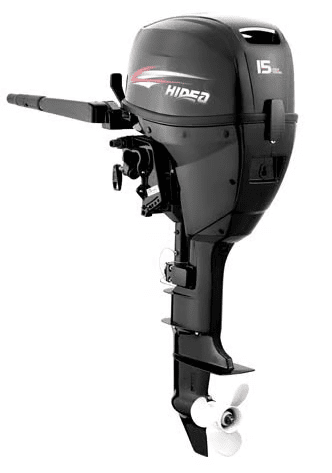 Hidea 15HP 4-Stroke OutboardUS$2,801 · in stock, ships now
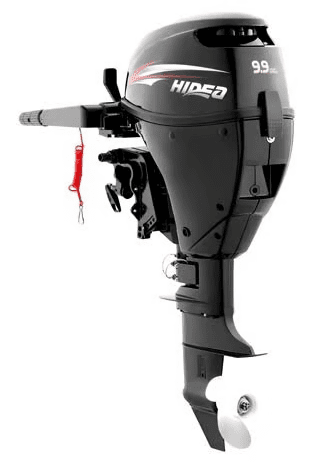 Hidea 9.9HP 4-Stroke OutboardUS$2,508 · in stock, ships now
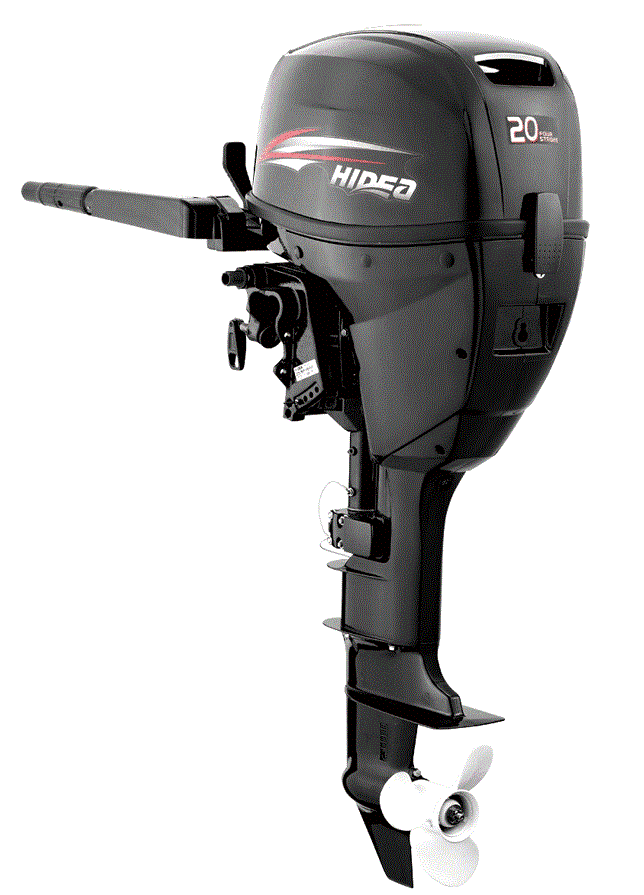 Hidea 20HP Carburettor 4-Stroke Outboard — Short Shaft, Electric StartUS$2,640 · in stock, ships now
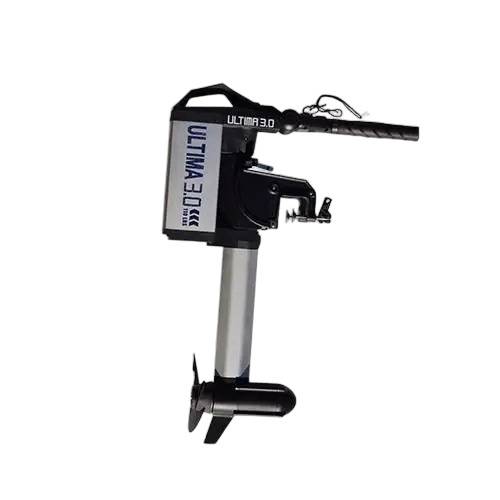 Haswing Ultima 3.0HP Electric OutboardUS$1,947 · in stock, ships now
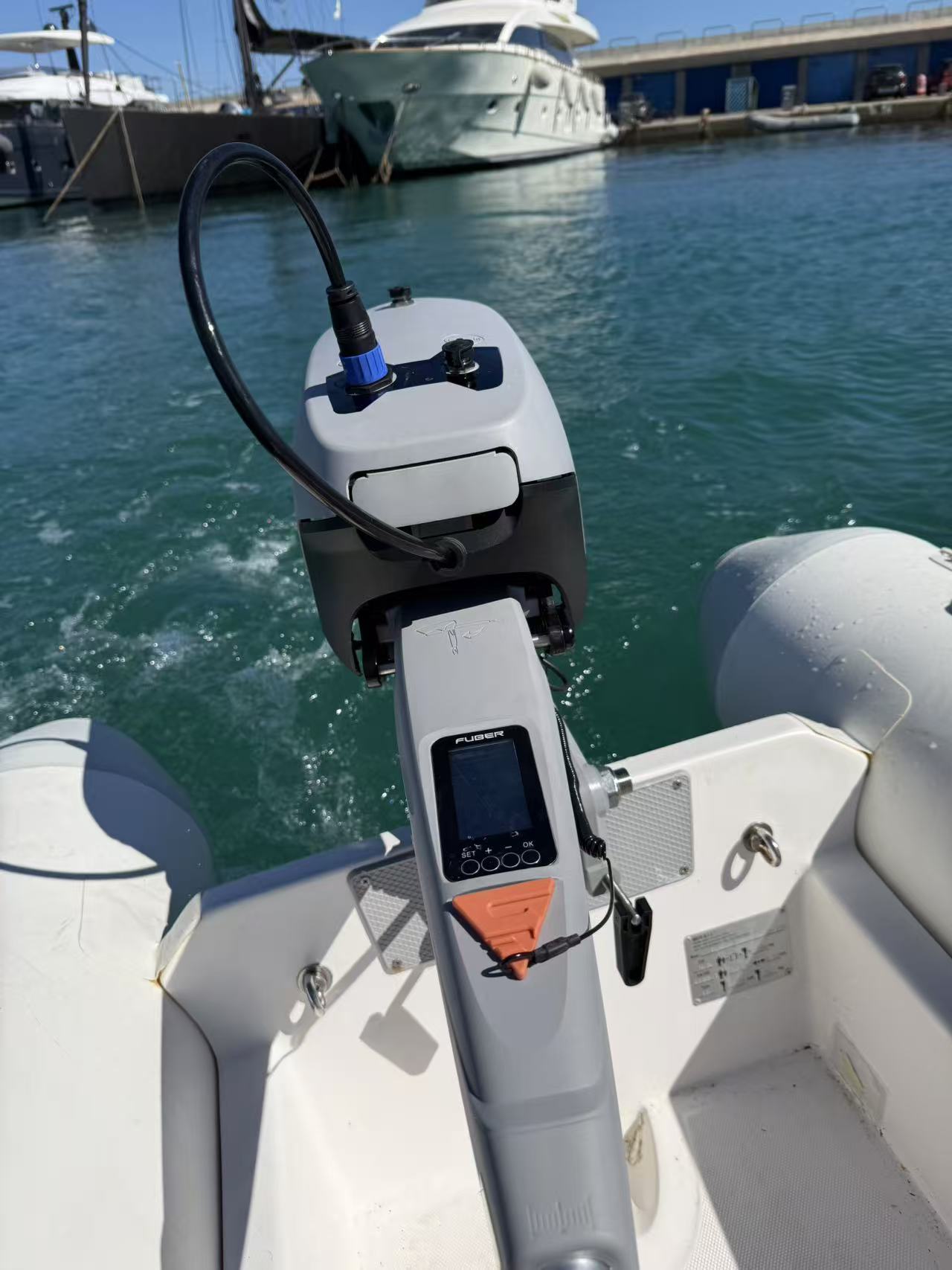 Fuber Global 1.5 Electric Outboard — Short ShaftUS$2,475 · in stock, ships now
Or replace the boat entirely
Aerowave Viper 400 Sovereign
Delivered to United States — freight included in the figure below.
US$3,167landed, USD
- 7-year hull warranty
- CE certified to ISO 6185-3 and EU Directive 2013/53/EU
- Door-to-door, tracked the whole way
See it for yourself
Real boats. Real owners. Real people behind them.
Plenty of what you read online these days is generated. Check us out properly — the factory, the reviews and the owners are all one click away. Why we use AI, and how to check we’re real
How our boats are built
Walk the production line: thermo-welded seams, 1.2 mm VALMEX Heavy Plus hulls, over-pressure relief valves on every chamber.
See the buildGoogle Maps reviews
Real Australian owners, five stars, published on our Google Business Profile with the map — read them there, not just on our own site.
Open Google Maps reviewsOwner stories
Boats in use — offshore, on rivers, on rescue duty. Photos and words from the people who actually own them.
Read owner stories
Choosing an outboard isn't about chasing maximum horsepower; it's about finding the perfect balance of power, weight, and efficiency for your specific boat and needs.
Selecting the right outboard for your inflatable catamaran is one of the most critical decisions you'll make. It dictates not just your top speed, but your boat's handling, safety, fuel efficiency, and even how easy it is to set up and pack down. Unlike a traditional monohull, an inflatable catamaran has unique hydrodynamic properties. Its twin hulls and tunnel are designed for exceptional efficiency, meaning it can achieve impressive performance with surprisingly modest power. This often leads to confusion, with new owners either underpowering their vessel or, more dangerously, overpowering it.
This comprehensive guide is designed to demystify the process. We'll cut through the jargon and provide clear, practical advice on choosing the ideal outboard size for an inflatable catamaran. We'll cover everything from understanding your boat's transom rating and the crucial difference between short and long shaft motors, to real-world advice on how horsepower relates to load, planing, and your intended use on the water. Whether you're eyeing an AeroWave AeroCat for solo fishing trips or an Aerowave Viper for family adventures, this is the definitive resource for making an informed choice.
Why a Catamaran's Hull Changes Everything
Before we talk about horsepower, it's essential to understand why an inflatable catamaran is not just a 'boat with two tubes'. The design is fundamentally different from a standard inflatable V-hull, and this difference is key to its efficiency.
A traditional V-hull boat pushes a lot of water out of the way to move forward. As it accelerates, it needs to climb 'over' its own bow wave to get on the plane, a power-intensive process. An inflatable catamaran works on a different principle. The two slender sponsons (the main air tubes) slice through the water with minimal resistance, while the air-filled tunnel between them provides lift. This cushion of air helps lift the hull higher out of the water as speed increases, dramatically reducing the wetted surface area—the part of the boat actually in contact with the water.
Less wetted surface means less drag. Less drag means the boat requires significantly less power to achieve and maintain planing speed. This is why a 4-metre inflatable catamaran can feel lively and responsive with a 15HP or 20HP outboard, whereas a similarly sized rigid-hull boat might feel sluggish with anything less than 30HP. This inherent efficiency is the catamaran's superpower. It translates to better fuel economy, a lighter overall package (boat and motor), and the ability to explore further on a single tank of fuel. Understanding this principle is the first step in avoiding the common mistake of over-powering your boat based on experiences with less efficient hull designs.
Your Transom Rating: The Non-Negotiable Starting Point
Every reputable inflatable boat, including all Aerowave models, comes with a builder's plate or certification sticker. This plate is your gospel. It lists critical information, including the maximum number of passengers, maximum load capacity, and, most importantly for this discussion, the maximum horsepower (HP) and maximum engine weight the transom is designed to handle.
These are not suggestions; they are absolute limits determined by engineers and certified under standards like ISO 6185-3. The transom—the reinforced panel at the stern where the outboard clamps on—is engineered to withstand the specific forces of thrust and weight generated by an engine up to that rating. All Easy Inflatables catamarans feature a robust transom designed for modern 4-stroke outboards, but the limits are there for a reason.
What Happens if You Exceed the Transom Rating?
Mounting an outboard that is too powerful or too heavy can lead to a cascade of dangerous problems:
- Structural Failure: The immense torque and weight can cause the transom to crack, delaminate, or even tear away from the inflatable tubes, leading to catastrophic failure.
- Poor Handling: An oversized motor makes the boat dangerously stern-heavy. This causes the bow to ride excessively high, obscuring your vision and making the boat unstable, especially in turns or choppy water. It can lead to 'porpoising' (the bow bouncing uncontrollably) or chine walking.
- Voided Warranty & Insurance: In the event of an accident or damage, if your boat is found to be equipped with an engine exceeding the manufacturer's rating, both your boat's warranty and your insurance policy will almost certainly be void.
Before you even start shopping for outboards, check your boat's specifications. For example, the AeroWave AeroCat 380 has a maximum rating of 20HP, while the larger Aerowave Viper 450 is rated for up to 30HP. Always use the lower of the two limits—max HP or max engine weight. A modern 20HP 4-stroke can sometimes weigh more than an older 25HP 2-stroke, so always check both numbers.
What Horsepower Do I Need for an Inflatable Catamaran?
This is the core question, and the answer is: it depends entirely on your boat's size and how you plan to use it. Let's break it down into common scenarios, using models from the Aerowave range as examples.
For Solo Fishing, Tendering, and Light Loads (3.3m – 3.8m boats)
If your primary use is solo fishing in estuaries, pottering around a harbour, or using the boat as a tender to a larger vessel, you can opt for smaller, lighter outboards. The goal here is portability and fuel efficiency, not outright speed.
- Boats: AeroWave AeroCat 335, Aerowave Viper 330, Aerowave WaveRunner 380.
- Recommended Power: 6HP to 9.9HP.
- Performance: A 6HP will push these boats along nicely at displacement speeds (around 8-10 km/h) and will plane with one light adult and minimal gear in ideal conditions. A 9.9HP motor, like the Hidea 9.9HP 4-Stroke, is the sweet spot for this category. It offers enough power to comfortably plane a solo angler with a good amount of gear, and can even plane two adults if the load is kept light. The
Aerowave Viper 330 + Hidea 9.9HP 4-Stroke Short Shaft Package($8,245) is a perfectly balanced combination for this purpose.
For All-Round Family Use and Consistent Planing (3.8m – 4.3m boats)
This is the most common use case: taking a partner, a couple of kids, or a mate out for a day on the water with an Esky, fishing rods, and beach gear. Here, the priority shifts to having enough power to get on the plane reliably with a typical load.
- Boats: AeroWave AeroCat 380, Aerowave Viper 400, Aerowave Viper 430.
- Recommended Power: 15HP to 20HP.
- Performance: A 15HP outboard is the minimum for this category. On a boat like the WaveRunner 380, a 15HP will provide spirited performance, planing easily with two or three people aboard. The
Aerowave WaveRunner 380 + Hidea 15HP 4-Stroke Package($8,189) is a prime example of a well-matched, turn-key solution. Moving up to a 20HP outboard, like the one paired with the Aerowave Viper 400, gives you more authority. It allows you to plane with four adults (within the boat's load limits) and handle choppier conditions with greater confidence. The extra horsepower means the engine isn't working as hard to maintain speed, which can surprisingly improve fuel economy at cruise. TheAerowave Viper 400 Open Bow + Hidea 20HP 4-Stroke Short Shaft Package($9,385) is an incredibly capable and versatile package for coastal exploring.
For Heavier Loads, Tow Sports, and Maximum Performance (4.3m – 4.5m+ boats)
When you're consistently carrying heavier loads, venturing into more open water, or want the option to tow a biscuit or skier, you'll want to be closer to the boat's maximum horsepower rating.
- Boats: Aerowave Viper 430, Aerowave Viper 450.
- Recommended Power: 25HP to 30HP.
- Performance: A 25HP or 30HP outboard transforms these larger inflatable catamarans into seriously capable sports boats. They will pop onto the plane almost instantly, even with a full load, and offer impressive top speeds (in the realm of 45-50 km/h, conditions permitting). This level of power provides a huge safety margin when dealing with strong currents, wind, or the need to outrun a coming storm. It also makes activities like towing a tube effortless. The key is to ensure the motor's weight is still within the transom's specified limit.
Short Shaft vs. Long Shaft: Why It's Not a Choice
Choosing the correct shaft length for your outboard is not a matter of preference; it's a technical requirement dictated by your boat's transom height. Getting this wrong is as bad as choosing the wrong horsepower.
-
What is Shaft Length? The shaft is the part of the outboard that extends down from the powerhead into the water, ending at the propeller and cavitation plate. Outboards primarily come in two standard lengths for this market: Short Shaft (approx. 15 inches / 38cm) and Long Shaft (approx. 20 inches / 51cm).
-
Why It Matters: The cavitation plate is the flat plate just above the propeller. For optimal performance, this plate must sit level with, or very slightly below, the lowest point of your boat's hull when on the plane.
- If the shaft is too long, the propeller and plate sit too deep in the water. This creates excessive drag, kills performance, increases fuel consumption, and puts a huge amount of upward leverage on your transom.
- If the shaft is too short, the propeller is too close to the surface. It will suck in air, causing the engine to over-rev without generating thrust. This is known as 'ventilating' or 'cavitating', and it can damage the engine and provides zero propulsion.
Virtually all modern inflatable boats and catamarans, including the entire Aerowave range, are designed with a standard 380mm (15-inch) transom height. Therefore, they require a SHORT SHAFT outboard.
There is no scenario where a long shaft motor is appropriate for a standard-transom inflatable catamaran. The only exception would be for specialised boats with a higher, custom-built transom, which is rare in the portable inflatable market. Always confirm your boat's transom height, but for boats like the Viper, AeroCat, and WaveRunner, the answer is always Short Shaft.
Outboard Weight: The Overlooked Factor in Performance
Horsepower gets all the attention, but engine weight is just as important, especially on a lightweight inflatable catamaran. The balance and trim of your boat are critical for both safety and performance, and a heavy motor hanging off the back has a profound effect.
Modern four-stroke outboards, like the Hidea range, are celebrated for their fuel efficiency, low emissions, and quiet operation. However, they are inherently heavier than the older two-stroke engines of equivalent horsepower. This is a crucial consideration. A 55kg outboard will make your boat handle very differently to a 45kg one, even if they are both rated at 20HP.
A heavy motor can cause:
- Stern-Heavy Trim: The boat will sit low at the back and high at the front, even at rest. This makes it harder to get on the plane.
- Porpoising: The boat can start to bounce uncontrollably once on the plane, which is both uncomfortable and dangerous.
- Portability Issues: One of the main attractions of an inflatable is its portability. A 9.9HP 4-stroke weighs around 38kg—manageable for one strong person. A 20HP 4-stroke is around 49-55kg, which is a definite two-person lift. A 30HP can be 70kg+. Consider how you will be moving and mounting your motor.
When comparing outboards, look at the dry weight. Don't just fixate on the HP number. Sometimes, opting for a slightly less powerful but significantly lighter engine can result in a better-balanced, more enjoyable, and ultimately more usable boat package.
A Practical Outboard Size Comparison for Inflatable Catamarans
To bring it all together, here is a practical comparison table for common outboard sizes on inflatable catamarans in the 3.3m to 4.5m range.
| Outboard Size | Dry Weight (Approx.) | Best For | Planing Ability (Typical Load*) | Recommended Boat Size | Example Use Case |
|---|---|---|---|---|---|
| 5-6 HP | 25-27 kg | Solo use, tenders, displacement speeds | Will plane one light adult (<90kg) with minimal gear in calm water. | 2.9m - 3.6m | A solo angler exploring a calm estuary on an AeroCat 335. |
| 8-9.9 HP | 38-42 kg | All-round solo use, light couples | Reliably planes one person and gear. Will plane two lighter adults. | 3.3m - 3.8m | A couple using a Viper 330 for harbour cruising and beach hopping. |
| 15 HP | 45-50 kg | Versatile family & fishing use | Easily planes two adults and gear. Can plane three adults. | 3.6m - 4.0m | A small family on a WaveRunner 380 for a day trip with an Esky. |
| 20 HP | 49-55 kg | The do-it-all performance choice | Confidently planes three adults. Can plane four with good weight distribution. | 3.8m - 4.3m | Two mates with full fishing gear and tackle on a Viper 400 Open Bow. |
| 25-30 HP | 55-75 kg | Heavy loads & light tow sports | Effortlessly planes a full load. Ideal outboard size for an inflatable catamaran used for tubing. | 4.3m - 4.5m+ | A family on a Viper 450 wanting speed, power, and the ability to tow a biscuit. |
Typical Load refers to 2-3 adults, fuel, and a moderate amount of gear (e.g., Esky, tackle box, safety equipment). Performance varies greatly with weight distribution and water conditions.
The Bottom Line
Choosing the correct outboard is a balancing act. The inherent efficiency of an inflatable catamaran hull means you can achieve excellent performance without needing to max out the horsepower rating. For most users of 3.8m to 4.3m boats, a high-quality 15HP or 20HP 4-stroke short shaft outboard offers the ideal blend of power, weight, and efficiency. It provides enough grunt to get on the plane reliably with family and gear, without compromising the boat's balance or portability too much.
Always start with your boat's transom rating (both HP and weight) as your absolute ceiling. Then, consider your primary use case, typical passenger load, and the total weight of your gear. If you're unsure, it's always better to seek expert advice. At Easy Inflatables, we've paired hundreds of boats with the right motors. We can help you analyse your needs and recommend a perfectly matched boat and motor package, ensuring you get the most enjoyment and performance from your investment. Feel free to call us on +61 2 4335 1603 or email sales@easyinflatables.com.au to discuss your options.
Related
Weekend-Proof Score 17 questions · about 2 minutes
Will the boat you're about to buy survive an Australian summer?
Seventeen straight questions about where you'll use it, what you'll ask of it and the boat you're weighing up. You get a score out of 100, the exact weak points in your plan, and the one boat that genuinely fits.
Free · your result shows on screen · no email required
So which one is yours?
Pick how you'll actually use it and we'll take you straight to the right hull.
I want to fish it
Open bow, rod holders, deck space you can stand and cast from.
Viper Sport 400Family, diving and the beach
3.8 m Series 3 catamaran — low bow to climb back in wearing fins or a tank.
WaveRunner 380Tender / one-person launch
3.3 m hard-floor boat that packs into a bag and still takes a beach landing.
Viper 330Shop gear featured in this guide
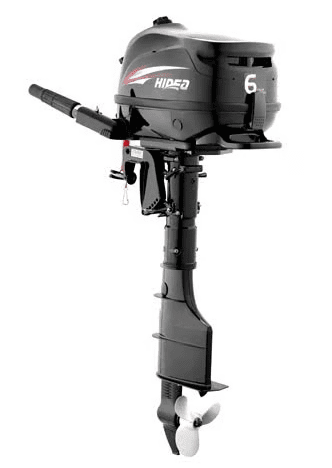
Hidea 6HP 4-Stroke Outboard
The 6HP 4-Stroke is built for tenders, skiffs and smaller inflatable boats. Quiet, easy to handle and reliable everyday power.
Australia-only item or unlisted country — ask for a price
Hidea 9.9HP 4-Stroke Outboard
Twin-cylinder smoothness for dinghies, inflatables and small aluminium boats. A confident step-up from 6HP.
Australia-only item or unlisted country — ask for a price
Hidea 15HP 4-Stroke Outboard
Strong, dependable mid-range power for bigger inflatables, tenders and small runabouts.
Australia-only item or unlisted country — ask for a price
Not sure which suits you? Talk to a real boat owner.
Before you spend a cent
Buying from Australia, delivered to United States
You have never heard of us, we are on the other side of the world, and the internet is full of fakes. Fair enough. Here is everything you would need to check us out, in one place — no forms, no chat bot.
Australian designed business
Easy Inflatables, Avoca Beach NSW 2251. ABN 96 856 548 613. International orders ship from our Hong Kong hub.
222 owner reviews, 4.8 average
Read them in full, good and bad, on our reviews page.
CE certified, 7-year hull warranty
ISO 6185-3 and EU Directive 2013/53/EU. Warranty honoured worldwide.
Tracked, insured, door to door
FREE freight to United States · local tax/duty on arrival.
- Who am I actually buying from?
- Easy Inflatables, Avoca Beach NSW 2251, Australia. ABN 96 856 548 613. Sean is the owner and skipper, Gary Stewart handles sales on +61 2 4335 1603, Karen Matthews handles email. The boats are Australian designed; international orders ship from our Hong Kong dispatch hub so your landed price stays competitive. Phone us before you pay a cent — a real person answers.
- Is this really an Australian product?
- Yes — Australian designed and engineered on the NSW Central Coast. Manufacturing is done offshore to our spec, and international orders ship direct from our Hong Kong dispatch hub. If we routed every boat through Australia first, the freight alone would roughly double or triple your cost for the same hull.
- What do I pay, and what is not included?
- The delivery and import terms depend on your country. EU, UK, New Zealand and named Asia/Pacific lanes include duty and tax; US freight is free but US buyers pay import charges on arrival. Other destinations show their terms before payment.
- How do I pay safely?
- Card through Stripe (Visa, Mastercard, Amex, Apple Pay, Google Pay) or bank transfer. Card payments carry your bank's own dispute protection. We never ask for crypto, gift cards or payment to a personal account.
- What if it arrives damaged?
- Every boat ships fully tracked and insured door to door. Photograph the carton and the boat on arrival and email us — transit damage is claimed and replaced through us, not left with you and the courier.
- Is the warranty real outside Australia?
- Yes. The 7-year hull warranty on 1.2 mm VALMEX Heavy Plus and Orca Hypalon hulls applies wherever you are. Replacement parts are held in Australia and at our overseas hub and go out by express courier to your door.
- Is the boat actually certified?
- All Aerowave catamarans are CE certified to ISO 6185-3 and EU Directive 2013/53/EU. Certification paperwork is supplied with the boat — ask and we will send it before you order.
Frequently asked questions
- Is a 5hp outboard enough for an inflatable catamaran?
- A 5hp outboard is suitable for a smaller inflatable catamaran (around 3.3m) for solo use at displacement speeds (trolling, pottering). It will struggle to get on the plane with more than one light adult and is not recommended for dealing with strong currents or winds.
- What size outboard do I need to plane with two people?
- To reliably get an inflatable catamaran on the plane with two adults and a bit of gear, you should be looking at a minimum of 9.9HP. A 15HP outboard is a better choice as it will achieve planing more easily and without working the engine at its maximum.
- Can I put a 25hp motor on a 4m inflatable cat rated for 20hp?
- No, you must never exceed the maximum horsepower rating specified by the manufacturer on the boat's compliance plate. Doing so is extremely dangerous, voids your warranty and insurance, and can lead to catastrophic transom failure or uncontrollable handling.
- Do I need a short shaft or long shaft outboard for my inflatable boat?
- Almost all portable inflatable boats and catamarans, including the entire Aerowave range, have a 15-inch (38cm) transom height and therefore require a short shaft outboard. Using a long shaft motor will create excessive drag and negatively impact performance and handling.
- How much faster is a 20hp compared to a 15hp on an inflatable catamaran?
- While the 20hp will have a higher top speed (perhaps 5-8 km/h faster), the main difference is in acceleration and load-carrying ability. The 20hp will get the boat on the plane quicker and more easily, especially when carrying a heavier load of 3-4 people.
- Why is outboard weight so important for an inflatable boat?
- Inflatable boats are very lightweight, so the engine weight has a significant effect on the boat's balance (trim). A motor that is too heavy will make the boat stern-heavy, causing the bow to ride too high, which is inefficient and unsafe. It also makes the motor harder to transport and mount.
- What's the best all-round outboard size for a 4m inflatable catamaran?
- For a 4-metre inflatable catamaran like the Aerowave Viper 400, a 20HP 4-stroke outboard is widely considered the best all-round choice. It provides an excellent balance of power for planing with passengers and gear, good fuel efficiency, and manageable weight.
Ready to set sail?
Premium German-fabric inflatable catamarans, built to order and delivered to your door. Talk to our team or browse the fleet.
Like this guide? Get the next one in your inbox.
Owner-tested tips, gear deep-dives and Aussie boating know-how — no spam.