Boat with Trailer vs Boat in a Bag: Which Actually Suits How You Boat?
Torn between a traditional boat with trailer and a portable fold-away inflatable? Compare ongoing rego, maintenance, ramp stress, and real on-water performance.
At a glance
Torn between a traditional boat with trailer and a portable fold-away inflatable? Compare ongoing rego, maintenance, ramp stress, and real on-water performance.
- Is Owning a Boat with Trailer Worth the Ongoing Running Costs?
- The Inevitable Saltwater Ingress
- Dual Registration and Administrative Friction
- Boat with Trailer Storage vs Packing Down into a Boot
What we'd put you in
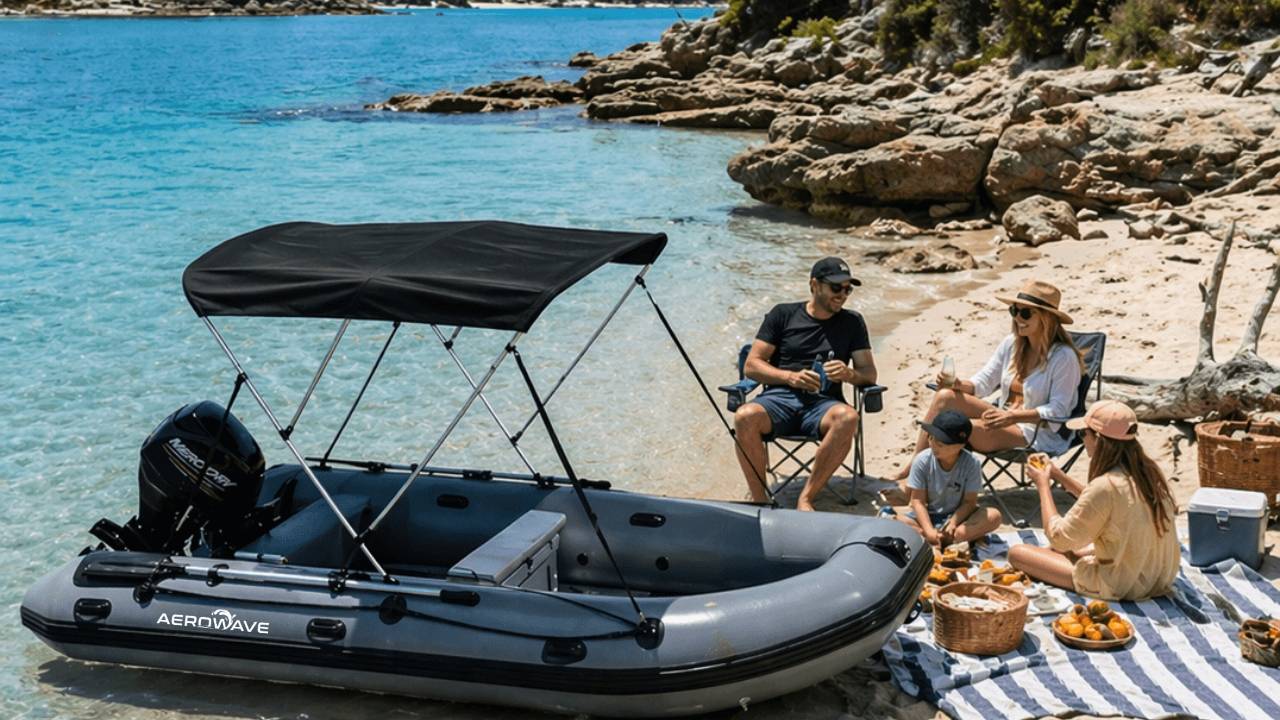
Aerowave Viper 400 Sovereign
Our best-selling boat: 4.0 m, 1.2 mm VALMEX hull, 5 + 2 year hull warranty.
US$4,449 USD
Delivered to your door, today's rate
- Free freight to United States · taxes included, nothing to pay on arrival
- 5 + 2 year hull warranty
🇺🇸 Shipping to United States · duty & taxes prepaid
Yes — we ship the Aerowave Viper 400 Sovereign to United States. Here's the landed price.
Our best-selling boat: 4.0 m, 1.2 mm VALMEX hull, 5 + 2 year hull warranty.
Aerowave Viper 400 Sovereign
- Boat package (export price)
- US$4,122
- 15% tariff relief credit
- − US$618
- Express air freight to United States
- Included
- Import duty, taxes & customs clearance
- US$946 — prepaid by us
- Estimated landed, USD
- US$4,449
Indicative, converted at today's rate. Ask below and we'll put a fixed figure in writing, valid 30 days.
- 5 + 2 year hull warranty
- 1500 GSM / 1.2 mm VALMEX® Heavy Plus hull
- CE certified to ISO 6185-3 and EU Directive 2013/53/EU
- Delivered duty paid — nothing to pay on arrival
Your price, delivered to your door — freight included.
We email the full PDF quote (spec, freight, finance, WavePay) to your inbox in under 60 seconds. No spam — one quote, one follow-up.
See it for yourself
Real boats. Real owners. Real people behind them.
Plenty of what you read online these days is generated. Check us out properly — the factory, the reviews and the owners are all one click away. Why we use AI, and how to check we’re real
How our boats are built
Walk the production line: thermo-welded seams, 1.2 mm VALMEX Heavy Plus hulls, over-pressure relief valves on every chamber.
See the buildGoogle Maps reviews
Real Australian owners, five stars, published on our Google Business Profile with the map — read them there, not just on our own site.
Open Google Maps reviewsOwner stories
Boats in use — offshore, on rivers, on rescue duty. Photos and words from the people who actually own them.
Read owner storiesThe traditional boat with trailer promises open-ended freedom, but for thousands of Australian boaties, it quietly turns into driveway clutter, endless maintenance, and boat-ramp dread.
For generations of Australians, boating began with a single vision: a rigid tinnie or half-cabin sitting behind a four-wheel drive on a galvanised steel chassis. Owning a boat with trailer was simply the default path to getting out on the water. You towed it to the local boat ramp, backed it down the concrete apron, spent the day fishing or cruising, rinsed the salt off at home, and parked it in the driveway or front lawn until the next sunny weekend.
Yet suburban Australia has changed dramatically over the past two decades. Block sizes have shrunk from the traditional quarter-acre to tight urban footprints with zero-lot-line walls. Local councils and strata bodies have cracked down heavily on street parking. Meanwhile, the costs of maintaining road-going running gear exposed to marine salt have climbed steadily. In response, modern soft inflatable catamarans—commonly called a "boat in a bag"—have evolved from flimsy pool toys into rigid, rough-water vessels built from 1,500 GSM German polymers that pack away into a car boot.
So, which setup actually delivers the boating lifestyle you are seeking? Is a traditional trailer rig still the undisputed king of convenience, or does a pack-down inflatable provide more days on the water for far less financial and mental overhead? Below is an unvarnished, practical breakdown of the true trade-offs between both approaches.
Is Owning a Boat with Trailer Worth the Ongoing Running Costs?
A boat with trailer carries hidden annual operating costs—such as duplicate registration, compulsory third-party insurance, tyre replacement, and structural hub servicing—that often exceed the running costs of the vessel itself. When calculating whether a trailer rig makes financial sense, most buyers look only at the combined purchase price of the hull, motor, and trailer package. They overlook the constant maintenance cycle that road-going marine trailers require under Australian conditions.
The Inevitable Saltwater Ingress
Every time you launch a trailer boat, you submerge hot wheel bearings, leaf springs, brake discs, and structural steel into cold, corrosive saltwater. Even with bearing protectors, grease caps, and dedicated freshwater flush kits, salt water finds a way into mechanical interfaces. Within two to three seasons of regular coastal use, owners routinely face:
- Corroded wheel bearings requiring repacking or replacement to avoid highway seizures
- Seized brake callipers or rusted cable actuation assemblies
- Brittle, salt-degraded wiring harnesses and failed submersible LED light clusters
- Surface flaking and internal structural rust inside box-section galvanised drawbars
- Perished, UV-damaged trailer tyres that flat-spot from sitting stationary on driveways
Dual Registration and Administrative Friction
In Australia, a trailer is legally an independent road vehicle. That means you pay two registration fees every single year: one for the vessel hull to the state maritime authority (such as Transport for NSW or Maritime Safety Queensland), and a second for the trailer chassis to the state roads authority. In several states, trailers over certain aggregate tare weights or older than set thresholds also require annual roadworthy safety inspections before registration can be renewed.
By comparison, an inflatable craft packed into a high-grade carry bag incurs zero road registration, zero compulsory third-party vehicle fees, zero tyre replacement costs, and zero bearing maintenance. If your outboard is small enough to fall beneath your state's maritime registration threshold (for instance, under 4 kW in Queensland or under 5 HP in specific inland waterways), you may even avoid vessel registration entirely, though most offshore-capable craft do require standard vessel rego.
Boat with Trailer Storage vs Packing Down into a Boot
Finding space to park a boat with trailer is the single biggest hurdle modern suburban boaties face, frequently forcing them to pay upwards of $2,000 annually for commercial storage facilities. The reality of modern Australian housing is that double garages are often already filled with family vehicles, work gear, or domestic storage, leaving trailers stranded on driveways, front verges, or curbs.
Council Bylaws and Driveway Conflicts
Local councils across Sydney, Melbourne, Brisbane, and regional coastal centres have tightened regulations concerning trailers parked on public streets. Long-term street parking of watercraft trailers often attracts warning notices, parking fines, or towing notices if left unmoved. Furthermore, modern housing estates managed by community titles or strata corporations frequently enforce bylaws banning trailers from being parked in front of building lines or on private common driveways.
If you do not have clear side-access down the flank of your property to reverse a trailer behind a locked gate, you are faced with three options:
- Sacrifice a secure garage space and park a primary family car outside in the weather.
- Pay for offsite secure yard storage, which adds ongoing rental overheads and significant travel time to every boat trip.
- Eliminate the trailer entirely by switching to a packable soft inflatable craft.
What a "Boat in a Bag" Footprint Actually Looks Like
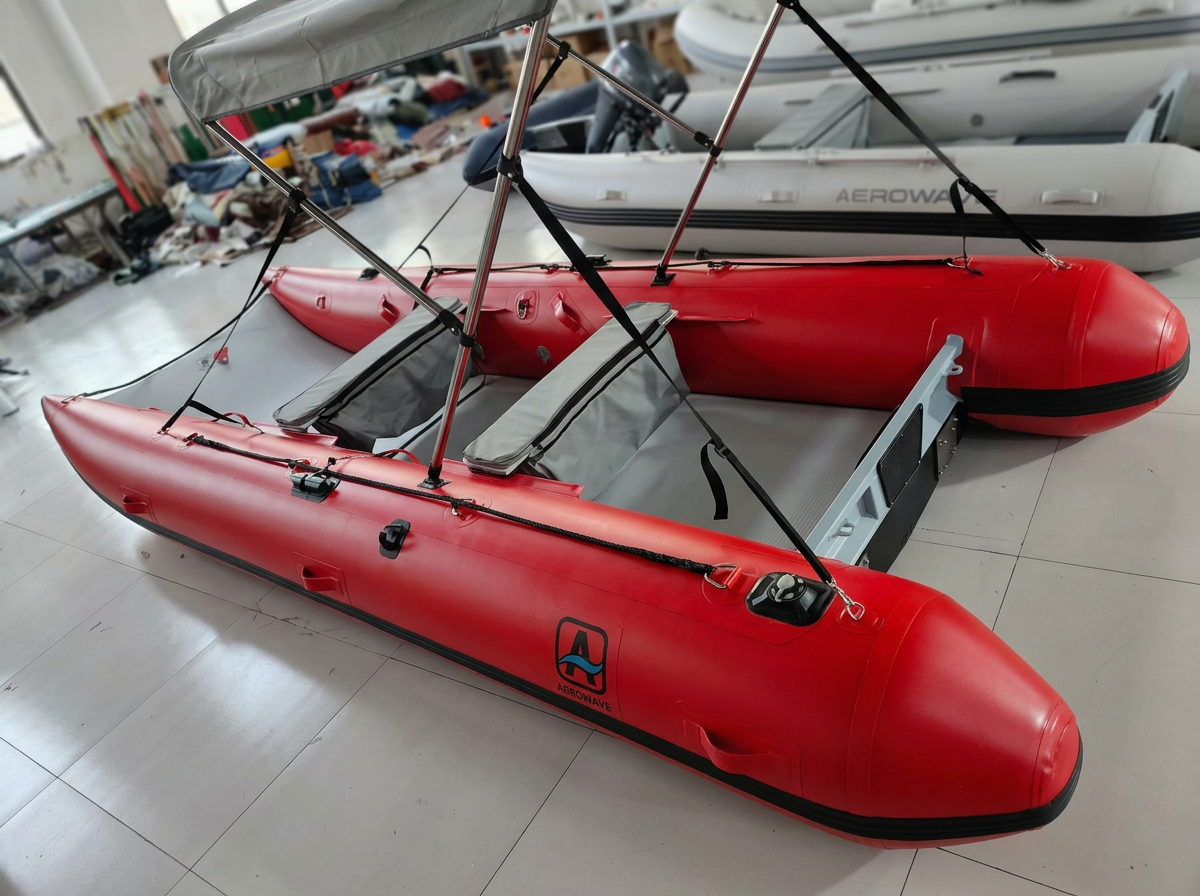
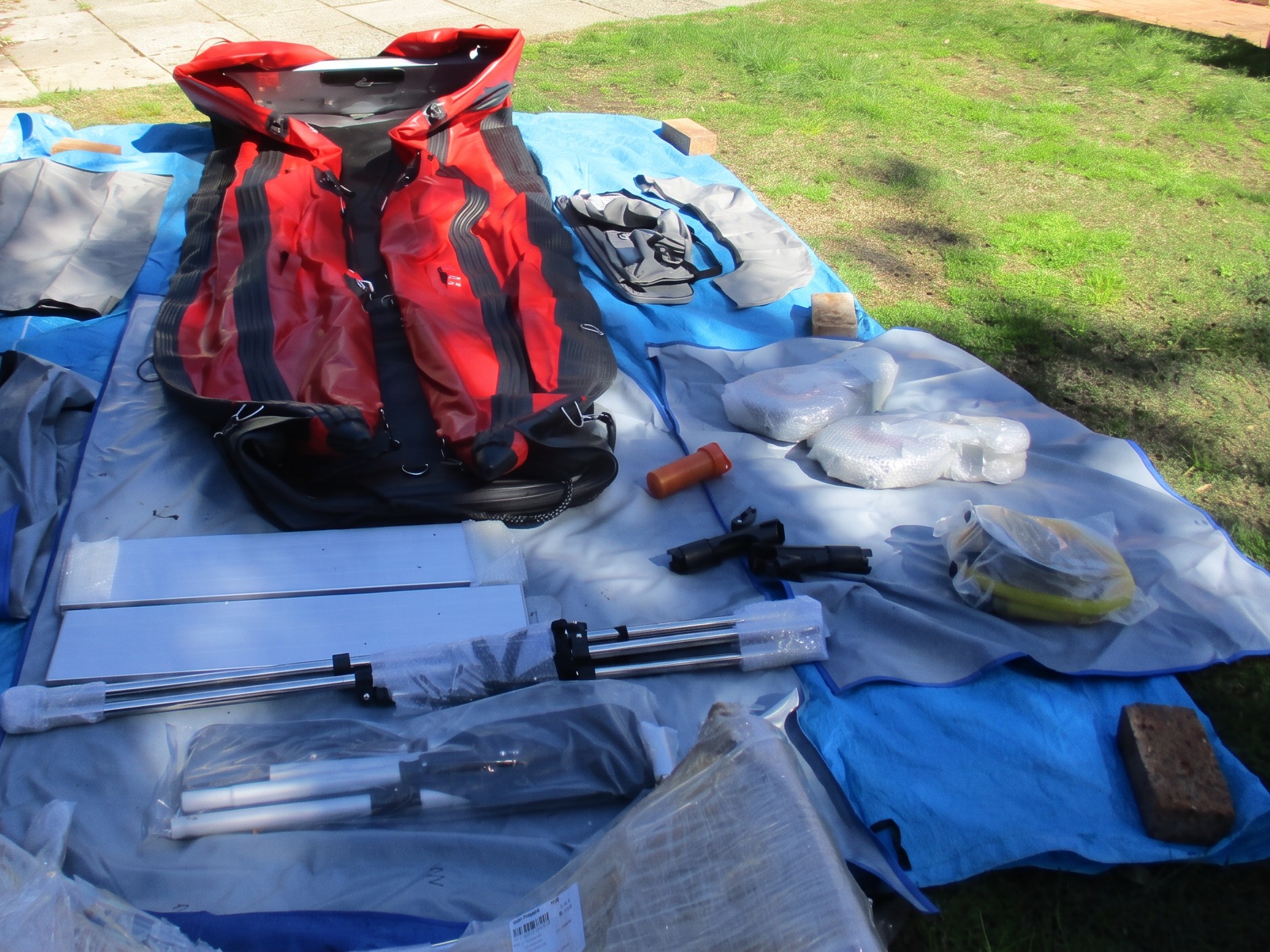
A premium modern soft inflatable catamaran—such as the AeroWave AeroCat 380 (priced at A$4,895) or the heavy-duty Aerowave Viper 330 (A$5,495)—folds down into a compact format. Stowed in an Australian-made, purpose-built storage bag (such as the Aerowave Heavy-Duty Boat Bag for A$299), the deflated hull measures roughly 120 cm by 65 cm by 40 cm.
That bundle easily fits across the cargo floor of a standard station wagon, in the boot of a mid-sized SUV, or under the tonneau cover of a dual-cab ute tub. The outboard—such as a compact Hidea 4-stroke—stows securely alongside it with a portable 12-litre or 24-litre fuel tank. When you return home, the entire rig can be stowed on a sturdy garage shelf, tucked beneath a workbench, or wheeled down an apartment elevator on a small folding hand trolley.
The Launching Reality: Concrete Boat Ramps vs Any Shoreline
Using a boat with trailer confines your launches strictly to engineered public boat ramps, whereas a soft inflatable can be deployed safely from sandy beaches, grassy riverbanks, tidal flats, or rocky coves without a ramp in sight. This single difference changes how, when, and where you can access the water across Australia.
The Boat Ramp Bottleneck
Anyone who has visited a popular public boat ramp on a pristine Saturday morning between October and April knows the drill. Pre-dawn arrival queues, congested prep bays, reversing blunders on steep concrete aprons, and impatient skippers waiting in swirling currents create immense stress. The return trip on a Sunday afternoon is often worse: low-tide ramp drop-offs that catch trailer axles, slippery green algae, and aggressive jockeying for courtesy docks.
Furthermore, trailer ramps dictate your fishing or cruising route. If the nearest ramp is 15 kilometres down-river from your target fishing spot, you must burn fuel and spend 40 minutes navigating speed-restricted waterways just to reach your grounds.
The Portability Advantage: Launch Anywhere
With a soft inflatable catamaran fitted with flip-down or removable transom launch wheels (such as those stowed neatly in the Aerowave Australian-Made Heavy-Duty Wheel Bag for A$109), the entire dynamic flips:
- You can drive directly into coastal national parks, waterfront caravan parks, or roadside rest stops.
- You inflate the craft next to your vehicle using a dual-stage 12-volt high-pressure pump (reaching the recommended 8–10 PSI on drop-stitch air decks in roughly 8 to 12 minutes).
- You attach the outboard, snap your gear into waterproof luggage like the Aerowave Viper Sovereign Bow Bag (A$250), and wheel the entire fully rigged craft down a beach track or over soft sand straight into the surf.
- You never stand in a boat ramp queue, you never wait for a courtesy pontoon, and you never have to reverse a trailer down a narrow single-lane track.
When a Dedicated Boat with Trailer Still Makes Practical Sense
A traditional boat with trailer remains the superior choice for skippers whose boating style prioritises heavy offshore payload capacity, permanent hardtops, multi-day enclosed cabin stays, or high-horsepower towing sports. A pack-down inflatable boat is remarkable, but it is not a universal replacement for every marine pursuit.
If your primary passion involves any of the following, a dedicated trailer boat remains the correct tool for the job:
- Deep Offshore Pelagic Trolling: If your regular run involves travelling 30 to 50 nautical miles beyond the shelf in search of marlin or southern bluefin tuna, you need the massive fuel tanks, outriggers, enclosed helm stations, and high-freeboard monohulls that only heavy fiberglass or plate-aluminium trailer vessels provide.
- Large Family Overnighting: If you plan on sleeping four adults in enclosed berths with a dedicated galley, marine toilet, and hot water systems, you are firmly in trailer-cruiser territory.
- Wakeboarding and Heavy Water Sports: While a soft catamaran like the Aerowave Viper 400 Open Bow paired with a 20 HP Hidea outboard (package priced at A$9,785) easily tows kids on biscuits or light kneeboards, it cannot generate the weighted wake profiles demanded by serious wakeboarders.
- Instant Hook-and-Go Driveway Readiness: If you have acreage, a vast shed, or a wide dedicated side-driveway, and your local ramp is quiet, leaving a boat permanently hitched on a trailer saves the 15-minute assembly and disassembly cycle required by a packed inflatable.
Being honest about your usage profile ensures you don't buy a craft that frustrates your specific marine goals.
The Modern Soft Inflatable Alternative: High-Pressure Air Decks and Performance
Many skippers who dismiss the "boat in a bag" concept are thinking of outdated, low-pressure inflatable runabouts that sagged in the middle and felt like wet trampolines underfoot. Modern inflatable catamarans bear virtually no structural resemblance to those budget imports of twenty years ago.
Structural Rigidity: High-Pressure Drop-Stitch Floors
The revolution in portable craft lies in high-pressure drop-stitch air decks. Featuring tens of thousands of polyester threads linking the upper and lower surfaces, these decks inflate to 8–10 PSI. At this pressure, the deck feels as solid as 12 mm marine plywood beneath your sea boots. You can stand to sight-cast, lean hard into turns, or haul a heavy icebox across the floor without the deck flexing or bowing under load.
German VALMEX Fabric Technology
Unlike budget PVC imports that degrade quickly under Australia's harsh UV index, high-end inflatable catamarans utilise premium German-engineered Mehler VALMEX fabrics.
- The AeroWave AeroCat series employs 1,100 decitex / 0.9 mm VALMEX, offering exceptional puncture resistance and lightweight agility.
- The heavy-duty Aerowave Viper range steps up to bulletproof 1,500 GSM / 1.2 mm VALMEX Heavy Plus construction, designed explicitly to endure oyster racks, gravel banks, and rough coral scrapes.
This material provides a verified service lifespan of 10 to 12 years even under aggressive coastal exposure. It is backed by robust consumer protections—such as the Viper's comprehensive 5 + 2-year warranty and the 5-year warranty across the AeroCat, WaveRunner, and Sport Series lines.
Catamaran Hydrodynamics on the Water
Because craft like the Aerowave WaveRunner 380 (hull package at A$4,945) run on twin sponsons rather than a deep-V monohull, they trap a cushion of air beneath the hull at speed. This aerated cushion dramatically softens chop impact, allowing the craft to plane with small, highly efficient outboards. With an engineered 380 mm transom height optimised for short-shaft outboards, you get high performance and extreme lateral stability at rest—all from a craft that travels to the water in the boot of an everyday family vehicle.
Total Cost of Ownership: 5-Year Breakdown
To understand the true economic difference between a traditional boat with trailer and a pack-away inflatable catamaran, you must look beyond the initial purchase price and calculate the cumulative five-year cost of ownership under standard Australian conditions.
The following comparison models an entry-to-mid-sized 3.8-metre aluminium tinnie on an unbraked galvanised trailer against a high-end 3.8-metre packable inflatable catamaran (such as an AeroCat 380 with a 15 HP 4-stroke outboard), operated over a 60-month timeframe.
| Cost Factor | Traditional Boat with Trailer (3.8m Rigid) | Modern Boat in a Bag (AeroCat 380 Package) |
|---|---|---|
| Initial Hull & Deck Cost | $4,500 – $6,000 | $4,895 (AeroWave AeroCat 380) |
| Trailer Purchase Price | $1,800 – $2,600 (Galvanised single axle) | $0 (No trailer required) |
| Outboard Engine (15 HP 4-Stroke) | $3,500 – $4,200 | $3,294 (e.g., in WaveRunner 380 + Hidea 15HP pack at $8,189) |
| 5-Year Road Trailer Rego & CTP | $850 – $1,400 (State dependent) | $0 |
| 5-Year Vessel Maritime Rego | $450 – $750 | $450 – $750 |
| 5-Year Trailer Servicing & Parts | $1,200 – $1,800 (Bearings, tyres, lights, springs) | $0 |
| 5-Year Garage / Offsite Storage Cost | $0 (Driveway) to $12,000 (Commercial yard) | $0 (Stowed on garage shelf or wardrobe) |
| Towing Fuel Consumption Penalty | ~15–20% increased vehicle fuel burn | Negligible (Carried inside vehicle cargo area) |
| Ramp Launching Tolls / Permits | Required at select managed facilities | $0 (Launch from open shorelines, reserves, or riverbanks) |
| Estimated 5-Year Ownership Total | $12,300 – $28,750 | $8,639 – $8,939 |
As the numbers show, eliminating the road trailer strips thousands of dollars of recurring administrative and mechanical overhead out of your recreational budget. That is money that stays in your pocket for fuel, quality fishing tackle, or long-distance touring.
How to Decide: A Practical Checklist for Australian Boaters
If you are on the fence between committing to a boat with trailer or investing in a premium portable craft, evaluate your actual habits against this operational checklist:
- Check Your Storage Real Estate: Do you have a secure, off-street, flat space at least 5.5 metres long to house a trailer and tow coupling without blocking footpaths, garden access, or council sightlines? If not, a bag-stored inflatable avoids immediate council fines or steep commercial storage fees.
- Assess Your Tow Vehicle: Does your daily commuter vehicle possess a rated tow hitch, transmission oil cooler, and adequate unbraked towing capacity, or do you drive an electric vehicle, a compact hatchback, or a mid-sized crossover? A portable catamaran travels inside virtually any vehicle without reducing electric driving range through aerodynamic drag.
- Count Your Solo Trips: Do you frequently head out fishing alone, or do you always boat with a strong, capable crew? Backing down a ramp, holding a trailer boat off concrete pylons in crosswinds, and winching a heavy hull solo requires considerable physical effort. In contrast, an inflatable on launch wheels can be rolled into the water and retrieved by one person with ease.
- Evaluate Your Destination Map: Are your dream boating locations remote coastal headlands, red-dirt estuary tracks across northern Australia, or hidden billabongs where road trailers are physically impossible to navigate? A boat in a bag allows you to take your craft across the Simpson Desert or through rough high-country tracks inside your 4WD, ready to assemble wherever water appears.
- Be Honest About Assembly Patience: Are you willing to spend 15 minutes setting up your pump, floor, and outboard at the water's edge in exchange for zero driveway clutter and zero trailer rego? If you despise assembly and demand instant 60-second launches at a ramp, a trailer rig remains your best match.
The Bottom Line
The choice between a boat with trailer and a soft inflatable catamaran is not a question of which craft is fundamentally "better." It is an honest evaluation of how you actually live and boat in Australia today.
A trailer boat delivers turnkey convenience for large offshore pursuits and effortless towing—provided you have the garage real estate, the tow vehicle, and the appetite for dual registrations and running-gear maintenance. But if you are frustrated by driveway congestion, ramp chaos, escalating trailer upkeep, and restricted access to remote waters, a premium soft inflatable catamaran completely rewrites the equation.
Built to rigorous ISO 6185-3 CE standards, capable of handling ocean swell, and compact enough to sleep on a garage shelf, modern soft inflatables give you the open water without the ball-and-chain of a trailer.
If you would like to discuss sizing, load ratings, or outboard pairings for your local waterways, call our team on +61 2 4335 1603 or email sales@easyinflatables.com.au. Every Aerowave boat is custom-built to order (taking up to three and a half weeks to build, or four weeks for Hypalon, followed by 10 to 13 days delivery, with delivery included for Australian customers), backed by a simple 50% build deposit.
Related
Weekend-Proof Score 17 questions · about 2 minutes
Will the boat you're about to buy survive an Australian summer?
Seventeen straight questions about where you'll use it, what you'll ask of it and the boat you're weighing up. You get a score out of 100, the exact weak points in your plan, and the one boat that genuinely fits.
Free · score and full report sent to you
So which one is yours?
Pick how you'll actually use it and we'll take you straight to the right hull.
I want to fish it
Open bow, rod holders, deck space you can stand and cast from.
Viper Sport 400Family, diving and the beach
3.8 m Series 3 catamaran — low bow to climb back in wearing fins or a tank.
WaveRunner 380Tender / one-person launch
3.3 m hard-floor boat that packs into a bag and still takes a beach landing.
Viper 330Shop gear featured in this guide
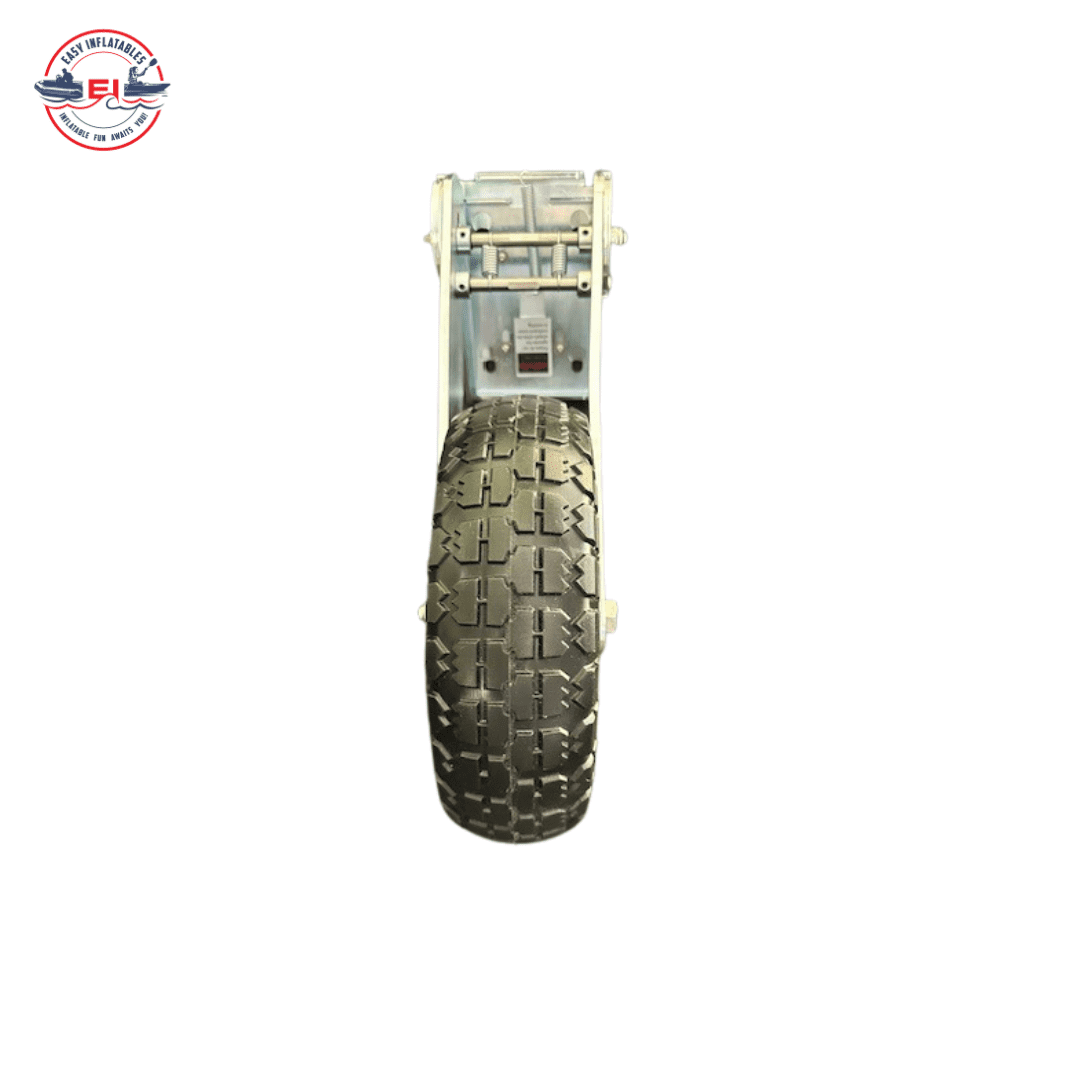
LockPro Plus Inflatable Boat Wheel Set
The LockPro Plus Inflatable Boat Wheel Set offers a premium solution for easy and safe loading of inflatable boats, featuring an Italian stainless steel quick-lock system.
Free freight to United States · taxes included, nothing to pay on arrival
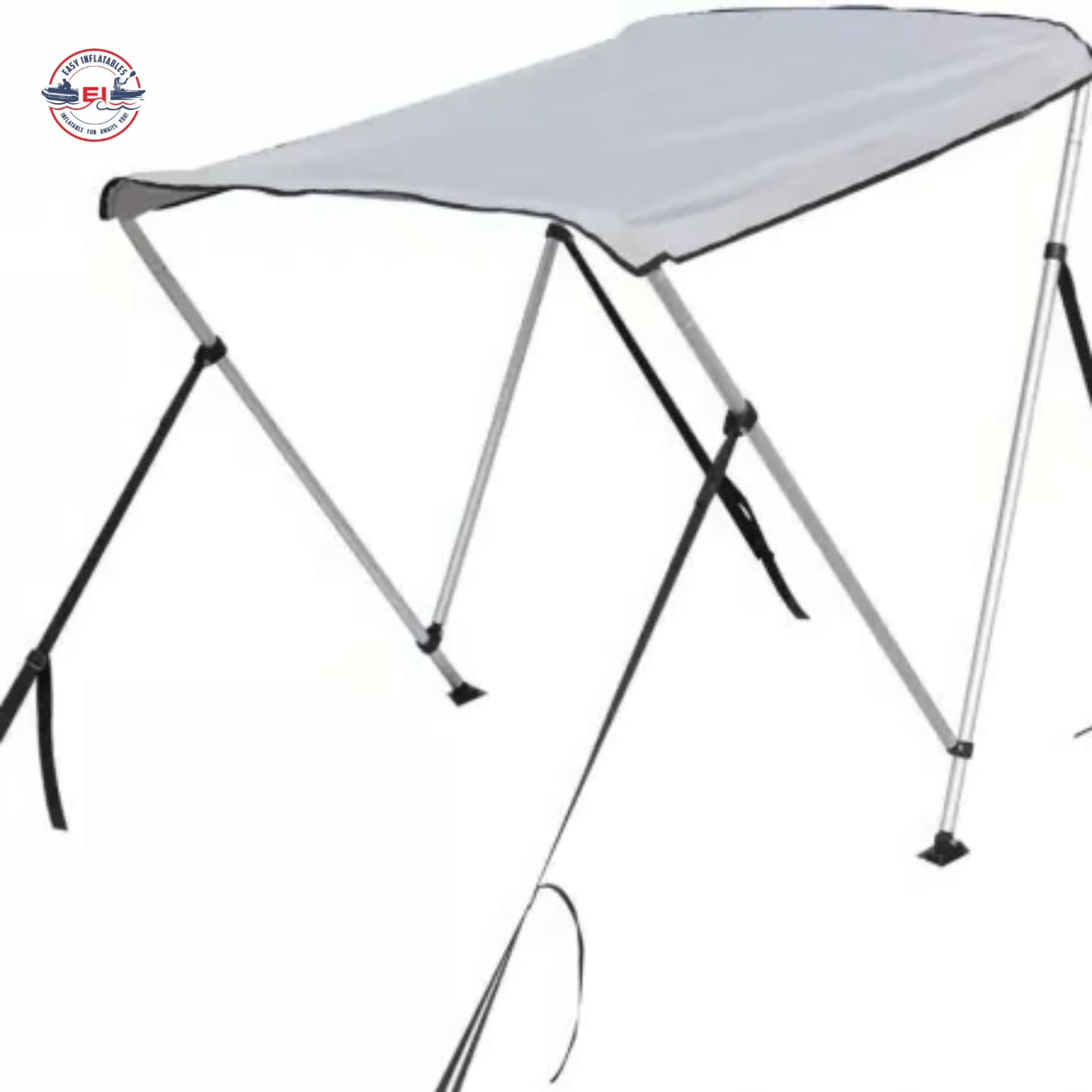
Aerowave Inflatable Boat Bimini
Lightweight inflatable UV sun-shade canopy for inflatable boats, SIBs and catamarans. Now available in two colours — Light Grey and Black. Fast setup, compact storage and premium UV protection for Australian boating.
Free freight to United States · taxes included, nothing to pay on arrival
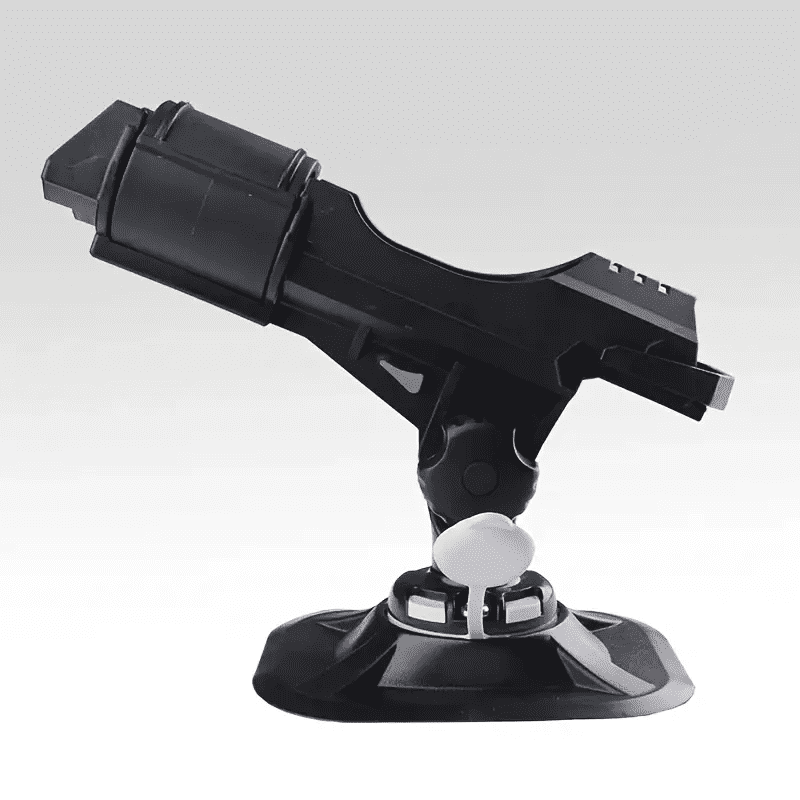
Inflatable Boat Rod Holder + Mount
Swivel rod holder and its star-lock base mount, glued onto your boat during the build. A$100 per unit.
Free freight to United States · taxes included, nothing to pay on arrival
Not sure which suits you? Talk to a real boat owner.
Before you spend a cent
Buying from Australia, delivered to United States
You have never heard of us, we are on the other side of the world, and the internet is full of fakes. Fair enough. Here is everything you would need to check us out, in one place — no forms, no chat bot.
Australian designed business
Easy Inflatables, Avoca Beach NSW 2251. ABN 96 856 548 613. International orders ship from our Hong Kong hub.
Rated 5.0 on Google
Every review is on our Google Business Profile, with the reviewer's name and the date.
CE certified, 5 + 2 year hull warranty
ISO 6185-3 and EU Directive 2013/53/EU. Warranty honoured worldwide.
Tracked, insured, door to door
Freight, duty & taxes included · nothing to pay on arrival.
- Who am I actually buying from?
- Easy Inflatables, Avoca Beach NSW 2251, Australia. ABN 96 856 548 613. Sean is the owner and skipper, Gary Stewart handles sales on +61 2 4335 1603, Karen Matthews handles email. The boats are Australian designed; international orders ship from our Hong Kong dispatch hub so your landed price stays competitive. Phone us before you pay a cent — a real person answers.
- Is this really an Australian product?
- Yes — Australian designed and engineered on the NSW Central Coast. Manufacturing is done offshore to our spec, and international orders ship direct from our Hong Kong dispatch hub. If we routed every boat through Australia first, the freight alone would roughly double or triple your cost for the same hull.
- What do I pay, and what is not included?
- The delivery and import terms depend on your country. US and UK boat orders include free express freight and prepaid import charges — nothing to pay on arrival. New Zealand and named Asia/Pacific lanes include duty and tax. EU buyers pay import charges on arrival. Other destinations show their terms before payment.
- How do I pay safely?
- Card through Stripe (Visa, Mastercard, Amex, Apple Pay, Google Pay) or bank transfer. Card payments carry your bank's own dispute protection. We never ask for crypto, gift cards or payment to a personal account.
- What if it arrives damaged?
- Every boat ships fully tracked and insured door to door. Photograph the carton and the boat on arrival and email us — transit damage is claimed and replaced through us, not left with you and the courier.
- Is the warranty real outside Australia?
- Yes. The 5 + 2 year hull warranty on 1.2 mm VALMEX Heavy Plus and Orca Hypalon hulls applies wherever you are. Replacement parts are held in Australia and at our overseas hub and go out by express courier to your door.
- Is the boat actually certified?
- All Aerowave catamarans are CE certified to ISO 6185-3 and EU Directive 2013/53/EU. Certification paperwork is supplied with the boat — ask and we will send it before you order.
Frequently asked questions
- Can I transport an inflatable catamaran on a boat trailer if I change my mind later?
- Yes. Soft inflatable catamarans can easily be carried on a standard unbraked flatbed or bunk-style trailer if you ever decide you prefer trailer towing. You simply support the twin sponsons on carpeted timber bunks rather than narrow rollers to distribute the hull weight evenly.
- How much does it cost annually to register and maintain a boat trailer in Australia?
- Depending on your state, annual trailer road registration and CTP insurance typically range from $150 to $280 per year. Factoring in routine wheel bearing repack kits, marine grease, submersible light replacements, and tyre depreciation, basic annual maintenance easily averages another $200 to $400 annually.
- How long does it take to inflate a boat from a bag at the water's edge?
- Using a quality dual-stage electric 12-volt pump powered from your vehicle battery, fully inflating a 3.8-metre catamaran and its 8–10 PSI drop-stitch air deck takes roughly 10 to 12 minutes. Total setup time—including attaching launch wheels, fitting the outboard, and loading gear—is comfortably under 20 minutes.
- Do I need a boat ramp if I don't have a boat with trailer?
- No, that is one of the primary advantages of an inflatable craft. When fitted with transom-mounted flip-down beach wheels, you can roll the fully assembled vessel over sand, pebble banks, or grass reserves directly into the water without needing a concrete boat ramp.
- Can one person launch a soft inflatable boat without a trailer?
- Yes. Because modern inflatable catamarans weigh between 35 kg and 65 kg depending on model size and fabric weight, one adult can comfortably wheel the fully rigged boat and small outboard down to the waterline using transom wheels, without placing strain on their back.
- How do insurance costs compare between a boat with trailer and a portable inflatable?
- A boat with trailer requires marine hull insurance plus vehicle road coverage for the trailer chassis, leading to higher combined premiums. Portable inflatables typically attract lower marine hull premiums and can often be insured under contents policies while stowed in your home or vehicle.
- Will an inflatable catamaran last as long as a traditional aluminium or fiberglass trailer boat?
- While rigid aluminium boats can last decades with proper care, premium inflatable catamarans constructed from heavy-duty German Mehler VALMEX fabric offer a proven working lifespan of 10 to 12 years. They do not suffer from aluminium plate fatigue, cracked weld seams, or trailer transport gelcoat fractures.
Ready to set sail?
Premium German-fabric inflatable catamarans, built to order and delivered to your door. Talk to our team or browse the fleet.
Like this guide? Get the next one in your inbox.
Owner-tested tips, gear deep-dives and Aussie boating know-how — no spam.