
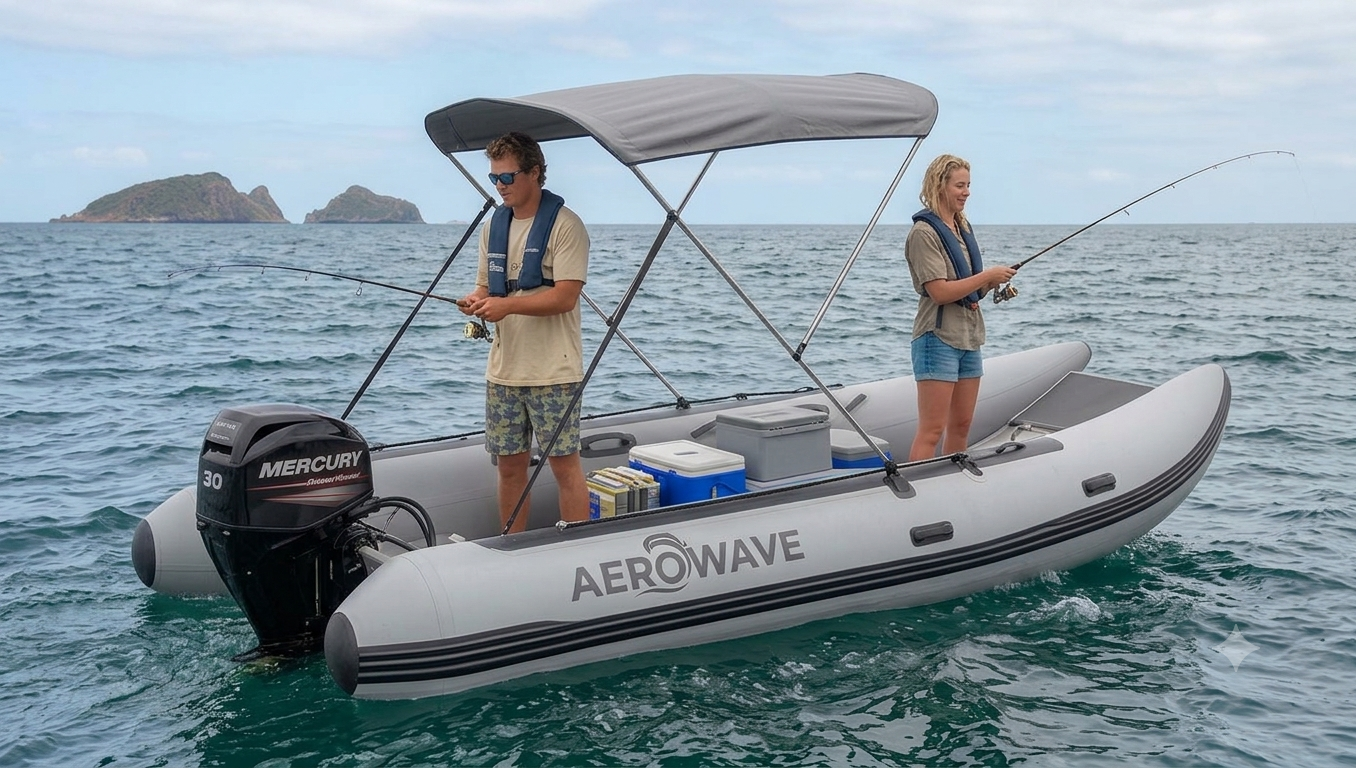
How to Choose an Inflatable Boat: 12 Specs That Matter More Than the Price Tag
A 12-point checklist for choosing an inflatable boat: fabric GSM, seams, transom, floor, valves, tubes, capacity plate, pressure, packed weight, landed cost and support.
Our recommendation
Aerowave Viper 430 Open Bow — Sports Package
Length
4.30m / 14'1"
Beam
2.00m / 79"
Tube Diameter
51cm
Bare Boat Weight (without Bimini & wheel kit)
~60kg / 132lbs
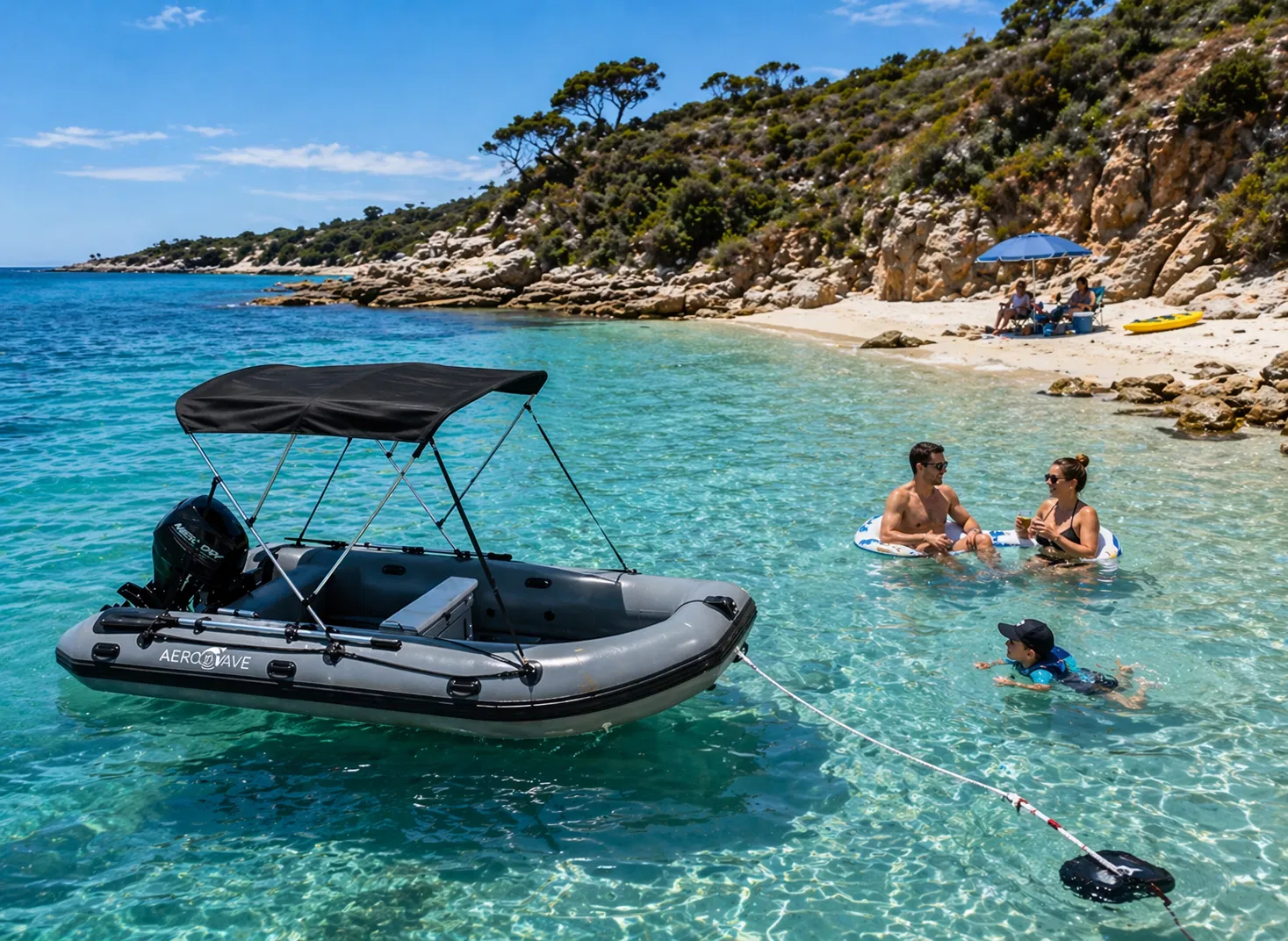
Choosing an inflatable boat can feel like comparing apples with mystery fruit. Listings highlight a low price, a big horsepower figure or "heavy-duty" fabric, but leave out the details that tell you how the boat is built and whether it suits your plans.
Use this checklist to compare the specifications that affect safety, durability, portability and the real cost of ownership. Before you buy, think about where you'll use the boat, how often you'll carry it, and everything you'll bring aboard — not just the number of people it holds.
1. Intended use and operating conditions
Start with the water, not the sale price. A compact tender for sheltered bays has different priorities from a fishing boat used every weekend, or a family boat that meets coastal chop.
Think about your usual launch spot, likely conditions, trip length and whether you'll stand while fishing. A light boat is easy to carry; a more robust build suits frequent use and rougher landings. Follow the manufacturer's limits and local boating rules for the water you choose.
2. Fabric weight, thickness and material
Ask for the fabric's brand, material, thickness and mass per square metre (GSM). Denier or decitex describes the yarn, not the strength of the finished fabric, so compare the full specification rather than a "1000D" or "heavy-duty" label.
As a guide, quality 0.9 mm PVC fabrics are around 1,100 GSM, while 1.2 mm heavy-duty PVC fabrics are around 1,500 GSM. Thicker, heavier material suits frequent use and abrasion resistance, and usually adds some weight and cost.
The AeroCat Series uses 1100 GSM / 0.9 mm VALMEX® for a lighter, easy-to-carry boat, while the Viper Series uses 1500 GSM / 1.2 mm VALMEX® Heavy Plus, rated for a 10–12 year service life, with an ORCA Hypalon upgrade available. They're different priorities — portability versus maximum durability. See the fabrics page.
3. How the seams are made
Ask whether the seams are thermo-welded or glued, and which parts of the boat use each method. Thermo-welding uses heat and pressure to fuse compatible PVC layers. Glued construction also works well when workmanship and the adhesive system are right.
Ask the seller to explain vague phrases such as "cold welded", and check what the warranty covers. Hypalon-type fabrics are joined with adhesive rather than heat welding, so compare the complete fabric-and-seam system. Read Welded vs Glued seams and see our manufacturing page.
4. Transom construction and motor fit
If you'll run an outboard, check the transom is designed for it. Ask for the maximum motor power and weight, and the recommended shaft length. Look for reinforced attachment points and a transom that feels solid.
Transom height affects performance too. The standard Aerowave transom is 380 mm, built for a short-shaft (15") outboard — it puts more propeller in the water and helps stop ventilation in chop. Check each model's motor limits rather than assuming a feature allows a bigger engine. More in Outboard Shaft Length Explained.
5. Floor type and the trade-offs
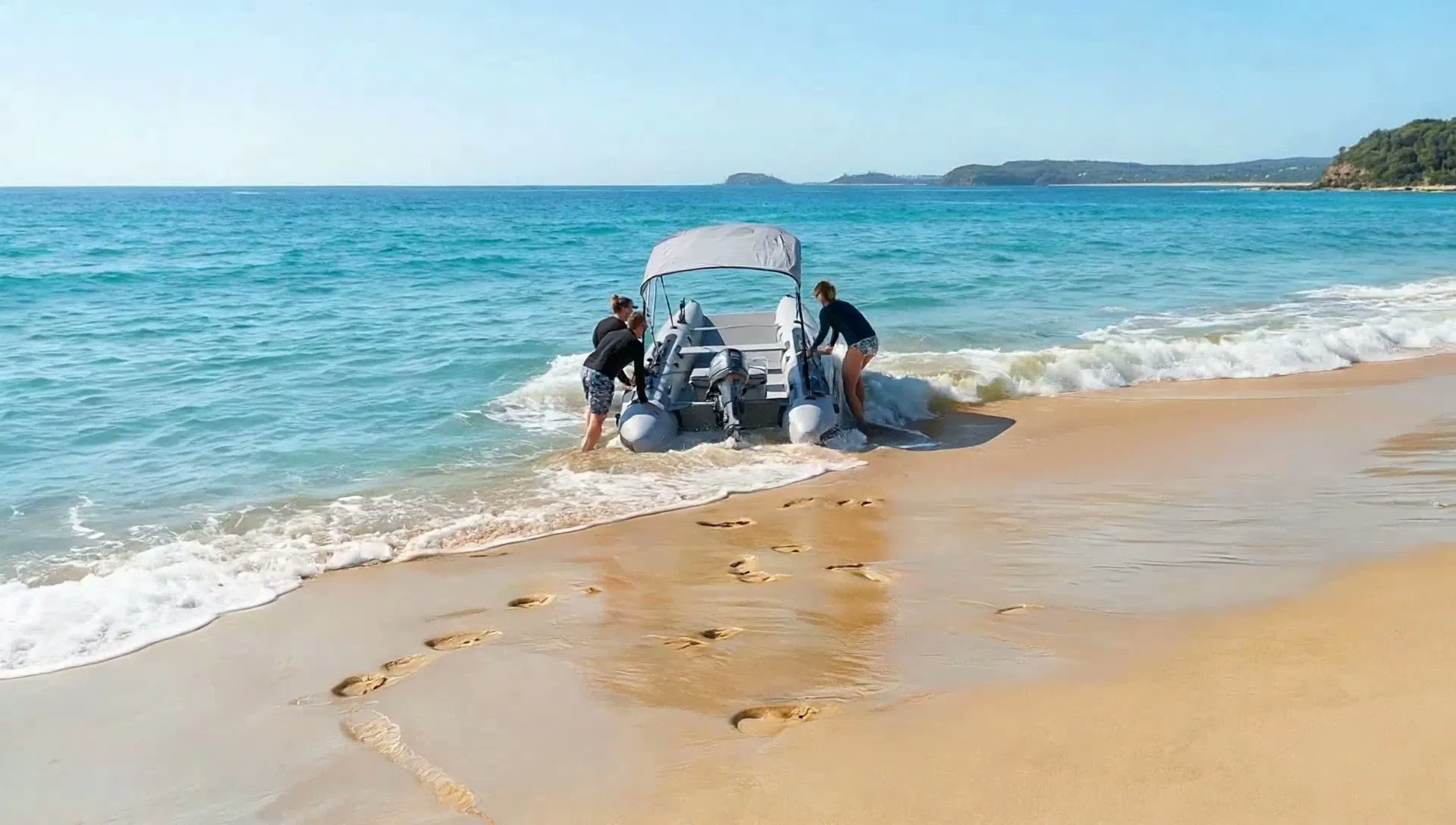
Floor choice affects stability underfoot, set-up time, packed size and carrying weight. Common options are slatted floors, high-pressure air decks, aluminium boards and rigid hulls.
A high-pressure air deck gives a firm, portable floor without heavy boards; check the correct pressure for the particular boat. An aluminium floor gives a hard surface but adds weight and assembly time. Think about what you'll do aboard — sit in a tender, or stand while fishing — and how far you'll carry the packed boat. Compare in Air Deck vs Aluminium Floor.
6. Pressure-relief valves
Air pressure rises with temperature. A boat inflated on a cool morning can heat up in direct Australian sun, increasing pressure in every chamber. Ask whether pressure-relief valves are fitted, where they are and whether they need maintenance.
Every Aerowave Viper, Sovereign, AeroCat catamaran, WaveRunner 380 and Sport Series Offshore has an automatic over-pressurisation valve on each air chamber. Still use a gauge, check pressure as conditions change and avoid leaving an inflated boat in strong sun unattended.
7. Tube diameter and hull layout
Tube diameter and hull design affect buoyancy, ride and how the boat behaves loaded. Bigger tubes add buoyancy and also bulk, so look at the whole design: tube spacing, hull shape and transom position.
Compare usable deck space with overall length. A catamaran's twin-hull layout works differently from a conventional inflatable hull — see Inflatable Catamaran vs Traditional Inflatable Boat.
8. Capacity plate and load limits
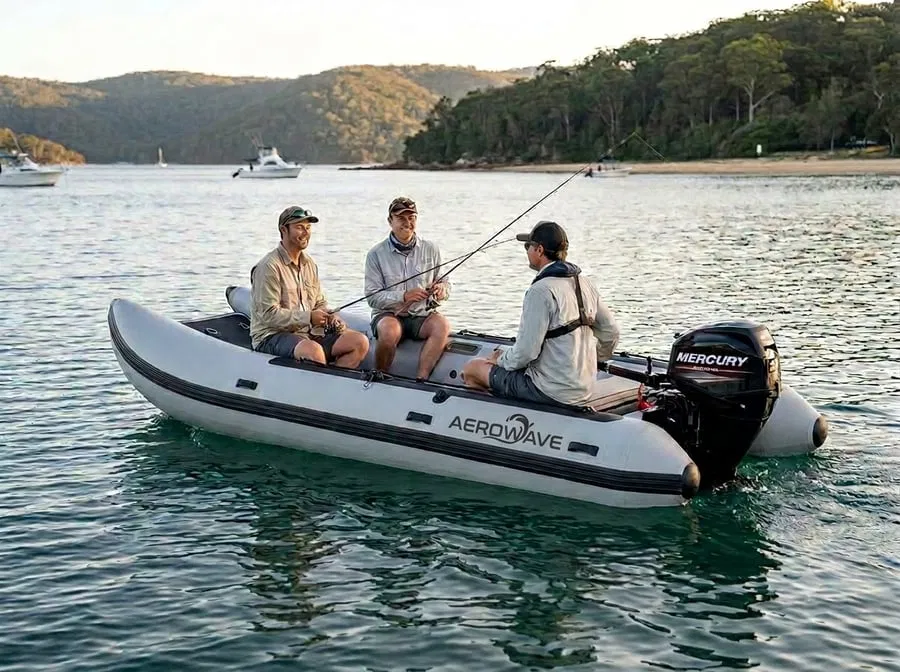
Check for a legible capacity plate that matches the exact model. In Australia many boats carry the Australian Builders Plate (ABP). Inflatable boats certified to EU Directive 2013/53/EU are specifically excluded from the ABP Standard, so Aerowave boats carry the manufacturer's European compliance plate and a Declaration of Conformity listing maximum people, load and outboard power — see Safety & Compliance. Buying remotely? Ask the seller for a clear photo of the plate.
The stated maximum is a limit, not an everyday load. Count people, motor, fuel, battery, safety equipment and gear. Read Inflatable Boat Weight Capacity Explained.
9. Working pressure and inflation instructions
Ask for the recommended operating pressure for each chamber and the floor. "Firm to the touch" isn't a measurement — different sections can need different pressures, and incorrect inflation affects performance and stresses components.
Check whether a gauge or electric pump is included, how the valves work, and whether to recheck pressure during a day on the water. Keep the instructions with the boat so everyone inflates it correctly.
10. Packed weight and portability
"Portable" means different things to different buyers. Ask for the packed weight and dimensions, and whether those include the floor, seats, pump, bag and accessories.
Check you can lift the packed boat safely, where you'll store it and how long set-up takes. If you'll carry it often, a lighter model like the AeroCat is worth a look. Read Choosing an Inflatable Boat That Fits in Your SUV.
11. Full landed cost, not just the listing price
Before paying, get a written total including the boat, delivery, taxes and any import charges. Confirm what's in the package: pump, gauge, floor, seats, oars, repair kit and carry bag all affect the comparison.
Aerowave boats are priced as complete packages with express delivery included and nothing extra to pay on arrival in Australia. Compare every model and price on the boats page.
12. Warranty, parts and after-sales support
A boat is a long-term purchase, so ask who you contact if a valve leaks, a part wears or you need repair advice. Check the written warranty, how to claim, what's covered and whether parts are available locally.
Good support matters most for first-time buyers. See our warranty and spare parts pages, or call Gary on +61 2 4335 1603.
Take this checklist shopping
Compare every boat with the same questions: fabric material and GSM, seam construction, transom and motor limits, floor type, pressure-relief valves, tube dimensions, capacity limits, working pressure, packed weight, complete landed price and local support.
The right boat isn't the cheapest or the heaviest — it's the one whose specifications match your water, load, storage and budget, with its limits and full costs clearly stated. Start with our Inflatable Boat Buying Guide or explore the Easy Inflatables range.
Frequently asked questions
- What is the most important spec when choosing an inflatable boat?
- Start with intended use, then fabric: brand, material, thickness and GSM together. A boat whose specs match your water, load and storage beats a cheaper listing that leaves details out.
- What GSM fabric should an inflatable boat have?
- Quality 0.9 mm PVC fabrics are around 1,100 GSM; 1.2 mm heavy-duty fabrics are around 1,500 GSM. Aerowave Vipers use 1500 GSM / 1.2 mm VALMEX Heavy Plus; AeroCats use 1100 GSM / 0.9 mm VALMEX.
- Do inflatable boats need an Australian Builders Plate?
- Inflatable boats certified to EU Directive 2013/53/EU are specifically excluded from the ABP Standard. Aerowave boats carry the manufacturer's European compliance plate and a Declaration of Conformity listing capacity and engine limits.
- Is an air deck or aluminium floor better?
- A high-pressure air deck is firm, light and quick to set up. An aluminium floor is hard and rigid but heavier and slower to assemble. Choose based on how you'll use and carry the boat.
- Why do pressure-relief valves matter?
- Air pressure rises as a boat heats in the sun. Relief valves vent excess pressure automatically, protecting seams and valves, alongside regular gauge checks.
- What should the price of an inflatable boat include?
- Get a written total covering the boat, delivery, taxes and any import charges, plus what's in the package. Aerowave boats are priced as complete packages with express delivery included in Australia.
- How heavy is a packed inflatable boat?
- It varies by model and fabric. Ask whether the packed weight includes the floor, seats, pump and bag, and check you can lift each bag safely.
Finance this boat from $29/week
Estimate only — powered by Australian Motorcycle & Marine Finance (AMMF).
Paid upfront (AUD)
$650
10% of price
Term
5 years
60 monthly repayments
Comparison rate
9.95% p.a.
Subject to AMMF approval
Weekly
$29
Monthly
$124
Amount financed
$5,845
Indicative only. Actual repayments depend on your AMMF credit assessment, term, fees and the balloon you select. Talk to AMMF for a personalised quote on Aerowave Viper 430 Open Bow — Sports Package.
Like this guide? Get the next one in your inbox.
Owner-tested tips and Aussie boating know-how — no spam.
Ready when you are
Build your Viper 430 Open Bow — Sports Package in under 3 minutes.
1500 GSM / 1.2 mm VALMEX® hull. Five-year limited hull warranty plus two years of extended limited structural hull cover, subject to conditions. Free freight to United States · taxes included, nothing to pay on arrival.
delivered to your door
See it for yourself
Real boats. Real owners. Real people behind them.
Plenty of what you read online these days is generated. Check us out properly — the factory, the reviews and the owners are all one click away. Why we use AI, and how to check we’re real
How our boats are built
Walk the production line: thermo-welded seams, 1.2 mm VALMEX Heavy Plus hulls, over-pressure relief valves on every chamber.
See the buildGoogle Maps reviews
Real Australian owners, five stars, published on our Google Business Profile with the map — read them there, not just on our own site.
Open Google Maps reviewsOwner stories
Boats in use — offshore, on rivers, on rescue duty. Photos and words from the people who actually own them.
Read owner stories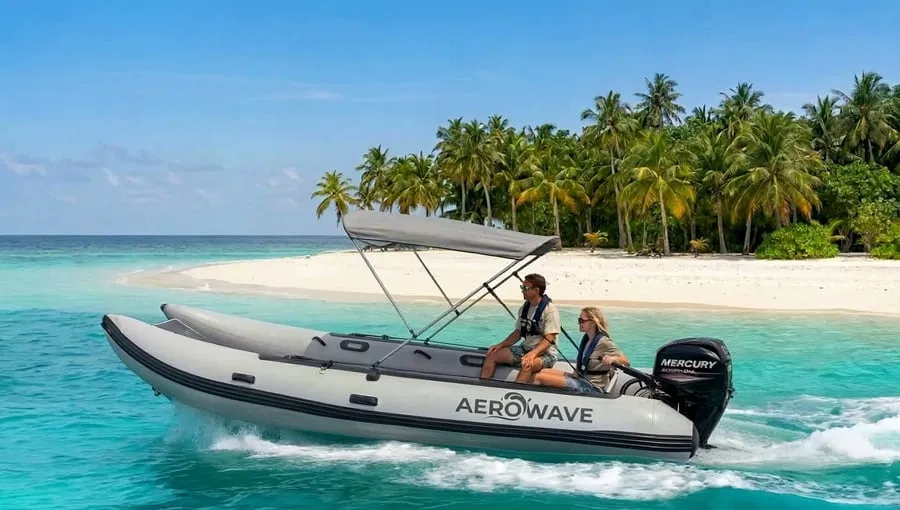
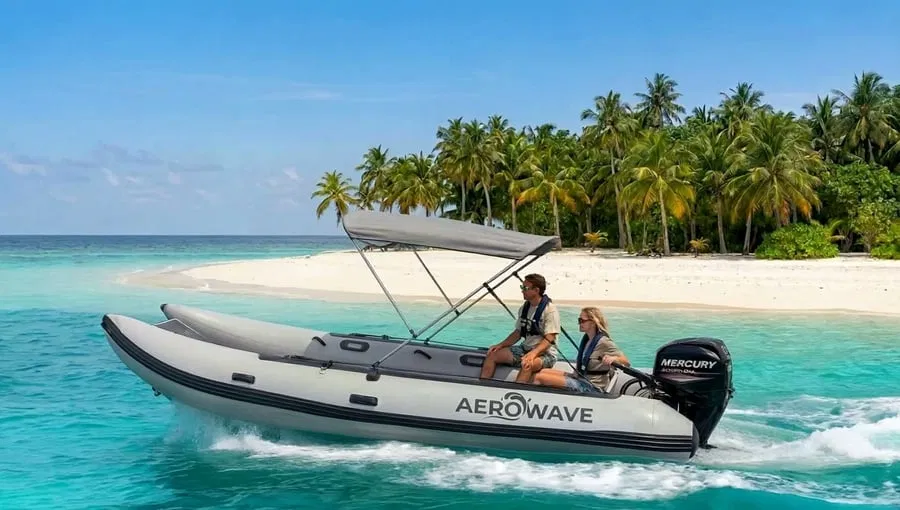
Aerowave Viper 430 Open Bow — Sports Package
US$4,628 USD · delivered to your door