The Ultimate Guide to Using an Inflatable Catamaran as a Dive Boat
Discover why inflatable catamarans are the ultimate platform for scuba diving. Our guide covers re-boarding, gear storage, safety, and choosing the best inflatable dive boat.
At a glance
Discover why inflatable catamarans are the ultimate platform for scuba diving. Our guide covers re-boarding, gear storage, safety, and choosing the best inflatable dive boat.
- Why is a Dive Boat Inflatable Catamaran the Smart Choice?
- How Do You Get Back Into an Inflatable Dive Boat?
- The Open Transom: A Diver's Best Friend
- Re-boarding Techniques for Inflatable Boats
What we'd put you in
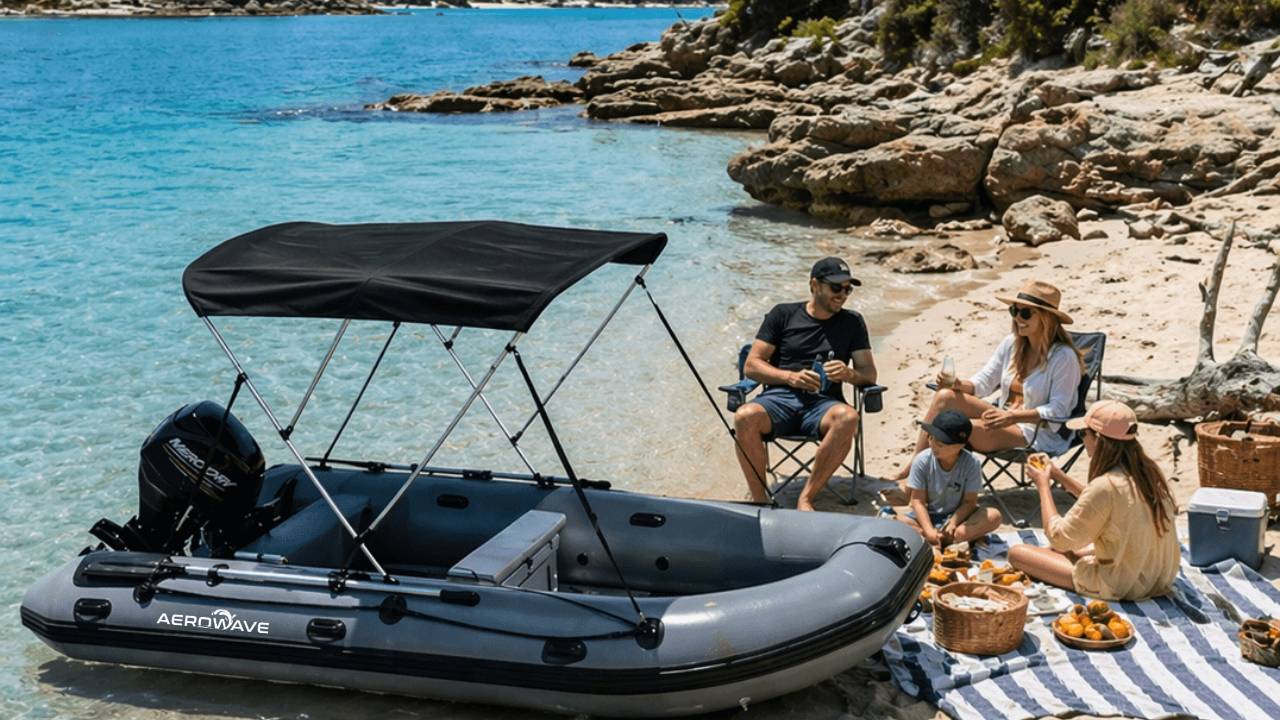
Aerowave Viper 400 Sovereign
If you're reading about catamarans, this is the one we build most of.
US$3,279 USD
Delivered to your door, today's rate
- Free freight to United States · local taxes payable on arrival
- 7-year hull warranty
🇺🇸 Shipping to United States · landed price quoted in writing
Yes — we ship the Aerowave Viper 400 Sovereign to United States. Here's the landed price.
If you're reading about catamarans, this is the one we build most of.
Aerowave Viper 400 Sovereign
- Boat package (export price)
- US$3,858
- 15% tariff relief credit
- − US$579
- Express air freight to United States
- Included
- Import duty, taxes & customs clearance
- Payable on arrival
- Estimated landed, USD
- US$3,279
Indicative, converted at today's rate, before local duty and tax on arrival. Ask below and we'll put a fixed figure in writing, valid 30 days.
- 7-year hull warranty
- 1500 GSM / 1.2 mm VALMEX® Heavy Plus hull
- CE certified to ISO 6185-3 and EU Directive 2013/53/EU
- Door-to-door, tracked the whole way
Your price, delivered to your door — freight included.
We email the full PDF quote (spec, freight, finance, WavePay) to your inbox in under 60 seconds. No spam — one quote, one follow-up.
See it for yourself
Real boats. Real owners. Real people behind them.
Plenty of what you read online these days is generated. Check us out properly — the factory, the reviews and the owners are all one click away. Why we use AI, and how to check we’re real
How our boats are built
Walk the production line: thermo-welded seams, 1.2 mm VALMEX Heavy Plus hulls, over-pressure relief valves on every chamber.
See the buildGoogle Maps reviews
Real Australian owners, five stars, published on our Google Business Profile with the map — read them there, not just on our own site.
Open Google Maps reviewsOwner stories
Boats in use — offshore, on rivers, on rescue duty. Photos and words from the people who actually own them.
Read owner stories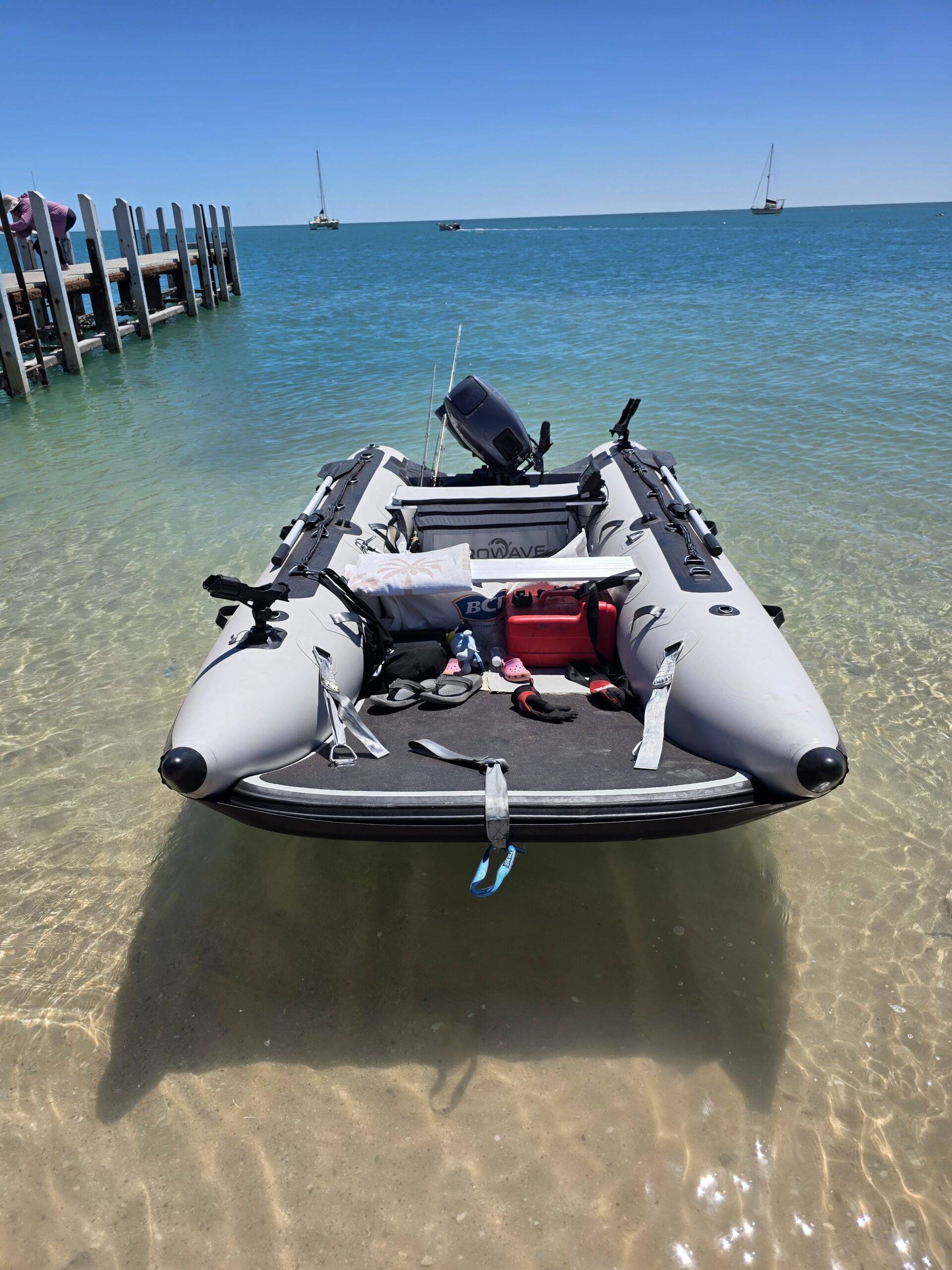
For the dedicated diver, the boat is not the destination—it's the key that unlocks the underwater world.
For too long, Australian scuba divers have been sold a false choice: either join a crowded charter, or commit to the immense cost, storage, and maintenance of a traditional rigid-hull boat. A trailer, a tow vehicle, harbour mooring fees, yearly anti-fouling, fibreglass repairs—it's a heavy burden for what might be a dozen weekends of use a year. But what if there was a third way? A vessel that combines the stability of a much larger boat, the portability of a car-topper, and the low running costs that leave more in the budget for air fills and better regs.
This is the promise of the modern inflatable catamaran. Forget the flimsy, round-nosed tenders you see tied to jetties. We're talking about high-pressure, military-grade fabric vessels engineered for stability, performance, and practicality. They represent a fundamental rethink of what a private dive boat can be. They are not just an alternative; for small groups of two to four divers exploring local coastlines, they are arguably the superior solution.
This guide is for the serious diver considering independence. We'll cut through the marketing fluff and get into the practical realities of using an inflatable catamaran as a dedicated dive platform. We'll cover everything from gear staging and water entries to anchoring and choosing the right model for your specific needs.
Why is a Dive Boat Inflatable Catamaran the Smart Choice?
The advantages of an inflatable catamaran over both traditional rigid boats and conventional inflatable monohulls are not just incremental; they are transformative for the diving experience. The core of this superiority lies in the twin-hull design, which provides a level of stability and efficiency that single hulls simply cannot match.
Stability is the cornerstone of a safe and comfortable dive platform. When you're dealing with heavy cylinders, clumsy fins, and the precarious process of gearing up, a boat that pitches and rolls is more than an annoyance—it's a hazard. An inflatable catamaran, with its wide stance and two points of contact on the water, is exceptionally stable at rest. You can have two divers sitting on one tube to gear up, and the boat will barely list. Compare this to a V-hull boat, where a single person's movement can cause significant roll, and the difference is night and day.
This stability extends to performance under way. The catamaran design traps a cushion of air between the hulls, lifting the boat and reducing wetted surface area. This means less drag, better fuel economy, and a smoother ride through chop. You'll use less fuel to get to your dive site, and you'll arrive more refreshed and less beaten-up than you would in a comparable-sized rigid boat.
Finally, there's the sheer practicality. A boat like the AeroWave AeroCat 380 can be deflated, rolled up, and stored in the garage, ready for your next adventure. There are no mooring fees, no trailer registration, and no need for a dedicated ramp. You can launch from beaches, creek beds, and sheltered coves that are completely inaccessible to larger vessels, opening up a whole new world of unexplored local dive sites.
How Do You Get Back Into an Inflatable Dive Boat?
This is the single most common question we hear, and it's a critical one. The image of struggling to haul yourself over a large, round tube is a valid concern for anyone who's used a budget inflatable. However, premium inflatable catamarans are designed with easy re-entry in mind.
The Open Transom: A Diver's Best Friend
This is the absolute game-changer. Unlike monohull inflatables which have a continuous tube running around the stern, many inflatable catamarans feature an open-transom design. This creates a low, easily accessible platform at the back of the boat between the two hulls. There's no high tube to clamber over. You simply swim to the stern, remove your fins, and use the solid transom or a small step to slide or step back onto the air deck. It's the closest you can get to the ease of a dedicated dive platform on a multi-million dollar charter boat, but on a vessel you can fit in the back of your car.
Re-boarding Techniques for Inflatable Boats
Even with an open transom, knowing the right technique makes all the difference.
-
The Fin Push-Up: The classic method. Approach the side tube, place both hands flat on top, and use a powerful scissor kick with your fins to propel the top half of your body out of the water and onto the tube. From there, you can swing your legs in. This works best when you're fresh and the water is calm.
-
The Buddy Assist (Heave-Ho): A simple and effective method for a two-diver team. The first diver in the boat grabs the second diver's BCD straps or tank valve and provides an upward pull while the diver in the water kicks. It requires minimal effort from both parties and is the safest method in choppy conditions.
-
Ladders: Helpful or a Hindrance? While portable rope ladders or folding stainless steel ladders are available, they can be cumbersome on an inflatable. Rope ladders can be difficult to use with fins on, and rigid ladders can create potential chafe points on the PVC or Hypalon fabric. For most divers, the combination of an open transom and the buddy-assist method is far more efficient and safer than fiddling with a ladder. If you do opt for a ladder, ensure it has large, flat contact points to spread the load and avoid damaging the tubes.
Is There Enough Space for Dive Gear on an Inflatable Catamaran?
Yes, absolutely, provided you are organised. A common misconception is that inflatable boats are cramped and chaotic. With a bit of planning, a 3.8 to 4.5-metre inflatable catamaran can comfortably accommodate two to three divers and all their equipment for a two-tank dive day.
Strategic Gear Storage
Organisation is key. A cluttered deck is a dangerous deck. Here’s how to manage your kit:
-
Tanks & BCDs: The best practice is to store your tanks with BCDs already attached. Lay them down on the high-pressure air deck, with the valves pointing towards the stern. Most divers find that placing them longitudinally along the boat's centreline or slightly off to one side works best. Use short straps looped through the boat's D-rings or seat straps to secure the cylinders and prevent them from rolling in transit. The robust, high-pressure air deck on models like the Aerowave Viper and AeroCat series (rated to 8–10 PSI) is more than tough enough to handle the weight and provides a forgiving, non-slip surface.
-
Fins, Masks, and Weights: These items are notorious for getting lost or trodden on. This is where dedicated storage bags become invaluable. The Aerowave Viper Sovereign Bow Bag (A$250) is a perfect example. It straps to the bow, utilising otherwise dead space to keep masks, snorkels, cameras, and other delicate items safe and dry. Weight belts should be stowed securely on the floor, ideally in a small crate or bag to prevent lead from scuffing the deck.
-
Dry Gear & Personal Items: A waterproof dry bag is non-negotiable for towels, keys, phones, and wallets. This can be clipped to a D-ring or stored inside the bow bag.
The Two-Diver Setup Checklist
Here’s a sample layout for a two-diver team on a boat like the Aerowave WaveRunner 380:
- Pre-Launch: Inflate boat to correct pressure (Tubes and Air Deck). Install seats.
- Loading: Place two BCD-mounted tanks on the floor, side-by-side, just forward of the transom. Secure with a strap.
- Place a small dive crate between the tanks for weight belts, knives, and other small accessories.
- Stow fins, masks, and snorkels in a bow bag or a dedicated mesh bag at the bow.
- Clip a dry bag with personal items to a D-ring under one of the seats.
- Place the anchor, rode, and dive flag in an easily accessible position near the helm.
- Ensure the fuel tank and outboard are clear and unobstructed.
This setup keeps the central deck area clear for moving around and gearing up, minimises trip hazards, and ensures the boat is correctly balanced.
Can You Do a Backward Roll Entry from an Inflatable Catamaran?
Yes, the backward roll (or 'diver's roll') is the preferred entry method from an inflatable boat. The stability of a catamaran makes this manoeuvre exceptionally safe and easy.
Here's the procedure:
- Gear Up: Get fully kitted up while sitting on the floor of the boat for maximum stability.
- Position: Swivel to sit on one of the main side tubes, facing into the boat. Your tank will be over the water.
- Final Checks: Do your final buddy checks (air on, BCD connected, etc.). Put your mask on and regulator in your mouth.
- The Roll: Place one hand over your mask and regulator, and the other on your weight belt or BCD straps. Simply tuck your chin and fall backwards into the water. The boat's tube is low to the water, so it's a very gentle entry.
The wide beam and immense stability of a catamaran mean the boat won't rock or list, even with a large diver rolling off the side. This is a significant advantage over deep-V monohulls, which can be much less forgiving.
Choosing the Right Inflatable Dive Boat Model
Not all inflatables are created equal. For diving, you need a boat with a robust fabric, a high-pressure floor, ample space, and a high payload capacity. At Easy Inflatables, our Aerowave catamarans are built with these demands in mind.
Our two flagship ranges, the AeroCat and the Viper, are both superb dive platforms, but they cater to slightly different priorities. The AeroCat is constructed from premium 1100 GSM / 0.9 mm VALMEX® fabric, while the flagship Viper series uses an even heavier-duty 1500 GSM / 1.2 mm VALMEX® Heavy Plus material for ultimate durability. This German-made fabric is the gold standard, with a proven lifespan of 10-12 years in the harsh Australian sun.
Here’s a comparison of models popular with divers:
| Feature | Aerowave AeroCat 380 | Aerowave Viper 400 Sovereign | Aerowave Viper 450 Open Bow |
|---|---|---|---|
| Length | 3.8 metres | 4.0 metres | 4.5 metres |
| Beam | 1.8 metres | 2.0 metres | 2.0 metres |
| Fabric | 1100 GSM / 0.9 mm VALMEX® | 1500 GSM / 1.2 mm VALMEX® | 1500 GSM / 1.2 mm VALMEX® |
| Max Persons | 6 | 7 | 9 |
| Max HP | 20 HP | 30 HP | 30 HP |
| Deck Space | Good | Excellent | Exceptional |
| Key Feature | Excellent value, lightweight | Ultimate durability, enclosed bow | Maximum space for groups |
| Primary Use | 2-3 divers, coastal exploration | 2-4 divers, serious offshore use | Dive clubs, training, larger groups |
| Price | A$4,570 (boat only) | A$5,845 (boat only) | A$6,345 (boat only) |
| **Suitability as a dive boat inflatable | Excellent | Superior | Ultimate |
For most two-person dive teams, the AeroWave AeroCat 380 hits the sweet spot of size, performance, and value. For those who frequently dive in rougher conditions or need the toughest possible construction, the Aerowave Viper 400 Sovereign is the undisputed champion. Its enclosed bow provides extra spray protection and a secure spot for an anchor well. For those needing to carry 3-4 divers regularly, the extra metre of internal space in the Aerowave Viper 450 Open Bow is well worth the investment.
Essential Accessories for Your Inflatable Dive Boat
Your boat is the platform, but the right accessories make your dive trips safer, easier, and more successful.
- Dive Flag: This is not optional—it's a legal requirement in Australia. You must display a Code Flag 'A' when divers are in the water. Ensure you have a sturdy, highly visible flag on a pole that can be mounted securely to the transom or a seat.
- Anchor System: You need an anchor that suits the seabed you'll be frequenting. A sand anchor (like a Danforth) is a good all-rounder, but a grapnel or reef anchor is better for rocky bottoms. Your anchor rode (the line connecting the anchor to the boat) should be at least five times the maximum depth you intend to anchor in. A 50-metre rode is a good starting point.
- Tube Protection: While VALMEX® fabric is incredibly tough, repeated abrasion from weight belts, tank bases, and spearguns can cause cosmetic scuffs over time. Our new handmade Aerowave Tube Chaps (A$1,000) are custom-fitted panels of heavy-duty material that protect the tops of your tubes exactly where you sit and gear up. They are a smart investment to keep your boat looking pristine.
- Electronics: A simple GPS/Fishfinder combo is a massive asset. It allows you to find and return to specific dive sites (wrecks, reefs) and provides critical depth information. It also serves as a primary navigation tool.
- Safety Gear: Beyond the dive flag, ensure you have an in-date flare kit, a V-sheet, a first-aid kit specifically for marine and dive incidents, a waterproof torch, and a reliable communication device like a VHF radio or a personal locator beacon (PLB).
Anchoring and Setup at the Dive Site
Your approach and setup at the dive site are critical for safety.
- Assess the Site: On arrival, motor slowly around the intended dive area. Use your sounder to check depths and bottom composition. Observe the current and wind direction. Your goal is to anchor 'up-current' or 'up-wind' of the spot you want to dive, so the boat settles back over the target.
- Prepare to Anchor: Before you cut the engine, get your anchor and rode ready. Make sure the line is flaked out on the deck and will run free without snagging.
- Drop Anchor: Motor slowly up-current past your target spot. When you're the right distance away (e.g., 30 metres up-current for a 10m deep site), stop the boat, and deploy the anchor. Pay out line as the boat drifts back with the current.
- Set the Anchor: Once you've paid out enough rode, snub the line on a cleat or D-ring. The anchor will dig in. You can check it's holding by lining up two objects on the shore. If they stay aligned, you're set. If they are moving relative to each other, your anchor is dragging, and you need to reset it.
- Hoist the Dive Flag: Before any divers enter the water, your 'Alpha' flag must be flying and clearly visible to other boat traffic.
- Final Prep: With the boat secure, you can complete your final gear-up in a stable, predictable environment.
The Bottom Line
An inflatable catamaran isn't just a viable dive boat; it is, for many Australian divers, the perfect dive boat. It removes the traditional barriers of cost, storage, and access that prevent so many from exploring our incredible coastline on their own terms. With unparalleled stability, incredible portability, and a design philosophy centred on practical use, boats like the Aerowave Viper and AeroCat series offer a level of freedom and capability that rigid hulls simply cannot match.
They require a thoughtful approach to gear management and procedure, but the payoff is immense: access to remote sites, the flexibility to dive on your schedule, and the pure joy of being self-sufficient on the water. If you're a serious diver looking to take the next step towards independence, it’s time to look past the old fibreglass paradigm and embrace the future of personal dive boating. To discuss which model would best suit your diving style, give our team a call on +61 2 4335 1603 or email sales@easyinflatables.com.au.
Related
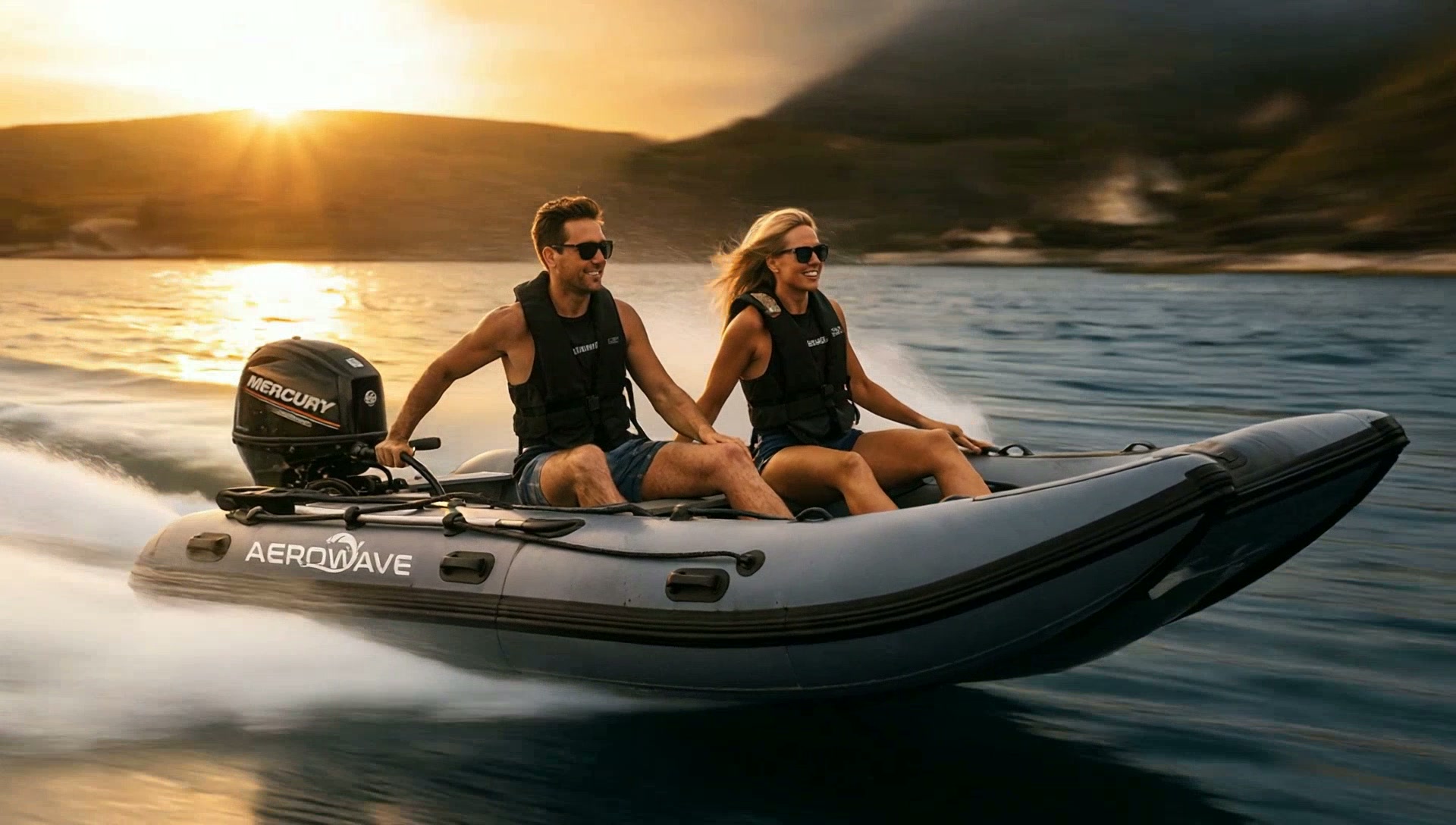
Weekend-Proof Score 17 questions · about 2 minutes
Will the boat you're about to buy survive an Australian summer?
Seventeen straight questions about where you'll use it, what you'll ask of it and the boat you're weighing up. You get a score out of 100, the exact weak points in your plan, and the one boat that genuinely fits.
Free · your result shows on screen · no email required
So which one is yours?
Pick how you'll actually use it and we'll take you straight to the right hull.
I want to fish it
Open bow, rod holders, deck space you can stand and cast from.
Viper Sport 400Family, diving and the beach
3.8 m Series 3 catamaran — low bow to climb back in wearing fins or a tank.
WaveRunner 380Tender / one-person launch
3.3 m hard-floor boat that packs into a bag and still takes a beach landing.
Viper 330Shop gear featured in this guide
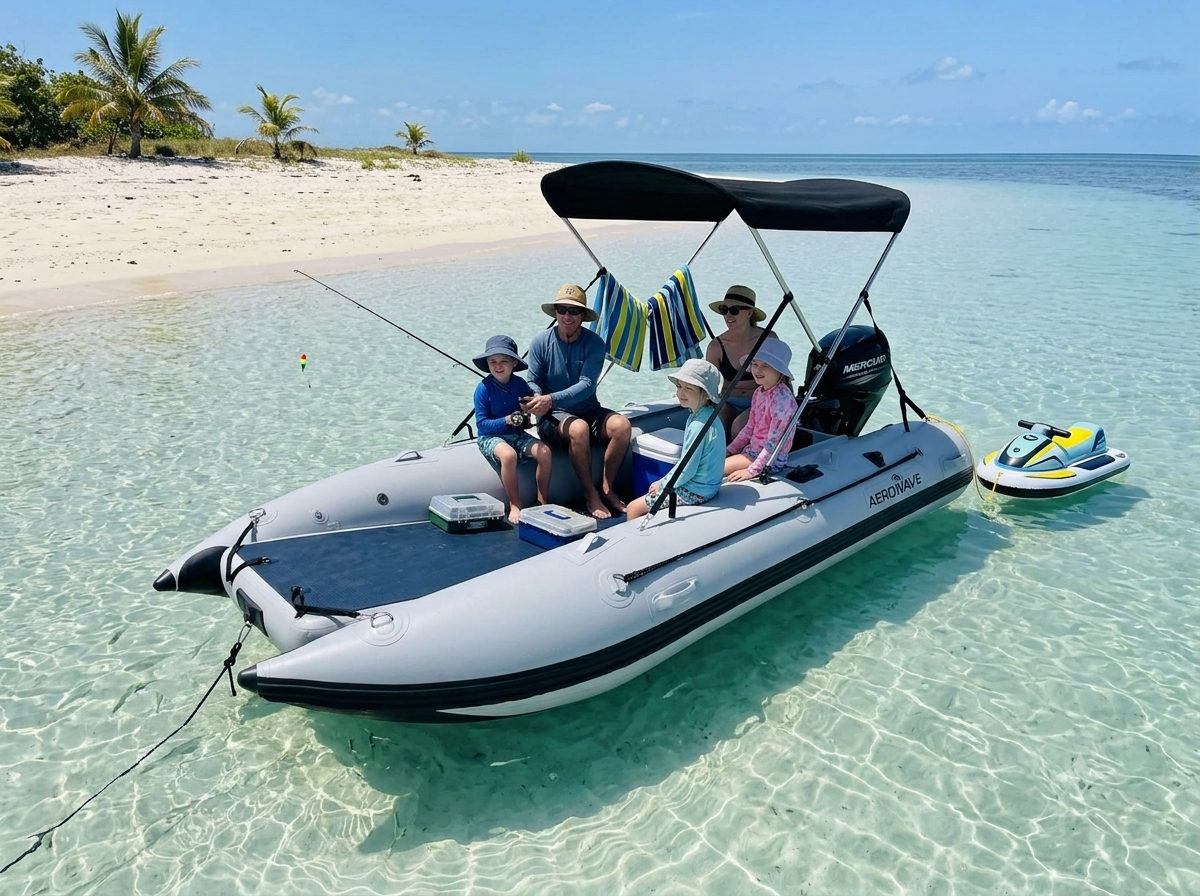
Aerowave WaveRunner 380 Series 3 Catamaran Package
The WaveRunner 380 Series 3 is a premium 3.8m inflatable catamaran package built for Australian and worldwide families, fishing, and coastal day boating — ideal for snorkeling and spearfishing — offering serious stability and premium German Valmex® construction.
Free freight to United States · local taxes payable on arrival
Aerowave Viper 400 Sovereign
Flagship 4m enclosed-bow inflatable catamaran. German VALMEX® 7321 Heavy Plus 1.2mm commercial-grade fabric, 10 PSI high-pressure drop-stitch air deck floor with VALMEX non-slip surface, LockPro wheels, full Bimini and FREE express delivery Australia-wide included. Winter special — save $1,000 until 31 August 2026.
Free freight to United States · local taxes payable on arrival
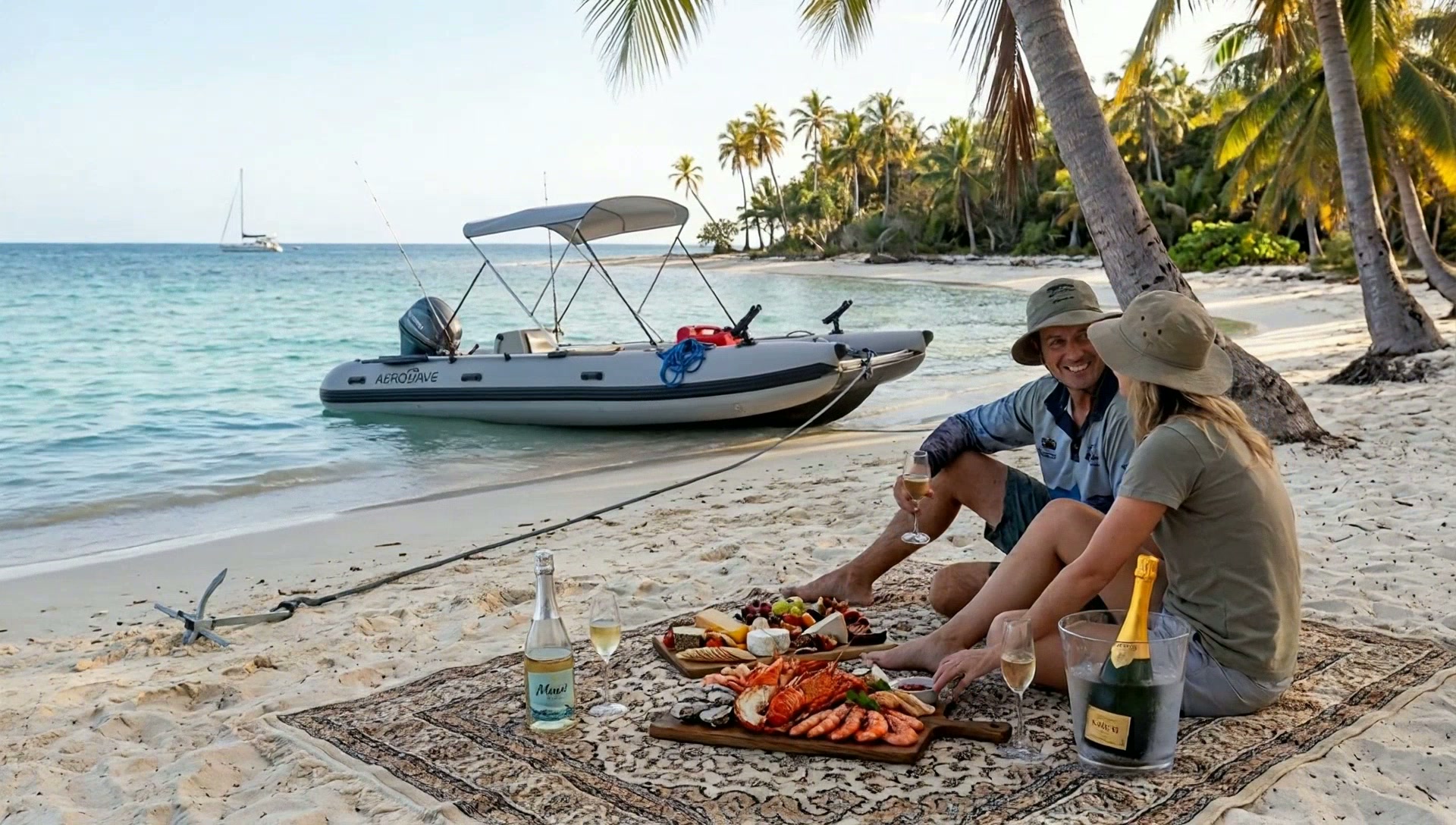
Aerowave Viper 365 Open Bow
Premium 3.65m Inflatable catamaran — built the same way as our flagship Viper 400 sports boat, just 35cm shorter. German VALMEX® 7321 Heavy Plus 1.2mm commercial-grade fabric, 10 PSI high-pressure drop-stitch air deck floor with VALMEX non-slip surface, LockPro wheels, full Bimini and FREE express delivery Australia-wide included.
Free freight to United States · local taxes payable on arrival
Not sure which suits you? Talk to a real boat owner.
Before you spend a cent
Buying from Australia, delivered to United States
You have never heard of us, we are on the other side of the world, and the internet is full of fakes. Fair enough. Here is everything you would need to check us out, in one place — no forms, no chat bot.
Australian designed business
Easy Inflatables, Avoca Beach NSW 2251. ABN 96 856 548 613. International orders ship from our Hong Kong hub.
222 owner reviews, 4.8 average
Read them in full, good and bad, on our reviews page.
CE certified, 7-year hull warranty
ISO 6185-3 and EU Directive 2013/53/EU. Warranty honoured worldwide.
Tracked, insured, door to door
FREE freight to United States · local tax/duty on arrival.
- Who am I actually buying from?
- Easy Inflatables, Avoca Beach NSW 2251, Australia. ABN 96 856 548 613. Sean is the owner and skipper, Gary Stewart handles sales on +61 2 4335 1603, Karen Matthews handles email. The boats are Australian designed; international orders ship from our Hong Kong dispatch hub so your landed price stays competitive. Phone us before you pay a cent — a real person answers.
- Is this really an Australian product?
- Yes — Australian designed and engineered on the NSW Central Coast. Manufacturing is done offshore to our spec, and international orders ship direct from our Hong Kong dispatch hub. If we routed every boat through Australia first, the freight alone would roughly double or triple your cost for the same hull.
- What do I pay, and what is not included?
- The delivery and import terms depend on your country. EU, UK, New Zealand and named Asia/Pacific lanes include duty and tax; US freight is free but US buyers pay import charges on arrival. Other destinations show their terms before payment.
- How do I pay safely?
- Card through Stripe (Visa, Mastercard, Amex, Apple Pay, Google Pay) or bank transfer. Card payments carry your bank's own dispute protection. We never ask for crypto, gift cards or payment to a personal account.
- What if it arrives damaged?
- Every boat ships fully tracked and insured door to door. Photograph the carton and the boat on arrival and email us — transit damage is claimed and replaced through us, not left with you and the courier.
- Is the warranty real outside Australia?
- Yes. The 7-year hull warranty on 1.2 mm VALMEX Heavy Plus and Orca Hypalon hulls applies wherever you are. Replacement parts are held in Australia and at our overseas hub and go out by express courier to your door.
- Is the boat actually certified?
- All Aerowave catamarans are CE certified to ISO 6185-3 and EU Directive 2013/53/EU. Certification paperwork is supplied with the boat — ask and we will send it before you order.
Frequently asked questions
- How many divers can an inflatable catamaran take?
- For practical diving, a 3.8m to 4.0m inflatable catamaran like an AeroCat 380 or Viper 400 is ideal for two divers and their gear. A larger 4.5m model can comfortably accommodate three divers. While the boat's legal capacity is higher, you must account for the bulk and weight of scuba equipment.
- Can I use a single-hull inflatable boat for diving?
- You can, but it's less stable and practical than a catamaran. Monohull inflatables (SIBs) tend to roll more when gearing up and re-boarding. The catamaran's twin-hull design provides a significantly more stable platform, which is much safer and more comfortable for diving activities.
- What is the best outboard motor for an inflatable dive boat?
- A 4-stroke outboard from 15HP to 25HP is ideal for most inflatable dive catamarans. A Hidea 15HP or 20HP 4-stroke provides excellent power-to-weight, reliability, and fuel efficiency to get you and your gear to the dive site without being excessively heavy to transport and mount.
- Are inflatable boats tough enough for scuba diving gear?
- Yes, provided you choose a high-quality boat. Our Aerowave models are made from premium German VALMEX® fabric (1100 GSM to 1500 GSM), which is extremely resistant to abrasion and puncture. While sharp objects should always be handled with care, these boats are designed to withstand the rigours of diving, including contact with tanks and weight belts.
- How do you store an inflatable dive boat?
- After a dive, the boat should be thoroughly rinsed with fresh water to remove salt and sand. Once dry, it can be deflated, rolled up, and stored in its carry bag. The compact package can be kept in a garage, shed, or even a large cupboard, eliminating the need for a trailer or marina berth.
- What's the difference between PVC and Hypalon for a dive boat?
- Both are excellent materials. Modern PVC, like the VALMEX® we use, is incredibly durable with welded seams and a 10-12 year lifespan. Hypalon is a premium rubber-based material known for its extreme UV and chemical resistance, which we can build with on request. For most recreational divers in Australia, high-quality PVC offers the best balance of performance, longevity, and value.
- Is an inflatable catamaran safe for diving in choppy water?
- The catamaran design excels in chop. The tunnel between the hulls traps air, softening the ride and reducing slamming. Their inherent stability and buoyancy make them very capable and safe in coastal conditions, often providing a more comfortable ride than a rigid boat of the same size.
Ready to set sail?
Premium German-fabric inflatable catamarans, built to order and delivered to your door. Talk to our team or browse the fleet.
Like this guide? Get the next one in your inbox.
Owner-tested tips, gear deep-dives and Aussie boating know-how — no spam.