Lightweight Inflatable Boat Guide: How Light Is Too Light on Australian Waters?
Chasing the lightest inflatable boat often leads to punctured hulls and flexing transoms. Discover the true weight vs durability balance for Australian conditions.
At a glance
Chasing the lightest inflatable boat often leads to punctured hulls and flexing transoms. Discover the true weight vs durability balance for Australian conditions.
- What Makes a Lightweight Inflatable Boat Too Light?
- The Warning Signs of an Under-Built Craft
- Understanding Fabric Metrics: GSM, Denier, and Thickness Explained
- Puncture Resistance and the Weight Trade-Off: Lab vs Reality
What we'd put you in
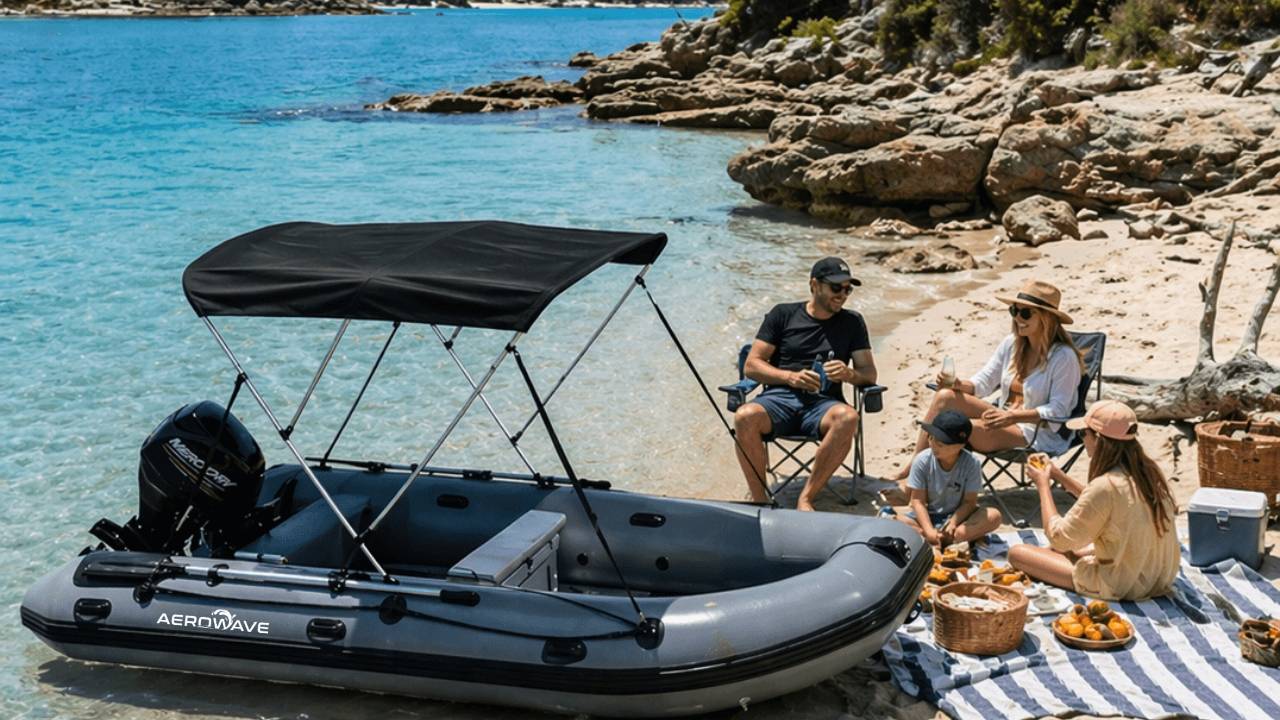
Aerowave Viper 400 Sovereign
1500 GSM / 1.2 mm VALMEX Heavy Plus — the fabric this article is really about.
US$3,279 USD
Delivered to your door, today's rate
- Free freight to United States · local taxes payable on arrival
- 7-year hull warranty
🇺🇸 Shipping to United States · landed price quoted in writing
Yes — we ship the Aerowave Viper 400 Sovereign to United States. Here's the landed price.
1500 GSM / 1.2 mm VALMEX Heavy Plus — the fabric this article is really about.
Written for Australian readers — but the boat ships to you. We are an Australian builder and this article is written from Australian waters. That changes nothing about what you can order: the same hull, the same 7-year warranty and the same certification go out to United States every week.
Aerowave Viper 400 Sovereign
- Boat package (export price)
- US$3,858
- 15% tariff relief credit
- − US$579
- Express air freight to United States
- Included
- Import duty, taxes & customs clearance
- Payable on arrival
- Estimated landed, USD
- US$3,279
Indicative, converted at today's rate, before local duty and tax on arrival. Ask below and we'll put a fixed figure in writing, valid 30 days.
- 7-year hull warranty
- 1500 GSM / 1.2 mm VALMEX® Heavy Plus hull
- CE certified to ISO 6185-3 and EU Directive 2013/53/EU
- Door-to-door, tracked the whole way
Your price, delivered to your door — freight included.
We email the full PDF quote (spec, freight, finance, WavePay) to your inbox in under 60 seconds. No spam — one quote, one follow-up.
See it for yourself
Real boats. Real owners. Real people behind them.
Plenty of what you read online these days is generated. Check us out properly — the factory, the reviews and the owners are all one click away. Why we use AI, and how to check we’re real
How our boats are built
Walk the production line: thermo-welded seams, 1.2 mm VALMEX Heavy Plus hulls, over-pressure relief valves on every chamber.
See the buildGoogle Maps reviews
Real Australian owners, five stars, published on our Google Business Profile with the map — read them there, not just on our own site.
Open Google Maps reviewsOwner stories
Boats in use — offshore, on rivers, on rescue duty. Photos and words from the people who actually own them.
Read owner storiesEvery kilogram stripped from an inflatable boat's hull either comes from genuine engineering innovation or dangerous structural compromise.
If you have ever wrestled a sixty-kilogram tender across the slippery rocks of an offshore reef anchorage or tried hoisting a sodden dinghy onto caravan roof racks at the end of a sweltering Queensland afternoon, the appeal of a featherweight vessel is obvious. Portability is the fundamental promise of inflatable boating. Yet in the race to market the lightest craft possible, the Australian recreational marine landscape has become flooded with under-engineered vessels that surrender safety, puncture resistance, and hydrodynamic stiffness for a headline number on a digital bathroom scale.
A genuinely capable lightweight inflatable boat must survive oyster-encrusted navigation piles, coarse silica sand, relentless tropical ultraviolet radiation, and the vibrational torque of a working four-stroke outboard. Cut the hull weight too far and you are no longer investing in a portable boat—you are buying an expensive vinyl pool toy masquerading as a coastal tender.
Understanding where weight matters, where it can safely be shaved, and how fabric density dictates longevity is essential before parting with your hard-earned dollars. Here is the unvarnished engineering reality behind the weight versus durability trade-off on Australian waters.
What Makes a Lightweight Inflatable Boat Too Light?
A lightweight inflatable boat becomes dangerously light when manufacturers reduce fabric density below 900 GSM, replace structural transoms with unsupported composite plates, or eliminate protective rubbing strakes to save hull mass. In real-world Australian conditions, any full-sized adult craft under twenty-five kilograms achieves its low weight through compromises that drastically reduce puncture resistance and offshore stability.
To understand why ultra-light vessels fail, you must look at structural forces. When a boat moves across choppy water, it experiences twisting loads known as torsional flex. In rigid-hull alternatives like pressed aluminium tinnies, structural ribs resist these forces. In soft inflatable boats (SIBs), that rigidity depends entirely on two factors: the internal pressure of the air chambers and the tensile strength of the coated fabric encasing them.
When budget imports drop their base fabric down to 650 or 750 GSM (grams per square metre), the fabric lacks the base yarn density to hold working air pressures reliably under high thermal loads. In coastal Australia, surface ambient temperatures often exceed thirty-five degrees Celsius. Low-denier fabrics expand excessively under heat, softening the tubes, inducing hull cavitation, and dramatically increasing the risk of structural seam blowout.
The Warning Signs of an Under-Built Craft
- Thin single-layer hull skin: Tubes that feel like vinyl pool floats rather than heavy-duty commercial polymer when deflated.
- Transom flex under moderate throttle: The motor visibly twists inward toward the cockpit when accelerating.
- Absence of sacrificial chafe protection: No under-tube rubbing strakes or keel protection along high-wear zones.
- Sub-par air deck ratings: Inflatable floors rated for only 3 to 5 PSI, which bow and buckle beneath your feet when standing.
- Undersized tube diameters: Tubes measuring less than 400 mm, resulting in low freeboard, wet rides, and compromised reserve buoyancy.
Understanding Fabric Metrics: GSM, Denier, and Thickness Explained
How do fabric thickness and GSM determine the real-world puncture resistance of an inflatable hull? GSM (grams per square metre) measures the total mass of the woven base scrim and its protective PVC or polymer coatings, while millimetre thickness indicates physical barrier depth against sharp abrasions. Higher GSM translates directly into superior tear strength, dimensional stability, and puncture resistance.
To assess boat durability objectively, you need to understand the three primary metrics marine engineers use to evaluate technical textiles:
- Denier: The weight in grams of 9,000 metres of the raw structural polyester thread used to weave the internal load-bearing scrim. Common figures range from 500D (fragile pool toys) to 1,100D (commercial workboats).
- GSM (Grams per Square Metre): The finished weight of the fabric after liquid polymers like Mehler VALMEX have been calendered or knife-coated onto both sides of the structural core scrim.
- Caliper Thickness (mm): The physical thickness of the cross-section, typically spanning 0.7 mm up to 1.2 mm in premium craft.
+-------------------------------------------------------------+ | OUTER ELASTOMERIC COATING | | (UV Blockers, Pigment, Abrasion PVC) | +-------------------------------------------------------------+ | HIGH-TENSILE BASE FABRIC | | (Woven Scrim: 1,100 Denier Polyester) | +-------------------------------------------------------------+ | INNER GAS-RETENTION LAYER | | (Airtight Bonding, Hydrolysis Barrier) | +-------------------------------------------------------------+
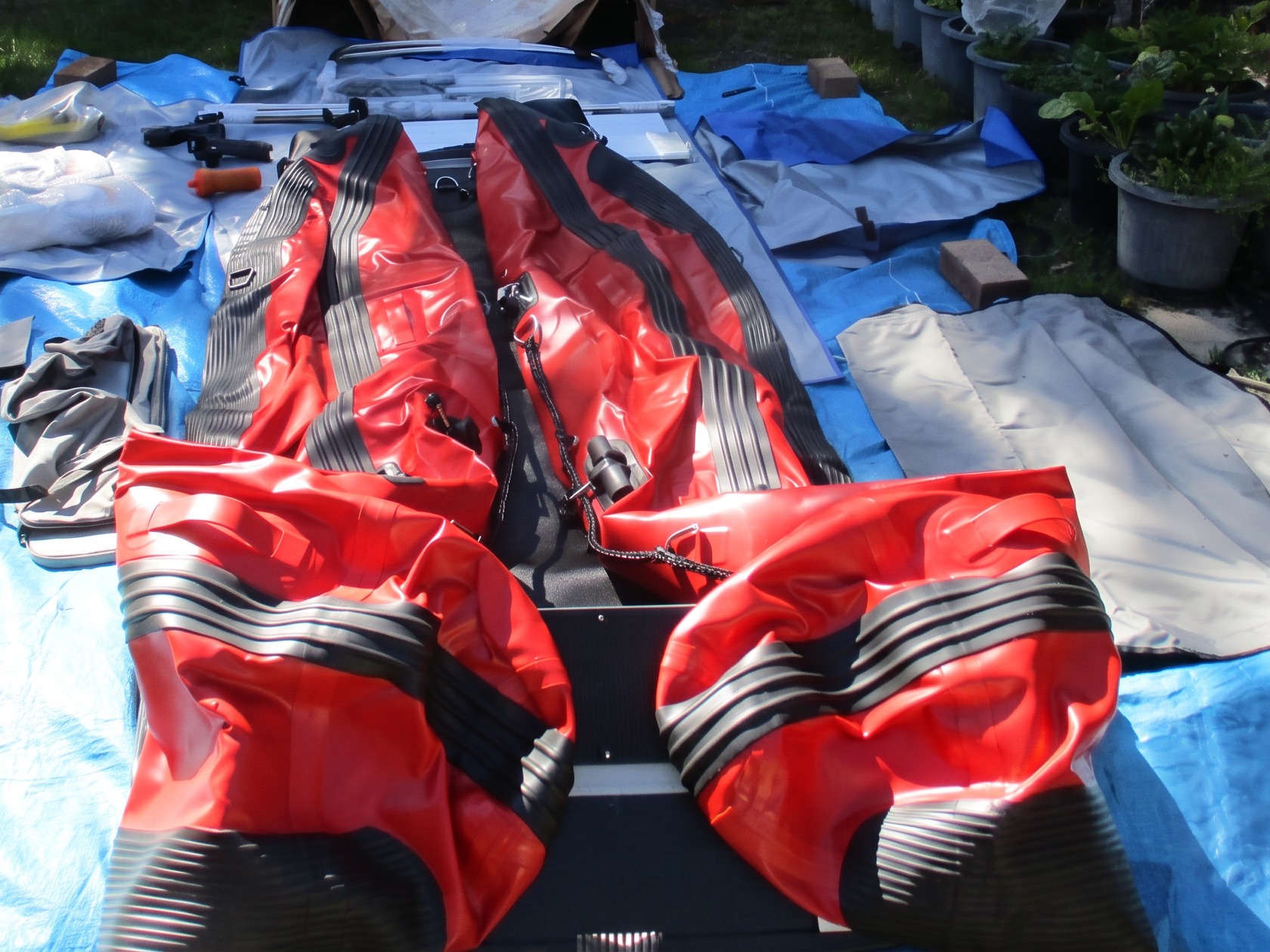
A 1,100 Denier polyester weave coated to 1,100 GSM (0.9 mm) provides the benchmark balance between pack-down flexibility and abrasive resistance. This is the exact specification utilised across the AeroWave AeroCat series, delivering an agile vessel that folds cleanly into an RV boot without surrendering defensive toughness.
When ultimate rock abrasion and commercial-grade longevity are required, moving to 1,500 GSM (1.2 mm VALMEX Heavy Plus)—the standard across our Aerowave Viper offshore catamaran range—adds dense elastomeric mass. That extra 400 grams per square metre dramatically increases resistance to sharp rock strikes and oyster shells, yielding a 10 to 12-year expected fabric lifespan in brutal Australian UV environments.
Puncture Resistance and the Weight Trade-Off: Lab vs Reality
What happens when a featherweight fabric encounters a submerged Australian boat ramp or mangrove oyster bed? In controlled laboratory tests, a sharp point under static load penetrates 750 GSM fabric at half the force required to breach 1,100 GSM marine-grade VALMEX, and less than a third of the force needed to pierce 1,500 GSM Heavy Plus material.
On the water, kinetic energy dictates survival. When a 250-kilogram loaded craft drifts into an encrusted navigation marker at three knots, all that momentum focuses on a point mere millimetres wide.
IMPACT TEST FORCE TO PUNCTURE (APPROX. NEWTONS)
Budget PVC (750 GSM / 0.6 mm) | [###] 180 N Standard Grade (900 GSM / 0.7 mm) | [#####] 260 N VALMEX Marine (1,100 GSM / 0.9 mm)| [#########] 420 N VALMEX Heavy Plus (1500 GSM/1.2mm)| [##############] 640 N
Ultra-lightweight PVC tears along the line of the internal weave when breached, resulting in catastrophic hull deflation. High-grade German-engineered VALMEX features a densely cross-woven 1,100-denier interior framework. Even when nicked by an oyster cluster or a dropped fishing knife, the structural yarns prevent the slit from propagating under tube pressure, preserving hull integrity until you reach the boat ramp.
Inflatable Catamarans vs Traditional Monohulls: The Lightweight Inflatable Boat Advantage
Why do inflatable catamaran hulls deliver superior weight-to-performance characteristics compared to deep-V monohull tenders? Inflatable catamarans ride on twin, high-buoyancy sponsons that lift the primary air deck entirely clear of surface friction, allowing a lighter hull to plane quickly with smaller, lighter outboards.
Traditional deep-V monohulls displace large volumes of water. To get on the plane, a monohull must push through a massive bow wave, demanding heavier engines, larger fuel reserves, and heavy fibreglass or aluminium reinforcement stringers inside the cockpit.
In contrast, an inflatable catamaran design—such as the AeroWave AeroCat or Aerowave Viper—packs unmistakable hydrodynamic advantages for weight-conscious boaters:
- Reduced hydrodynamic drag: Twin parallel air tubes break water suction rapidly, meaning an AeroCat 335 planes flat with zero bow rise.
- Downsized engine requirements: Where a 3.4-metre monohull might demand a hefty 20HP outboard to achieve twenty knots, an efficient inflatable catamaran hull reaches identical speeds using a lightweight Hidea 9.9HP or 15HP four-stroke outboard.
- Exceptional static stability: Stepping onto the sponson of an Aerowave WaveRunner 380 will not roll the hull. The catamaran stance acts as a wide, self-stabilising platform, safe for casting lures or hauling dive gear over the side.
By leveraging the catamaran hull shape, you save total expedition weight: not by stripping safety material from the inflatable tubes, but by eliminating unnecessary engine mass and excess fuel loads.
Hull Weight Comparison Across Popular Inflatable Configurations
To see how material thickness, hull geometry, and construction standards impact carrying weight, study the verified configurations below. This table highlights how high-density engineering preserves safety while remaining realistic to transport.
| Vessel Style & Model | Fabric Weight & Spec | Hull Dry Weight | Air Deck Pressure | Key Strength & Intended Use |
|---|---|---|---|---|
| Ultra-Light Budget Monohull | 750 GSM (0.6 mm Standard PVC) | ~19 kg – 22 kg | 3 – 5 PSI | Calm inland freshwater only; highly vulnerable to UV and sand abrasion |
| Aerowave Swift Tender 230 SI | 1,100 GSM (0.9 mm VALMEX) | 24 kg | 8 – 10 PSI Air Deck | Compact yacht tender; high puncture safety in a true lightweight inflatable boat |
| Aerowave Swift Tender 290 SI | 1,100 GSM (0.9 mm VALMEX) | 29 kg | 8 – 10 PSI Air Deck | Coastal cruiser tender; safe capacity for three adults plus supplies |
| AeroWave AeroCat 335 | 1,100 GSM (0.9 mm VALMEX) | 36 kg | 8 – 10 PSI Air Deck | Portable coastal fishing; planes flat effortlessly with small outboards |
| AeroWave AeroCat 380 | 1,100 GSM (0.9 mm VALMEX) | 44 kg | 8 – 10 PSI Air Deck | High-efficiency twin-hull adventure craft; outstanding stability-to-weight ratio |
| Aerowave Viper 330 | 1,500 GSM (1.2 mm VALMEX Plus) | 48 kg | 8 – 10 PSI Air Deck | Heavy-duty open-water craft; commercial-grade resistance against oyster reefs |
| Aerowave Viper 400 Open Bow | 1,500 GSM (1.2 mm VALMEX Plus) | 58 kg | 8 – 10 PSI Air Deck | Offshore dive and expedition platform; unmatched hull durability and rigidity |
What a Practical Lightweight Inflatable Boat Must Still Include
When stripping hull weight down for easy caravan transit or solo launching, what core structural features must never be compromised? A genuinely sea-ready craft must retain multi-chamber buoyancy, a rigid marine-grade transom, commercial high-pressure drop-stitch floors, and heavy-duty sacrificial wear patches.
If you inspect a boat and discover that any of the following five engineering elements have been removed to hit an unrealistic hull weight target, walk away.
1. High-Pressure Drop-Stitch Air Deck (8 to 10 PSI Rating)
Budget inflatable boats save weight and cost by using simple roll-up slatted timber floors or low-pressure air floors that run at 3 to 4 PSI. These flex alarmingly under acceleration, sap engine energy, and make standing up like balancing on an underinflated air mattress. Premium boats utilise drop-stitch technology—tens of thousands of internal polyester threads bonding top and bottom skins—inflating rock-hard to 8–10 PSI. You get the rigidity of an aluminium plate floor with zero assembly time and minimal weight.
2. Multi-Chamber Sponson Architecture
Safety at sea depends on chamber redundancy. Every Aerowave vessel is certified to ISO 6185-3 standards, incorporating independent forward and aft chambers partitioned by internal baffle cones. If an offshore impact ever compromises one chamber, the baffle expands to support the remaining volume, keeping the craft buoyant, level, and safe to navigate home under power.
3. A Heavily Reinforced Marine-Grade Transom (380 mm Standard)
Your boat's transom must transfer all forward thrust from your outboard directly into the inflatable tubes without twisting or cracking. True durability demands a marine-grade composite or marine-ply transom, glassed or bonded with high-tensile brackets, precisely set to the standard 380 mm (15-inch short shaft) height. Boats that replace structural transoms with paper-thin aluminium extrusions quickly fail under heavy chop.
4. Continuous Heavy-Duty Rubbing Strakes
Dragging an inflatable tender across gravel ramps, shell banks, and floating pontoons is unavoidable. Sacrificial ribbed rubber or polymer rubbing strakes along the keel line and exterior sponson shoulders take the brunt of these impacts, shielding the structural fabric underneath.
5. Robust Transom Wheel Integration Points
If a boat is engineered correctly, you do not need it to weigh fourteen kilograms to move it on your own. By equipping a 35 to 45-kilogram catamaran hull with heavy-duty fold-down transom launching wheels, a single adult can effortlessly roll the boat, outboard, and fishing tackle down a sandy boat ramp into the water.
Essential Checklist: Assessing Portability Before You Buy
When evaluating a lightweight inflatable boat for your camping setup, four-wheel drive, or cruiser deck, run through this practical checklist to ensure it will work in the real world:
- Confirmed Pack-Down Envelope: Does the deflated boat fit inside your vehicle boot or caravan tunnel boot without requiring folding origami? (e.g., paired with an Aerowave Heavy-Duty Boat Bag for A$299).
- True Hull Mass vs Total Weight: Is the advertised weight just the bare skin, or does it include the transom, air floor, seat bench, and paddles?
- Two-Person Lift Feasibility: Can two people safely lift the packed boat bag into an RV without risking back strain?
- Standard Outboard Compatibility: Does the transom accept standard, reliable four-stroke engines, such as a Hidea 9.9HP or 15HP short shaft?
- UV Fabric Pedigree: Is the fabric genuine German Mehler VALMEX or an unbranded commercial polymer with a known 10–12 year lifespan under harsh Australian sunlight?
- Warranty Backing: Does the manufacturer stand behind the craft with a genuine long-term warranty, such as the 5 + 2-year hull warranty on the Aerowave Viper range or the 5-year warranty on AeroCat and WaveRunner models?
Real Australian Case Studies: Finding the Sweet Spot
Case Study 1: The Caravan Tourer on the Gibb River Road
A retired couple traversing Western Australia's Kimberley region required a boat for barramundi fishing in estuaries and tidal rivers. Their tow vehicle had limited spare payload capacity.
Initially tempted by an ultra-light 18-kilogram single-skin tender, they realised that sharp tidal rock bars and mangrove snags would quickly compromise such fragile fabric. Instead, they opted for an AeroWave AeroCat 335 at 36 kg (A$3,895 in the Ready-to-Fish Pack), built with 1,100 GSM VALMEX.
Paired with fold-down transom wheels and an Aerowave Heavy-Duty Wheel Bag (A$109), the entire package secures safely on their caravan rear bumper. The catamaran's 8–10 PSI drop-stitch air deck gives them a rigid casting platform, and its twin sponsons navigate estuary chop with total safety.
Case Study 2: The Coastal Yacht Tender at Pittwater
A coastal yacht owner based in Broken Bay, New South Wales, needed an everyday tender to ferry guests, provisions, and fuel from Church Point out to their mooring. Weight was a primary constraint because the tender had to be hoisted onto snap davits on the mother ship's stern.
They selected the Aerowave Swift Tender 270 SI at A$2,899. Weighing under 27 kilograms, it is light enough to winch effortlessly, yet its 1,100 GSM heavy-duty fabric and multiple airtight chambers withstand daily collisions with barnacle-covered marina pylons. For added protection from the sun, they equipped the tubes with a pair of Aerowave Tube Chaps (A$1,000), guaranteeing over a decade of continuous service.
The Real Cost of Buying Too Light
When an overseas budget import cuts corners on material mass, the financial savings quickly evaporate. Ultra-light, cheap PVC craft routinely suffer seam delamination within two to three seasons of exposure to Australian coastal heat.
Because lower-tier PVC uses cheap plasticisers that migrate and break down under strong UV radiation, the material turns brittle, sticky, and impossible to patch securely. By contrast, premium German VALMEX relies on advanced thermal polymer coatings that resist UV-induced oxidation, delivering a realistic lifespan of 10 to 12 years.
5-YEAR COST OF OWNERSHIP COMPARISON
BUDGET ULTRA-LIGHT TENDER (750 GSM)
- Purchase Price: A$1,200
- Seam Glue Repairs (Year 2): A$350
- Fabric Puncture Repairs: A$250
- Replacement Hull (Year 3): A$1,200 TOTAL OUTLAY OVER 5 YEARS: A$3,000 (plus endless hassle)
QUALITY MID-WEIGHT CRAFT (AEROCAT 335 - 1,100 GSM)
- Purchase Price: A$3,895
- Maintenance & Wear Parts: A$0 (under 5-yr warranty)
- Residual Resale Value: -A$2,200 NET INVESTMENT OVER 5 YEARS: A$1,695 (trouble-free boating)
Investing in correct material weight up front avoids the ongoing expenses and safety hazards of cheap, fragile hulls.
Custom Australian Assembly and Direct Delivery
At Easy Inflatables, we engineer our catamarans and tenders specifically for the challenging Australian marine environment. Every vessel is custom-built to strict specifications, backed by ISO 6185-3 certification.
Our custom manufacturing process takes roughly three weeks to build (up to four weeks for Hypalon variants), followed by rigorous multi-stage quality control. A 50% build deposit reserves your production slot, with the remaining balance due only once the vessel successfully passes final inspection and pressure testing.
Once completed, your boat ships directly to your door, with transit times averaging 7 to 10 days. Best of all, delivery is fully included for all Australian customers. (For international orders, please refer to easyinflatables.com.au/international for regional freight and customs terms).
Whether you are looking at the agile AeroWave AeroCat 380 (A$4,570), the high-performance Aerowave WaveRunner 380 Series 3 Catamaran Package (A$4,945), or an offshore-ready Aerowave Viper 400 Open Bow (A$5,595), you are investing in proven marine engineering designed to handle real sea conditions.
The Bottom Line
Chasing the absolute lowest number on the scales is a dangerous game when buying an inflatable craft. A boat that is too light sacrifices the fabric density, structural air-floor rigidity, and transom support required to keep you safe in open water.
Look for the sweet spot: modern catamaran hull geometry that delivers lightweight performance on the water, matched with genuine 1,100 to 1,500 GSM VALMEX fabric that will survive Australian conditions for a decade or more. That is where true portability meets long-term durability.
If you want expert guidance on picking the right boat for your caravan, 4WD, or yacht tender setup, speak with our technical team today on +61 2 4335 1603 or email sales@easyinflatables.com.au.
Related
Weekend-Proof Score 17 questions · about 2 minutes
Will the boat you're about to buy survive an Australian summer?
Seventeen straight questions about where you'll use it, what you'll ask of it and the boat you're weighing up. You get a score out of 100, the exact weak points in your plan, and the one boat that genuinely fits.
Free · your result shows on screen · no email required
So which one is yours?
Pick how you'll actually use it and we'll take you straight to the right hull.
I want to fish it
Open bow, rod holders, deck space you can stand and cast from.
Viper Sport 400Family, diving and the beach
3.8 m Series 3 catamaran — low bow to climb back in wearing fins or a tank.
WaveRunner 380Tender / one-person launch
3.3 m hard-floor boat that packs into a bag and still takes a beach landing.
Viper 330Shop gear featured in this guide
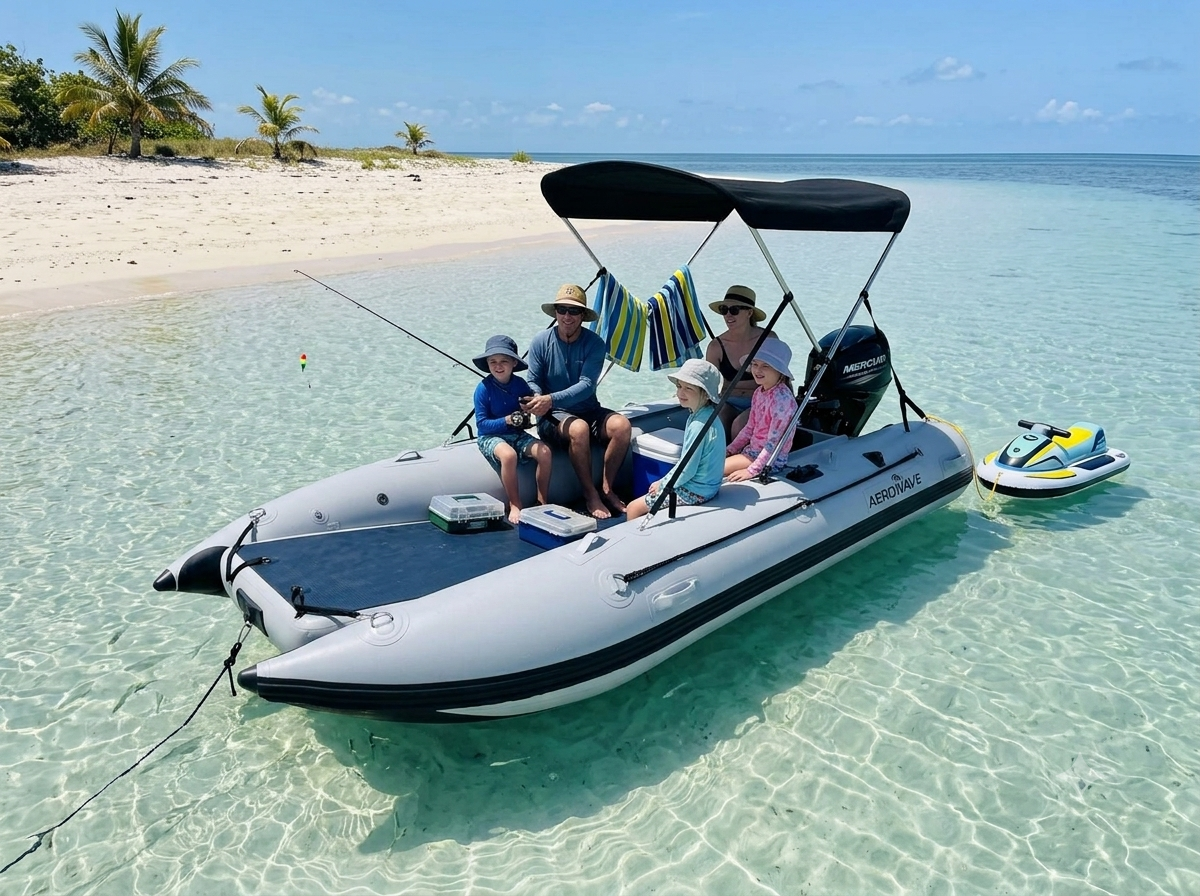
Aerowave WaveRunner 380 Series 3 Catamaran Package
The WaveRunner 380 Series 3 is a premium 3.8m inflatable catamaran package built for Australian and worldwide families, fishing, and coastal day boating — ideal for snorkeling and spearfishing — offering serious stability and premium German Valmex® construction.
Free freight to United States · local taxes payable on arrival
Aerowave Viper 400 Sovereign
Flagship 4m enclosed-bow inflatable catamaran. German VALMEX® 7321 Heavy Plus 1.2mm commercial-grade fabric, 10 PSI high-pressure drop-stitch air deck floor with VALMEX non-slip surface, LockPro wheels, full Bimini and FREE express delivery Australia-wide included. Winter special — save $1,000 until 31 August 2026.
Free freight to United States · local taxes payable on arrival
Aerowave Viper 365 Open Bow
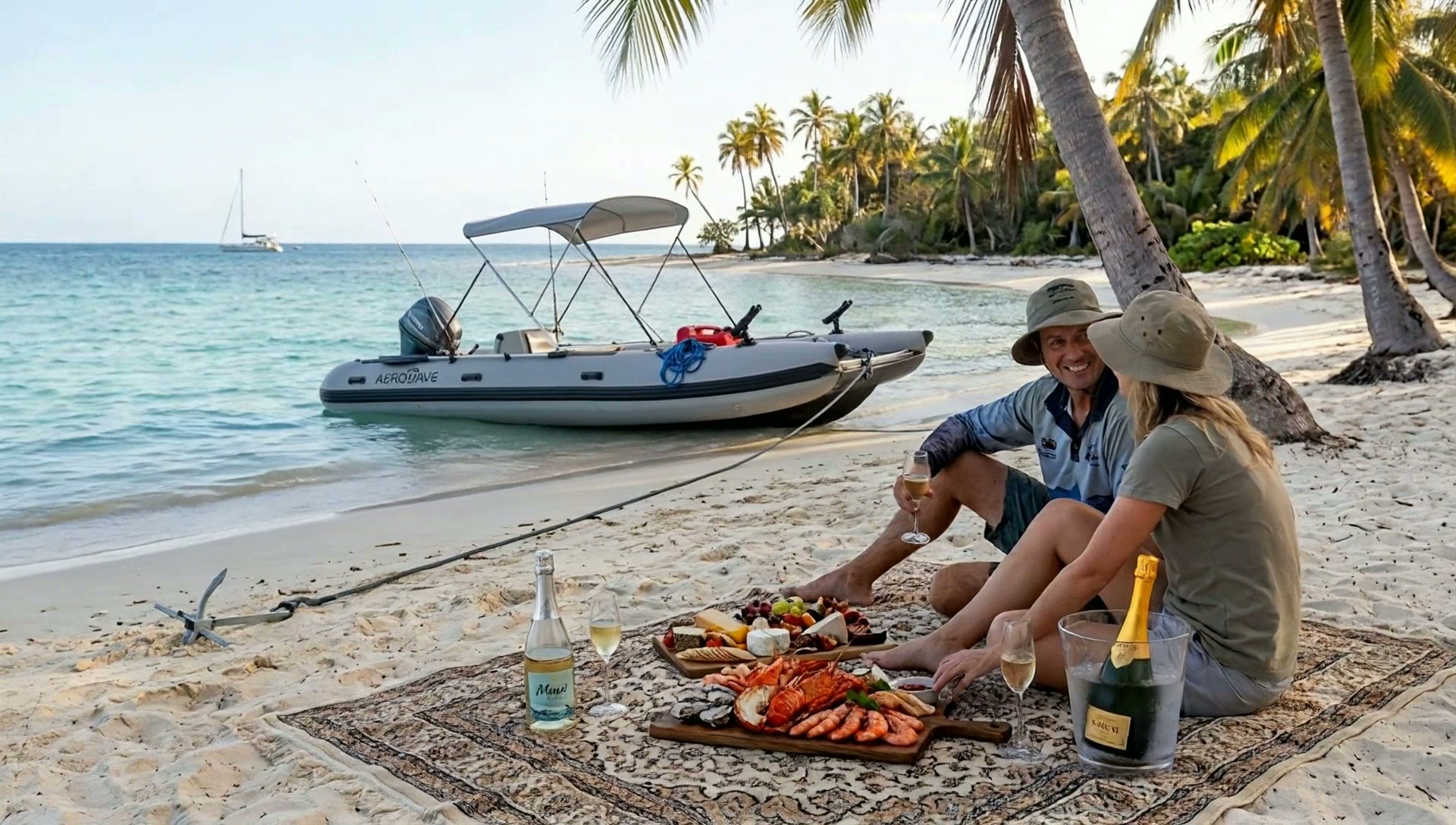
Premium 3.65m Inflatable catamaran — built the same way as our flagship Viper 400 sports boat, just 35cm shorter. German VALMEX® 7321 Heavy Plus 1.2mm commercial-grade fabric, 10 PSI high-pressure drop-stitch air deck floor with VALMEX non-slip surface, LockPro wheels, full Bimini and FREE express delivery Australia-wide included.
Free freight to United States · local taxes payable on arrival
Not sure which suits you? Talk to a real boat owner.
Before you spend a cent
Buying from Australia, delivered to United States
You have never heard of us, we are on the other side of the world, and the internet is full of fakes. Fair enough. Here is everything you would need to check us out, in one place — no forms, no chat bot.
Australian designed business
Easy Inflatables, Avoca Beach NSW 2251. ABN 96 856 548 613. International orders ship from our Hong Kong hub.
Rated 5.0 on Google
Every review is on our Google Business Profile, with the reviewer's name and the date.
CE certified, 7-year hull warranty
ISO 6185-3 and EU Directive 2013/53/EU. Warranty honoured worldwide.
Tracked, insured, door to door
FREE freight to United States · local tax/duty on arrival.
- Who am I actually buying from?
- Easy Inflatables, Avoca Beach NSW 2251, Australia. ABN 96 856 548 613. Sean is the owner and skipper, Gary Stewart handles sales on +61 2 4335 1603, Karen Matthews handles email. The boats are Australian designed; international orders ship from our Hong Kong dispatch hub so your landed price stays competitive. Phone us before you pay a cent — a real person answers.
- Is this really an Australian product?
- Yes — Australian designed and engineered on the NSW Central Coast. Manufacturing is done offshore to our spec, and international orders ship direct from our Hong Kong dispatch hub. If we routed every boat through Australia first, the freight alone would roughly double or triple your cost for the same hull.
- What do I pay, and what is not included?
- The delivery and import terms depend on your country. EU, UK, New Zealand and named Asia/Pacific lanes include duty and tax; US freight is free but US buyers pay import charges on arrival. Other destinations show their terms before payment.
- How do I pay safely?
- Card through Stripe (Visa, Mastercard, Amex, Apple Pay, Google Pay) or bank transfer. Card payments carry your bank's own dispute protection. We never ask for crypto, gift cards or payment to a personal account.
- What if it arrives damaged?
- Every boat ships fully tracked and insured door to door. Photograph the carton and the boat on arrival and email us — transit damage is claimed and replaced through us, not left with you and the courier.
- Is the warranty real outside Australia?
- Yes. The 7-year hull warranty on 1.2 mm VALMEX Heavy Plus and Orca Hypalon hulls applies wherever you are. Replacement parts are held in Australia and at our overseas hub and go out by express courier to your door.
- Is the boat actually certified?
- All Aerowave catamarans are CE certified to ISO 6185-3 and EU Directive 2013/53/EU. Certification paperwork is supplied with the boat — ask and we will send it before you order.
Frequently asked questions
- What is considered a safe lightweight inflatable boat weight for Australian conditions?
- For a two-to-three-person craft measuring between 2.7 and 3.3 metres, a safe hull weight ranges between 25 and 38 kilograms. Craft falling below this range typically use low-density fabrics under 900 GSM or lack structural transom reinforcement, making them vulnerable to puncture and offshore hull flex.
- What is the difference between 1100 GSM and 1500 GSM VALMEX fabric?
- 1,100 GSM fabric has a physical thickness of 0.9 mm and offers an ideal balance of puncture resistance and easy folding for car boots and caravans. 1,500 GSM VALMEX Heavy Plus measures 1.2 mm thick, providing maximum commercial abrasion resistance against rock bars and oyster leases, making it the premier choice for offshore catamarans.
- Can a lightweight inflatable boat handle a four-stroke outboard engine?
- Yes, provided the vessel has a structurally bonded marine-grade transom rated for the engine's weight and power. For instance, our AeroCat and Viper hulls feature 380 mm transoms engineered to support modern four-stroke outboards, such as the Hidea 9.9HP, 15HP, or 20HP short-shaft engines, without transom twisting.
- Why is an inflatable catamaran lighter to run than a monohull tender?
- Inflatable catamarans generate hydrodynamic lift using twin sponsons, breaking surface suction and lifting the floor completely clear of the water. This significantly lowers water resistance, allowing the craft to plane flat with a smaller, lighter outboard engine while offering greater deck space and stability than a deep-V hull.
- How long will a quality lightweight inflatable boat last in the Australian sun?
- A boat crafted from high-grade Mehler VALMEX polymer fabric will reliably last 10 to 12 years under Australian conditions, supported by built-in UV stabilisers. In contrast, cheap budget PVC imports often suffer seam breakdown and fabric degradation within 2 to 4 years of heavy sun exposure.
- What warranty coverage is included with Easy Inflatables boats?
- All Aerowave Viper catamarans carry a 5 + 2-year warranty on hull fabric and seams. AeroCat, WaveRunner, and Sport Series models are protected by a comprehensive 5-year warranty, while genuine boating accessories include a 1-year warranty.
Ready to set sail?
Premium German-fabric inflatable catamarans, built to order and delivered to your door. Talk to our team or browse the fleet.
Like this guide? Get the next one in your inbox.
Owner-tested tips, gear deep-dives and Aussie boating know-how — no spam.