Mercury 9.9 Four Stroke in Australia: Specs, Fuel, Transom Fit (2026)
What a Mercury 9.9 four stroke actually delivers on an Australian inflatable: real specs, weight, fuel range, Command Thrust vs standard, and the transom checks that decide whether it works.
At a glance
What a Mercury 9.9 four stroke actually delivers on an Australian inflatable: real specs, weight, fuel range, Command Thrust vs standard, and the transom checks that decide whether it works.
- Why the Mercury 9.9 Four Stroke Dominates Small Boats
- A practical middle ground for portable rigs
- Core Engine Specs and Real-World Performance
- What the numbers mean on the water
Ships to United States 🇺🇸 · tracked door to door
The motor for your inflatable — petrol or electric, in stock now.
Hidea 4-strokes from 2.5 to 20 hp, plus the Haswing Ultima 3.0HP and Fuber Global 1.5 electric outboards. Every one of them is matched to a soft-transom inflatable.
- Hidea 4-stroke range: 2.5, 5, 6, 8, 9.9, 15 and 20 hp — carby or EFI
- Haswing Ultima 3.0HP and Fuber Global 1.5 electric — quiet, no fuel, no service
- Shaft length, transom height and thrust matched to our hulls before it ships
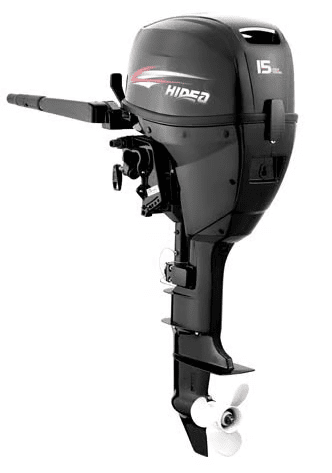 Hidea 15HP 4-Stroke OutboardUS$2,801 · in stock, ships now
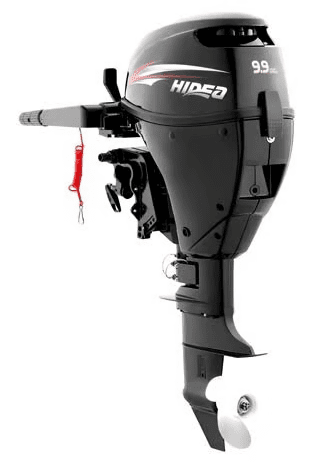 Hidea 9.9HP 4-Stroke OutboardUS$2,508 · in stock, ships now
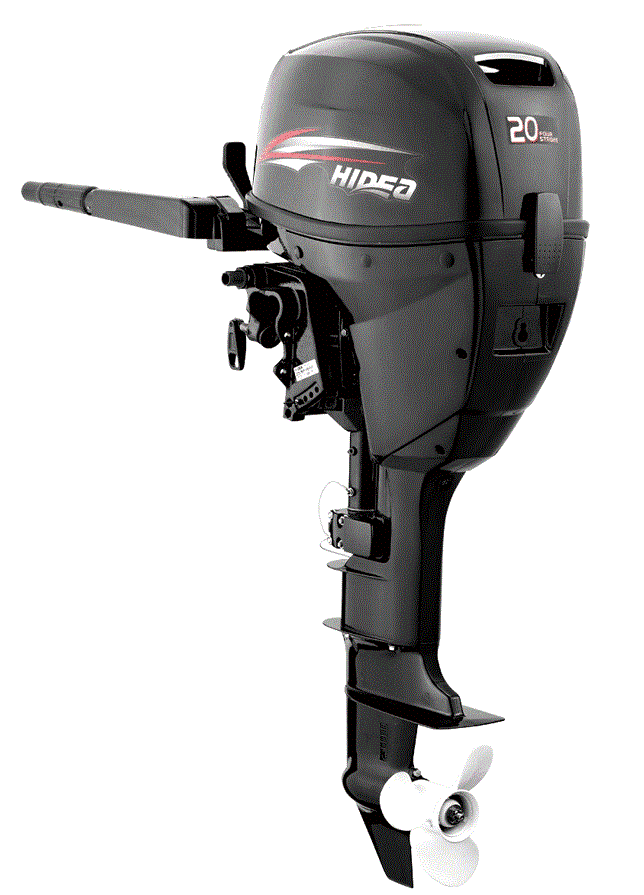 Hidea 20HP Carburettor 4-Stroke Outboard — Short Shaft, Electric StartUS$2,640 · in stock, ships now
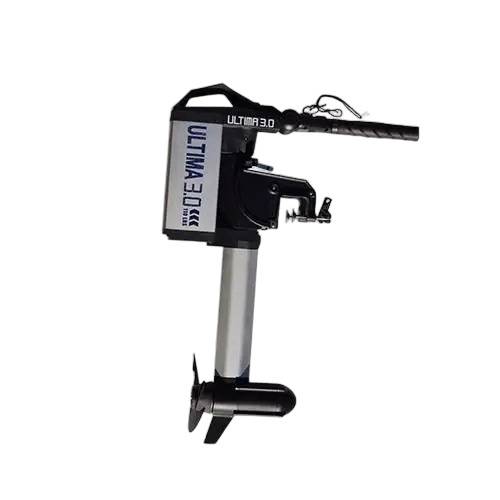 Haswing Ultima 3.0HP Electric OutboardUS$1,947 · in stock, ships now
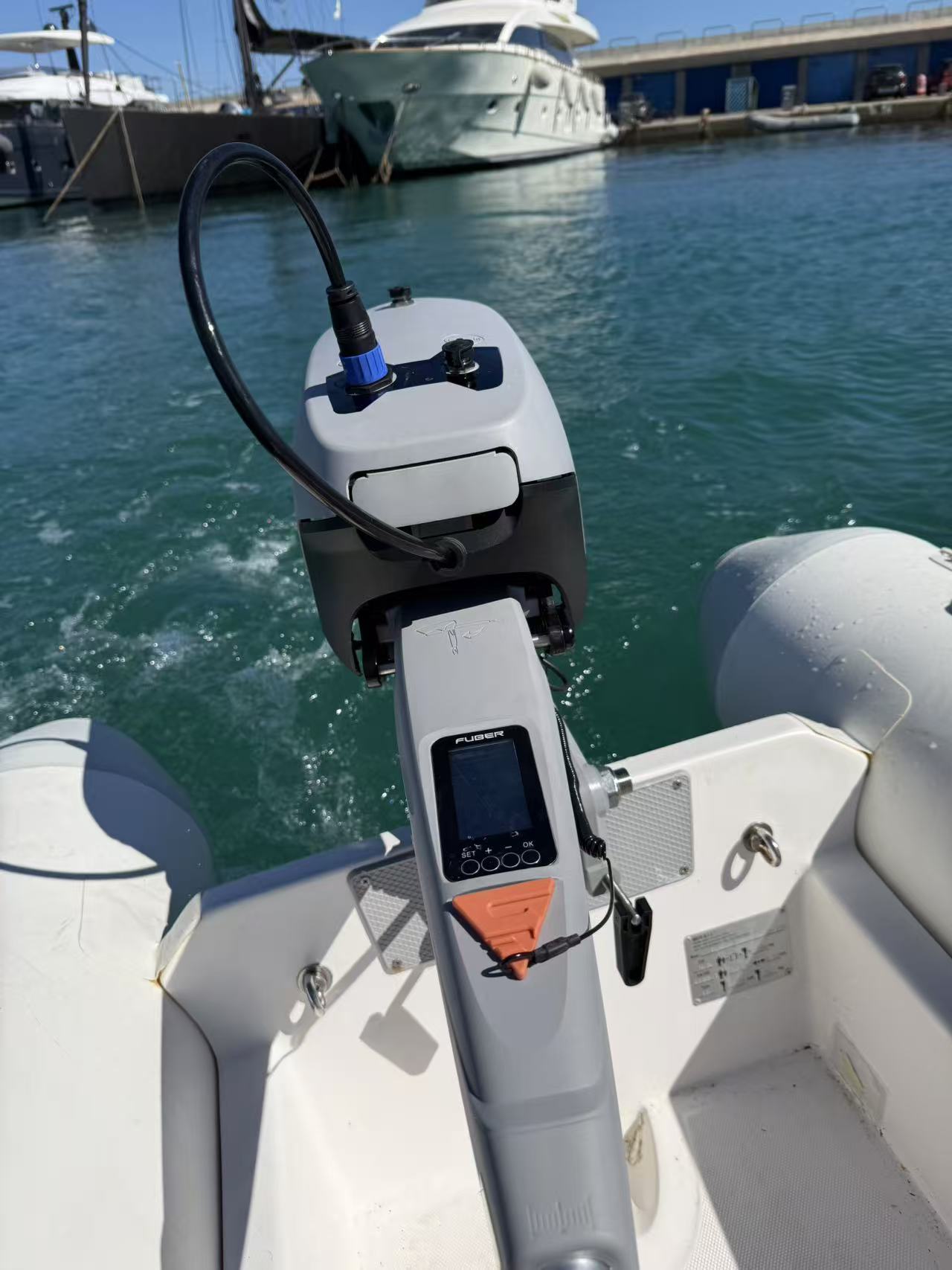 Fuber Global 1.5 Electric Outboard — Short ShaftUS$2,475 · in stock, ships now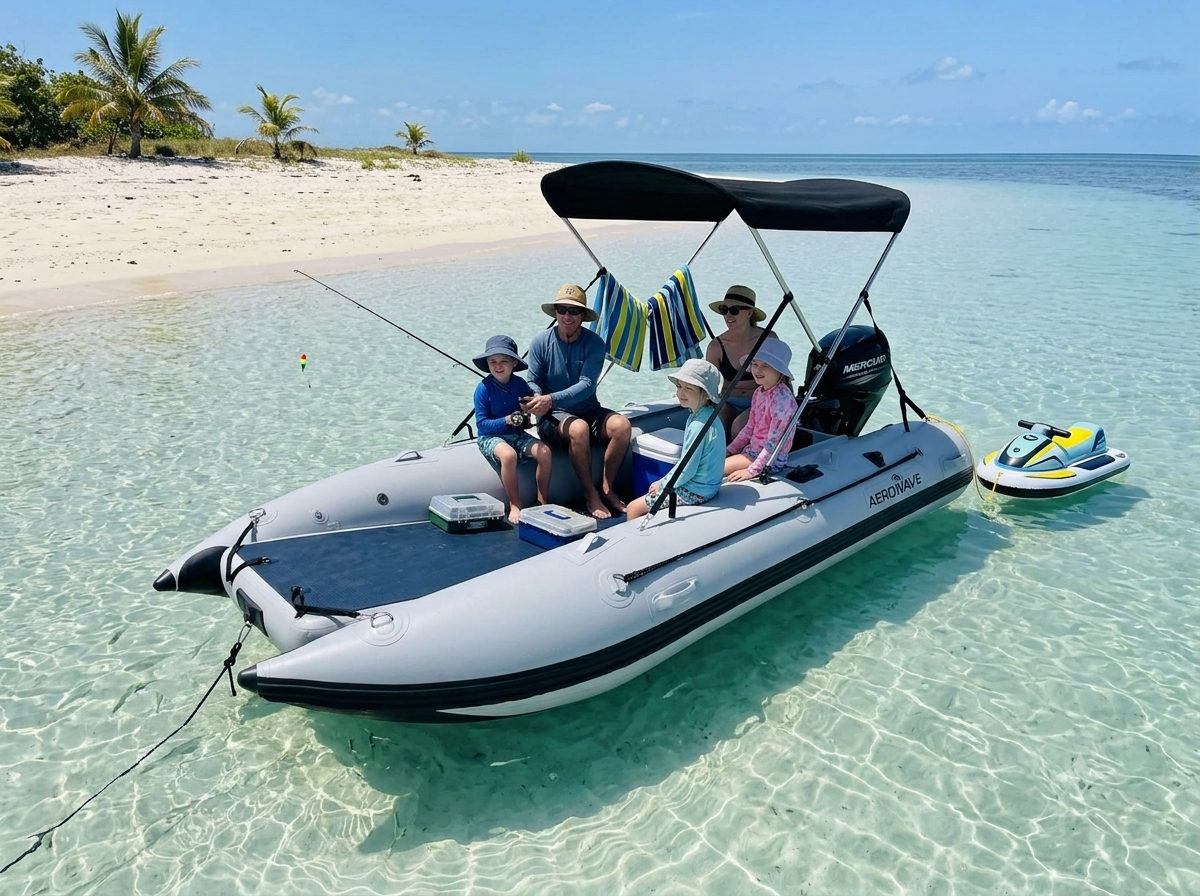
Or replace the boat entirely
Aerowave WaveRunner 380 Series 3 Catamaran Package
Delivered to United States — freight included in the figure below.
US$2,662landed, USD
- 7-year hull warranty
- CE certified to ISO 6185-3 and EU Directive 2013/53/EU
- Door-to-door, tracked the whole way
See it for yourself
Real boats. Real owners. Real people behind them.
Plenty of what you read online these days is generated. Check us out properly — the factory, the reviews and the owners are all one click away. Why we use AI, and how to check we’re real
How our boats are built
Walk the production line: thermo-welded seams, 1.2 mm VALMEX Heavy Plus hulls, over-pressure relief valves on every chamber.
See the buildGoogle Maps reviews
Real Australian owners, five stars, published on our Google Business Profile with the map — read them there, not just on our own site.
Open Google Maps reviewsOwner stories
Boats in use — offshore, on rivers, on rescue duty. Photos and words from the people who actually own them.
Read owner storiesYou've backed the trailer down a shallow coastal ramp at low tide, or carried an inflatable from the roof rack to a remote river launch. The boat is ready, but the engine is where the practical argument starts. A motor that's too small leaves you fighting current and load, while a heavier outboard can turn a simple weekend setup into a two-person lifting job.
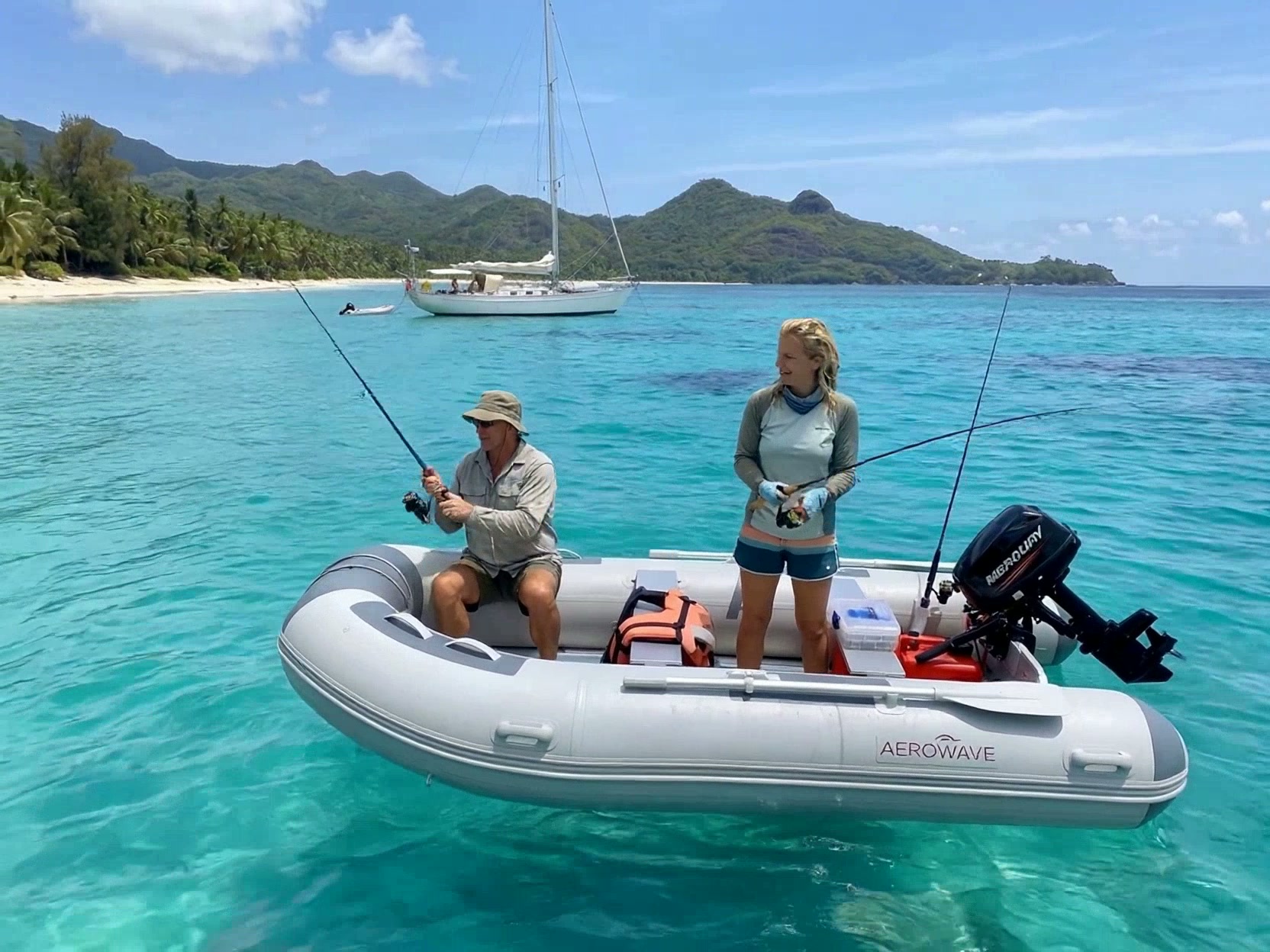
The Mercury 9.9 FourStroke sits in that useful middle ground. It offers more usable thrust than a small portable pusher without automatically demanding the transport, mounting hardware, and transom strength associated with larger outboards. For Australian owners of dinghies, tenders, fishing boats, and inflatable catamarans, the important question isn't just horsepower. It's whether the complete motor and hull combination suits the launch, the load, and the water you'll use.
Why the Mercury 9.9 Four Stroke Dominates Small Boats
At a quiet river landing, the practical test starts before the engine runs. A lightweight inflatable must be unloaded, inflated, and supported by a transom that can carry the motor without excessive flex. The Mercury 9.9 FourStroke suits this job because it provides useful thrust without forcing every portable-boat owner into a larger, harder-to-handle installation.
The Australian-sold model is a compact twin-cylinder outboard with 209cc displacement, 7.3 kW output, and a full-throttle operating range of 5000 to 6000 rpm. These specifications are listed in archived Mercury Marine Australia material. On a small inflatable, those figures only become useful when the hull, passenger placement, tube pressure, propeller, and transom height work together. A nominally suitable motor can still accelerate poorly or squat under load if the setup is wrong.
A practical middle ground for portable rigs
The 9.9hp class occupies a useful position between smaller portable outboards and heavier 15hp installations. An 8hp motor may be easier to handle, but it offers less reserve when carrying passengers, gear, or working against tide. A 15hp motor can provide more performance, yet its extra weight and thrust place greater demands on a lightweight transom and make lifting more difficult. The 9.9 FourStroke's roughly 38kg package is still a serious load for an inflatable, so the transom, lifting method, and mounting hardware must be checked rather than assumed adequate. A broader Mercury outboards Australia guide helps place those choices in the local boating context.
Four-stroke ownership also removes the need to mix oil into petrol. The compact twin-cylinder layout gives controlled power for tender work and close manoeuvring, while routine servicing remains part of ownership. It is a practical portable option, not a maintenance-free one.
The standard gear ratio suits general small-boat use, while a Command Thrust version changes the propeller and thrust balance for heavier loads and slower hulls. In Australian tidal rivers and coastal conditions, that distinction matters. More low-speed push can help a loaded inflatable hold position, but the larger gearcase and propeller arrangement can increase weight and drag. Confirm the hull's transom rating and the motor's actual configuration before choosing.
Practical rule: Choose the engine you can safely lift, mount, secure, and service. A theoretical power advantage is useless if the motor stays at home because handling it is difficult.
Before leaving a ramp, include weather awareness and safe navigation 2026 Australia in the launch plan. A portable outboard does not make a remote landing forgiving, particularly when tide, wind, and a flexible transom are working against the boat.
Core Engine Specs and Real-World Performance
The Mercury 9.9 FourStroke's useful character comes from its proportions, not from a single headline number. The Australian specification is a 209cc, two-cylinder platform with a 55 mm bore and 44 mm stroke, a combination that keeps the engine compact while producing its rated output. Australian dealer data lists the lightest manual-start configurations at about 38 to 38.5 kg, depending on model, which explains why the engine remains viable for portable tender work. The technical details are set out in Australian Mercury 9.9 FourStroke specifications.
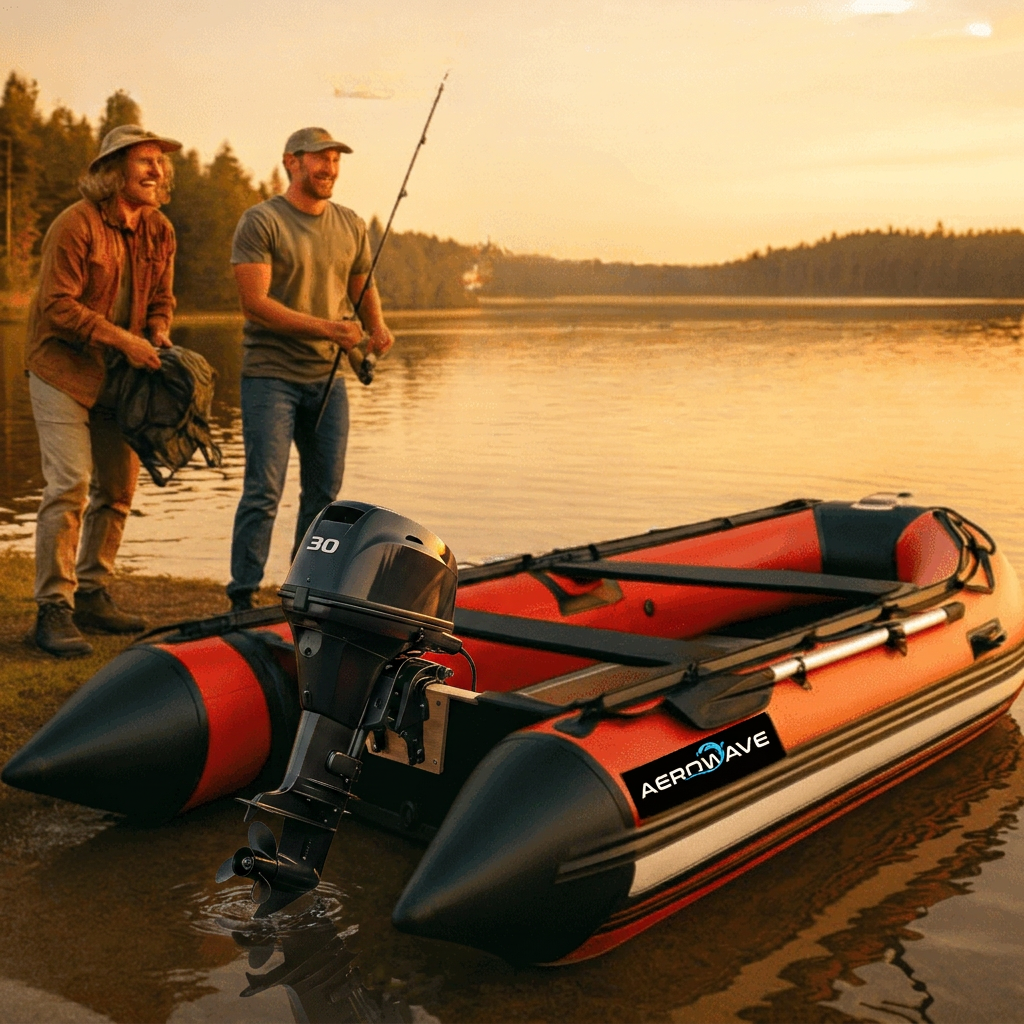
What the numbers mean on the water
The full-throttle operating band of 5000 to 6000 rpm gives you a useful reference when checking propeller loading and installation. A correctly matched setup should allow the engine to reach its specified operating range under the boat's normal load. If the motor can't reach that band, the propeller, hull loading, shaft position, or boat condition needs investigation rather than more throttle.
The standard gear ratio is 2.08:1, meaning the crankshaft turns more than twice for each propeller revolution. In practical terms, the gearcase trades engine speed for propeller torque, helping the motor push a loaded inflatable away from the ramp and maintain control at low boat speeds. It won't make a heavy hull behave like a light planing boat, but it gives the propeller a useful mechanical advantage for acceleration and manoeuvring.
The engine's 7.3 kW output is well suited to lightweight hulls when the boat is correctly inflated and sensibly loaded. Poor tube pressure, a waterlogged floor, passengers sitting too far aft, or an incorrectly trimmed motor can waste that output before it reaches the water. That's why a boat that performs well with one or two people can feel noticeably different when loaded with fuel, fishing gear, and extra passengers.
Installation affects performance more than the badge
Start with the transom and shaft measurement, then check the propeller and trim. A motor that sits too high can ventilate in turns or chop. One mounted too deep creates drag and makes lifting the engine at the ramp harder. The same 9.9hp rating can therefore produce very different results across a soft-bottom inflatable, a rigid inflatable boat, and an inflatable catamaran.
A practical buying guide on choosing an outboard size for an inflatable boat in Australia is useful before comparing engine variants. The key is to assess the complete rig, not just the advertised horsepower.
Standard EFI Versus Command Thrust Configurations
Australian buyers often use “Mercury 9.9” as though it identifies one motor. It doesn't. Shaft length, starting system, controls, gearcase, propeller loading, and intended use can change the way the engine behaves on the same hull.
The standard 9.9hp EFI configuration is generally the more sensible match for lightweight inflatables, portable dinghies, and roof-rack rigs. The Command Thrust or BigFoot-style variant is built around stronger low-speed thrust, which is valuable when the hull is heavier, the water is tidal, or the boat spends much of its time pushing rather than planing.
The major mechanical distinction is the gear ratio. The Command Thrust variant uses a deeper 2.42:1 gear ratio, compared with 2.08:1 for the standard configuration, and uses different propeller loading. The deeper ratio improves thrust for heavier inflatables, displacement hulls, and tidal rivers, but the trade-off is lower potential top-end speed. These configuration details are listed in Mercury 9.9hp BigFoot information.
Standard 9.9hp versus Command Thrust decision matrix
| Feature | Standard 9.9hp EFI | Command Thrust (BigFoot) |
|---|---|---|
| Best match | Lightweight dinghies, tenders, and portable inflatables | Heavier inflatables, displacement hulls, and demanding tidal work |
| Gear ratio | 2.08:1 | 2.42:1 |
| Propeller behaviour | Balanced acceleration and top-end performance | Greater low-speed bite and thrust |
| Transport priority | Better suited to frequent removal and roof-rack use | More appropriate for a semi-permanent or stronger installation |
| Water conditions | Sheltered water and general recreational use | Strong current, tidal rivers, and heavier loads |
| Main compromise | Less low-speed authority with a heavy hull | More weight and less emphasis on top-end speed |
For a typical 2.8 to 3.6m inflatable, the standard model is usually the better starting point when portability matters. It's easier to live with at a remote launch and less likely to overwhelm a lightweight transom with unnecessary hardware and propeller load.
Command Thrust makes more sense when the boat routinely carries substantial equipment, operates against current, or has a hull shape that benefits from pushing power rather than quick acceleration. Don't select it because the name sounds stronger. Match the gearcase to the boat's actual resistance and the conditions you expect to face. Mercury's Australian 9.9 to 60hp Command Thrust range shows why the variants should be treated as different tools.
Matching the Motor to Inflatables and Catamarans
The transom is the first place to start, not the engine brochure. A lightweight inflatable can carry a capable outboard, but the tubes, floor, transom plate, and attachment points must work together. The lightest manual-start Mercury 9.9 FourStroke models are listed at about 38 to 38.5 kg, so they're manageable for many reinforced PVC or Hypalon boats, but that mass still affects lifting, trim, and stern loading.
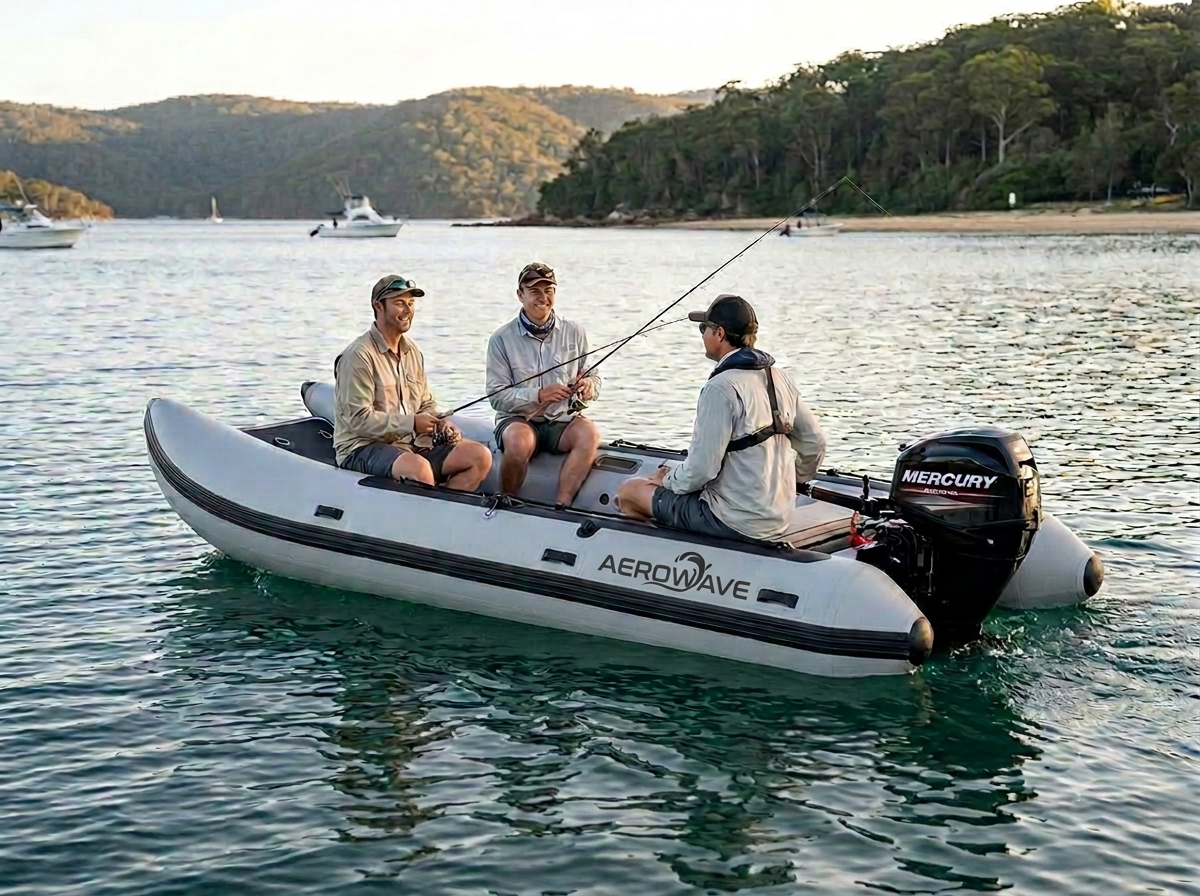
Check the hull before choosing the motor
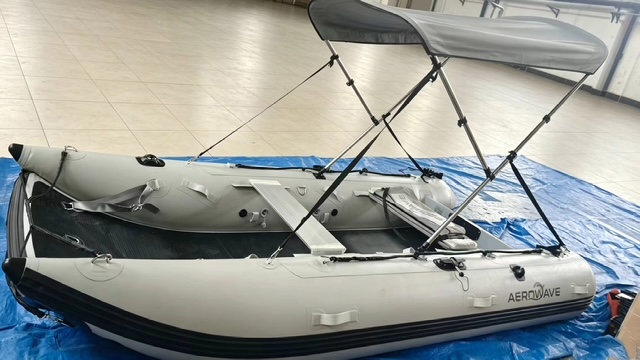
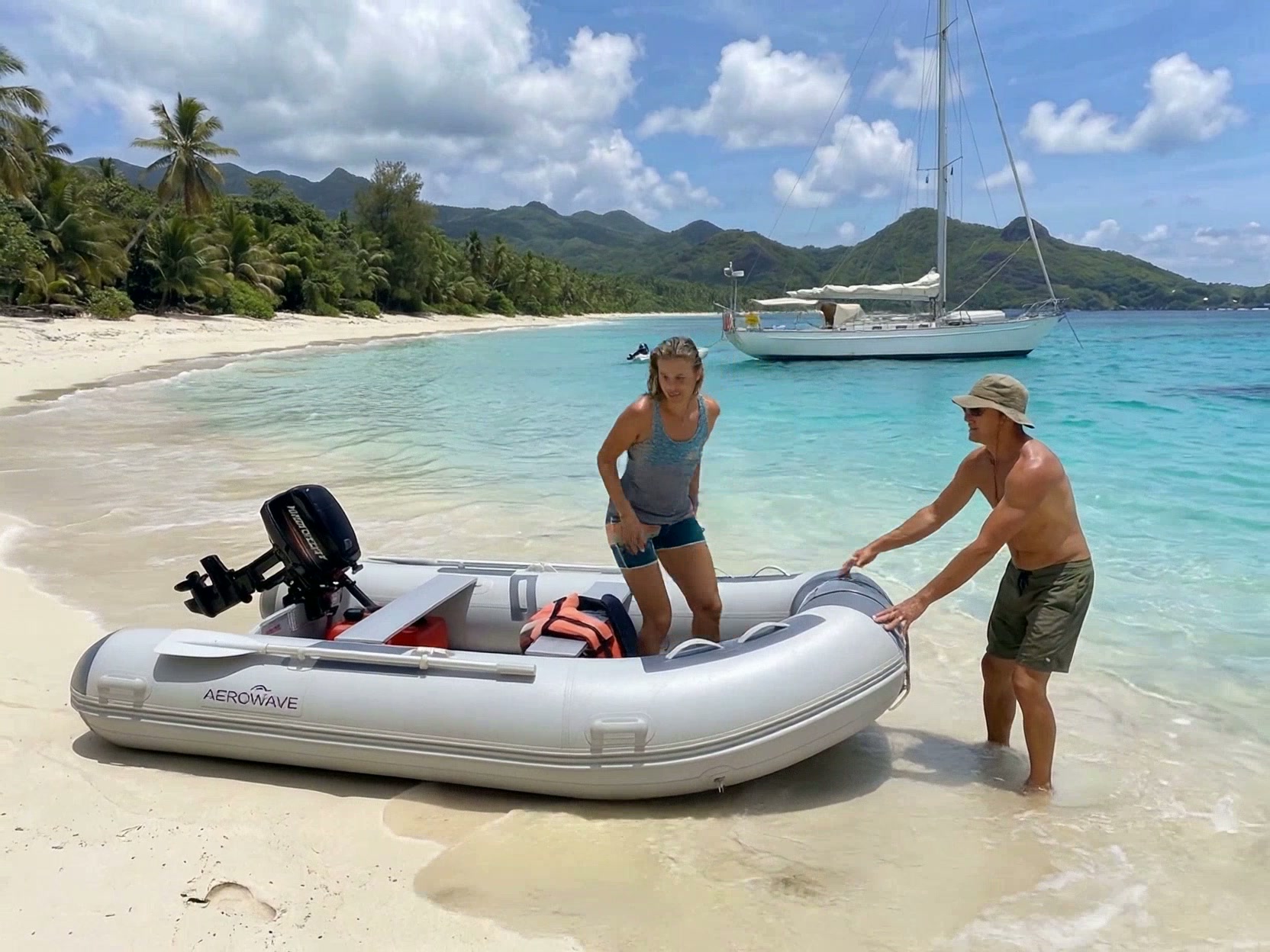
A standard V-hull inflatable often gives the most predictable response under power, especially when passengers sit forward enough to control bow rise. High-pressure air-deck boats can be excellent portable platforms, but they still need a properly reinforced transom and correct weight distribution. Inflatable catamarans behave differently again. Their twin-hull geometry can give stability and efficient tracking, but the outboard must sit squarely on the transom and the propeller must remain clear of the hull structure.
Use this checklist before buying:
- Confirm the capacity plate: Stay within the manufacturer's horsepower and weight limits, even if the motor physically fits.
- Measure the transom: Mercury configurations are available with 15-inch, 20-inch, or 25-inch shaft options, so measure rather than guessing.
- Assess lifting access: A motor that is manageable at the dealership may be awkward beside a slippery ramp, especially after a long day on the water.
- Load the boat: Include fuel, battery if fitted, anchor, safety equipment, fishing gear, and the people who normally travel together.
- Inspect the mounting surface: Look for flex, movement, cracking, or soft material around the transom brackets before running the engine hard.
The shaft length should place the propeller at the correct depth without forcing the engine excessively low. Too short can cause ventilation and loss of bite. Too long can add drag and make shallow launches more difficult. A practical guide to selecting a motor for an inflatable boat can help you compare the hull, transom, and engine as one system.
The video below provides another visual reference for how an outboard integrates with an inflatable hull.
Trim also matters. If the bow rises heavily, move portable weight forward before changing engines. If the boat struggles to steer or the transom squats, check inflation pressure, mounting height, and loading before assuming the motor lacks power.
Fuel Economy and Remote Adventure Logistics
At a remote Australian camp, fuel planning quickly exposes weaknesses in a small-boat setup. On a tidal creek, coastal run, or inland river, the fuel carried affects range, payload, and the margin available for getting home. A four-stroke keeps engine oil separate from the fuel system, but consumption still changes with throttle position, passenger load, hull efficiency, wind, current, and propeller selection.
Australian configurations are commonly paired with a 12-litre fuel tank, a compact arrangement for transport and day trips. That capacity gives you a useful starting point, not a promised range. A lightly loaded inflatable in sheltered water will use fuel differently from a 38kg four-stroke pushing several people into tide. The added weight of the motor also matters: a light transom can squat under it, increasing wetted area and making the engine work harder.
Plan around conditions, not a brochure estimate
For a remote outing, calculate fuel for the outward leg, return leg, near-shore manoeuvring, changing current, and a reserve that remains untouched during normal running. A stated cruise figure cannot account for a full boat, headwind, chop, or an unfavourable tide.
Fuel storage affects vehicle loading as well. A portable engine and tank leave room for camping gear, fishing equipment, and recovery items, while the tank still needs to remain upright and protected from heat, impact, and movement. Loose containers in a vehicle or unsuitable fuel storage create a separate safety risk.
Remote-trip practice: Treat fuel as a return-trip resource first. If the return depends on perfect weather and an empty boat, the plan is too tight.
Command Thrust gearing can help a heavily loaded inflatable hold onto the water in tidal conditions, but it does not remove the physical penalty of mounting a comparatively heavy four-stroke on a flexible transom. Check transom support, trim, and weight distribution before adding fuel or cargo. Standard gearing may suit a lighter hull and easier transport, while Command Thrust trades some portability for stronger low-speed push.
Before selecting a tank or hose arrangement, confirm the engine configuration and available storage space. This petrol tank guide for outboard engines helps organise a portable setup rather than a permanent fuel system.
The advantage of the 9.9 class is the compact engine, tank, and inflatable package. It suits trips where the launch point is far from a service station, provided loading, fuel security, and route planning are handled with the same care as engine choice.
Essential Maintenance and Valve Clearance Specs
A portable four-stroke often spends long periods stored between fishing trips, then gets asked to start immediately when the weather is right. That pattern makes pre-season inspection important. Fuel condition, cooling passages, engine oil, gear oil, fasteners, and valve adjustment all deserve attention before the first serious outing.
Mercury's owner-manual data specifies a 0.9 mm spark plug gap, 0.13 to 0.17 mm intake-valve clearance, 0.18 to 0.22 mm exhaust-valve clearance, and NGK DCPR6E spark plugs. Those figures come from the Mercury 9.9 FourStroke owner manual, and they're the numbers to give your mechanic when discussing an inspection.
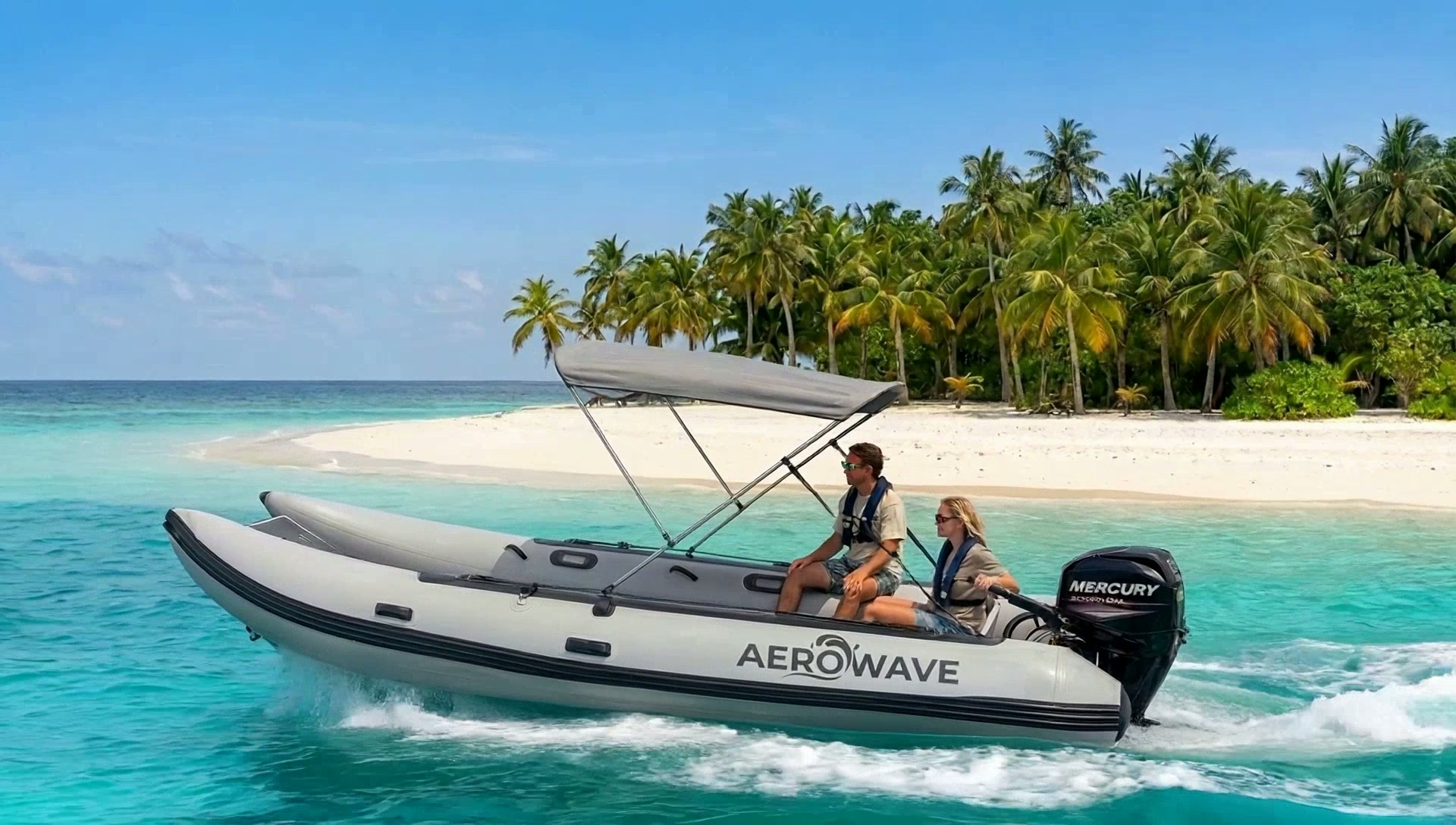
A useful pre-season inspection
Start with a visual check before removing anything. Look for fuel leaks, damaged hoses, corrosion around fasteners, loose control fittings, and signs of salt or silt around the cooling system. Then work through the service items that affect starting and running quality.
- Inspect the spark plug: Check the plug condition and set the gap to 0.9 mm. Use the specified NGK DCPR6E type unless the applicable manual for your exact model says otherwise.
- Check valve clearance cold: Measure the intake at 0.13 to 0.17 mm and the exhaust at 0.18 to 0.22 mm. Cold inspection matters because thermal expansion changes the running clearance.
- Check the cooling system: Confirm that the tell-tale stream is clear and that the water pump and passages aren't restricted by salt, sand, or debris.
- Inspect lower-unit lubrication: Look for water contamination, damaged seals, or metallic debris when checking the gearcase oil.
- Review storage preparation: Stabilise fuel as appropriate, protect exposed metal, and store the engine in the position specified by Mercury for that model.
Valve clearance isn't a cosmetic adjustment. Excessive clearance can create noise and alter valve operation, while insufficient clearance can affect sealing as the engine reaches operating temperature. If you don't have the correct feeler gauges, torque information, and service procedure, let a marine mechanic handle the adjustment.
For replacement components and service items, keep the exact model code to hand when ordering Mercury outboard parts. Different shaft, start, and gearcase configurations can use different parts, so “9.9hp Mercury” alone may not identify the right component.
The 9.9hp Versus 15hp Dilemma for Small Rigs
A 15hp outboard can look like the obvious upgrade until it must be lifted onto a portable transom, stored in an SUV, or carried down a remote beach. Mounting a roughly 38kg four-stroke on a lightweight inflatable also places more demand on the transom, tubes, trim, and weight distribution. Extra horsepower only helps when the hull can turn it into useful forward motion.
An Australian boating test recorded a 9.9hp four-stroke at about 36 km/h and a 15hp at 38.9 km/h on a small boat, as reported in Australian Mercury 9.9hp retail and test information. Results vary with hull design, load, propeller, and setup, but the comparison shows how modest the practical speed gap can be.
Decide from the rig you use
The 9.9hp suits owners who regularly remove the engine, travel with limited storage, use a lightweight inflatable, or carry a modest load. It is also easier to manage when launching involves poor footing, shallow water, or a long walk from vehicle to shoreline. On these boats, lower lifting and mounting effort can matter more than a small increase in top-end speed.
A 15hp becomes more defensible when the hull is rated for it, the transom can handle its mass, and the boat carries heavy equipment or several passengers. It also suits a motor that stays mounted on a trailer, hoist, or strong bracket. In tidal rivers and coastal water, Command Thrust gearing can provide stronger low-speed control and pushing power, while the standard gear ratio may be the better match for a lighter, less heavily loaded inflatable. Propeller choice and load distribution still determine how well either setup performs.
Judge the two engines on complete rig weight, hull efficiency, passenger load, launch access, and the speed you can use safely.
New Mercury 9.9 FourStroke examples are listed around A$3,799 to A$4,499 in Australian listings, including Australian Mercury 9.9hp pricing listings. Compare shaft length, starting system, gearcase, condition, included tank, and service history. A 9.9hp with Command Thrust is not an identical purchase to a standard model.
For many portable inflatable rigs, the Mercury 9.9 FourStroke offers the more manageable balance. It preserves useful performance without making transport and mounting unnecessarily difficult. It will not make every heavy boat plane, but an efficient inflatable with correct tube pressure and sensible loading can deliver manageable weight, controllable thrust, and dependable day-to-day use.
Easy Inflatables offers Aerowave inflatable boats, catamarans, RIBs, yacht tenders, kayaks, accessories, and Hidea outboards for Australian boating setups. Visit Easy Inflatables to compare hull sizes, transom configurations, and portable packages before pairing a boat with a Mercury 9.9 FourStroke or another suitable outboard.
Pairing a 9.9hp four-stroke with the right hull
Horsepower only works if the hull and transom are built for it. Every Aerowave hull runs a 380mm reinforced transom, so a short-shaft 9.9hp sits deep enough to stop the prop ventilating in chop.
- Aerowave Viper 330 + 9.9HP 4-Stroke package — a matched boat-and-motor rig, nothing left to work out.
- AeroCat 380 inflatable catamaran — the stable fishing platform for a 9.9–15hp class motor.
- Swift Tender 270 SI — yacht tender weight with a transom rated for a real four-stroke.
Not sure what fits your transom? Call +61 2 4335 1603 and we'll size the motor to the boat before you spend a cent.
Weekend-Proof Score 17 questions · about 2 minutes
Will the boat you're about to buy survive an Australian summer?
Seventeen straight questions about where you'll use it, what you'll ask of it and the boat you're weighing up. You get a score out of 100, the exact weak points in your plan, and the one boat that genuinely fits.
Free · your result shows on screen · no email required
So which one is yours?
Pick how you'll actually use it and we'll take you straight to the right hull.
I want to fish it
Open bow, rod holders, deck space you can stand and cast from.
Viper Sport 400Family, diving and the beach
3.8 m Series 3 catamaran — low bow to climb back in wearing fins or a tank.
WaveRunner 380Tender / one-person launch
3.3 m hard-floor boat that packs into a bag and still takes a beach landing.
Viper 330Shop gear featured in this guide
Aerowave WaveRunner 380 Series 3 Catamaran Package
The WaveRunner 380 Series 3 is a premium 3.8m inflatable catamaran package built for Australian and worldwide families, fishing, and coastal day boating — ideal for snorkeling and spearfishing — offering serious stability and premium German Valmex® construction.
Free freight to United States · local taxes payable on arrival
Aerowave Viper 400 Sovereign
Flagship 4m enclosed-bow inflatable catamaran. German VALMEX® 7321 Heavy Plus 1.2mm commercial-grade fabric, 10 PSI high-pressure drop-stitch air deck floor with VALMEX non-slip surface, LockPro wheels, full Bimini and FREE express delivery Australia-wide included. Winter special — save $1,000 until 31 August 2026.
Free freight to United States · local taxes payable on arrival

Aerowave Viper 365 Open Bow
Premium 3.65m Inflatable catamaran — built the same way as our flagship Viper 400 sports boat, just 35cm shorter. German VALMEX® 7321 Heavy Plus 1.2mm commercial-grade fabric, 10 PSI high-pressure drop-stitch air deck floor with VALMEX non-slip surface, LockPro wheels, full Bimini and FREE express delivery Australia-wide included.
Free freight to United States · local taxes payable on arrival
Not sure which suits you? Talk to a real boat owner.
Before you spend a cent
Buying from Australia, delivered to United States
You have never heard of us, we are on the other side of the world, and the internet is full of fakes. Fair enough. Here is everything you would need to check us out, in one place — no forms, no chat bot.
Australian designed business
Easy Inflatables, Avoca Beach NSW 2251. ABN 96 856 548 613. International orders ship from our Hong Kong hub.
222 owner reviews, 4.8 average
Read them in full, good and bad, on our reviews page.
CE certified, 7-year hull warranty
ISO 6185-3 and EU Directive 2013/53/EU. Warranty honoured worldwide.
Tracked, insured, door to door
FREE freight to United States · local tax/duty on arrival.
- Who am I actually buying from?
- Easy Inflatables, Avoca Beach NSW 2251, Australia. ABN 96 856 548 613. Sean is the owner and skipper, Gary Stewart handles sales on +61 2 4335 1603, Karen Matthews handles email. The boats are Australian designed; international orders ship from our Hong Kong dispatch hub so your landed price stays competitive. Phone us before you pay a cent — a real person answers.
- Is this really an Australian product?
- Yes — Australian designed and engineered on the NSW Central Coast. Manufacturing is done offshore to our spec, and international orders ship direct from our Hong Kong dispatch hub. If we routed every boat through Australia first, the freight alone would roughly double or triple your cost for the same hull.
- What do I pay, and what is not included?
- The delivery and import terms depend on your country. EU, UK, New Zealand and named Asia/Pacific lanes include duty and tax; US freight is free but US buyers pay import charges on arrival. Other destinations show their terms before payment.
- How do I pay safely?
- Card through Stripe (Visa, Mastercard, Amex, Apple Pay, Google Pay) or bank transfer. Card payments carry your bank's own dispute protection. We never ask for crypto, gift cards or payment to a personal account.
- What if it arrives damaged?
- Every boat ships fully tracked and insured door to door. Photograph the carton and the boat on arrival and email us — transit damage is claimed and replaced through us, not left with you and the courier.
- Is the warranty real outside Australia?
- Yes. The 7-year hull warranty on 1.2 mm VALMEX Heavy Plus and Orca Hypalon hulls applies wherever you are. Replacement parts are held in Australia and at our overseas hub and go out by express courier to your door.
- Is the boat actually certified?
- All Aerowave catamarans are CE certified to ISO 6185-3 and EU Directive 2013/53/EU. Certification paperwork is supplied with the boat — ask and we will send it before you order.
Frequently asked questions
- How much does a Mercury 9.9 four stroke weigh?
- The 9.9 FourStroke package is around 38kg depending on shaft length, starting system and gearcase. That is a genuine two-hand lift, so check your transom rating and how you will carry it to the water before you buy.
- Is a 9.9hp four stroke enough for a 3.3m to 3.8m inflatable?
- Yes for most cruising, tender and fishing use. A 9.9hp will plane a light 3.3m–3.8m inflatable catamaran with two adults and gear. Load, tube pressure, prop and transom height matter as much as horsepower.
- What is the difference between standard and Command Thrust?
- Command Thrust uses a larger gearcase and a different prop and gear ratio for more low-speed push on heavier, slower hulls. Standard gearing usually suits a lighter inflatable better and weighs less.
- Short shaft or long shaft for an inflatable boat?
- Match the shaft to the transom height. Our Aerowave hulls use a 380mm transom, which takes a short shaft. A long shaft on a short transom drags; a short shaft on a tall transom ventilates and blows out in chop.
- How far will a 9.9hp four stroke go on 12 litres?
- Plan on roughly 2–4 litres an hour at sensible cruise, so 12 litres is a few hours of running, not a full day. Always fuel for the return trip against wind and tide, not the trip out.
- What does a Mercury 9.9 four stroke cost in Australia?
- New examples are commonly listed around A$3,799 to A$4,499 depending on shaft length, start system and gearcase. Compare what is included before comparing prices, and factor in the fuel tank and line.
- What servicing does a 9.9 four stroke need?
- Flush after every saltwater trip, change the engine oil and gear oil on the manufacturer's schedule, replace the impeller when specified, check the anodes and have valve clearances inspected by a marine mechanic at the stated interval.
Ready to set sail?
Premium German-fabric inflatable catamarans, built to order and delivered to your door. Talk to our team or browse the fleet.
Like this guide? Get the next one in your inbox.
Owner-tested tips, gear deep-dives and Aussie boating know-how — no spam.