
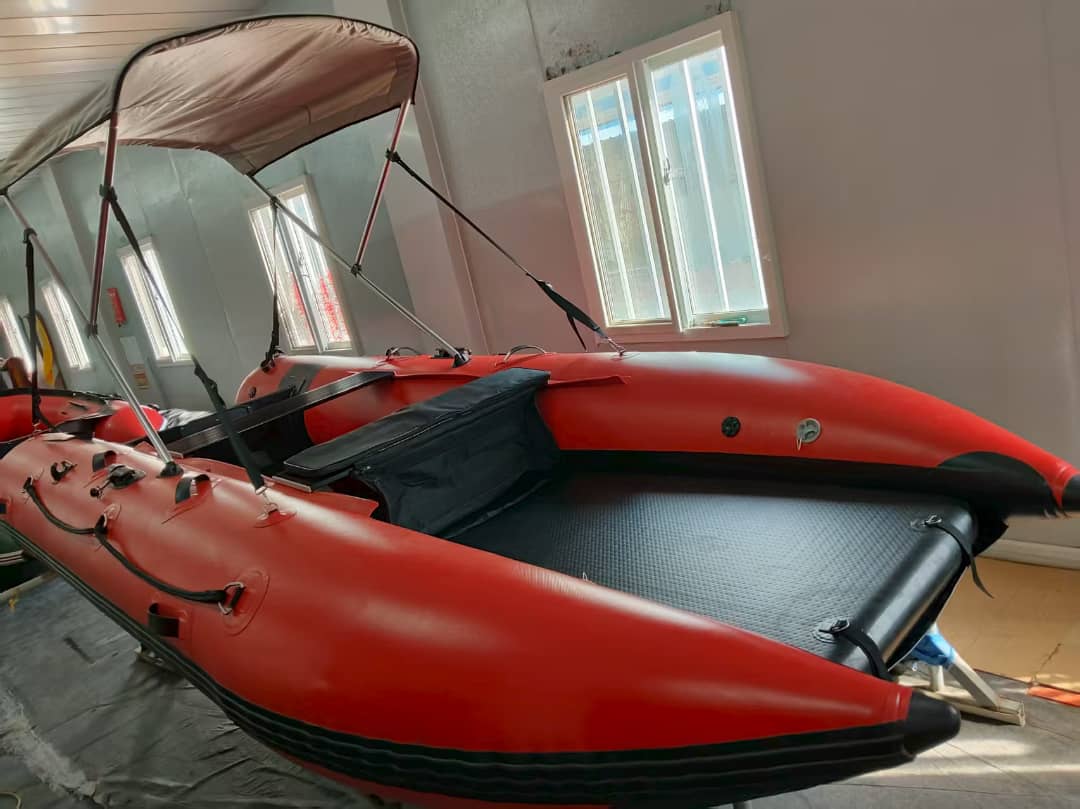
Inflatable Boat on a Trailer: When to Keep It Rigged and Ready to Launch
Should you keep your inflatable boat on a trailer or pack it away? Compare launch speed, UV care, bunk setup, and tyre maintenance for soft catamarans.
At a glance
Should you keep your inflatable boat on a trailer or pack it away? Compare launch speed, UV care, bunk setup, and tyre maintenance for soft catamarans.
- Should You Keep an Inflatable Boat on a Trailer or Pack It Down?
- Frequency of Use and Setup Friction
- Storage Space and Vehicle Constraints
- How to Set Up a Trailer for an Inflatable Boat (Bunks vs Rollers)
What we'd put you in
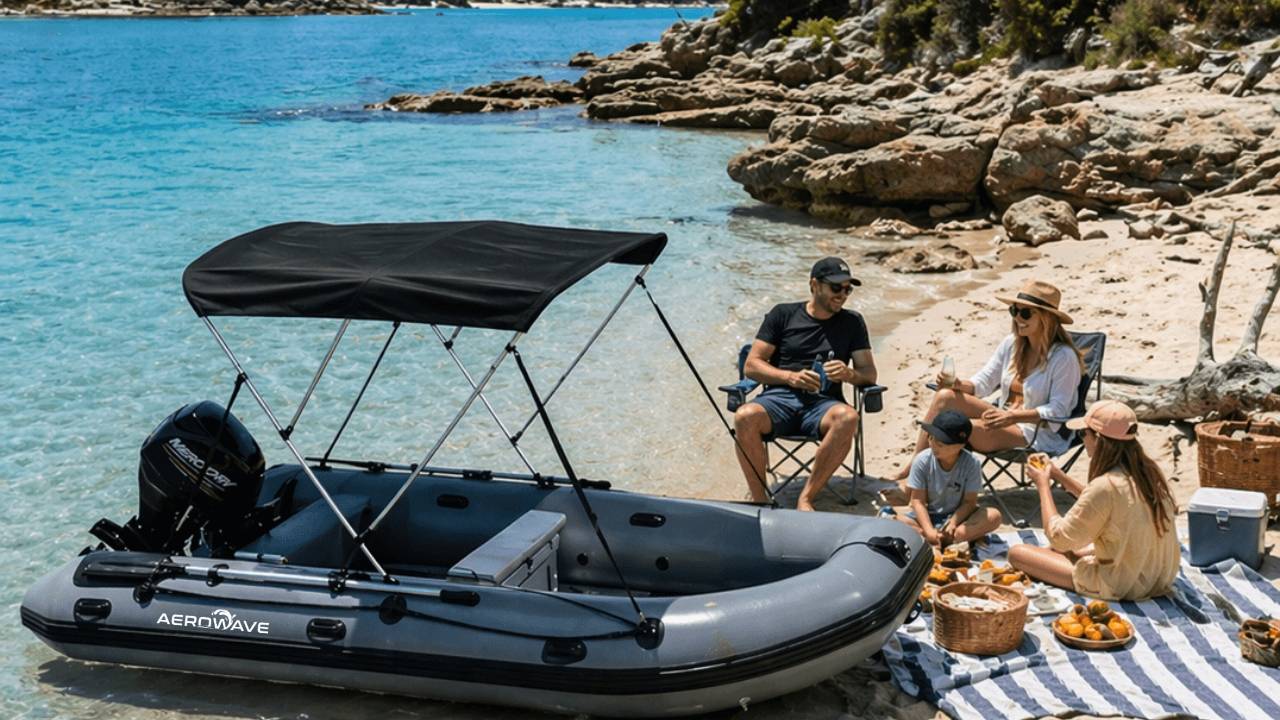
Aerowave Viper 400 Sovereign
Same capability as a small hard boat — without the trailer, the ramp or the rego.
US$4,449 USD
Delivered to your door, today's rate
- Free freight to United States · taxes included, nothing to pay on arrival
- 5 + 2 year hull warranty
🇺🇸 Shipping to United States · duty & taxes prepaid
Yes — we ship the Aerowave Viper 400 Sovereign to United States. Here's the landed price.
Same capability as a small hard boat — without the trailer, the ramp or the rego.
Aerowave Viper 400 Sovereign
- Boat package (export price)
- US$4,122
- 15% tariff relief credit
- − US$618
- Express air freight to United States
- Included
- Import duty, taxes & customs clearance
- US$946 — prepaid by us
- Estimated landed, USD
- US$4,449
Indicative, converted at today's rate. Ask below and we'll put a fixed figure in writing, valid 30 days.
- 5 + 2 year hull warranty
- 1500 GSM / 1.2 mm VALMEX® Heavy Plus hull
- CE certified to ISO 6185-3 and EU Directive 2013/53/EU
- Delivered duty paid — nothing to pay on arrival
Your price, delivered to your door — freight included.
We email the full PDF quote (spec, freight, finance, WavePay) to your inbox in under 60 seconds. No spam — one quote, one follow-up.
See it for yourself
Real boats. Real owners. Real people behind them.
Plenty of what you read online these days is generated. Check us out properly — the factory, the reviews and the owners are all one click away. Why we use AI, and how to check we’re real
How our boats are built
Walk the production line: thermo-welded seams, 1.2 mm VALMEX Heavy Plus hulls, over-pressure relief valves on every chamber.
See the buildGoogle Maps reviews
Real Australian owners, five stars, published on our Google Business Profile with the map — read them there, not just on our own site.
Open Google Maps reviewsOwner stories
Boats in use — offshore, on rivers, on rescue duty. Photos and words from the people who actually own them.
Read owner storiesLeaving an inflatable boat on a trailer transforms spontaneous mid-week fishing into a five-minute reality, yet doing it incorrectly can silently destroy your tubes and warp your transom.
Owning a high-performance soft inflatable boat (SIB)—particularly a high-speed tunnel-hull catamaran—presents a rare luxury in modern boating. You are not shackled to commercial storage facilities, high marina fees, or massive four-wheel drives. You can fold a 3.8-metre craft into the boot of a family hatchback or unroll it on a sandy beach.
However, as many Australian boaties discover after their first dozen trips, deflating, rolling, unrolling, and re-inflating a high-pressure craft every single weekend can sap the joy out of quick coastal runs. Hooking a dedicated trailer to your towball, swinging by the ramp, and gliding into the tide within minutes holds undeniable appeal.
Trailers introduce a new set of maintenance rituals. The punishing Australian sun, road vibration, point-load damage from ill-suited rollers, and saltwater bearing failure will shorten your craft's lifespan if ignored. Whether you run a heavy-duty expedition catamaran or a lightweight tender, knowing when to keep an inflatable boat on a trailer—and how to rig the bunks to protect the fabric—is the dividing line between effortless ownership and costly workshop repairs.
Should You Keep an Inflatable Boat on a Trailer or Pack It Down?
Keeping an inflatable boat on a trailer is the ideal choice if you launch more than twice a month, have secure covered garage or carport space, and run an outboard weighing 35 kilograms or more. Packing the boat down into a carry bag makes superior sense if storage space is restricted, you travel long distances with a caravan, or you want to eliminate trailer registration, road maintenance, and boat ramp fees entirely.
When evaluating which path suits your lifestyle, consider three primary variables: setup friction, storage footprint, and hull protection.
Frequency of Use and Setup Friction
Setup friction is the primary reason boats gather dust in suburban sheds. When an inflatable catamaran is packed into an Aerowave Heavy-Duty Boat Bag (A$299), reaching the water requires unpacking the fabric, unfolding the sponsons, connecting a two-stage electric pump, seating the high-pressure drop-stitch air deck, mounting the outboard, connecting fuel lines, and fitting safety gear. Even with streamlined drills, you are looking at 20 to 30 minutes of physical effort before your hull hits the water, followed by the identical routine in reverse under the midday heat.
An inflatable boat on trailer cuts ramp preparation down to removing two transom tie-down straps, unplugging the light board, inserting your drain plugs, and backing down the ramp. If you target early-morning bite windows or sneak out for dusk sessions on Sydney Harbour or Moreton Bay, having the rig permanently assembled delivers more days on the water.
Storage Space and Vehicle Constraints
A trailered craft claims roughly five metres of driveway or garage depth once you factor in the drawbar. If your local council strictly polices street parking or your garage ceiling clearance cannot accommodate a vessel on chassis rails, the trailer quickly turns into an administrative headache. Folding the craft away enables you to stow a genuine offshore-capable boat inside a standard wardrobe or on an overhead garage rack, entirely out of sight.
+-----------------------------------------------------------------------------------+ | DECISION MATRIX: TRAILER VS PACK-DOWN | +---------------------+-------------------------------+-----------------------------+ | Parameter | Inflatable Boat on Trailer | Packed in Heavy-Duty Bag | +---------------------+-------------------------------+-----------------------------+ | Ramp Arrival to Wet | 3–5 minutes | 20–30 minutes | | Tow Vehicle Need | Towbar required (any small car)| Zero (fits in vehicle boot) | | Annual Rego Cost | Trailer rego ($100–$250/yr) | $0 | | Space Required | 5m garage bay or side yard | 120cm x 60cm shelf space | | Outboard Handling | Stays bolted to transom | Lifted on/off every trip | | Fabric Exposure | Higher UV exposure risk | Zero UV exposure in storage | +---------------------+-------------------------------+-----------------------------+
How to Set Up a Trailer for an Inflatable Boat (Bunks vs Rollers)
You must never use an unmodified roller trailer designed for rigid-hull fibreglass or aluminium boats to carry an inflatable craft. Roller trailers create extreme point-loading that will stretch the fabric, deform internal baffling, and potentially punch straight through thermal welds or glued seams under dynamic road transport loads.
An inflatable boat on a trailer requires broad, carpeted longitudinal bunks that disperse weight uniformly across the broad surface area of the main tubes or twin catamaran sponsons.
Eliminating Rollers in Favour of Flat Longitudinal Bunks
Soft inflatable boats rely on air pressure for structural rigidity. Rollers concentrate the entire static mass of the vessel—plus the dynamic downward forces caused by highway corrugations—into contact patches the size of a fifty-cent coin. Over a three-hour drive to an estuary, those small rollers strike the tube fabric repeatedly, fatiguing the PVC or polymer coatings.
Replace all central keel rollers with continuous marine-grade timber or extruded aluminium bunks faced with UV-stabilised marine carpet or high-density polyethylene (HDPE) glide slicks. For an inflatable catamaran like the Aerowave Viper 365 Open Bow (A$5,895) or AeroWave AeroCat 380 (A$4,895), you need twin bunks positioned directly under the centre line of each pontoon. The bunks should be a minimum of 100 mm to 150 mm in width to spread the load evenly across the 1500 GSM / 1.2 mm VALMEX Heavy Plus or 1100 decitex fabric.
Supporting the Transom and Engine Load
The most critical structural rule when placing an inflatable boat on trailer rails is that the bunks must extend fully beneath the transom board.
A quality marine transom on modern catamarans measures 380 mm in height to suit standard short-shaft outboards, fabricated from heavy-duty laminated marine timber sealed with resin and anchored directly to the air sponsons via reinforced heavy-gauge brackets. If your trailer bunks finish even 100 mm short of the transom, the weight of a 20HP four-stroke outboard (often scaling 45 to 55 kg) bounces unsupported on the aft overhang during transit.
That cantilevered leverage acts like a pry bar against the tube attachments. Over dozens of towing cycles, road shock will shear or crack the transom joint seals. Set your trailer winch post so that the transom sits dead-flush over the rear edge of the bunks, directing 100% of the outboard's downward static weight straight into the trailer chassis.
Tie-Down Techniques That Protect Sponsons
Never crank down across the top of inflated tubes with narrow 25 mm ratchet straps. Narrow webbed straps act like cheese-cutters across PVC and Hypalon fabrics, causing structural creases and friction burning the top skin when road grit works its way underneath.
Instead, secure an inflatable boat on trailer chassis points using wide 50 mm straps with padded sleeves, positioned strategically:
- Run the primary stern tie-down harness directly through the heavy-duty stainless steel transom U-bolts or ski-eyes to the trailer frame, anchoring the transom down against the rear of the bunks.
- Secure the bow using a secondary safety chain and turnbuckle to the bow D-ring, supplementing the winch strap.
- If a belly strap across the main tubes is necessary for high-speed highway transit, insert thick carpet off-cuts, closed-cell foam pads, or specialised tube covers between the webbing and the inflatable fabric.
- Tighten straps only until firm. Over-tensioning ratchet handles will crush internal air chambers and strain tube seam welds.
Managing Tube Pressure When Storing an Inflatable Boat on Trailer
Tube pressure inside an inflatable boat parked on an open trailer fluctuates radically with ambient temperature swings due to basic gas physics. If you inflate your tubes to their maximum operating pressure of 3.0 to 3.5 PSI inside a cool morning garage and leave the trailer parked outside under the direct 38°C Australian summer sun, pressure inside those chambers can rapidly spike beyond 5.0 PSI.
Excessive pressure compromises safety valves, fatigues glued seams on budget imports, and distorts high-pressure drop-stitch air floors, which normally operate at 8–10 PSI. When storing your craft between trips, follow these pressure discipline rules:
- Vent 20% of Working Pressure: Whenever parking the boat on its trailer for more than 48 hours, bleed air until the main tubes yield slightly under thumb pressure (roughly 2.0 to 2.5 PSI).
- De-pressurise the Air Deck: Drop the high-pressure drop-stitch floor down to approximately 5 PSI. The floor contains thousands of polyester internal spacer threads per square metre; backing off the tension prevents creep and thread fatigue.
- Rely on Pressure-Relief Valves: Premium builds, such as the Aerowave Viper range, integrate automatic over-pressure safety valves that purge excess barometric pressure before it reaches critical failure thresholds. However, do not treat safety relief valves as a substitute for intentional manual bleeding during extreme summer heatwaves.
- Re-pressurise at the Ramp: Keep a compact 12V digital pump or high-output dual-action hand pump in your tow vehicle. Once you arrive at the boat ramp, take 90 seconds to top the chambers up to recommended working pressure before sliding into the water. Lake or ocean water is almost always cooler than ambient air, which quickly drops your internal pressure the moment the hull touches the brine.
Trailer vs Bag vs Roof: Comparing Transport and Storage Methods
Every boater prioritises different aspects of ownership: velocity to plane, cost overheads, vehicle wear, and storage practicality. The table below illustrates how keeping an inflatable boat on trailer equipment compares against carrying it inside a bag or mounting it across vehicle roof bars.
| Feature / Metric | Inflatable Boat on Trailer | Packed in Carry Bag | Roof Rack / Ute Tub |
|---|---|---|---|
| Ideal Boat Class | Viper 400 Open Bow / WaveRunner 380 | Swift Tender 230 SI / AeroCat 335 | AeroCat 335 / Swift Tender 290 SI |
| Launch Time (Arrival to Water) | 3–5 minutes | 20–30 minutes | 10–15 minutes |
| Annual Maintenance Overhead | Bearings, tyres, trailer rego, lights | Nil (rinse, dry, fold) | Nil (roof bars only) |
| Engine Handling | Engine remains bolted to transom | Engine lifted manually each trip | Engine transported in cargo bay |
| Maximum Outboard Size | Up to 20HP+ 4-stroke (heavy) | 2.5HP–9.9HP portable | 6HP–15HP portable |
| Fuel Efficiency Impact | Noticeable towing drag on towcar | Zero additional aerodynamic drag | Moderate aerodynamic drag on roof |
| Garage Footprint | Complete vehicle bay required | Standard storage shelf or cupboard | Stored overhead or on vehicle |
| Inflatable boat on trailer fabric stress | Low dynamic stress on bunks | Crease fatigue if folded wet | Friction point risk on crossbars |
UV Care and Fabric Longevity for Trailered Inflatable Boats
Continuous ultraviolet radiation is the single most destructive environmental factor facing an inflatable boat kept on a trailer in Australia. While premium German-engineered fabrics like Mehler VALMEX (featuring a 10–12 year service life) contain advanced UV inhibitors and anti-fungal treatments, leaving an uncovered boat baking in an open suburban driveway will accelerate chalking, degrade fabric plasticisers, and weaken perimeter attachments over time.
+-----------------------------------------------------------------------------------+ | UV PROTECTION SPECTRUM: SOLAR DEFENCE PROTOCOLS | +-----------------------------------------------------------------------------------+ | TIER 1: Climate-Controlled Enclosed Garage (Zero UV, optimal pressure stability) | | TIER 2: Breather Boat Cover + Carport (High protection, protects against fallout) | | TIER 3: Custom Aerowave Tube Chaps ($1,000 fitted pair, shields working fabric) | | TIER 4: Bare boat in open driveway (Severe UV degradation, voided lifespan) | +-----------------------------------------------------------------------------------+
Breathable Heavy-Duty Canvas Covers
Never wrap a trailered inflatable in cheap non-breathable blue polyethylene tarpaulins from hardware stores. Dark, non-porous tarps trap moisture, humidity, and extreme heat beneath them, creating an industrial greenhouse environment that bakes the hull and fosters black mould inside seam crevices.
Invest in a tailored, breathable marine canvas cover that drapes entirely over the pontoon edges and engine cowl, allowing air circulation while reflecting 98% of direct UV-A and UV-B rays. Secure the cover with under-hull drawstrings so gusting coastal winds cannot whip the cover against the tubes, causing abrasive chafe marks across the fabric surface.
Sacrificial Tube Chaps for High-Exposure Hulls
For owners who must keep their craft outdoors on an open trailer or moored on tender davits, Aerowave Tube Chaps (A$1,000 for a handmade, custom-fitted pair) deliver the ultimate physical barrier. These heavy-duty, marine-grade fabric covers fit snugly over the upper surfaces of the air tubes, taking the brunt of direct solar radiation, dropped fishing lures, and salt crystallisation, leaving the structural VALMEX fabric beneath in showroom condition.
Protective 303 Aerospace Barrier Coatings
Apply a dedicated water-based polymer protectant (such as 303 Aerospace Protectant) to your tubes every 8 to 12 weeks. Unlike automotive silicone-based dressings—which dry out synthetic elastomers and leave slick, dangerous surfaces—specialised marine inflatable protectants block solar radiation, repel road grime, and keep the PVC top-coat supple without compromising the integrity of glued rubbing strakes or future patch repairs.
Trailer Running Gear: Tyres, Bearings, and Australian Saltwater Immersion
If you choose to keep an inflatable boat on a trailer, you inherit running gear maintenance that does not exist for bag-stored vessels. Boat trailers run smaller diameter tyres (typically 10-inch to 13-inch wheels) that rotate significantly faster than the wheels of your tow vehicle, generating substantial friction heat on highway trips.
Wheel Bearing Preservation in Coastal Brine
Submerging hot trailer hubs into cold saltwater causes air inside the hub assembly to contract instantly. This creates a vacuum that pulls seawater past standard neoprene hub seals directly into the steel roller bearings.
- Bearing Protectors (Bearing Buddies): Fit spring-loaded bearing protectors packed with high-temperature marine-grade grease. The internal spring maintains positive outward pressure against the seal, preventing saltwater ingress during immersion.
- Pre-Ramp Cool Down: When you arrive at the boat ramp after an hour-long drive at 100 km/h, park in the staging bay for five minutes to let your wheel hubs cool before reversing into the water.
- Immediate Post-Trip Washdown: Always flush hubs, leaf springs, axle tubes, and brake discs with fresh water as soon as you retrieve the boat. Even a quick blast from an onboard chemical pressure tank or garden hose removes caustic salt crystals that corrode steel overnight.
Tyre Pressures and Highway Corrugations
Because inflatable catamarans are remarkably light—often scaling between 45 kg and 80 kg without the outboard—standard leaf-sprung trailers bounce aggressively over uneven road surfaces. This chatter transfers excessive shock directly to your boat bunks.
Run your trailer tyre pressures slightly lower than the maximum rating stamped on the sidewall if you are hauling an unladen, lightweight tender, ensuring the tyre itself acts as secondary suspension. Inspect the tyre tread depth and sidewalls biannually; small trailer tyres often succumb to UV sidewall cracking and ozone rot long before the tread wears down.
Why Many Inflatable Catamaran Owners Skip the Trailer Entirely
While keeping an inflatable boat on a trailer speeds up local ramps, a substantial portion of experienced owners intentionally avoid trailers altogether. Soft inflatable catamarans deliver advantages that rigid-hulled boats simply cannot match, and bolting them to a trailer negates some of those natural benefits.
WHY OWNERS SKIP THE TRAILER: ├── 1. Access completely remote, trailer-inaccessible water (beaches, rivers, rocks) ├── 2. Sidestep all annual trailer registration fees, roadworthy inspections, and ramp queues ├── 3. Eliminate roadside wheel-bearing anxiety and trailer tyre punctures ├── 4. Zero garage storage space consumed; entire boat stows in car boot or caravan locker └── 5. Effortless single-handed launching via heavy-duty folding transom wheels
Heavy-Duty Folding Transom Wheels
Equipping your craft with quick-release, heavy-duty stainless-steel transom wheels provides the ultimate bridge between trailered readiness and packing flexibility. With rugged pneumatic or puncture-proof wheels locked into the downward position, a single operator can wheel a fully rigged craft—including outboard, fuel tank, and fishing rods—from a caravan park, parkland bay, or sandy track directly down to the water's edge.
Once floating in knee-deep water, pivot the wheels upward and click the locking pins home. You enter secret fishing spots, remote tidal estuaries, and shallow inland billabongs where no boat trailer could ever dream of reversing without getting bogged to the axles.
Unlocking Caravanning and Touring Freedom
If you tow a 2.5-tonne touring caravan or camper trailer across the Top End, towing a secondary boat trailer is legally impossible across Australia. Stowing a high-performance open-bow catamaran inside your vehicle allows you to carry a genuine offshore-capable fishing craft across remote red-dirt corrugations without trailer towing complications.
Paired with an Aerowave Australian-Made Heavy-Duty Wheel Bag (A$109) and the Aerowave Boat Bag & Wheel Bag Set (A$389), packing down the craft protects both your vehicle interior and the boat itself from abrasive bulldust and track grit.
Checklist: Storing Your Inflatable Boat on Trailer Between Trips
Follow this practical maintenance checklist whenever you return from an outing to guarantee your vessel remains ready for immediate deployment:
- Engine Flush: Flush your Hidea 4-stroke outboard with fresh municipal tap water using outboard earmuffs or a flush barrel for a full five minutes to clear all cooling passages.
- Hull Washdown: Sponge down the tubes, drop-stitch floor, and transom brackets with fresh water and mild biodegradable marine soap to dissolve salt residue and fish blood.
- Bunk Inspection: Rinse road grit and beach sand off the carpeted bunks. Sand trapped between the carpet and your inflatable fabric acts like 80-grit sandpaper during road transit.
- Drain Plug Removal: Unscrew internal transom drain bungs so rainwater cannot pool inside the deck. A sudden summer downpour can dump 200 kg of water weight into your boat, overloading trailer bunks, axles, and tyres.
- Chamber Pressure Reduction: Vent 15–20% of the air volume from the main sponsons and drop-stitch air deck if the boat is stationed outside or in an uninsulated tin shed.
- Cover Attachment: Fasten your breathable marine cover securely around the hull to shield against UV radiation, falling gum leaves, and bird droppings.
- Hub & Axle Washdown: Thoroughly spray the wheel hubs, suspension springs, and trailer frame with fresh water, followed by an anti-corrosion barrier spray on electrical plugs.
- Winch and Strap Tension Check: Confirm the bow safety chain is engaged and transom tie-down straps are set to firm—never over-cranked to the point of structural tube distortion.
The Bottom Line
Keeping an inflatable boat on a trailer provides the fastest route to the water, giving you the immediate launch capability of a rigid runabout combined with the unbeatable stability, buoyant safety, and fuel efficiency of an inflatable catamaran.
If you commit to the trailer setup, protect your investment by installing wide carpeted bunks that support the transom directly beneath the outboard, fit a breathable UV cover, and practice strict pressure discipline during the heat of Australian summers. And if you ever tire of boat ramp queues, trailer registration fees, and hub maintenance, remember the ultimate trump card of your craft: you can loosen the tie-downs, deflate the chambers, pack the boat into its bag, and leave the trailer behind for good.
For expert advice on pairing your Aerowave hull with the ideal bunk trailer layout, or to discuss custom-built catamaran options, phone our Australian team directly on +61 2 4335 1603 or email sales@easyinflatables.com.au.
Related
Weekend-Proof Score 17 questions · about 2 minutes
Will the boat you're about to buy survive an Australian summer?
Seventeen straight questions about where you'll use it, what you'll ask of it and the boat you're weighing up. You get a score out of 100, the exact weak points in your plan, and the one boat that genuinely fits.
Free · score and full report sent to you
So which one is yours?
Pick how you'll actually use it and we'll take you straight to the right hull.
I want to fish it
Open bow, rod holders, deck space you can stand and cast from.
Viper Sport 400Family, diving and the beach
3.8 m Series 3 catamaran — low bow to climb back in wearing fins or a tank.
WaveRunner 380Tender / one-person launch
3.3 m hard-floor boat that packs into a bag and still takes a beach landing.
Viper 330Shop gear featured in this guide
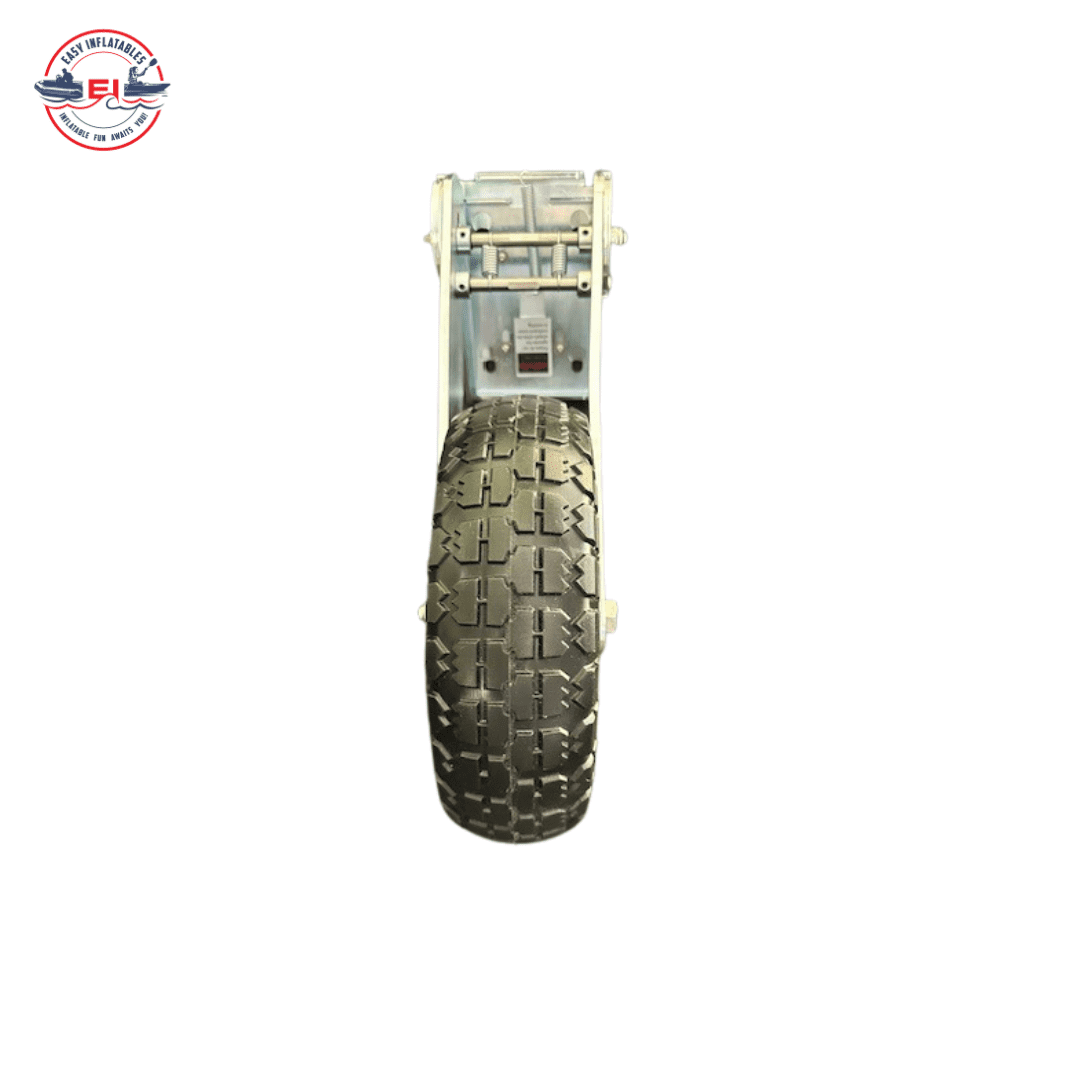
LockPro Plus Inflatable Boat Wheel Set
The LockPro Plus Inflatable Boat Wheel Set offers a premium solution for easy and safe loading of inflatable boats, featuring an Italian stainless steel quick-lock system.
Free freight to United States · taxes included, nothing to pay on arrival
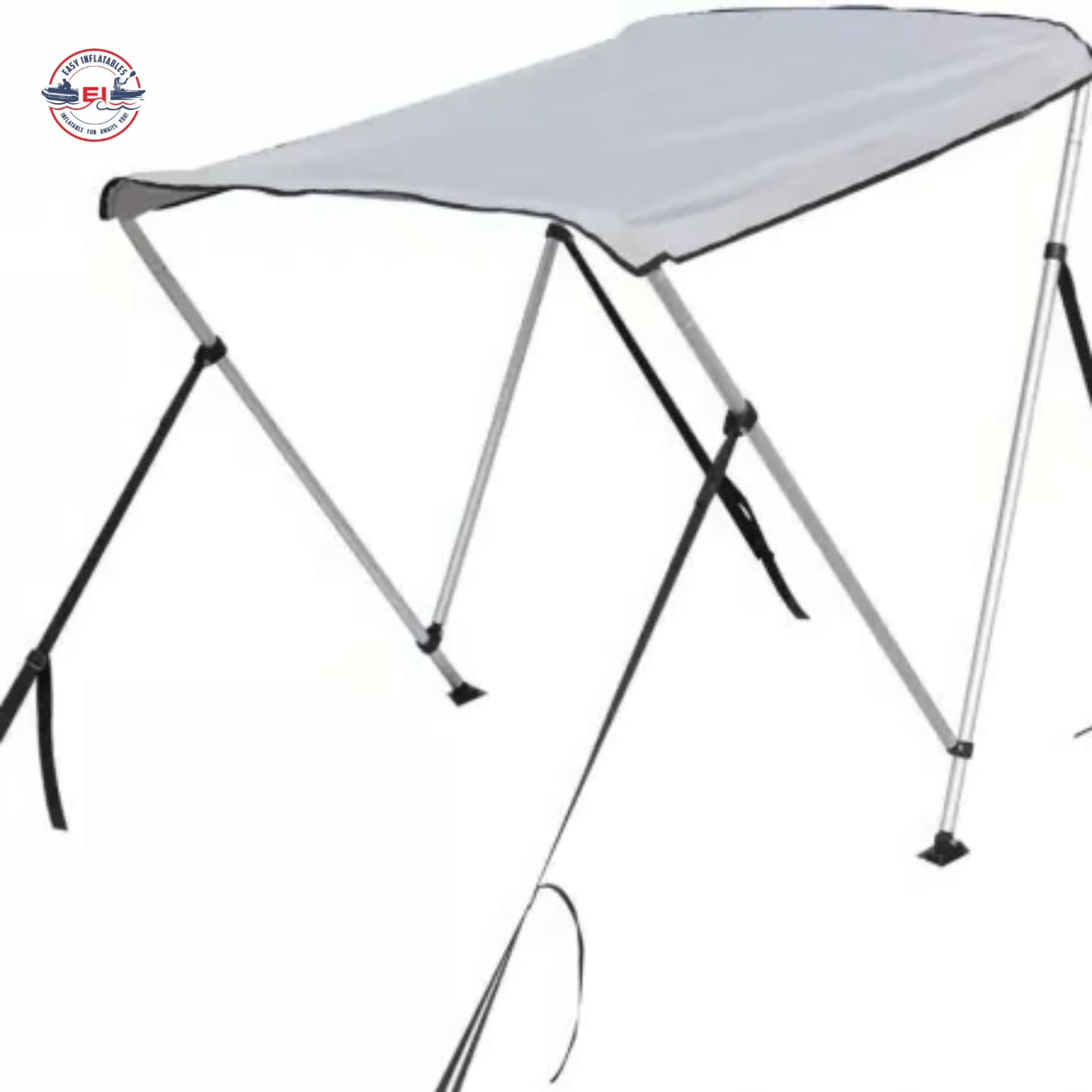
Aerowave Inflatable Boat Bimini
Lightweight inflatable UV sun-shade canopy for inflatable boats, SIBs and catamarans. Now available in two colours — Light Grey and Black. Fast setup, compact storage and premium UV protection for Australian boating.
Free freight to United States · taxes included, nothing to pay on arrival
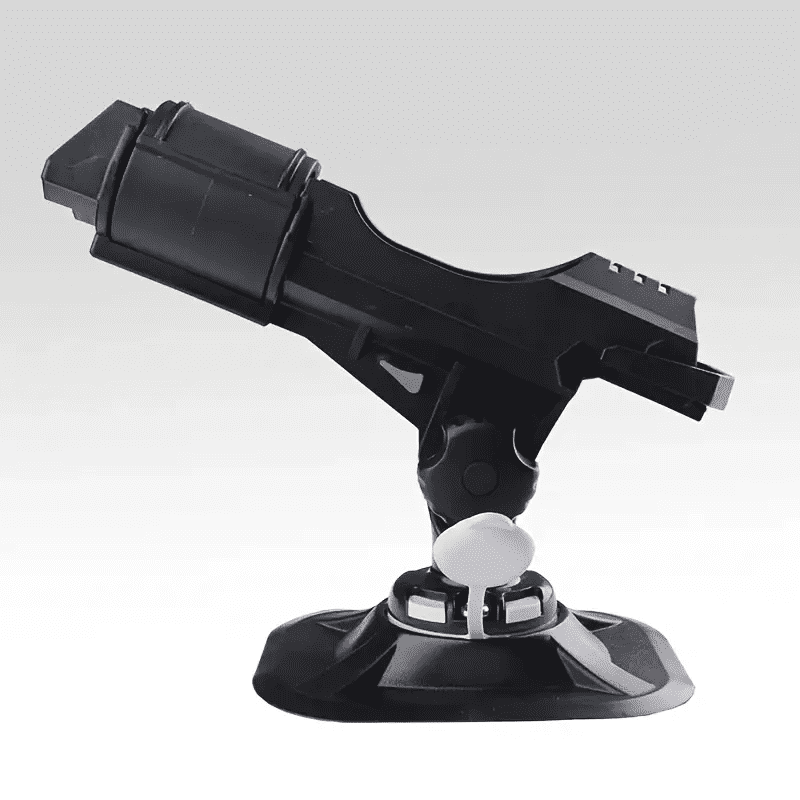
Inflatable Boat Rod Holder + Mount
Swivel rod holder and its star-lock base mount, glued onto your boat during the build. A$100 per unit.
Free freight to United States · taxes included, nothing to pay on arrival
Not sure which suits you? Talk to a real boat owner.
Before you spend a cent
Buying from Australia, delivered to United States
You have never heard of us, we are on the other side of the world, and the internet is full of fakes. Fair enough. Here is everything you would need to check us out, in one place — no forms, no chat bot.
Australian designed business
Easy Inflatables, Avoca Beach NSW 2251. ABN 96 856 548 613. International orders ship from our Hong Kong hub.
Rated 5.0 on Google
Every review is on our Google Business Profile, with the reviewer's name and the date.
CE certified, 5 + 2 year hull warranty
ISO 6185-3 and EU Directive 2013/53/EU. Warranty honoured worldwide.
Tracked, insured, door to door
Freight, duty & taxes included · nothing to pay on arrival.
- Who am I actually buying from?
- Easy Inflatables, Avoca Beach NSW 2251, Australia. ABN 96 856 548 613. Sean is the owner and skipper, Gary Stewart handles sales on +61 2 4335 1603, Karen Matthews handles email. The boats are Australian designed; international orders ship from our Hong Kong dispatch hub so your landed price stays competitive. Phone us before you pay a cent — a real person answers.
- Is this really an Australian product?
- Yes — Australian designed and engineered on the NSW Central Coast. Manufacturing is done offshore to our spec, and international orders ship direct from our Hong Kong dispatch hub. If we routed every boat through Australia first, the freight alone would roughly double or triple your cost for the same hull.
- What do I pay, and what is not included?
- The delivery and import terms depend on your country. US and UK boat orders include free express freight and prepaid import charges — nothing to pay on arrival. New Zealand and named Asia/Pacific lanes include duty and tax. EU buyers pay import charges on arrival. Other destinations show their terms before payment.
- How do I pay safely?
- Card through Stripe (Visa, Mastercard, Amex, Apple Pay, Google Pay) or bank transfer. Card payments carry your bank's own dispute protection. We never ask for crypto, gift cards or payment to a personal account.
- What if it arrives damaged?
- Every boat ships fully tracked and insured door to door. Photograph the carton and the boat on arrival and email us — transit damage is claimed and replaced through us, not left with you and the courier.
- Is the warranty real outside Australia?
- Yes. The 5 + 2 year hull warranty on 1.2 mm VALMEX Heavy Plus and Orca Hypalon hulls applies wherever you are. Replacement parts are held in Australia and at our overseas hub and go out by express courier to your door.
- Is the boat actually certified?
- All Aerowave catamarans are CE certified to ISO 6185-3 and EU Directive 2013/53/EU. Certification paperwork is supplied with the boat — ask and we will send it before you order.
Frequently asked questions
- Can you leave an inflatable boat on a trailer permanently?
- Yes, you can leave an inflatable boat on a trailer permanently provided it rests on wide, carpeted flat bunks that fully support the transom board beneath the outboard. The boat should be kept under a breathable UV cover or inside a garage, with tube pressures dropped by 20% to avoid heat-induced over-pressurisation.
- Do I need a special trailer for an inflatable boat?
- Yes, standard roller trailers built for aluminium or fibreglass boats must not be used because individual rollers cause extreme point-load damage to inflatable tubes. An inflatable boat requires a bunk trailer with wide, flat, carpet-lined timber or plastic bunks positioned beneath each air tube to disperse weight evenly.
- How tight should trailer straps be on an inflatable boat?
- Straps should be tightened firmly enough to prevent movement on the bunks, but never ratcheted down so hard that they compress or crease the inflatable air tubes. Always use wide 50 mm straps with padded sleeves, and attach your primary tie-down lines directly to the rigid transom U-bolts rather than over bare fabric.
- Why do trailer bunks need to extend past the transom on an inflatable boat?
- Trailer bunks must fully support the transom to bear the concentrated weight of the outboard motor. If bunks end short of the transom board, the motor bounces without support during road travel, creating severe cantilever stresses that will crack transom glue joints and tear fabric seals.
- Should I deflate my inflatable boat when it is on the trailer?
- You should not deflate the boat completely, but you should release roughly 15% to 20% of its working air pressure if it is stored in hot weather. Dropping the pressure slightly prevents ambient heat expansion from straining chamber baffles and seams, while keeping enough shape to shed rainwater off your cover.
- What is the warranty and build lead time for an Aerowave inflatable boat?
- Aerowave Viper catamarans carry a 5 + 2-year warranty, while AeroCat, WaveRunner, and Sport Series models feature a 5-year warranty (accessories carry 1 year). Custom boats take up to three and a half weeks to build (up to four for Hypalon), followed by 10 to 13 days delivery, which is included for Australian customers.
Ready to set sail?
Premium German-fabric inflatable catamarans, built to order and delivered to your door. Talk to our team or browse the fleet.
Like this guide? Get the next one in your inbox.
Owner-tested tips, gear deep-dives and Aussie boating know-how — no spam.

