
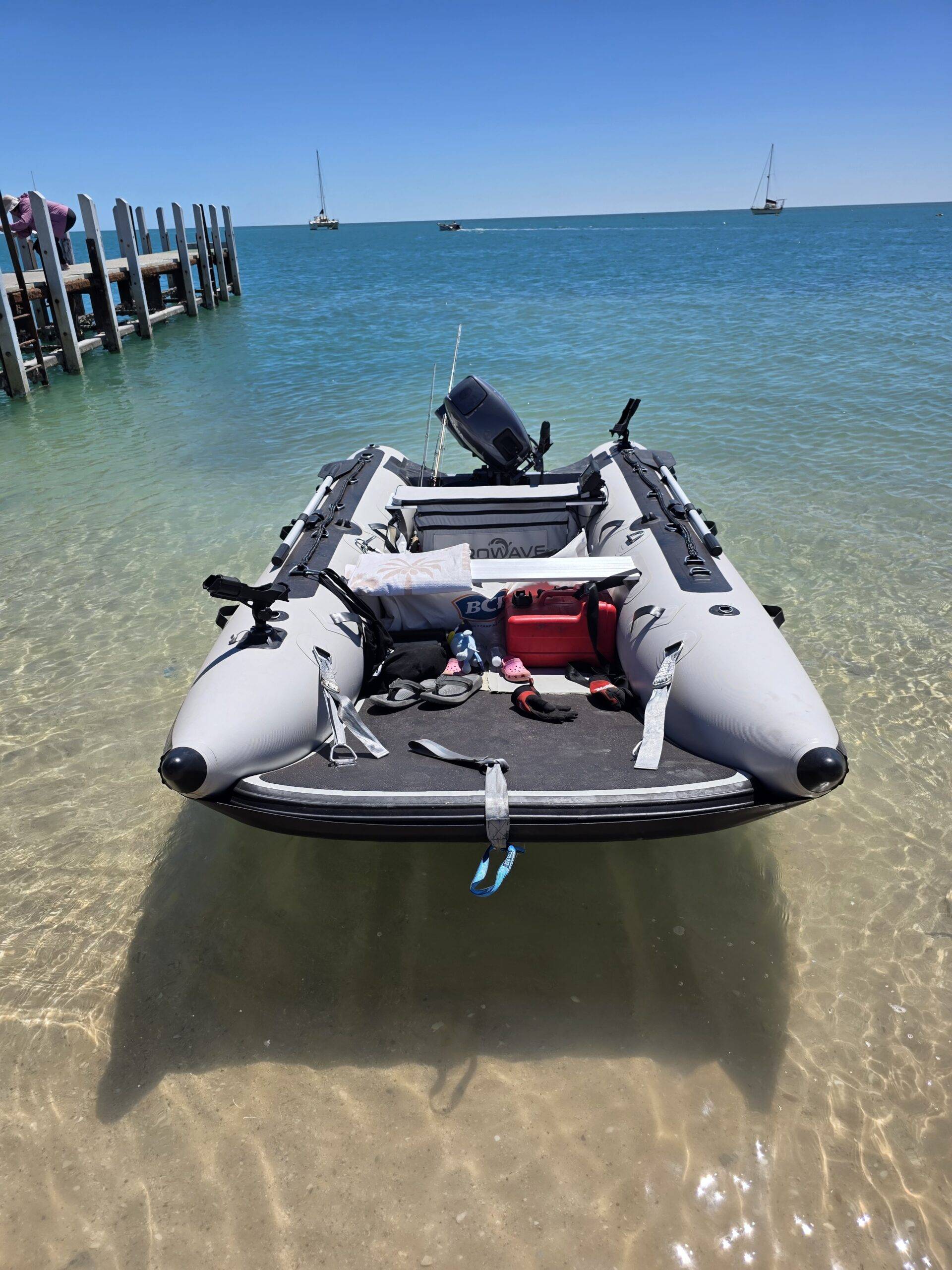
Inflatable Boat Storage: How to Store Yours in a Garage, Apartment or Caravan
Practical inflatable boat storage for Australians: inflated or deflated, folding and rolling, garage, apartment, caravan, trailer and roof rack, sun protection and an off-season checklist.
Our recommendation
AeroWave AeroCat 335 — Ready-to-Fish Pack
Length
3.35m / 11'0"
Beam
165cm / 65"
Inside Beam
69cm / 27"
Tube Diameter
50cm / 19"
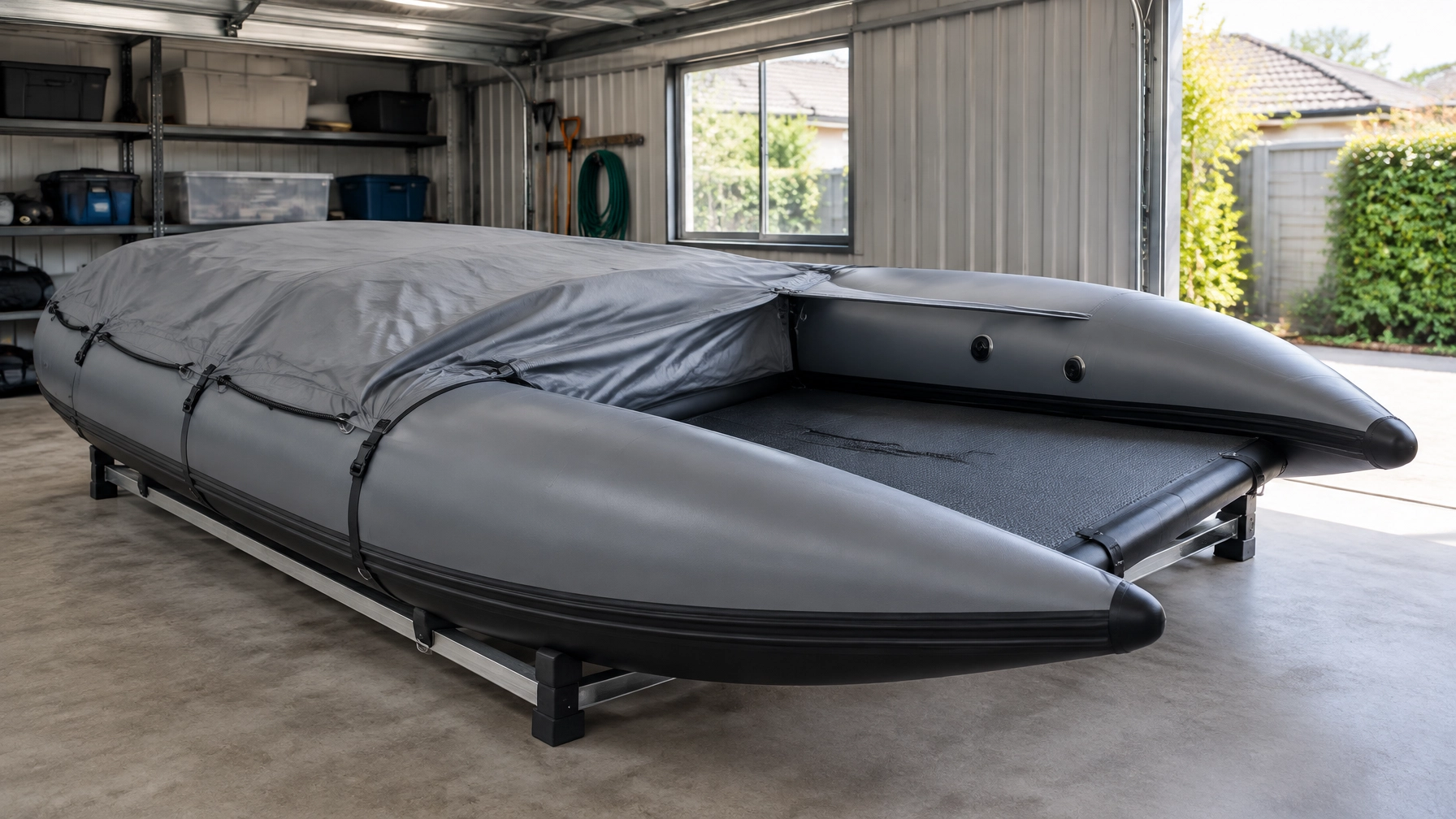
One of the big advantages of an inflatable boat is that it doesn't need your driveway, garage or a marina berth. Good storage still matters: a clean, dry, protected boat is quicker to set up next time and lasts longer.
Whether you live in an apartment, have a small shed or travel with a caravan, the right option depends on how often you use your boat and how much room you have. Here are practical inflatable boat storage ideas for Australian owners, plus a simple pack-away checklist.
Deflate it or store it inflated?
Check your owner's manual first — recommended storage varies with the boat's construction, material and floor type.
Partly inflated is convenient if you use the boat often and have a clean, dry indoor space. It avoids repeated folding, which minimises wear from tight creases. Support the boat evenly, keep it away from sharp objects and heat sources, and don't leave it fully inflated somewhere hot and sunny — rising temperatures increase internal pressure.
Deflated and rolled is the space-saving choice for apartments, caravans and longer breaks. Clean and dry the boat first, then follow the folding instructions for your model. A neat, loose roll is better than forcing the boat into a tight space.
Whatever your boat, its manual is the final word on deflation, folding and storage. Aerowave owners can also download the owner's manual from each product page in the Viper Series and AeroCat Series.
How to fold and roll an inflatable boat carefully
A rushed pack-down traps moisture, sand or grit against the fabric. Give yourself a little time after each trip.
- Remove loose gear. Take off the outboard, seats, oars and accessories. Store fuel and batteries separately, following their own safety instructions.
- Rinse away salt and dirt. Wash the boat with fresh water, including the floor and seams. Use mild soap on the hull if needed; avoid solvents, harsh chemicals and abrasive brushes.
- Let it dry completely. Dry it in the shade, opening up folds and the areas around fittings. Never roll up a damp boat — trapped moisture causes mildew.
- Choose a clean surface. Lay down a clean tarp or mat before deflating so grit can't abrade the fabric as you fold.
- Deflate and fold in the order in your manual. Check when to remove or deflate an inflatable floor.
- Roll loosely and protect it. Avoid sharp creases and tight straps. Put the boat in its carry bag and lift it rather than dragging it across concrete.
For more on avoiding wear in storage, read The Abrasion Nobody Counts: Preventing Inflatable Boat Storage Damage.
Garage or shed storage
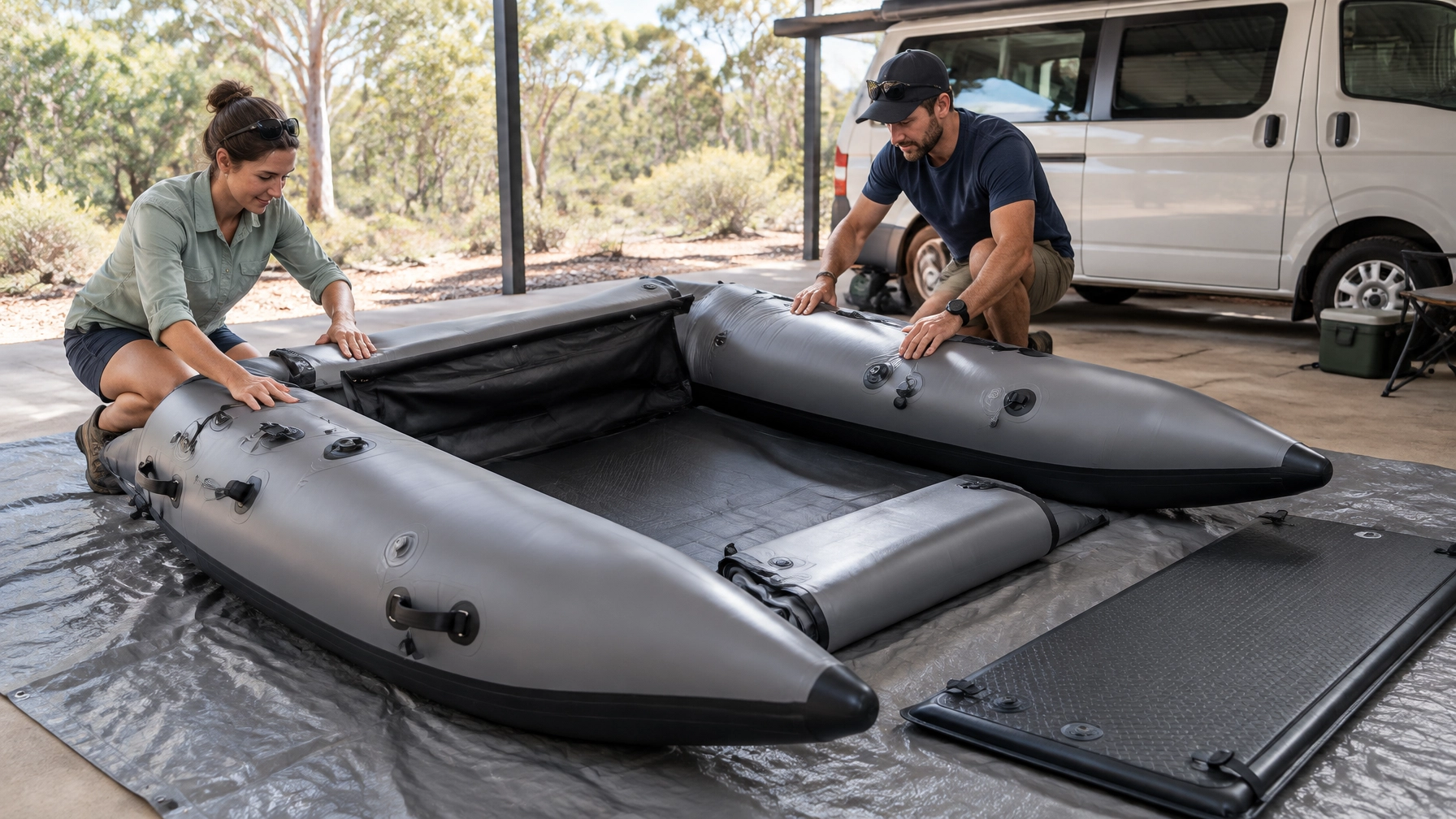
A garage or shed is the simplest option, folded or partly inflated. Aim for a cool, dry, shaded and ventilated space. Keep the boat off damp concrete on a shelf, rack or clean platform, and don't stack heavy gear on top.
If storing it inflated, support it evenly. Keep it away from sharp tools, fuel, solvents, heaters and sunlight through windows or open doors. Use a breathable cover once the boat is completely dry, and leave room for air to circulate.
Rodents can chew boat fabric or nest in a stored boat. Keep the area tidy, store a deflated boat in its closed carry bag, and use rodent prevention that keeps traps and chemicals away from the boat, children and pets.
Apartment and balcony storage
A deflated boat in its carry bag fits in a storage cage, wardrobe or under a sturdy bed. Measure the packed boat and your storage space before you buy, and check strata rules for shared storage areas. Our apartment storage guide has renter-friendly ideas.
A balcony is best avoided for long-term storage — it exposes the boat to sun, weather and temperature swings. If it's your only option, check with your building manager, protect the boat from UV and rain, secure it against wind, and never block an exit.
Caravan and camper storage
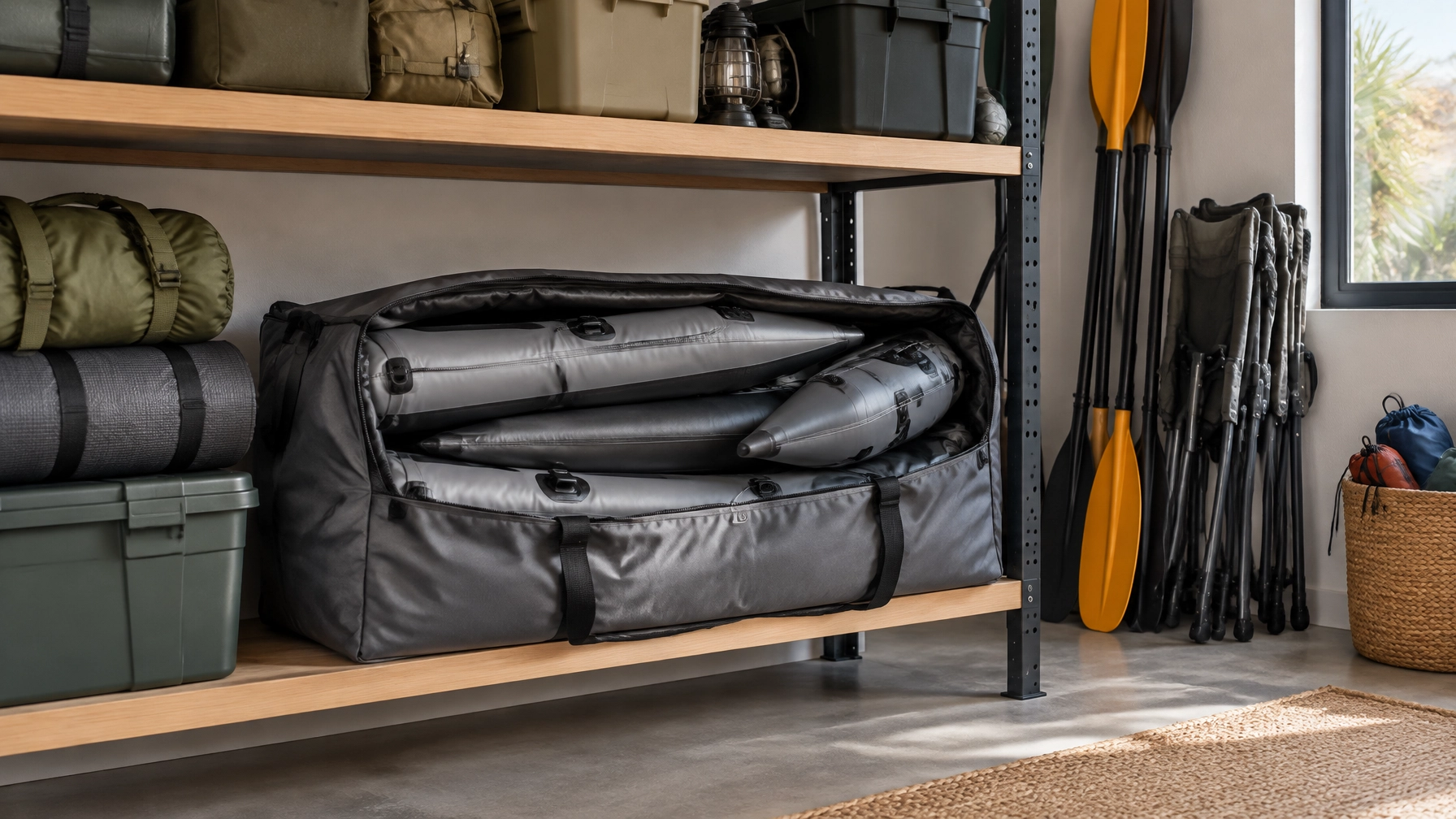
Pack the deflated boat in its bag and secure it so it can't shift while travelling. Keep it away from sharp equipment and heavy objects. Check your vehicle's payload and storage limits before loading the boat, motor and accessories. For trip ideas, read Inflatable Boats for Caravanners & Grey Nomads.
Can you store an inflatable boat on a trailer or roof rack?
Yes, on a trailer, if it's supported evenly, protected from weather and kept somewhere secure. Remove the motor and loose gear, keep the boat clean and dry, and use a UV-resistant cover that allows ventilation. Check pressure as conditions change. See Inflatable Boat on a Trailer.
A roof rack is for transport rather than long-term storage. Check your vehicle and rack load limits, use proper supports and restraints, and don't leave an inflatable strapped tightly against a hot roof for long periods.
Protect the boat from Australian sun and heat
UV and heat gradually age inflatable materials. Store your boat out of direct sun whenever possible and use a suitable cover if it must stay outdoors. Pressure-relief valves help manage heat build-up, alongside shade and regular pressure checks.
UV protectants vary — some can affect repairs or bonding on certain fabrics, so check the boat manufacturer's guidance before applying anything. Learn about our fabrics on the fabrics page and manufacturing page.
Off-season storage checklist
In Australia, "winterising" usually means preparing the boat for a break rather than dealing with frost. Before putting it away:
- Rinse off salt, sand and dirt.
- Inspect the tubes, seams, valves, floor and fittings.
- Repair any issues first, using materials approved for your boat — see our repairs and patching guide.
- Dry the boat fully, including folds and around fittings.
- Store it inflated or deflated as the manual recommends.
- Keep it shaded, dry, ventilated and protected from rodents.
- Check on it every few weeks during long storage.
Service the outboard, battery, fuel system or trailer separately, following their makers' instructions — see Outboard Motor Servicing in Australia.
A simpler way to manage storage costs
A trailer boat needs space for the boat and trailer, and can bring trailer registration, maintenance or marina fees. An inflatable that packs away reduces those demands, especially when you keep it at home and launch without a trailer. Read Boat Without a Trailer.
Dry and deflate it when space is tight, or keep it partly inflated in a covered area if you use it often and the manual allows. For compact options, explore our portable inflatable catamarans.
Quick inflatable boat storage checklist
- Clean off salt and grit after use.
- Dry completely before covering or packing.
- Follow the boat's own folding and storage instructions.
- Store in a cool, shaded, dry and ventilated space.
- Keep the boat off rough or damp floors and away from heavy objects.
- Protect it from UV, heat and rodents.
- Check the boat during long-term storage.
Frequently asked questions
- Should I store my inflatable boat inflated or deflated?
- Check your manual. Partly inflated suits frequent use in a clean, dry indoor space; deflated and loosely rolled saves space for apartments, caravans and long breaks.
- How do I fold an inflatable boat for storage?
- Remove gear, rinse with fresh water, dry completely in the shade, deflate on a clean tarp and roll loosely in the order your manual shows, then store in the carry bag.
- Can I store an inflatable boat in an apartment?
- Yes. A deflated boat in its carry bag fits a storage cage, wardrobe or under a sturdy bed. Avoid long-term balcony storage because of sun and weather.
- How do I protect an inflatable boat from rodents?
- Keep the area tidy, store a deflated boat in its closed bag, raise it off the floor and use rodent prevention that keeps traps and chemicals away from the boat.
- Can I leave an inflatable boat in the sun?
- Avoid long periods in direct sun. UV ages fabric and heat raises tube pressure. Store it shaded or under a breathable, UV-resistant cover.
- How do I prepare an inflatable boat for the off-season?
- Rinse, inspect and repair, dry fully, store as the manual recommends in a cool, shaded, ventilated spot, and check on it periodically.
Finance this boat from $18/week
Estimate only — powered by Australian Motorcycle & Marine Finance (AMMF).
Paid upfront (AUD)
$420
10% of price
Term
5 years
60 monthly repayments
Comparison rate
9.95% p.a.
Subject to AMMF approval
Weekly
$18
Monthly
$80
Amount financed
$3,775
Indicative only. Actual repayments depend on your AMMF credit assessment, term, fees and the balloon you select. Talk to AMMF for a personalised quote on AeroWave AeroCat 335 — Ready-to-Fish Pack.
Like this guide? Get the next one in your inbox.
Owner-tested tips and Aussie boating know-how — no spam.
Ready when you are
Build your AeroCat 335 — Ready-to-Fish Pack in under 3 minutes.
1100 decitex / 0.9 mm VALMEX® hull. Five-year limited hull warranty. Free freight to United States · taxes included, nothing to pay on arrival.
delivered to your door
See it for yourself
Real boats. Real owners. Real people behind them.
Plenty of what you read online these days is generated. Check us out properly — the factory, the reviews and the owners are all one click away. Why we use AI, and how to check we’re real
How our boats are built
Walk the production line: thermo-welded seams, 1.2 mm VALMEX Heavy Plus hulls, over-pressure relief valves on every chamber.
See the buildGoogle Maps reviews
Real Australian owners, five stars, published on our Google Business Profile with the map — read them there, not just on our own site.
Open Google Maps reviewsOwner stories
Boats in use — offshore, on rivers, on rescue duty. Photos and words from the people who actually own them.
Read owner stories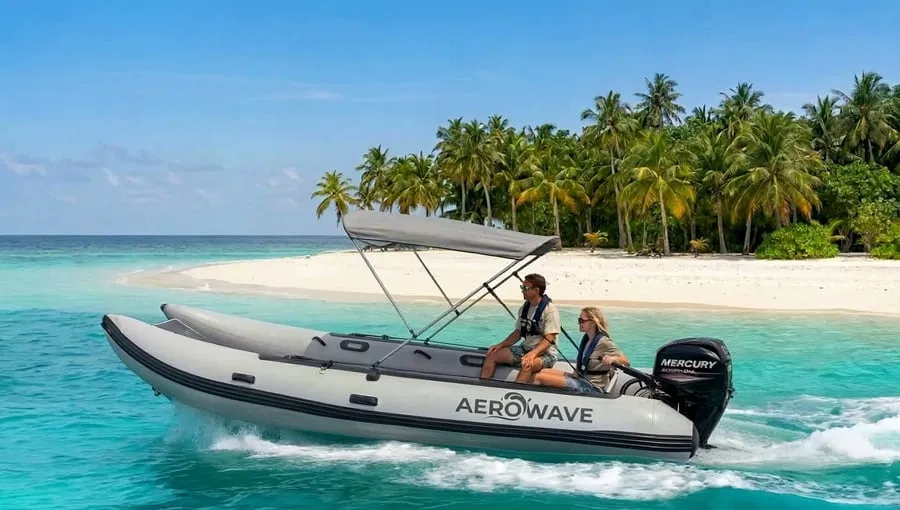
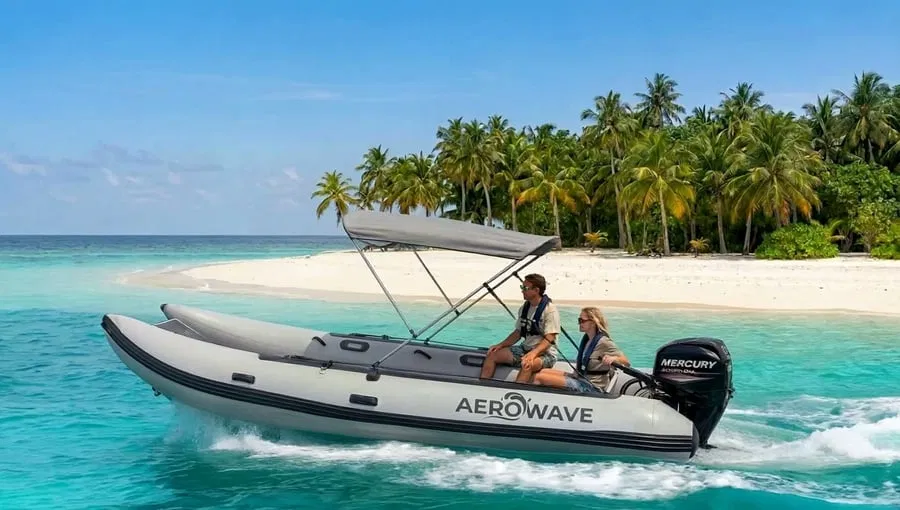
AeroWave AeroCat 335 — Ready-to-Fish Pack
US$2,989 USD · delivered to your door